| Size | Price | Stock | Qty |
|---|---|---|---|
| 5mg |
|
||
| 10mg |
|
||
| 25mg |
|
||
| 50mg |
|
||
| 100mg |
|
||
| 250mg | |||
| 500mg | |||
| 1g | |||
| Other Sizes |


Purity: ≥98%
| Targets |
SMI-16a exhibits superior inhibitory properties against Pim-1 and Pim-2 [1]. In MM cells, treatment with Pim-2 short interfering RNA and the Pim inhibitor SMI-16a effectively restored osteoblastogenesis, which had been suppressed by all of the aforementioned inhibitors. Treatment with SMI-16a increases anabolic signaling mediated by BMP-2 and inhibits TGF-β signaling [2].
|
|---|---|
| ln Vitro |
SMI-16a exhibits superior inhibitory properties against Pim-1 and Pim-2 [1]. In MM cells, treatment with Pim-2 short interfering RNA and the Pim inhibitor SMI-16a effectively restored osteoblastogenesis, which had been suppressed by all of the aforementioned inhibitors. Treatment with SMI-16a increases anabolic signaling mediated by BMP-2 and inhibits TGF-β signaling [2].
Compound 16a demonstrated potent inhibition of recombinant Pim-1 and Pim-2 kinase activity in enzymatic assays. It exhibited anti-proliferative activity against human prostate cancer PC3 cells with an IC50 of 48 ± 8 µM in an MTS cell viability assay. [1] |
| ln Vivo |
SMI-16a was administered intraperitoneally to mice at a dose of 50 mg/kg every day for five days; a dose of 100 mg/kg was markedly hazardous. Five days a week of SMI-16a treatment decreased tumor growth in the mice by around 50% without resulting in weight loss. Red blood cell and white blood cell counts (including lymphocytes, monocytes, and granulocytes) were unaffected by subchronic treatment of SMI-16a, suggesting that the substance has no myelosuppressive effects. Because albumin, alkaline phosphatase, and alanine aminotransferase levels remain unchanged, SMI-16a is not hepatotoxic [1]. SMI-16a can successfully stop bone deterioration while preventing MM tumor growth in animal models of MM [2].
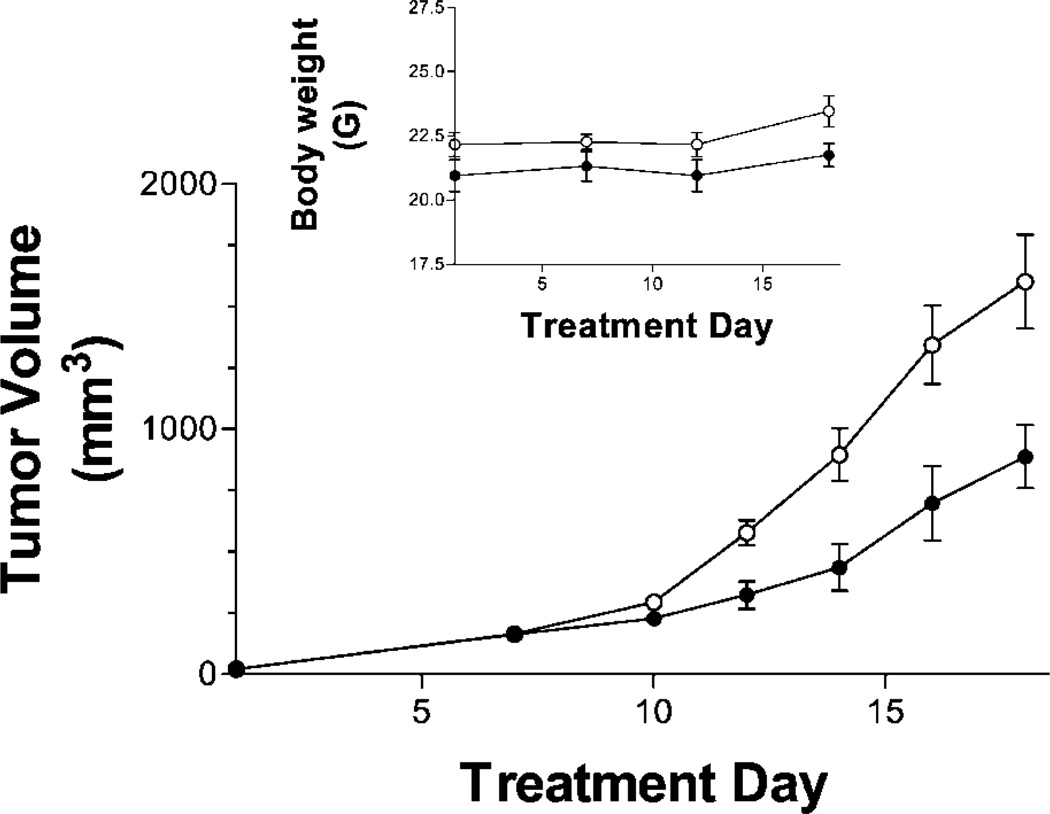
Intraperitoneal administration of 16a (50 mg/kg, 5 days per week) significantly reduced the growth of syngeneic JC murine mammary adenocarcinoma tumors implanted in Balb/c mice by approximately 50%, compared to vehicle-treated controls. The treatment did not cause body weight loss in the animals. [1] |
| Enzyme Assay |
Pim kinase activity was primarily assessed using an ATP-depletion assay. Recombinant human Pim-1 was incubated with a Bad-derived peptide substrate, ATP, MgCl2, and test compounds. Residual ATP levels after the kinase reaction were measured using a luciferase-based kit. IC50 values were determined from dose-response curves.
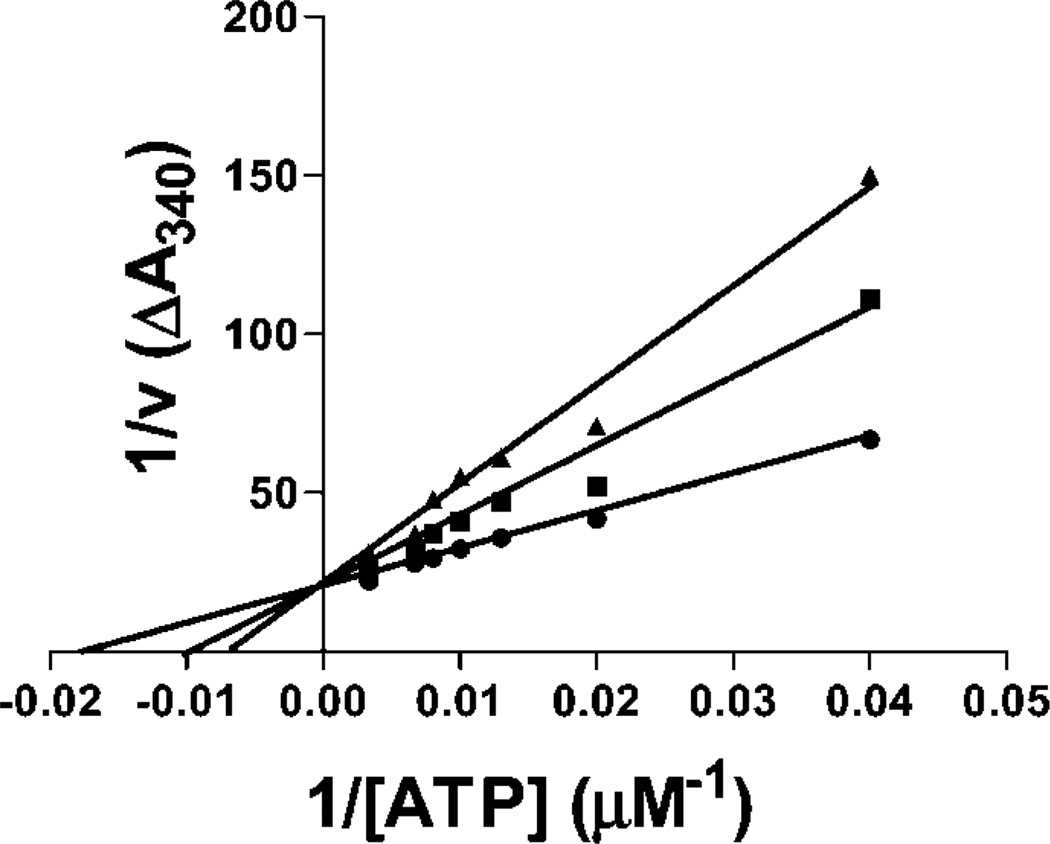
For kinetic studies and experiments requiring higher ATP concentrations, a coupled spectrophotometric assay was used. This assay couples ADP production to NADH oxidation catalyzed by pyruvate kinase and lactate dehydrogenase. Activity was monitored by measuring the decrease in absorbance at 340 nm due to NADH oxidation. [1] |
| Cell Assay |
Cytotoxicity was determined using the MTS assay. PC3 prostate carcinoma cells were seeded in 96-well plates, allowed to attach, and then treated with varying concentrations of the test compounds for 48 hours. Cell viability was assessed by measuring the metabolic reduction of MTS reagent. The percentage of cell killing was calculated relative to control cultures treated with vehicle alone. [1]
|
| Animal Protocol |
50 mg/kg; i.p.
Female Balb/C mice injected subcutaneously with JC cells suspended in PBS For the antitumor efficacy study, Balb/c mice were implanted subcutaneously with JC murine mammary adenocarcinoma cells. When palpable tumors developed, mice were randomized into groups and treated intraperitoneally with either vehicle (50% DMSO: 50% phosphate-buffered saline) or 16a at a dose of 50 mg/kg. Treatments were administered once daily, five days per week. Tumor volumes and body weights were measured multiple times per week. Tumor volume was calculated using the formula (L × W^2)/2. [1] For toxicity evaluation, Swiss Webster mice were injected intraperitoneally daily with vehicle or 16a at 3, 10, or 50 mg/kg for 7 days. Animals were observed for an additional 7 days before blood collection for complete blood count and clinical chemistry analysis. [1] |
| Toxicity/Toxicokinetics |
Subchronic administration (intraperitoneal injection, up to 50 mg/kg daily for 7 consecutive days) of 16a in mice did not significantly affect the levels of erythrocytes, leukocytes, lymphocytes, monocytes, or granulocytes, indicating that it did not have a myelosuppressive effect. Blood biochemical analysis showed no significant changes in liver function indicators (albumin, alkaline phosphatase, alanine aminotransferase), pancreatic function indicators (amylase), or kidney function indicators (blood urea nitrogen, creatinine, electrolytes). However, elevated blood glucose levels were detected in mice treated with the highest dose (50 mg/kg) of 16a. A dose of 100 mg/kg has been reported to be significantly toxic. [1]
|
| References | |
| Additional Infomation |
SMI-16a is a thiazolidinedione-2,4-dione derivative that has been identified as a potent and selective inhibitor of Pim-1 and Pim-2 kinases. It was chosen for in vivo studies due to its excellent inhibitory activity against both Pim-1 and Pim-2 isoenzymes. The elevated blood glucose levels observed at high doses are consistent with potential inhibition of the mTOR signaling pathway, which is known to be regulated by Pim kinase activity. [1]
|
| Molecular Formula |
C13H13NO3S
|
|
|---|---|---|
| Molecular Weight |
263.31222
|
|
| Exact Mass |
263.061
|
|
| CAS # |
587852-28-6
|
|
| Related CAS # |
|
|
| PubChem CID |
6076476
|
|
| Appearance |
Light yellow to yellow solid powder
|
|
| Density |
1.3±0.1 g/cm3
|
|
| Index of Refraction |
1.633
|
|
| LogP |
3.1
|
|
| Hydrogen Bond Donor Count |
1
|
|
| Hydrogen Bond Acceptor Count |
4
|
|
| Rotatable Bond Count |
4
|
|
| Heavy Atom Count |
18
|
|
| Complexity |
359
|
|
| Defined Atom Stereocenter Count |
0
|
|
| SMILES |
O=C(NC/1=O)SC1=C\C2=CC=C(OCCC)C=C2
|
|
| InChi Key |
GBWOSXZUTXXXQF-FLIBITNWSA-N
|
|
| InChi Code |
InChI=1S/C13H13NO3S/c1-2-7-17-10-5-3-9(4-6-10)8-11-12(15)14-13(16)18-11/h3-6,8H,2,7H2,1H3,(H,14,15,16)/b11-8-
|
|
| Chemical Name |
|
|
| Synonyms |
|
|
| HS Tariff Code |
2934.99.9001
|
|
| Storage |
Powder -20°C 3 years 4°C 2 years In solvent -80°C 6 months -20°C 1 month |
|
| Shipping Condition |
Room temperature (This product is stable at ambient temperature for a few days during ordinary shipping and time spent in Customs)
|
| Solubility (In Vitro) |
|
|||
|---|---|---|---|---|
| Solubility (In Vivo) |
Solubility in Formulation 1: ≥ 2.5 mg/mL (9.49 mM) (saturation unknown) in 10% DMSO + 40% PEG300 + 5% Tween80 + 45% Saline (add these co-solvents sequentially from left to right, and one by one), clear solution.
For example, if 1 mL of working solution is to be prepared, you can add 100 μL of 25.0 mg/mL clear DMSO stock solution to 400 μL PEG300 and mix evenly; then add 50 μL Tween-80 to the above solution and mix evenly; then add 450 μL normal saline to adjust the volume to 1 mL. Preparation of saline: Dissolve 0.9 g of sodium chloride in 100 mL ddH₂ O to obtain a clear solution. Solubility in Formulation 2: ≥ 2.5 mg/mL (9.49 mM) (saturation unknown) in 10% DMSO + 90% (20% SBE-β-CD in Saline) (add these co-solvents sequentially from left to right, and one by one), clear solution. For example, if 1 mL of working solution is to be prepared, you can add 100 μL of 25.0 mg/mL clear DMSO stock solution to 900 μL of 20% SBE-β-CD physiological saline solution and mix evenly. Preparation of 20% SBE-β-CD in Saline (4°C,1 week): Dissolve 2 g SBE-β-CD in 10 mL saline to obtain a clear solution. View More
Solubility in Formulation 3: ≥ 2.5 mg/mL (9.49 mM) (saturation unknown) in 10% DMSO + 90% Corn Oil (add these co-solvents sequentially from left to right, and one by one), clear solution. |
| Preparing Stock Solutions | 1 mg | 5 mg | 10 mg | |
| 1 mM | 3.7978 mL | 18.9890 mL | 37.9780 mL | |
| 5 mM | 0.7596 mL | 3.7978 mL | 7.5956 mL | |
| 10 mM | 0.3798 mL | 1.8989 mL | 3.7978 mL |
*Note: Please select an appropriate solvent for the preparation of stock solution based on your experiment needs. For most products, DMSO can be used for preparing stock solutions (e.g. 5 mM, 10 mM, or 20 mM concentration); some products with high aqueous solubility may be dissolved in water directly. Solubility information is available at the above Solubility Data section. Once the stock solution is prepared, aliquot it to routine usage volumes and store at -20°C or -80°C. Avoid repeated freeze and thaw cycles.
Calculation results
Working concentration: mg/mL;
Method for preparing DMSO stock solution: mg drug pre-dissolved in μL DMSO (stock solution concentration mg/mL). Please contact us first if the concentration exceeds the DMSO solubility of the batch of drug.
Method for preparing in vivo formulation::Take μL DMSO stock solution, next add μL PEG300, mix and clarify, next addμL Tween 80, mix and clarify, next add μL ddH2O,mix and clarify.
(1) Please be sure that the solution is clear before the addition of next solvent. Dissolution methods like vortex, ultrasound or warming and heat may be used to aid dissolving.
(2) Be sure to add the solvent(s) in order.
Inhibition of Pim-1 in a cell-free kinase assay.
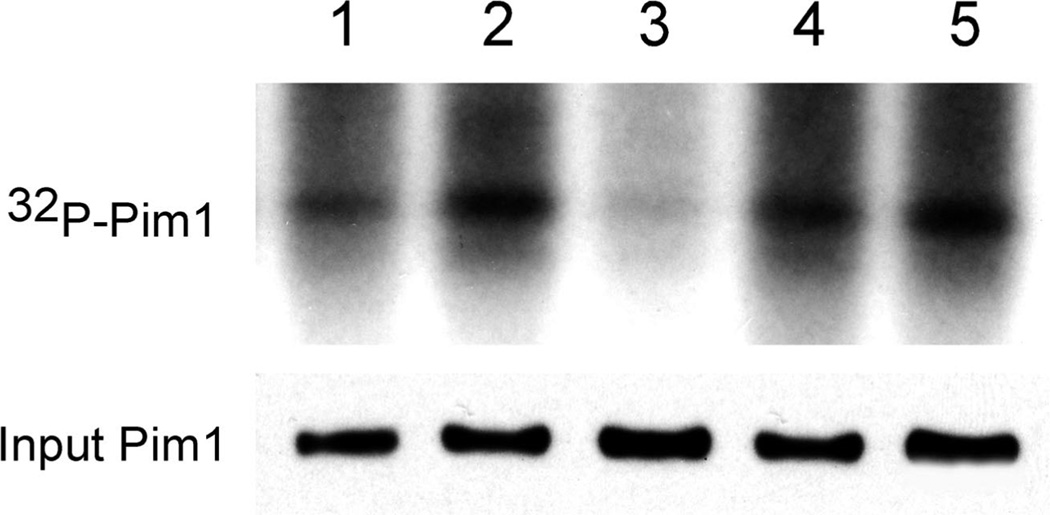
Inhibition of Pim-1 autophosphorylation in intact cells.
Antitumor activity of16a. |
Kinetics of inhibition of Pim-1 by4a.
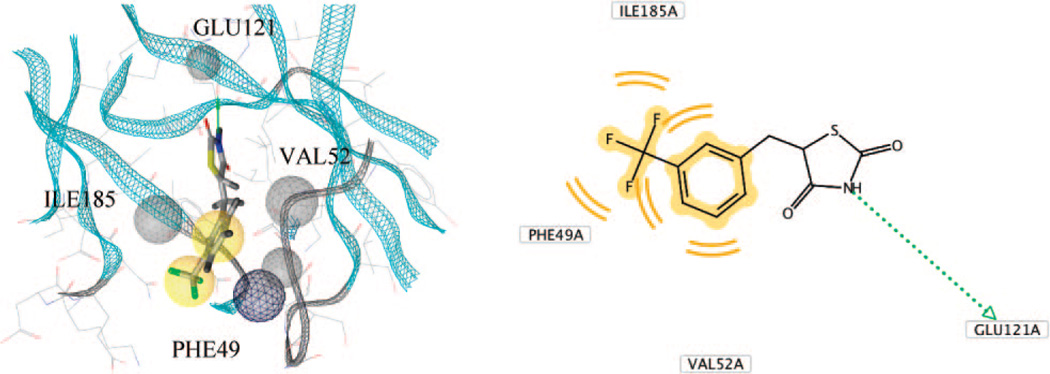
Computational docking of4ato Pim-1.J Med Chem. 2009 Jan 8; 52(1): 74–86. |
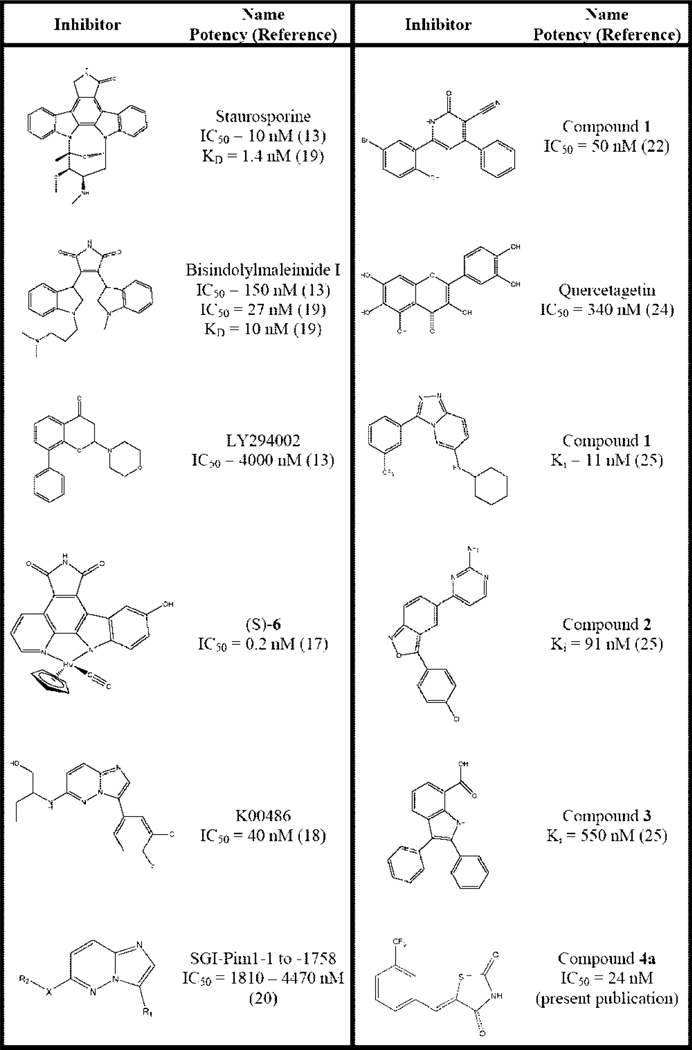
Structures and potencies of reported Pim-1 inhibitors.J Med Chem. 2009 Jan 8; 52(1): 74–86. |
Products are for research use only; We do not sell to patients
Copyright 2020 InvivoChem LLC | All Rights Reserved


 COA
COA