| Size | Price | Stock | Qty |
|---|---|---|---|
| 5mg |
|
||
| 10mg |
|
||
| 25mg |
|
||
| 50mg |
|
||
| 100mg |
|
||
| 250mg |
|
||
| 500mg | |||
| Other Sizes |
Purity: ≥98%
| Targets |
ROCK-2 (IC50 = 102 nM); ROCK-1 (IC50 = 276 nM)
Rho-associated coiled-coil kinase 1 (ROCK1) (Ki = 0.3 nM) [1] - Rho-associated coiled-coil kinase 2 (ROCK2) (Ki = 0.6 nM) [1] - Smooth muscle contraction-related targets (myosin light chain phosphatase, MLC) [1][2] - T cell/macrophage activation-related targets (NF-κB, TNF-α, IFN-γ) [3] |
|---|---|
| ln Vitro |
SAR407899 hydrochloride is a potent and ATP-competitive ROCK inhibitor, with Kis of 36 nM and 41 nM for human and rat ROCK-2, respectively. SAR407899 inhibits ROCK-2 more effectively than ROCK-1, with IC50 values of 102±19 nM and 276±26 nM, respectively, when 40 μM ATP is present. SAR407899 has IC50s of 5.4 and 3.1 μM, respectively, which indicates that it inhibits PKC-Δ and MSK-1 less potently. The ROCK-mediated phosphorylation of MYPT T696 in HeLa cells stimulated with PHEN is specifically inhibited by SAR407899 (0.1, 0.3, 1.0, and 3.0 μM). This effect is also observed at 1 μM and 10 μM in primary rat aortic smooth muscle cells. SAR407899 (3 μM) totally prevents the development of stress fibers and the thrombin-induced shrinkage of human umbilical vein endothelial cells (HUVECs). With an IC50 of 5.0±1.3 μM, SAR407899 concentration-dependently inhibits 5-bromodeoxyuridine incorporation into the cells. THP-1 migration is also effectively inhibited by SAR407899, with an IC50 of 2.5±1.0 μM. With IC50 values ranging from 122 to 280 nM, SAR407899 exhibits strong vasorelaxant activity in a wide range of isolated arteries taken from various vascular beds and species[1]. SAR407899, with IC50s of 0.07 and 0.05 μM, respectively, relaxes the phenylephrine pre-contracted smooth muscle in a dose-dependent manner[2].
SAR407899 HCl exhibited potent ROCK inhibitory activity: it selectively inhibited ROCK1 (Ki=0.3 nM) and ROCK2 (Ki=0.6 nM) without significant cross-reactivity with other kinases (IC50 > 1 μM for PKC, Akt, ERK1/2). In isolated rat aortic rings precontracted with phenylephrine, it induced dose-dependent relaxation with an EC50 of 12 nM, reversing vasoconstriction by inhibiting MLC phosphorylation [1] - In human and rabbit isolated corpora cavernosa strips (precontracted with phenylephrine), SAR407899 HCl (1-100 nM) induced concentration-dependent relaxation, with EC50 values of 18 nM (human) and 22 nM (rabbit). It enhanced relaxation responses to acetylcholine in diabetic rabbit cavernosa strips (impaired in diabetic models), restoring relaxation rate from ~35% (control) to ~78% at 50 nM [2] - In mixed lymphocyte reaction (MLR) and T cell activation assays, SAR407899 HCl (1-10 μM) inhibited T cell proliferation (inhibition rate ~65% at 5 μM) and reduced secretion of pro-inflammatory cytokines (TNF-α, IFN-γ, IL-2) by ~45-60% at 10 μM. It also suppressed macrophage migration and nitric oxide (NO) production in LPS-stimulated RAW264.7 cells [3] |
| ln Vivo |
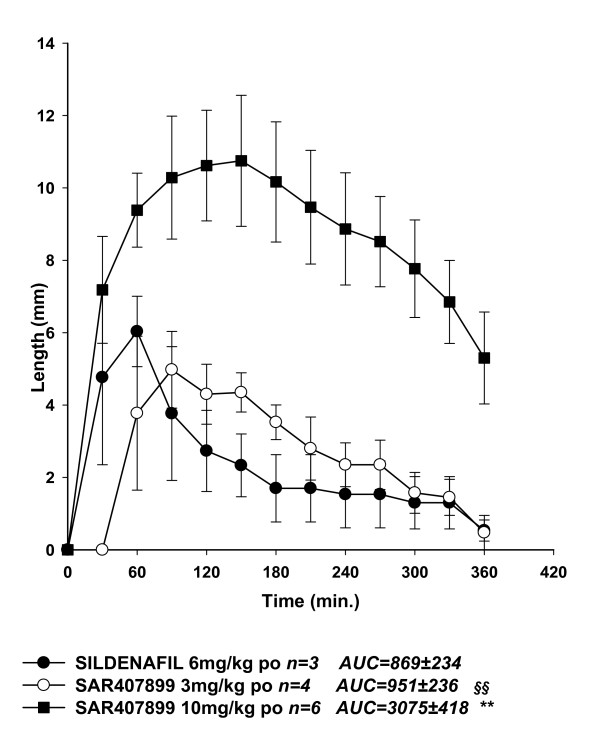
SAR407899 (3 mg/kg, i.v.) suppresses the phosphorylation of MYPT T696 by ROCK in the thoracic aorta of rats that develop spontaneous hypertension (SHRs). In rats, SAR407899 (0.01-0.30 mg/kg, i.v.) effectively decreases pressor responses to vasoconstrictor agents. Hypertensive SHRs' blood pressure is dose-dependently lowered by SAR407899 (1, 3, 10, and 30 mg/kg, p.o.)[1]. In rabbits in good health, SAR407899 (1-3 mg/kg, i.v. or 3, 10 mg/kg, p.o.) lengthens the penis. In diabetic rabbits, SAR407899 (3-10 mg/kg, p.o.) likewise lengthens the penile in a dose-dependent manner[2].
In spontaneously hypertensive rats (SHR), oral administration of SAR407899 HCl (0.3 mg/kg, 1 mg/kg, 3 mg/kg) dose-dependently reduced systolic blood pressure (SBP): 0.3 mg/kg reduced SBP by ~15%, 1 mg/kg by ~28%, and 3 mg/kg by ~35% at 4 hours post-administration. The antihypertensive effect persisted for ~12 hours, with no significant change in heart rate. It also improved aortic compliance and reduced vascular fibrosis (α-SMA expression decreased by ~40% at 3 mg/kg) [1] - In streptozotocin-induced diabetic rats (with erectile dysfunction), intracavernous injection of SAR407899 HCl (0.1 mg/kg, 0.3 mg/kg) improved erectile function: the intracavernous pressure (ICP)/mean arterial pressure (MAP) ratio increased from 0.21 (vehicle) to 0.45 (0.1 mg/kg) and 0.68 (0.3 mg/kg). Oral administration (1 mg/kg, 3 mg/kg, once daily for 4 weeks) also restored ICP/MAP ratio to ~0.52 (3 mg/kg) and reduced cavernous smooth muscle fibrosis [2] - In mouse cardiac allograft transplantation models (BALB/c to C57BL/6), oral SAR407899 HCl (1 mg/kg, 3 mg/kg, once daily from day 0 post-transplant) prolonged allograft survival time: median survival increased from 8 days (vehicle) to 14 days (1 mg/kg) and 22 days (3 mg/kg). It reduced T cell and macrophage infiltration in graft tissues, downregulated TNF-α and IFN-γ mRNA levels by ~55% and ~60% (3 mg/kg) [3] |
| Enzyme Assay |
ROCK1/ROCK2 kinase activity assay (HTRF-based): Recombinant human ROCK1/ROCK2 was incubated with biotin-labeled myosin light chain (MLC) substrate, ATP, and SAR407899 HCl (0.01-100 nM) at 37°C for 60 minutes. Streptavidin-conjugated donor fluorophore and anti-phospho-MLC antibody-conjugated acceptor fluorophore were added, and FRET signal was measured. Ki values were calculated by competitive binding curve analysis [1]
- MLC phosphorylation assay: Rat aortic smooth muscle cell lysates were incubated with SAR407899 HCl (0.1-100 nM) and ATP at 37°C for 30 minutes. Phosphorylated MLC (p-MLC) levels were detected by Western blot, and inhibition rate of MLC phosphorylation was quantified [1] |
| Cell Assay |
Vascular smooth muscle cell (VSMC) assay: Rat aortic VSMCs were seeded in 96-well plates and treated with SAR407899 HCl (0.01-100 nM) for 24 hours. Cell proliferation was detected by MTT assay; p-MLC and α-SMA expression was analyzed by Western blot to evaluate cell contraction and fibrosis [1]
- Corpora cavernosa smooth muscle cell assay: Human cavernosa smooth muscle cells were treated with SAR407899 HCl (1-100 nM) for 48 hours. Cell relaxation was assessed by measuring intracellular calcium concentration ([Ca²⁺]i) with fluorescent probe; acetylcholine-induced relaxation response was evaluated by functional assay [2] - Immune cell assay: Splenocytes from C57BL/6 mice were stimulated with anti-CD3/CD28 antibodies and treated with SAR407899 HCl (1-10 μM) for 72 hours. T cell proliferation was detected by CFSE staining; cytokine (TNF-α, IFN-γ, IL-2) levels in supernatants were measured by ELISA. LPS-stimulated RAW264.7 cells were treated with the drug for 24 hours, and NO production was detected by Griess reagent [3] |
| Animal Protocol |
SAR407899 is administered intravenously (i.e., in an ear vein) in increasing doses to rabbits, orally (1, 3, 10, 30 mg/kg) or in combination with sildenafil (2 or 6 mg/kg). Every animal is used multiple times with a week's washout in between for various doses and agents. Using a sliding digital caliper, the length (mm) of the exposed penile mucosa (penile erection parameter) is measured at various time intervals. The findings are presented as the penile length of three to five rabbits, mean ± SEM[2].
Hypertensive rat model: Spontaneously hypertensive rats (SHR) were randomized into vehicle and SAR407899 HCl treatment groups (0.3 mg/kg, 1 mg/kg, 3 mg/kg). The drug was dissolved in 0.5% carboxymethylcellulose sodium and administered by oral gavage once daily for 28 days. Systolic blood pressure was measured by tail-cuff plethysmography every 7 days. At the end of treatment, rats were sacrificed; aortic tissues were collected for Western blot (p-MLC, α-SMA) and histological analysis [1] - Diabetic erectile dysfunction model: Streptozotocin-induced diabetic rats were divided into vehicle, intracavernous injection (0.1 mg/kg, 0.3 mg/kg), and oral (1 mg/kg, 3 mg/kg) treatment groups. Intracavernous injection was performed once; oral administration was once daily for 4 weeks. Erectile function was evaluated by measuring intracavernous pressure (ICP) and mean arterial pressure (MAP) during electrical stimulation of the cavernous nerve. Cavernous tissues were collected for histological and molecular analysis [2] - Cardiac allograft model: BALB/c mouse hearts were transplanted into C57BL/6 mice. Recipient mice were randomized into vehicle and SAR407899 HCl treatment groups (1 mg/kg, 3 mg/kg). The drug was dissolved in normal saline and administered by oral gavage once daily from day 0 post-transplant. Graft survival was monitored daily; mice were sacrificed at rejection or day 30, and graft tissues were collected for immunohistochemistry (T cell/macrophage infiltration) and PCR (cytokine mRNA) [3] |
| ADME/Pharmacokinetics |
In rats, the oral bioavailability of SAR407899 HCl (3 mg/kg) was approximately 42%[1]. The plasma elimination half-life (t1/2) was 5.8 hours, and the peak plasma concentration (Cmax) of 38 ng/mL was reached 1.2 hours after administration[1]. The volume of distribution (Vd) was 4.3 L/kg, and the total plasma clearance (CL) was 7.2 mL/min/kg[1]. The drug preferentially distributed in vascular tissue and corpus cavernosum smooth muscle. Two hours after administration, the tissue/plasma concentration ratio in the aorta was approximately 4.5, and in the corpus cavernosum it was approximately 3.8[1][2].
|
| Toxicity/Toxicokinetics |
In vitro experiments showed that SAR407899 HCl at concentrations up to 10 μM had no significant cytotoxicity to normal vascular smooth muscle cells (VSMCs), corpus cavernosum smooth muscle cells, or spleen cells [1][2][3]. In vivo experiments showed that administration of SAR407899 HCl to hypertensive rats for 28 consecutive days (up to 3 mg/kg) or to transplanted mice for 30 consecutive days (up to 3 mg/kg) did not cause significant changes in body weight, organ index, or serum ALT/AST/creatinine levels [1][3]. The plasma protein binding rate of SAR407899 HCl in rat plasma was approximately 89% [1].
|
| References |
|
| Additional Infomation |
SAR407899 HCl is a synthetic, selective small molecule Rho-associated coiled-coil kinase (ROCK1/ROCK2) inhibitor [1][2][3] - Its core mechanism is to inhibit ROCK-mediated myosin light chain (MLC) phosphorylation, thereby leading to relaxation of vascular and corpus cavernosum smooth muscle and inhibiting ROCK-dependent immune cell (T cell, macrophage) activation [1][2][3] - This drug has therapeutic potential in treating hypertension (vasodilation, lowering blood pressure), diabetic erectile dysfunction (restoring corpus cavernosum smooth muscle relaxation), and organ transplant rejection (inhibiting pro-inflammatory immune responses) [1][2][3] - The drug has good pharmacokinetic properties (moderate oral bioavailability, long half-life, tissue-specific distribution) and low systemic toxicity, supporting its potential for clinical development [1]
|
| Molecular Formula |
C14H17CLN2O2
|
|---|---|
| Molecular Weight |
280.7500
|
| Exact Mass |
280.098
|
| Elemental Analysis |
C, 59.89; H, 6.10; Cl, 12.63; N, 9.98; O, 11.40
|
| CAS # |
923262-96-8
|
| Related CAS # |
SAR407899;923359-38-0
|
| PubChem CID |
42635918
|
| Appearance |
Light yellow to khaki solid
|
| LogP |
2.789
|
| Hydrogen Bond Donor Count |
3
|
| Hydrogen Bond Acceptor Count |
3
|
| Rotatable Bond Count |
2
|
| Heavy Atom Count |
19
|
| Complexity |
337
|
| Defined Atom Stereocenter Count |
0
|
| SMILES |
Cl.O=C1C2C(=CC(=CC=2)OC2CCNCC2)C=CN1
|
| InChi Key |
KMNVOGVCCZNVNU-UHFFFAOYSA-N
|
| InChi Code |
InChI=1S/C14H16N2O2.ClH/c17-14-13-2-1-12(9-10(13)3-8-16-14)18-11-4-6-15-7-5-11;/h1-3,8-9,11,15H,4-7H2,(H,16,17);1H
|
| Chemical Name |
6-piperidin-4-yloxy-2H-isoquinolin-1-one;hydrochloride
|
| Synonyms |
6-(piperidin-4-yloxy)isoquinolin-1(2H)-one hydrochloride; SAR-407899 hydrochloride; SAR407899 (hydrochloride); SAR407899 hydrochloride;
|
| HS Tariff Code |
2934.99.9001
|
| Storage |
Powder -20°C 3 years 4°C 2 years In solvent -80°C 6 months -20°C 1 month Note: Please store this product in a sealed and protected environment, avoid exposure to moisture. |
| Shipping Condition |
Room temperature (This product is stable at ambient temperature for a few days during ordinary shipping and time spent in Customs)
|
| Solubility (In Vitro) |
Water: ~56 mg/mL (~199.5 mM)
Ethanol: ~1 mg/mL (~3.6 mM) DMSO: ~28 mg/mL (~99.7 mM) |
|---|---|
| Solubility (In Vivo) |
Solubility in Formulation 1: ≥ 2.5 mg/mL (8.90 mM) (saturation unknown) in 10% DMSO + 40% PEG300 + 5% Tween80 + 45% Saline (add these co-solvents sequentially from left to right, and one by one), clear solution.
For example, if 1 mL of working solution is to be prepared, you can add 100 μL of 25.0 mg/mL clear DMSO stock solution to 400 μL PEG300 and mix evenly; then add 50 μL Tween-80 to the above solution and mix evenly; then add 450 μL normal saline to adjust the volume to 1 mL. Preparation of saline: Dissolve 0.9 g of sodium chloride in 100 mL ddH₂ O to obtain a clear solution. Solubility in Formulation 2: ≥ 2.5 mg/mL (8.90 mM) (saturation unknown) in 10% DMSO + 90% (20% SBE-β-CD in Saline) (add these co-solvents sequentially from left to right, and one by one), clear solution. For example, if 1 mL of working solution is to be prepared, you can add 100 μL of 25.0 mg/mL clear DMSO stock solution to 900 μL of 20% SBE-β-CD physiological saline solution and mix evenly. Preparation of 20% SBE-β-CD in Saline (4°C,1 week): Dissolve 2 g SBE-β-CD in 10 mL saline to obtain a clear solution. View More
Solubility in Formulation 3: ≥ 2.5 mg/mL (8.90 mM) (saturation unknown) in 10% DMSO + 90% Corn Oil (add these co-solvents sequentially from left to right, and one by one), clear solution. Solubility in Formulation 4: 25 mg/mL (89.05 mM) in PBS (add these co-solvents sequentially from left to right, and one by one), clear solution; with ultrasonication. |
| Preparing Stock Solutions | 1 mg | 5 mg | 10 mg | |
| 1 mM | 3.5619 mL | 17.8094 mL | 35.6189 mL | |
| 5 mM | 0.7124 mL | 3.5619 mL | 7.1238 mL | |
| 10 mM | 0.3562 mL | 1.7809 mL | 3.5619 mL |
*Note: Please select an appropriate solvent for the preparation of stock solution based on your experiment needs. For most products, DMSO can be used for preparing stock solutions (e.g. 5 mM, 10 mM, or 20 mM concentration); some products with high aqueous solubility may be dissolved in water directly. Solubility information is available at the above Solubility Data section. Once the stock solution is prepared, aliquot it to routine usage volumes and store at -20°C or -80°C. Avoid repeated freeze and thaw cycles.
Calculation results
Working concentration: mg/mL;
Method for preparing DMSO stock solution: mg drug pre-dissolved in μL DMSO (stock solution concentration mg/mL). Please contact us first if the concentration exceeds the DMSO solubility of the batch of drug.
Method for preparing in vivo formulation::Take μL DMSO stock solution, next add μL PEG300, mix and clarify, next addμL Tween 80, mix and clarify, next add μL ddH2O,mix and clarify.
(1) Please be sure that the solution is clear before the addition of next solvent. Dissolution methods like vortex, ultrasound or warming and heat may be used to aid dissolving.
(2) Be sure to add the solvent(s) in order.
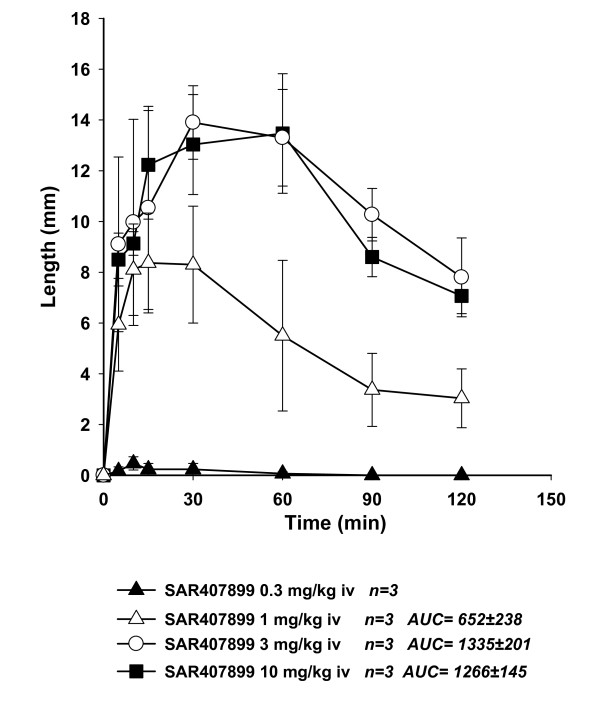 Dose-dependent effect of intravenous SAR407899 on penile erection in normal rabbits.J Transl Med.2012 Mar 23;10:59. |
|---|
Penile erection in diabetic rabbits after oral SAR407899 in comparison with sildenafil.J Transl Med.2012 Mar 23;10:59. |
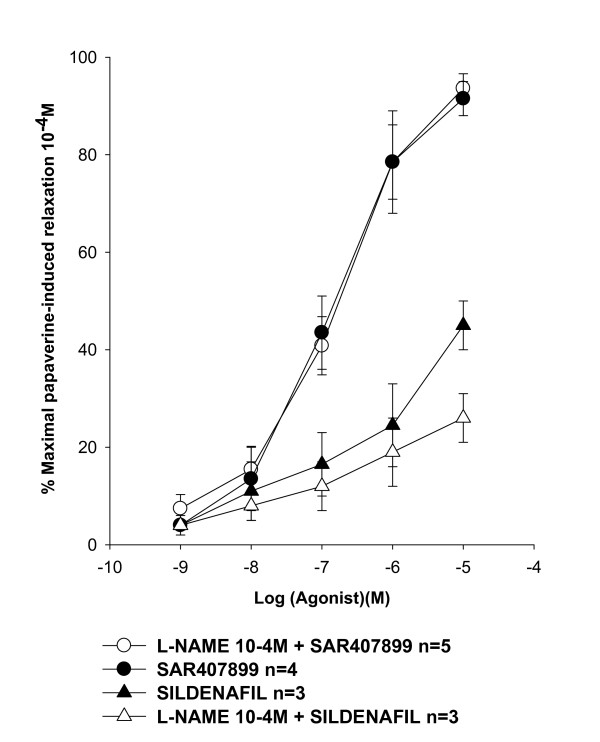 Semilogaritmic plot of molar concentrations of SAR407899 against in vitro relaxation of human 3 μM phenylephrine-precontracted corpus cavernosum. |
Products are for research use only; We do not sell to patients
Copyright 2020 InvivoChem LLC | All Rights Reserved


 COA
COA