| Size | Price | Stock | Qty |
|---|---|---|---|
| 5mg |
|
||
| 10mg |
|
||
| 25mg |
|
||
| 50mg |
|
||
| 100mg |
|
||
| 250mg |
|
||
| 500mg |
|
||
| Other Sizes | |||
| 10 mM * 1 mL in DMSO |
Purity: ≥98%
| Targets |
NAT10/N-acetyltransferase 10
Remodelin HBr targets N-acetyltransferase 10 (NAT10) (IC50 = 1.1 μM) [1] |
|---|---|
| ln Vitro |
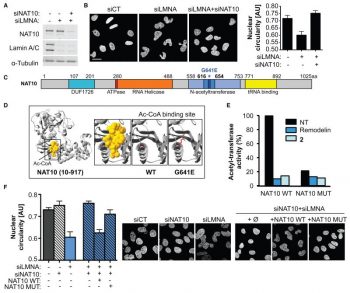
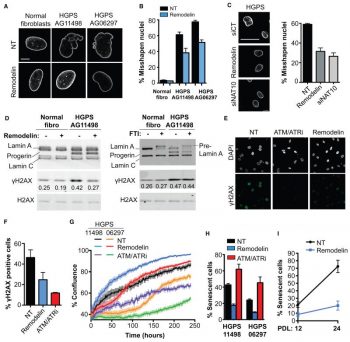
Remodelin hydrobromide (10-40 μM, 1-7 days) suppresses NAT10 activity and cell proliferation in a dose-dependent manner in AR-positive and AR-negative prostate cancer cells [2]. Remodelin hydrobromide (20 μM, 24 hours) inhibits NAT10 and decreases DNA replication in prostate cancer cells [2]. In LmnaG609G/G609G fibroblasts, remodelin hydrobromide (1 μM, 7 days) decreases nuclear morphological defects and promotes genome stability [3].
- Remodelin corrects nuclear shape defects in laminopathic cells (e.g., fibroblasts from patients with Hutchinson-Gilford progeria syndrome, HGPS) by inhibiting NAT10. Treatment with 1 μM Remodelin for 72 hours reduces the percentage of cells with abnormal nuclear morphology, increases lamin A/C levels at the nuclear envelope, and improves chromatin organization [1] - In prostate cancer cell lines (DU145, PC-3), Remodelin (5 μM, 10 μM) inhibits cell proliferation, colony formation, and migration in a dose-dependent manner. It downregulates proteins involved in DNA replication (e.g., CDC6, MCM2) and induces cell cycle arrest at the G1 phase, as detected by flow cytometry and western blot [2] - In human hepatocellular carcinoma (HCC) cell lines (HepG2, Huh7) resistant to doxorubicin, Remodelin (5 μM) reverses drug resistance by suppressing the epithelial-to-mesenchymal transition (EMT). It decreases the expression of EMT-related transcription factors (e.g., Snail, Twist) and mesenchymal markers (e.g., N-cadherin), while increasing epithelial markers (e.g., E-cadherin) as shown by western blot and qPCR [4] In LMNA mutant fibroblasts (laminopathic cells), Remodelin HBr treatment (1–10 μM) corrects nuclear shape abnormalities, restores heterochromatin organization at the nuclear periphery, and reduces abnormal RNA synthesis. It also rescues the defective nucleocytoplasmic transport and nuclear pore complex distribution in these cells [1] - In human prostate cancer cell lines (DU145, PC3, LNCaP), Remodelin HBr (5–20 μM) inhibits cell proliferation in a concentration-dependent manner, induces G1/S phase cell cycle arrest, and reduces colony formation ability. It downregulates the expression of DNA replication-related genes (MCM2, MCM5, CDC6) and proteins (PCNA, Cyclin E1) via NAT10 inhibition [2] - In senescent human fibroblasts (HDFs) and laminopathic patient-derived fibroblasts, Remodelin HBr (5 μM) decreases the expression of senescence markers (p16INK4a, p21CIP1), reduces reactive oxygen species (ROS) production, and improves cell viability [3] - In human hepatocellular carcinoma (HCC) cell lines (HepG2, Huh7) with doxorubicin resistance, Remodelin HBr (2.5–10 μM) reverses epithelial-to-mesenchymal transition (EMT): it upregulates E-cadherin expression and downregulates N-cadherin, Vimentin, and Snail expression. This reversal enhances the sensitivity of HCC cells to doxorubicin, reducing the IC50 of doxorubicin by ~50% [4] |
| ln Vivo |
Remodelin hydrobromide (2 or 20 mg/kg, intraperitoneally, once every two days for 4 weeks) effectively decreases the growth of AR-negative prostate cancer in a tumor xenograft nude mice model [2]. Remodelin hydrobromide (100 mg/kg, oral) inhibits NAT10 and dramatically increases healthy lifespan in the LmnaG609G/G609G mouse premature aging syndrome (HGPS) model [3]. Remodelin hydrobromide (5 mg/kg, oral) revealed a T1/2 of 1.81 hours and an oral bioavailability (F%) of 43.5% in mice [3]. Pharmacokinetic characteristics for Remodelin hydrobromide in Mice[1] Route Dose (mg/kg) T1/2 (h) Tmax (h) Cmax (ng/mL) AUC0-t (ng/h/mL) AUC0-Ꝏ (ng/h /mL) MRT_last (h) F(%) po 5 1.81 0.25 409 235 259 0.84 43.5%
- In a mouse model of HGPS (LmnaG609G/G609G mice), oral administration of Remodelin improves healthspan. Treatment from 4 weeks of age at a dose of 100 mg/kg/day increases grip strength, reduces kyphosis, delays the onset of gait abnormalities, and extends the median survival by ~15% compared to vehicle controls. Histological analysis shows improved nuclear morphology in kidney and muscle tissues [3] - In a xenograft model of prostate cancer (DU145 cells implanted in nude mice), intraperitoneal injection of Remodelin (20 mg/kg, twice weekly for 4 weeks) significantly reduces tumor volume and weight. Tumor tissues exhibit decreased expression of CDC6 and MCM2, and increased apoptotic cells as detected by TUNEL assay [2] In LMNA G609G transgenic mice (a model of human accelerated aging syndrome), intraperitoneal administration of Remodelin HBr (50 mg/kg/day) for 8 weeks extends the healthspan: it improves grip strength, reduces kyphosis severity, delays the onset of cataracts, and normalizes the nuclear morphology of hepatocytes and fibroblasts. The treatment also restores the expression of heterochromatin markers (H3K9me3) in liver tissues and reduces systemic inflammation (decreased TNF-α, IL-6 levels) [3] - In a subcutaneous xenograft model of prostate cancer (DU145 cells implanted in nude mice), intraperitoneal injection of Remodelin HBr (30 mg/kg/day) for 21 days significantly inhibits tumor growth (tumor volume reduced by ~60% compared to control) and downregulates NAT10, PCNA, and Cyclin E1 expression in tumor tissues [2] - In a doxorubicin-resistant HCC xenograft model (HepG2/ADR cells implanted in nude mice), combined treatment with Remodelin HBr (25 mg/kg/day, intraperitoneal) and doxorubicin (2 mg/kg/week, intravenous) for 4 weeks inhibits tumor growth more effectively than either agent alone (tumor weight reduced by ~75% vs. control, ~40% vs. doxorubicin alone). The combination also reverses EMT in tumor tissues and reduces Snail expression [4] |
| Enzyme Assay |
Lysine acetyltransferase (KAT) assay.[1]
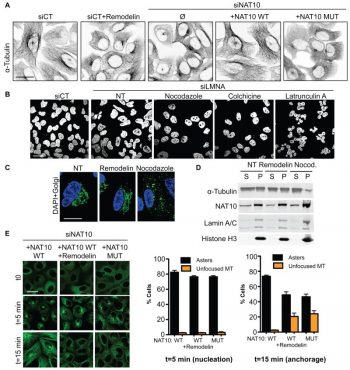
The KAT assay was performed using the Fluorescent HAT Assay kit using NAT10 purified from HEK293 cells and 5 μg of purified MAP enriched Tubulin Porcine as a substrate. Remodelin and clickable molecule 2 were used at 50 μM. [1] Circular Dichroism Spectroscopy.[1] CD experiments were performed using a Chirascan Circular Dichroism Spectrophotometer. 200 μl of purified FLAG-NAT10 at a final concentration of 10 μM in TBS + 0.1 % NP-40 was placed in a quartz cuvette with an optical path length of 1 mm, transferred to the spectrophotometer. CD scans were recorded at 25°C over the wavelength range of 180 to 350 nm with a 1s response time, 1 nm pitch and 1.5-nm bandwidth. Compound 1 solubilized in DMSO was added and the solution was incubated for 5 min before recording scans. CD spectra were buffer subtracted, zero corrected at 300 nm and normalized (Molar ellipticity θ is quoted in 105 deg cm2 dmol−1). - Recombinant NAT10 protein is incubated with Remodelin at various concentrations (0.1-10 μM) in a reaction buffer containing acetyl-CoA and a fluorescently labeled RNA substrate. The acetyltransferase activity of NAT10 is measured by detecting the fluorescent signal emitted by the acetylated product. The IC50 value is calculated based on the dose-response curve of enzyme inhibition [1] Recombinant NAT10 protein was incubated with a synthetic RNA substrate (corresponding to the 5' end of 18S rRNA) and acetyl-CoA (including radiolabeled acetyl group) in reaction buffer. Remodelin HBr was added at concentrations ranging from 0.1 to 10 μM, and the mixture was incubated at 37°C for 1 hour. The reaction was terminated by adding SDS buffer, and the RNA was purified by phenol-chloroform extraction. The radioactivity of the purified RNA was measured by liquid scintillation counting to quantify NAT10-mediated RNA acetylation. The inhibition rate was calculated relative to the vehicle control, and the IC50 value was determined by nonlinear regression analysis [1] - A fluorescence-based assay was used to detect NAT10 activity. NAT10 protein, fluorescently labeled peptide substrate, and acetyl-CoA were mixed with Remodelin HBr (0.05–20 μM) in assay buffer. After incubation at 30°C for 30 minutes, the fluorescence intensity (excitation 485 nm, emission 520 nm) was measured to reflect the acetylation level of the substrate. The half-maximal inhibitory concentration (IC50) was calculated based on the dose-response curve [2] |
| Cell Assay |
Cell Proliferation Assay[2]
Cell Types: Prostate cancer cell lines VCaP, PC3, and DU145 Tested Concentrations: 0,10,20,40 μM Incubation Duration: 1,2,7 days Experimental Results: Inhibited NAT10 and suppressed the growth of both AR- positive and AR-negative prostate cancer cells. Displayed Dramatically diminished cell proliferation activity over time, compared to the control group. diminished colony formation ability with a dose-dependent manner. Immunofluorescence[2] Cell Types: Prostate cancer cell lines VCaP, PC3, and DU145 Tested Concentrations: 20 μM Incubation Duration: 24 h Experimental Results: demonstrated a significant decrease in both the positive labeling rate and the fluorescence intensity compared to the control group. Dramatically decreased both the staining foci of IdU and the staining foci of CldU compared to control group. Western Blot Analysis[3] Cell Types: Skin fibroblasts from LmnaG609G/G609G and wildtype (WT) littermates Tested Concentrations: 1 μM Incubation Duration: 7 days Experimental Results: diminished the higher level of the DNA double-strand b - For laminopathic cells: Patient-derived fibroblasts are seeded and treated with Remodelin (0.1-5 μM) for 72 hours. Nuclear morphology is assessed by immunofluorescence staining of lamin A/C and DAPI. The percentage of cells with abnormal nuclei is quantified, and chromatin organization is analyzed by confocal microscopy [1] - For prostate cancer cells: DU145/PC-3 cells are treated with Remodelin (5 μM, 10 μM) for 24-72 hours. Cell viability is measured by CCK-8 assay; colony formation is assessed by plating cells in soft agar and counting colonies after 14 days. Migration is evaluated using transwell assays. Western blot and qPCR are used to detect proteins/genes related to DNA replication and cell cycle [2] - For doxorubicin-resistant HCC cells: HepG2/Huh7 cells are pretreated with Remodelin (5 μM) for 24 hours, then exposed to doxorubicin. Cell viability is measured by MTT assay to determine reversal of resistance. EMT markers are analyzed by western blot and qPCR, and cell migration/invasion are assessed by transwell assays [4] Nuclear morphology analysis: Laminopathic fibroblasts or cancer cells were seeded on coverslips, cultured overnight, and treated with Remodelin HBr (1–10 μM) for 48 hours. Cells were fixed with paraformaldehyde, permeabilized with Triton X-100, and stained with anti-Lamin A/C antibody and DAPI. Fluorescence images were captured by confocal microscopy, and nuclear shape irregularity was quantified by measuring the nuclear circularity (n ≥ 100 cells per group) [1,3] - Cell proliferation and viability assay: Cancer cells (5×10³ per well) were seeded in 96-well plates, treated with Remodelin HBr (0.5–40 μM) for 48–72 hours. Cell viability was detected by CCK-8 assay (absorbance measured at 450 nm), and the half-maximal inhibitory concentration (IC50) for proliferation was calculated. For colony formation assay, cells (1×10³ per well) were seeded in 6-well plates, treated with Remodelin HBr (2.5–10 μM) for 14 days, stained with crystal violet, and colonies with >50 cells were counted [2,4] - Cell cycle analysis: Prostate cancer cells or HCC cells were treated with Remodelin HBr (5–15 μM) for 24 hours, harvested by trypsinization, fixed with 70% ethanol at -20°C overnight, stained with PI/RNase solution for 30 minutes at room temperature, and analyzed by flow cytometry to determine the distribution of cells in G0/G1, S, and G2/M phases [2,4] - Western blot analysis: Cells treated with Remodelin HBr (2.5–20 μM) for 24–48 hours were lysed to extract total protein. Equal amounts of protein were subjected to SDS-PAGE electrophoresis, transferred to PVDF membranes, and blocked with non-fat milk. Membranes were incubated with primary antibodies against NAT10, PCNA, Cyclin E1, E-cadherin, N-cadherin, Vimentin, p16INK4a, p21CIP1, or GAPDH (loading control) overnight at 4°C, followed by secondary antibody incubation for 1 hour at room temperature. Protein bands were visualized by chemiluminescence, and band intensity was quantified by ImageJ software [1,2,3,4] - RT-PCR analysis: Total RNA was extracted from treated cells using TRIzol reagent, reverse-transcribed into cDNA. Quantitative real-time PCR was performed with specific primers for MCM2, MCM5, CDC6, Snail, or GAPDH (reference gene). The relative mRNA expression levels were calculated using the 2-ΔΔCt method [2,4] |
| Animal Protocol |
- For HGPS mice: Remodelin is dissolved in 0.5% methylcellulose and administered orally via gavage at 100 mg/kg/day, starting from 4 weeks of age until the end of the study. Mice are monitored weekly for grip strength, kyphosis severity, and gait. Survival is recorded, and tissues are collected for histological and immunofluorescence analysis [3]
- For prostate cancer xenografts: Nude mice bearing DU145 tumors are randomized into control and treatment groups. Remodelin is dissolved in DMSO and diluted in PBS, then injected intraperitoneally at 20 mg/kg twice weekly for 4 weeks. Tumor volume is measured every 3 days, and tumors are harvested for western blot and TUNEL assay [2] Animal/Disease Models: PC-3 cells tumor xenograft model in nude athymic BALB/c nu/nu (nude) mice[2] Doses: 2 or 20 mg /kg Route of Administration: intraperitoneal (ip)injection, once every two days for 4 weeks Experimental Results: Dramatically decreased AR-negative prostate cancer tumor growth. In the high-dose group, xenograft tumor weight at the endpoint was much smaller than that in the low -dose group. Animal/Disease Models: LmnaG609G/G609G hutchinson-gilford progeria syndrome (HGPS) mouse model[3] Doses: 100 mg/kg Route of Administration: po (oral gavage), daily schedule for 3 weeks of age onward, until the end- point Experimental Results: Ameliorated age-dependent weight loss. Ameliorated cardiac pathology. Led to the dramatic amelioration of HGPS cardiac pathologies, including reduction of adventitial fibrosis of the aorta, rescue of vascular smooth muscle cell loss, and salvage of smooth muscle actin (SMA) loss, both in the aorta and the coronary arteries. Animal/Disease Models: WT Mice (pharmacokinetic/PK assay)[3] Doses: 5 mg/kg Route of Administration: Oral gavage LMNA G609G transgenic mice (6-week-old, male and female) were randomly divided into control and treatment groups (n = 10 per group). Remodelin HBr was dissolved in PBS containing 5% DMSO and 10% Tween 80, and administered via intraperitoneal injection at a dose of 50 mg/kg once daily for 8 weeks. Control mice received the same volume of vehicle. During the treatment period, grip strength was measured weekly, and kyphosis was scored every 2 weeks. At the end of the experiment, mice were euthanized, and liver, skin, and fibroblast samples were collected for histological and molecular analysis [3] - Prostate cancer xenograft model: Nude mice (4-week-old, male) were subcutaneously injected with DU145 cells (5×10⁶ cells/mouse) into the right flank. When tumors reached a volume of ~100 mm3, mice were randomly assigned to control (n = 8) and Remodelin HBr treatment (n = 8) groups. Remodelin HBr was dissolved in 0.9% saline containing 2% DMSO, administered via intraperitoneal injection at 30 mg/kg once daily for 21 days. Tumor volume was measured every 3 days using a caliper (volume = length × width2 / 2). Mice were euthanized, and tumors were excised, weighed, and stored for Western blot and immunohistochemical analysis [2] - HCC doxorubicin-resistant xenograft model: Nude mice (4-week-old, male) were subcutaneously implanted with HepG2/ADR cells (1×10⁷ cells/mouse). When tumors reached ~150 mm3, mice were divided into four groups (n = 6 per group): control, doxorubicin alone (2 mg/kg, intravenous injection once weekly), Remodelin HBr alone (25 mg/kg, intraperitoneal injection once daily), and combination group. Remodelin HBr was dissolved in PBS with 3% DMSO, and treatment lasted for 4 weeks. Tumor volume and mouse body weight were recorded every 3 days. After euthanasia, tumors were collected for EMT marker detection and histological examination [4] |
| Toxicity/Toxicokinetics |
In a mouse model of progeria, a daily dose of 100 mg/kg of Remodelin did not show significant toxicity; body weight and liver and kidney function remained normal.[3] - In nude mice treated with Remodelin (20 mg/kg, intraperitoneal injection), no significant weight loss or organ damage was observed.[2] In acute toxicity assessment, mice were given a single intraperitoneal injection of Remodelin HBr (up to 200 mg/kg). No death or significant toxic symptoms (e.g., lethargy, weight loss, diarrhea) were observed within 7 days. Serum biochemical analysis showed no significant changes in ALT, AST, BUN, or creatinine levels compared to control mice.[3] - In a long-term toxicity study (LMNA G609G mice were given an intraperitoneal injection of 50 mg/kg/day for 8 weeks), histological examination of the liver, kidneys, heart, and spleen tissues revealed no abnormal lesions or inflammation. The weight gain in the treatment group was comparable to that in the control group, indicating no systemic toxicity [3] - No significant weight loss or behavioral abnormalities were observed in nude mice treated with Remodelin HBr (30 mg/kg/day for 21 days or 25 mg/kg/day for 4 weeks). Immunohistochemical staining of tumor-adjacent normal tissues (liver, kidney) showed no signs of tissue damage or inflammatory cell infiltration [2,4]
|
| References |
|
| Additional Infomation |
Remodelin is a small molecule inhibitor of NAT10, a nucleolar acetyltransferase involved in rRNA acetylation and nuclear structure maintenance. Its mechanism of action is to correct nuclear abnormalities by regulating NAT10-mediated protein acetylation involved in nuclear membrane integrity [1]. Remodelin has shown potential therapeutic effects in aging-related diseases (e.g., progeria) and cancers (prostate cancer, hepatocellular carcinoma) by targeting the NAT10-dependent pathway [2,3,4]. Remodelin HBr is a small molecule inhibitor of NAT10, a nucleolar acetyltransferase that mediates N4-acetylation of cytosine residues in rRNA. Its mechanism of action involves inhibiting NAT10-dependent rRNA acetylation, thereby regulating ribosome biosynthesis and nuclear structure [1]
-Remodelin HBr is the hydrobromide form of Remodelin, which is more water-soluble than the parent compound, making it easier to administer to cells in vitro and to animals in vivo [1,3] -In lamininopathy cells, Remodelin HBr corrects nuclear defects by restoring the correct localization of laminin A/C and nuclear pore complexes, which are disrupted in diseases caused by LMNA mutations (e.g., progeria) [1] -In cancer cells, Remodelin HBr exerts antitumor effects by inhibiting NAT10-mediated DNA replication (prostate cancer) or reversing EMT (hepatocellular carcinoma) and can enhance the efficacy of chemotherapeutic drugs. (Doxorubicin) is used for drug-resistant tumors [2,4] |
| Molecular Formula |
C15H15BRN4S
|
|
|---|---|---|
| Molecular Weight |
363.28
|
|
| Exact Mass |
362.02
|
|
| Elemental Analysis |
C, 49.59; H, 4.16; Br, 22.00; N, 15.42; S, 8.83
|
|
| CAS # |
1622921-15-6
|
|
| Related CAS # |
Remodelin;949912-58-7
|
|
| PubChem CID |
86280479
|
|
| Appearance |
Light yellow to yellow solid
|
|
| LogP |
5.054
|
|
| Hydrogen Bond Donor Count |
2
|
|
| Hydrogen Bond Acceptor Count |
5
|
|
| Rotatable Bond Count |
3
|
|
| Heavy Atom Count |
21
|
|
| Complexity |
397
|
|
| Defined Atom Stereocenter Count |
0
|
|
| SMILES |
Br[H].S1C([H])=C(C2C([H])=C([H])C(C#N)=C([H])C=2[H])N=C1N([H])/N=C1/C([H])([H])C([H])([H])C([H])([H])C/1([H])[H]
|
|
| InChi Key |
XNWBCMSPDCSWSD-UHFFFAOYSA-N
|
|
| InChi Code |
InChI=1S/C15H14N4S.BrH/c16-9-11-5-7-12(8-6-11)14-10-20-15(17-14)19-18-13-3-1-2-4-13;/h5-8,10H,1-4H2,(H,17,19);1H
|
|
| Chemical Name |
4-[2-(2-Cyclopentylidenehydrazinyl)-4-thiazolyl]benzonitrile Hydrobromide
|
|
| Synonyms |
|
|
| HS Tariff Code |
2934.99.9001
|
|
| Storage |
Powder -20°C 3 years 4°C 2 years In solvent -80°C 6 months -20°C 1 month Note: Please store this product in a sealed and protected environment, avoid exposure to moisture. |
|
| Shipping Condition |
Room temperature (This product is stable at ambient temperature for a few days during ordinary shipping and time spent in Customs)
|
| Solubility (In Vitro) |
DMSO: 72 mg/mL (198.2 mM)
Water: 1 mg/mL (Insoluble) Ethanol: 1 mg/mL |
|---|---|
| Solubility (In Vivo) |
Solubility in Formulation 1: 10 mg/mL (27.53 mM) in 15% Cremophor EL + 85% Saline (add these co-solvents sequentially from left to right, and one by one), suspension solution; with sonication.
Preparation of saline: Dissolve 0.9 g of sodium chloride in 100 mL ddH₂ O to obtain a clear solution. Solubility in Formulation 2: ≥ 2.5 mg/mL (6.88 mM) (saturation unknown) in 10% DMSO + 40% PEG300 + 5% Tween80 + 45% Saline (add these co-solvents sequentially from left to right, and one by one), clear solution. For example, if 1 mL of working solution is to be prepared, you can add 100 μL of 25.0 mg/mL clear DMSO stock solution to 400 μL PEG300 and mix evenly; then add 50 μL Tween-80 to the above solution and mix evenly; then add 450 μL normal saline to adjust the volume to 1 mL. Preparation of saline: Dissolve 0.9 g of sodium chloride in 100 mL ddH₂ O to obtain a clear solution. View More
Solubility in Formulation 3: ≥ 2.5 mg/mL (6.88 mM) (saturation unknown) in 10% DMSO + 90% (20% SBE-β-CD in Saline) (add these co-solvents sequentially from left to right, and one by one), clear solution. Solubility in Formulation 4: ≥ 2.5 mg/mL (6.88 mM) (saturation unknown) in 10% DMSO + 90% Corn Oil (add these co-solvents sequentially from left to right, and one by one), clear solution. For example, if 1 mL of working solution is to be prepared, you can add 100 μL of 25.0 mg/mL clear DMSO stock solution to 900 μL corn oil and mix evenly. |
| Preparing Stock Solutions | 1 mg | 5 mg | 10 mg | |
| 1 mM | 2.7527 mL | 13.7635 mL | 27.5270 mL | |
| 5 mM | 0.5505 mL | 2.7527 mL | 5.5054 mL | |
| 10 mM | 0.2753 mL | 1.3763 mL | 2.7527 mL |
*Note: Please select an appropriate solvent for the preparation of stock solution based on your experiment needs. For most products, DMSO can be used for preparing stock solutions (e.g. 5 mM, 10 mM, or 20 mM concentration); some products with high aqueous solubility may be dissolved in water directly. Solubility information is available at the above Solubility Data section. Once the stock solution is prepared, aliquot it to routine usage volumes and store at -20°C or -80°C. Avoid repeated freeze and thaw cycles.
Calculation results
Working concentration: mg/mL;
Method for preparing DMSO stock solution: mg drug pre-dissolved in μL DMSO (stock solution concentration mg/mL). Please contact us first if the concentration exceeds the DMSO solubility of the batch of drug.
Method for preparing in vivo formulation::Take μL DMSO stock solution, next add μL PEG300, mix and clarify, next addμL Tween 80, mix and clarify, next add μL ddH2O,mix and clarify.
(1) Please be sure that the solution is clear before the addition of next solvent. Dissolution methods like vortex, ultrasound or warming and heat may be used to aid dissolving.
(2) Be sure to add the solvent(s) in order.
Inhibiting NAT10 activity by Remodelin mediates nuclear shape rescue of LMNA depleted cells. Science. 2014 May 2;344(6183):527-32. |
Remodelin targets NAT10 to improve nuclear shape and fitness of HGPS cells. Science. 2014 May 2;344(6183):527-32. |
Inhibiting NAT10 acetyltransferase activity modifies microtubule organisation to rescue nuclear shape defects. Science. 2014 May 2;344(6183):527-32. |
Products are for research use only; We do not sell to patients
Copyright 2020 InvivoChem LLC | All Rights Reserved


 COA
COA