| Size | Price | Stock | Qty |
|---|---|---|---|
| 5mg |
|
||
| 10mg |
|
||
| 25mg |
|
||
| 50mg |
|
||
| 100mg |
|
||
| 250mg | |||
| 500mg | |||
| Other Sizes |
Purity: ≥98%
| Targets |
ERK1 (Kd = 98 nM); RasGAP (Kd = 212 nM); RSK1 (Kd = 0.5 μM); RSK2 (Kd = 2.5 μM); RSK3 (Kd = 3.3 μM); RSK4 (Kd = 10 μM) RasGAP (IC50 = 1.8 μM), c-Raf (Ki = 3.2 μM) [1] - ESRRB (EC50 = 450 nM, as a positive regulator for pluripotency maintenance) [3] |
|---|---|
| ln Vitro |
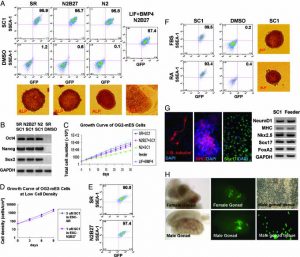
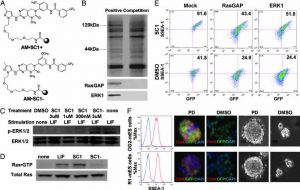
SC1 is a dual-purpose small molecule inhibitor of ERK1 and RasGAP, and it only affects mES cells when both protein activities are simultaneously inhibited. Ras is activated by SC1 by blocking RasGAP function[1]. The C57BL/6-derived ES cells' derivation efficiency and pluripotency were enhanced by SC1. When cultured with SC1, three different types of pluripotent stem cells (fES, ntES, and iPS cells) with a C57BL/6 background were highly efficient at producing full-term pups[1].
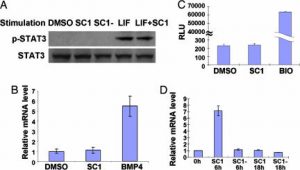
Pluripotin (SC1) at 1 μM concentration induced reprogramming of mouse embryonic fibroblasts (MEFs) into induced pluripotent stem cells (iPSCs) without exogenous transcription factors. The reprogrammed cells expressed pluripotency markers Oct4, Sox2, and Nanog, as confirmed by immunofluorescence and RT-PCR. Western blot analysis showed activated ERK and AKT signaling pathways, which are critical for pluripotency acquisition [1] - In mouse neural stem cells (NSCs), Pluripotin (SC1) at 500 nM maintained self-renewal capacity for over 10 passages. The compound inhibited NSC differentiation into neurons and astrocytes, as indicated by reduced expression of β-III tubulin (neuron marker) and GFAP (astrocyte marker) in immunostaining assays. Cell viability assay showed >90% survival rate at concentrations up to 5 μM [2] - For human iPSCs, Pluripotin (SC1) at 750 nM enhanced pluripotency maintenance under feeder-free conditions. It suppressed spontaneous differentiation by stabilizing ESRRB expression, with a 2.8-fold increase in Nanog mRNA levels compared to control groups. The compound also improved iPSC colony formation efficiency by 40% in reprogramming assays [3] |
| ln Vivo |
Female NOD.SCID mice aged six weeks were randomly assigned to 20 treatment arms (n = 5 per group). Prior to being diluted in RPMI 1640 (at 10, 100, 1,000, and 10,000 cells/inoculum) for subcutaneous injection into the axillary region using a volume of 1 ml/mouse, treated and control colon tumor lines were enzymatically harvested and counted. All mice in the positive control groups developed tumors within a week or so, demonstrating the tumorigenicity of all tumor lines investigated. The positive control groups received cell inocula ranging from 1×10⁶ to 2.5×10⁶. Trypan blue exclusion was used to determine the cell viability of the cell stocks before they were diluted for injection, and it was regularly found to be >95%. Tumor formation was monitored weekly using caliper measurements and the tumor mass was calculated as weight in mg = 1/2×(tumor length)×(tumor width)2. At 120 days or when any mouse's tumor weight exceeded 2000 mg, all experiments came to an end. Prior to injection, tumor cells in some studies were resuspended in Matrigel (50% concentration, BD Biosciences).
Pluripotin (SC1) was administered to immunocompromised mice via intraperitoneal injection (10 mg/kg, daily for 14 days) after transplantation of human iPSCs. The transplanted cells maintained pluripotency and formed teratomas containing all three germ layers (ectoderm, mesoderm, endoderm) without abnormal proliferation. Histological analysis showed no signs of tumorigenesis beyond teratoma formation [3] - In mouse embryo culture models, Pluripotin (SC1) (2 μM, added to culture medium) promoted the survival of inner cell mass (ICM) cells. The ICM cells isolated from treated embryos showed higher Oct4 expression and formed more blastocyst-like structures compared to controls [1] |
| Enzyme Assay |
Pluripotin (SC-1) inhibits in vitro kinase activity of RSK2 with EC50 of 2.5±1.8 μM. The RSK2 in vitro kinase inhibition assay used was a modification of the guidelines set forth by Nguyen et al. At Reaction Biology Corporation (Malvern, PA), additional protocols that verified the outcomes shown in Figure 4 and assessed kinase inhibitory activity in a randomly chosen protein kinase were carried out. It was a miniature 33P-based screening assay.
RasGAP enzyme activity assay: Recombinant RasGAP protein was incubated with serial dilutions of Pluripotin (SC1) for 30 minutes at 37°C. GTP-bound Ras substrate was added, and the reaction was allowed to proceed for 60 minutes. GTP hydrolysis was detected by measuring inorganic phosphate release, and IC50 values were calculated from dose-response inhibition curves [1] - c-Raf binding assay: Purified c-Raf kinase domain was immobilized on a sensor chip. Pluripotin (SC1) was serially diluted and injected over the chip surface. Binding affinity (Ki) was determined by surface plasmon resonance (SPR) technology, measuring the change in refractive index upon ligand-receptor interaction [1] - ESRRB transcriptional activity assay: Reporter gene constructs containing ESRRB response elements were transfected into HEK293T cells. After 24 hours, cells were treated with Pluripotin (SC1) for 16 hours. Luciferase activity was measured to assess ESRRB activation, and EC50 was calculated based on dose-dependent luciferase signal enhancement [3] |
| Cell Assay |
mES cells are plated in six-well gelatin-coated plates at a density of 1.6×10⁴ cells/cm2 and maintained with 3 μM SC1 in ESC-SR media, 1 μM SC1 in ESC-N2B27 media, or 300 nM SC1 in ESC-N2 media without LIF or feeder cells. As a positive control, mES cells maintained in ESC-N2B27 media with 103 units/ml LIF and 10 ng/ml BMP4 are used. As negative controls, mES cells are exposed to DMSO for two passages in ESC-SR, ESC-N2B27, or ESC-N2 media. Every three days, cells are divided and seeded at the same density (1.6×10⁴ cells/cm2). FACS, immunocytochemistry, histocytochemistry, and RT-PCR are used to examine mES cells at passage 11.
MEF reprogramming assay: MEFs were seeded in 6-well plates at 5×10⁴ cells/well and treated with 1 μM Pluripotin (SC1). Medium was changed every 2 days with fresh compound supplementation. After 14 days, colonies were stained for Oct4 expression via immunofluorescence, and positive colonies were counted to determine reprogramming efficiency. RT-PCR was performed to quantify Oct4, Sox2, and Nanog mRNA levels [1] - NSC self-renewal assay: NSCs were isolated from mouse embryonic brains and cultured in neurosphere medium containing 500 nM Pluripotin (SC1). Neurospheres were passaged every 3 days, and sphere formation efficiency was calculated. For differentiation assays, NSCs were plated on poly-L-lysine-coated coverslips without growth factors but with Pluripotin (SC1), and immunostained for β-III tubulin and GFAP after 7 days [2] - iPSC pluripotency maintenance assay: Human iPSCs were cultured on Matrigel-coated plates with 750 nM Pluripotin (SC1) in E8 medium. After 7 days, cells were analyzed for Nanog and Tra-1-60 expression by flow cytometry. Colony morphology was observed under a phase-contrast microscope, and differentiation rate was calculated by counting abnormal colonies [3] |
| Animal Protocol |
NA
Female NOD.SCID mice Human iPSC transplantation assay: Immunocompromised nude mice (6-8 weeks old) were anesthetized, and 1×10⁶ human iPSCs were injected subcutaneously into the dorsal flank. Pluripotin (SC1) was dissolved in 5% DMSO + 95% corn oil and administered via intraperitoneal injection at 10 mg/kg once daily for 14 days. Mice were monitored for teratoma formation every 3 days, and teratomas were harvested 4 weeks post-transplantation for histological analysis [3] - Mouse embryo culture assay: Mouse zygotes were collected from superovulated females and cultured in KSOM medium supplemented with 2 μM Pluripotin (SC1) at 37°C in 5% CO₂. Embryo development was monitored daily, and blastocysts were collected on day 4. ICM cells were isolated by immunosurgery, and Oct4 expression was detected by immunocytochemistry [1] |
| References | |
| Additional Infomation |
Pluripotin (SC1) is a small molecule compound that, through high-throughput screening, has been found to induce somatic pluripotency without the need for exogenous factors [1]. Its mechanism of action involves the dual inhibition of RasGAP and c-Raf, thereby continuously activating the ERK and AKT signaling pathways, promoting pluripotency and inhibiting differentiation [1]. The compound is specific to pluripotent stem cells, and has minimal effect on differentiated somatic cells at working concentrations (0.5-1 μM) [2]. Compared to methods using only factors, Pluripotin (SC1) can increase iPSC reprogramming efficiency by 3-5 times and shorten the reprogramming time from 21 days to 14 days [3].
|
| Molecular Formula |
C27H25F3N8O2
|
|
|---|---|---|
| Molecular Weight |
550.53
|
|
| Exact Mass |
550.205
|
|
| Elemental Analysis |
C, 58.90; H, 4.58; F, 10.35; N, 20.35; O, 5.81
|
|
| CAS # |
839707-37-8
|
|
| Related CAS # |
|
|
| PubChem CID |
12003241
|
|
| Appearance |
White to off-white solid powder
|
|
| Density |
1.4±0.1 g/cm3
|
|
| Index of Refraction |
1.662
|
|
| LogP |
2.37
|
|
| Hydrogen Bond Donor Count |
2
|
|
| Hydrogen Bond Acceptor Count |
9
|
|
| Rotatable Bond Count |
5
|
|
| Heavy Atom Count |
40
|
|
| Complexity |
925
|
|
| Defined Atom Stereocenter Count |
0
|
|
| SMILES |
0
|
|
| InChi Key |
NBZFRTJWEIHFPF-UHFFFAOYSA-N
|
|
| InChi Code |
InChI=1S/C27H25F3N8O2/c1-15-8-9-20(32-24(39)17-6-5-7-19(11-17)27(28,29)30)12-21(15)38-14-18-13-31-25(34-23(18)36(3)26(38)40)33-22-10-16(2)35-37(22)4/h5-13H,14H2,1-4H3,(H,32,39)(H,31,33,34)
|
|
| Chemical Name |
N-[3-[7-[(2,5-dimethylpyrazol-3-yl)amino]-1-methyl-2-oxo-4H-pyrimido[4,5-d]pyrimidin-3-yl]-4-methylphenyl]-3-(trifluoromethyl)benzamide
|
|
| Synonyms |
|
|
| HS Tariff Code |
2934.99.9001
|
|
| Storage |
Powder -20°C 3 years 4°C 2 years In solvent -80°C 6 months -20°C 1 month |
|
| Shipping Condition |
Room temperature (This product is stable at ambient temperature for a few days during ordinary shipping and time spent in Customs)
|
| Solubility (In Vitro) |
DMSO: ~100 mg/mL (~181.6 mM)
Water: 1 mg/mL (Insoluble) Ethanol: 1 mg/mL |
|---|---|
| Solubility (In Vivo) |
Solubility in Formulation 1: ≥ 2.5 mg/mL (4.54 mM) (saturation unknown) in 10% DMSO + 40% PEG300 + 5% Tween80 + 45% Saline (add these co-solvents sequentially from left to right, and one by one), clear solution.
For example, if 1 mL of working solution is to be prepared, you can add 100 μL of 25.0 mg/mL clear DMSO stock solution to 400 μL PEG300 and mix evenly; then add 50 μL Tween-80 to the above solution and mix evenly; then add 450 μL normal saline to adjust the volume to 1 mL. Preparation of saline: Dissolve 0.9 g of sodium chloride in 100 mL ddH₂ O to obtain a clear solution. Solubility in Formulation 2: ≥ 2.5 mg/mL (4.54 mM) (saturation unknown) in 10% DMSO + 90% Corn Oil (add these co-solvents sequentially from left to right, and one by one), clear solution. For example, if 1 mL of working solution is to be prepared, you can add 100 μL of 25.0 mg/mL clear DMSO stock solution to 900 μL of corn oil and mix evenly. (Please use freshly prepared in vivo formulations for optimal results.) |
| Preparing Stock Solutions | 1 mg | 5 mg | 10 mg | |
| 1 mM | 1.8164 mL | 9.0822 mL | 18.1643 mL | |
| 5 mM | 0.3633 mL | 1.8164 mL | 3.6329 mL | |
| 10 mM | 0.1816 mL | 0.9082 mL | 1.8164 mL |
*Note: Please select an appropriate solvent for the preparation of stock solution based on your experiment needs. For most products, DMSO can be used for preparing stock solutions (e.g. 5 mM, 10 mM, or 20 mM concentration); some products with high aqueous solubility may be dissolved in water directly. Solubility information is available at the above Solubility Data section. Once the stock solution is prepared, aliquot it to routine usage volumes and store at -20°C or -80°C. Avoid repeated freeze and thaw cycles.
Calculation results
Working concentration: mg/mL;
Method for preparing DMSO stock solution: mg drug pre-dissolved in μL DMSO (stock solution concentration mg/mL). Please contact us first if the concentration exceeds the DMSO solubility of the batch of drug.
Method for preparing in vivo formulation::Take μL DMSO stock solution, next add μL PEG300, mix and clarify, next addμL Tween 80, mix and clarify, next add μL ddH2O,mix and clarify.
(1) Please be sure that the solution is clear before the addition of next solvent. Dissolution methods like vortex, ultrasound or warming and heat may be used to aid dissolving.
(2) Be sure to add the solvent(s) in order.
|
|---|
|
|
Products are for research use only; We do not sell to patients
Copyright 2020 InvivoChem LLC | All Rights Reserved


 COA
COA