| Size | Price | Stock | Qty |
|---|---|---|---|
| 100mg |
|
||
| 500mg |
|
||
| 1g |
|
||
| 2g |
|
||
| 5g | |||
| Other Sizes |
Purity: ≥98%
| Targets |
Pemetrexed Disodium Hydrate (formerly designated LY231514) targets three folate-dependent enzymes critical for nucleotide biosynthesis: thymidylate synthase (TS, Ki = 0.1 μM), dihydrofolate reductase (DHFR, Ki = 1.0 μM), and glycinamide ribonucleotide formyltransferase (GARFT, Ki = 0.05 μM). These Ki values were determined via in vitro enzyme inhibition assays using purified human recombinant enzymes [1]
|
|---|---|
| ln Vitro |
Pemetrexed (LY231514) disodium neoplasm is a novel family of classical antifolate medications whose anti-activity may result from its polyglutamate promoter's simultaneous and cooperative suppression of multiple essential folate enzyme needs. One of the most well-known enzyme FPGS substrates is pemetrexed (LY231514), with a Km of 1.6 μM and a Vmax/Km of 621. The selectivity and antitumor efficaciousness of LY231514 may be determined by its polyglutamate and polyglutamic acid auxiliaries. Although TS is inhibited by LY23l5l4 alone (Ki=340 nM in recombinant mice), LY23l5l4's glutamic acidity is strong. One of the most potent folic acid TS is LY231514, which is 100 times higher (Ki=3.4 nM) [1].
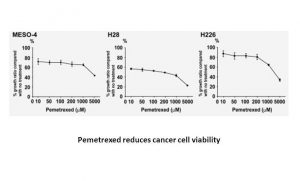
In non-small cell lung cancer (NSCLC) cell lines (A549, H460): Pemetrexed Disodium Hydrate exhibited concentration-dependent antiproliferative activity with IC50 values of 0.05 μM (A549) and 0.2 μM (H460) after 72-hour incubation (MTT assay). Western blot analysis showed that 0.1 μM Pemetrexed Disodium Hydrate reduced TS protein expression by 50%-60% in A549 cells, while PCR detected a 30%-40% downregulation of DHFR mRNA in H460 cells at 0.2 μM. Additionally, 0.1 μM of the drug increased apoptotic cell percentage (Annexin V-positive) from 5% (control) to 25% in A549 cells [1] - In murine regulatory T cells (Tregs) isolated from spleen: Pemetrexed Disodium Hydrate (0.1-1 μM) inhibited Treg proliferation in a concentration-dependent manner (CFSE dilution assay). At 0.5 μM, the proliferation rate of Tregs was reduced by 40% compared to untreated controls. Flow cytometry analysis showed no significant effect on Treg viability (PI-negative cells >90% at all tested concentrations), but 0.5 μM Pemetrexed Disodium Hydrate decreased the expression of Foxp3 (a Treg-specific transcription factor) by 30% [2] |
| ln Vivo |
Statistically speaking, the mice in the PC61 plus pemetrexed group survived longer than the other groups. According to survival analysis, mice treated with PC61 with pemetrexed had a considerably higher survival rate than mice treated with PC61 alone, rat IgG plus pemetrexed, or no therapy at all [2].
In nude mice bearing A549 (NSCLC) xenografts: Mice were randomized into two groups (n=6/group): vehicle control (0.9% saline + 0.1% DMSO) and Pemetrexed Disodium Hydrate (10 mg/kg, intravenous injection, twice weekly). After 4 weeks of treatment, the mean tumor volume in the drug group was 65% smaller than that in the control group (180 ± 25 mm³ vs. 520 ± 40 mm³). Immunohistochemical staining of tumor tissues revealed a 55% decrease in Ki-67 (proliferation marker) positive cells and a 40% increase in TUNEL (apoptosis marker) positive cells in the drug-treated group [1] - In C57BL/6 mice bearing murine malignant mesothelioma (AB12 cell line) xenografts: Mice were divided into four groups (n=8/group): (1) Control (PBS, intraperitoneal injection); (2) Pemetrexed Disodium Hydrate alone (20 mg/kg, intraperitoneal injection, once weekly); (3) Anti-CD25 antibody (Treg blocker) alone (200 μg/mouse, intraperitoneal injection, day 0 and day 7); (4) Pemetrexed Disodium Hydrate + Anti-CD25 antibody (same doses as single groups). Results: (1) Pemetrexed Disodium Hydrate alone reduced tumor volume by 35% and prolonged median survival by 5 days (21 days vs. 16 days, control); (2) The combination group showed 70% tumor volume reduction and 12-day median survival prolongation (28 days vs. 16 days). Flow cytometry of tumor-infiltrating lymphocytes showed that the combination decreased Treg percentage (CD4+Foxp3+) by 60% compared to control [2] |
| Enzyme Assay |
TS Activity Assay: The assay was performed in 50 mM Tris-HCl buffer (pH 7.5) containing 10 mM MgCl2, 0.1 mM [3H]-dUMP (substrate), and 0.5 mM N5,N10-methylenetetrahydrofolate (cofactor). Purified human TS (0.1 μg/well) was pre-incubated with Pemetrexed Disodium Hydrate (0.01-10 μM) at 37°C for 10 minutes. The reaction was initiated by adding substrate, incubated for 30 minutes, and terminated with 5% trichloroacetic acid. The radioactive precipitate ([3H]-dTMP) was collected on glass fiber filters and measured via liquid scintillation counting. The Ki value was calculated by fitting the inhibition curve to the Michaelis-Menten equation [1]
- DHFR Activity Assay: Reaction buffer (50 mM potassium phosphate, pH 7.0) contained 0.1 mM NADPH and 0.05 mM dihydrofolate (substrate). Purified human DHFR (0.05 μg/well) was mixed with Pemetrexed Disodium Hydrate (0.1-10 μM) and incubated at 25°C for 5 minutes. The reaction was started by adding substrate, and the decrease in absorbance at 340 nm (due to NADPH oxidation) was recorded every minute for 20 minutes. The Ki value was determined using Lineweaver-Burk plot analysis [1] - GARFT Activity Assay: The assay used 50 mM HEPES buffer (pH 7.4) with 5 mM ATP, 2 mM MgCl2, 0.1 mM GAR (substrate), and 0.05 mM 10-formyltetrahydrofolate (formyl donor). Purified human GARFT (0.2 μg/well) was pre-incubated with Pemetrexed Disodium Hydrate (0.005-5 μM) at 37°C for 15 minutes. The reaction was initiated by adding substrates, and the fluorescence of the product (formyl-GAR) was measured at excitation 340 nm/emission 460 nm. The Ki value was derived from the dose-response inhibition curve [1] |
| Cell Assay |
MTT Antiproliferation Assay (A549/H460 Cells): Cells were seeded in 96-well plates at 5×10³ cells/well in RPMI 1640 medium (10% fetal bovine serum) and incubated overnight. Pemetrexed Disodium Hydrate was added at concentrations of 0.01-1 μM, and cells were cultured for 72 hours at 37°C (5% CO2). 20 μL MTT solution (5 mg/mL in PBS) was added, and incubation continued for 4 hours. The supernatant was removed, 150 μL dimethyl sulfoxide was added to dissolve formazan crystals, and absorbance at 570 nm was measured. IC50 was calculated as the drug concentration inhibiting 50% cell viability [1]
- CFSE Dilution Assay (Murine Tregs): Tregs were isolated from mouse spleens using CD4+Foxp3+ magnetic beads and labeled with 5 μM CFSE. Labeled Tregs were cultured in 24-well plates (1×10⁵ cells/well) with anti-CD3/CD28 antibodies (stimulators) and Pemetrexed Disodium Hydrate (0.1-1 μM). After 72 hours, CFSE fluorescence intensity was measured via flow cytometry. Proliferation rate was calculated as the percentage of cells with reduced CFSE signal (divided cells) relative to control [2] - Clone Formation Assay (A549 Cells): A549 cells were seeded in 6-well plates at 200 cells/well and allowed to attach for 24 hours. Pemetrexed Disodium Hydrate was added at 0.05, 0.1, 0.2 μM, and cells were cultured for 14 days (medium changed every 3 days). Colonies were fixed with 4% paraformaldehyde (15 minutes) and stained with 0.1% crystal violet (30 minutes). Colonies with >50 cells were counted, and clone formation rate = (colonies in treatment/colonies in control) × 100% [1] |
| Animal Protocol |
Dissolved in DMSO and then diluted in water; 100, or 150 mg/kg; i.p. injection
EMT-6 mammary carcinoma, the human HCT 116 colon carcinoma, and the human H460 non-small cell lung carcinoma are injected s.c. into the nude mice. A549 Xenograft Model (Nude Mice): Female nude mice (6-8 weeks old, 18-22 g) were subcutaneously injected with 5×10⁶ A549 cells (suspended in 0.2 mL PBS/Matrigel 1:1) into the right flank. When tumors reached 100-150 mm³, mice were assigned to groups. Pemetrexed Disodium Hydrate was dissolved in 0.9% physiological saline containing 0.1% dimethyl sulfoxide and administered via intravenous injection at 10 mg/kg twice weekly for 4 weeks. Control mice received the same volume of vehicle. Tumor volume (length × width² / 2) and body weight were measured every 3 days. At study end, mice were euthanized, and tumors were excised for immunohistochemistry [1] - Malignant Mesothelioma Model (C57BL/6 Mice): Male C57BL/6 mice (6-8 weeks old, 20-24 g) were intraperitoneally injected with 1×10⁶ AB12 mesothelioma cells. On day 7 post-infection (tumor establishment), mice were grouped: (1) Control: PBS (intraperitoneal injection, once weekly); (2) Pemetrexed Disodium Hydrate: dissolved in PBS, 20 mg/kg, intraperitoneal injection, once weekly for 3 weeks; (3) Anti-CD25 antibody: dissolved in PBS, 200 μg/mouse, intraperitoneal injection on day 7 and day 14; (4) Combination: same doses/schedule as single groups. Mice were monitored for body weight (twice weekly) and survival (daily). At day 21, 3 mice per group were euthanized, and tumor tissues were collected for flow cytometry analysis of tumor-infiltrating lymphocytes [2] |
| ADME/Pharmacokinetics |
In nude mice treated with pemetrexed disodium hydrate (10 mg/kg, intravenously): plasma concentration-time curves conformed to a two-compartment model. Key parameters: terminal half-life (t1/2β) = 3.5 ± 0.4 h, area under the curve (AUC0-∞) = 25.6 ± 3.2 μg·h/mL, clearance (CL) = 0.4 ± 0.05 mL/h/g. Approximately 80% of the administered dose was excreted unchanged in the urine within 24 hours, confirming that renal excretion is the main route of clearance [1].
|
| Toxicity/Toxicokinetics |
Effects During Pregnancy and Lactation
◉ Overview of medication use during lactation Most sources suggest that mothers should not breastfeed while receiving high-dose antitumor drugs. Manufacturers recommend that mothers should not breastfeed during pemetrexed treatment and for one week after the last dose. Chemotherapy may adversely affect the normal microbiota and chemical composition of breast milk. [1] Women receiving chemotherapy during pregnancy are more likely to experience breastfeeding difficulties. [2] ◉ Effects on breastfed infants No relevant published information was found as of the revision date. ◉ Effects on lactation and breast milk No relevant published information was found as of the revision date. 28170295 In nude mice (A549 model): pemetrexed disodium hydrate (10 mg/kg, twice weekly) caused a transient 10%–12% weight loss during the first two weeks of treatment, which recovered by week four. Serum ALT (alanine aminotransferase), AST (aspartate aminotransferase), and creatinine (renal function marker) levels were not significantly different from those in the control group (p > 0.05) [1] - In C57BL/6 mice (mesothelioma model): Pemetrexed disodium hydrate (20 mg/kg, once weekly) caused mild, reversible neutropenia in week 2 (mean neutrophil count: 1.8 × 10⁹/L, compared to 2.5 × 10⁹/L in the control group) and returned to normal in week 3. No significant changes in liver and kidney function indicators or histological abnormalities were observed in the drug treatment group [2] - The plasma protein binding rate of pemetrexed disodium hydrate was determined in human plasma in vitro: 82%-85% of the drug was bound to plasma proteins, regardless of concentration (test concentration range: 0.1-10 μM) [1] |
| References |
|
| Additional Infomation |
Pemetrexed (2-) is a dicarboxylic acid dianion obtained by deprotonating the two carboxyl groups of pemetrexed. It is a dicarboxylic acid dianion and also an N-acyl-L-α-amino acid anion. It is the conjugate base of pemetrexed. Pemetrexed is a guanine-derived antitumor drug that acts as a nucleic acid synthesis inhibitor by binding to and inhibiting the activity of thymidine synthase. Drug Indications: Malignant pleural mesothelioma: Pemetrexed in combination with cisplatin is indicated for the treatment of patients with unresectable malignant pleural mesothelioma who have not previously received chemotherapy. Non-small cell lung cancer: Pemetrexed (Alimta) in combination with cisplatin is indicated for first-line treatment of patients with locally advanced or metastatic non-small cell lung cancer, excluding squamous cell-predominant histological types. Pemetrexed monotherapy is indicated for maintenance therapy in patients with locally advanced or metastatic non-small cell lung cancer whose disease has not immediately progressed after platinum-based chemotherapy, excluding squamous cell-predominant histological types. Pemetrexed monotherapy is indicated as second-line treatment for patients with locally advanced or metastatic non-small cell lung cancer, excluding squamous cell-predominant histological types. Pemetrexed disodium hydrate (LY231514) is a multi-target antifolate drug designed to overcome resistance to single-target antifolate drugs (such as methotrexate) by inhibiting three key enzymes in nucleotide synthesis. A 1997 study provided preclinical evidence supporting its development for the treatment of non-small cell lung cancer (NSCLC) [1] - In a 2010 study, the synergistic antitumor effect of pemetrexed disodium hydrate and anti-CD25 antibody was attributed to two mechanisms: (1) pemetrexed disodium hydrate inhibits tumor cell proliferation through metabolic interference; and (2) anti-CD25 antibody clears regulatory T cells (Tregs), reverses Treg-mediated immunosuppression, and enhances the antitumor immune response. This combined strategy laid the foundation for clinical trials of chemotherapy-immunotherapy for malignant mesothelioma [2]
|
| Molecular Formula |
C20H21N5O6.5/2H2O.2NA
|
|---|---|
| Molecular Weight |
516.42
|
| Exact Mass |
425.133
|
| CAS # |
357166-30-4
|
| Related CAS # |
Pemetrexed;137281-23-3;Pemetrexed disodium;150399-23-8
|
| PubChem CID |
135916113
|
| Appearance |
White to off-white solid powder
|
| LogP |
1.5
|
| Hydrogen Bond Donor Count |
4
|
| Hydrogen Bond Acceptor Count |
7
|
| Rotatable Bond Count |
7
|
| Heavy Atom Count |
31
|
| Complexity |
737
|
| Defined Atom Stereocenter Count |
1
|
| SMILES |
C1=CC(=CC=C1CCC2=CNC3=C2C(=O)NC(=N3)N)C(=O)N[C@@H](CCC(=O)[O-])C(=O)[O-]
|
| InChi Key |
QJVSMHJWAOSBMD-MYXYZBIASA-L
|
| InChi Code |
InChI=1S/C20H21N5O6.2Na.7H2O/c21-20-24-16-15(18(29)25-20)12(9-22-16)6-3-10-1-4-11(5-2-10)17(28)23-13(19(30)31)7-8-14(26)27;;;;;;;;;/h1-2,4-5,9,13H,3,6-8H2,(H,23,28)(H,26,27)(H,30,31)(H4,21,22,24,25,29);;;7*1H2/q;2*+1;;;;;;;/p-2/t13-;;;;;;;;;/m0........./s1
|
| Chemical Name |
sodium (S)-2-(4-(2-(2-amino-4-oxo-4,7-dihydro-1H-pyrrolo[2,3-d]pyrimidin-5-yl)ethyl)benzamido)pentanedioate heptahydrate.
|
| Synonyms |
LY-231514 Disodium Hydrate; LY231514; LY 231514; Pemetrexed, US brand name: ALIMTA
|
| HS Tariff Code |
2934.99.9001
|
| Storage |
Powder -20°C 3 years 4°C 2 years In solvent -80°C 6 months -20°C 1 month Note: Please store this product in a sealed and protected environment, avoid exposure to moisture. |
| Shipping Condition |
Room temperature (This product is stable at ambient temperature for a few days during ordinary shipping and time spent in Customs)
|
| Solubility (In Vitro) |
DMSO: 100 mg/mL (193.6 mM)
Water: 1 mg/mL (Insoluble) Ethanol: 1 mg/mL |
|---|---|
| Solubility (In Vivo) |
Solubility in Formulation 1: 33.33 mg/mL (64.54 mM) in PBS (add these co-solvents sequentially from left to right, and one by one), clear solution; with sonication.
(Please use freshly prepared in vivo formulations for optimal results.) |
| Preparing Stock Solutions | 1 mg | 5 mg | 10 mg | |
| 1 mM | 1.9364 mL | 9.6820 mL | 19.3641 mL | |
| 5 mM | 0.3873 mL | 1.9364 mL | 3.8728 mL | |
| 10 mM | 0.1936 mL | 0.9682 mL | 1.9364 mL |
*Note: Please select an appropriate solvent for the preparation of stock solution based on your experiment needs. For most products, DMSO can be used for preparing stock solutions (e.g. 5 mM, 10 mM, or 20 mM concentration); some products with high aqueous solubility may be dissolved in water directly. Solubility information is available at the above Solubility Data section. Once the stock solution is prepared, aliquot it to routine usage volumes and store at -20°C or -80°C. Avoid repeated freeze and thaw cycles.
Calculation results
Working concentration: mg/mL;
Method for preparing DMSO stock solution: mg drug pre-dissolved in μL DMSO (stock solution concentration mg/mL). Please contact us first if the concentration exceeds the DMSO solubility of the batch of drug.
Method for preparing in vivo formulation::Take μL DMSO stock solution, next add μL PEG300, mix and clarify, next addμL Tween 80, mix and clarify, next add μL ddH2O,mix and clarify.
(1) Please be sure that the solution is clear before the addition of next solvent. Dissolution methods like vortex, ultrasound or warming and heat may be used to aid dissolving.
(2) Be sure to add the solvent(s) in order.
| NCT Number | Recruitment | interventions | Conditions | Sponsor/Collaborators | Start Date | Phases |
| NCT01473563 | Completed Has Results | Drug: Pemetrexed | Nonsquamous Non-Small Cell Neoplasm of Lung |
Eli Lilly and Company | December 2011 | Phase 2 |
Products are for research use only; We do not sell to patients
Copyright 2020 InvivoChem LLC | All Rights Reserved


 NMR
NMR