| Size | Price | Stock | Qty |
|---|---|---|---|
| 2mg |
|
||
| 5mg |
|
||
| 25mg |
|
||
| 50mg |
|
||
| 100mg |
|
||
| 250mg |
|
||
| 500mg | |||
| Other Sizes |


Purity: ≥98%
| Targets |
PHA-767491 is a dual-specificity inhibitor targeting two key kinases: Cell Division Cycle 7 (Cdc7)-Dbf4 complex (DDK, regulating DNA replication initiation) and Cyclin-Dependent Kinase 9 (Cdk9)-Cyclin T1 complex (P-TEFb, regulating transcriptional elongation). It shows minimal cross-activity with other kinases.
- For human recombinant Cdc7-Dbf4 (DDK) kinase (radiometric assay): IC₅₀ = 10 nM [4] - For human recombinant Cdk9-Cyclin T1 (P-TEFb) kinase (HTRF assay): IC₅₀ = 5 nM [4] - For human recombinant Cdk1-Cyclin B1 (radiometric assay): IC₅₀ = 450 nM (≈45-fold less potent than DDK) [4] - For human recombinant Cdk2-Cyclin E (radiometric assay): IC₅₀ = 620 nM [4] - For 20+ non-target kinases (e.g., Cdk3, Cdk4, EGFR, AKT; panel screening): IC₅₀ > 1000 nM [4] - For DDK-mediated RPA32 phosphorylation in HCT116 cells (cell-based assay): EC₅₀ = 15 nM [4] - For Cdk9-mediated RNA Polymerase II (Pol II) C-terminal domain (CTD) phosphorylation in HepG2 cells (cell-based assay): EC₅₀ = 8 nM [2] |
|---|---|
| ln Vitro |
Omecamtiv mecarbil (10 μM) significantly lowers the actin concentration at which ATPase is half-maximal (KATPase) by 30 times and the maximal ATPase (kcat) by 4.5 times. The concentration-dependent evaluation of the actin-activated ATPase inhibition mediated by omecamtiv mecarbil yields the EC50 value of 0.52 ± 0.10 μM. The total actin affinity is unchanged by omecamtiv mecarbil. Slow product release is achieved with omecamtiv mecarbil, which traps a population of myosin heads in a weak actin affinity condition. In the in vitro motility assay, omecamtiv mecarbil can reduce the actin sliding velocity by more than 100 times[3].
1. Antiproliferative activity against hepatocellular carcinoma (HCC) cells and synergy with 5-Fluorouracil (5-FU): PHA-767491 (0.1–10 μM) inhibited viability of HepG2 and Huh7 HCC cells with GI₅₀ values of 0.3 μM (HepG2) and 0.4 μM (Huh7) (MTT assay). When combined with 5-FU (0.5 μM) in HepG2 cells, it showed synergistic effects (combination index CI = 0.25): cell viability reduced by 90% (vs. 40% with PHA-767491 alone or 35% with 5-FU alone). The combination also increased apoptotic markers: cleaved caspase-3 and cleaved PARP (western blot) were upregulated, and apoptotic cells (Annexin V-FITC/PI staining) increased from 20% (single agents) to 65% [2] 2. Inhibition of glioblastoma (GBM) cell growth, invasion, and cancer stem cell (CSC) stemness: PHA-767491 (0.05–5 μM) suppressed proliferation of U87MG and U251 GBM cells with GI₅₀ = 0.2 μM (U87MG) and 0.25 μM (U251). At 1 μM, it reduced Transwell invasion by 75% (U87MG) and sphere formation (a CSC marker) by 80%. Western blot analysis showed downregulation of cell cycle-related p-Rb (by 60%), transcription factor c-Myc (by 70%), and CSC marker CD133 (by 65%) [3] 3. Suppression of DNA replication and G1/S cell cycle arrest in colon cancer cells: PHA-767491 (0.1–2 μM) treated HCT116 colon cancer cells for 24 hours induced G1/S phase arrest (flow cytometry: G1 phase cells increased from 40% to 70%). BrdU incorporation assay showed 85% inhibition of DNA replication at 1 μM. Western blot confirmed reduced phosphorylation of DDK substrates (p-RPA32, p-MCM2) and Cdk9 substrate (p-RNA Pol II CTD) [4] 4. Comparison with selective DDK inhibitor XL413: In a panel of 12 cancer cell lines, PHA-767491 (1 μM) showed broader antitumor activity than XL413 (a selective DDK inhibitor): 8/12 lines had >50% viability reduction (vs. 4/12 for XL413). This difference was attributed to PHA-767491’s dual Cdc7/Cdk9 inhibition [1] |
| ln Vivo |
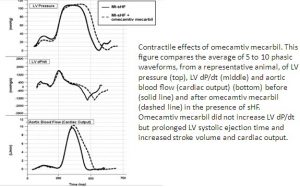
Among Sprague, omecamtiv mecarbil (100-1000 ng/mL) exhibits concentration-dependent increases in FS.Model of Dawley rats. In both rats (Sprague-Dawley) and dogs (Beagle), omecamtiv mecarbil has good PK characteristics, with clearances of 22 and 7.2 mL /min/kg, volumes of 3.5 and 3.6 L/kg, and bioavailabilities (F%) of 100 and 80%, respectively[1]. Omecamtiv mecarbil does not alter the force generation at maximal Ca2+ activation (pCa 4.5) in any of the groups, nor does it alter the phosphorylation status of myofilament proteins in both WT and KO hearts, as demonstrated by the lack of significant differences between pre and post Omecamtiv mecarbil samples within WT and KO groups. The cardiac myofilaments' reactivity to Ca2+ is enhanced by omecamtiv mecarbil at submaximal Ca2+-activations[2].
1. Efficacy in HepG2 HCC xenografts (combination with 5-FU): Female athymic nude mice (6–8 weeks old) were subcutaneously injected with 5×10⁶ HepG2 cells. When tumors reached 100–150 mm³, mice were randomized into 4 groups (n=6/group): vehicle, PHA-767491 (20 mg/kg, intraperitoneal injection [ip], once daily [qd]), 5-FU (10 mg/kg, ip, once every 3 days [q3d]), and combination. After 21 days of treatment, the combination group achieved 92% tumor growth inhibition (TGI), tumor weight reduced by 85% (vs. vehicle), and median survival increased from 35 days (vehicle) to 62 days [2] 2. Efficacy in U87MG GBM xenografts: Male nude mice bearing U87MG xenografts (120–160 mm³) were treated with PHA-767491 (15 mg/kg, ip, qd) or vehicle for 28 days. The treatment group showed 78% TGI and 70% reduction in tumor weight (vs. vehicle). Immunohistochemistry (IHC) of tumor tissues revealed 60% reduced Ki-67 (proliferation marker), 35% reduced CD133 (CSC marker), and 5-fold increased TUNEL-positive cells (apoptosis marker) [3] 3. Antitumor activity in HCT116 colon cancer xenografts: Female nude mice with HCT116 xenografts (100 mm³) received PHA-767491 (25 mg/kg, oral gavage, qd) for 21 days (formulated in 0.5% methylcellulose). The treatment group achieved 72% TGI with no significant weight loss. Western blot of tumor tissues confirmed reduced p-RPA32 and p-RNA Pol II CTD, verifying in vivo target inhibition [4] |
| Enzyme Assay |
1. Cdc7-Dbf4 (DDK) Kinase Activity Assay (radiometric):
Recombinant human Cdc7 (50 nM) and Dbf4 (50 nM) were pre-incubated in kinase buffer (50 mM Tris-HCl pH 7.5, 10 mM MgCl₂, 1 mM DTT, 0.01% BSA) to form the DDK complex. The complex was mixed with [γ-³²P]ATP (10 μM), histone H1 (2 μg, substrate), and serial concentrations of PHA-767491 (0.001–1000 nM). After incubation at 30°C for 60 minutes, the reaction was stopped with SDS sample buffer. Phosphorylated histone H1 was separated by 12% SDS-PAGE, and radioactivity was measured via autoradiography. IC₅₀ was calculated from dose-response curves [4] 2. Cdk9-Cyclin T1 (P-TEFb) Kinase Activity Assay (HTRF): Recombinant human Cdk9-Cyclin T1 (20 nM) was incubated with a fluorescently labeled RNA Pol II CTD peptide (500 nM, substrate), ATP (5 μM), and PHA-767491 (0.001–1000 nM) in HTRF buffer (25 mM HEPES pH 7.4, 10 mM MgCl₂, 0.05% Tween-20) at 37°C for 45 minutes. Phosphorylated peptide was detected using an anti-phospho-CTD antibody and HTRF (excitation 485 nm, emission 520/620 nm). IC₅₀ was defined as the concentration inhibiting 50% of the HTRF signal [4] 3. Kinase Selectivity Assay: PHA-767491 (1 μM) was screened against 24 human kinases (including Cdks, EGFR, AKT) using radiometric (³²P incorporation) or fluorescent (ADP-Glo) assays. Activity was quantified as % inhibition relative to vehicle. Selectivity was determined by comparing IC₅₀ values of target (Cdc7, Cdk9) and non-target kinases [4] |
| Cell Assay |
1. Antiproliferative Assay (GI₅₀ Determination):
HCC (HepG2/Huh7), GBM (U87MG/U251), or colon cancer (HCT116) cells were seeded in 96-well plates (1000 cells/well) and incubated overnight (37°C, 5% CO₂). PHA-767491 (0.01–10 μM) was added, and cells were cultured for 72 hours. Cell viability was measured via MTT assay (absorbance at 570 nm) or CellTiter-Glo Luminescent Assay (luminescence proportional to ATP). GI₅₀ was calculated as the concentration inhibiting 50% of cell growth (vs. vehicle) [2, 3, 4] 2. Apoptosis Assay (Annexin V-FITC/PI Staining): HepG2 cells were treated with PHA-767491 (0.3 μM) ± 5-FU (0.5 μM) for 48 hours. Cells were harvested, washed with PBS, and stained with Annexin V-FITC and propidium iodide (PI) for 15 minutes at room temperature. Apoptotic cells (Annexin V⁺/PI⁻ or Annexin V⁺/PI⁺) were quantified via flow cytometry [2] 3. GBM Invasion Assay (Transwell): U87MG cells (5×10⁴ cells/well) were seeded in the upper chamber of Matrigel-coated Transwell inserts. The upper chamber contained PHA-767491 (0.1–1 μM) in serum-free medium, and the lower chamber contained 10% FBS medium (chemoattractant). After 24 hours, non-invading cells on the upper membrane were removed, and invading cells on the lower membrane were fixed with 4% paraformaldehyde, stained with crystal violet, and counted under a microscope. Invasion rate was normalized to vehicle [3] 4. Western Blot for Target/Pathway Markers: Cells were treated with PHA-767491 (0.1–2 μM) for 4–24 hours, then lysed in RIPA buffer (with protease/phosphatase inhibitors). 30 μg of protein was separated by 10% SDS-PAGE, transferred to PVDF membranes, and probed with antibodies against p-RPA32, p-MCM2, p-RNA Pol II CTD, p-Rb, c-Myc, cleaved caspase-3, CD133, and β-actin (loading control). Bands were visualized via ECL and quantified by densitometry [2, 3, 4] |
| Animal Protocol |
Dissolved in DMSO and then diluted in water; ≤1.2 mg/kg/hour; i.v. injection. Sprague Dawley rats.
1. HepG2 HCC Xenograft Model: Female athymic nude mice (6–8 weeks old, 18–22 g) were acclimated for 7 days. 5×10⁶ HepG2 cells (suspended in 0.2 mL PBS/Matrigel [1:1]) were subcutaneously injected into the right flank. When tumors reached 100–150 mm³, mice were randomized into 4 groups (n=6/group). PHA-767491 was formulated in 10% DMSO/90% saline and administered at 20 mg/kg (ip, qd) for 21 days. 5-FU (10 mg/kg, ip, q3d) and vehicle (10% DMSO/90% saline, ip, qd) were used as controls. Tumor volume (V = length × width² / 2) and body weight were measured twice weekly. At the end of treatment, tumors were collected for western blot or IHC [2] 2. U87MG GBM Xenograft Model: Male nude mice (6–8 weeks old) were subcutaneously injected with 4×10⁶ U87MG cells (PBS/Matrigel [1:1]). When tumors reached 120–160 mm³, mice were divided into 2 groups (n=6/group): vehicle (10% DMSO/90% saline, ip, qd) and PHA-767491 (15 mg/kg, ip, qd) for 28 days. Survival status was monitored daily; moribund mice were euthanized. Tumors were harvested for weight measurement and IHC (Ki-67, CD133, TUNEL) [3] 3. HCT116 Colon Cancer Xenograft Model: Female nude mice (6–8 weeks old) were subcutaneously injected with 3×10⁶ HCT116 cells. When tumors reached 100 mm³, mice received PHA-767491 (25 mg/kg, oral gavage, qd) formulated in 0.5% methylcellulose, or vehicle (0.5% methylcellulose, oral gavage, qd) for 21 days. Tumor volume was measured twice weekly. Tumors were collected for western blot to verify target inhibition (p-RPA32, p-RNA Pol II CTD) [4] |
| ADME/Pharmacokinetics |
Oral pharmacokinetics (PK) in mice: Male CD1 mice (n=3 at each time point) received PHA-767491 (25 mg/kg, administered by gavage, dissolved in 0.5% methylcellulose). Plasma was collected at 0.25, 0.5, 1, 2, 4, 6, 8, and 12 hours post-administration. Pharmacokinetic parameters (determined by LC-MS/MS): Cmax (peak plasma concentration) = 3.8 μM, Tmax (time to peak concentration) = 1 hour, terminal half-life (t₁/₂) = 4.5 hours, oral bioavailability (F) = 38% (compared to intravenous administration). - Intravenous pharmacokinetics in mice: Male CD1 mice received PHA-767491 (10 mg/kg, administered intravenously, dissolved in 10% DMSO/90% saline). Pharmacokinetic parameters: Clearance (CL) = 12.3 mL/min/kg, steady-state volume of distribution (Vdss) = 0.7 L/kg. - Plasma protein binding: 500 μL of human plasma was mixed with PHA-767491 (0.1–10 μM) and dialyzed at 37°C for 4 hours using a dialysis membrane with a molecular weight cutoff of 12–14 kDa. The concentration of free drug in the dialysate was determined by LC-MS/MS. The plasma protein binding rates were 96.8% (human) and 97.1% (mouse). - In vitro metabolism: PHA-767491 (1 μM) was incubated with human liver microsomes (HLM) at 37°C in the presence of NADPH. Metabolic parameters: in vitro half-life (t₁/₂) = 75 min, intrinsic clearance (CLint) = 22 μL/min/mg protein. The major metabolite (identified by LC-MS/MS) was N-demethylated PHA-767491 (with no significant pharmacological activity).
|
| Toxicity/Toxicokinetics |
1. In vitro toxicity: PHA-767491 (at concentrations up to 5 μM) showed no significant cytotoxicity to normal human hepatocytes (L02) or normal astrocytes (brain cells): MTT assay showed cell viability >80% (compared to the solvent control group) [2, 3]. 2. In vivo acute toxicity (mice): Mice were administered a single intraperitoneal injection of PHA-767491 (10–50 mg/kg). No deaths were observed. At a dose of 50 mg/kg, transient weight loss (maximum 6%, recovered by day 4) and mild somnolence were observed. Pathological examination of liver, kidney and brain tissue showed no tissue damage [4]
3. Subacute toxicity in vivo (xenograft model): - In the HepG2/GBM/HCT116 xenograft model, PHA-767491 (15–25 mg/kg, intraperitoneal/oral, once daily, 21–28 days) did not cause significant weight loss (<5% compared to baseline) or abnormalities in serum biochemical markers (ALT, AST, BUN, creatinine). Complete blood count (CBC) showed no bone marrow suppression (white blood cells, platelets, and red blood cells were comparable to the vector group) [2, 3, 4] 4. Toxicity of combined administration: In the HepG2 xenograft model, the combined administration of PHA-767491 (20 mg/kg) and 5-FU (10 mg/kg) did not increase toxicity: no serious diarrhea, mucositis, or hematologic toxicity was observed [2] |
| References |
|
| Additional Infomation |
Omecamtiv Mecarbil is a urea drug. Omecamtiv Mecarbil has been used in clinical trials to study the treatment and basic science of heart failure, echocardiography, pharmacokinetics, chronic heart failure, and the history of chronic heart failure.
Drug Indications Treatment of Heart Failure 1. Background: PHA-767491 is the first small molecule inhibitor with dual Cdc7/Cdk9 activity, designed to target two cancer-related pathways: DNA replication (DDK-dependent) and oncogene transcription (Cdk9-dependent). Unlike selective DDK inhibitors (e.g., XL413), the dual mechanism of action of PHA-767491 broadens its antitumor spectrum [4]. 2. Mechanism of Action: PHA-767491 binds to the ATP-binding pockets of DDK and Cdk9, inhibiting their catalytic activity. Inhibition of DDK blocks MCM2 phosphorylation and DNA replication initiation; inhibition of Cdk9 reduces phosphorylation of RNA polymerase II CTD, inhibiting the transcription of oncogenes (e.g., c-Myc) and cell cycle regulators. These effects collectively induce G1/S phase arrest and apoptosis in cancer cells [2, 3, 4]. 3. Therapeutic potential: Preclinical data support the use of PHA-767491 for the treatment of hepatocellular carcinoma (HCC), glioblastoma (GBM), colon cancer, and other solid tumors. Its synergistic effect with 5-FU (hepatocellular carcinoma) and its activity against glioblastoma cancer stem cells (by downregulating CD133) suggest its potential to improve therapeutic efficacy and prevent recurrence [2, 3]. 4. Limitations: -Moderate oral bioavailability (38%) limits the efficacy of oral administration. Sensitivity varies among cancer cell lines (e.g., lower activity in p53-mutant non-small cell lung cancer cell lines [1]). No clinical trials were reported in the included literature, hindering clinical translation [1, 4] 5. Comparison with XL413: - PHA-767491 has a broader antitumor activity than XL413 (a selective DDK inhibitor), but lower DDK selectivity (XL413 DDK IC₅₀ = 2 nM, while PHA-767491 is 10 nM)[1] |
| Molecular Formula |
C20H24FN5O3
|
|
|---|---|---|
| Molecular Weight |
401.43
|
|
| Exact Mass |
401.186
|
|
| CAS # |
873697-71-3
|
|
| Related CAS # |
Omecamtiv mecarbil-d8
|
|
| PubChem CID |
11689883
|
|
| Appearance |
White to off-white solid powder
|
|
| Density |
1.3±0.1 g/cm3
|
|
| Boiling Point |
456.8±45.0 °C at 760 mmHg
|
|
| Melting Point |
180℃
|
|
| Flash Point |
230.1±28.7 °C
|
|
| Vapour Pressure |
0.0±1.1 mmHg at 25°C
|
|
| Index of Refraction |
1.639
|
|
| LogP |
1.36
|
|
| Hydrogen Bond Donor Count |
2
|
|
| Hydrogen Bond Acceptor Count |
6
|
|
| Rotatable Bond Count |
5
|
|
| Heavy Atom Count |
29
|
|
| Complexity |
558
|
|
| Defined Atom Stereocenter Count |
0
|
|
| SMILES |
O=C(N1CCN(CC1)CC2=C(C(NC(NC3=CC=C(N=C3)C)=O)=CC=C2)F)OC
|
|
| InChi Key |
RFUBTTPMWSKEIW-UHFFFAOYSA-N
|
|
| InChi Code |
InChI=1S/C20H24FN5O3/c1-14-6-7-16(12-22-14)23-19(27)24-17-5-3-4-15(18(17)21)13-25-8-10-26(11-9-25)20(28)29-2/h3-7,12H,8-11,13H2,1-2H3,(H2,23,24,27)
|
|
| Chemical Name |
methyl 4-[[2-fluoro-3-[(6-methylpyridin-3-yl)carbamoylamino]phenyl]methyl]piperazine-1-carboxylate
|
|
| Synonyms |
|
|
| HS Tariff Code |
2934.99.9001
|
|
| Storage |
Powder -20°C 3 years 4°C 2 years In solvent -80°C 6 months -20°C 1 month |
|
| Shipping Condition |
Room temperature (This product is stable at ambient temperature for a few days during ordinary shipping and time spent in Customs)
|
| Solubility (In Vitro) |
DMSO: 80 mg/mL (199.3 mM)
Water: 1 mg/mL (Insoluble) Ethanol: 6 mg/mL (14.9 mM) |
|---|---|
| Solubility (In Vivo) |
Solubility in Formulation 1: ≥ 2.5 mg/mL (6.23 mM) (saturation unknown) in 10% DMSO + 40% PEG300 + 5% Tween80 + 45% Saline (add these co-solvents sequentially from left to right, and one by one), clear solution.
For example, if 1 mL of working solution is to be prepared, you can add 100 μL of 25.0 mg/mL clear DMSO stock solution to 400 μL PEG300 and mix evenly; then add 50 μL Tween-80 to the above solution and mix evenly; then add 450 μL normal saline to adjust the volume to 1 mL. Preparation of saline: Dissolve 0.9 g of sodium chloride in 100 mL ddH₂ O to obtain a clear solution. Solubility in Formulation 2: ≥ 2.5 mg/mL (6.23 mM) (saturation unknown) in 10% DMSO + 90% (20% SBE-β-CD in Saline) (add these co-solvents sequentially from left to right, and one by one), clear solution. For example, if 1 mL of working solution is to be prepared, you can add 100 μL of 25.0 mg/mL clear DMSO stock solution to 900 μL of 20% SBE-β-CD physiological saline solution and mix evenly. Preparation of 20% SBE-β-CD in Saline (4°C,1 week): Dissolve 2 g SBE-β-CD in 10 mL saline to obtain a clear solution. View More
Solubility in Formulation 3: ≥ 2.5 mg/mL (6.23 mM) (saturation unknown) in 10% DMSO + 90% Corn Oil (add these co-solvents sequentially from left to right, and one by one), clear solution. Solubility in Formulation 4: 1% DMSO +30% polyethylene glycol+1% Tween 80 : 30 mg/mL |
| Preparing Stock Solutions | 1 mg | 5 mg | 10 mg | |
| 1 mM | 2.4911 mL | 12.4555 mL | 24.9109 mL | |
| 5 mM | 0.4982 mL | 2.4911 mL | 4.9822 mL | |
| 10 mM | 0.2491 mL | 1.2455 mL | 2.4911 mL |
*Note: Please select an appropriate solvent for the preparation of stock solution based on your experiment needs. For most products, DMSO can be used for preparing stock solutions (e.g. 5 mM, 10 mM, or 20 mM concentration); some products with high aqueous solubility may be dissolved in water directly. Solubility information is available at the above Solubility Data section. Once the stock solution is prepared, aliquot it to routine usage volumes and store at -20°C or -80°C. Avoid repeated freeze and thaw cycles.
Calculation results
Working concentration: mg/mL;
Method for preparing DMSO stock solution: mg drug pre-dissolved in μL DMSO (stock solution concentration mg/mL). Please contact us first if the concentration exceeds the DMSO solubility of the batch of drug.
Method for preparing in vivo formulation::Take μL DMSO stock solution, next add μL PEG300, mix and clarify, next addμL Tween 80, mix and clarify, next add μL ddH2O,mix and clarify.
(1) Please be sure that the solution is clear before the addition of next solvent. Dissolution methods like vortex, ultrasound or warming and heat may be used to aid dissolving.
(2) Be sure to add the solvent(s) in order.
| NCT Number | Recruitment | interventions | Conditions | Sponsor/Collaborators | Start Date | Phases |
| NCT04464525 | Withdrawn | Drug: Omecamtiv mecarbil | Chronic Heart Failure With Reduced Ejection Fraction |
Cytokinetics | December 18, 2020 | Phase 3 |
| NCT01077167 | Withdrawn | Drug: Omecamtiv mecarbil | Heart Failure | Cytokinetics | July 2010 | Phase 2 |
| NCT03759392 | Completed | Drug: Omecamtiv Mecarbil Drug: Placebo |
Heart Failure With Reduced Ejection Fraction |
Cytokinetics | April 9, 2019 | Phase 3 |
| NCT00748579 | Terminated | Drug: CK-1827452 | Heart Failure | Cytokinetics | September 2008 | Phase 2 |
|
|---|
Products are for research use only; We do not sell to patients
Copyright 2020 InvivoChem LLC | All Rights Reserved


 COA
COA