| Size | Price | Stock | Qty |
|---|---|---|---|
| 1mg |
|
||
| 2mg |
|
||
| 5mg |
|
||
| 10mg |
|
||
| 25mg |
|
||
| 50mg |
|
||
| 100mg | |||
| Other Sizes |


Purity: ≥98%
| Targets |
F0F1-ATPase (Ki = 1 μM)
Oligomycin A (MCH-32) is a specific inhibitor of mitochondrial F0F1-ATP synthase (also known as ATPase), which catalyzes ATP synthesis via proton gradient-driven rotation of the F0 subunit. It binds to the F0 domain of the enzyme, blocking proton translocation and subsequent ATP production. - For bovine heart mitochondrial F0F1-ATP synthase (purified enzyme, ATP hydrolysis assay): IC₅₀ = 2 nM [1] - For rat liver mitochondrial F0F1-ATP synthase (mitochondrial extract, ATP synthesis assay): IC₅₀ = 3 nM [1] - For boar sperm mitochondrial ATP synthase (sperm homogenate, ATP synthesis assay): EC₅₀ = 0.8 μM [2] - For non-target enzymes (e.g., cytoplasmic hexokinase, glycolytic enzymes, plasma membrane ATPase): IC₅₀ > 100 μM (no significant inhibition) [1, 2] |
|---|---|
| ln Vitro |
Oligomycin A inhibits the mitochondrial F0F1-ATPase with a Ki of 1 μM. Oligomycin A is cytotoxic to the NCI-60 cell line, with a GI50 of 10 nM. Oligomycin A inhibits Triton X-100 solubilized ATPase with a Ki of 0.1 μM. In addition, Oligomycin A exhibits antifungal properties [1]. Oligomycin A (2.4 μM) prevents sperm from achieving viable in vitro capacitation (IVC) and inhibits progesterone-induced in vitro acrosome exocytosis (IVAE), resulting in peak O2 depletion and ATP levels [2].
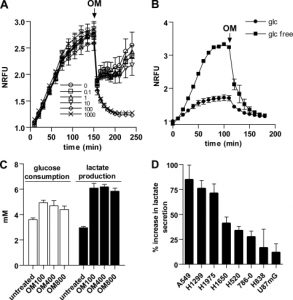
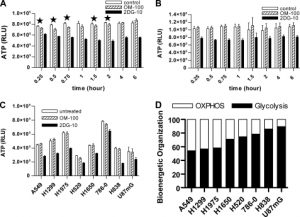
1. Inhibition of mitochondrial F0F1-ATP synthase activity and ATP production in isolated mitochondria: Oligomycin A (0.1–100 nM) dose-dependently inhibited ATP hydrolysis by purified bovine heart F0F1-ATP synthase: 10 nM reduced activity by 95%, and 2 nM achieved 50% inhibition (IC₅₀ = 2 nM). In isolated rat liver mitochondria, 3 nM Oligomycin A suppressed ATP synthesis (driven by succinate oxidation) by 50%, and 10 nM completely blocked it [1] 2. Cytotoxicity against cancer cell lines (comparison with Apoptolidin): Oligomycin A (0.1–10 μM) showed broad cytotoxicity against 5 human cancer cell lines (A549, HeLa, MCF-7, HCT116, Jurkat): GI₅₀ values ranged from 0.2 μM (Jurkat) to 0.8 μM (A549) (MTT assay). This was attributed to mitochondrial ATP depletion: 0.5 μM Oligomycin A reduced intracellular ATP levels in HeLa cells by 70% after 4 hours, whereas the selective F0F1-ATPase inhibitor Apoptolidin showed narrower cytotoxicity (only active against Jurkat cells, GI₅₀ = 0.1 μM) [1] 3. Suppression of boar sperm motility and in vitro capacitation without altering total energy levels: Oligomycin A (0.1–10 μM) treated boar sperm (incubated in capacitation medium) dose-dependently reduced progressive motility: 0.8 μM decreased motility from 85% (vehicle) to 42% (EC₅₀ = 0.8 μM), and 10 μM reduced it to <10% (CASA analysis). At 1 μM, Oligomycin A inhibited in vitro capacitation (assessed by cholesterol efflux and acrosome reaction): capacitation rate dropped from 60% (vehicle) to 15%. Notably, total sperm ATP levels (measured by luciferase assay) remained unchanged (vs. vehicle) even at 10 μM, as sperm compensated via increased glycolysis [2] 4. Lack of effect on glycolytic ATP production in sperm and cancer cells: In boar sperm treated with 10 μM Oligomycin A, glycolytic flux (measured by lactate production) increased by 40%, maintaining total ATP levels. In HeLa cells, 0.5 μM Oligomycin A did not affect lactate production or glycolytic enzyme (hexokinase, pyruvate kinase) activity, confirming its specificity for mitochondrial ATP synthase [1, 2] |
| Enzyme Assay |
1. F0F1-ATP Synthase ATP Hydrolysis Assay (purified enzyme):
Purified bovine heart F0F1-ATP synthase (0.1 μg/well) was incubated in assay buffer (50 mM Tris-HCl pH 7.5, 5 mM MgCl₂, 1 mM DTT, 0.1% BSA) with Oligomycin A (0.1–100 nM) for 15 minutes at 30°C. The reaction was initiated by adding ATP (2 mM final concentration) and incubated for 30 minutes. Released inorganic phosphate (Pi) was detected using a malachite green-based reagent, and absorbance was measured at 620 nm. ATP hydrolysis activity was calculated as nmol Pi/min/mg protein, and IC₅₀ was derived from dose-response curves [1] 2. F0F1-ATP Synthase ATP Synthesis Assay (isolated mitochondria): Isolated rat liver mitochondria (100 μg/well) were resuspended in synthesis buffer (25 mM KCl, 10 mM Tris-HCl pH 7.4, 5 mM MgCl₂, 1 mM ADP, 10 mM succinate, 0.1 mM EGTA) with Oligomycin A (0.1–100 nM). ATP synthesis was initiated by adding ³²P-ATP (1 μCi/well) and incubating at 37°C for 20 minutes. The reaction was stopped with 10% trichloroacetic acid, and ³²P-labeled ATP was separated by thin-layer chromatography. Radioactivity was measured by scintillation counting, and ATP synthesis rate was calculated as pmol ATP/min/mg mitochondrial protein [1] 3. Boar Sperm Mitochondrial ATP Synthase Assay (sperm homogenate): Boar sperm were homogenized in lysis buffer (20 mM Tris-HCl pH 7.4, 150 mM NaCl, 1% Triton X-100, protease inhibitors), and the supernatant (sperm homogenate) was collected. ATP synthase activity was measured in synthesis buffer (10 mM Tris-HCl pH 7.4, 5 mM MgCl₂, 1 mM ADP, 5 mM pyruvate, 0.5 mM NADH) with Oligomycin A (0.1–10 μM). ATP production was detected by luciferase-based ATP assay kit (luminescence measured at 560 nm), and EC₅₀ was determined as the concentration inhibiting 50% of ATP synthesis [2] |
| Cell Assay |
Incubation of boar spermatozoa in a capacitation medium with oligomycin A, a specific inhibitor of the F0 component of the mitochondrial ATP synthase, induced an immediate and almost complete immobilisation of cells. Oligomycin A also inhibited the ability of spermatozoa to achieve feasible in vitro capacitation (IVC), as measured through IVC-compatible changes in motility patterns, tyrosine phosphorylation levels of the acrosomal p32 protein, membrane fluidity and the ability of spermatozoa to achieve subsequent, progesterone-induced in vitro acrosome exocytosis (IVAE). Both inhibitory effects were caused without changes in the rhythm of O2 consumption, intracellular ATP levels or mitochondrial membrane potential (MMP). IVAE was accompanied by a fast and intense peak in O2 consumption and ATP levels in control spermatozoa. Oligomycin A also inhibited progesterone-induced IVAE as well as the concomitant peaks of O2 consumption and ATP levels. The effect of oligomycin on IVAE was also accompanied by concomitant alterations in the IVAE-induced changes on intracellular Ca(2+) levels and MMP. Our results suggest that the oligomycin A-sensitive mitochondrial ATP-synthase activity is instrumental in the achievement of an adequate boar sperm motion pattern, IVC and IVAE. However, this effect seems not to be linked to changes in the overall maintenance of adequate energy levels in stages other than IVAE.[2]
1. Cancer Cell Cytotoxicity Assay (MTT): Human cancer cells (A549, HeLa, MCF-7, HCT116, Jurkat) were seeded in 96-well plates (5×10³ cells/well) and incubated overnight. Oligomycin A (0.1–10 μM) was added, and cells were cultured for 72 hours. MTT reagent (5 mg/mL) was added (10 μL/well), and incubation continued for 4 hours. Formazan crystals were dissolved in DMSO, and absorbance was measured at 570 nm. GI₅₀ (concentration inhibiting 50% cell growth) was calculated by normalizing to vehicle-treated cells [1] 2. Intracellular ATP Level Measurement (luciferase assay): HeLa cells (1×10⁴ cells/well) or boar sperm (1×10⁶ cells/well) were treated with Oligomycin A (0.1–10 μM) for 4 hours. Cells/sperm were lysed with 0.1% Triton X-100, and lysates were mixed with luciferin-luciferase reagent (ATP assay kit). Luminescence was measured using a microplate reader, and ATP levels were calculated by comparing to an ATP standard curve [1, 2] 3. Boar Sperm Motility and Capacitation Assays: - Motility assay: Boar sperm (2×10⁶/mL) were treated with Oligomycin A (0.1–10 μM) in capacitation medium (TCM-199 + 10% fetal bovine serum) at 38.5°C, 5% CO₂. Progressive motility was analyzed at 1, 3, and 6 hours using a computer-assisted sperm analysis (CASA) system, measuring parameters including path velocity (VAP) and straight-line velocity (VSL) [2] - Capacitation assay: After 6 hours of treatment, sperm were stained with cholera toxin B (CTB)-FITC (to detect cholesterol efflux, a capacitation marker) and propidium iodide (PI, to exclude dead cells). Fluorescence was measured by flow cytometry: capacitation rate = percentage of CTB-FITC-positive/PI-negative sperm. Additionally, acrosome reaction (another capacitation marker) was assessed by Pisum sativum agglutinin (PSA)-FITC staining: acrosome-reacted sperm = PSA-FITC-positive cells [2] |
| Toxicity/Toxicokinetics |
Intraperitoneal LD50 in mice: 1500 ug/kg
|
| References |
|
| Additional Infomation |
Oligomycin A is an oligomycin with the molecular formula C45H74011. It is a mitochondrial F1FO ATP synthase inhibitor that can induce apoptosis in various cell types and has antifungal, antitumor, and nematicidal activities. However, its clinical application is limited due to its poor solubility in water and other biocompatible solvents. It can function as an EC 3.6.3.14 (H(+)-transporting dual-sector ATPase) inhibitor, an antitumor drug, and a nematicide. It is a diketone compound, a pentanol compound, an antibiotic, an antifungal drug, and an oligomycin.
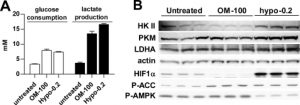
1. Background: Oligomycin A is a macrolide antibiotic isolated from Streptomyces diastatochromogenes and was first identified as a mitochondrial ATP synthase inhibitor in the 1950s. It has been widely used as a research tool to study mitochondrial metabolism, ATP homeostasis, and the role of mitochondrial ATP in cellular functions (such as cell proliferation and sperm motility). Unlike apoptolidin (a structurally different F0F1-ATPase inhibitor), Oligomycin A exhibits broad cytotoxicity due to its ability to inhibit ATP synthase in all cell types, while apoptolidin is cell type selective [1]. 2. Mechanism of action: Oligomycin A binds to the c subunit of the F0 domain of mitochondrial F0F1-ATP synthase, which forms a proton channel across the inner mitochondrial membrane. This binding blocks the transport of protons from the intermembrane space to the mitochondrial matrix, disrupting the proton gradient required for ATP synthase to catalyze ATP synthesis (from ADP and Pi). In cells, this leads to mitochondrial ATP depletion, but some cell types (e.g., sperm, cancer cells) can compensate by increasing glycolysis, thereby maintaining total ATP levels [1, 2]. 3. Research applications: - In cancer research: used to study the dependence of cancer cells on mitochondrial metabolism (oxidative phosphorylation and glycolysis, the "Warburg effect"). Its extensive cytotoxicity limits its clinical application, but it can serve as a positive control for mitochondrial-targeted cytotoxic drugs [1]. In reproductive biology: it is used to study the role of mitochondrial ATP in sperm motility and capacitation. Studies have found that oligomycin A inhibits sperm capacitation without reducing total ATP levels, suggesting that sperm require local mitochondrial ATP (rather than glycolytic ATP) to maintain capacitation-related processes such as cholesterol efflux and acrosome reaction [2]. 4. Limitations: Oligomycin A has no clinical value due to its extensive toxicity (affecting all mitochondrial cells, including normal cells). Furthermore, its poor solubility in aqueous solution and potential systemic toxicity make it unsuitable for in vivo studies (no in vivo data were reported in the included literature). Additionally, its inhibition of ATP synthase at high concentrations is irreversible, making it unsuitable for studying reversible metabolic regulation [1, 2]. |
| Molecular Formula |
C45H74O11
|
|---|---|
| Molecular Weight |
791.06
|
| Exact Mass |
790.523
|
| Elemental Analysis |
C, 68.50; H, 9.20; O, 22.30
|
| CAS # |
579-13-5
|
| Related CAS # |
Oligomycin;1404-19-9;Oligomycin D;1404-59-7;Oligomycin C;11052-72-5;Oligomycin B;11050-94-5
|
| PubChem CID |
52947716
|
| Appearance |
White to off-white solid powder
|
| Density |
1.1±0.1 g/cm3
|
| Boiling Point |
886.3±65.0 °C at 760 mmHg
|
| Melting Point |
150-151ºC
|
| Flash Point |
252.0±27.8 °C
|
| Vapour Pressure |
0.0±0.6 mmHg at 25°C
|
| Index of Refraction |
1.543
|
| Source |
Originated from microorganisms: Streptomyces diastatochromogenes
|
| LogP |
6.17
|
| Hydrogen Bond Donor Count |
5
|
| Hydrogen Bond Acceptor Count |
11
|
| Rotatable Bond Count |
3
|
| Heavy Atom Count |
56
|
| Complexity |
1390
|
| Defined Atom Stereocenter Count |
18
|
| SMILES |
CC[C@@H]\1CC[C@H]2[C@H]([C@H]([C@@H]([C@]3(O2)CC[C@@H]([C@@H](O3)C[C@@H](C)O)C)C)OC(=O)/C=C/[C@@H]([C@H]([C@@H](C(=O)[C@@H]([C@H]([C@@H](C(=O)[C@]([C@H]([C@@H](C/C=C/C=C1)C)O)(C)O)C)O)C)C)O)C)C
|
| InChi Key |
STEWZSZUSBALCS-HQBODTQXSA-N
|
| InChi Code |
InChI=1S/C45H72O11/c1-12-34-17-15-13-14-16-27(4)42(51)44(11,53)43(52)32(9)40(50)31(8)39(49)30(7)38(48)26(3)18-21-37(47)54-41-29(6)35(20-19-34)55-45(33(41)10)23-22-25(2)36(56-45)24-28(5)46/h13-15,17-18,21,24-27,29-36,38,40-42,46,48,50-51,53H,12,16,19-20,22-23H2,1-11H3/b14-13+,17-15+,21-18+,28-24-/t25-,26-,27+,29+,30-,31-,32-,33-,34-,35-,36-,38+,40+,41+,42-,44+,45-/m1/s1
|
| Chemical Name |
(1S,2R,4E,5R,6R,6S,7S,8R,10S,11S,12R,14S,15R,16S,18E,20E,22S,25R,28R,29S)-22-ethyl-3,4,5,6-tetrahydro-7,11,14,15-tetrahydroxy-6-[(1Z)-2-hydroxy-1-propen-1-yl]-5,6,8,10,12,14,16,28,29-nonamethyl-spiro[2,26-dioxabicyclo[23.3.1]nonacosa-4,18,20-triene-27,2-[2H]pyran]-3,9,13-trione
|
| Synonyms |
05HQS4AI99; 579-13-5; Oligomycin A; EINECS 209-437-3; UNII-05HQS4AI99; BRN 5702132; RP-32705; MCH-32;
|
| HS Tariff Code |
2934.99.9001
|
| Storage |
Powder -20°C 3 years 4°C 2 years In solvent -80°C 6 months -20°C 1 month |
| Shipping Condition |
Room temperature (This product is stable at ambient temperature for a few days during ordinary shipping and time spent in Customs)
|
| Solubility (In Vitro) |
DMSO: 10 mg/mL (12.6 mM)
Water: 1 mg/mL (Insoluble) Ethanol: 1 mg/mL |
|---|---|
| Solubility (In Vivo) |
Solubility in Formulation 1: ≥ 2.5 mg/mL (3.16 mM) (saturation unknown) in 10% DMSO + 40% PEG300 + 5% Tween80 + 45% Saline (add these co-solvents sequentially from left to right, and one by one), clear solution.
For example, if 1 mL of working solution is to be prepared, you can add 100 μL of 25.0 mg/mL clear DMSO stock solution to 400 μL PEG300 and mix evenly; then add 50 μL Tween-80 to the above solution and mix evenly; then add 450 μL normal saline to adjust the volume to 1 mL. Preparation of saline: Dissolve 0.9 g of sodium chloride in 100 mL ddH₂ O to obtain a clear solution. Solubility in Formulation 2: 2.5 mg/mL (3.16 mM) in 10% DMSO + 90% (20% SBE-β-CD in Saline) (add these co-solvents sequentially from left to right, and one by one), suspension solution; with ultrasonication. For example, if 1 mL of working solution is to be prepared, you can add 100 μL of 25.0 mg/mL clear DMSO stock solution to 900 μL of 20% SBE-β-CD physiological saline solution and mix evenly. Preparation of 20% SBE-β-CD in Saline (4°C,1 week): Dissolve 2 g SBE-β-CD in 10 mL saline to obtain a clear solution. View More
Solubility in Formulation 3: ≥ 2.5 mg/mL (3.16 mM) (saturation unknown) in 10% DMSO + 90% Corn Oil (add these co-solvents sequentially from left to right, and one by one), clear solution. Solubility in Formulation 4: ≥ 2.5 mg/mL (3.16 mM) (saturation unknown) in 10% EtOH + 40% PEG300 + 5% Tween80 + 45% Saline (add these co-solvents sequentially from left to right, and one by one), clear solution. For example, if 1 mL of working solution is to be prepared, you can add 100 μL of 25.0 mg/mL clear EtOH stock solution to 400 μL of PEG300 and mix evenly; then add 50 μL of Tween-80 to the above solution and mix evenly; then add 450 μL of normal saline to adjust the volume to 1 mL. Preparation of saline: Dissolve 0.9 g of sodium chloride in 100 mL ddH₂ O to obtain a clear solution. Solubility in Formulation 5: ≥ 2.5 mg/mL (3.16 mM) (saturation unknown) in 10% EtOH + 90% Corn Oil (add these co-solvents sequentially from left to right, and one by one), clear solution. For example, if 1 mL of working solution is to be prepared, you can add 100 μL of 25.0 mg/mL clear EtOH stock solution to 900 μL of corn oil and mix evenly. Solubility in Formulation 6: 30% PEG400+0.5% Tween80+5% Propylene glycol :15 mg/mL |
| Preparing Stock Solutions | 1 mg | 5 mg | 10 mg | |
| 1 mM | 1.2641 mL | 6.3206 mL | 12.6413 mL | |
| 5 mM | 0.2528 mL | 1.2641 mL | 2.5283 mL | |
| 10 mM | 0.1264 mL | 0.6321 mL | 1.2641 mL |
*Note: Please select an appropriate solvent for the preparation of stock solution based on your experiment needs. For most products, DMSO can be used for preparing stock solutions (e.g. 5 mM, 10 mM, or 20 mM concentration); some products with high aqueous solubility may be dissolved in water directly. Solubility information is available at the above Solubility Data section. Once the stock solution is prepared, aliquot it to routine usage volumes and store at -20°C or -80°C. Avoid repeated freeze and thaw cycles.
Calculation results
Working concentration: mg/mL;
Method for preparing DMSO stock solution: mg drug pre-dissolved in μL DMSO (stock solution concentration mg/mL). Please contact us first if the concentration exceeds the DMSO solubility of the batch of drug.
Method for preparing in vivo formulation::Take μL DMSO stock solution, next add μL PEG300, mix and clarify, next addμL Tween 80, mix and clarify, next add μL ddH2O,mix and clarify.
(1) Please be sure that the solution is clear before the addition of next solvent. Dissolution methods like vortex, ultrasound or warming and heat may be used to aid dissolving.
(2) Be sure to add the solvent(s) in order.
|
|---|
|
|
Products are for research use only; We do not sell to patients
Copyright 2020 InvivoChem LLC | All Rights Reserved


 COA
COA