| Size | Price | Stock | Qty |
|---|---|---|---|
| 5mg |
|
||
| 10mg |
|
||
| 25mg |
|
||
| 50mg |
|
||
| 100mg |
|
||
| 250mg | |||
| 500mg | |||
| Other Sizes |


Purity: ≥98%
| Targets |
5-HT2 Receptor ( Ki = 0.14 nM ); D2 Receptor ( Ki = 0.75 nM ); 5-HT1A Receptor ( pEC50 = 7.6 ); 5-HT1A Receptor ( pKi = 8.08 ); a1-adrenergic receptor ( Ki = 0.46 nM ); Histamine H1 ( Ki = 1.6 nM ); a2-adrenergic receptor ( Ki = 5.4 nM )
Ocaperidone (R79598) targets D2 dopamine receptor (Ki = 0.3 nM), 5-HT2A serotonin receptor (Ki = 1.6 nM), 5-HT2C serotonin receptor (Ki = 3.7 nM), α1-adrenergic receptor (Ki = 12 nM), α2-adrenergic receptor (Ki = 68 nM), H1 histamine receptor (Ki = 45 nM); no affinity for muscarinic cholinergic receptors (Ki > 1000 nM) [1] Ocaperidone (R79598) targets human recombinant 5-HT1A receptors (Ki = 48 nM); acts as an antagonist at 5-HT1A receptors (no intrinsic activity, blocks 5-CT-induced inhibition of forskolin-stimulated cAMP accumulation) [2] |
|---|---|
| ln Vitro |
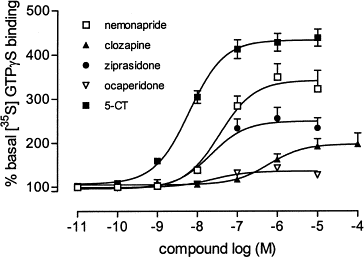
In vitro activity: Ocaperidone exhibits high affinify at 5-HT2 and dopamine D2, with Kis of 0.14 nM, 0.46 nM, 0.75 nM, 1.6 nM, and 5.4 nM for 5HT2, a1-adrenergic, dopamine D2, histamine H1, and a2-adrenergic, respectively[1]. Ocaperidone exhibits 5-HT1A receptor agonist activity, with a pEC50 and pKi of 7.60 and 8.08[2].
1. Receptor binding assays: Ocaperidone (R79598) exhibited high affinity for D2 dopamine receptors (Ki=0.3 nM), 5-HT2A (Ki=1.6 nM), 5-HT2C (Ki=3.7 nM), moderate affinity for α1-adrenergic (Ki=12 nM), H1 histamine (Ki=45 nM), α2-adrenergic (Ki=68 nM) receptors, and negligible affinity for muscarinic cholinergic receptors (Ki>1000 nM) in radioligand binding assays using rat brain membrane preparations [1] 2. 5-HT1A receptor functional assay: In HeLa cells expressing human recombinant 5-HT1A receptors, Ocaperidone (R79598) (10 nM–10 μM) did not induce any change in forskolin-stimulated cAMP accumulation (no intrinsic agonist/inverse agonist activity), but dose-dependently blocked the inhibitory effect of 5-CT (a selective 5-HT1A agonist) on cAMP accumulation, with an IC50 of 72 nM for antagonism [2] |
| ln Vivo |
Ocaperidone exhibits a strong occupation of 5HT2 receptors with an ED50 of 0.04 mg/kg in the rat frontal cortex and 0.1–0.1 6 mg/kg in the striatum and nucleus accumbens for D2 receptors[1]. Ocaperidone (R 79598) has an ED50 of 0.163 mg/kg and partially generalizes to buspirone, antagonistic to both dopamine D2 and 5-HT2[3].
1. Monoamine turnover assay in rat brain regions: Oral administration of Ocaperidone (R79598) (0.1, 0.3, 1, 3 mg/kg) to male Wistar rats dose-dependently increased dopamine (DA) turnover (DOPAC/DA ratio) in the striatum (maximal increase of ~80% at 3 mg/kg), nucleus accumbens (maximal increase of ~60% at 3 mg/kg), and olfactory tubercle (maximal increase of ~50% at 3 mg/kg); it also increased norepinephrine (NE) turnover (MHPG/NE ratio) in the frontal cortex (maximal increase of ~40% at 3 mg/kg) and hippocampus (maximal increase of ~30% at 3 mg/kg), and slightly increased serotonin (5-HT) turnover (5-HIAA/5-HT ratio) in the frontal cortex (maximal increase of ~20% at 3 mg/kg) [1] 2. Catalepsy induction in rats: Ocaperidone (R79598) induced catalepsy in male Wistar rats at oral doses ≥1 mg/kg, with a minimal effective dose (MED) of 1 mg/kg; the catalepsy score was dose-dependent (score of 1.2 at 1 mg/kg, 2.8 at 3 mg/kg, 3.5 at 10 mg/kg) [1] 3. Apomorphine antagonism in rats: Ocaperidone (R79598) (0.3, 1, 3 mg/kg, p.o.) dose-dependently antagonized apomorphine-induced (0.5 mg/kg, s.c.) stereotyped behavior in male Wistar rats, with an ED50 of 0.8 mg/kg [1] |
| Enzyme Assay |
It uses frozen HA7 cells to prepare the membranes. Following cell harvesting, they are homogenized in ice-cold Tris-HCl pH 7.4, 4°C for 10 minutes, and then centrifuged at 40000×g. Following another centrifugation, the pellet is suspended in the same buffer. Following a second centrifugation, the pellet is suspended in an assay buffer made up of Tris-HCl (50 mM, pH 7.4), pargyline (10 μM), and CaCl2 (4 mM). The [3H] 8-OH-DPAT (1 nM final concentration) and ocaperidone at seven concentrations are incubated with membrane protein (0.031-0.084 mg/tube) for 30 minutes at room temperature. Filtration through Whatman filters stops the reaction, and liquid scintillation spectrometry measures the amount of radioactivity. Triples are used to conduct the experiments. Non-linear curve fitting software, EBDA/LIGAND, is used to analyze data. The means of three determinations are included in the results expressed as pKi values[3].
1. Radioligand binding assay for dopamine/serotonidrenergic/histamine/muscarinic receptors: Rat brain tissues (striatum for D2, frontal cortex for 5-HT2A/5-HT2C/α1/α2, whole brain for H1, cortex for muscarinic) were homogenized in ice-cold buffer and centrifuged to prepare membrane fractions; membrane suspensions were incubated with specific radioligands ([3H]spiperone for D2, [3H]ketanserin for 5-HT2A/5-HT2C, [3H]prazosin for α1, [3H]yohimbine for α2, [3H]pyrilamine for H1, [3H]quinuclidinyl benzilate for muscarinic) and serial dilutions of Ocaperidone (R79598) (10⁻¹¹–10⁻⁵ M) for 60 minutes at 25°C; non-specific binding was determined in the presence of excess unlabeled ligands; bound radioactivity was separated by filtration and counted using a scintillation counter; Ki values were calculated using the Cheng-Prusoff equation [1] 2. 5-HT1A receptor radioligand binding assay: Membrane preparations from HeLa cells expressing human recombinant 5-HT1A receptors were incubated with [3H]8-OH-DPAT (a selective 5-HT1A radioligand) and serial dilutions of Ocaperidone (R79598) (10⁻¹⁰–10⁻⁵ M) for 90 minutes at 30°C; non-specific binding was defined with excess 5-HT (10⁻⁴ M); bound radioactivity was collected by filtration and quantified via liquid scintillation counting; Ki values were computed using standard ligand binding equations [2] |
| Cell Assay |
1. 5-HT1A receptor functional assay in HeLa cells: HeLa cells stably expressing human recombinant 5-HT1A receptors were seeded in 24-well plates and cultured for 24 hours; cells were preincubated with Ocaperidone (R79598) (10 nM–10 μM) or vehicle for 15 minutes at 37°C, then forskolin (10 μM) and 5-CT (10 nM, a selective 5-HT1A agonist) were added and incubated for an additional 15 minutes; intracellular cAMP levels were measured using a competitive immunoassay kit; the ability of Ocaperidone (R79598) to block 5-CT-induced inhibition of forskolin-stimulated cAMP accumulation was calculated as percentage inhibition, and IC50 values were determined from concentration-response curves [2]
|
| Animal Protocol |
Rats: Male Wistar rats weighing 200 g are given subcutaneous injections of Ocaperidone dissolved in saline at different dosages (0.01-10 or 2.5-40 mg/kg) or saline (control) injections every hour. After that, the rats receive an intravenous injection of 1 μg/kg (5-10 μCi) [3H]spiperone in the tail vein. One hour after receiving the [3H]spiperone injection, the rats are decapitated and their striatum, nucleus accumbens, tuberculum olfactorium, frontal cortex, and cerebellum are immediately dissected. The tissues are placed in plastic counting vials, cooled on ice, weighed, and dissolved in 10 mL of Instagel II. The radioactivity is counted after 48 hours; the data are expressed in dpm and are based on a quenched standard curve and external standard counting. The radioactivity count is expressed as pg of [3H]spiperone per milligram of tissue. For every dosage of medication, four to six animals are treated. The values are averaged and graphically plotted against the logarithm of the drug dosages for each drug and brain area. The values obtained from the cerebellum are plotted on each graph; labeling in the cerebellum is interpreted as a sign of nonspecific tissue labeling[1].
1. Monoamine turnover measurement in rats: Male Wistar rats (200–250 g) were fasted overnight and orally administered Ocaperidone (R79598) (0.1, 0.3, 1, 3 mg/kg) dissolved in 0.5% methylcellulose (vehicle) or vehicle alone (volume: 10 ml/kg); control rats received vehicle only. Rats were euthanized 2 hours post-dosing, and brain regions (striatum, nucleus accumbens, olfactory tubercle, frontal cortex, hippocampus) were dissected on ice; tissues were homogenized in 0.1 M perchloric acid containing EDTA (0.1 mM) and sodium metabisulfite (0.1%); homogenates were centrifuged (15,000 × g for 15 minutes at 4°C), and supernatants were analyzed for monoamines (DA, NE, 5-HT) and their metabolites (DOPAC, MHPG, 5-HIAA) using high-performance liquid chromatography (HPLC) with electrochemical detection (n=6–8 per dose group) [1] 2. Catalepsy test in rats: Male Wistar rats (200–250 g) were orally dosed with Ocaperidone (R79598) (0.1, 0.3, 1, 3, 10 mg/kg) in 0.5% methylcellulose or vehicle (10 ml/kg); catalepsy was assessed 1, 2, 4, and 6 hours post-dosing by placing the rat’s forepaws on a horizontal bar (9 cm above the floor) and measuring the time the rat maintained this position (maximum 60 seconds); a score of ≥30 seconds was considered cataleptic; the median catalepsy score was calculated for each dose group (n=8 per dose) [1] 3. Apomorphine antagonism test in rats: Male Wistar rats (200–250 g) received oral Ocaperidone (R79598) (0.3, 1, 3 mg/kg) in 0.5% methylcellulose or vehicle (10 ml/kg) 1 hour before subcutaneous injection of apomorphine (0.5 mg/kg in 0.9% saline); stereotyped behavior (sniffing, licking, gnawing) was observed for 30 minutes post-apomorphine injection and scored on a 0–4 scale (0 = no stereotypy, 4 = continuous stereotypy); the percentage inhibition of stereotyped behavior was calculated relative to vehicle-treated controls, and ED50 was determined from dose-response curves (n=8 per dose) [1] |
| References |
|
| Additional Infomation |
Ocarpiperone is a pyridoxine class of antipsychotic drugs. Drug Indications It has been studied for the treatment of schizophrenia and schizoaffective disorder. Mechanism of Action Ocarpiperone is a benzisoxazolepiperidine antipsychotic that binds primarily with high affinity to 5-HT2 (serotonin) receptors, α1 and α2 adrenergic receptors, dopamine D2 receptors, and histamine H1 receptors. Ocarpiperone primarily antagonizes 5-HT2 and D2 receptors. One proposed mechanism of action is central D2 receptor blockade, a common mechanism of action for all antipsychotics used to treat positive symptoms of schizophrenia.
1. Ocarpiperone (R79598) is a novel benzisoxazole antipsychotic drug with a structure related to risperidone. It is designed to target multiple monoaminergic receptors to exert antipsychotic effects and reduce extrapyramidal side effects[1]. 2. The receptor spectrum of oxapeptide (R79598) (high affinity for D2/5-HT2A receptors, moderate affinity for 5-HT2C/α1/H1/α2 receptors, and no affinity for muscarinic receptors) conforms to the characteristics of “atypical” antipsychotic drugs, characterized by a balance of antagonistic effects on D2 and 5-HT2A receptors[1]. 3. In the functional assay of human 5-HT1A receptors, oxapeptide (R79598) is a silent antagonist (without agonist/reverse agonist activity), which distinguishes it from some other drugs that target 5-HT1A receptors. Antipsychotic drugs with partial receptor agonist activity (e.g., clozapine, aripiprazole) [2] |
| Molecular Formula |
C24H25FN4O2
|
|
|---|---|---|
| Molecular Weight |
420.49
|
|
| Exact Mass |
420.196
|
|
| Elemental Analysis |
C, 68.55; H, 5.99; F, 4.52; N, 13.32; O, 7.61
|
|
| CAS # |
129029-23-8
|
|
| Related CAS # |
|
|
| PubChem CID |
71351
|
|
| Appearance |
White to off-white solid powder
|
|
| Density |
1.34g/cm3
|
|
| Boiling Point |
588ºC at 760mmHg
|
|
| Melting Point |
180-184°C
|
|
| Flash Point |
309.4ºC
|
|
| Vapour Pressure |
8.36E-14mmHg at 25°C
|
|
| Index of Refraction |
1.667
|
|
| LogP |
3.951
|
|
| Hydrogen Bond Donor Count |
0
|
|
| Hydrogen Bond Acceptor Count |
6
|
|
| Rotatable Bond Count |
4
|
|
| Heavy Atom Count |
31
|
|
| Complexity |
856
|
|
| Defined Atom Stereocenter Count |
0
|
|
| SMILES |
O=C1C(CCN2CCC(C3=NOC4=C3C=CC(F)=C4)CC2)=C(C)N=C5N1C=CC=C5C
|
|
| InChi Key |
ZZQNEJILGNNOEP-UHFFFAOYSA-N
|
|
| InChi Code |
InChI=1S/C24H25FN4O2/c1-15-4-3-10-29-23(15)26-16(2)19(24(29)30)9-13-28-11-7-17(8-12-28)22-20-6-5-18(25)14-21(20)31-27-22/h3-6,10,14,17H,7-9,11-13H2,1-2H3
|
|
| Chemical Name |
3-[2-[4-(6-fluoro-1,2-benzoxazol-3-yl)piperidin-1-yl]ethyl]-2,9-dimethylpyrido[1,2-a]pyrimidin-4-one
|
|
| Synonyms |
|
|
| HS Tariff Code |
2934.99.9001
|
|
| Storage |
Powder -20°C 3 years 4°C 2 years In solvent -80°C 6 months -20°C 1 month |
|
| Shipping Condition |
Room temperature (This product is stable at ambient temperature for a few days during ordinary shipping and time spent in Customs)
|
| Solubility (In Vitro) |
|
|||
|---|---|---|---|---|
| Solubility (In Vivo) |
Solubility in Formulation 1: ≥ 1.67 mg/mL (3.97 mM) (saturation unknown) in 10% DMSO + 40% PEG300 + 5% Tween80 + 45% Saline (add these co-solvents sequentially from left to right, and one by one), clear solution.
For example, if 1 mL of working solution is to be prepared, you can add 100 μL of 16.7 mg/mL clear DMSO stock solution to 400 μL PEG300 and mix evenly; then add 50 μL Tween-80 to the above solution and mix evenly; then add 450 μL normal saline to adjust the volume to 1 mL. Preparation of saline: Dissolve 0.9 g of sodium chloride in 100 mL ddH₂ O to obtain a clear solution. Solubility in Formulation 2: 1.67 mg/mL (3.97 mM) in 10% DMSO + 90% (20% SBE-β-CD in Saline) (add these co-solvents sequentially from left to right, and one by one), suspension solution; with ultrasonication. For example, if 1 mL of working solution is to be prepared, you can add 100 μL of 16.7 mg/mL clear DMSO stock solution to 900 μL of 20% SBE-β-CD physiological saline solution and mix evenly. Preparation of 20% SBE-β-CD in Saline (4°C,1 week): Dissolve 2 g SBE-β-CD in 10 mL saline to obtain a clear solution. (Please use freshly prepared in vivo formulations for optimal results.) |
| Preparing Stock Solutions | 1 mg | 5 mg | 10 mg | |
| 1 mM | 2.3782 mL | 11.8909 mL | 23.7818 mL | |
| 5 mM | 0.4756 mL | 2.3782 mL | 4.7564 mL | |
| 10 mM | 0.2378 mL | 1.1891 mL | 2.3782 mL |
*Note: Please select an appropriate solvent for the preparation of stock solution based on your experiment needs. For most products, DMSO can be used for preparing stock solutions (e.g. 5 mM, 10 mM, or 20 mM concentration); some products with high aqueous solubility may be dissolved in water directly. Solubility information is available at the above Solubility Data section. Once the stock solution is prepared, aliquot it to routine usage volumes and store at -20°C or -80°C. Avoid repeated freeze and thaw cycles.
Calculation results
Working concentration: mg/mL;
Method for preparing DMSO stock solution: mg drug pre-dissolved in μL DMSO (stock solution concentration mg/mL). Please contact us first if the concentration exceeds the DMSO solubility of the batch of drug.
Method for preparing in vivo formulation::Take μL DMSO stock solution, next add μL PEG300, mix and clarify, next addμL Tween 80, mix and clarify, next add μL ddH2O,mix and clarify.
(1) Please be sure that the solution is clear before the addition of next solvent. Dissolution methods like vortex, ultrasound or warming and heat may be used to aid dissolving.
(2) Be sure to add the solvent(s) in order.
Agonist activity of antipsychotics at h5-HT1Areceptors in comparison with 5-CT.Eur J Pharmacol.2001 Dec 14;433(1):55-62. |
|---|
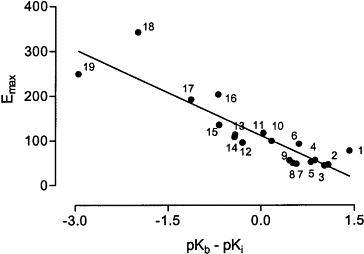
Correlation betweenKb/Kiratio and efficacy of antipsychotics and 5-HT1Areceptor ligands.Eur J Pharmacol.2001 Dec 14;433(1):55-62. |
Products are for research use only; We do not sell to patients
Copyright 2020 InvivoChem LLC | All Rights Reserved


 COA
COA