| Size | Price | Stock | Qty |
|---|---|---|---|
| 5mg |
|
||
| 10mg |
|
||
| 25mg |
|
||
| 50mg |
|
||
| 100mg |
|
||
| 500mg | |||
| Other Sizes |
Purity: ≥98%
| Targets |
EphA2 (IC50 = 3.3 nM); EphB4 (IC50 = 3 nM)
NVP-BHG712 targets ALK5 (TGFβRI, Transforming Growth Factor β Receptor I) with an IC50 value of 14 nM [1] |
|---|---|
| ln Vitro |
NVP-BHG712 treatment also inhibits RTK autophosphorylation in stable transfected A375 melanoma cells with an EC50 of 25 nM for EphB4 and 4.2 μM for VEGFR2, respectively. [1]
ALK5 kinase activity inhibition: NVP-BHG712 potently inhibited the kinase activity of recombinant human ALK5, with an IC50 of 14 nM. It showed minimal inhibition against other related kinases, indicating high target selectivity [1] - TGFβ-induced Smad2 phosphorylation inhibition: In TGFβ-stimulated NIH/3T3 fibroblasts, NVP-BHG712 concentration-dependently blocked Smad2 phosphorylation (detected by western blot) without affecting total Smad2 protein levels. The inhibitory effect was observable at nanomolar concentrations [1] - Fibroblast proliferation suppression: NVP-BHG712 inhibited TGFβ-induced proliferation of NIH/3T3 fibroblasts, with a significant reduction in cell number observed after 72 hours of treatment at effective concentrations [1] - Fibroblast migration inhibition: In Transwell migration assays, NVP-BHG712 reduced TGFβ-induced migration of NIH/3T3 fibroblasts, decreasing the number of migrated cells compared to the TGFβ-treated control group [1] - Endothelial tube formation inhibition: In human umbilical vein endothelial cells (HUVECs), NVP-BHG712 inhibited TGFβ-induced tube formation, a key step in angiogenesis, by reducing tube length and branching points [1] |
| ln Vivo |
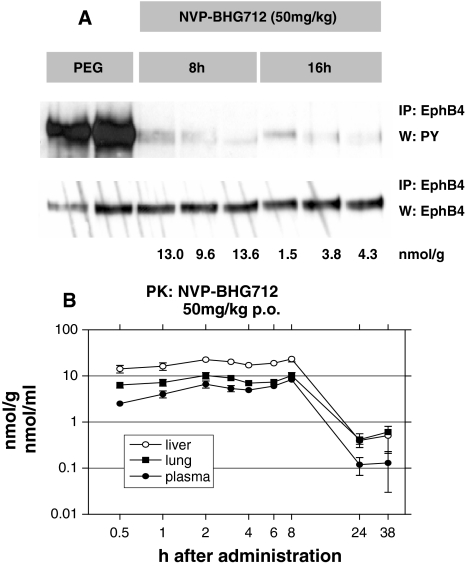
NVP-BHG712 (3 mg/kg, p.o.) significantly reduces VEGF-stimulated tissue formation and vascularization in a model of growth factor-induced angiogenesis by inhibiting EphB4 forward signaling. The potent reversal of VEGF-enhanced tissue formation and vessel growth is another benefit of NVP-BHG712 (10 mg/kg/kg, p.o.). The long-lasting exposure of NVP-BHG712 (3 mg/kg, p.o.) results in a long-lasting inhibition of EphB4 kinase activity in mice, with concentrations of around 10 μM in plasma as well as in lung and liver tissue for up to 8 hours. [1]
Angiogenesis suppression in Matrigel plug assay: In mice subcutaneously implanted with Matrigel plugs containing TGFβ, NVP-BHG712 administration significantly inhibited angiogenesis. The hemoglobin content in Matrigel plugs (a marker of vascularization) was reduced by approximately 50% compared to the control group. Histological analysis confirmed a decrease in the density of functional blood vessels [1] |
| Enzyme Assay |
NVP-BHG712 is a specific EphB4 inhibitor with an ED50 of 25 nM that distinguishes between EphB4 and VEGFR inhibition; it also exhibits activity against c-Raf, c-Src, and c-Abl with IC50 values of 0.395 μM, 1.266 μM and 1.667 μM, respectively.
ALK5 kinase activity assay: Prepare reaction mixtures containing recombinant human ALK5 kinase domain, ATP, and a specific peptide substrate. Add serial dilutions of NVP-BHG712 to the mixtures and incubate at 30°C for a specified period. Terminate the reaction with a stop solution, then detect the phosphorylation of the peptide substrate using a time-resolved fluorescence resonance energy transfer (TR-FRET) method. Calculate the IC50 value by plotting the inhibition rate against drug concentration [1] |
| Cell Assay |
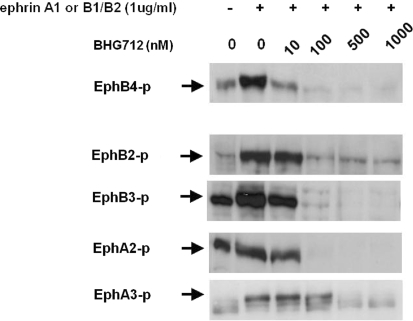
NVP-BHG712 inhibited the autophosphorylation of different EphRs in Hek293 cells after transfection. EphB4 was more inhibited by NVP-BHG712 than EphB2, EphA2, EphB3, and EphA2.
TGFβ-induced Smad2 phosphorylation assay: Culture NIH/3T3 fibroblasts in serum-reduced medium overnight. Pretreat cells with different concentrations of NVP-BHG712 for 1 hour, then stimulate with TGFβ for 30 minutes. Lyse cells to extract total protein, separate proteins by SDS-PAGE, and perform western blot using antibodies against phosphorylated Smad2 and total Smad2 to evaluate the inhibitory effect [1] - Fibroblast proliferation assay: Seed NIH/3T3 fibroblasts in 96-well plates and incubate overnight. Pretreat with NVP-BHG712 for 1 hour, then add TGFβ. After 72 hours of incubation, assess cell proliferation using a colorimetric assay based on metabolic activity. Calculate the percentage of proliferation relative to the TGFβ-treated control [1] - Fibroblast migration assay: Place NIH/3T3 fibroblasts in the upper chamber of Transwell inserts. Pretreat the cells with NVP-BHG712 for 1 hour, then add TGFβ to the lower chamber as a chemoattractant. Incubate for 24 hours, fix and stain the migrated cells on the lower surface of the insert, and count the number of migrated cells under a microscope [1] - Endothelial tube formation assay: Coat 96-well plates with Matrigel and allow it to solidify. Seed HUVECs in the wells and treat with NVP-BHG712 and TGFβ. Incubate for 6 hours, then observe and image the tube structures. Quantify tube formation by measuring total tube length and branching points using image analysis software [1] |
| Animal Protocol |
VEGF-mediated angiogenesis in vivo is induced in a growth factor implant model in mice.
≤30 mg/kg Administered via p.o. Matrigel plug angiogenesis assay: Prepare Matrigel mixtures containing TGFβ and heparin. Inject the mixtures subcutaneously into the flanks of mice to form Matrigel plugs. Administer NVP-BHG712 via intraperitoneal injection once daily at a dose of 30 mg/kg for 7 consecutive days. On day 8, euthanize the mice and excise the Matrigel plugs. Measure the hemoglobin content of the plugs to assess vascularization, and process the plugs for histological sectioning and hematoxylin-eosin staining to analyze blood vessel density [1] |
| References | |
| Additional Infomation |
4-Methyl-3-[[1-methyl-6-(3-pyridyl)-4-pyrazolo[3,4-d]pyrimidinyl]amino]-N-[3-(trifluoromethyl)phenyl]benzamide belongs to the benzamide class of compounds. Mechanism of action: NVP-BHG712 is a selective small molecule ALK5 inhibitor. It binds to the kinase domain of ALK5, blocking TGFβ-induced receptor activation and subsequent Smad2/3 phosphorylation. This inhibits downstream signaling pathways regulating cell proliferation, migration, and angiogenesis [1]. Therapeutic potential: Due to its anti-angiogenic activity, NVP-BHG712 holds promise as a potential treatment for diseases characterized by abnormal angiogenesis, such as cancer and fibrotic diseases [1].
|
| Molecular Formula |
C26H20F3N7O
|
|
|---|---|---|
| Molecular Weight |
503.48
|
|
| Exact Mass |
503.168
|
|
| Elemental Analysis |
C, 62.02; H, 4.00; F, 11.32; N, 19.47; O, 3.18
|
|
| CAS # |
940310-85-0
|
|
| Related CAS # |
NVP-BHG712 isomer;2245892-85-5
|
|
| PubChem CID |
16747388
|
|
| Appearance |
White to yellow solid powder
|
|
| Density |
1.4±0.1 g/cm3
|
|
| Index of Refraction |
1.666
|
|
| LogP |
4.05
|
|
| Hydrogen Bond Donor Count |
2
|
|
| Hydrogen Bond Acceptor Count |
9
|
|
| Rotatable Bond Count |
5
|
|
| Heavy Atom Count |
37
|
|
| Complexity |
786
|
|
| Defined Atom Stereocenter Count |
0
|
|
| SMILES |
O=C(C1C=C(NC2C3C=NN(C=3N=C(C3C=CC=NC=3)N=2)C)C(C)=CC=1)NC1C=C(C(F)(F)F)C=CC=1
|
|
| InChi Key |
ZCCPLJOKGAACRT-UHFFFAOYSA-N
|
|
| InChi Code |
InChI=1S/C26H20F3N7O/c1-15-8-9-16(25(37)32-19-7-3-6-18(12-19)26(27,28)29)11-21(15)33-23-20-14-31-36(2)24(20)35-22(34-23)17-5-4-10-30-13-17/h3-14H,1-2H3,(H,32,37)(H,33,34,35)
|
|
| Chemical Name |
4-methyl-3-[(1-methyl-6-pyridin-3-ylpyrazolo[3,4-d]pyrimidin-4-yl)amino]-N-[3-(trifluoromethyl)phenyl]benzamide
|
|
| Synonyms |
|
|
| HS Tariff Code |
2934.99.9001
|
|
| Storage |
Powder -20°C 3 years 4°C 2 years In solvent -80°C 6 months -20°C 1 month |
|
| Shipping Condition |
Room temperature (This product is stable at ambient temperature for a few days during ordinary shipping and time spent in Customs)
|
| Solubility (In Vitro) |
DMSO: ~101 mg/mL (~200.6 mM)
Water: 1 mg/mL (Insoluble) Ethanol: ~3 mg/mL (~6.0 mM) |
|---|---|
| Solubility (In Vivo) |
Solubility in Formulation 1: ≥ 2.08 mg/mL (4.13 mM) (saturation unknown) in 10% DMSO + 40% PEG300 + 5% Tween80 + 45% Saline (add these co-solvents sequentially from left to right, and one by one), clear solution.
For example, if 1 mL of working solution is to be prepared, you can add 100 μL of 20.8 mg/mL clear DMSO stock solution to 400 μL PEG300 and mix evenly; then add 50 μL Tween-80 to the above solution and mix evenly; then add 450 μL normal saline to adjust the volume to 1 mL. Preparation of saline: Dissolve 0.9 g of sodium chloride in 100 mL ddH₂ O to obtain a clear solution. Solubility in Formulation 2: ≥ 2.08 mg/mL (4.13 mM) (saturation unknown) in 10% DMSO + 90% Corn Oil (add these co-solvents sequentially from left to right, and one by one), clear solution. For example, if 1 mL of working solution is to be prepared, you can add 100 μL of 20.8 mg/mL clear DMSO stock solution to 900 μL of corn oil and mix evenly. View More
Solubility in Formulation 3: NMP+polyethylene glycol 300 (10/90, v/v): 30mg/mL |
| Preparing Stock Solutions | 1 mg | 5 mg | 10 mg | |
| 1 mM | 1.9862 mL | 9.9309 mL | 19.8618 mL | |
| 5 mM | 0.3972 mL | 1.9862 mL | 3.9724 mL | |
| 10 mM | 0.1986 mL | 0.9931 mL | 1.9862 mL |
*Note: Please select an appropriate solvent for the preparation of stock solution based on your experiment needs. For most products, DMSO can be used for preparing stock solutions (e.g. 5 mM, 10 mM, or 20 mM concentration); some products with high aqueous solubility may be dissolved in water directly. Solubility information is available at the above Solubility Data section. Once the stock solution is prepared, aliquot it to routine usage volumes and store at -20°C or -80°C. Avoid repeated freeze and thaw cycles.
Calculation results
Working concentration: mg/mL;
Method for preparing DMSO stock solution: mg drug pre-dissolved in μL DMSO (stock solution concentration mg/mL). Please contact us first if the concentration exceeds the DMSO solubility of the batch of drug.
Method for preparing in vivo formulation::Take μL DMSO stock solution, next add μL PEG300, mix and clarify, next addμL Tween 80, mix and clarify, next add μL ddH2O,mix and clarify.
(1) Please be sure that the solution is clear before the addition of next solvent. Dissolution methods like vortex, ultrasound or warming and heat may be used to aid dissolving.
(2) Be sure to add the solvent(s) in order.
NVP-BHG712 inhibits multiple Eph receptor kinases in cell based assays.Angiogenesis.2010 Sep;13(3):259-67. |
NVP-BHG712 inhibits endogenous EphB4 autophosphorylation in lung tissue of mice and has micromolar exposure in plasma and tissues.Angiogenesis.2010 Sep;13(3):259-67. |
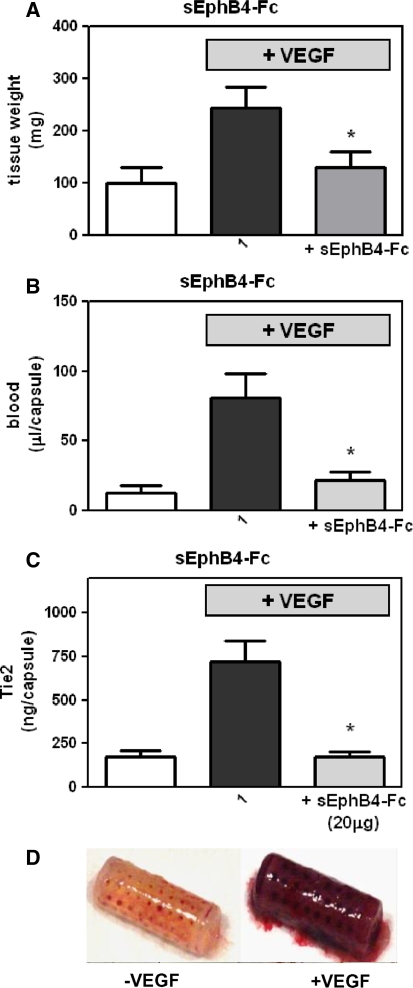
Soluble EphB4-Fc protein inhibits VEGF driven tissue growth and angiogenesis.Angiogenesis.2010 Sep;13(3):259-67. |
Products are for research use only; We do not sell to patients
Copyright 2020 InvivoChem LLC | All Rights Reserved


 COA
COA