| Size | Price | Stock | Qty |
|---|---|---|---|
| 5mg |
|
||
| 10mg |
|
||
| 25mg |
|
||
| 50mg |
|
||
| 100mg |
|
||
| 250mg | |||
| Other Sizes |


Purity: ≥98%
| Targets |
NS-11021 targets the large-conductance Ca2+-activated potassium channel (BKCa, KCa1.1). It activates the channel by altering gating kinetics without affecting the single-channel conductance. NS11021 increased the open probability of the channel. It influences neither a number of cloned Kv channels nor endogenous Na+ and Ca2+ channels (L- and T-type) in guinea pig cardiac myocytes.
|
|---|---|
| ln Vitro |
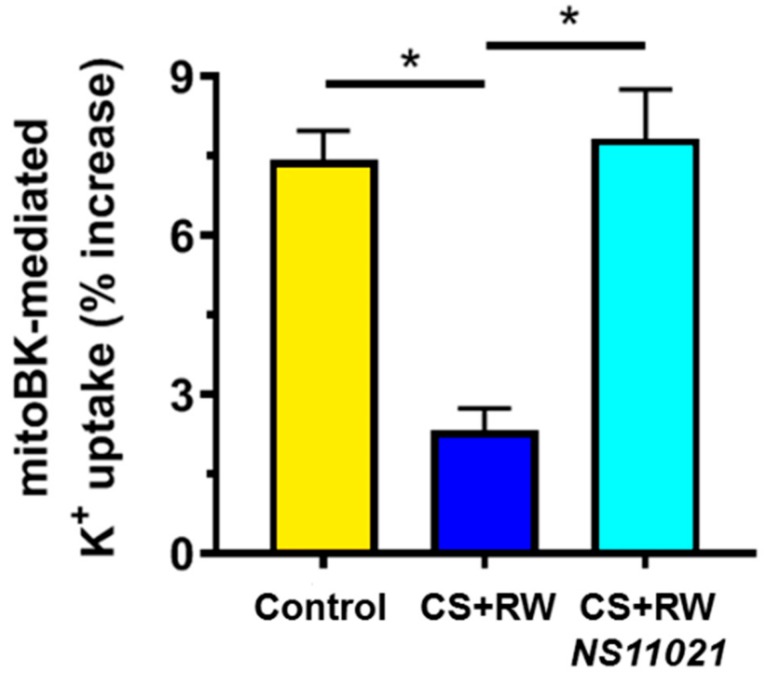
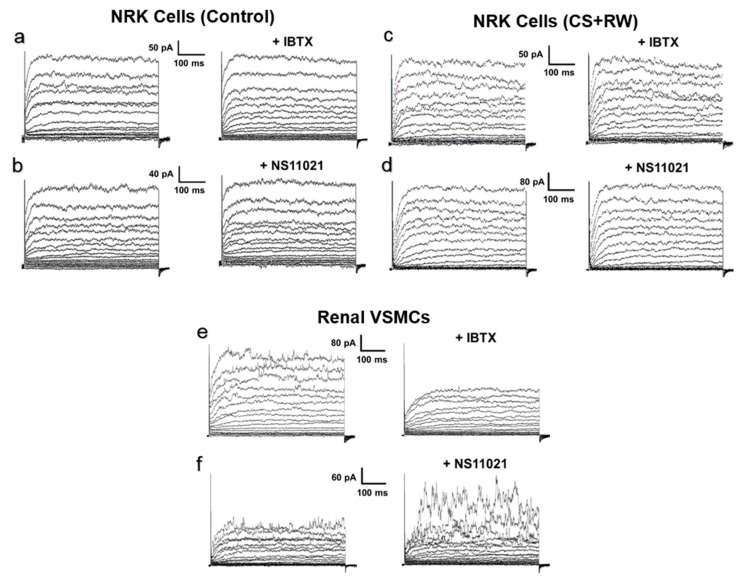
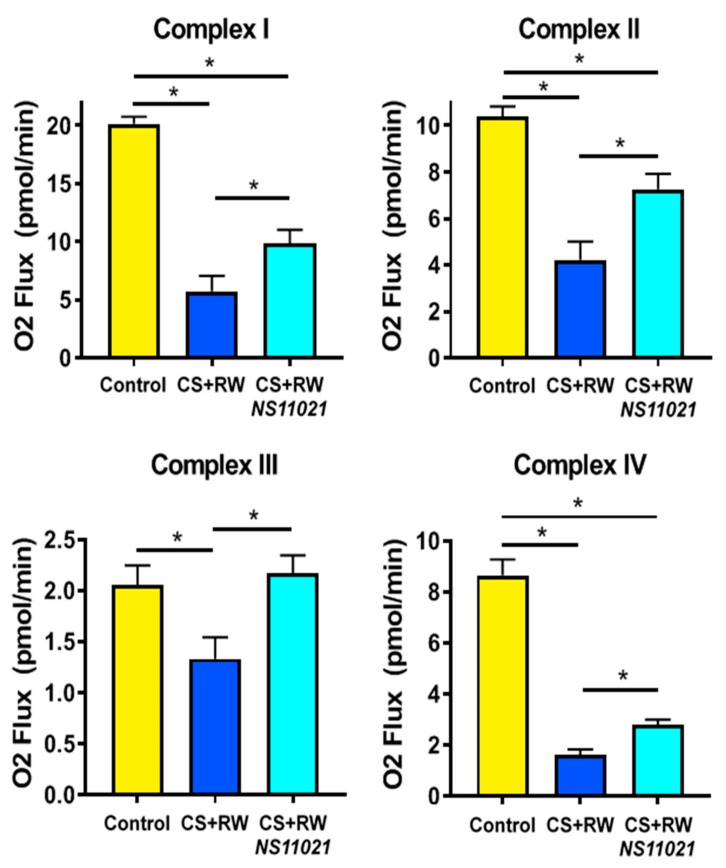
At a concentration of 3 μM, NS 11021 (1-30 μM) increases hKCa1.1 current from 2 μA to 4 μA and can dose-dependently activate hKCa1.1 channels in X. laevis eggs. The channel's hKCa1.1 current is increased by 171% by NS 11021 (3 μM), causing it to alternate between open and closed structures on a regular basis. NS 11021 (0-10 μM), a channel in X that keeps its structure closed. monoclonal HEK293 cells that consistently express hKCa1.1 can have their hKCa1.1 currents enhanced by laevis oocytes in a concentration-dependent way [1]. The frog gastrocnemius muscle's resting membrane potential (RMP) was unaffected by NS 11021 (5 or 50 μM, which increased current by 187%[1] M), but the action potential (AP) rise time was markedly and dose-dependently increased. Completely reversing the death of the upper stage of the AP complex caused by hydrogen peroxide in dividing myofibers, NS 11021 (1 μM) Attenuates the effects of CS+RW in Proximal Renal Renal Kubular Epithelial (NRK) cells (Cold for 18 hours and Rewarmed for 2 hours) on conductive mitoBK channels. cell death, depolarization, generation of superoxide, and respiratory failure [3].
In vitro, NS11021 activates KCa1.1 in a concentration-dependent manner. NS11021 increased the open probability of the channel by altering gating kinetics without affecting the single-channel conductance. It leads to relaxation of both intracavernous arteries and corpus cavernosum strips primarily through opening of BKCa channels. It exhibits no modulatory effect on a variety of K+ (KV), Na+, and Ca2+ channels. |
| ln Vivo |
In vivo, NS11021 has been used to study the role of BKCa channels in various physiological processes. Its vasorelaxant effects have been demonstrated in isolated tissue preparations. The compound's ability to activate BKCa channels makes it a valuable tool for studying smooth muscle function, neurotransmission, and other BKCa-mediated processes.
|
| Enzyme Assay |
The activity of NS-11021 is assessed using electrophysiological techniques, specifically patch-clamp electrophysiology. Cells expressing KCa1.1 channels are treated with varying concentrations of NS11021. The whole-cell or single-channel currents are recorded. The shift in the voltage-dependence of activation and the increase in open probability are measured. The EC50 for channel activation is determined from dose-response curves.
|
| Cell Assay |
To evaluate the cellular effects of NS-11021, cells expressing BKCa channels or native tissues such as smooth muscle cells are treated with the compound. The activation of BKCa channels and its effects on membrane potential, calcium influx, and contractility are measured. The compound's selectivity over other ion channels is assessed using similar electrophysiological techniques.
|
| Animal Protocol |
In vivo studies with NS-11021 typically involve administration to animal models via various routes. Its vasorelaxant effects are assessed in models of vascular dysfunction. Its effects on neurotransmission and smooth muscle function are evaluated in appropriate tissue preparations.
|
| ADME/Pharmacokinetics |
NS-11021 has a molecular formula of C16H9BrF6N6S and a molecular weight of 511.24 g/mol. Its CAS number is 956014-19-0. It is a crystalline solid with a purity of >98%. It is soluble in DMSO (10 mM). It should be stored at -20°C as a powder.
|
| Toxicity/Toxicokinetics |
Specific toxicology data for NS-11021 are not extensively detailed in the available literature. As with all research compounds, standard safety precautions should be taken when handling NS-11021. It is intended for research use only and is not for human consumption.
|
| References |
|
| Additional Infomation |
NS-11021 is a potent and specific activator of large-conductance Ca2+-activated potassium channels (BKCa/KCa1.1). It is used as a research tool to study the role of BKCa channels in smooth muscle relaxation, neurotransmission, and other physiological processes. Its improved specificity and potency over NS1619 make it a valuable compound for BKCa channel research.
|
| Molecular Formula |
C16H9BRF6N6S
|
|---|---|
| Molecular Weight |
511.2444
|
| Exact Mass |
509.97
|
| Elemental Analysis |
C, 37.59; H, 1.77; Br, 15.63; F, 22.30; N, 16.44; S, 6.27
|
| CAS # |
956014-19-0
|
| Related CAS # |
956014-19-0;
|
| PubChem CID |
24825677
|
| Appearance |
White to off-white solid powder
|
| Density |
1.798±0.06 g/cm3(20 °C , 760mmHg)
|
| Boiling Point |
507.5±60.0 °C (760 mmHg)
|
| LogP |
5.621
|
| Hydrogen Bond Donor Count |
3
|
| Hydrogen Bond Acceptor Count |
10
|
| Rotatable Bond Count |
3
|
| Heavy Atom Count |
30
|
| Complexity |
586
|
| Defined Atom Stereocenter Count |
0
|
| SMILES |
FC(C1C=C(C(F)(F)F)C=C(NC(NC2C(C3NN=NN=3)=CC(Br)=CC=2)=S)C=1)(F)F
|
| InChi Key |
INVIVOAFDIKYQMOMF-UHFFFAOYSA-N
|
| InChi Code |
InChI=1S/C16H9BrF6N6S/c17-9-1-2-12(11(6-9)13-26-28-29-27-13)25-14(30)24-10-4-7(15(18,19)20)3-8(5-10)16(21,22)23/h1-6H,(H2,24,25,30)(H,26,27,28,29)
|
| Chemical Name |
N'-[3,5-bis(trifluoromethyl)phenyl]-N-[4-bromo-2-(2H-tetrazol-5-yl)phenyl]-thiourea
|
| Synonyms |
NS-11021 NS 11021 NS11021.
|
| HS Tariff Code |
2934.99.9001
|
| Storage |
Powder -20°C 3 years 4°C 2 years In solvent -80°C 6 months -20°C 1 month |
| Shipping Condition |
Room temperature (This product is stable at ambient temperature for a few days during ordinary shipping and time spent in Customs)
|
| Solubility (In Vitro) |
DMSO : ~100 mg/mL (~195.60 mM)
|
|---|---|
| Solubility (In Vivo) |
Solubility in Formulation 1: ≥ 2.08 mg/mL (4.07 mM) (saturation unknown) in 10% DMSO + 40% PEG300 + 5% Tween80 + 45% Saline (add these co-solvents sequentially from left to right, and one by one), clear solution.
For example, if 1 mL of working solution is to be prepared, you can add 100 μL of 20.8 mg/mL clear DMSO stock solution to 400 μL PEG300 and mix evenly; then add 50 μL Tween-80 to the above solution and mix evenly; then add 450 μL normal saline to adjust the volume to 1 mL. Preparation of saline: Dissolve 0.9 g of sodium chloride in 100 mL ddH₂ O to obtain a clear solution. Solubility in Formulation 2: ≥ 2.08 mg/mL (4.07 mM) (saturation unknown) in 10% DMSO + 90% Corn Oil (add these co-solvents sequentially from left to right, and one by one), clear solution. For example, if 1 mL of working solution is to be prepared, you can add 100 μL of 20.8 mg/mL clear DMSO stock solution to 900 μL of corn oil and mix evenly. (Please use freshly prepared in vivo formulations for optimal results.) |
| Preparing Stock Solutions | 1 mg | 5 mg | 10 mg | |
| 1 mM | 1.9560 mL | 9.7801 mL | 19.5603 mL | |
| 5 mM | 0.3912 mL | 1.9560 mL | 3.9121 mL | |
| 10 mM | 0.1956 mL | 0.9780 mL | 1.9560 mL |
*Note: Please select an appropriate solvent for the preparation of stock solution based on your experiment needs. For most products, DMSO can be used for preparing stock solutions (e.g. 5 mM, 10 mM, or 20 mM concentration); some products with high aqueous solubility may be dissolved in water directly. Solubility information is available at the above Solubility Data section. Once the stock solution is prepared, aliquot it to routine usage volumes and store at -20°C or -80°C. Avoid repeated freeze and thaw cycles.
Calculation results
Working concentration: mg/mL;
Method for preparing DMSO stock solution: mg drug pre-dissolved in μL DMSO (stock solution concentration mg/mL). Please contact us first if the concentration exceeds the DMSO solubility of the batch of drug.
Method for preparing in vivo formulation::Take μL DMSO stock solution, next add μL PEG300, mix and clarify, next addμL Tween 80, mix and clarify, next add μL ddH2O,mix and clarify.
(1) Please be sure that the solution is clear before the addition of next solvent. Dissolution methods like vortex, ultrasound or warming and heat may be used to aid dissolving.
(2) Be sure to add the solvent(s) in order.
|
|
|
Products are for research use only; We do not sell to patients
Copyright 2020 InvivoChem LLC | All Rights Reserved


 COA
COA