
| Size | Price | Stock | Qty |
|---|---|---|---|
| 5mg |
|
||
| 10mg |
|
||
| 25mg |
|
||
| 50mg |
|
||
| 100mg |
|
||
| 250mg | |||
| Other Sizes |


| Targets |
Norbergenin has no identified single specific target; its biological activities are mainly mediated through antioxidant mechanisms [1]
|
|---|---|
| ln Vitro |
Norbergenin, which is the O-demethyl derivative of bergenin, the main component of Mallotus japonicus, has been found to show moderate antioxidant activity (IC(50) 13 microM in DPPH radical scavenging; 32 microM in superoxide anion scavenging). Modification of sugar part on norbergenin by coupling with a variety of fatty acids was employed for increasing its antioxidant activity. Selective esterification of hydroxyl groups on the sugar part enhanced greatly antioxidant activity.
Norbergenin exhibited potent DPPH radical scavenging activity with an IC₅₀ value of 28.6 μM, showing 3.2-fold higher activity than bergenin (IC₅₀ = 91.5 μM) [1] - It scavenged ABTS⁺ radicals with an IC₅₀ value of 35.2 μM, demonstrating concentration-dependent antioxidant capacity [1] - In H₂O₂-induced oxidative stress model of PC12 cells: Norbergenin (10–100 μM) dose-dependently increased cell viability, with 50 μM concentration improving survival rate by 58% compared to H₂O₂-only group (MTT assay) [1] - The compound reduced intracellular reactive oxygen species (ROS) levels in H₂O₂-treated PC12 cells: 50 μM decreased ROS fluorescence intensity by 46% (DCFH-DA staining, flow cytometry) [1] - Norbergenin (20–100 μM) dose-dependently increased superoxide dismutase (SOD) activity in PC12 cells, with 50 μM enhancing SOD activity by 38% compared to control [1] - No significant cytotoxicity was observed in PC12 cells at concentrations up to 200 μM (MTT assay) [1] |
| ln Vivo |
Norbergenin 11-hexanoate not only exhibited stronger antioxidant activity than catechins, but also prevented neuronal death in primary cultures of rat cortical neurons at a concentration of 10 microM in DMEM supplemented with N2.
|
| Enzyme Assay |
DPPH radical scavenging assay: Serial dilutions of Norbergenin (10–100 μM) were mixed with DPPH radical solution in ethanol. The mixture was incubated in the dark at 25°C for 30 minutes, and absorbance at 517 nm was measured. The IC₅₀ value was calculated based on the percentage of DPPH radical scavenging [1]
- ABTS radical cation scavenging assay: ABTS⁺ radical cation was generated by reacting ABTS with potassium persulfate. Norbergenin (10–100 μM) was added to the ABTS⁺ solution, incubated at 25°C for 15 minutes, and absorbance at 734 nm was recorded to determine scavenging activity and IC₅₀ [1] - SOD activity assay: PC12 cells were treated with Norbergenin (20–100 μM) for 24 hours. Cells were lysed, and the supernatant was mixed with SOD assay reagent. The reaction mixture was incubated at 37°C for 20 minutes, and absorbance at 550 nm was measured to calculate SOD activity [1] |
| Cell Assay |
PC12 cell oxidative stress protection assay: PC12 cells were seeded in 96-well plates (5×10³ cells/well) and cultured for 24 hours. The cells were pretreated with Norbergenin (10–100 μM) for 1 hour, then exposed to H₂O₂ (200 μM) for 24 hours. MTT reagent was added, and absorbance at 570 nm was measured to calculate cell viability [1]
- Intracellular ROS detection assay: PC12 cells were seeded in 6-well plates, pretreated with Norbergenin (50 μM) for 1 hour, and stimulated with H₂O₂ (200 μM) for 6 hours. Cells were loaded with DCFH-DA probe, incubated in the dark for 30 minutes, and analyzed by flow cytometry to quantify ROS levels [1] |
| References | |
| Additional Infomation |
Norbergenin has been found in African shield-leaved trees (Peltophorum africanum), Japanese privet (Mallotus japonicus), and other organisms with relevant data. Nobeganin is a natural derivative of beganin, isolated from plants of the Saxifragaceae family [1]. Its core biological activities include antioxidant and neuroprotective effects. Its antioxidant mechanism involves direct scavenging of free radicals (DPPH, ABTS⁺) and enhancing the activity of endogenous antioxidant enzymes (SOD) [1]. The compound exerts its neuroprotective effect by reducing oxidative stress-induced damage to PC12 cells, which are commonly used cell models for neurotoxicity and neuroprotective studies [1]. Compared with the parent compound beganin, nobeganin exhibits stronger antioxidant and neuroprotective efficacy, making it a potential lead compound for research on neurodegenerative diseases [1].
|
| Molecular Formula |
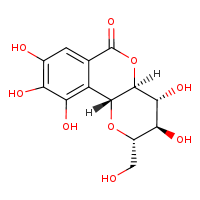
C13H14O9
|
|---|---|
| Molecular Weight |
314.246
|
| Exact Mass |
314.064
|
| Elemental Analysis |
C, 49.69; H, 4.49; O, 45.82
|
| CAS # |
79595-97-4
|
| PubChem CID |
90476206
|
| Appearance |
White to yellow solid powder
|
| Source |
Originated from plants: other families
|
| LogP |
-1.3
|
| Hydrogen Bond Donor Count |
6
|
| Hydrogen Bond Acceptor Count |
9
|
| Rotatable Bond Count |
1
|
| Heavy Atom Count |
22
|
| Complexity |
443
|
| Defined Atom Stereocenter Count |
5
|
| SMILES |
OC1C(O)=C(O)C=C2C=1[C@@H]1O[C@H](CO)[C@@H](O)[C@H](O)[C@H]1OC2=O
|
| InChi Key |
GDYGAIKPBLFCKR-OIPGZRGRSA-N
|
| InChi Code |
InChI=1S/C13H14O9/c14-2-5-8(17)10(19)12-11(21-5)6-3(13(20)22-12)1-4(15)7(16)9(6)18/h1,5,8,10-12,14-19H,2H2/t5-,8-,10+,11+,12-/m1/s1
|
| Chemical Name |
Pyrano(3,2-c)(2)benzopyran-6(2H)-one, 3,4,4a,10b-tetrahydro-3,4,8,9,10-pentahydroxy-2-(hydroxymethyl)-, (2R-(2alpha,3beta,4alpha,4aalpha,10bbeta))-
|
| Synonyms |
Demethylbergenin;Norbergenin
|
| HS Tariff Code |
2934.99.9001
|
| Storage |
Powder -20°C 3 years 4°C 2 years In solvent -80°C 6 months -20°C 1 month |
| Shipping Condition |
Room temperature (This product is stable at ambient temperature for a few days during ordinary shipping and time spent in Customs)
|
| Solubility (In Vitro) |
DMSO : ~125 mg/mL (~397.79 mM)
|
|---|---|
| Solubility (In Vivo) |
Solubility in Formulation 1: ≥ 2.08 mg/mL (6.62 mM) (saturation unknown) in 10% DMSO + 40% PEG300 + 5% Tween80 + 45% Saline (add these co-solvents sequentially from left to right, and one by one), clear solution.
For example, if 1 mL of working solution is to be prepared, you can add 100 μL of 20.8 mg/mL clear DMSO stock solution to 400 μL PEG300 and mix evenly; then add 50 μL Tween-80 to the above solution and mix evenly; then add 450 μL normal saline to adjust the volume to 1 mL. Preparation of saline: Dissolve 0.9 g of sodium chloride in 100 mL ddH₂ O to obtain a clear solution. Solubility in Formulation 2: ≥ 2.08 mg/mL (6.62 mM) (saturation unknown) in 10% DMSO + 90% (20% SBE-β-CD in Saline) (add these co-solvents sequentially from left to right, and one by one), clear solution. For example, if 1 mL of working solution is to be prepared, you can add 100 μL of 20.8 mg/mL clear DMSO stock solution to 900 μL of 20% SBE-β-CD physiological saline solution and mix evenly. Preparation of 20% SBE-β-CD in Saline (4°C,1 week): Dissolve 2 g SBE-β-CD in 10 mL saline to obtain a clear solution. View More
Solubility in Formulation 3: ≥ 2.08 mg/mL (6.62 mM) (saturation unknown) in 10% DMSO + 90% Corn Oil (add these co-solvents sequentially from left to right, and one by one), clear solution. |
| Preparing Stock Solutions | 1 mg | 5 mg | 10 mg | |
| 1 mM | 3.1822 mL | 15.9109 mL | 31.8218 mL | |
| 5 mM | 0.6364 mL | 3.1822 mL | 6.3644 mL | |
| 10 mM | 0.3182 mL | 1.5911 mL | 3.1822 mL |
*Note: Please select an appropriate solvent for the preparation of stock solution based on your experiment needs. For most products, DMSO can be used for preparing stock solutions (e.g. 5 mM, 10 mM, or 20 mM concentration); some products with high aqueous solubility may be dissolved in water directly. Solubility information is available at the above Solubility Data section. Once the stock solution is prepared, aliquot it to routine usage volumes and store at -20°C or -80°C. Avoid repeated freeze and thaw cycles.
Calculation results
Working concentration: mg/mL;
Method for preparing DMSO stock solution: mg drug pre-dissolved in μL DMSO (stock solution concentration mg/mL). Please contact us first if the concentration exceeds the DMSO solubility of the batch of drug.
Method for preparing in vivo formulation::Take μL DMSO stock solution, next add μL PEG300, mix and clarify, next addμL Tween 80, mix and clarify, next add μL ddH2O,mix and clarify.
(1) Please be sure that the solution is clear before the addition of next solvent. Dissolution methods like vortex, ultrasound or warming and heat may be used to aid dissolving.
(2) Be sure to add the solvent(s) in order.
Products are for research use only; We do not sell to patients
Copyright 2020 InvivoChem LLC | All Rights Reserved


