| Size | Price | Stock | Qty |
|---|---|---|---|
| 5mg |
|
||
| 10mg |
|
||
| 25mg |
|
||
| 50mg |
|
||
| 100mg |
|
||
| Other Sizes |
Purity: ≥98%
| Targets |
Necrosis; MLKL/mixed lineage kinase domain-like protein
Necrosulfonamide (NSA) selectively targets the Mixed Lineage Kinase Domain-like Protein (MLKL); no IC50, Ki, or EC50 values for this target were described in the literature. [1] Necrosulfonamide (NSA) specifically targets the Mixed Lineage Kinase Domain-like Protein (MLKL), which acts downstream of receptor-interacting serine-threonine kinase 3 (RIP3) in the necroptosis pathway; no IC50, Ki, or EC50 values for this target were described in the literature. [2] Necrosulfonamide (NSA) exerts its in vivo effects by targeting MLKL-mediated necroptosis; no IC50, Ki, or EC50 values for this target were described in the literature. [4] |
|---|---|
| ln Vitro |
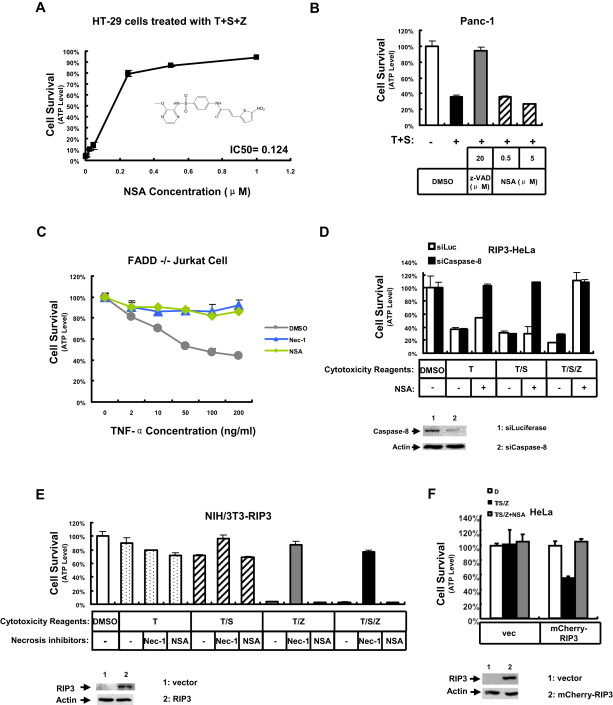
Necrosulfonamide inhibits MLKL-mediated Necrosis by blocking its N-terminal CC domain function. Following RIP3 activation, it prevents necrosis. Even at a concentration of 5 μM , necrosulfonamide has no impact on the apoptosis induced by TNF-α plus Smac mimetic in Panc-1 cells deficient in RIP3. In human cells, necrosulfonamide effectively inhibits necrosis, but not in mouse cells. The cysteine at residue 86 in human MLKL that necrosulfonamide covalently modifies is replaced by a tryptophan residue in mouse MLKL (mixed lineage kinase domain-like protein), which accounts for necrosulfonamide's species specificity[2].
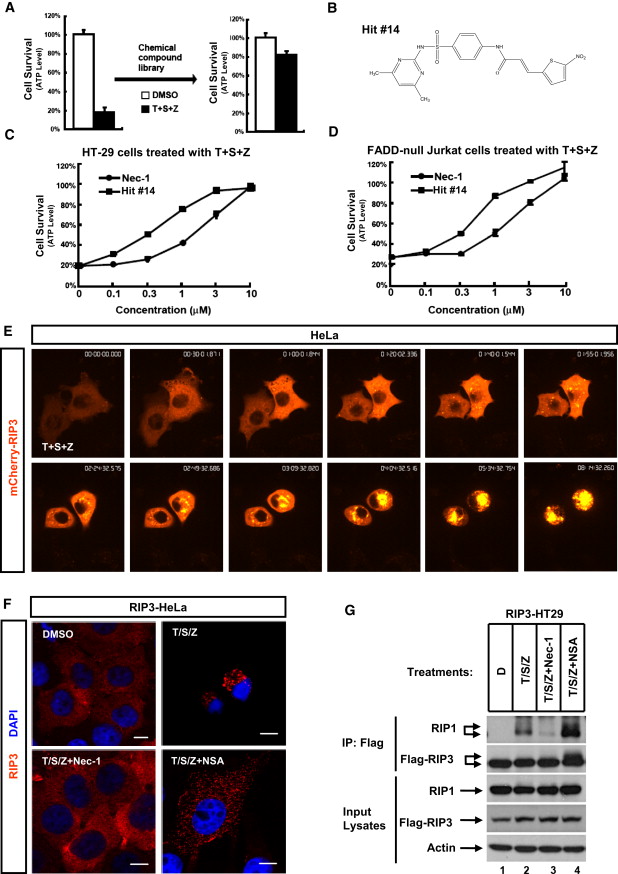
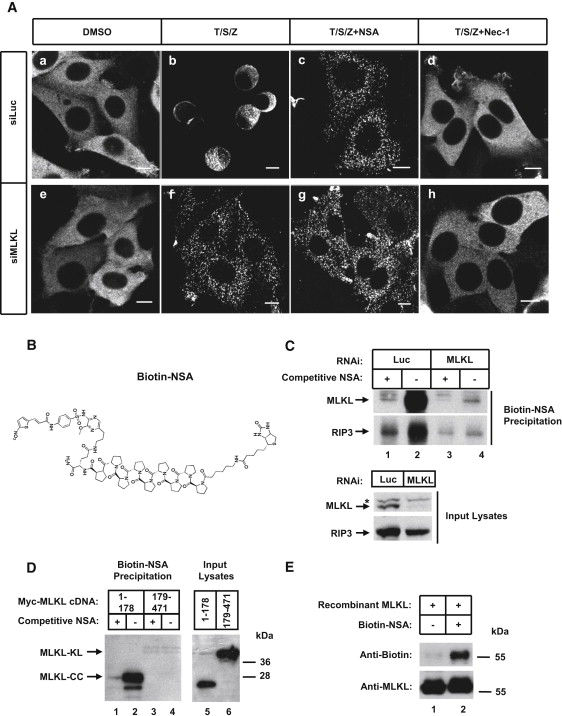
1. High-throughput screening of 200,000 compounds and subsequent structure–activity relationship (SAR) studies identified NSA as a potent small-molecule inhibitor of necroptosis. Necroptosis was induced in cells using a combination of tumor necrosis factor-alpha (TNF-α), Smac mimetic, and z-VAD-fmk (referred to as T/S/Z). A forward chemical genetic approach with an NSA-based chemical probe further revealed that NSA blocks necrosome formation by selectively binding to MLKL. [1] 2. NSA specifically blocks necrosis downstream of RIP3 activation. Two experimental approaches confirmed MLKL as the target of NSA: (i) an NSA-derived affinity probe was used to capture proteins that interact with NSA in cell lysates, and MLKL was identified as the primary interacting protein; (ii) co-immunoprecipitation (co-IP) using anti-RIP3 antibodies pulled down MLKL, demonstrating a physical interaction between RIP3 and MLKL. Additionally, RIP3 was found to phosphorylate MLKL at threonine 357 (T357) and serine 358 (S358), and these phosphorylation events were critical for triggering necrosis. Treating cells with NSA or knocking down MLKL expression arrested necrosis at a stage where RIP3 formed discrete punctae in the cytoplasm, indicating that NSA interrupts the necroptosis cascade after RIP3 aggregation but before MLKL-mediated membrane disruption. [2] |
| ln Vivo |
Necrosulfonamide (NSA) is a small molecule that targets MLKL, the final executor of necroptosis, to specifically inhibit necroptosis.
In a rat model of Alzheimer’s disease (AD) induced by oral administration of aluminum chloride (AlCl₃) at 17 mg/kg/day for 6 consecutive weeks, intraperitoneal injection of NSA at 1.65 mg/kg/day for 6 weeks exerted significant ameliorative effects: [4] - Behavioral improvements: NSA enhanced spatial learning and memory in rats, as evidenced by better performance in the Morris Water Maze (e.g., reduced escape latency and increased platform crossings) and Y-Maze (e.g., higher spontaneous alternation rate). - Biochemical adjustments: NSA reduced the abnormally elevated levels of hippocampal pro-inflammatory cytokine TNF-α, β-site amyloid precursor protein cleaving enzyme 1 (BACE1), β-amyloid peptide, glycogen synthase kinase-3β (GSK-3β), phosphorylated tau protein, and acetylcholinesterase (AChE). Concurrently, it restored the decreased level of acetylcholine (ACh) in the hippocampus. - Mechanistic action: The therapeutic effects of NSA were associated with its inhibition of the phosphorylation of MLKL (the key executor of necroptosis), which blocked MLKL-mediated necroptosis in the AD-affected hippocampus. - Histopathological support: Histological examination of hippocampal tissues confirmed reduced neuronal damage and β-amyloid deposition in NSA-treated rats, consistent with the biochemical findings. [4] |
| Enzyme Assay |
RIP1 and RIP3 were immunoprecipitated with an anti-Flag antibody. The Flag beads were incubated with 2 μCi of [32P]γ-ATP at 37°C for 1 hour with the artificial substrate MBP or purified recombinant MLKL after being washed three times with kinase buffer (50 mM HEPES, pH 7.5, 10 mM MgCl2, 50 mM NaCl, 0.02% BSA, 150 μM ATP, and 1 mM DTT). Then SDS-PAGE and autoradiography were applied to the reaction mixtures. We describe the discovery of a small molecule known as (E)-N-(4-(N-(3-methoxypyrazin-2-yl)sulfamoyl)phenyl)-3-(5-nitrothiophene-2-yl)acrylamide, also known as necrosulfonamide, which specifically inhibits necrosis downstream of RIP3 activation. The mixed lineage kinase domain-like protein (MLKL) was identified as the interacting target by coimmunoprecipitation with anti-RIP3 antibodies and an affinity probe made from necrosulfonamide. The threonine 357 and serine 358 residues on MLKL were phosphorylated by RIP3 and these phosphorylation events were essential for necrosis.
1. Affinity probe-based target identification assay for NSA: [2] An affinity probe was constructed by modifying the chemical structure of NSA to incorporate a reactive group (e.g., a photo-crosslinker) and a purification tag (e.g., biotin). Cell lysates were prepared from cells undergoing necroptosis (induced by T/S/Z or other necroptotic stimuli) and incubated with the NSA affinity probe. After incubation, the probe-protein complexes were captured using streptavidin-coated beads (to bind the biotin tag) or an antibody against the purification tag. The captured proteins were then eluted, separated by sodium dodecyl sulfate-polyacrylamide gel electrophoresis (SDS-PAGE), and identified via mass spectrometry (MS) or Western blotting. This assay confirmed MLKL as the primary protein that interacts with NSA. 2. Co-immunoprecipitation (co-IP) assay for RIP3-MLKL interaction: [2] Cells were treated with necroptotic stimuli (e.g., T/S/Z) to activate RIP3, and total protein was extracted using lysis buffer containing protease and phosphatase inhibitors. The protein lysate was incubated with an anti-RIP3 antibody at 4°C overnight to form antibody-RIP3 complexes. Protein A/G agarose beads were then added to the mixture and incubated for several hours to precipitate the antibody-RIP3 complexes. After washing the beads to remove non-specifically bound proteins, the precipitated complexes were eluted with Laemmli sample buffer and heated. The eluted proteins were analyzed by Western blotting using an anti-MLKL antibody to detect whether MLKL was co-precipitated with RIP3, confirming their physical interaction. [2] |
| Cell Assay |
Necrosis inhibitors induce diverse effects on MLKL phosphorylation. T/S/Z is applied to HT-29 cells for either 12 or 8 hours, with or without necrosis inhibitors. By monitoring released protease activity in the culture medium, the quantity of dead cells is calculated. The whole-cell extracts are made, and western blotting is used to analyze them. Final concentrations of 1 or 10 μM necrosulfonamide or necrostatin-1 inhibit necrosis.
1. Cell necroptosis induction and NSA inhibition assay: [2] Cultured cells (e.g., HeLa or HT29 cells) were seeded in multi-well plates and allowed to adhere overnight. Necroptosis was induced by adding a combination of TNF-α, Smac mimetic, and z-VAD-fmk (T/S/Z) to the culture medium. After inducing stimulus addition, cells were treated with serial concentrations of NSA (or vehicle as a control) and incubated for a specific period (e.g., 6–24 hours). Cell necroptosis was evaluated by measuring lactate dehydrogenase (LDH) release into the medium (a marker of membrane damage) or by microscopic observation of cell morphology (e.g., swollen cells with disrupted membranes). 2. MLKL knockdown and necroptosis validation assay: [2] Cells were transfected with small interfering RNA (siRNA) targeting MLKL (or non-targeting siRNA as a control) using a transfection reagent. After 48–72 hours of transfection to ensure efficient MLKL knockdown, necroptosis was induced with T/S/Z. The extent of necroptosis was assessed via LDH release or morphological analysis, and Western blotting was performed to confirm MLKL knockdown efficiency using an anti-MLKL antibody. 3. Western blot analysis for MLKL phosphorylation: [2] Cells treated with necroptotic stimuli (with or without NSA) were lysed in RIPA buffer containing protease and phosphatase inhibitors. Protein concentrations were determined using a BCA assay, and equal amounts of protein were separated by SDS-PAGE. The separated proteins were transferred to a polyvinylidene difluoride (PVDF) membrane, which was blocked with non-fat milk. The membrane was then incubated with primary antibodies against phosphorylated MLKL (p-MLKL, specific for T357/S358), total MLKL, or RIP3 at 4°C overnight. After washing, the membrane was incubated with a horseradish peroxidase (HRP)-conjugated secondary antibody, and protein bands were visualized using an enhanced chemiluminescence (ECL) detection system. This assay confirmed that NSA inhibits MLKL phosphorylation or blocks its downstream function. 4. Immunofluorescence staining for RIP3 punctae: [2] Cells grown on coverslips were treated with necroptotic stimuli and NSA (or vehicle). After incubation, cells were fixed with paraformaldehyde, permeabilized with Triton X-100, and blocked with bovine serum albumin (BSA). The cells were then incubated with an anti-RIP3 primary antibody overnight at 4°C, followed by a fluorophore-conjugated secondary antibody. Nuclei were stained with DAPI. Coverslips were mounted onto slides, and RIP3 localization was observed using a fluorescence microscope. The assay showed that NSA treatment or MLKL knockdown results in the formation of discrete RIP3 punctae without subsequent necroptosis. [2] |
| Animal Protocol |
Male Wistar rats
1.65 mg/kg i.p. Rats were randomly allocated into four groups (8 rats/group). Group 1 (Control group) comprised normal vehicle-treated rats. Group 2 (AlCl3 group; AD group) comprised rats that were treated with AlCl3, dissolved in distilled water, orally at a dose of 17 mg/kg daily for 6 consecutive weeks, and represented the AD group. Group 3 (AlCl3 + necrosulfonamide (NSA) group) comprised rats that were treated with AlCl3, as in group 2, concomitantly with necrosulfonamide (NSA), dissolved in dimethyl sulfoxide, intraperitoneally at a dose of 1.65 mg/kg daily for 6 weeks. Group 4 (necrosulfonamide (NSA) group) comprised normal rats that were treated with NSA dissolved in dimethyl sulfoxide at a dose of 1.65 mg/kg/day intraperitoneally for 6 weeks. The dose of NSA was selected based on a pilot experiment conducted prior to the main study. In this preliminary study, the dose efficacy was evaluated based on histological examination of the hippocampus for amyloid plaque deposits and neuronal degeneration, learning and memory evaluation by Morris water maze and Y-maze tests, and analysis of hippocampal p-MLKL, p-tau, and β-amyloid levels, in AlCl3 + NSA-treated rats compared to AlCl3-treated rats.[4] Alzheimer’s disease (AD) rat model construction and NSA treatment protocol: [4] 1. Animal selection and grouping: Male rats (specific strain not specified) were randomly divided into three groups: normal control group, AD model group, and NSA-treated AD group. 2. AD model induction: Rats in the AD model and NSA-treated groups were administered AlCl₃ via oral gavage at a dose of 17 mg/kg/day for 6 consecutive weeks to induce AD-like neuropathologies. 3. NSA administration: Concurrently with AlCl₃ treatment, rats in the NSA-treated group received intraperitoneal injections of NSA at a dose of 1.65 mg/kg/day for 6 weeks. The normal control group and AD model group received intraperitoneal injections of vehicle (e.g., saline or DMSO) at the same frequency. 4. Behavioral testing: After 6 weeks of treatment, spatial learning and memory were evaluated using the Morris Water Maze and Y-Maze: - Morris Water Maze: Rats were trained to find a hidden platform in a water tank, with escape latency (time to find the platform) recorded daily. A probe trial was conducted 24 hours after the last training session to measure the number of crossings over the former platform position. - Y-Maze: Rats were placed in one arm of a Y-shaped maze, and the spontaneous alternation rate (percentage of consecutive entries into different arms) was recorded over a specified period. 5. Tissue collection and analysis: After behavioral testing, rats were euthanized, and the hippocampus was dissected. Hippocampal tissues were used for: - Biochemical analysis: Protein extraction for Western blotting to detect TNF-α, BACE1, β-amyloid, GSK-3β, p-tau, AChE, ACh, and p-MLKL levels. - Histopathological analysis: Tissue fixation, paraffin embedding, sectioning, and staining (e.g., HE staining for neuronal morphology or immunohistochemistry for β-amyloid deposition) to assess hippocampal damage. [4] |
| References | |
| Additional Infomation |
Necrosulfonamide (NSA) is a sulfonamide drug, a 3-methoxypyrazine-2-yl derivative of (E)-N-(4-(N-(4,6-dimethylpyrimidin-2-yl)sulfonyl)phenyl)-3-(5-nitrothiophene-2-yl)acrylamide. SSA specifically blocks the activation of downstream necrosis by RIP3 (receptor-interacting serine/threonine kinase 3), a key signaling molecule in the programmed necrosis (apoptosis) pathway. It acts as an inhibitor of necroptosis and a neuroprotective agent. It is a sulfonamide compound belonging to the pyrazine and thiophene classes. Through high-throughput screening of 200,000 compounds and subsequent structure-activity relationship (SAR) studies, we found that SSA is a potent small-molecule inhibitor that inhibits necroptosis induced by the combined action of TNF-α, Smac mimics, and z-VAD-fmk (T/S/Z). We used a forward chemogenetic approach and NSA-based chemical probes to further reveal that NSA selectively targets mixed lineage kinase domain-like protein (MLKL) to block the formation of necrosomes. [1]
Receptor-interacting serine/threonine kinase 3 (RIP3) is a key signaling molecule in the programmed necrosis (necrotizing apoptosis) pathway. This pathway plays an important role in a variety of physiological and pathological conditions, including development, tissue damage response and antiviral immunity. This article reports the identification of a small molecule compound called (E)-N-(4-(N-(3-methoxypyrazin-2-yl)sulfonyl)phenyl)-3-(5-nitrothiophene-2-yl)acrylamide (hereinafter referred to as necrotizing sulfonamide), which specifically blocks the downstream necrosis process activated by RIP3. The mixed lineage kinase domain-like protein (MLKL) was identified as the interaction target by both affinity probes derived from necrotizing sulfonamide and co-immunoprecipitation experiments with anti-RIP3 antibodies. RIP3 phosphorylates MLKL at threonine 357 and serine 358, and these phosphorylation events are crucial for necrosis. Treatment of cells with necrotizing sulfonamide or knockdown of MLKL expression arrests the necrosis process at a specific step in which RIP3 forms discrete spots within the cell. These results suggest that MLKL is a key mediator of downstream necrosis signaling of RIP3 kinases. [2] Programmed necrotizing cell death induced by the tumor necrosis factor α (TNF-α) cytokine family depends on a kinase cascade consisting of receptor-interacting kinases RIP1 and RIP3. How these kinase activities lead to cell death is unclear. MLKL, a mixed-lineage kinase domain-like protein, is a functional substrate of RIP3 that binds to RIP3 through its kinase-like domain but lacks kinase activity itself. RIP3 phosphorylates MLKL at T357 and S358. This article reports the development of a monoclonal antibody that specifically recognizes phosphorylated MLKL in cells that die through this pathway and in liver biopsy samples from patients with drug-induced liver injury. Phosphorylated MLKL forms oligomers that can bind to phosphatidylinositol and cardiolipin. This property allows MLKL to migrate from the cytosol to the plasma membrane and intracellular membrane, where it directly disrupts membrane integrity, leading to cell death. [3] Alzheimer's disease (AD) is a progressive neurodegenerative disease for which there is currently no effective treatment. Existing treatments can only alleviate symptoms and have limited efficacy. Necrophage is a controlled form of cell death that has been found to be associated with the pathogenesis of various neurodegenerative diseases in recent years. This study investigated the role of necroptosis in the pathogenesis of AD and evaluated the potential therapeutic effect of the necroptosis inhibitor sulfamethoxazole (NSA) in an AD rat model. AD was induced by oral administration of aluminum chloride (AlCl3, 17 mg/kg/day) for 6 consecutive weeks. Intraperitoneal injection of NSA (1.65 mg/kg/day) for 6 weeks significantly improved AlCl3-induced spatial learning and memory impairment, as evidenced by enhanced performance in the Morris water maze and Y maze in rats. NSA can reduce the abnormally high expression of tumor necrosis factor-α (TNF-α), β-amyloid precursor protein lyase 1 (BACE1), β-amyloid protein, glycogen synthase kinase-3β (GSK-3β), phosphorylated tau protein and acetylcholinesterase in the hippocampus, accompanied by acetylcholine supplementation. The improvement of Alzheimer's disease-related disorders by NSA is associated with its inhibition of phosphorylation of the key necroptosis executive factor, mixed lineage kinase domain-like protein (MLKL). Histopathological changes support the above biochemical results. In summary, NSA treatment represents a promising approach to Alzheimer's disease by targeting MLKL-dependent necroptosis to alleviate the neuropathological features of Alzheimer's disease. [4] 1. Background of the discovery of NSA: NSA was discovered through high-throughput screening and subsequent structure-activity relationship optimization of 200,000 compounds, with the aim of finding inhibitors of necroptosis, a programmed cell death pathway associated with a variety of pathological conditions. [1] 2. Role in the necroptosis pathway: NSA is a key tool compound for studying necroptosis because it specifically targets MLKL (a downstream effector molecule of RIP3) and blocks the process in the later stages of necroptosis (after RIP3 activation and aggregation). This finding confirms that MLKL is a key mediator of RIP3-dependent necroptosis and deepens our understanding of the necroptosis signaling cascade. [2] 3. Therapeutic potential in neurodegenerative diseases: In a rat model of Alzheimer's disease (AD), NSA showed therapeutic effects by targeting MLKL-mediated necroptosis, reducing AD-related neuropathologies such as β-amyloid accumulation and tau protein hyperphosphorylation, and improving cognitive function. This suggests that NSA or MLKL inhibitors may represent a promising therapeutic strategy for AD and other neurodegenerative diseases associated with necroptosis. [4] |
| Molecular Formula |
C18H15N5O6S2
|
|
|---|---|---|
| Molecular Weight |
461.47
|
|
| Exact Mass |
461.046
|
|
| CAS # |
1360614-48-7
|
|
| Related CAS # |
Necrosulfonamide-d4;1795144-22-7;(E/Z)-Necrosulfonamide;432531-71-0
|
|
| PubChem CID |
1566236
|
|
| Appearance |
Light yellow to yellow solid
|
|
| Density |
1.6±0.1 g/cm3
|
|
| Melting Point |
257 °C(dec.)
|
|
| Index of Refraction |
1.695
|
|
| LogP |
4.08
|
|
| Hydrogen Bond Donor Count |
2
|
|
| Hydrogen Bond Acceptor Count |
10
|
|
| Rotatable Bond Count |
7
|
|
| Heavy Atom Count |
31
|
|
| Complexity |
760
|
|
| Defined Atom Stereocenter Count |
0
|
|
| SMILES |
S(C1C([H])=C([H])C(=C([H])C=1[H])N([H])C(/C(/[H])=C(\[H])/C1=C([H])C([H])=C([N+](=O)[O-])S1)=O)(N([H])C1C(=NC([H])=C([H])N=1)OC([H])([H])[H])(=O)=O
|
|
| InChi Key |
FNPPHVLYVGMZMZ-XBXARRHUSA-N
|
|
| InChi Code |
InChI=1S/C18H15N5O6S2/c1-29-18-17(19-10-11-20-18)22-31(27,28)14-6-2-12(3-7-14)21-15(24)8-4-13-5-9-16(30-13)23(25)26/h2-11H,1H3,(H,19,22)(H,21,24)/b8-4+
|
|
| Chemical Name |
(E)-N-[4-[(3-methoxypyrazin-2-yl)sulfamoyl]phenyl]-3-(5-nitrothiophen-2-yl)prop-2-enamide
|
|
| Synonyms |
|
|
| HS Tariff Code |
2934.99.9001
|
|
| Storage |
Powder -20°C 3 years 4°C 2 years In solvent -80°C 6 months -20°C 1 month |
|
| Shipping Condition |
Room temperature (This product is stable at ambient temperature for a few days during ordinary shipping and time spent in Customs)
|
| Solubility (In Vitro) |
DMSO: ~92 mg/mL (~199.4 mM)
Water: 1 mg/mL (Insoluble) Ethanol: N/A |
|---|---|
| Solubility (In Vivo) |
Solubility in Formulation 1: 2.5 mg/mL (5.42 mM) in 10% DMSO + 40% PEG300 + 5% Tween80 + 45% Saline (add these co-solvents sequentially from left to right, and one by one), suspension solution; with sonication.
For example, if 1 mL of working solution is to be prepared, you can add 100 μL of 25.0 mg/mL clear DMSO stock solution to 400 μL PEG300 and mix evenly; then add 50 μL Tween-80 to the above solution and mix evenly; then add 450 μL normal saline to adjust the volume to 1 mL. Preparation of saline: Dissolve 0.9 g of sodium chloride in 100 mL ddH₂ O to obtain a clear solution. Solubility in Formulation 2: 2.5 mg/mL (5.42 mM) in 10% DMSO + 90% (20% SBE-β-CD in Saline) (add these co-solvents sequentially from left to right, and one by one), suspension solution; with ultrasonication. For example, if 1 mL of working solution is to be prepared, you can add 100 μL of 25.0 mg/mL clear DMSO stock solution to 900 μL of 20% SBE-β-CD physiological saline solution and mix evenly. Preparation of 20% SBE-β-CD in Saline (4°C,1 week): Dissolve 2 g SBE-β-CD in 10 mL saline to obtain a clear solution. View More
Solubility in Formulation 3: 2.5 mg/mL (5.42 mM) in 10% DMSO + 90% Corn Oil (add these co-solvents sequentially from left to right, and one by one), suspension solution; with ultrasonication. Solubility in Formulation 4: 10 mg/mL (21.67 mM) in 50% PEG300 50% Saline (add these co-solvents sequentially from left to right, and one by one), suspension solution; with ultrasonication. Preparation of saline: Dissolve 0.9 g of sodium chloride in 100 mL ddH₂ O to obtain a clear solution. Solubility in Formulation 5: 6.67 mg/mL (14.45 mM) in 20% SBE-β-CD in Saline (add these co-solvents sequentially from left to right, and one by one), suspension solution; with ultrasonication. Preparation of 20% SBE-β-CD in Saline (4°C,1 week): Dissolve 2 g SBE-β-CD in 10 mL saline to obtain a clear solution. |
| Preparing Stock Solutions | 1 mg | 5 mg | 10 mg | |
| 1 mM | 2.1670 mL | 10.8349 mL | 21.6699 mL | |
| 5 mM | 0.4334 mL | 2.1670 mL | 4.3340 mL | |
| 10 mM | 0.2167 mL | 1.0835 mL | 2.1670 mL |
*Note: Please select an appropriate solvent for the preparation of stock solution based on your experiment needs. For most products, DMSO can be used for preparing stock solutions (e.g. 5 mM, 10 mM, or 20 mM concentration); some products with high aqueous solubility may be dissolved in water directly. Solubility information is available at the above Solubility Data section. Once the stock solution is prepared, aliquot it to routine usage volumes and store at -20°C or -80°C. Avoid repeated freeze and thaw cycles.
Calculation results
Working concentration: mg/mL;
Method for preparing DMSO stock solution: mg drug pre-dissolved in μL DMSO (stock solution concentration mg/mL). Please contact us first if the concentration exceeds the DMSO solubility of the batch of drug.
Method for preparing in vivo formulation::Take μL DMSO stock solution, next add μL PEG300, mix and clarify, next addμL Tween 80, mix and clarify, next add μL ddH2O,mix and clarify.
(1) Please be sure that the solution is clear before the addition of next solvent. Dissolution methods like vortex, ultrasound or warming and heat may be used to aid dissolving.
(2) Be sure to add the solvent(s) in order.
Products are for research use only; We do not sell to patients
Copyright 2020 InvivoChem LLC | All Rights Reserved


 COA
COA