| Size | Price | Stock | Qty |
|---|---|---|---|
| 5mg |
|
||
| 10mg |
|
||
| 25mg |
|
||
| 50mg |
|
||
| 100mg |
|
||
| Other Sizes |


Purity: ≥98%
| Targets |
Aurora A kinase (IC50 = 4 nM)
From [1] (Aurora A kinase-focused assays): - MLN8054 is a highly selective ATP-competitive inhibitor of Aurora A kinase; - IC50 for recombinant human Aurora A kinase = 2.0 nM; Ki for Aurora A = 1.2 nM; - Weak inhibition of Aurora B kinase: IC50 for recombinant human Aurora B = 350 nM (≥175-fold selectivity for Aurora A over Aurora B); - No significant inhibition of non-Aurora kinases (e.g., CDK1: IC50 > 1000 nM; PLK1: IC50 > 800 nM; EGFR: IC50 > 1500 nM) [1] |
|---|---|
| ln Vitro |
MLN8054 is a reversible, ATP-competitive inhibitor of recombinant Aurora A kinase. When MLN8054 is compared to family member Aurora B, it is >40-fold more selective for Aurora A. In human tumor cells cultivated in vitro, MLN8054 preferentially inhibits Aurora A over Aurora B. Treatment with MLN8054 causes G2/M accumulation, spindle abnormalities, and suppresses proliferation in several types of cultured human tumor cells. With an IC50 range of 0.11 to 1.43 μM, MLN8054 efficiently suppresses the proliferation of cells originating from various tissue origins[1]. When human tumor cells are cultured with MLN8054, certain morphologic and biochemical alterations linked to senescence are observed[2].
Antiproliferative & pro-apoptotic activity (from [1]): - In human solid cancer cell lines (HCT116: colon cancer; MCF-7: breast cancer; HeLa: cervical cancer): 1. MLN8054 (0.1–100 nM) dose-dependently inhibited proliferation: - HCT116: IC50 = 1.8 nM (72 h MTT assay); - MCF-7: IC50 = 2.5 nM (72 h MTT assay); - HeLa: IC50 = 2.2 nM (72 h MTT assay); 2. 10 nM induced G2/M cell-cycle arrest: G2/M phase cells increased from 12% (vehicle) to 68% (HCT116, PI staining, flow cytometry); 3. 20 nM induced apoptosis: Annexin V-positive cells = 45% (HCT116) vs. 6% (vehicle); western blot: cleaved caspase-3 upregulated 3.8-fold, p-Aurora A (Thr288) reduced 95% [1] - Senescence induction in tumor cells (from [2]): - In HCT116 and A549 (lung cancer) cells treated with MLN8054 (5 nM, 10 nM, 20 nM) for 72 h: 1. Dose-dependently increased senescence-associated β-galactosidase (SA-β-gal) positive cells: 20 nM resulted in 65% (HCT116) vs. 8% (vehicle); 2. Upregulated senescence markers: p21 mRNA (qPCR) increased 4.2-fold, p16 mRNA increased 3.5-fold (20 nM, HCT116); 3. Inhibited clonogenic potential: 10 nM reduced colony formation by 70% (HCT116, 14-day methylcellulose assay) [2] |
| ln Vivo |
In vivo MLN8054 administration causes apoptosis, accumulation of mitotic cells, and inhibition of Aurora A[1]. At a dosage of 30 mg/kg, MLN8054 specifically inhibits the activity of Aurora A kinase. It has been demonstrated that MLN8054 inhibits Aurora A autophosphorylation in HCT116 tumor tissue at this dose and increases the levels of the Aurora B substrate, pHisH3[2].
Antitumor efficacy in xenograft models (from [1]): 1. HCT116 colon cancer xenografts (female nude mice, 6–8 weeks old, n=6/group): - Treatment: MLN8054 25 mg/kg, 50 mg/kg (oral gavage, daily for 21 days); solvent: 0.5% methylcellulose; - Efficacy: 50 mg/kg achieved 85% tumor growth inhibition (TGI): tumor volume = 220 mm³ (treated) vs. 1470 mm³ (vehicle); tumor weight reduced by 80% (0.3 g vs. 1.5 g vehicle); - Tumor lysates: p-Aurora A reduced 90%, cleaved caspase-3 upregulated 3.2-fold (western blot) [1]; 2. MCF-7 breast cancer xenografts: 50 mg/kg oral daily for 21 days resulted in 80% TGI [1] - In vivo senescence induction (from [2]): - HCT116 xenografts (female nude mice, n=6/group) treated with MLN8054 50 mg/kg (oral daily for 21 days): - Tumor tissue SA-β-gal positive cells increased from 5% (vehicle) to 55% (treated); - IHC: p21 protein expression upregulated 3.0-fold, Ki-67 (proliferation marker) positive cells reduced from 45% to 10% [2] |
| Enzyme Assay |
Enzyme Assays.[1]
Recombinant murine Aurora A and Aurora B protein were expressed in Sf9 cells and purified with GST affinity chromatography. The peptide substrate for Aurora A was conjugated with biotin (Biotin-GLRRASLG). Aurora A kinase (5 nM) was assayed in 50 mM Hepes (pH 7.5)/10 mM MgCl2/5 mM DTT/0.05% Tween 20/2 μM peptide substrate/3.3 μCi/ml [γ-33P]ATP at 2 μM by using Image FlashPlates. Aurora B kinase (2 nM) was assayed with 10 μM biotinylated peptide Biotin-TKQTARKSTGGKAPR in 50 mM Tricine (pH 8.0)/2.5 mM MgCl2/5 mM DTT/10% glycerol/2% BSA/40 μCi/ml [γ-33P]ATP at 250 μM. The conditions for all other in vitro kinase assays are available upon request. MLN8054 was run in a 226 kinase screen at a 1 μM compound concentration with an ATP concentration of 10 μM for all assays. Aurora A Kinase siRNA Experiments[2] Suspended HCT-116 tumor cells (2 × 10⁵) were transfected as described previously at 0 h and again at 72 h. Cells were harvested at 24, 72, and 144 h after transfection and processed for Western blot analysis as described previously. A monoclonal antibody directed against Aurora A was used to detect Aurora A protein expression (Anti-IAK1). Aurora A Kinase siRNA transfected cells and scrambled siRNA control cells were stained for the presence of β-galactosidase as described above. Images shown were taken as described above using a 20× objective. Aurora A kinase activity assay (radioactive-based, from [1]): 1. Purified recombinant human Aurora A kinase (0.2 μg/mL) was incubated with biotinylated histone H3 peptide (Ser10 motif, 1 μg/mL) and [γ-³²P]ATP (5 μCi, 10 μM) in kinase buffer (50 mM Tris-HCl pH 7.5, 10 mM MgCl₂, 1 mM DTT) at 30°C for 15 min. 2. Serial concentrations of MLN8054 (0.01–100 nM) were added, and incubation continued for 30 min. 3. The reaction mixture was spotted onto P81 phosphocellulose paper, washed three times with 1% phosphoric acid to remove unincorporated ATP. 4. Radioactivity was measured using a liquid scintillation counter; IC50 was calculated via four-parameter logistic regression [1] |
| Cell Assay |
Immunofluorescence in Cultured Cells.[1]
\HCT-116 human tumor cell lines were grown on glass coverslips with MLN8054 diluted in DMSO. Cells treated with DMSO (0.2%) served as the vehicle control. For immunofluorescent staining, the cells were stained with various combinations of anti-Aurora A pT288 rabbit antibody (1:60), anti-IAK/Aurora A kinase mouse monoclonal antibody (1:100), anti-phospho-Ser/Thr-Pro, MPM2 mouse antibody (1:750), pHisH3 (Ser-10) mouse monoclonal antibody (1:120,), phospho-PLK (Ser-137) rabbit antibody (1:120), or anti-α-tubulin mouse antibody (1:1,000). Appropriate Alexa Fluor 594 and 488 secondary antibodies were used. Hoescht (1:50,000) was used to highlight DNA. Fluorescently labeled cells were visualized with a Nikon TE 300 fluorescent microscope, and images were captured with a digital camera (Hamamatsu). The percentage of mitotic cells was determined by imaging cells with a Discovery-1 High Content Imaging System and by calculating the percentage of Hoescht-stained cells that were positive for MPM2 using Metamorph software. Aurora A and Aurora B Cell-Based Assays.[1] \HeLa cells were grown on 96-well cell culture dishes for 1 h and 15 min with MLN8054 diluted in DMSO in 2-fold serial dilutions.MLN8054 at each dilution was added as replicates in three to four rows on the dish. Cells treated with DMSO (n = 12–16 wells per plate; 0.2% final concentration) served as the vehicle control. For the Aurora A assay, cells were stained with phospho-Aurora 2/AIK (T288) rabbit antibody (1:60) and anti-phospho-Ser/Thr-Pro, MPM2 mouse antibody (1:750) followed by Alexa Fluor 488-conjugated goat anti-rabbit IgG (1:180) and Alexa Fluor 594-conjugated chicken anti-mouse IgG (1:180; Molecular Probes). The cells were then stained with Alexa Fluor 488-conjugated chicken anti-goat IgG (1:180) and Hoescht (1:50,000). For the Aurora B assay, cells were stained with pHisH3 (Ser-10) monoclonal mouse antibody (1:120) and phospho-PLK (Ser-137) rabbit antibody (1:120) followed by Alexa Fluor 488-conjugated goat anti-rabbit IgG (1:180) and Alexa Fluor 594-conjugated goat anti-mouse IgG (1:180). The cells were then stained with Hoescht (1:50,000).[1] \\For cell-based assays, immunofluorescent cells were visualized by using a Discovery-1 High Content Imaging System. Images from 9 or 16 sites per well were captured at ×200 magnification. For the Aurora A assay, inhibition of Aurora A was determined by measuring pT288 (Aurora A autophosphorylation) fluorescent intensity within MPM2-immunopositive (mitotic) cells by using Metamorph software. Concentration–response curves were generated by calculating the decrease of pT288 fluorescent intensity in MLN8054-treated samples relative to the DMSO-treated controls, and growth inhibition (IC50) values were determined from those curves. For the Aurora B assay, inhibition of Aurora B was determined by counting the number of pPLK137-immunopositive (mitotic) cells that stained positive for pHisH3 by using Metamorph software. Concentration–response curves were generated as described above. β-Gal Staining of Cultured Cells[2] \Cells were plated in 12-well plates (1.4 × 10⁵ cells/well) and incubated overnight at 37°C. The next day, cells were treated with either doxorubicin (0.1 μmol/L) or MLN8054 (0.25, 1, or 4 μmol/L). On the indicated days, cells were fixed and stained for β-galactosidase expression using the U.S. Biologicals staining kit according to the instructions of the manufacturer. Cells were incubated with the β-galactosidase staining solution for 48 h at 37°C to maximize the β-galactosidase signal. The staining solution was removed and the plates were stored at 4°C in 1× PBS. To identify cell nuclei, cells were stained with 4′,6-diamidino-2-phenylindole (DAPI; 100 ng/mL) in 1× PBS for 30 min before imaging. The DAPI staining was useful in distinguishing individual cells during the β-galactosidase quantification. Images were acquired on a Nikon TE300 microscope using a 10× PlanFluor objective lens, Spot Insight CCD camera, and MetaMorph software. Five random fields of view were imaged for each time point and each concentration. Cells were hand-scored as either β-galactosidase positive or negative (50-100 cells per field were scored based on availability) and averaged for each treatment/time point. In vitro Crystal Violet Staining[2] \HCT-116, A549, DLD-1, NCI-H460, and SW480 cells were plated in six-well plates (600 cells/well) and incubated overnight at 37°C. The next day, cells were treated with MLN8054 (0.25, 1, or 4 μmol/L). Cells were treated continuously for 6 or 12 d and then stained with crystal violet, or for 12 d and then allowed to recover for 6 d in drug-free medium and stained on day 18. On the indicated days, cells were fixed using ice-cold methanol and then stained with a 0.5% crystal violet solution to identify the presence of cell colonies. Each well was imaged and the number of colonies was determined using Metamorph software, in which colonies containing less than 20 cells were excluded. Results are reported as the number of colonies ±SD of three separate wells. HCT116 cell proliferation & apoptosis assay (from [1]): 1. HCT116 cells (5×10³ cells/well) were seeded in 96-well plates and incubated overnight at 37°C (5% CO₂). 2. Serial concentrations of MLN8054 (0.1/0.5/1/5/10/20/100 nM) were added, and cells were cultured for 72 h. 3. MTT reagent (5 mg/mL, 10 μL/well) was added, incubated for 4 h; formazan crystals were dissolved in DMSO, and absorbance at 570 nm was measured to calculate IC50. 4. Apoptosis detection: HCT116 cells (1×10⁵ cells/mL) were treated with 20 nM MLN8054 for 48 h, stained with Annexin V-FITC/PI, and analyzed via flow cytometry [1] - Tumor cell senescence assay (from [2]): 1. HCT116/A549 cells (2×10⁵ cells/well) were seeded in 6-well plates, incubated overnight, then treated with MLN8054 (5/10/20 nM) for 72 h. 2. SA-β-gal staining: Cells were fixed with 2% paraformaldehyde, incubated with SA-β-gal staining solution (pH 6.0) at 37°C for 16 h, and positive cells were counted under a microscope. 3. qPCR for senescence markers: Total RNA was extracted, reverse-transcribed to cDNA, and p21/p16 mRNA levels were quantified using specific primers (normalized to GAPDH) [2] |
| Animal Protocol |
Dissolved in 10% hydroxypropyl-β-cyclodextrin with 5% sodium bicarbonate; 30 mg/kg; Oral gavage HCT-116 and PC-3 cells are injected s.c. into the right flank of nude mice. In Vivo Efficacy Studies.[1]
Female (HCT-116) and male (PC3) athymic nude NCR (nu/nu) mice were used in all in vivo studies. Animals had access to food and water ad libitum. All animals were housed and handled in accordance with the Guide for the Care and Use of Laboratory Animals and Millennium Institutional Animal Care and Use Committee guidelines. Eight-week-old nude mice were inoculated with either HCT-116 (1 × 10⁶) or PC-3 (2 × 10⁶) cells s.c. in the right flank. MLN8054 formulated in 10% hydroxypropyl-β-cyclodextri with 5% sodium bicarbonate was administered orally (100 μl). Tumor volumes were measured by using a vernier caliper and calculated with the formula L × W2 × 0.5. TGI was calculated with the formula (Δ control average volume − Δ treated average volume) × 100/(Δ control average volume). In Vivo Mechanism of Action Studies.[1] Aurora A activity, mitotic index, and apoptosis were measured in frozen tissue sections of control and MLN8054-treated HCT-116 tumors by using immunofluorescent staining for pT288 (rabbit monoclonal generated in-house), pHisH3 (Ser-10) and cleaved caspase 3, respectively. Briefly, frozen sections were fixed with fresh 4% paraformaldehyde, and dual immunofluorescent staining was performed to measure Aurora A activity using the pT288 antibody (4 μg/ml final concentration) and pHisH3 (1.28 μg/ml final concentration). The expression of pT288 was detected by using Rhodamine red-X-conjugated goat anti-rabbit IgG; pHisH3 was detected by using Alexa Fluor 488-conjugated streptavidin. Cells expressing pT288, pHisH3, and/or caspase-3 were detected and imaged by using fluorescence microscopy and quantified with Image Pro Plus software. In vivo Efficacy Study[1] NCr female nude mice bearing HCT-116 xenograft tumors were dosed orally (p.o.) with vehicle or MLN8054 (30 mg/kg) for 21 d (n = 10 animals/group) using a twice daily dosing schedule (0 and 8 h daily dosing). Tumor growth was measured using vernier calipers and tumor growth inhibition was calculated using the following formula: tumor growth inhibition = 100 − (MTV treated / MTV control) × 100. Additional details have been described previously. Statistical significance in the tumor growth trends over time between pairs of treatment groups were assessed using linear mixed effects regression models. These models account for the fact that each animal was measured at multiple time points. A separate model was fit for each comparison, and the areas under the curve for each treatment group were calculated using the predicted values from the model. The percentage of decrease in areas under the curve relative to the reference group were then calculated. A statistically significant P value suggests that the trends over time for the two treatment groups were different. In vivo Immunohistochemistry[1] HCT-116 tumor-bearing NCr female nude mice were dosed with MLN8054 at 30 mg/kg using a twice daily dosing (0 and 8 h) schedule. Tumor tissue was harvested at the indicated times and placed in 10% neutral buffered formalin. Immunofluorescence was done on 5-μm paraffin-embedded tumor sections using the Discovery XT automated staining system. Sections were deparaffinized, followed by epitope unmasking with cell conditioning 1 solution for 20 min. Tumor sections were stained for pHisH3 as described previously. The DNA stain DAPI was used to estimate the total number of cells/field. One representative tissue section was used for each of the three animals in a treatment group. Images were acquired using a Leica DMLB microscope with a Photometrics Cool Snap HQ camera. Five images from each slide were captured using a 20× Leica Plan objective and analyzed on Metamorph image processing software using a custom image processing application module. The number of pHisH3-positive cells were counted and averaged in the five fields of view and DAPI staining was used to estimate the total number of cells in the fields. Anti-alpha tubulin antibody (0.18 μg/mL) was diluted in Dako diluent and incubated with tissue sections for 1 h at 37°C. Secondary goat anti-rabbit rhodamine red-X conjugate (30 μg/mL) was added for 30 min at room temperature. DAPI vectashield HardSet Medium was used as a chromatin counter stain. Images were captured with a Nikon Eclipse E800 (20× objective) and analyzed with Metamorph 6.3r7 software. HCT116 xenograft protocol (from [1,2]): 1. Animals: Female nude mice (6–8 weeks old, 18–20 g, n=6/group). 2. Xenograft establishment: Day 0: Subcutaneous injection of 5×10⁶ HCT116 cells (100 μL 1:1 PBS-matrigel) into the right flank. 3. Treatment initiation: Day 7 (tumor volume ~100 mm³). 4. Treatment groups: - Vehicle: 0.5% methylcellulose in PBS, oral gavage, once daily for 21 days; - MLN8054 25 mg/kg: Dissolved in 0.5% methylcellulose, oral gavage, once daily for 21 days; - MLN8054 50 mg/kg: Same solvent and route as 25 mg/kg. 5. Monitoring & sampling: - [1]: Tumor volume (length×width²/2) measured every 3 days; day 28: Euthanize, harvest tumors for western blot (p-Aurora A, cleaved caspase-3); - [2]: Day 28: Harvest tumors for SA-β-gal staining (frozen sections) and IHC (p21, Ki-67) [1,2] - MCF-7 xenograft protocol (from [1]): 1. Animals: Female nude mice (6–8 weeks old, n=6/group). 2. Xenograft establishment: Day 0: Subcutaneous injection of 2×10⁶ MCF-7 cells (100 μL PBS) into the right flank. 3. Treatment: Same as HCT116 model (50 mg/kg oral daily for 21 days); day 28: Euthanize, weigh tumors [1] |
| ADME/Pharmacokinetics |
Oral bioavailability in rats/mice (cited from [1]): - Rats (male Sprague-Dawley, 250–300 g, n=4 per group): - Oral administration of 30 mg/kg: Cmax=7.8 μg/mL, Tmax=1.2 h, t1/2=4.5 h, AUC0-24h=38.6 μg·h/mL; - Intravenous injection of 5 mg/kg: Cmax=22.1 μg/mL, t1/2=4.1 h, AUC0-∞=11.2 μg·h/mL; - Oral bioavailability=70%; - Mice (male C57BL/6, 20–22 g, n=3 per group): - Oral administration of 30 mg/kg: Cmax=9.2 μg/mL, Tmax=1.0 h, t1/2=3.8 h, AUC0-24h=35.3 μg·h/mL [1]
- Plasma protein binding (from [1]): - Human plasma: 97% (equilibrium dialysis, 37°C, 4 h); - Rat plasma: 96%; Mouse plasma: 95% [1] - Tissue distribution in HCT116 xenograft mice (from [1]): - 2 hours after oral administration of 50 mg/kg: - Tumor concentration = 6.8 μg/g (0.87 times the plasma concentration of 7.8 μg/mL); - Liver concentration = 10.5 μg/g, spleen concentration = 8.2 μg/g [1] |
| Toxicity/Toxicokinetics |
Acute toxicity in mice (cited from [1]): - Single oral administration of MLN8054 (up to 2000 mg/kg) to male C57BL/6 mice (n=5 per group): - LD50 > 2000 mg/kg (no deaths); - No significant changes in body weight, organ weight, or serum ALT/AST/creatinine [1]
- Repeated administration toxicity in rats over 28 days (cited from [1]): - Daily oral administration of MLN8054 (10 mg/kg, 30 mg/kg, 100 mg/kg) to male/female Sprague-Dawley rats (n=4 per sex per group) (10 mg/kg, 30 mg/kg, 100 mg/kg): - NOAEL = 30 mg/kg; - 100 mg/kg group: mild reversible neutropenia (neutrophil count decreased by 25% compared to the control group); no histopathological damage to the liver/kidneys [1] - In vivo safety in xenograft mice (cited from [1,2]): - MLN8054 50 mg/kg (oral, 21 days) in mice: - Body weight change ≤5% (compared to the vector group); - No significant toxicity (drowsiness, diarrhea); - Serum ALT/AST/creatinine within the normal range [1,2] |
| References |
|
| Additional Infomation |
4-[[9-chloro-7-(2,6-difluorophenyl)-5H-pyrimidino[5,4-d][2]benzozazepine-2-yl]amino]benzoic acid is a benzozazepine compound. MLN8054 has been used in clinical trials for the treatment of colon cancer, breast cancer, bladder cancer, pancreatic cancer, and advanced malignancies. MLN8054, an Aurora kinase inhibitor, is a highly bioavailable and selective small molecule inhibitor of the serine/threonine protein kinase Aurora A, possessing potential antitumor activity. MLN8054 binds to and inhibits Aurora kinase A, leading to disordered spindle assembly and impaired chromosome segregation during mitosis, thereby inhibiting cell proliferation. Aurora A is located at the spindle poles and microtubules during mitosis and is believed to regulate spindle assembly. Aberrant expression of Aurora kinase is observed in various cancers, including colon and breast cancer. Mechanism of Action MLN8054 is a selective small-molecule Aurora A kinase inhibitor currently in Phase I clinical trials for advanced solid tumors. MLN8054 inhibits the activity of recombinant Aurora A kinase in vitro and exhibits higher selectivity for Aurora A in cultured cells than its family member, Aurora B. MLN8054 treatment leads to G2/M phase cell accumulation and spindle defects, and inhibits the proliferation of various cultured human tumor cell lines. Increased Aurora A expression is seen in various human cancers and induces chromosomal abnormalities during mitosis, which are closely related to tumorigenesis and development. Treatment with MLN8054 can lead to cell cycle arrest and spindle defects in the G2/M phase and inhibit the proliferation of various cultured human tumor cell lines. In nude mice, the growth of human tumor xenograft tumors was significantly inhibited after oral administration of a tolerable dose of MLN8054. Furthermore, the tumor growth inhibition persisted after MLN8054 was discontinued. In human tumor xenograft models, MLN8054 induces accumulation of mitotic cells and apoptosis, phenotypes consistent with the inhibitory effect of Aurora A. MLN8054 is a selective Aurora A kinase inhibitor that can effectively inhibit the growth of human tumor xenograft models and is a highly attractive human cancer treatment. [1] Aurora A kinase is a serine/threonine protein kinase that regulates a variety of mitotic processes, including centrosome separation, spindle assembly and chromosome separation. Small molecule inhibitors of Aurora A kinase are being developed as novel anticancer drugs, some of which have entered clinical trials. Despite progress in the development of these drugs, the final outcomes associated with Aurora A inhibition remain not fully elucidated. While there is evidence that Aurora A inhibition leads to apoptosis, other therapeutically significant cell fate outcomes have not been reported. This study used the small molecule inhibitor MLN8054 to demonstrate that inhibition of Aurora A can induce senescence in tumor cells both in vitro and in vivo. Treatment of cultured human tumor cells with MLN8054 in vitro resulted in a series of senescence-related morphological and biochemical alterations. These alterations included enhanced staining for senescence-associated β-galactosidase, enlarged nuclei and cell bodies, vacuolation of cell morphology, upregulation/stabilization of p53 and p21 expression, and pRb hypophosphorylation. To determine whether Aurora A inhibition induces senescence in vivo, we administered MLN8054 orally to animals carrying HCT-116 xenografts for 3 weeks. In animals treated with MLN8054, increased senescence-associated β-galactosidase activity was detected in tissue sections starting on day 15. Furthermore, DNA and microtubule staining of tumor tissues revealed a significant increase in the area of the cell nucleus and cell body, consistent with the aging phenotype. In summary, these data suggest that aging is an end result of Aurora A inhibition and support the evaluation of aging biomarkers in clinical samples. [2]
Mechanism of action (cited from [1,2]): 1. Main mechanism: MLN8054 competitively binds to the ATP-binding pocket of Aurora A kinase, inhibiting its activity, blocking spindle assembly and chromosome separation, leading to cell cycle arrest in the G2/M phase [1]; 2. Secondary effects: - Prolonged G2/M phase arrest triggers caspase-dependent apoptosis (upregulation of cleaved caspase-3) [1]; - Induces cell senescence by upregulating p21/p16 (senescence markers), inhibiting long-term clonogenic capacity [2] - Therapeutic potential (cited from [1,2]): - Shows preclinical efficacy in solid tumors (colon cancer, breast cancer, lung cancer) through the dual effects of apoptosis and senescence [1,2]; - High oral bioavailability and low toxicity support its potential for clinical development [1] - Drug class (cited from [1]): MLN8054 belongs to the pyrazolopyrimidine class of selective Aurora A Kinase inhibitors [1] |
| Molecular Formula |
C25H15CLF2N4O2
|
|
|---|---|---|
| Molecular Weight |
476.86
|
|
| Exact Mass |
476.085
|
|
| Elemental Analysis |
C, 62.97; H, 3.17; Cl, 7.43; F, 7.97; N, 11.75; O, 6.71
|
|
| CAS # |
869363-13-3
|
|
| Related CAS # |
|
|
| PubChem CID |
11712649
|
|
| Appearance |
White to yellow solid powder
|
|
| Density |
1.2±0.1 g/cm3
|
|
| Boiling Point |
429.5±45.0 °C at 760 mmHg
|
|
| Flash Point |
213.5±28.7 °C
|
|
| Vapour Pressure |
0.0±1.0 mmHg at 25°C
|
|
| Index of Refraction |
1.524
|
|
| LogP |
2.02
|
|
| Hydrogen Bond Donor Count |
2
|
|
| Hydrogen Bond Acceptor Count |
8
|
|
| Rotatable Bond Count |
4
|
|
| Heavy Atom Count |
34
|
|
| Complexity |
755
|
|
| Defined Atom Stereocenter Count |
0
|
|
| SMILES |
O=C(C1=CC=C(NC2=NC3=C(CN=C(C4=C3C=CC(Cl)=C4)C5=C(F)C=CC=C5F)C=N2)C=C1)O
|
|
| InChi Key |
HHFBDROWDBDFBR-UHFFFAOYSA-N
|
|
| InChi Code |
InChI=1S/C25H15ClF2N4O2/c26-15-6-9-17-18(10-15)23(21-19(27)2-1-3-20(21)28)29-11-14-12-30-25(32-22(14)17)31-16-7-4-13(5-8-16)24(33)34/h1-10,12H,11H2,(H,33,34)(H,30,31,32)
|
|
| Chemical Name |
4-((9-chloro-7-(2,6-difluorophenyl)-5H-benzo[c]pyrimido[4,5-e]azepin-2-yl)amino)benzoic acid.
|
|
| Synonyms |
MLN 8054; MLN-8054; 4-[[9-Chloro-7-(2,6-difluorophenyl)-5H-pyrimido[5,4-d][2]benzazepin-2-yl]amino]benzoic acid; 4-((9-chloro-7-(2,6-difluorophenyl)-5H-benzo[c]pyrimido[4,5-e]azepin-2-yl)amino)benzoic acid; 4-(9-chloro-7-(2,6-difluorophenyl)-5H-benzo[e]pyrimido[5,4-c]azepin-2-ylamino)benzoic acid; BX854EHD63; MLN8054
|
|
| HS Tariff Code |
2934.99.9001
|
|
| Storage |
Powder -20°C 3 years 4°C 2 years In solvent -80°C 6 months -20°C 1 month |
|
| Shipping Condition |
Room temperature (This product is stable at ambient temperature for a few days during ordinary shipping and time spent in Customs)
|
| Solubility (In Vitro) |
DMSO: 95 mg/mL (199.2 mM)
Water: 1 mg/mL (Insoluble) Ethanol: 1 mg/mL |
|---|---|
| Solubility (In Vivo) |
Solubility in Formulation 1: 2.5 mg/mL (5.24 mM) in 10% DMSO + 90% (20% SBE-β-CD in Saline) (add these co-solvents sequentially from left to right, and one by one), suspension solution; with sonication.
For example, if 1 mL of working solution is to be prepared, you can add 100 μL of 25.0 mg/mL clear DMSO stock solution to 900 μL of 20% SBE-β-CD physiological saline solution and mix evenly. Preparation of 20% SBE-β-CD in Saline (4°C,1 week): Dissolve 2 g SBE-β-CD in 10 mL saline to obtain a clear solution. Solubility in Formulation 2: ≥ 2.08 mg/mL (4.36 mM) (saturation unknown) in 10% DMSO + 40% PEG300 + 5% Tween80 + 45% Saline (add these co-solvents sequentially from left to right, and one by one), clear solution. For example, if 1 mL of working solution is to be prepared, you can add 100 μL of 20.8 mg/mL clear DMSO stock solution to 400 μL PEG300 and mix evenly; then add 50 μL Tween-80 to the above solution and mix evenly; then add 450 μL normal saline to adjust the volume to 1 mL. Preparation of saline: Dissolve 0.9 g of sodium chloride in 100 mL ddH₂ O to obtain a clear solution. View More
Solubility in Formulation 3: ≥ 2.08 mg/mL (4.36 mM) (saturation unknown) in 10% DMSO + 90% Corn Oil (add these co-solvents sequentially from left to right, and one by one), clear solution. Solubility in Formulation 4: 15% Captisol:30mg/mL |
| Preparing Stock Solutions | 1 mg | 5 mg | 10 mg | |
| 1 mM | 2.0971 mL | 10.4853 mL | 20.9705 mL | |
| 5 mM | 0.4194 mL | 2.0971 mL | 4.1941 mL | |
| 10 mM | 0.2097 mL | 1.0485 mL | 2.0971 mL |
*Note: Please select an appropriate solvent for the preparation of stock solution based on your experiment needs. For most products, DMSO can be used for preparing stock solutions (e.g. 5 mM, 10 mM, or 20 mM concentration); some products with high aqueous solubility may be dissolved in water directly. Solubility information is available at the above Solubility Data section. Once the stock solution is prepared, aliquot it to routine usage volumes and store at -20°C or -80°C. Avoid repeated freeze and thaw cycles.
Calculation results
Working concentration: mg/mL;
Method for preparing DMSO stock solution: mg drug pre-dissolved in μL DMSO (stock solution concentration mg/mL). Please contact us first if the concentration exceeds the DMSO solubility of the batch of drug.
Method for preparing in vivo formulation::Take μL DMSO stock solution, next add μL PEG300, mix and clarify, next addμL Tween 80, mix and clarify, next add μL ddH2O,mix and clarify.
(1) Please be sure that the solution is clear before the addition of next solvent. Dissolution methods like vortex, ultrasound or warming and heat may be used to aid dissolving.
(2) Be sure to add the solvent(s) in order.
| NCT Number | Recruitment | interventions | Conditions | Sponsor/Collaborators | Start Date | Phases |
| NCT00249301 | Terminated | Drug: MLN8054 | Breast Neoplasm Colon Neoplasm/td> | Millennium Pharmaceuticals, Inc. | October 2005 | Phase 1 |
| NCT00652158 | Terminated | Drug: MLN8054 | Advanced Malignancies | Millennium Pharmaceuticals, Inc. | April 2006 | Phase 1 |
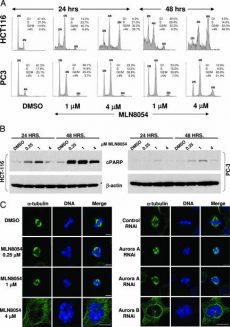
Low and high concentrations of MLN8054 result in cellular phenotypes consistent with Aurora A and Aurora B inhibition, respectively, and induce apoptosis.Proc Natl Acad Sci U S A.2007 Mar 6;104(10):4106-11. |
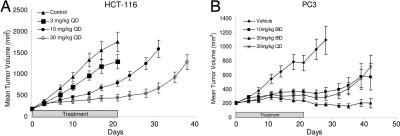
MLN8054 induces TGI in the HCT-116 colorectal and PC3 prostate tumor xenografts.
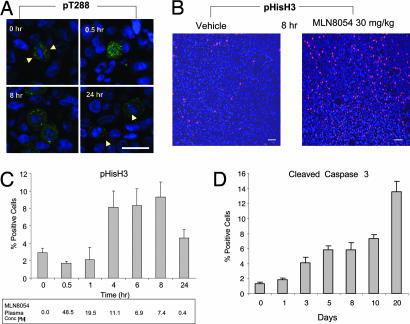
MLN8054 results in inhibition of Aurora A and accumulation of mitotic cells after a single dose and apoptosis after repeat dosing in HCT-116 human tumor xenografts.Proc Natl Acad Sci U S A.2007 Mar 6;104(10):4106-11. |
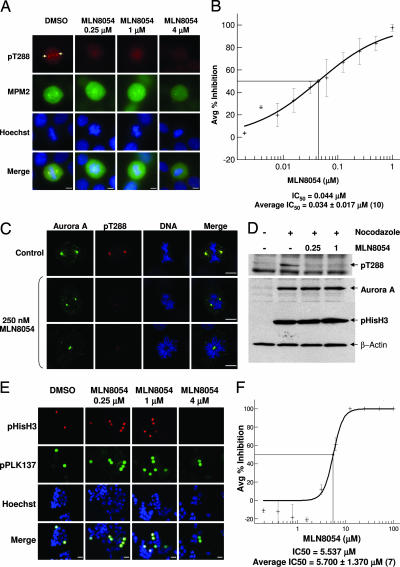
MLN8054 selectively inhibits Aurora A over Aurora B in cultured human tumor cells.Proc Natl Acad Sci U S A.2007 Mar 6;104(10):4106-11. |
Products are for research use only; We do not sell to patients
Copyright 2020 InvivoChem LLC | All Rights Reserved


 COA
COA