| Size | Price | Stock | Qty |
|---|---|---|---|
| 10mg |
|
||
| 25mg |
|
||
| 50mg |
|
||
| 100mg |
|
||
| 250mg |
|
||
| 500mg | |||
| Other Sizes |


Purity: ≥98%
| Targets |
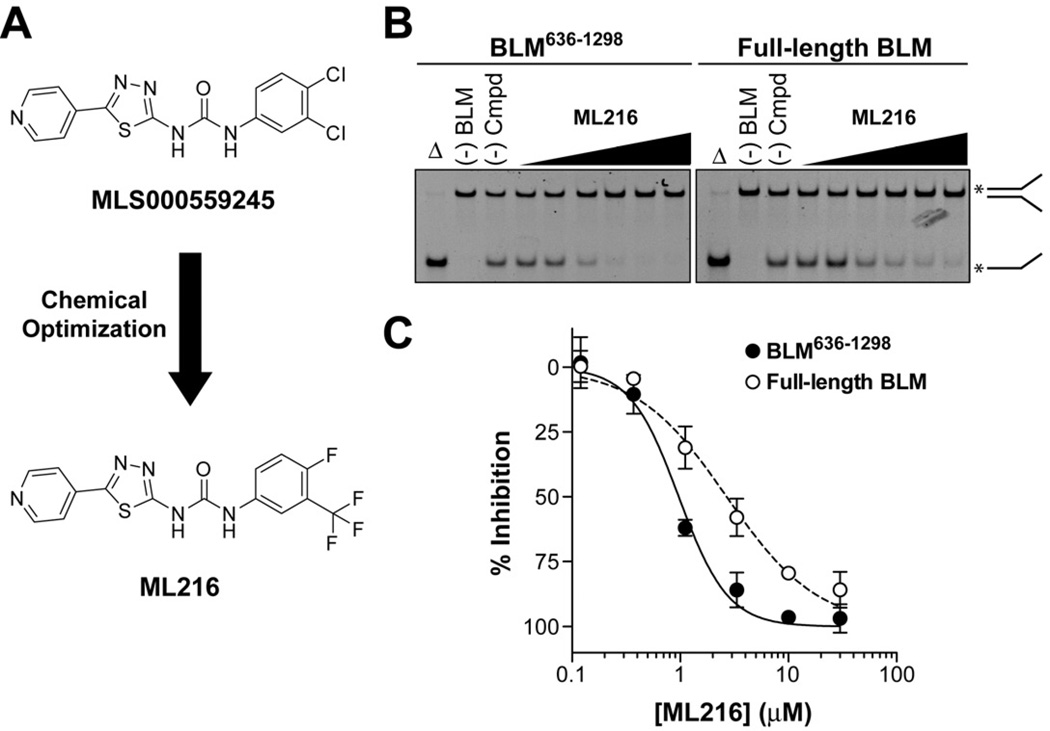
BLMfull-length ( IC50 = 2.98 μM ); BLM636-1298 ( IC50 = 0.97 μM )
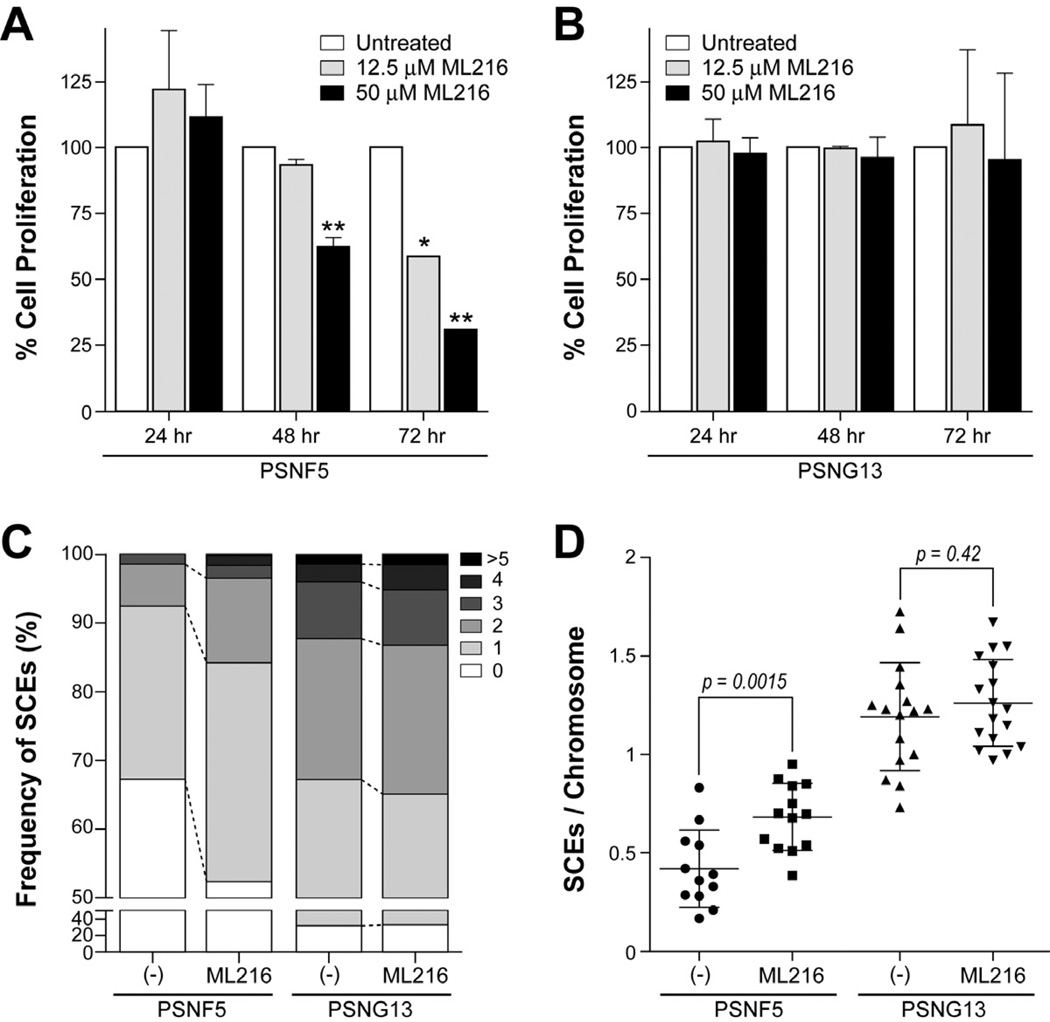
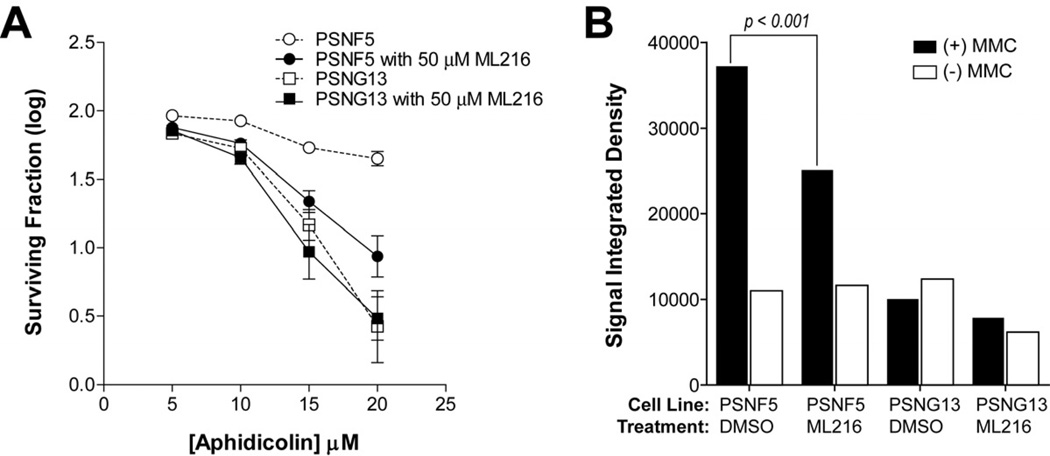
ML216 (12.5-50 μM; 24-72 hours; PSNG5 and PSNG13cells) treatmentsuppresses PSNF5 cell proliferation, but not PSNG13 cell proliferation in a concentration-dependent manner[1]. ML216 treatment increases the frequency of sister chromatid exchanges (SCEs) in a statistically significant way in PSNF5 cells, but not in PSNG13 cells[1]. ML216 enhances the aphidicolin sensitivity of PSNF5 cells, but has no sensitizing effect on isogenic PSNG13 cells lacking BLM[1]. ML216 inhibits WRN500-946 (IC50 of 12.6 μM), which is 2.5 times more sensitive to inhibition than the full length WRN (IC50 of 5 μM). Based on IC50 values, BLM is slightly more sensitive than WRN to ML216's inhibition (1.7-fold). Even though ML216 clearly inhibits WRN, this substance seems to be specific to BLM in human cells. Both WRN+ and WRN? cell proliferation is equally inhibited by ML216, and both cell types are similarly sensitized to aphidicolin[1]. |
|---|---|
| ln Vitro |
ML216 (12.5-50 μM; 24-72 hours; PSNG5 and PSNG13cells) treatmentsuppresses PSNF5 cell proliferation, but not PSNG13 cell proliferation in a concentration-dependent manner[1].
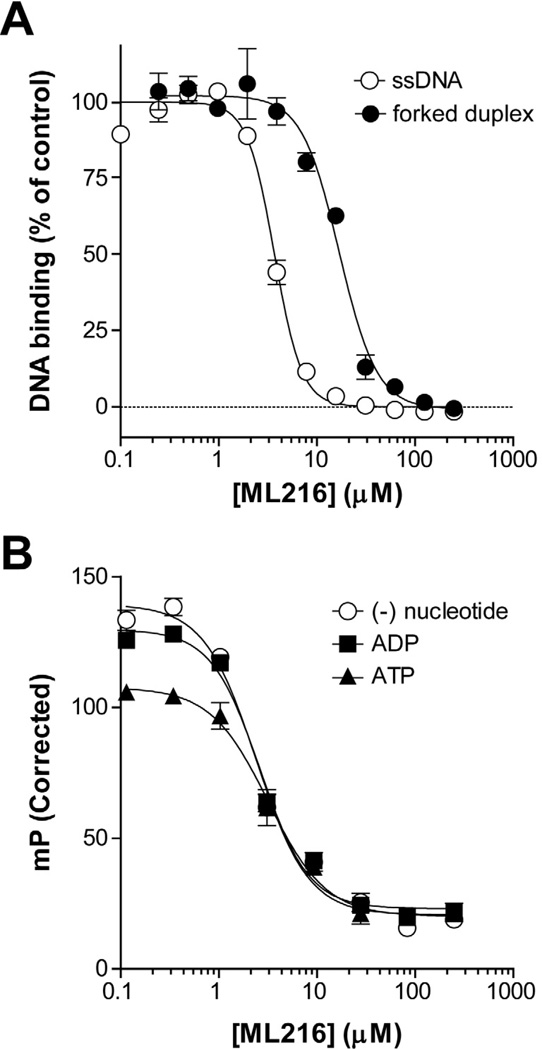
ML216 treatment increases the frequency of sister chromatid exchanges (SCEs) in a statistically significant way in PSNF5 cells, but not in PSNG13 cells[1]. ML216 enhances the aphidicolin sensitivity of PSNF5 cells, but has no sensitizing effect on isogenic PSNG13 cells lacking BLM[1]. ML216 inhibits WRN500-946 (IC50 of 12.6 μM), which is 2.5 times more sensitive to inhibition than the full length WRN (IC50 of 5 μM). Based on IC50 values, BLM is slightly more sensitive than WRN to ML216's inhibition (1.7-fold). Even though ML216 clearly inhibits WRN, this substance seems to be specific to BLM in human cells. Both WRN+ and WRN? cell proliferation is equally inhibited by ML216, and both cell types are similarly sensitized to aphidicolin[1]. ML216 is a potent and selective inhibitor of the ATP-dependent DNA unwinding (helicase) activity of BLM. It inhibits both a truncated variant (BLM636–1298) and full-length recombinant BLM with IC50 values in the low micromolar range. ML216 exhibits a DNA substrate-structure dependent inhibition profile. It potently inhibits BLM's unwinding of a forked duplex DNA substrate. Inhibition of BLM's branch migration activity on D-loop and Holliday junction substrates, and its G-quadruplex disrupting activity, required approximately 10-fold higher concentrations (50 μM). ML216 shows modest inhibition of the related WRN helicase but no significant inhibition of human RECQ1, RECQ5, or the distantly related E. coli UvrD helicase at concentrations up to 50 μM. Mechanistically, ML216 acts as a competitive inhibitor of DNA binding. Electrophoretic mobility shift assays (EMSA) and fluorescence polarization assays demonstrate that ML216 displaces BLM from both single-stranded and forked duplex DNA substrates. Consistent with inhibiting DNA binding, ML216 non-competitively inhibits the ssDNA-dependent ATPase activity of BLM with a Ki of 1.76 ± 0.26 μM. [1] |
| ln Vivo |
Though ML216 inhibits unwinding by the sequence-related BLM and WRN helicases in vitro in a manner similar to that of WRN helicases, the drug's mechanism of action in vivo appears to be specific for BLM based on ML216's apparent reliance on BLM for biological effects in human cells. Informational would be a co-crystal structure of BLM in complex with the inhibitor. A certain conformation of WRN that renders it resistant to ML216 may be induced by cellular cues in vivo[2].
|
| Enzyme Assay |
High-Throughput Fluorescence-Quenching Helicase Assay: A forked duplex DNA substrate with a fluorophore and a quencher on opposite strands was used. ATP-dependent unwinding by BLM separates the strands, relieving quenching and increasing fluorescence. This assay was miniaturized to a 1536-well format to screen for inhibitors. Inhibitory activity was measured as a decrease in fluorescence signal compared to a DMSO control.
Gel-Based Helicase Assay with Radiolabeled DNA: Helicase activity was measured by separating reaction products via non-denaturing polyacrylamide gel electrophoresis (PAGE). The substrate was a 5'-end radiolabeled forked duplex. Unwinding releases a labeled single-stranded DNA product, which is quantified. IC50 values for inhibition were determined using non-linear regression analysis. DNA Binding Assay (Electrophoretic Mobility Shift Assay - EMSA): The ability of BLM to bind single-stranded or forked duplex DNA was assessed by native PAGE. Binding forms a protein-DNA complex with reduced mobility. Increasing concentrations of ML216 were tested for their ability to disrupt complex formation. DNA Binding Assay (Fluorescence Polarization - FP): Equilibrium binding of BLM to a fluorescently-labeled oligonucleotide (corresponding to one strand of the forked duplex) was monitored by fluorescence polarization. An increase in polarization indicates protein binding. ML216 was tested for its ability to reduce the polarization signal, indicating inhibition of DNA binding. Measurements were performed in the absence or presence of nucleotides (ADP, ATP). ATPase Assay: The ssDNA-dependent ATP hydrolysis activity of BLM was measured. ML216 was tested for inhibition, and the mechanism (competitive vs. non-competitive with respect to ATP) was determined using Michaelis-Menten kinetics. [1] |
| Cell Assay |
Cell Line: PSNG5 and PSNG13cells
Concentration: 12.5 μM or 50 µM Incubation Time: 24 hours, 48 hours, 72 hours Result: Inhibited the proliferation of PSNF5 cells, but not of PSNG13 cells, and did so in a concentration-dependent manner. Cell Proliferation Assay (WST-1): The isogenic human fibroblast cell lines PSNF5 (BLM-proficient) and PSNG13 (BLM-deficient) were treated with ML216 at indicated concentrations for up to 72 hours. Cell proliferation was assessed using the WST-1 reagent, a tetrazolium salt converted to formazan by mitochondrial dehydrogenases. Absorbance was measured at 450 nm with a 690 nm reference. Sister Chromatid Exchange (SCE) Analysis: Cells were cultured in the presence of bromodeoxyuridine (BrdU) for two cell cycles, with ML216 added either for the entire duration or for the last 8 hours before metaphase harvest. Chromosome spreads were prepared, differentially stained, and the frequency of SCEs per chromosome was scored. Clonogenic Survival/Aphidicolin Sensitization Assay: Cells were pretreated with DMSO or ML216 (50 μM) for 24 hours, followed by co-treatment with increasing concentrations of aphidicolin (a DNA polymerase inhibitor) for another 24 hours. Cells were then washed, plated at low density, and allowed to grow in drug-free medium for up to 12 days to form colonies. Surviving fractions were calculated. γ-H2AX Focus Immunofluorescence Assay: Cells were treated with DMSO or ML216 for 48 hours, then exposed to mitomycin C (MMC) for an additional 12 hours. Cells were fixed, permeabilized, and stained with an antibody against phosphorylated histone H2AX (γ-H2AX) and DAPI. Fluorescence microscopy was used to quantify the number and integrated density of γ-H2AX nuclear foci, indicative of DNA double-strand breaks. [1] |
| References | |
| Additional Infomation |
1-[4-fluoro-3-(trifluoromethyl)phenyl]-3-(5-pyridin-4-yl-1,3,4-thiadiazol-2-yl)urea belongs to the urea class of compounds. ML216 was discovered through high-throughput screening of a library of approximately 350,000 compounds, followed by medicinal chemistry optimization of the initial lead compound MLS000559245 to improve its physicochemical properties, such as solubility and cell permeability. In cell-based experiments, ML216 exhibited bleomycin (BLM) expression-dependent targeting activity: it specifically inhibited the proliferation of BLM-expressing cells (PSNF5), induced sister chromatid exchange (SCE), and enhanced the toxicity of chlorpyrifos, but did not have this effect in homologous BLM expression-deficient cells (PSNG13). ML216 also inhibited mitomycin C (MMC)-induced nucleation. γ-H2AX aggregation foci were observed in cells with normal BLM function, consistent with the role of BLM in processing DNA damage intermediates into double-strand breaks. Although ML216 inhibited WRN in biochemical experiments, it had no differential effect on the proliferation or apigenin sensitivity of fibroblasts with normal and WRN-deficient function, suggesting that BLM is its primary cellular target. This study proposes that ML216 could serve as a valuable molecular probe for acutely inhibiting BLM function in cells and suggests that its derivatives could be investigated as potential anticancer drugs, especially for tumors dependent on the telomere replacement elongation (ALT) pathway. [1]
|
| Molecular Formula |
C15H9F4N5OS
|
|
|---|---|---|
| Molecular Weight |
383.32
|
|
| Exact Mass |
383.046
|
|
| Elemental Analysis |
C, 47.00; H, 2.37; F, 19.82; N, 18.27; O, 4.17; S, 8.36
|
|
| CAS # |
1430213-30-1
|
|
| Related CAS # |
|
|
| PubChem CID |
49852229
|
|
| Appearance |
Light yellow to yellow solid powder
|
|
| Density |
1.6±0.1 g/cm3
|
|
| Index of Refraction |
1.641
|
|
| LogP |
4.11
|
|
| Hydrogen Bond Donor Count |
2
|
|
| Hydrogen Bond Acceptor Count |
9
|
|
| Rotatable Bond Count |
3
|
|
| Heavy Atom Count |
26
|
|
| Complexity |
491
|
|
| Defined Atom Stereocenter Count |
0
|
|
| SMILES |
O=C(NC1=CC=C(F)C(C(F)(F)F)=C1)NC2=NN=C(S2)C3=CC=NC=C3
|
|
| InChi Key |
WMCOYUSJXXCHFH-UHFFFAOYSA-N
|
|
| InChi Code |
InChI=1S/C15H9F4N5OS/c16-11-2-1-9(7-10(11)15(17,18)19)21-13(25)22-14-24-23-12(26-14)8-3-5-20-6-4-8/h1-7H,(H2,21,22,24,25)
|
|
| Chemical Name |
1-[4-fluoro-3-(trifluoromethyl)phenyl]-3-(5-pyridin-4-yl-1,3,4-thiadiazol-2-yl)urea
|
|
| Synonyms |
|
|
| HS Tariff Code |
2934.99.9001
|
|
| Storage |
Powder -20°C 3 years 4°C 2 years In solvent -80°C 6 months -20°C 1 month |
|
| Shipping Condition |
Room temperature (This product is stable at ambient temperature for a few days during ordinary shipping and time spent in Customs)
|
| Solubility (In Vitro) |
|
|||
|---|---|---|---|---|
| Solubility (In Vivo) |
Solubility in Formulation 1: 2 mg/mL (5.22 mM) in 10% DMSO + 90% (20% SBE-β-CD in Saline) (add these co-solvents sequentially from left to right, and one by one), suspension solution; with sonication.
For example, if 1 mL of working solution is to be prepared, you can add 100 μL of 20.0 mg/mL clear DMSO stock solution to 900 μL of 20% SBE-β-CD physiological saline solution and mix evenly. Preparation of 20% SBE-β-CD in Saline (4°C,1 week): Dissolve 2 g SBE-β-CD in 10 mL saline to obtain a clear solution. (Please use freshly prepared in vivo formulations for optimal results.) |
| Preparing Stock Solutions | 1 mg | 5 mg | 10 mg | |
| 1 mM | 2.6088 mL | 13.0439 mL | 26.0879 mL | |
| 5 mM | 0.5218 mL | 2.6088 mL | 5.2176 mL | |
| 10 mM | 0.2609 mL | 1.3044 mL | 2.6088 mL |
*Note: Please select an appropriate solvent for the preparation of stock solution based on your experiment needs. For most products, DMSO can be used for preparing stock solutions (e.g. 5 mM, 10 mM, or 20 mM concentration); some products with high aqueous solubility may be dissolved in water directly. Solubility information is available at the above Solubility Data section. Once the stock solution is prepared, aliquot it to routine usage volumes and store at -20°C or -80°C. Avoid repeated freeze and thaw cycles.
Calculation results
Working concentration: mg/mL;
Method for preparing DMSO stock solution: mg drug pre-dissolved in μL DMSO (stock solution concentration mg/mL). Please contact us first if the concentration exceeds the DMSO solubility of the batch of drug.
Method for preparing in vivo formulation::Take μL DMSO stock solution, next add μL PEG300, mix and clarify, next addμL Tween 80, mix and clarify, next add μL ddH2O,mix and clarify.
(1) Please be sure that the solution is clear before the addition of next solvent. Dissolution methods like vortex, ultrasound or warming and heat may be used to aid dissolving.
(2) Be sure to add the solvent(s) in order.
(A) Structure of MLS000559245 that was identified during the high throughput screen and ML216, which was developed through subsequent medicinal chemistry optimization of this chemotype. (B) Effects on ML216 on the helicase activity of BLM636–1298and full-length BLM. In the absence of ML216, BLM unwinds the forked duplex into ssDNA (depicted diagrammatically on the right). The open triangle above the left lane in each case depicts heat-denatured DNA. The asterisk denotes fluorescent-end label. (C) Quantification of the extent of BLM inhibition by ML216.Chem Biol.2013 Jan 24;20(1):55-62. |
(A) Effect of ML216 on binding BLM to ssDNA or a forked duplex using EMSA. Data were derived from 2 independent gel retardation experiments. Error bars: SE. (B) As in panel A, except effects on DNA binding measured using fluorescence polarization (FP).Chem Biol.2013 Jan 24;20(1):55-62. |
ML216 has activity in human cells that depends on BLM. (A, B) Effects of different concentrations of ML216, as indicated, on the rate of cell proliferation in PSNF5 (BLM+; panel A) and PSNG13 (BLM−; panel B) cells.
(A) ML216 sensitizes PSNF5, but not PSNG13, cells to aphidicolin.(B) ML216 suppresses γ-H2AX focus formation in MMC-treated PSNF5 cells, but not similarly treated PSNG13 cells.Chem Biol.2013 Jan 24;20(1):55-62. |
Products are for research use only; We do not sell to patients
Copyright 2020 InvivoChem LLC | All Rights Reserved


 COA
COA