| Size | Price | Stock | Qty |
|---|---|---|---|
| 1mg |
|
||
| 5mg |
|
||
| 10mg |
|
||
| 25mg |
|
||
| 50mg |
|
||
| 100mg |
|
||
| 250mg |
|
||
| 500mg | |||
| Other Sizes |


Purity: ≥98%
| Targets |
Aurora-A kinase (IC₅₀ = 0.3 nM in recombinant kinase assay) [1]
- No significant inhibition of Aurora-B or Aurora-C at concentrations up to 100 nM [1] |
|---|---|
| ln Vitro |
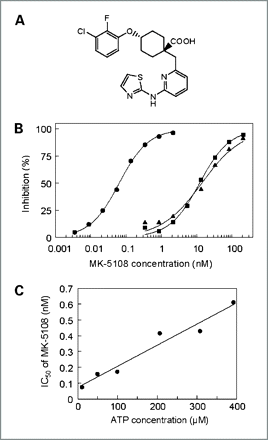
MK-5108 has an IC50 value of 0.064 nM and inhibits Aurora-A activity in an ATP-competitive manner. Compared to the other family circuits, Aurora-B (220-fold) and Aurora-C (190-fold), it demonstrated stronger switching. The selectivity of MK-5108 towards Aurora-A is also interfered with by other proteins. 14 cell lines are inhibited in growth by MK-5108, with IC50 values ranging from 0.16 to 6.4 μM [1].
Antiproliferative activity against human cancer cell lines: IC₅₀ values ranged from 5 nM (HCT116 colorectal cancer) to 20 nM (MCF-7 breast cancer) [1] - Cell cycle arrest in G2/M phase: HCT116 cells treated with MK-5108 (10 nM) for 24 h showed 65% cells in G2/M phase (vs. 15% in control), confirmed by propidium iodide (PI) staining and flow cytometry [1] - Induction of apoptosis: MCF-7 cells treated with MK-5108 (20 nM) for 48 h showed 40% annexin V-positive apoptotic cells (vs. 5% in control). Western blot revealed increased cleaved caspase-3 (3-fold) and cleaved PARP (2.5-fold) [1] - Mechanism: Inhibited Aurora-A-mediated phosphorylation of TPX2 (a key regulator of mitotic spindle assembly), leading to defective spindle formation and mitotic checkpoint activation [1] |
| ln Vivo |
In the HCT116 tumor model, MK-5108 therapy at 15 and 30 mg/kg significantly inhibited tumor growth. MK-5108 caused little weight loss and was well tolerated at both dosages. Significant anti-tumor efficacy was also demonstrated by MK-5108 in nude mice with SW48 tumors. Tumor growth inhibition was dose-dependent and produced %T/C of 35% and 7% on day 10 and 58% and 32% on day 27 at 15 and 45 mg/kg of MK-5108, respectively. In naked mice, MK-5108 was well tolerated, causing little weight loss and only mild effects on blood cells [1].
HCT116 colorectal cancer xenograft model (nude mice): Oral administration of MK-5108 (50 mg/kg daily) for 14 days resulted in 75% tumor growth inhibition (TGI). Tumor volume: 180 ± 25 mm³ (treated) vs. 720 ± 40 mm³ (control) [1] - Combination with docetaxel: In MDA-MB-231 breast cancer xenografts, MK-5108 (30 mg/kg) + docetaxel (10 mg/kg) i.p. twice weekly for 18 days achieved 90% TGI, significantly higher than single-agent effects (45% for MK-5108 alone, 60% for docetaxel alone) [1] |
| Enzyme Assay |
Aurora-A kinase activity assay (HTRF format): Recombinant Aurora-A was incubated with MK-5108 (0.01–100 nM), ATP (10 μM), and a biotinylated TPX2 peptide substrate in kinase buffer (50 mM Tris-HCl, 10 mM MgCl₂, 1 mM DTT, pH 7.5) at 30°C for 60 min. Phosphorylated substrate was detected using streptavidin-europium cryptate and a phospho-specific antibody labeled with XL665. IC₅₀ was calculated via dose-response curve fitting [1]
|
| Cell Assay |
Antiproliferation assay (CellTiter-Glo): Cells (e.g., HCT116, MCF-7) were seeded in 96-well plates (2×10³ cells/well), treated with MK-5108 (1–100 nM) for 72 h, and luminescence was measured. IC₅₀ values were determined as the concentration inhibiting 50% of viable cells [1]
- Cell cycle analysis (PI staining): Cells were fixed with 70% ethanol, stained with PI (50 μg/mL) + RNase A (100 μg/mL), and analyzed by flow cytometry to quantify G2/M phase accumulation [1] - Apoptosis assay (annexin V-FITC/PI double staining): Cells were stained with annexin V-FITC and PI, and apoptotic cells were detected by flow cytometry [1] |
| Animal Protocol |
Dissolved in 0.5% methyl cellulose/0.24% SDS; 30 mg/kg; Oral gavage. SCID mice bearing HCT116 tumors
HCT116 xenograft model: Mice (n=8/group) received MK-5108 orally (50 mg/kg) in 0.5% CMC-Na + 0.1% Tween 80 vehicle daily for 14 days. Tumor volume was measured as (length × width²)/2 [1] - MDA-MB-231 combination study: Mice received MK-5108 (30 mg/kg i.p.) dissolved in 5% DMSO + 45% PEG400 + 50% saline, and docetaxel (10 mg/kg i.p.) in cremophor EL/ethanol/saline (1:1:8), both twice weekly for 18 days [1] |
| ADME/Pharmacokinetics |
Oral bioavailability: 35% in rats (oral dose 20 mg/kg) [1] - Plasma half-life: 4.8 hours (rat, intravenous injection 5 mg/kg) [1] - Plasma protein binding: 95% in human plasma (equilibrium dialysis) [1] - Metabolism: mainly metabolized by hepatic CYP3A4 to generate a hydroxylated derivative (M1), which retains 30% of the Aurora-A inhibitory activity of the parent compound [1]
|
| Toxicity/Toxicokinetics |
Acute toxicity (mice): LD₅₀ > 2000 mg/kg (oral) [1] - Chronic toxicity (rats): Oral administration of 50 mg/kg daily for 28 days resulted in mild neutropenia (15% decrease in white blood cell count), but no significant hepatotoxicity or nephrotoxicity was observed (ALT, AST, BUN, and creatinine were all within the normal range) [1] - Cardiotoxicity: Telemetry studies (dogs, doses up to 100 mg/kg) did not show QT interval prolongation [1]
|
| References | |
| Additional Infomation |
4-(3-chloro-2-fluorophenoxy)-1-[[6-(2-thiazolylamino)-2-pyridinyl]methyl]-1-cyclohexanecarboxylic acid is an aromatic ether. MK-5108 has been used in clinical trials for the treatment of cancer, tumors, and vegetations. MK5108, an Aurora A kinase inhibitor, is a highly bioavailable and selective small molecule inhibitor of the serine/threonine protein kinase Aurora A, possessing potential antimitotic and antitumor activities. MK5108 binds to and inhibits the activity of Aurora A kinase, which may lead to disordered spindle assembly and chromosome segregation during mitosis, ultimately inhibiting cell division and proliferation, and inducing apoptosis in cells overexpressing Aurora A kinase. Aurora A kinase is localized to the spindle poles and microtubules during mitosis and is thought to regulate spindle assembly. Aurora kinase is overexpressed in various cancers.
Selectivity: The selectivity for Aurora-A is more than 1000 times higher than that for other kinases (e.g., CDK1, EGFR, VEGFR2)[1] -Clinical significance: It aims to overcome resistance to taxanes by targeting Aurora-A-driven mitotic defects[1] -Synergistic effect with docetaxel: The combination therapy enhances mitotic arrest and apoptosis by doubly inhibiting microtubule dynamics and Aurora-A signaling[1] |
| Molecular Formula |
C22H21CLFN3O3S
|
|
|---|---|---|
| Molecular Weight |
461.94
|
|
| Exact Mass |
461.097
|
|
| Elemental Analysis |
C, 57.20; H, 4.58; Cl, 7.67; F, 4.11; N, 9.10; O, 10.39; S, 6.94
|
|
| CAS # |
1010085-13-8
|
|
| Related CAS # |
|
|
| PubChem CID |
24748204
|
|
| Appearance |
White to off-white solid powder
|
|
| Density |
1.4±0.1 g/cm3
|
|
| Boiling Point |
637.6±65.0 °C at 760 mmHg
|
|
| Flash Point |
339.4±34.3 °C
|
|
| Vapour Pressure |
0.0±2.0 mmHg at 25°C
|
|
| Index of Refraction |
1.651
|
|
| LogP |
4.58
|
|
| Hydrogen Bond Donor Count |
2
|
|
| Hydrogen Bond Acceptor Count |
8
|
|
| Rotatable Bond Count |
7
|
|
| Heavy Atom Count |
31
|
|
| Complexity |
611
|
|
| Defined Atom Stereocenter Count |
0
|
|
| SMILES |
C1CC(CCC1OC2=C(C(=CC=C2)Cl)F)(CC3=NC(=CC=C3)NC4=NC=CS4)C(=O)O
|
|
| InChi Key |
LCVIRAZGMYMNNT-VVONHTQRSA-N
|
|
| InChi Code |
InChI=1S/C22H21ClFN3O3S/c23-16-4-2-5-17(19(16)24)30-15-7-9-22(10-8-15,20(28)29)13-14-3-1-6-18(26-14)27-21-25-11-12-31-21/h1-6,11-12,15H,7-10,13H2,(H,28,29)(H,25,26,27)/t15-,22-
|
|
| Chemical Name |
(1r,4r)-4-(3-chloro-2-fluorophenoxy)-1-((6-(thiazol-2-ylamino)pyridin-2-yl)methyl)cyclohexane-1-carboxylic acid
|
|
| Synonyms |
VX-689; VX689; VX 689; MK5108; MK-5108; MK 5108; VX-689
|
|
| HS Tariff Code |
2934.99.9001
|
|
| Storage |
Powder -20°C 3 years 4°C 2 years In solvent -80°C 6 months -20°C 1 month |
|
| Shipping Condition |
Room temperature (This product is stable at ambient temperature for a few days during ordinary shipping and time spent in Customs)
|
| Solubility (In Vitro) |
DMSO: 92 mg/mL (199.1 mM)
Water: 1 mg/mL (Insoluble) Ethanol: 1 mg/mL |
|---|---|
| Solubility (In Vivo) |
Solubility in Formulation 1: ≥ 1.25 mg/mL (2.71 mM) (saturation unknown) in 10% DMSO + 40% PEG300 + 5% Tween80 + 45% Saline (add these co-solvents sequentially from left to right, and one by one), clear solution.
For example, if 1 mL of working solution is to be prepared, you can add 100 μL of 12.5 mg/mL clear DMSO stock solution to 400 μL PEG300 and mix evenly; then add 50 μL Tween-80 to the above solution and mix evenly; then add 450 μL normal saline to adjust the volume to 1 mL. Preparation of saline: Dissolve 0.9 g of sodium chloride in 100 mL ddH₂ O to obtain a clear solution. Solubility in Formulation 2: ≥ 1.25 mg/mL (2.71 mM) (saturation unknown) in 10% DMSO + 90% (20% SBE-β-CD in Saline) (add these co-solvents sequentially from left to right, and one by one), clear solution. For example, if 1 mL of working solution is to be prepared, you can add 100 μL of 12.5 mg/mL clear DMSO stock solution to 900 μL of 20% SBE-β-CD physiological saline solution and mix evenly. Preparation of 20% SBE-β-CD in Saline (4°C,1 week): Dissolve 2 g SBE-β-CD in 10 mL saline to obtain a clear solution. View More
Solubility in Formulation 3: ≥ 1.25 mg/mL (2.71 mM) (saturation unknown) in 10% DMSO + 90% Corn Oil (add these co-solvents sequentially from left to right, and one by one), clear solution. Solubility in Formulation 4: 0.5% methylcellulose+0.2% Tween 80:~30mg/mL Solubility in Formulation 5: 6.67 mg/mL (14.44 mM) in 0.5% MC 0.5% Tween-80 (add these co-solvents sequentially from left to right, and one by one), suspension solution; with ultrasonication. |
| Preparing Stock Solutions | 1 mg | 5 mg | 10 mg | |
| 1 mM | 2.1648 mL | 10.8239 mL | 21.6478 mL | |
| 5 mM | 0.4330 mL | 2.1648 mL | 4.3296 mL | |
| 10 mM | 0.2165 mL | 1.0824 mL | 2.1648 mL |
*Note: Please select an appropriate solvent for the preparation of stock solution based on your experiment needs. For most products, DMSO can be used for preparing stock solutions (e.g. 5 mM, 10 mM, or 20 mM concentration); some products with high aqueous solubility may be dissolved in water directly. Solubility information is available at the above Solubility Data section. Once the stock solution is prepared, aliquot it to routine usage volumes and store at -20°C or -80°C. Avoid repeated freeze and thaw cycles.
Calculation results
Working concentration: mg/mL;
Method for preparing DMSO stock solution: mg drug pre-dissolved in μL DMSO (stock solution concentration mg/mL). Please contact us first if the concentration exceeds the DMSO solubility of the batch of drug.
Method for preparing in vivo formulation::Take μL DMSO stock solution, next add μL PEG300, mix and clarify, next addμL Tween 80, mix and clarify, next add μL ddH2O,mix and clarify.
(1) Please be sure that the solution is clear before the addition of next solvent. Dissolution methods like vortex, ultrasound or warming and heat may be used to aid dissolving.
(2) Be sure to add the solvent(s) in order.
| NCT Number | Recruitment | interventions | Conditions | Sponsor/Collaborators | Start Date | Phases |
| NCT00543387 | Completed Has Results | Drug: MK-5108 Drug: docetaxel |
Cancer, Neoplasms, Tumors | Merck Sharp & Dohme LLC | March 27, 2008 | Phase 1 |
MK-5108 is a highly potent and selective inhibitor of Aurora-A kinase.Mol Cancer Ther. 2010 Jan;9(1):157-66. |
MK-5108 inhibits the proliferation of cultured human cell lines and growth of xenograft tumors.A,SCID mice bearing HCT116 tumors were treated orally twice daily for 12 consecutive days with either vehicle control (•) or MK-5108 at 15 mg/kg (▴) or 30 mg/kg ( |
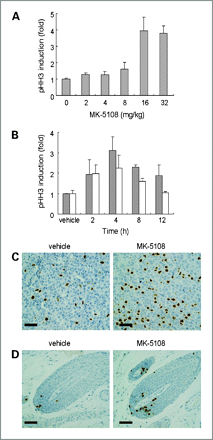
MK-5108 induces the accumulation of mitotic cells in HeLa-luc tumors and skin hair bulbs.Mol Cancer Ther. 2010 Jan;9(1):157-66. |
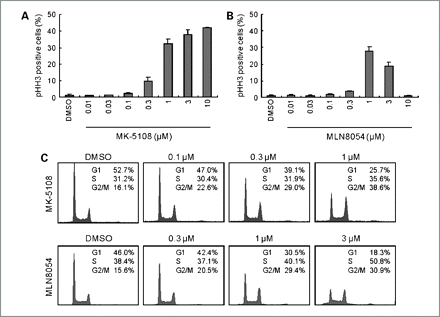
MK-5108 induces accumulation of mitotic cells in HeLa-S3 cells. HeLa-S3 cells were released from the G1-S block. MK-5108 (A) or MLN8054 (B) was added at 4 h and the percentage of pHH3-positive cells was determined at 18 h by immunofluorescent analysis as described in Materials and Methods.C,DNA profiles of asynchronously cultured HeLa-S3 cells treated by MK-5108 or MLN8054 for 24 h were evaluated by flow cytometry.Mol Cancer Ther. 2010 Jan;9(1):157-66. |
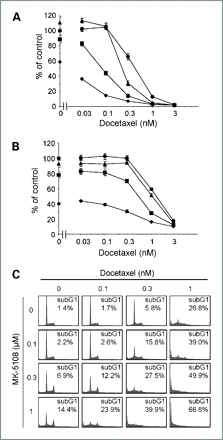
MK-5108 enhances the effects of docetaxel on the inhibition of cell proliferation and induction of cell death.Mol Cancer Ther. 2010 Jan;9(1):157-66. |
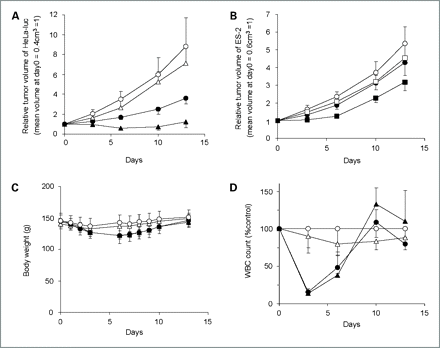
MK-5108 enhances the antitumor activity of docetaxel without affecting toxicity.AtoD,nude rats bearing dual HeLa-luc and ES-2 xenograft tumors in each flank were treated with vehicle control (○), docetaxel (•), MK-5108 (▵), and docetaxel and MK-5108 in combination (▴;n= 5 rats per group). Docetaxel was injected i.v. at 7.5 mg/kg.Mol Cancer Ther. 2010 Jan;9(1):157-66. |
Products are for research use only; We do not sell to patients
Copyright 2020 InvivoChem LLC | All Rights Reserved


 COA
COA
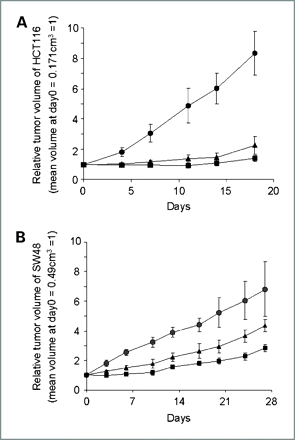
 ;n= 5 mice per group).