| Size | Price | Stock | Qty |
|---|---|---|---|
| 5mg |
|
||
| 10mg |
|
||
| 25mg |
|
||
| 50mg |
|
||
| 100mg |
|
||
| 250mg |
|
||
| 500mg | |||
| Other Sizes |


Purity: ≥98%
| Targets |
Akt1 (IC50 = 2.7 nM); Akt3 (IC50 = 8.1 nM); Akt2 (IC50 = 14 nM); Leishmania; Akt1 E17K mutant
Miransertib (ARQ 092) targets AKT1 (IC50 = 0.016 μM), AKT2 (IC50 = 0.03 μM), AKT3 (IC50 = 0.04 μM) (allosteric inhibitor) [1] Miransertib (ARQ 092) targets Leishmania donovani Akt homolog (LdAkt) (IC50 = 0.4 μM) [2] |
|---|---|
| ln Vitro |
ARQ 092 blocks membrane translocation of inactive AKT and even dephosphorylates the membrane-associated active form, thereby perturbing AKT activity. Treatment with 50–500 nM ARQ 092 significantly inhibits neutrophil M2 integrin function and decreases platelet P-selectin exposure and Ib/IX/V-mediated agglutination. ARQ 092 inhibits proliferation in a wide variety of cancer cell lines, but it is most effective against leukemia, breast, endometrial, and colorectal cancer cell lines. Additionally, compared to cancer cell lines with wt-PIK3CA/PIK3R1 or PTEN mutations, ARQ 092 inhibition is more common in cancer cell lines containing PIK3CA/PIK3R1 mutations. In cells with mutations, ARQ 092 specifically targets the PI3K/AKT pathway and AKT and lowers GSK3 and GSK3 phosphorylation.
In human cancer cell lines with activated AKT (BT474, SKBR3, HCT116, PC3), Miransertib (ARQ 092) (0.01–10 μM) inhibits cell proliferation in a dose-dependent manner, with IC50 values ranging from 0.08 to 1.2 μM. It blocks AKT phosphorylation (Ser473, Thr308) and downstream signaling: reduces p-GSK3β (Ser9), p-S6 (Ser235/236), and p-FOXO1 (Ser256) levels (Western blot). In BT474 cells, it induces G1 cell cycle arrest (60% of cells in G1 vs. 40% control) and apoptosis (Annexin V-FITC/PI staining shows apoptotic rate ~45% at 0.5 μM) [1] - Miransertib (ARQ 092) exhibits high selectivity for AKT isoforms: no significant inhibition of 45 other kinases (e.g., PI3Kα, mTOR, ERK1/2) at 10 μM (kinase selectivity panel assay) [1] - In Leishmania donovani promastigotes and amastigotes, Miransertib (ARQ 092) (0.1–5 μM) inhibits parasite proliferation: IC50 = 0.5 μM for promastigotes and 0.7 μM for amastigotes. It blocks LdAkt phosphorylation (Ser473 homolog), reduces parasite survival in THP-1 macrophages (infected with amastigotes) by ~65% at 1 μM, and disrupts parasite mitochondrial membrane potential (JC-1 staining) [2] |
| ln Vivo |
Short-term oral administration of ARQ 092 or hydroxyurea, a main therapy for sickle cell disease, diminishes heterotypic cell-cell interactions in venules of sickle cell disease mice challenged with TNF-α. ARQ 092 is well tolerated at a continuous daily dose of 60 mg or a dose of 600 mg when administered once a week, for several months. ARQ 092 is likely to inhibit the activity of all AKT isoforms in intravascular cells and thereby attenuates the process of thrombosis and inflammation in SCD patients. ARQ 092 is highly active in a subset of endometrial tumors that harbor PI3K pathway gene mutations.
In a subcutaneous xenograft model of HER2-positive breast cancer (BT474 cells in nude mice), oral administration of Miransertib (ARQ 092) (30 mg/kg/day) for 21 days inhibits tumor growth by ~70% compared to vehicle control. Tumor tissues show reduced p-AKT (Ser473), p-GSK3β, and Ki-67 (proliferation marker) expression, and increased cleaved caspase-3 (apoptosis marker) via immunohistochemistry and Western blot [1] - In a Leishmania donovani-infected BALB/c mouse model, oral administration of Miransertib (ARQ 092) (20 mg/kg/day) for 14 days reduces hepatic parasite load by ~60% and splenic parasite load by ~55% compared to untreated mice. No significant exacerbation of inflammation or tissue damage is observed in infected organs [2] |
| Enzyme Assay |
Miransertib (ARQ-092) is an orally bioavailable, selective, and potent allostericAktinhibitor withIC50s of 2.7 nM, 14 nM and 8.1 nM forAkt1,Akt2,Akt3, respectively.
AKT1 (1–480), AKT2 (1–481, and AKT3 (1–479) Alpha Screen Assays[1] \AKT activity was assayed using a GSK3-derived biotinylated peptide substrate, crosstide (biotin-GRPRTSSFAEG), and AlphaScreen (amplified luminescent proximity homogeneous assay) technology. Test compounds and controls were prepared in 10% DMSO at 10-fold the desired final concentration, and 2.5 μL of each compound was added to each well of a reaction plate (Corning 96-well half-area solid white nonbinding surface plate). Full-length unphosphorylated AKT was diluted in assay buffer (50 mM Tris, pH 8.0, 0.02 mg/mL BSA, 10 mM MgCl2, 1 mM EGTA, 10% glycerol, 0.2 mM Na3VO4, 1 mM DTT, 0.1 mM β-glycerophosphate, and 0.2 mM NaF) and added to each well at a volume of 17.5 μL for a final concentration of 8 nM (AKT1), 63 nM (AKT2), or 13 nM (AKT3) in the 25 μL reaction. After a 20 min preincubation at room temperature, the kinase reaction was initiated by the addition of 5 μL of the activation mixture diluted in assay buffer, containing biotinylated crosstide, PDK1, MAPKAPK2, DOPS/DOPC, PtdIns(3,4,5)P3, and ATP for a final concentration of 60 nM biotinylated crosstide, 0.1 nM (AKT1, AKT3) or 0.3 nM (AKT2) PDK1, 0.7 nM (AKT1), 1.3 nM (AKT2), or 0.4 nM (AKT3) MAPKAPK2, 5.5 μM DOPS, 5.5 μM DOPC, 0.5 μM PtdIns(3,4,5)P3, and 50 μM (AKT1, AKT2) or 18 μM (AKT3) ATP. The plates were incubated for 30 min at room temperature, and the reactions were stopped in the dark by the addition of 10 μL of stop/detection mixture prepared in assay buffer, containing EDTA, AlphaScreen streptavidin donor and protein A acceptor beads, and phospho-AKT substrate antibody at final concentrations of 10 mM EDTA, 500 ng/well of both AlphaScreen streptavidin donor beads and protein A acceptor beads, and phospho-AKT substrate antibody at a final dilution of 1:350. Assay plates were incubated for 90 min at room temperature in the dark, and the plates were read on a PerkinElmer Envision multilabel plate reader (excitation wavelength, 640 nm; emission wavelength, 570 nm). All IC50 values reported are the geometric mean of at least n = 2 determinations. CYP450 Inhibition Assay[1] \Human liver microsomes (0.25 mg/mL), probe substrates [3 μM midazolam (3A4), 5 μM bufuralol (2D6), 100 μM tolbutamide (2C9), 10 μM paclitaxel (2C8), 80 μM S-mephenytoin (2C19), and 50 μM phenacetin (1A2)], 3.3 mM MgCl2, 1 mM NADPH, and the compound (0.1–10 μM) dissolved in DMSO (0.1% final) were incubated for 10 min, after which acetonitrile containing reserpine (internal standard) was used to stop the reaction. The solvents were evaporated under a constant stream of nitrogen gas at 35 °C, and the resulting compound was reconstituted in 100 μL of water for LC/MS/MS analysis. An inhibitors cocktail consisting of 0.5 μM ketoconazole (3A4), 1 μM sulfaphenazole (2C9), 1 μM quinidine (2D6), 2 μM quercetin (2C8), 1 μM nootkatone (2C19), and 0.5 μM α-naphthoflavone (1A2) was used as a positive control. Incubations containing only DMSO (no compound) served as the 100% activity control. The percent inhibition was calculated based on the signal for the 100% activity control, and the IC50 values were either estimated or determined using fit-model 205 (one-site dose response) in XLfit4. Cross-Species NADPH-Dependent Microsomal Stability Assay[1] \Human, CD-1 mouse, and Beagle dog liver microsomes (0.25 mg/mL), 3.3 mM MgCl2, and a NADPH-regenerating system (0.4 units/mL G6PDH, 1.3 mM NADP+, and 3.3 mM G6P) were incubated with 1 μM compound for 0, 3, 6, 10, 15, or 30 min. The incubations were stopped with acetonitrile containing warfarin (internal standard), and the samples were analyzed by LC/MS/MS. The peak area ratios were used to determine the percent remaining at each time point compared with time zero. The half-life values were estimated using the equation for monoexponential decay. Midazolam and propranolol (female mouse only) were used as positive controls. Recombinant human AKT1/2/3 kinase (with PH domain) was incubated with GSK3β-derived peptide substrate and ATP in kinase buffer. Miransertib (ARQ 092) was added at concentrations ranging from 0.001–1 μM, and the mixture was incubated at 30°C for 60 minutes. Phosphorylated peptide was detected via HTRF assay (excitation 340 nm, emission 665 nm). Inhibition rate was calculated, and IC50 was determined by nonlinear regression [1] - Leishmania donovani Akt homolog (LdAkt) kinase activity assay: Recombinant LdAkt was mixed with parasite-specific substrate peptide and [γ-32P]ATP in reaction buffer. Miransertib (ARQ 092) (0.01–10 μM) was added, and the mixture was incubated at 37°C for 30 minutes. SDS-PAGE electrophoresis and autoradiography were performed, and radioactivity of phosphorylated substrate was quantified to calculate IC50 [2] - Kinase selectivity panel assay: Miransertib (ARQ 092) (10 μM) was incubated with 45 purified human kinases (including PI3Kα, mTOR, ERK1/2, JAK2) and respective substrates/ATP. Kinase activity was measured via radiometric or fluorescence-based assays, and inhibition percentage was calculated to confirm selectivity for AKT isoforms [1] |
| Cell Assay |
Anti-proliferative cellular assays are conducted using the CellTiter Non-Radioactive Cell Proliferation Assay, which utilizes the production of formazan from a tetrazolium compound by live cells. The ATCC is where one can purchase AN3CA and A2780 cells. While A2780 cells are cultured in RPMI, AN3CA cells are cultured in DMEM. The test substance is applied to the cells in 96-well plates at a final DMSO concentration of no more than 0.5% v/v after they have been cultured for 24 hours and treated for 72 hours. Using MTS stock reagent (2 mg/mL in DPBS), PMS stock reagent (0.92 mg/mL in DPBS) is diluted 20 times before being diluted five times and added to each well of a 96-well plate.
Cancer cell proliferation and signaling assay: BT474/SKBR3/HCT116 cells (5×10³ per well) were seeded in 96-well plates, treated with Miransertib (ARQ 092) (0.01–10 μM) for 48 hours. Cell viability was measured by CCK-8 assay; cell cycle was analyzed by PI staining and flow cytometry; apoptosis was detected by Annexin V-FITC/PI staining. Western blot analyzed p-AKT (Ser473/Thr308), AKT, p-GSK3β, p-S6, cleaved caspase-3, and GAPDH [1] - Leishmania infection assay: THP-1 cells (1×10⁴ per well) were differentiated into macrophages with PMA, then infected with Leishmania donovani promastigotes (MOI = 10) for 24 hours. Miransertib (ARQ 092) (0.1–5 μM) was added, and cells were cultured for 72 hours. Infected cells were stained with Giemsa, and the number of intracellular amastigotes per macrophage was counted under a microscope (n ≥ 100 macrophages per group). Mitochondrial membrane potential was measured by JC-1 staining and flow cytometry [2] |
| Animal Protocol |
Mice:The experiments presented here employ only male offspring, and all mice are kept on outbred C57BL6/J backgrounds that have undergone more than 10 generations of backcrossing. Then, for the next four weeks, either the vehicle or Miransertib (100 mg/kg body weight) is given daily by oral gavage. When established hypertrophy was indicated at 12 weeks of age, administration started and lasted for 4 weeks until the mice were 16 weeks old. SHP2+/+ and SHP2Y279C/+ mice receive only vehicle treatment as controls.
Breast cancer xenograft model: Nude mice (4-week-old, female) were subcutaneously injected with BT474 cells (5×10⁶ cells/mouse) into the right flank. When tumors reached ~120 mm³, mice were randomly divided into control (n = 6) and Miransertib (ARQ 092) treatment (n = 6) groups. The drug was dissolved in 0.5% carboxymethylcellulose (CMC) + 0.1% Tween 80, administered orally at 30 mg/kg once daily for 21 days. Tumor volume (length×width²/2) and body weight were measured every 3 days; tumors were excised for immunohistochemistry and Western blot [1] - Leishmania infection model: BALB/c mice (6-week-old, female) were intraperitoneally infected with Leishmania donovani promastigotes (1×10⁷ cells/mouse). Seven days post-infection, mice were divided into control (n = 8) and treatment (n = 8) groups. Miransertib (ARQ 092) was dissolved in DMSO (5%) + saline (95%), administered orally at 20 mg/kg once daily for 14 days. Mice were euthanized, and liver/spleen tissues were collected to quantify parasite load via limiting dilution assay [2] |
| ADME/Pharmacokinetics |
Compounds 9a, 9b, 21a–c, and 23 showed no significant inhibitory activity against CYP450 1A2, 2C8, 2D6, and 3A4. Compounds 9a and 9b exhibited sub-micromolar IC50 values for inhibition of CYP450 2C9, while 9a also inhibited CYP450 2C19 (IC50 ≤ 1 μM). All compounds demonstrated good stability in liver microsomes (human, mouse, and canine). Overall, we found that this series of compounds possesses good in vitro ADME properties, with compound ARQ 092 (21a) showing particularly good biochemical inhibitory activity, intracellular AKT phosphorylation inhibitory activity, and good ADME properties. In mouse pharmacokinetic studies (oral 100 mg/kg, intravenous 5 mg/kg), the oral bioavailability of compound ARQ 092 (21a) was 23%. Our recent article reports the results of in vivo pharmacodynamic evaluation of ARQ 092 (21a) in NCr-M nude mice implanted with AN3CA tumor xenografts. After oral administration of 100 mg/kg of compound 21a to tumor-bearing mice, the levels of p-AKT (S473), p-AKT (T306), and p-PRAS40 (T246) decreased by 99%, 95%, and 58%, respectively (Table 8). The phosphorylation inhibition lasted for 8 hours. The plasma concentration of compound 21a was 2.1 μM at 1 hour and decreased to 0.26 μM at 8 hours; while in tumor tissue, the concentration was 21.0 μM at 1 hour and 9.6 μM at 8 hours. The concentration in tumor tissue was significantly higher than that in plasma, indicating that the compound tends to accumulate in tissues rather than in blood vessels. [1]
Definite single-dose pharmacokinetic studies were conducted in rats and monkeys (Table 9). ARQ 092 (21a) showed good absolute oral bioavailability in both rats and monkeys, with F values of 62% and 49%, respectively. The compound was absorbed more slowly in rats than in monkeys, with a Tmax of 8.0 h in rats and 4.3 h in monkeys. Furthermore, the half-life of the compound was longer in rats than in monkeys, with a t1/2 of 17 h in rats and 7 h in monkeys. The Cmax in rats and monkeys were 198 and 258 ng/mL, respectively, and the AUCinf were 5496 and 2960 h·ng/mL, respectively. Oral bioavailability: 70% in rats and 65% in dogs (determined by comparing plasma concentrations after oral and intravenous administration)[1] - Plasma half-life (t1/2): 4.5 hours in rats and 8.2 hours in dogs[1] - Plasma protein binding: 92% in human plasma and 95% in rat plasma (equilibrium dialysis method)[1] - Tissue distribution: The highest concentrations were found in rat liver (3.2 times the plasma concentration), kidney (2.8 times the plasma concentration), and tumor tissue (2.5 times the plasma concentration)[1] - Metabolism: Mainly metabolized by CYP3A4-mediated oxidation in the liver; no major active metabolites were identified[1] - Excretion: Within 24 hours after administration to rats, 55% was excreted in feces and 35% in urine[1] |
| Toxicity/Toxicokinetics |
In vitro toxicity: Miransertib (ARQ 092) at concentrations up to 10 μM did not show significant cytotoxicity in normal human mammary epithelial cells (HMEC) or THP-1-derived macrophages (cell viability >85% vs. control group) [1,2]
- Acute toxicity: LD50 in rats and mice >2000 mg/kg (oral administration); no death or serious toxic symptoms (drowsiness, convulsions) were observed at doses up to 2000 mg/kg [1] - Repeat-dose toxicity: In a 28-day rat study (oral doses of 10, 30, and 100 mg/kg/day, respectively), the drug was well tolerated. Mild gastrointestinal discomfort (transient soft stools) was observed only at a dose of 100 mg/kg. No changes in body weight, hematological parameters, or serum biochemical markers (ALT, AST, BUN, creatinine) were detected. Histological examination of the liver, kidneys, heart and brain tissues revealed no abnormal lesions [1] - In vivo toxicity in the Leishmania model: Mice treated with Miransertib (ARQ 092) (20 mg/kg/day for 14 days) did not show significant weight loss or organ damage. Serum ALT/AST levels were within the normal range, and histological examination of the liver/spleen showed no increased inflammation [2] |
| References |
|
| Additional Infomation |
Miransertib is being investigated in the clinical trial NCT01473095 (ARQ 092 Phase I dose-escalation study in adult patients with advanced solid tumors and relapsed malignant lymphoma). Miransertib is an orally bioavailable serine/threonine protein kinase AKT (protein kinase B) inhibitor with potential antitumor activity. Miransertib binds to AKT in a non-ATP competitive manner and inhibits its activity, which may lead to inhibition of the PI3K/AKT signaling pathway. This may lead to reduced tumor cell proliferation and induction of tumor cell apoptosis. The AKT signaling pathway is often abnormally regulated in cancer and is closely related to the proliferation, survival and migration of tumor cells. Miransertib (ARQ 092) is an orally bioavailable selective allosteric AKT inhibitor that binds to the PH domain of AKT and prevents its membrane localization and activation [1]. Its anticancer mechanism includes inhibiting AKT-mediated survival and proliferation signaling and inducing cell cycle arrest and apoptosis in AKT-activated cancer cells [1].
- It exhibits novel activity against Leishmania donovani by targeting the parasite's Akt homolog (LdAkt), disrupting mitochondrial function and parasite survival [2]. - The compound's high selectivity for AKT subtypes minimizes off-target effects, and its good oral bioavailability supports its clinical application in cancer and potential leishmaniasis [1,2]. - Clinical trials are currently underway. Treatment trials targeting solid tumors (e.g., breast cancer, ovarian cancer) activated by the AKT signaling pathway [1] |
| Molecular Formula |
C27H24N6
|
|---|---|
| Molecular Weight |
432.5197
|
| Exact Mass |
432.206
|
| Elemental Analysis |
C, 74.98; H, 5.59; N, 19.43
|
| CAS # |
1313881-70-7
|
| Related CAS # |
Miransertib hydrochloride;1313883-00-9; 1313881-70-7; 1817727-87-9 (3HCl); 1817727-88-0 (mesylate)
|
| PubChem CID |
53262401
|
| Appearance |
Off-white to yellow solid powder
|
| Density |
1.4±0.1 g/cm3
|
| Boiling Point |
700.8±70.0 °C at 760 mmHg
|
| Flash Point |
377.6±35.7 °C
|
| Vapour Pressure |
0.0±2.2 mmHg at 25°C
|
| Index of Refraction |
1.742
|
| LogP |
6.09
|
| Hydrogen Bond Donor Count |
2
|
| Hydrogen Bond Acceptor Count |
5
|
| Rotatable Bond Count |
4
|
| Heavy Atom Count |
33
|
| Complexity |
653
|
| Defined Atom Stereocenter Count |
0
|
| SMILES |
N([H])([H])C1(C2C([H])=C([H])C(=C([H])C=2[H])N2C(C3C([H])=C([H])C([H])=NC=3N([H])[H])=NC3C([H])=C([H])C(C4C([H])=C([H])C([H])=C([H])C=4[H])=NC2=3)C([H])([H])C([H])([H])C1([H])[H]
|
| InChi Key |
HNFMVVHMKGFCMB-UHFFFAOYSA-N
|
| InChi Code |
InChI=1S/C27H24N6/c28-24-21(8-4-17-30-24)25-32-23-14-13-22(18-6-2-1-3-7-18)31-26(23)33(25)20-11-9-19(10-12-20)27(29)15-5-16-27/h1-4,6-14,17H,5,15-16,29H2,(H2,28,30)
|
| Chemical Name |
3-[3-[4-(1-aminocyclobutyl)phenyl]-5-phenylimidazo[4,5-b]pyridin-2-yl]pyridin-2-amine
|
| Synonyms |
ARQ092; ARQ-092; AKT inhibitor 2; ARQ 092 Free Base; Miransertib [INN]; ARQ 092
|
| HS Tariff Code |
2934.99.9001
|
| Storage |
Powder -20°C 3 years 4°C 2 years In solvent -80°C 6 months -20°C 1 month |
| Shipping Condition |
Room temperature (This product is stable at ambient temperature for a few days during ordinary shipping and time spent in Customs)
|
| Solubility (In Vitro) |
DMSO: ~86 mg/mL (~183.4 mM)
Water: <1 mg/mL (Insoluble) Ethanol: ~6 mg/mL (~12.8 mM) |
|---|---|
| Solubility (In Vivo) |
Solubility in Formulation 1: ≥ 1.25 mg/mL (2.89 mM) (saturation unknown) in 10% DMSO + 40% PEG300 +5% Tween-80 + 45% Saline (add these co-solvents sequentially from left to right, and one by one), clear solution.
For example, if 1 mL of working solution is to be prepared, you can add 100 μL of 12.5 mg/mL clear DMSO stock solution to 400 μL PEG300 and mix evenly; then add 50 μL Tween-80 + to the above solution and mix evenly; then add 450 μL normal saline to adjust the volume to 1 mL. Preparation of saline: Dissolve 0.9 g of sodium chloride in 100 mL ddH₂ O to obtain a clear solution. (Please use freshly prepared in vivo formulations for optimal results.) |
| Preparing Stock Solutions | 1 mg | 5 mg | 10 mg | |
| 1 mM | 2.3120 mL | 11.5602 mL | 23.1203 mL | |
| 5 mM | 0.4624 mL | 2.3120 mL | 4.6241 mL | |
| 10 mM | 0.2312 mL | 1.1560 mL | 2.3120 mL |
*Note: Please select an appropriate solvent for the preparation of stock solution based on your experiment needs. For most products, DMSO can be used for preparing stock solutions (e.g. 5 mM, 10 mM, or 20 mM concentration); some products with high aqueous solubility may be dissolved in water directly. Solubility information is available at the above Solubility Data section. Once the stock solution is prepared, aliquot it to routine usage volumes and store at -20°C or -80°C. Avoid repeated freeze and thaw cycles.
Calculation results
Working concentration: mg/mL;
Method for preparing DMSO stock solution: mg drug pre-dissolved in μL DMSO (stock solution concentration mg/mL). Please contact us first if the concentration exceeds the DMSO solubility of the batch of drug.
Method for preparing in vivo formulation::Take μL DMSO stock solution, next add μL PEG300, mix and clarify, next addμL Tween 80, mix and clarify, next add μL ddH2O,mix and clarify.
(1) Please be sure that the solution is clear before the addition of next solvent. Dissolution methods like vortex, ultrasound or warming and heat may be used to aid dissolving.
(2) Be sure to add the solvent(s) in order.
| NCT Number | Status | Interventions | Conditions | Sponsor/Collaborators | Start Date | Phases |
| NCT04980872 | Active Recruiting |
Drug: Miransertib | PROS/PS | Merck Sharp & Dohme LLC | November 2, 2021 | Phase 2 |
| NCT04316546 | Recruiting | Drug: MK-7075 (miransertib) |
Proteus Syndrome | National Human Genome Research Institute (NHGRI) |
May 20, 2022 | Phase 2 |
| NCT02594215 | Completed | Drug: MK-7075 (miransertib) |
Proteus Syndrome | ational Human Genome Research Institute (NHGRI) |
November 16, 2015 | Phase 1 |
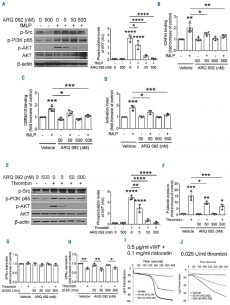
ARQ 092 inhibits activation of neutrophils and platelets isolated from SCD patients in vitro.Haematologica.2017 Feb;102(2):246-259. |
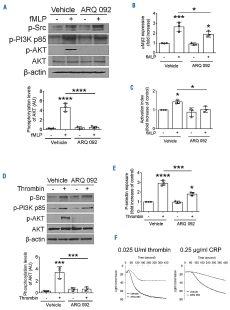
Oral administration of ARQ 092 blocks AKT phosphorylation and activation of neutrophils and platelets isolated from SCD mice ex vivo.Haematologica.2017 Feb;102(2):246-259. |
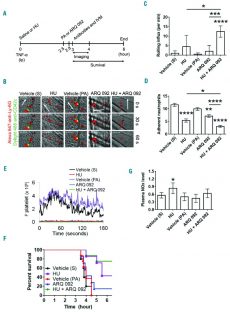
(A–G). Oral administration of hydroxyurea and ARQ 092 has numerous beneficial effects in TNF-α-challenged SCD mice.Haematologica.2017 Feb;102(2):246-259. |
Products are for research use only; We do not sell to patients
Copyright 2020 InvivoChem LLC | All Rights Reserved


 COA
COA