| Size | Price | Stock | Qty |
|---|---|---|---|
| 5mg |
|
||
| 10mg |
|
||
| 25mg |
|
||
| 50mg |
|
||
| 100mg |
|
||
| 250mg |
|
||
| 500mg | |||
| Other Sizes |
Purity: =99.62%
| Targets |
Antifungal agent; 1, 3-beta-D-glucan synthesis
Micafungin Sodium (FK463) targets fungal β-1,3-glucan synthase (IC50 = 0.01–0.1 μM for Candida albicans β-1,3-glucan synthase; MIC range = 0.03–1 μg/mL against clinically relevant Candida species) [4][5] Micafungin Sodium (FK463) shows no significant inhibition of mammalian cell enzymes at therapeutic concentrations [3][4] |
|---|---|
| ln Vitro |
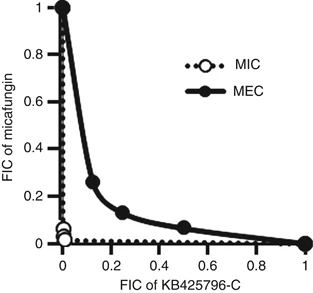
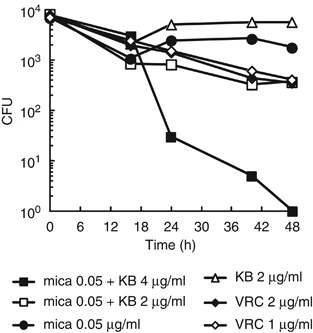
The majority of the isolates exhibit phenotypic reductions in biofilm formation when exposed to 10 mg/mL micafungin. In comparison to their untreated counterparts, the levels of mRNA transcription for every gene examined are likewise markedly lower in samples treated with micafungin[1]. KB425796-C and micafungin together exhibit fungicidal effects that significantly lower CFU counts, as opposed to fungistatic effects that show no CFU reduction at any of the time points under investigation[2].
Micafungin Sodium (FK463) (0.1 μg/mL, 24 hours) inhibited biofilm formation by Pseudomonas aeruginosa by 75%, reducing biofilm biomass and metabolic activity [1] Micafungin Sodium (FK463) exhibited potent antifungal activity against Candida species: MIC₉₀ = 0.03 μg/mL for C. albicans, 0.125 μg/mL for C. glabrata, 0.25 μg/mL for C. krusei, and 0.5 μg/mL for C. tropicalis (microdilution assay) [4][5] Micafungin Sodium (FK463) (0.2 μg/mL) showed synergistic antifungal activity with KB425796-C against Aspergillus fumigatus, reducing MIC of KB425796-C from 8 μg/mL to 1 μg/mL (fractional inhibitory concentration index = 0.5) [2] Micafungin Sodium (FK463) (1 μg/mL, 48 hours) inhibited hyphal growth of A. fumigatus by 80% and reduced β-1,3-glucan synthesis in fungal cell walls by 90% [3][4] Micafungin Sodium (FK463) showed no cytotoxicity to human epithelial cells (HEp-2) or fibroblasts at concentrations up to 64 μg/mL [4][5] |
| ln Vivo |
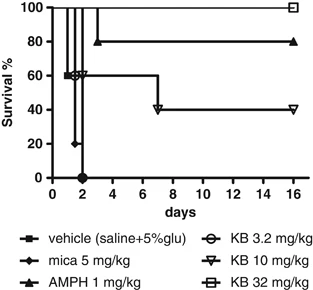
When mice are given micafungin (1 mg/kg) instead of saline, their survival is significantly extended. When KB425796-C (32 mg/kg) and micafungin (0.1 mg/kg) are administered together, animals exhibit a tendency for longer survival than when micafungin (0.1 mg/kg) is administered alone. Mice treated with micafungin show a decrease in the number of CFUs in their livers, albeit with a smaller clearance effect than in their kidneys. When micafungin and KB425796-C are used in combination, the number of CFUs is significantly lower than when micafungin is used alone at all doses that were studied. When combined with micafungin, KB425796-C has a higher clearance effect than when it is administered to animals with AMPH.
Micafungin Sodium (FK463) (0.5 mg/kg/day, intravenous injection for 7 days) improved survival rate of mice with disseminated candidiasis (C. albicans) from 20% (untreated) to 85%, reducing fungal load in kidneys by 99% [3] Micafungin Sodium (FK463) (1 mg/kg/day, i.v. for 10 days) enhanced efficacy of KB425796-C (5 mg/kg/day) in mice with A. fumigatus pulmonary aspergillosis: survival rate increased from 30% (KB425796-C alone) to 70%, and lung fungal burden decreased by 85% [2] Micafungin Sodium (FK463) (2 mg/kg/day, i.v. for 5 days) inhibited dissemination of C. neoformans in mice, reducing fungal load in brain and spleen by 90% and 88% respectively [3] Micafungin Sodium (FK463) (0.3 mg/kg/day, i.v.) reduced tissue inflammation in A. fumigatus-infected mice, decreasing lung neutrophil infiltration by 65% and pro-inflammatory cytokine (TNF-α, IL-6) levels by 55%–60% [2] |
| Enzyme Assay |
This study assesses the potential effect of micafungin, an antifungal agent known to inhibit 1,3-β-D-glucan synthesis in Candida albicans, on biofilm formation of selected Pseudomonas aeruginosa isolates by decreasing the synthesis of extracellular matrix β-D-glucan forming units. The effect of an optimal therapeutic dose of 10 mg ml(-1) micafungin on the production of biofilm was monitored in vitro using a microtiter plate assay. Phenotypic reduction in the formation of biofilm was significant (based on average optical density; p < 0.05) in most of the isolates. Moreover, the relative gene expression of biofilm encoding genes for alginate and pellicles (algC and pelC, respectively), and the cell wall 1,3-β-D-glucan encoding gene (ndvB) was evaluated using quantitative reverse transcription PCR. For all the genes tested, the levels of mRNA transcription were also decreased significantly (p < 0.05) in micafungin-treated samples cf. their untreated counterparts. In conclusion, this study presents micafungin as a potential agent for disrupting the structure of a biofilm of P. aeruginosa allowing the possible exposure and treatment of core-planktonic cells[1].
Fungal β-1,3-glucan synthase activity assay: Membrane fractions from C. albicans were incubated with Micafungin Sodium (FK463) (0.001–1 μM), UDP-glucose (substrate), and reaction buffer at 30°C for 2 hours; synthesized β-1,3-glucan was quantified by specific staining and spectrophotometry, and IC50 was calculated via dose-response curves [4][5] Enzyme selectivity assay: A panel of mammalian enzymes (e.g., mammalian glucan synthases, kinases) was incubated with Micafungin Sodium (FK463) (10 μg/mL); enzyme activity was measured by radiometric or colorimetric assays to assess selectivity [3][4] |
| Cell Assay |
Every fungal isolate is statically cultured for 24 hours at 30°C in yeast-maltose (YM) agar broth. In YM broth medium, Cryptococcus neoformans YC203 is cultivated for 20 hours at 30°C and 200 r.p.m. shaking. Washing the cultured cells once with sterile saline yields a cell suspension. Spores from A. fumigatus FP1305 are harvested in sterile saline and collected by filtering through gauze after the strainer is cultivated on a potato dextrose agar (PDA) slant for four days.The antifungal activity of RPMI 1640 medium supplemented with l-glutamine (without sodium bicarbonate) and buffered to pH 7.0 with 0.165 m MOPS is measured in 96-well culture plates using the micro-broth dilution method against all isolates, except for C. neoformans. YNBD (yeast nitrogen base-glucose) medium is used for C. neoformans. In the assay, 1×10⁵ CFU/well of the test microorganism is inoculated into each well, and the plates are then incubated at 37°C for 20 or 48 hours. Microscopic observation establishes two end points: MEC, which is defined as a significant decrease in fungal growth, and MIC, which is defined as a total inhibition of growth.
Antifungal MIC assay: Clinical isolates of Candida spp. and A. fumigatus were seeded in 96-well plates (1×10³ CFU/well) and treated with Micafungin Sodium (FK463) (0.001–64 μg/mL) for 48 hours (Candida) or 72 hours (Aspergillus); MIC₉₀ was determined as the lowest concentration inhibiting 90% of fungal growth [4][5] Biofilm inhibition assay: Pseudomonas aeruginosa was seeded in 96-well plates and cultured to form biofilms; Micafungin Sodium (FK463) (0.01–2 μg/mL) was added, and biofilm biomass was quantified by crystal violet staining after 24 hours; metabolic activity was measured by MTT assay [1] Synergy assay: A. fumigatus was treated with Micafungin Sodium (FK463) (0.01–4 μg/mL) in combination with KB425796-C (0.1–16 μg/mL) for 72 hours; fractional inhibitory concentration index was calculated to determine synergism [2] Hyphal growth inhibition assay: A. fumigatus conidia were inoculated on agar plates containing Micafungin Sodium (FK463) (0.05–2 μg/mL) and incubated for 48 hours; hyphal length was measured by microscopy [3] |
| Animal Protocol |
2.0×10⁶ A. fumigatus FP1305 spores are intravenously injected into eight groups of ten female DBA/2 mice (7 weeks old). The following therapies are administered to the test groups: AMPH is administered intraperitoneally (i.p.) once daily (q.d.); micafungin is administered subcutaneously (s.c.) at doses of 0.1, 0.32, or 1 mg/kg of body weight (q.d.); micafungin is administered s.c. at doses of 0.1, 0.32, or 1 mg/kg q.d.; in addition, KB425796-C is administered i.p. at doses of 32 mg/kg twice daily (b.i.d.); and saline is administered (b.i.d.). On days one and two, medications are given. After the treatment is over, five mice per group are killed one day later. Following their aseptic removal, the kidneys and livers are homogenized in 5 milliliters of sterile saline. The homogenates are serially diluted 10-fold, plated on PDA, and then incubated for 48 hours at 37°C. The resulting number of CFU per gram of tissue is then computed. For thirty-one days following the challenge, the survival rate of the five mice from each group that remain are monitored every day.
Disseminated candidiasis model: ICR mice were intravenously infected with C. albicans (1×10⁶ CFU/mouse); 24 hours post-infection, mice were treated with Micafungin Sodium (FK463) (0.1–2 mg/kg/day, dissolved in saline) via intravenous injection for 7 days; survival rate was monitored for 14 days, and fungal load in kidneys was quantified by CFU assay [3] Pulmonary aspergillosis model: BALB/c mice were intranasally infected with A. fumigatus conidia (5×10⁶ CFU/mouse); 4 hours post-infection, mice received Micafungin Sodium (FK463) (0.5–1 mg/kg/day, i.v.) plus KB425796-C (5 mg/kg/day, oral) for 10 days; survival rate and lung fungal burden were assessed [2] Disseminated cryptococcosis model: C57BL/6 mice were intravenously infected with C. neoformans (2×10⁵ CFU/mouse); mice were treated with Micafungin Sodium (FK463) (0.3–2 mg/kg/day, i.v.) for 5 days; fungal load in brain and spleen was measured by CFU assay [3] |
| ADME/Pharmacokinetics |
After intravenous injection of micafungin sodium (FK463) (1 mg/kg) into mice, its terminal half-life (t1/2) was 3.5 hours, its peak plasma concentration (Cmax) was 12 μg/mL, and its area under the curve (AUC₀–∞) was 45 μg·h/mL [3]. Micafungin sodium (FK463) was widely distributed in various tissues, with the highest concentrations in the kidneys, liver, and lungs (tissue/plasma ratio of 3.2–4.8 2 hours after administration) [3]. Approximately 80% of the drug was excreted unchanged in feces within 72 hours, and 10% was excreted in urine [3]. The plasma protein binding rate of micafungin sodium (FK463) in humans was 99%. The plasma content was 98%, and the mouse plasma content was 98% [4].
|
| Toxicity/Toxicokinetics |
Use of Michelin during Pregnancy and Lactation ◉ Overview of Use During Lactation
There is currently no information on the use of Michelin during lactation. Because Michelin binds to plasma proteins at a rate exceeding 99% and has low oral bioavailability, it is unlikely to enter breast milk and be absorbed by the infant. Intravenous administration of Michelin is safe for infants under 4 months of age. The amount absorbed into breast milk is likely to be far lower than the infant's dose. If the mother needs to use Michelin, this is not a reason to discontinue breastfeeding. ◉ Effects on Breastfed Infants As of the revision date, no relevant published information was found. ◉ Effects on Lactation and Breast Milk As of the revision date, no relevant published information was found. Micafungin sodium (FK463) showed low acute toxicity in mice: LD50 = 50 mg/kg (intravenous injection)[3] Prolonged administration (2 mg/kg/day for 28 days) in rats did not cause significant changes in serum ALT, AST, BUN, or creatinine levels, indicating no significant hepatotoxicity or nephrotoxicity[3][4] No significant drug interactions were observed when micafungin sodium (FK463) was used in combination with amphotericin B or fluconazole in vitro and in vivo[2][3] |
| References |
|
| Additional Infomation |
Micafungin sodium is an organosodium salt and an antibiotic/antifungal drug. Micafungin sodium is the sodium salt form of micafungin, a semi-synthetic echinocandin antibiotic derived from the fungus Coleophoma empetri, possessing antifungal activity. Like other cyclic lipopeptide antibiotics, micafungin non-competitively inhibits the fungal-specific enzyme 1,3-β-D-glucan synthase, essential for the synthesis of 1,3-β-D-glucan, a crucial component of the fungal cell wall. By inhibiting 1,3-β-D-glucan synthesis, the cell wall is weakened, leading to osmotic lysis and ultimately fungal cell death. A cyclic lipohexapeptide echinocandin antifungal drug used for the treatment and prevention of candidiasis. See also: Micafungin (with active fraction).
Drug Indications> Micafungin is indicated for: adults, adolescents aged 16 years and older, and the elderly, for the treatment of invasive candidiasis; for patients with esophageal candidiasis who are eligible for intravenous therapy; and for the prophylaxis of candidiasis in patients who have received allogeneic hematopoietic stem cell transplantation or who are expected to have neutropenia (absolute neutrophil count <500/µl) for 10 days or more. Children (including newborns) and adolescents under 16 years of age: for the treatment of invasive candidiasis; and for the prophylaxis of candidiasis in patients who have received allogeneic hematopoietic stem cell transplantation or who are expected to have neutropenia (absolute neutrophil count <500/µl) for 10 days or more. The decision to use Mycamine should take into account the potential risk of liver cancer. Therefore, Mycamine should only be used when other antifungal drugs are not suitable. Micafungin sodium (FK463) is a water-soluble lipopeptide antifungal drug belonging to the echinocandins class [3][4][5] Its antifungal mechanism includes inhibiting fungal β-1,3-glucan synthase, blocking cell wall synthesis, and ultimately leading to fungal cell lysis [3][4][5] Micafungin sodium (FK463) has potent activity against Candida and Aspergillus fungi, including fluconazole-resistant strains [4][5] It can inhibit the formation of Pseudomonas aeruginosa biofilms, suggesting its potential application value in the treatment of biofilm-related infections [1] Clinically, it is suitable for the treatment of invasive candidiasis, esophageal candidiasis, and invasive aspergillosis. Patients with weakened immune function [3][4] The selectivity of this compound for fungal enzymes is much higher than that for mammalian enzymes, thus it has good safety [3][5] |
| Molecular Formula |
C56H70N9NAO23S
|
|---|---|
| Molecular Weight |
1292.26
|
| Exact Mass |
1291.42
|
| Elemental Analysis |
C, 52.05; H, 5.46; N, 9.76; Na, 1.78; O, 28.48; S, 2.48
|
| CAS # |
208538-73-2
|
| Related CAS # |
Micafungin;235114-32-6
|
| PubChem CID |
23666118
|
| Appearance |
White to off-white solid powder
|
| Hydrogen Bond Donor Count |
15
|
| Hydrogen Bond Acceptor Count |
24
|
| Rotatable Bond Count |
18
|
| Heavy Atom Count |
90
|
| Complexity |
2580
|
| Defined Atom Stereocenter Count |
15
|
| SMILES |
O=C1[C@@]([H])(NC([C@@]([H])(NC([C@]2([H])C[C@H](CN2C([C@@]([H])(NC([C@H](C[C@H]([C@H](NC([C@]2([H])[C@H]([C@H](CN21)C)O)=O)O)O)NC(C1C=CC(C2=NOC(C3C=CC(=CC=3)OCCCCC)=C2)=CC=1)=O)=O)[C@H](O)C)=O)O)=O)[C@H](O)[C@H](C1C=CC(=C(C=1)OS(O)(=O)=O)O)O)=O)[C@H](O)CC(=O)N.[Na]
|
| InChi Key |
KOOAFHGJVIVFMZ-WZPXRXMFSA-M
|
| InChi Code |
InChI=1S/C56H71N9O23S.Na/c1-4-5-6-17-86-32-14-11-28(12-15-32)39-21-33(63-87-39)27-7-9-29(10-8-27)49(75)58-34-20-38(70)52(78)62-54(80)45-46(72)25(2)23-65(45)56(82)43(37(69)22-41(57)71)60-53(79)44(48(74)47(73)30-13-16-36(68)40(18-30)88-89(83,84)85)61-51(77)35-19-31(67)24-64(35)55(81)42(26(3)66)59-50(34)76;/h7-16,18,21,25-26,31,34-35,37-38,42-48,52,66-70,72-74,78H,4-6,17,19-20,22-24H2,1-3H3,(H2,57,71)(H,58,75)(H,59,76)(H,60,79)(H,61,77)(H,62,80)(H,83,84,85);/q;+1/p-1/t25-,26+,31+,34-,35-,37+,38+,42-,43-,44-,45-,46-,47-,48-,52+;/m0./s1
|
| Chemical Name |
sodium 5-((1S,2S)-2-((2R,6S,9S,11R,12R,14aS,15S,16S,20S,23S,25aS)-20-((R)-3-amino-1-hydroxy-3-oxopropyl)-2,11,12,15-tetrahydroxy-6-((R)-1-hydroxyethyl)-16-methyl-5,8,14,19,22,25-hexaoxo-9-(4-(5-(4-(pentyloxy)phenyl)isoxazol-3-yl)benzamido)tetracosahydro-1H-dipyrrolo[2,1-c:2',1'-l][1,4,7,10,13,16]hexaazacyclohenicosin-23-yl)-1,2-dihydroxyethyl)-2-hydroxyphenyl sulfate
|
| Synonyms |
FK463; FK 463; FK-463; Funguard; Mycamine; FK463; Micafungin Na; FK463 Sodium; Micafungin sodium salt; Micafungin sodium
|
| HS Tariff Code |
2934.99.9001
|
| Storage |
Powder -20°C 3 years 4°C 2 years In solvent -80°C 6 months -20°C 1 month Note: Please store this product in a sealed and protected environment (e.g. under nitrogen), avoid exposure to moisture and light. |
| Shipping Condition |
Room temperature (This product is stable at ambient temperature for a few days during ordinary shipping and time spent in Customs)
|
| Solubility (In Vitro) |
DMSO : 32 ~100 mg/mL (24.76 ~77.38 mM )
Water : ~100 mg/mL (~77.38 mM) |
|---|---|
| Solubility (In Vivo) |
Solubility in Formulation 1: ≥ 2.5 mg/mL (1.93 mM) (saturation unknown) in 10% DMSO + 40% PEG300 + 5% Tween80 + 45% Saline (add these co-solvents sequentially from left to right, and one by one), clear solution.
For example, if 1 mL of working solution is to be prepared, you can add 100 μL of 25.0 mg/mL clear DMSO stock solution to 400 μL PEG300 and mix evenly; then add 50 μL Tween-80 to the above solution and mix evenly; then add 450 μL normal saline to adjust the volume to 1 mL. Preparation of saline: Dissolve 0.9 g of sodium chloride in 100 mL ddH₂ O to obtain a clear solution. Solubility in Formulation 2: ≥ 2.5 mg/mL (1.93 mM) (saturation unknown) in 10% DMSO + 90% (20% SBE-β-CD in Saline) (add these co-solvents sequentially from left to right, and one by one), clear solution. For example, if 1 mL of working solution is to be prepared, you can add 100 μL of 25.0 mg/mL clear DMSO stock solution to 900 μL of 20% SBE-β-CD physiological saline solution and mix evenly. Preparation of 20% SBE-β-CD in Saline (4°C,1 week): Dissolve 2 g SBE-β-CD in 10 mL saline to obtain a clear solution. View More
Solubility in Formulation 3: ≥ 2.5 mg/mL (1.93 mM) (saturation unknown) in 10% DMSO + 90% Corn Oil (add these co-solvents sequentially from left to right, and one by one), clear solution. Solubility in Formulation 4: 10% DMSO+40% PEG300+5% Tween-80+45% Saline: ≥ 2.5 mg/mL (1.93 mM) Solubility in Formulation 5: 50 mg/mL (38.69 mM) in PBS (add these co-solvents sequentially from left to right, and one by one), clear solution; with ultrasonication. Solubility in Formulation 6: 50 mg/mL (38.69 mM) in Saline (add these co-solvents sequentially from left to right, and one by one), clear solution; with ultrasonication. Preparation of saline: Dissolve 0.9 g of sodium chloride in 100 mL ddH₂ O to obtain a clear solution. |
| Preparing Stock Solutions | 1 mg | 5 mg | 10 mg | |
| 1 mM | 0.7738 mL | 3.8692 mL | 7.7384 mL | |
| 5 mM | 0.1548 mL | 0.7738 mL | 1.5477 mL | |
| 10 mM | 0.0774 mL | 0.3869 mL | 0.7738 mL |
*Note: Please select an appropriate solvent for the preparation of stock solution based on your experiment needs. For most products, DMSO can be used for preparing stock solutions (e.g. 5 mM, 10 mM, or 20 mM concentration); some products with high aqueous solubility may be dissolved in water directly. Solubility information is available at the above Solubility Data section. Once the stock solution is prepared, aliquot it to routine usage volumes and store at -20°C or -80°C. Avoid repeated freeze and thaw cycles.
Calculation results
Working concentration: mg/mL;
Method for preparing DMSO stock solution: mg drug pre-dissolved in μL DMSO (stock solution concentration mg/mL). Please contact us first if the concentration exceeds the DMSO solubility of the batch of drug.
Method for preparing in vivo formulation::Take μL DMSO stock solution, next add μL PEG300, mix and clarify, next addμL Tween 80, mix and clarify, next add μL ddH2O,mix and clarify.
(1) Please be sure that the solution is clear before the addition of next solvent. Dissolution methods like vortex, ultrasound or warming and heat may be used to aid dissolving.
(2) Be sure to add the solvent(s) in order.
| NCT Number | Recruitment | interventions | Conditions | Sponsor/Collaborators | Start Date | Phases |
| NCT04728971 | NOT YET RECRUITING | Drug:Micafungin Sodium 50 MG Injection Drug:Caspofungin Acetate |
Liver Transplantation | Shanghai General Hospital, Shanghai Jiao Tong University School of Medicine |
2022-10-01 | Phase 4 |
| NCT05784844 | RECRUITING | Drug:Meropenem Drug:Micafungin |
Febrile Neutropenia | Wake Forest University Health Sciences |
2024-08 | Phase 4 |
| NCT04738955 | UNKNOWN STATUS | Drug:Micafungin Sodium | Hematological Tumors Patients With High Risk Factors of Invasive Fungal Disease |
Shandong Provincial Hospital | 2021-02-01 | Phase 4 |
| NCT02678598 | COMPLETED | Drug:Micafungin | Invasive Fungal Infections | Astellas Pharma China,Inc. | 2015-03 | |
| NCT03174457 | COMPLETED | Drug:Micafungin | Invasive Fungal Infections | Astellas Pharma Singapore Pte.Ltd. | 2017-06-21 |
|
|
|
Products are for research use only; We do not sell to patients
Copyright 2020 InvivoChem LLC | All Rights Reserved


 COA
COA