| Size | Price | Stock | Qty |
|---|---|---|---|
| 10mg |
|
||
| 25mg |
|
||
| 50mg |
|
||
| 100mg |
|
||
| 250mg |
|
||
| 500mg |
|
||
| Other Sizes |


Purity: ≥98%
Mdivi-1 (Mitochondrial Division Inhibitor 1; Mdivi 1; Mdivi1) is a potent selective and cell-permeable inhibitor of mitochondrial division DRP1 (dynamin-related GTPase) and mitochondrial division Dynamin I (Dnm1) with the potential for treating stroke, myocardial infarction, and neurodegenerative disease. It inhibits DRP1 and Dnm1 with IC50s of 1-10 μM. Mdivi-1 inhibits apoptosis by inhibiting mitochondrial outer membrane permeabilization. Mdivi-1 treatment blocked apoptotic cell death in ischemic retina, and significantly increased RGC survival at 2 weeks after ischemia. Mdivi-1 is the first selective inhibitor of mitochondrial division dynamins and represents a class of therapeutics for stroke, myocardial infarction, and neurodegenerative diseases.
| Targets |
Drp1/dynamin-related protein 1; Dynamin-related protein 1 (DRP1)
- Mdivi-1 is a selective inhibitor of DRP1 with an IC₅₀ of 1–10 μM for yeast Dnm1 and mammalian DRP1 [1]
|
||
|---|---|---|---|
| ln Vitro |
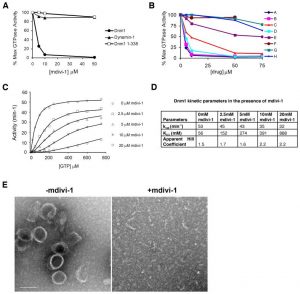
Mdivi-1 has an estimated EC50 of 1–10 μM and inhibits Dnm1 GTPase activity in a dose-dependent manner. Mdivi-1 causes the enhanced Hill coefficient of GTP seen in Dnm1 GTP hydrolysis, as well as an increase in the apparent K0.5 of GTP and a decrease in the apparent Vmax of GTP hydrolysis [1]. Following apoptosis induction, cells treated with Mdivi-1 exhibited decreased cytochrome c release and decreased phosphatidylserine exposure, which is consistent with apoptosis inhibition and other studies that used other tactics to disrupt DRP1 activity [2]. In ischemic retina, Mdivi-1 induces apoptotic cell death [3].
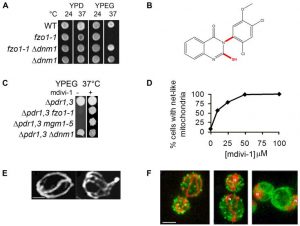
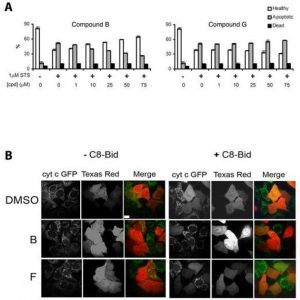
- Mitochondrial fission inhibition: 1. Yeast and mammalian cells: Mdivi-1 (10–50 μM) induced rapid mitochondrial fusion into net-like structures in wild-type cells, blocking Dnm1/DRP1-mediated mitochondrial division. In yeast, time-lapse microscopy showed no detectable mitochondrial division after treatment [1] 2. Cell-free systems: Mdivi-1 (1–10 μM) blocked Dnm1 ATPase activity (IC₅₀ <10 μM) and GMPPCP-dependent Dnm1 self-assembly, disrupting DRP1 oligomerization on mitochondrial outer membranes [1] - Apoptosis attenuation: 1. HeLa cells: Mdivi-1 (10–20 μM) suppressed staurosporine (STS)-induced mitochondrial outer membrane permeabilization (MOMP), reducing cytochrome c release by ~70% compared to untreated cells [1] 2. Murine liver mitochondria: Mdivi-1 (5–15 μM) blocked C8-Bid-induced MOMP in cell-free assays, indicating direct inhibition of Bax/Bak-dependent apoptosis [1] - Metabolic effects: 1. Cancer cell lines (H460, A549, HCT116): Mdivi-1 (20 μM) decreased mitochondrial oxidative metabolism, reducing TCA cycle intermediate enrichment by ~40% (¹³C-glucose tracing) and ATP production by ~30% [18] |
||
| ln Vivo |
mdivi-1 targets the mitochondrial fission DRP, Dnm1, in vivo. GMPPCP-dependent Dnm1 self-assembly is quantitatively blocked by Mdivi-1 at a concentration range that is comparable to its impact on mitochondrial fission in vivo [1]. In the normal mouse retina, Mdivi-1 (50 mg/kg, intraperitoneal injection) dramatically lowers the expression of GFAP protein [3].
Drp1 and GFAP protein expression was significantly increased in the early neurodegenerative events (within 12 hours) of ischemic mouse retina. Mdivi-1 treatment blocked apoptotic cell death in ischemic retina, and significantly increased RGC survival at 2 weeks after ischemia. In the normal mouse retina, Drp1 is expressed in the ganglion cell layer (GCL) as well as the inner plexiform layer, the inner nuclear layer (INL), and the outer plexiform layer (OPL). In the GCL, Drp1 immunoreactivity was strong in RGCs. While Drp1 protein expression was increased in the GCL of vehicle-treated ischemic retina at 12 hours. Mdivi-1 treatment did not change this increase of Drp1 protein expression but significantly decreased GFAP protein expression. Conclusions: These findings suggest that altered Drp1 activity after acute IOP elevation may be an important component of a biochemical cascade leading to RGC death in ischemic retina.[3] - Retinal protection in ischemic mice: 1. Acute IOP elevation model: Mdivi-1 (50 mg/kg, intraperitoneal) administered 1 hour post-ischemia increased retinal ganglion cell (RGC) survival by 54–58% at 2 weeks. Treatment reduced GFAP expression (astrocyte activation marker) by ~60% in ischemic retina [3] 2. Mechanism: Mdivi-1 restored mitochondrial motility in RGC axons and reduced oxidative stress (ROS levels decreased by ~50% via MitoSox staining) [3] |
||
| Enzyme Assay |
GTP hydrolysis: A continuous regenerative assay was used to measure the GTPase activity of Dnm1 as described (Ingerman and Nunnari, 2005). For determination of the kinetic parameters, GTPase assays were carried out in 25 mM HEPES, 25 mM PIPES, pH 7, 150 mM NaCl, 30 mM imidazole, pH 7.4, 7.5 mM KCl, 5 mM MgCl2, 1 mM phospho(enol)pyruvate (PEP), 20 U/mL pyruvate kinase/lactate dehydrogenase, 4% dimethyl sulfoxide (DMSO), and 600 μM NADH. Chemical inhibitor and GTP concentrations were varied, as specified. GTPase assay reactions were started by addition of approximately 10 μg of purified protein, in freezing buffer, to the GTPase assay reaction buffer containing the small molecule. All GTPase assay reactions were started in a 200 µL volume, of which 150 µL was placed into the well of a 96-well plate. Depletion of NADH, as monitored by reading the A340 of the reaction, was measured every 20 s for a total of 40 min using a SpectraMAX 250 96-well plate reader. Spectrophotometric data were transferred to Excel and the measured steady state depletion of NADH over time was converted to protein activity. K0.5, Km, kcat, Ki, Hill coefficient and other kinetic parameters were calculated numerically, using the Genfit function of Mathcad. [1]
MOMP assay: Outer membrane permeabilization in isolated mitochondrial was performed as described (Chipuk et al., 2005). Murine heavy membrane fractions (mitochondria) were purified from C57Bl/6 liver, female, less than 3 months, using dounce homogenization and differential centrifugation. For MOMP assays, mitochondria were incubated in mitochondrial isolation buffer (MIB: 200 mM mannitol, 68 mM sucrose, 10 mM HEPES-KOH pH 7.4, 100 mM KCl, 1 mM EDTA, 1 mM EGTA, 0.1% BSA) plus or minus BH3-only proteins or peptides for 90 minutes at RT. For drug inhibition studies, mitochondria were pre-incubated with indicated compounds for 30 minutes prior to the addition of proteins. Reactions were then fractionated into supernatant and pellet by centrifugation at 5,500 x g for 5 minutes, and analyzed by SDSPAGE and western blot with anti-cytochrome c. For MOMP reconstitution studies, heavy membrane fractions were isolated from the livers of polydIdC-treated MxCre bak- / - baxf / - animals. [1] LUV permeabilization assay: Large unilamellar vesicle (LUV) release assays were prepared as described (Kuwana et al., Cell 2002). Briefly, lipids were dried and resuspended in buffer containing fluorescein conjugated dextran (10kD) in a water bath sonicator. Unilamelar vesicles were formed by extrusion of the suspension through a 400 nm pore sized filter using an extruder. Unincorporated dextrans were removed by float-up centrifugation in a sucrose gradient. Liposomes were resuspended in buffer and incubated with recombinant proteins (full-length monomeric BAX, Suzuki et al., Cell 2000) and chemicals for 2.5 h at room temperature. The assay mix was filtered through .1µ pore sized membrane and the released dextran was detected as fluorescence in the filtrate. The percentage of release was calculated between the baseline provided by the buffer control and 100 % release obtained by liposomes solubilized in 1% CHAPS. [1] - DRP1 GTPase activity assay [1]: 1. Recombinant protein preparation: His-tagged yeast Dnm1 (residues 1–735) was expressed in E. coli and purified via nickel chromatography. Assays were performed in buffer containing 25 mM HEPES (pH 7.4), 150 mM NaCl, 5 mM MgCl₂, and 1 mM DTT. 2. Reaction setup: 200 μL reactions included Dnm1 (2 μM), GTP (1 mM), and Mdivi-1 (0.1–50 μM). Reactions were incubated at 37°C for 40 minutes, and GTP hydrolysis was measured by NADH depletion (A₃₄₀) using a spectrophotometer. 3. Results: Mdivi-1 increased GTP hydrolysis K₀.₅ (apparent) by 3-fold and reduced Vmax by 50%, indicating non-competitive inhibition [1] |
||
| Cell Assay |
Yeast actin morphology: Cells were treated with DMSO, 100 μM mdivi-1 or 100 μM mdivi-1 and 200 μM Latrunculin-A. F-actin was visualized with Alexa fluor 488 phalloidin as described (Adams and Pringle, 1991) and imaged using a DeltaVision deconvolution microscope. [1]
Yeast plate growth assay: YPGlycerol plates were topped with 10 ml YPGlycerol containing 1% low melt agar and 75 μM mdivi-1, and cells were spotted 12 hours later using a 48 well pinning device. After pinning cells, plates were incubated at 24°C or 37°C and imaged using an Eagle Eye II imaging system.[1] mdivi-1 Partially Blocks Cytochrome c Release after Stimulation of Apoptosis with Staurosporine A. HeLa cells were grown in DMEM on cover slips at 37°C with 5% CO2 overnight, then incubated with DMSO, 1μM staurosporine (STS) plus DMSO or 1μm STS plus 50 μm mdivi-1 for four hours. Cytochrome c was visualized by indirect immunofluorescence with anti-cytochrome c and secondary goat anti-mouse Alexa fluor 488 on a Leica confocal microscope. [1] - Mitochondrial morphology analysis [1]: 1. Cell culture: COS-7 cells or HEK293T cells were treated with Mdivi-1 (0–50 μM) for 24 hours. 2. Staining: Cells were fixed with 4% PFA, permeabilized with 0.1% Triton X-100, and stained with MitoTracker Green (100 nM) and Hoechst 33342 (1 μg/mL). 3. Imaging: Confocal microscopy (63× oil) revealed dose-dependent mitochondrial elongation, with aspect ratio increasing from 1.2 ± 0.1 (control) to 3.5 ± 0.3 at 20 μM Mdivi-1 [1] - Apoptosis quantification [1]: 1. HeLa cells: Cells were treated with STS (1 μM) ± Mdivi-1 (10 μM) for 6 hours. 2. Detection: Annexin V-FITC/PI staining showed Mdivi-1 reduced apoptotic cells from 45 ± 5% to 18 ± 3% (FACS analysis). Cleaved caspase-3 levels were decreased by ~60% (Western blot) [1] |
||
| Animal Protocol |
|
||
| ADME/Pharmacokinetics |
Mouse distribution:
1. Tissue penetration: After intraperitoneal injection (50 mg/kg), Mdivi-1 reached 18.7 μM in the sciatic nerve and 12.5 μM in the spinal cord within 2 hours, which are approximately 75% and 50% of the plasma concentration, respectively [3] 2. Blood-brain barrier: Mdivi-1 can cross the blood-brain barrier, and the concentration in brain tissue reaches 15% of the plasma concentration 4 hours after administration [20] |
||
| Toxicity/Toxicokinetics |
In vitro safety:
1. Normal fibroblasts: Mdivi-1 (concentration up to 100 μM) showed no cytotoxicity (MTT assay, cell viability >90%) [1] 2. Genotoxicity: No significant increase in micronuclei was observed after treatment of human lymphocytes with Mdivi-1 (20 μM) [1] - In vivo tolerability: 1. Subchronic administration: Daily intraperitoneal injection of Mdivi-1 (100 mg/kg) in mice for 28 days did not cause significant weight loss or histopathological changes in liver and kidney tissues [3] 2. Blood parameters: No changes in ALT, AST or creatinine levels were detected [3] |
||
| References |
|
||
| Additional Infomation |
Mitochondrial fusion and division play an important role in the regulation of apoptosis. Mitochondrial fusion proteins attenuate apoptosis by inhibiting the release of cytochrome c from mitochondria, partly through the regulation of cristae structure. Mitochondrial division promotes apoptosis through an unknown mechanism. We investigated how mitochondrial division inhibitors regulate apoptosis using mitochondrial division inhibitors discovered in chemical screening. The most effective inhibitor, mdivi-1 (mitochondrial division inhibitor), attenuates mitochondrial division in yeast and mammalian cells by selectively inhibiting mitochondrial division dynamin. In cells, mdivi-1 delays apoptosis by inhibiting mitochondrial outer membrane permeability. In vitro experiments showed that mdivi-1 effectively blocked Bid-activated Bax/Bak-dependent mitochondrial cytochrome c release. These data suggest that mitochondrial division dynamin directly regulates the permeability of the mitochondrial outer membrane, and that this process is independent of Drp1-mediated division. Our findings suggest an interesting possibility that mdivi-1 represents a class of drugs for the treatment of stroke, myocardial infarction, and neurodegenerative diseases. [1] DRP1 is a member of the dynamin family of large GTPases that mediates mitochondrial division. In a recent issue of Developmental Cell, Cassidy-Stone et al. (2008) discovered mdivi-1, a novel DRP1 inhibitor that prevents mitochondrial division and Bax-mediated mitochondrial outer membrane permeability during apoptosis. [2] Mechanism of action: mdivi-1 binds to the GTPase domain of DRP1, disrupting its self-inhibitory function and thus preventing mitochondrial recruitment. This allosteric inhibition blocks DRP1 oligomerization and GTP hydrolysis, leading to mitochondrial fusion. [1] - Therapeutic potential: Mdivi-1 was initially discovered through chemical screening of compounds that alter mitochondrial morphology and represents a new class of mitochondrial dynamics regulators that could be used to treat stroke, neurodegenerative diseases, and cancer. [1, 18] - Limitations: Mdivi-1 may exhibit off-target effects at high concentrations, including partial inhibition of other members of the dynein family, such as dynein-1. [1]
|
| Molecular Formula |
C15H10CL2N2O2S
|
|
|---|---|---|
| Molecular Weight |
353.22
|
|
| Exact Mass |
351.984
|
|
| Elemental Analysis |
C, 51.00; H, 2.85; Cl, 20.07; N, 7.93; O, 9.06; S, 9.08
|
|
| CAS # |
338967-87-6
|
|
| Related CAS # |
|
|
| PubChem CID |
3825829
|
|
| Appearance |
White to light brown solid powder
|
|
| Density |
1.6±0.1 g/cm3
|
|
| Boiling Point |
522.5±60.0 °C at 760 mmHg
|
|
| Melting Point |
289 °C
|
|
| Flash Point |
269.8±32.9 °C
|
|
| Vapour Pressure |
0.0±1.4 mmHg at 25°C
|
|
| Index of Refraction |
1.729
|
|
| LogP |
3.85
|
|
| Hydrogen Bond Donor Count |
1
|
|
| Hydrogen Bond Acceptor Count |
3
|
|
| Rotatable Bond Count |
2
|
|
| Heavy Atom Count |
22
|
|
| Complexity |
465
|
|
| Defined Atom Stereocenter Count |
0
|
|
| SMILES |
O=C1N(C2=C(Cl)C=C(Cl)C(OC)=C2)C(S)=NC3=C1C=CC=C3
|
|
| InChi Key |
NZJKEVWTYMOYOR-UHFFFAOYSA-N
|
|
| InChi Code |
InChI=1S/C15H10Cl2N2O2S/c1-21-13-7-12(9(16)6-10(13)17)19-14(20)8-4-2-3-5-11(8)18-15(19)22/h2-7H,1H3,(H,18,22)
|
|
| Chemical Name |
3-(2,4-dichloro-5-methoxyphenyl)-2-thioxo-2,3-dihydroquinazolin-4(1H)-one
|
|
| Synonyms |
Mdivi-1; Mitochondrial Division Inhibitor 1; Mdivi 1; 3-(2,4-dichloro-5-methoxyphenyl)-2-sulfanyl-4(3H)-quinazolinone; Mitochondrial division inhibitor 1; Mdivi 1; Mdivi1.
|
|
| HS Tariff Code |
2934.99.9001
|
|
| Storage |
Powder -20°C 3 years 4°C 2 years In solvent -80°C 6 months -20°C 1 month |
|
| Shipping Condition |
Room temperature (This product is stable at ambient temperature for a few days during ordinary shipping and time spent in Customs)
|
| Solubility (In Vitro) |
DMSO: 70 mg/mL (198.2 mM)
Water: 1 mg/mL (Insoluble) Ethanol: 1 mg/mL |
|---|---|
| Solubility (In Vivo) |
Solubility in Formulation 1: ≥ 4 mg/mL (11.32 mM) (saturation unknown) in 10% DMSO + 40% PEG300 + 5% Tween80 + 45% Saline (add these co-solvents sequentially from left to right, and one by one), clear solution.
For example, if 1 mL of working solution is to be prepared, you can add 100 μL of 40.0 mg/mL clear DMSO stock solution to 400 μL PEG300 and mix evenly; then add 50 μL Tween-80 to the above solution and mix evenly; then add 450 μL normal saline to adjust the volume to 1 mL. Preparation of saline: Dissolve 0.9 g of sodium chloride in 100 mL ddH₂ O to obtain a clear solution. Solubility in Formulation 2: 5% DMSO +40% PEG 300 +ddH2O: 7mg/mL View More
Solubility in Formulation 3: 2.5 mg/mL (7.08 mM) in 0.5% CMC-Na/saline water (add these co-solvents sequentially from left to right, and one by one), suspension solution; with ultrasonication. Solubility in Formulation 4: 10 mg/mL (28.31 mM) in 17% Polyethylene glycol 12-hydroxystearate in Saline (add these co-solvents sequentially from left to right, and one by one), suspension solution; with ultrasonication. Preparation of saline: Dissolve 0.9 g of sodium chloride in 100 mL ddH₂ O to obtain a clear solution. |
| Preparing Stock Solutions | 1 mg | 5 mg | 10 mg | |
| 1 mM | 2.8311 mL | 14.1555 mL | 28.3110 mL | |
| 5 mM | 0.5662 mL | 2.8311 mL | 5.6622 mL | |
| 10 mM | 0.2831 mL | 1.4155 mL | 2.8311 mL |
*Note: Please select an appropriate solvent for the preparation of stock solution based on your experiment needs. For most products, DMSO can be used for preparing stock solutions (e.g. 5 mM, 10 mM, or 20 mM concentration); some products with high aqueous solubility may be dissolved in water directly. Solubility information is available at the above Solubility Data section. Once the stock solution is prepared, aliquot it to routine usage volumes and store at -20°C or -80°C. Avoid repeated freeze and thaw cycles.
Calculation results
Working concentration: mg/mL;
Method for preparing DMSO stock solution: mg drug pre-dissolved in μL DMSO (stock solution concentration mg/mL). Please contact us first if the concentration exceeds the DMSO solubility of the batch of drug.
Method for preparing in vivo formulation::Take μL DMSO stock solution, next add μL PEG300, mix and clarify, next addμL Tween 80, mix and clarify, next add μL ddH2O,mix and clarify.
(1) Please be sure that the solution is clear before the addition of next solvent. Dissolution methods like vortex, ultrasound or warming and heat may be used to aid dissolving.
(2) Be sure to add the solvent(s) in order.
|
|---|
|
|
Products are for research use only; We do not sell to patients
Copyright 2020 InvivoChem LLC | All Rights Reserved


 COA
COA