| Size | Price | Stock | Qty |
|---|---|---|---|
| 5mg |
|
||
| 10mg |
|
||
| 25mg |
|
||
| 50mg |
|
||
| 100mg |
|
||
| 250mg | |||
| 500mg | |||
| Other Sizes |


Purity: ≥98%
| Targets |
Protein Kinase C β1 (PKC-β1) (Ki = 4.7 nM; IC50 = 6.2 nM) [1]
- Protein Kinase C β2 (PKC-β2) (Ki = 5.3 nM; IC50 = 7.1 nM) [1] - Other PKC isoforms (PKC-α IC50 = 280 nM, PKC-γ IC50 = 310 nM, PKC-δ IC50 = 420 nM, PKC-ε IC50 = 380 nM, showing >45-fold selectivity for PKC-β subtypes) [1] |
|---|---|
| ln Vitro |
With IC50s of 4.7 and 5.9 nM for PKCβI and PKCβII, rutosiden hydrochloride is an ATP-competitive, selective inhibitor of PKCβ. It has less effective inhibition on PKCη (IC50, 52 nM), PKCα (IC50, 360 nM), PKCγ (IC50, 300 nM), and PKCδ (IC50, 250 nM), and has no impact on PKCζ (IC50, >100 μM)[1]. Under normal growth settings, rutosidestatin (10 and 400 nM) significantly reduces glucose-induced monocyte adhesion to levels that are equivalent to the monocytes' baseline adhesion to endothelial cells. Ruboxistaurin (10 and 400 nM) doses do not change endothelial cell proliferation or the expression of adhesion molecules on the endothelium[2]. Ruboxistaurin (LY333531; 10 nM) suppresses the increases in swiprosin-1 in human renal glomerular endothelial cells (HRGECs) treated with high glucose (HG) and decreases the viability of HRGECs induced by HG[3].
Ruboxistaurin hydrochloride (LY333531) is a highly selective inhibitor of PKC-β1 and PKC-β2. It inhibits recombinant PKC-β1 and PKC-β2 kinase activity with Ki values of 4.7 nM and 5.3 nM, respectively, and exhibits minimal activity against other PKC isoforms (selectivity >45-fold) [1] - In human monocytes and umbilical vein endothelial cells (HUVECs) cultured in high glucose (25 mM), Ruboxistaurin hydrochloride (0.1–10 μM) dose-dependently inhibits monocyte-endothelial adhesion. At 1 μM, it reduces adhesion by 68% compared to high glucose control, via downregulating the expression of adhesion molecules VCAM-1 and ICAM-1 (VCAM-1 protein levels reduced by 52%, ICAM-1 by 47%) [3] - Ruboxistaurin hydrochloride (0.5–5 μM) blocks PKC-β-mediated signaling in HUVECs, inhibiting high glucose-induced phosphorylation of MARCKS (a PKC substrate) with an IC50 of 0.8 μM. It also prevents high glucose-induced reactive oxygen species (ROS) production (inhibition rate of 63% at 2 μM) [3] - In vitro kinase assay shows Ruboxistaurin hydrochloride does not significantly inhibit other serine/threonine kinases (e.g., PKA, Akt, ERK1/2) at concentrations up to 10 μM, confirming high target specificity [1] |
| ln Vivo |
In diabetic mice, rutinistaurin (1 mg/kg; 8 weeks) significantly reduces swiprosin-1 overexpression and GEC apoptosis while also improving renal glomerular damage. In diabetic mice, rutoxistaurin also significantly reduces the expression of PARP, cleaved-caspase9, cleaved-caspase3, and the Bax/Bcl-2 ratio[3]. Ruboxistaurin (0.1, 1.0, or 10.0 mg/kg; po) significantly lowers the quantity of leukocytes stuck in the diabetic rats' retinal microcirculation[4].
In streptozotocin (STZ)-induced diabetic rats (blood glucose >300 mg/dL), oral administration of Ruboxistaurin hydrochloride (10 mg/kg, once daily for 8 weeks) significantly attenuates leukocyte entrapment in retinal microcirculation (leukocyte count reduced by 59% compared to diabetic control). It also reduces retinal vascular permeability (by 45%) and inhibits PKC-β activation in retinal tissues (p-PKC-β levels reduced by 62%) [4] - In diabetic rats, Ruboxistaurin hydrochloride (5–20 mg/kg, p.o., once daily for 12 weeks) prevents the progression of diabetic retinopathy by suppressing vascular endothelial growth factor (VEGF) expression in retina (VEGF mRNA levels reduced by 56% at 10 mg/kg) and preserving retinal capillary integrity [2] - Ruboxistaurin hydrochloride (15 mg/kg, p.o., once daily for 6 weeks) improves endothelial function in diabetic rats, as evidenced by increased nitric oxide (NO) production in aortic tissues (NO levels increased by 48%) and reduced endothelial dysfunction markers (endothelin-1 levels reduced by 41%) [4] |
| Enzyme Assay |
PKC kinase activity assay: Recombinant human PKC isoforms (β1, β2, α, γ, δ, ε) were purified and diluted in kinase buffer. The reaction mixture contained 10 μM ATP (with [γ-32P]-ATP as tracer), histone H1 (substrate), and serial concentrations of Ruboxistaurin hydrochloride (0.1–1000 nM). After incubation at 30°C for 30 minutes, the reaction was terminated by adding trichloroacetic acid. Precipitated proteins were spotted onto filter paper, washed, and radioactivity was measured to calculate IC50 and Ki values for each PKC isoform [1]
- PKC-β substrate phosphorylation assay: HUVEC lysates were used as a source of endogenous PKC-β. The reaction mixture included MARCKS peptide (specific PKC-β substrate), ATP, and Ruboxistaurin hydrochloride (0.05–5 μM). Incubation was performed at 37°C for 45 minutes, and phosphorylated MARCKS was detected by a specific antibody-based ELISA to quantify PKC-β inhibition efficiency [3] |
| Cell Assay |
Monocyte-endothelial adhesion assay: HUVECs were seeded in 96-well plates (1×10⁴ cells/well) and cultured for 24 h. Cells were pretreated with Ruboxistaurin hydrochloride (0.1–10 μM) for 1 h, then exposed to high glucose (25 mM) for 24 h. Human monocytes labeled with fluorescent dye were added to each well and incubated for 1 h. Non-adherent monocytes were washed away, and fluorescence intensity was measured to calculate adhesion rate [3]
- Western blot analysis for adhesion molecules: HUVECs treated with high glucose (25 mM) and Ruboxistaurin hydrochloride (0.5–5 μM) for 24 h were lysed. Proteins were separated by SDS-PAGE, transferred to PVDF membranes, and probed with antibodies against VCAM-1, ICAM-1, and β-actin (loading control). Band intensity was quantified using densitometry to assess protein expression changes [3] - ROS production assay: HUVECs were loaded with a ROS-sensitive fluorescent probe, then treated with high glucose (25 mM) and Ruboxistaurin hydrochloride (0.5–5 μM) for 16 h. Fluorescence intensity was measured by flow cytometry to determine ROS levels, with inhibition rate calculated relative to high glucose control [3] |
| Animal Protocol |
Ruboxistaurin is administered orally at dosages of 0.1 (n = 8), 1.0 (n = 16), and 10.0 mg/kg/d (n = 8) for 4 weeks, from the time streptozotocin is injected in the rats. Immediately before acridine orange digital fluorography, rats are anesthetized with a mixture (1:1) of xylazine hydrochloride (4 mg/kg) and ketamine hydrochloride (10 mg/kg). The pupils are dilated with 0.5% tropicamide and 2.5% phenylephrine hydrochloride. A contact lens is placed on the cornea to maintain transparency throughout the experiments. Each rat has a catheter inserted into the tail vein and is placed on a movable platform. Body temperature is maintained between 37°C and 39°C throughout the experiment
Rats with streptozotocin-induced diabetes Diabetic retinopathy model: Male Sprague-Dawley rats (200–250 g) were rendered diabetic by intraperitoneal injection of STZ (65 mg/kg). One week after STZ injection, rats with blood glucose >300 mg/dL were randomly divided into 3 groups (n=10/group): diabetic control (vehicle), Ruboxistaurin hydrochloride low dose (5 mg/kg), and high dose (10 mg/kg). The drug was dissolved in 0.5% carboxymethylcellulose sodium and administered orally once daily for 8 weeks. Retinal microcirculation was observed by fluorescence microscopy after intravenous injection of fluorescein isothiocyanate (FITC)-labeled leukocytes, and leukocyte entrapment was counted [4] - Diabetic endothelial function model: STZ-induced diabetic rats (n=8/group) were treated with Ruboxistaurin hydrochloride (15 mg/kg, p.o., once daily) for 6 weeks. At the end of treatment, aortic tissues were isolated to measure NO production by Griess assay and endothelin-1 levels by ELISA. Retinal tissues were collected for Western blot analysis of PKC-β activation [4] |
| ADME/Pharmacokinetics |
Oral absorption: In beagle dogs, oral administration of rubostalline hydrochloride (10 mg/kg) achieved a maximum plasma concentration (Cmax) of 87 ng/mL, with a time to reach Cmax (Tmax) of 2.1 hours and an oral bioavailability (F) of 42% [2]
- Distribution: The apparent volume of distribution (Vd) of rubostalline hydrochloride in rats was 1.8 L/kg, indicating its extensive tissue distribution. The drug can cross the blood-retinal barrier. Two hours after oral administration (10 mg/kg), the concentration in retinal tissue can reach 12 ng/g [2]. - Half-life: The elimination half-life (t1/2) in rats (oral administration) was 5.8 hours, and in dogs (oral administration) it was 6.3 hours [2]. - Excretion: Within 72 hours after oral administration in rats, 58% of the drug was excreted in feces and 23% in urine, mainly in the form of the unchanged compound (accounting for 65% of the total excretion) [2]. |
| Toxicity/Toxicokinetics |
Acute toxicity: Single oral administration of rubostalline hydrochloride up to 200 mg/kg to mice and rats did not cause death or significant clinical toxicity (e.g., weight loss, somnolence) within 14 days [2]
- Repeated-dose toxicity: No significant changes were observed in serum ALT, AST, BUN or creatinine levels in rats treated with rubostalline hydrochloride (5-30 mg/kg, orally, once daily for 90 days). Histological examination of liver, kidney, retina and heart tissues revealed no pathological abnormalities [2] - Plasma protein binding rate: The plasma protein binding rate of rubostatine hydrochloride in human plasma was 91% and that in rat plasma was 89% as determined by balanced dialysis [2] - Drug interaction: In vitro human liver microsomal studies showed that rubostatine hydrochloride did not inhibit CYP450 isoenzymes (CYP1A2, CYP2C9, CYP2D6, CYP3A4) at concentrations up to 50 μM, suggesting that the possibility of drug interaction is low [2] |
| References | |
| Additional Infomation |
Ruboxistaurin hydrochloride (LY333531) is a synthetic, orally effective, subtype-selective PKC-β inhibitor used to treat microvascular complications of diabetes[2]. Its mechanism of action is to competitively bind to the ATP-binding pockets of PKC-β1 and PKC-β2, thereby inhibiting their activation and downstream signaling pathways involved in vascular inflammation, permeability and proliferation[1]. Lubostatin hydrochloride is indicated for the treatment of diabetic retinopathy because it targets the PKC-β-mediated pathogenesis in retinal vessels[2]. The drug is highly selective for PKC-β subtypes, superior to other PKC subtypes and non-PKC kinases, thereby minimizing off-target effects[1].
|
| Molecular Formula |
C28H28N4O3.HCL
|
|---|---|
| Molecular Weight |
505.01
|
| Exact Mass |
504.192
|
| CAS # |
169939-93-9
|
| Related CAS # |
Ruboxistaurin;169939-94-0;Ruboxistaurin mesylate;192050-59-2;Ruboxistaurin-d6 hydrochloride;1794767-04-6
|
| PubChem CID |
9870785
|
| Appearance |
Orange to red solid powder
|
| LogP |
4.644
|
| Hydrogen Bond Donor Count |
2
|
| Hydrogen Bond Acceptor Count |
4
|
| Rotatable Bond Count |
2
|
| Heavy Atom Count |
36
|
| Complexity |
872
|
| Defined Atom Stereocenter Count |
1
|
| SMILES |
CN(C)C[C@@H]1CCN2C=C(C3=CC=CC=C32)C4=C(C5=CN(CCO1)C6=CC=CC=C65)C(=O)NC4=O.Cl
|
| InChi Key |
NYQIEYDJYFVLPO-FERBBOLQSA-N
|
| InChi Code |
InChI=1S/C28H28N4O3.ClH/c1-30(2)15-18-11-12-31-16-21(19-7-3-5-9-23(19)31)25-26(28(34)29-27(25)33)22-17-32(13-14-35-18)24-10-6-4-8-20(22)24;/h3-10,16-18H,11-15H2,1-2H3,(H,29,33,34);1H/t18-;/m0./s1
|
| Chemical Name |
(12E,32E,7S)-7-((dimethylamino)methyl)-22,25-dihydro-11H,21H,31H-6-oxa-1,3(3,1)-diindola-2(3,4)-pyrrolacyclononaphane-22,25-dione hydrochloride
|
| Synonyms |
Ruboxistaurin HCl; 169939-93-9; Ruboxistaurin Hydrochloride; LY-333531 hydrochloride; UNII-6496V4OCZN; 6496V4OCZN; LY333531; LY-333531 hydrochloride; LY 333531 hydrochloride
|
| HS Tariff Code |
2934.99.9001
|
| Storage |
Powder -20°C 3 years 4°C 2 years In solvent -80°C 6 months -20°C 1 month Note: Please store this product in a sealed and protected environment, avoid exposure to moisture. |
| Shipping Condition |
Room temperature (This product is stable at ambient temperature for a few days during ordinary shipping and time spent in Customs)
|
| Solubility (In Vitro) |
DMSO: 50 mg/mL (99.0 mM)
Water: 1 mg/mL (Insoluble) Ethanol: 1 mg/mL |
|---|---|
| Solubility (In Vivo) |
Solubility in Formulation 1: ≥ 0.67 mg/mL (1.33 mM) (saturation unknown) in 10% DMSO + 40% PEG300 + 5% Tween80 + 45% Saline (add these co-solvents sequentially from left to right, and one by one), clear solution.
For example, if 1 mL of working solution is to be prepared, you can add 100 μL of 6.7 mg/mL clear DMSO stock solution to 400 μL PEG300 and mix evenly; then add 50 μL Tween-80 to the above solution and mix evenly; then add 450 μL normal saline to adjust the volume to 1 mL. Preparation of saline: Dissolve 0.9 g of sodium chloride in 100 mL ddH₂ O to obtain a clear solution. Solubility in Formulation 2: ≥ 0.67 mg/mL (1.33 mM) (saturation unknown) in 10% DMSO + 90% (20% SBE-β-CD in Saline) (add these co-solvents sequentially from left to right, and one by one), clear solution. For example, if 1 mL of working solution is to be prepared, you can add 100 μL of 6.7 mg/mL clear DMSO stock solution to 900 μL of 20% SBE-β-CD physiological saline solution and mix evenly. Preparation of 20% SBE-β-CD in Saline (4°C,1 week): Dissolve 2 g SBE-β-CD in 10 mL saline to obtain a clear solution. (Please use freshly prepared in vivo formulations for optimal results.) |
| Preparing Stock Solutions | 1 mg | 5 mg | 10 mg | |
| 1 mM | 1.9802 mL | 9.9008 mL | 19.8016 mL | |
| 5 mM | 0.3960 mL | 1.9802 mL | 3.9603 mL | |
| 10 mM | 0.1980 mL | 0.9901 mL | 1.9802 mL |
*Note: Please select an appropriate solvent for the preparation of stock solution based on your experiment needs. For most products, DMSO can be used for preparing stock solutions (e.g. 5 mM, 10 mM, or 20 mM concentration); some products with high aqueous solubility may be dissolved in water directly. Solubility information is available at the above Solubility Data section. Once the stock solution is prepared, aliquot it to routine usage volumes and store at -20°C or -80°C. Avoid repeated freeze and thaw cycles.
Calculation results
Working concentration: mg/mL;
Method for preparing DMSO stock solution: mg drug pre-dissolved in μL DMSO (stock solution concentration mg/mL). Please contact us first if the concentration exceeds the DMSO solubility of the batch of drug.
Method for preparing in vivo formulation::Take μL DMSO stock solution, next add μL PEG300, mix and clarify, next addμL Tween 80, mix and clarify, next add μL ddH2O,mix and clarify.
(1) Please be sure that the solution is clear before the addition of next solvent. Dissolution methods like vortex, ultrasound or warming and heat may be used to aid dissolving.
(2) Be sure to add the solvent(s) in order.
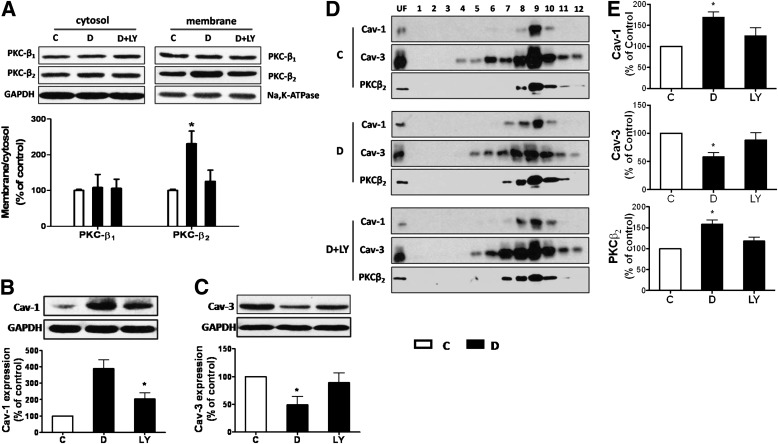
Effects of PKCβ inhibitor (LY333531) treatment upon subcellular distributions of PKCβ1and PKCβ2and expression levels of Cav-1 and Cav-3 in total heart preparations and various isolated cellular fractions.Diabetes. 2013 Jul; 62(7): 2318–2328. |
|---|
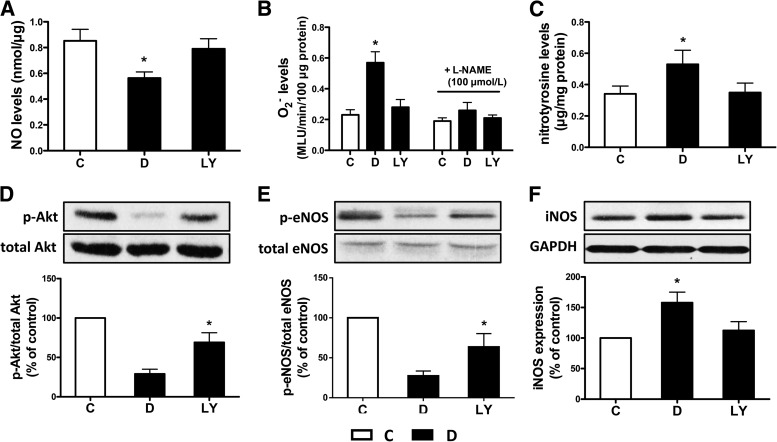
Effects of PKCβ inhibitor (LY333531) treatment upon the levels of NO, O2−, nitrotyrosine, and protein expression of p-Akt, p-eNOS, and iNOS in diabetic myocardium.Diabetes. 2013 Jul; 62(7): 2318–2328. |
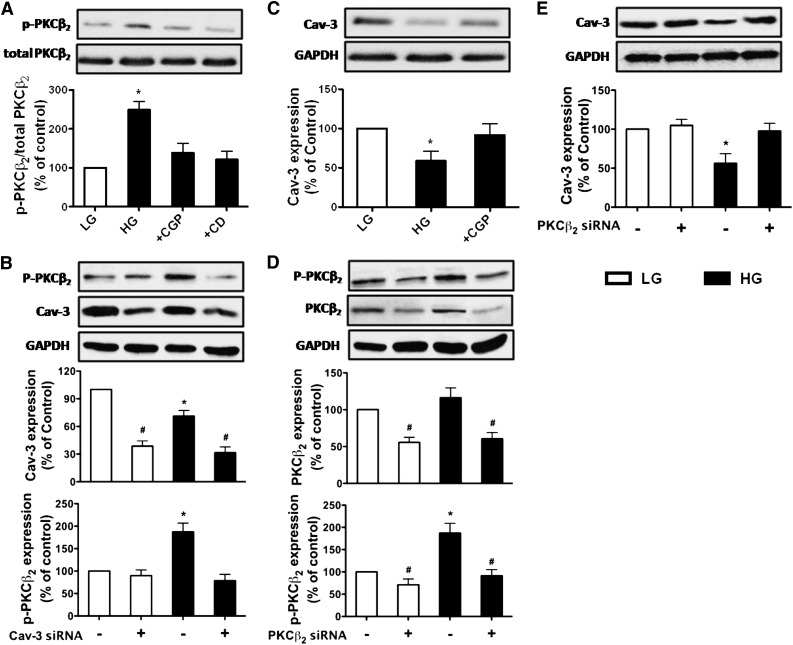
Expression of p-PKCβ2and Cav-3 in cultured cardiomyocytes and H9C2 cells after various treatments in LG (5.5 mmol/L) or HG (25 mmol/L) conditions for 36 h.Diabetes. 2013 Jul; 62(7): 2318–2328. |
Products are for research use only; We do not sell to patients
Copyright 2020 InvivoChem LLC | All Rights Reserved


 COA
COA