

| Size | Price | Stock | Qty |
|---|---|---|---|
| 10mg |
|
||
| 25mg |
|
||
| 50mg |
|
||
| 100mg |
|
||
| 250mg |
|
||
| 500mg |
|
||
| 1g | |||
| Other Sizes |
Purity: ≥98%
| Targets |
5-HT1D Receptor ( Ki = 249 nM )
LY310762 is a selective agonist of the 5-hydroxytryptamine 1D (5-HT₁D) receptor. In radioligand binding assays using guinea pig brain membranes, it exhibited high affinity for 5-HT₁D receptors with a Ki value of 0.8 nM, and negligible affinity for 5-HT₁A (Ki > 1000 nM) and 5-HT₂A (Ki > 1000 nM) receptors [1] - LY310762 acts as an agonist of the 5-hydroxytryptamine 1B (5-HT₁B) receptor. In binding assays with rat cerebral cortical membranes, it showed a Ki value of 1.2 nM for 5-HT₁B receptors, with no significant binding to dopamine D₂ (Ki > 5000 nM) or opioid μ receptors (Ki > 5000 nM) [3] - LY310762 activates 5-HT₁D receptors in rat renal vasculature (functional validation via renal vasodilation assays) [2] |
|---|---|
| ln Vitro |
In vitro activity: LY310762 (0.01-1 µM) potentiates potassium-induced [ 3 H]5-HT outflow from guinea pig cortical slices with an EC50 value of 31 nM[1].
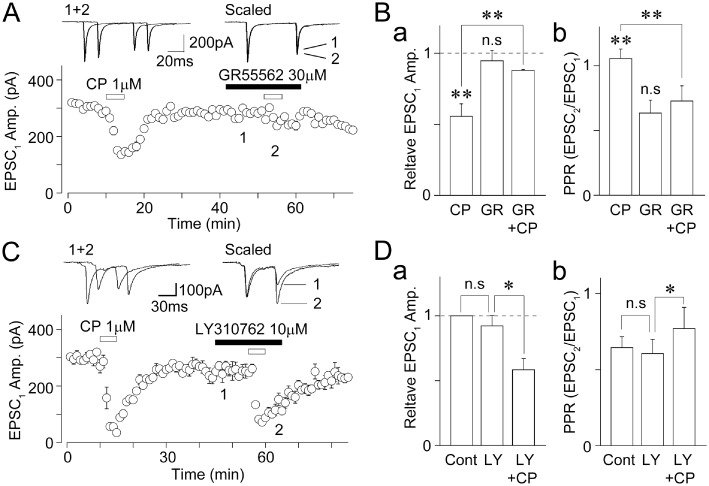
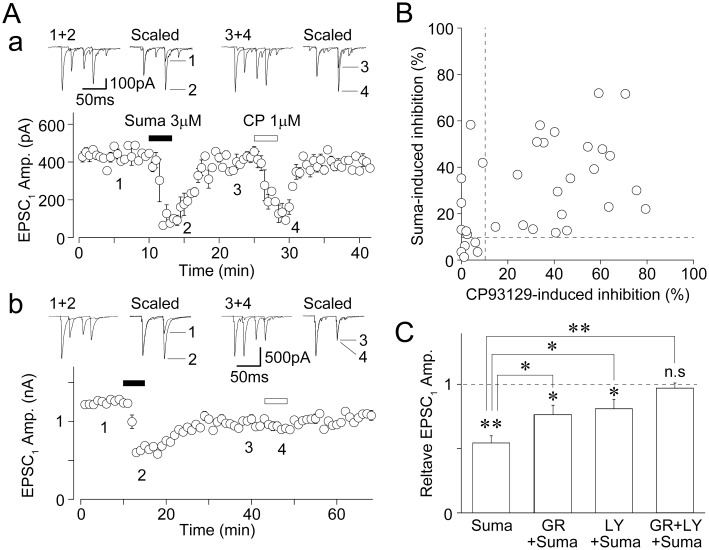
LY310762 (10 µM) blocks the amount of the sumatriptan-induced decrease in excitatory postsynaptic potential (EPSCs) significantly but not totally[3]. In isolated guinea pig hippocampal slices, LY310762 (1, 10, 100 nM) concentration-dependently inhibited potassium chloride (KCl, 30 mM)-induced [³H]-serotonin (5-HT) release: 100 nM reduced [³H]-5-HT release by 45% compared to KCl-only controls. This inhibitory effect was completely reversed by the selective 5-HT₁D antagonist BRL 15572 (1 μM), confirming mediation by 5-HT₁D receptors [1] - In isolated rat medullary dorsal horn slices, LY310762 (0.1, 1, 10 nM) dose-dependently suppressed electrical stimulation (50 Hz, 2 ms pulse width)-induced glutamate release: 10 nM reduced glutamate release by 52% (measured via high-performance liquid chromatography, HPLC). It had no effect on γ-aminobutyric acid (GABA) release at concentrations up to 100 nM [3] - In primary cultures of rat medullary dorsal horn neurons, pre-treatment with LY310762 (0.1, 1, 10 nM) for 10 min inhibited capsaicin (1 μM)-induced glutamate release: 10 nM reduced release by 38% without affecting neuronal viability (assessed by trypan blue exclusion) [3] - In isolated rat renal arterial rings, LY310762 (10-1000 nM) induced concentration-dependent relaxation of phenylephrine (1 μM)-precontracted rings: 1000 nM achieved 40% relaxation, which was attenuated by 65% in the presence of the nitric oxide (NO) synthase inhibitor L-NAME (100 μM) [2] |
| ln Vivo |
LY310762 (10 mg/kg; i.p.; single) dramatically raises the extracellular 5-HT concentration that is generated by the selective serotonin reuptake inhibitor fluoxetine in vivo[1].
LY310762 (1 mg/kg; i.v.; single) eliminates 5-HT vasodilator effects in phenylephrine-infusion rats model[2]. In male Sprague-Dawley rats anesthetized with pentobarbital (50 mg/kg, i.p.), intravenous (i.v.) administration of LY310762 (0.1, 0.3, 1 mg/kg) dose-dependently increased renal blood flow (RBF): 1 mg/kg increased RBF by 35% compared to baseline. Concurrently, it reduced renal vascular resistance (RVR) by 30% at 1 mg/kg. Pre-administration of L-NAME (10 mg/kg, i.v.) 15 min before LY310762 (1 mg/kg) attenuated the RBF increase by 60%, indicating dependence on the NO pathway [2] - In awake, freely moving male Wistar rats instrumented with intracerebroventricular (i.c.v.) cannulas, LY310762 (10 μg, i.c.v.) reduced KCl (1 M, i.c.v.)-induced increases in hippocampal [³H]-5-HT release by 42% (measured via in vivo microdialysis), consistent with its in vitro effect on 5-HT₁D autoreceptors [1] |
| Enzyme Assay |
Guinea Pig Brain 5-HT₁D Receptor Binding Assay: Whole guinea pig brain (excluding cerebellum, a 5-HT₁D-poor region) was homogenized in ice-cold Tris-HCl buffer (50 mM, pH 7.4, containing 4 mM CaCl₂ and 0.1% ascorbic acid) and centrifuged at 48,000 × g for 15 min. The membrane pellet was resuspended, and 50 μg of membrane protein was incubated with [³H]-sumatriptan (0.5 nM, a selective 5-HT₁B/1D ligand) and various concentrations of LY310762 (10⁻¹² to 10⁻⁶ M) at 25°C for 60 min. Non-specific binding was defined as binding in the presence of 10 μM metergoline. Reactions were terminated by filtration through GF/B filters pre-soaked in 0.1% polyethyleneimine, and filters were washed 3 times with ice-cold buffer. Radioactivity was counted via liquid scintillation spectrometry, and Ki values were calculated using the Cheng-Prusoff equation [1]
- Rat Cortical 5-HT₁B Receptor Binding Assay: Rat cerebral cortex was homogenized in ice-cold HEPES buffer (25 mM, pH 7.4, containing 10 mM MgCl₂ and 1 mM EGTA) and centrifuged at 50,000 × g for 15 min. The membrane fraction was resuspended, and 75 μg of protein was incubated with [³H]-CP 55940 (0.3 nM, a 5-HT₁B ligand) and LY310762 (10⁻¹² to 10⁻⁶ M) at 25°C for 90 min. Non-specific binding was determined with 10 μM sumatriptan. Filtration and radioactivity counting were performed as described above, and Ki values were derived from concentration-response curves [3] |
| Cell Assay |
Primary Rat Medullary Dorsal Horn Neuron Glutamate Release Assay: Medullary dorsal horn tissue was isolated from neonatal Sprague-Dawley rats (1-3 days old), dissociated with 0.25% trypsin for 15 min at 37°C, and filtered through a 70 μm cell strainer. Cells were seeded on poly-L-lysine-coated 24-well plates at 2×10⁵ cells/well and cultured in DMEM medium supplemented with 10% fetal bovine serum (FBS) and 1% penicillin-streptomycin for 7 days. Before experiments, medium was replaced with serum-free DMEM, and cells were pre-incubated with LY310762 (0.1, 1, 10 nM) for 10 min. Glutamate release was induced by adding capsaicin (1 μM), and supernatants were collected after 5 min. Glutamate concentrations were measured via HPLC with fluorescence detection (excitation: 338 nm, emission: 425 nm) after derivatization with o-phthalaldehyde [3]
- Isolated Rat Renal Arterial Ring Relaxation Assay: Renal arteries were isolated from male Sprague-Dawley rats (250-300 g), cut into 3-mm rings, and mounted in organ baths filled with Krebs-Ringer bicarbonate buffer (37°C, gassed with 95% O₂/5% CO₂). Rings were precontracted with phenylephrine (1 μM) until a stable tension was achieved. LY310762 (10-1000 nM) was added cumulatively, and tension changes were recorded via isometric transducers. To assess NO dependence, rings were pre-incubated with L-NAME (100 μM) for 20 min before adding LY310762 [2] |
| Animal Protocol |
Dunkin Hartley guinea pigs (female; 350-400 g, Harlan)
10 mg/kg Intraperitoneal injection; single Rat Renal Hemodynamics Assay: Male Sprague-Dawley rats (250-300 g) were anesthetized with sodium pentobarbital (50 mg/kg, i.p.). A tracheal cannula was inserted to maintain airway patency, and a carotid artery cannula was placed to monitor mean arterial pressure (MAP). A renal artery cannula connected to a transit-time flowmeter was inserted to measure renal blood flow (RBF). LY310762 was dissolved in physiological saline containing 0.1% dimethyl sulfoxide (DMSO) and administered via the jugular vein at doses of 0.1, 0.3, or 1 mg/kg (volume: 0.1 mL/kg). Baseline RBF and renal vascular resistance (RVR, calculated as MAP/RBF) were recorded for 10 min before drug administration, and measurements were repeated every 5 min for 30 min post-administration. A separate group of rats received L-NAME (10 mg/kg, i.v.) 15 min before LY310762 (1 mg/kg) to block NO synthesis [2] - Rat In Vivo Microdialysis Assay: Male Wistar rats (280-320 g) were surgically implanted with an i.c.v. cannula and a microdialysis probe (4 mm membrane length) into the hippocampus under isoflurane anesthesia. After 7 days of recovery, artificial cerebrospinal fluid (aCSF) was perfused through the probe at 2 μL/min for 2 h to establish baseline. LY310762 (10 μg) dissolved in aCSF was administered via the i.c.v. cannula, and microdialysate samples were collected every 20 min for 2 h. KCl (1 M, 10 μL) was administered i.c.v. 30 min after LY310762 to stimulate 5-HT release. [³H]-5-HT in dialysates was measured via liquid scintillation counting [1] |
| References |
|
| Additional Infomation |
LY-310762 hydrochloride is a hydrochloride formed by the formal reaction of equimolar amounts of LY-310762 with hydrogen chloride. It is a potent and selective 5-HT1D (5-HT1D) receptor antagonist. It can be used as both a receptor modulator and a serotonergic antagonist. It contains LY-310762(1+).
LY310762 is a typical selective 5-HT₁B/1D receptor agonist and is primarily used as a research tool to study the role of these receptors in neurotransmitter release (e.g., 5-HT, glutamate) and angiogenesis [1,3]. - The mechanism by which LY310762 inhibits 5-HT release involves the activation of presynaptic 5-HT₁D autoreceptors on serotonergic neurons, thereby reducing calcium ion influx and subsequent exocytosis of 5-HT-containing vesicles [1]. - LY310762 induces renal vasodilation via a NO-dependent pathway: activation of renal vascular 5-HT₁D receptors stimulates endothelial nitric oxide synthase (eNOS) activity, increasing NO production, which subsequently leads to vasodilation. [2] - In the dorsal horn of the rat medulla oblongata (a key area for pain management), LY310762 reduces glutamate release at primary afferent nerve endings via 5-HT₁B receptors, suggesting its potential application in preclinical models of inflammatory or neuropathic pain. [3] - Unlike non-selective triptans (e.g., sumatriptan), LY310762 exhibits higher selectivity for 5-HT₁D receptors than 5-HT₁B receptors in guinea pig tissues, making it valuable in distinguishing the functions of these two receptor subtypes. [1] |
| Molecular Formula |
C24H28CLFN2O2
|
|
|---|---|---|
| Molecular Weight |
430.94
|
|
| Exact Mass |
430.182
|
|
| Elemental Analysis |
C, 66.89; H, 6.55; Cl, 8.23; F, 4.41; N, 6.50; O, 7.43
|
|
| CAS # |
192927-92-7
|
|
| Related CAS # |
|
|
| PubChem CID |
11957576
|
|
| Appearance |
White to off-white solid powder
|
|
| LogP |
4.849
|
|
| Hydrogen Bond Donor Count |
1
|
|
| Hydrogen Bond Acceptor Count |
4
|
|
| Rotatable Bond Count |
5
|
|
| Heavy Atom Count |
30
|
|
| Complexity |
606
|
|
| Defined Atom Stereocenter Count |
0
|
|
| SMILES |
Cl[H].FC1C([H])=C([H])C(=C([H])C=1[H])C(C1([H])C([H])([H])C([H])([H])N(C([H])([H])C([H])([H])N2C3=C([H])C([H])=C([H])C([H])=C3C(C([H])([H])[H])(C([H])([H])[H])C2=O)C([H])([H])C1([H])[H])=O
|
|
| InChi Key |
BOCLFQZPFYNVFD-UHFFFAOYSA-N
|
|
| InChi Code |
InChI=1S/C24H27FN2O2.ClH/c1-24(2)20-5-3-4-6-21(20)27(23(24)29)16-15-26-13-11-18(12-14-26)22(28)17-7-9-19(25)10-8-17;/h3-10,18H,11-16H2,1-2H3;1H
|
|
| Chemical Name |
1-[2-[4-(4-fluorobenzoyl)piperidin-1-yl]ethyl]-3,3-dimethylindol-2-one;hydrochloride
|
|
| Synonyms |
|
|
| HS Tariff Code |
2934.99.9001
|
|
| Storage |
Powder -20°C 3 years 4°C 2 years In solvent -80°C 6 months -20°C 1 month Note: Please store this product in a sealed and protected environment, avoid exposure to moisture. |
|
| Shipping Condition |
Room temperature (This product is stable at ambient temperature for a few days during ordinary shipping and time spent in Customs)
|
| Solubility (In Vitro) |
DMSO: ~18.3 mg/mL (42.5 mM)
Water: 1 mg/mL (Insoluble) Ethanol: 1 mg/mL |
|---|---|
| Solubility (In Vivo) |
Solubility in Formulation 1: ≥ 1.83 mg/mL (4.25 mM) (saturation unknown) in 10% DMSO + 40% PEG300 + 5% Tween80 + 45% Saline (add these co-solvents sequentially from left to right, and one by one), clear solution.
For example, if 1 mL of working solution is to be prepared, you can add 100 μL of 18.3 mg/mL clear DMSO stock solution to 400 μL PEG300 and mix evenly; then add 50 μL Tween-80 to the above solution and mix evenly; then add 450 μL normal saline to adjust the volume to 1 mL. Preparation of saline: Dissolve 0.9 g of sodium chloride in 100 mL ddH₂ O to obtain a clear solution. Solubility in Formulation 2: ≥ 1.83 mg/mL (4.25 mM) (saturation unknown) in 10% DMSO + 90% (20% SBE-β-CD in Saline) (add these co-solvents sequentially from left to right, and one by one), clear solution. For example, if 1 mL of working solution is to be prepared, you can add 100 μL of 18.3 mg/mL clear DMSO stock solution to 900 μL of 20% SBE-β-CD physiological saline solution and mix evenly. Preparation of 20% SBE-β-CD in Saline (4°C,1 week): Dissolve 2 g SBE-β-CD in 10 mL saline to obtain a clear solution. View More
Solubility in Formulation 3: ≥ 1.83 mg/mL (4.25 mM) (saturation unknown) in 10% DMSO + 90% Corn Oil (add these co-solvents sequentially from left to right, and one by one), clear solution. |
| Preparing Stock Solutions | 1 mg | 5 mg | 10 mg | |
| 1 mM | 2.3205 mL | 11.6025 mL | 23.2051 mL | |
| 5 mM | 0.4641 mL | 2.3205 mL | 4.6410 mL | |
| 10 mM | 0.2321 mL | 1.1603 mL | 2.3205 mL |
*Note: Please select an appropriate solvent for the preparation of stock solution based on your experiment needs. For most products, DMSO can be used for preparing stock solutions (e.g. 5 mM, 10 mM, or 20 mM concentration); some products with high aqueous solubility may be dissolved in water directly. Solubility information is available at the above Solubility Data section. Once the stock solution is prepared, aliquot it to routine usage volumes and store at -20°C or -80°C. Avoid repeated freeze and thaw cycles.
Calculation results
Working concentration: mg/mL;
Method for preparing DMSO stock solution: mg drug pre-dissolved in μL DMSO (stock solution concentration mg/mL). Please contact us first if the concentration exceeds the DMSO solubility of the batch of drug.
Method for preparing in vivo formulation::Take μL DMSO stock solution, next add μL PEG300, mix and clarify, next addμL Tween 80, mix and clarify, next add μL ddH2O,mix and clarify.
(1) Please be sure that the solution is clear before the addition of next solvent. Dissolution methods like vortex, ultrasound or warming and heat may be used to aid dissolving.
(2) Be sure to add the solvent(s) in order.
 |
|---|
 |
Products are for research use only; We do not sell to patients
Copyright 2020 InvivoChem LLC | All Rights Reserved


 COA
COA