| Size | Price | Stock | Qty |
|---|---|---|---|
| 5mg |
|
||
| 10mg |
|
||
| 25mg |
|
||
| 50mg |
|
||
| 100mg |
|
||
| 250mg | |||
| 500mg | |||
| Other Sizes |
Purity: ≥98%
| Targets |
LY2886721 specifically targets β-site amyloid precursor protein cleaving enzyme 1 (BACE1) (Ki = 0.4 nM; IC50 = 0.9 nM) [1]
|
|---|---|
| ln Vitro |
When HEK293Swe cells are exposed to LY2886721 at increasing concentrations over night, the amount of Aβ released into the condition medium decreases in a concentration-dependent manner. The BACE inhibition mechanism is supported by the nearly similar EC50s of 18.5 and 19.7 nM for Aβ1-42 and Aβ1-40 inhibition, respectively[1]. The synthesis of Aβ decreases concentration-dependently when PDAPP neuronal cells are exposed to increasing concentrations of LY2886721 over the course of an overnight exposure. The Aβ1-40 and Aβ1-42 EC50s for inhibition in PDAPP neuronal cultures are similar to those in HEK293Swe cells, with values around 10 nM[1].
In recombinant human BACE1 enzyme assays, LY2886721 inhibited BACE1 activity with an IC50 of 0.9 nM and Ki of 0.4 nM, showing high potency and selectivity. It exhibited negligible inhibition against other aspartyl proteases (e.g., cathepsin D, renin) with IC50 values > 10,000 nM [1] - In APP-overexpressing human neuroblastoma (SH-SY5Y-APP) cells, LY2886721 dose-dependently reduced Aβ40 and Aβ42 secretion. At 10 nM, it decreased Aβ40 by 68% and Aβ42 by 72% compared to vehicle; maximum inhibition (≈90% for both peptides) was achieved at 100 nM [1] - In primary rat cortical neurons, LY2886721 (1-100 nM) suppressed endogenous Aβ production without affecting cell viability (assessed by MTT assay) or APP expression (detected by Western blot) [1] |
| ln Vivo |
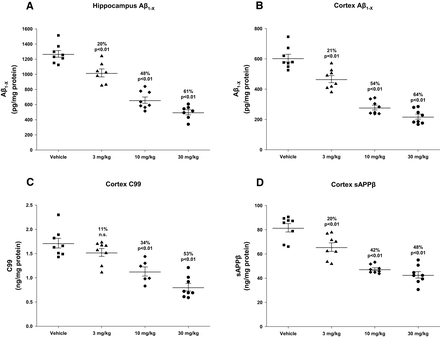
Treatment with LY2886721 (3-30 mg/kg; oral dose; PDAPP mice) dramatically lowers Aβ1-x levels in the cortical and hippocampus regions. Treatment with LY2886721 causes a considerable decrease in C99 and sAPPβ levels in the brain parenchyma[1].
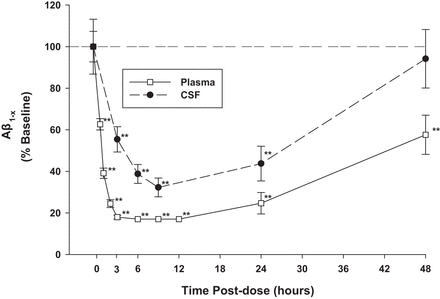
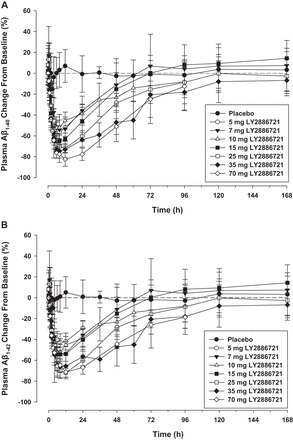
In C57BL/6 mice, oral administration of LY2886721 (1, 3, 10 mg/kg) dose-dependently reduced cerebrospinal fluid (CSF) Aβ40 and Aβ42 levels. The 10 mg/kg dose decreased CSF Aβ40 by 75% and Aβ42 by 78% at 6 hours post-dosing [1] - In beagle dogs, oral dosing of LY2886721 (0.3, 1, 3 mg/kg) resulted in dose-related reductions in CSF Aβ40 (max 82% reduction at 3 mg/kg) and plasma Aβ40 (max 65% reduction at 3 mg/kg) at 4 hours post-administration [1] - In healthy human volunteers (phase 1 study), single oral doses of LY2886721 (5, 15, 50 mg) caused dose-dependent decreases in CSF Aβ40 and Aβ42. The 50 mg dose reduced CSF Aβ40 by 64% and Aβ42 by 68% at 8 hours post-dosing, with effects persisting for ≥24 hours [1] |
| Enzyme Assay |
Recombinant human BACE1 was incubated with a fluorogenic peptide substrate (corresponding to the APP β-cleavage site) and various concentrations of LY2886721 (0.01-100 nM) in assay buffer at 37°C for 60 minutes. Fluorescence intensity (excitation 320 nm, emission 405 nm) was measured to assess enzyme activity. IC50 values were calculated from dose-response inhibition curves, and Ki was derived using the Cheng-Prusoff equation [1]
- For selectivity assays, recombinant cathepsin D, renin, and other aspartyl proteases were incubated with their respective fluorogenic substrates and LY2886721 (0.1-10,000 nM) under optimal reaction conditions. Enzyme activity was quantified, and IC50 values were determined to evaluate selectivity [1] |
| Cell Assay |
SH-SY5Y-APP cells were seeded in 24-well plates at 2×10⁵ cells/well and cultured for 24 hours. LY2886721 was added at concentrations of 0.1, 1, 10, 100 nM, and cells were incubated for 24 hours. Culture supernatants were collected, and Aβ40/Aβ42 levels were quantified by sandwich ELISA [1]
- Primary rat cortical neurons were isolated from embryonic day 18 rats and plated in 96-well plates. After 7 days in culture, neurons were treated with LY2886721 (1-100 nM) for 24 hours. Endogenous Aβ in supernatants was measured by ELISA, and cell viability was assessed by MTT assay. APP and β-CTF (β-carboxy-terminal fragment) levels were analyzed by Western blot using specific antibodies [1] |
| Animal Protocol |
Animal/Disease Models: Female hemizygous APPV717F transgenic mice (PDAPP) (2-3 months old)[1]
Doses: 3 mg/kg, 10 mg/kg, 30 mg/kg Route of Administration: Oral administration Experimental Results: Hippocampal and cortical levels of Aβ1-x were Dramatically decreased . Mice: Male C57BL/6 mice (8-10 weeks old) were fasted overnight before oral administration of LY2886721 (dissolved in 0.5% methylcellulose) at doses of 1, 3, 10 mg/kg. CSF and plasma were collected at 1, 3, 6, 12, 24 hours post-dosing. Aβ40/Aβ42 levels were measured by ELISA, and plasma drug concentrations were determined by LC-MS/MS [1] - Dogs: Beagle dogs (12-18 kg) were administered LY2886721 (dissolved in 0.5% methylcellulose) orally at 0.3, 1, 3 mg/kg. CSF (via cisternal puncture) and plasma were collected at 1, 2, 4, 8, 12, 24 hours post-dosing. Aβ levels and drug concentrations were quantified by ELISA and LC-MS/MS, respectively [1] - Humans: Healthy volunteers (18-55 years old) were enrolled in a single-center, randomized, double-blind, placebo-controlled phase 1 study. Participants received single oral doses of LY2886721 (5, 15, 50 mg) or placebo. CSF (via lumbar puncture) and plasma were collected at baseline and 2, 4, 8, 12, 24, 48 hours post-dosing. Aβ40/Aβ42 levels and drug concentrations were analyzed [1] |
| ADME/Pharmacokinetics |
In mice, after oral administration of LY2886721 (10 mg/kg), the plasma Cmax was 123 ng/mL (Tmax = 1 h), the oral bioavailability was 42%, and the terminal elimination half-life (t1/2) was 3.2 h. The cerebrospinal fluid/plasma concentration ratio was 0.25, indicating that it can effectively penetrate the blood-brain barrier [1]. In dogs, after oral administration of LY2886721 (3 mg/kg), the plasma Cmax was 98 ng/mL (Tmax = 2 h), the oral bioavailability was 58%, and the t1/2 was 4.5 h. The cerebrospinal fluid/plasma ratio was 0.31 [1]. In humans, after oral administration of LY2886721 (50 mg), the plasma Cmax was 86 ng/mL (Tmax = 3 h), the oral bioavailability was 38%, and the t1/2 was 6.8 h. The cerebrospinal fluid/plasma ratio was 0.28, and the cerebrospinal fluid drug concentration remained above the in vitro IC50 of BACE1 for ≥24 hours [1]. LY2886721 is mainly metabolized in the liver via CYP3A4; the main metabolites are inactive and are mainly excreted in feces (≈65%) and urine (≈28%) [1].
|
| Toxicity/Toxicokinetics |
In acute toxicity studies in mice and dogs, LY2886721 showed no significant toxicity at doses up to 300 mg/kg (orally)[1] - In phase 1 human studies, LY2886721 was well tolerated at doses up to 50 mg. Adverse events were mild to moderate, the most common being headache (8%) and fatigue (5%), with no serious adverse events reported[1] - LY2886721 had plasma protein binding rates of 92–94% in mice, 90–93% in dogs, and 91–95% in humans, with no concentration-dependent binding[1] - No significant changes in liver function (ALT, AST) or kidney function (creatinine, BUN) were observed in animals and humans treated with LY2886721[1]
|
| References | |
| Additional Infomation |
LY2886721 has been used in clinical trials for basic scientific research on Alzheimer's disease. LY2886721 is a potent, selective, and orally bioavailable small molecule BACE1 inhibitor. BACE1 is a key enzyme in the amyloid protein production pathway of APP [1]. Its mechanism of action is to bind to the active site of BACE1, inhibiting β-cleavage of APP, thereby reducing the production of Aβ peptides (Aβ40 and Aβ42) associated with the pathogenesis of Alzheimer's disease [1]. The drug has good pharmacokinetic properties, including good oral absorption, effective blood-brain barrier penetration, and sustained action, supporting its potential for once-daily administration [1]. A phase I study showed that LY2886721 dose-dependently and persistently reduced Aβ levels in the cerebrospinal fluid of healthy individuals, providing proof of concept for BACE1 inhibition as a therapeutic strategy. Alzheimer's disease [1]
|
| Molecular Formula |
C18H16F2N4O2S
|
|
|---|---|---|
| Molecular Weight |
390.41
|
|
| Exact Mass |
390.096
|
|
| CAS # |
1262036-50-9
|
|
| Related CAS # |
1262036-49-6
|
|
| PubChem CID |
49837968
|
|
| Appearance |
White to off-white solid powder
|
|
| Density |
1.6±0.1 g/cm3
|
|
| Index of Refraction |
1.706
|
|
| LogP |
0.8
|
|
| Hydrogen Bond Donor Count |
2
|
|
| Hydrogen Bond Acceptor Count |
7
|
|
| Rotatable Bond Count |
3
|
|
| Heavy Atom Count |
27
|
|
| Complexity |
610
|
|
| Defined Atom Stereocenter Count |
2
|
|
| SMILES |
C1[C@H]2CSC(=N[C@]2(CO1)C3=C(C=CC(=C3)NC(=O)C4=NC=C(C=C4)F)F)N
|
|
| InChi Key |
NIDRNVHMMDAAIK-YPMLDQLKSA-N
|
|
| InChi Code |
InChI=1S/C18H16F2N4O2S/c19-11-1-4-15(22-6-11)16(25)23-12-2-3-14(20)13(5-12)18-9-26-7-10(18)8-27-17(21)24-18/h1-6,10H,7-9H2,(H2,21,24)(H,23,25)/t10-,18-/m0/s1
|
|
| Chemical Name |
N-(3-((4aS,7aS)-2-amino-4a,5,7,7a-tetrahydro-4H-furo[3,4-d][1,3]thiazin-7a-yl)-4-fluorophenyl)-5-fluoropicolinamide
|
|
| Synonyms |
|
|
| HS Tariff Code |
2934.99.9001
|
|
| Storage |
Powder -20°C 3 years 4°C 2 years In solvent -80°C 6 months -20°C 1 month |
|
| Shipping Condition |
Room temperature (This product is stable at ambient temperature for a few days during ordinary shipping and time spent in Customs)
|
| Solubility (In Vitro) |
DMSO: 9 mg/mL (23.1 mM)
Water: 1 mg/mL (Insoluble) Ethanol: 1 mg/mL |
|---|---|
| Solubility (In Vivo) |
Solubility in Formulation 1: ≥ 2 mg/mL (5.12 mM) (saturation unknown) in 10% DMSO + 90% Corn Oil (add these co-solvents sequentially from left to right, and one by one), clear solution.
For example, if 1 mL of working solution is to be prepared, you can add 100 μL of 20.0 mg/mL clear DMSO stock solution to 900 μL of corn oil and mix evenly. (Please use freshly prepared in vivo formulations for optimal results.) |
| Preparing Stock Solutions | 1 mg | 5 mg | 10 mg | |
| 1 mM | 2.5614 mL | 12.8070 mL | 25.6141 mL | |
| 5 mM | 0.5123 mL | 2.5614 mL | 5.1228 mL | |
| 10 mM | 0.2561 mL | 1.2807 mL | 2.5614 mL |
*Note: Please select an appropriate solvent for the preparation of stock solution based on your experiment needs. For most products, DMSO can be used for preparing stock solutions (e.g. 5 mM, 10 mM, or 20 mM concentration); some products with high aqueous solubility may be dissolved in water directly. Solubility information is available at the above Solubility Data section. Once the stock solution is prepared, aliquot it to routine usage volumes and store at -20°C or -80°C. Avoid repeated freeze and thaw cycles.
Calculation results
Working concentration: mg/mL;
Method for preparing DMSO stock solution: mg drug pre-dissolved in μL DMSO (stock solution concentration mg/mL). Please contact us first if the concentration exceeds the DMSO solubility of the batch of drug.
Method for preparing in vivo formulation::Take μL DMSO stock solution, next add μL PEG300, mix and clarify, next addμL Tween 80, mix and clarify, next add μL ddH2O,mix and clarify.
(1) Please be sure that the solution is clear before the addition of next solvent. Dissolution methods like vortex, ultrasound or warming and heat may be used to aid dissolving.
(2) Be sure to add the solvent(s) in order.
|
|---|
|
|
Products are for research use only; We do not sell to patients
Copyright 2020 InvivoChem LLC | All Rights Reserved


 COA
COA