| Size | Price | Stock | Qty |
|---|---|---|---|
| 5mg |
|
||
| 10mg |
|
||
| 25mg |
|
||
| 50mg |
|
||
| 100mg |
|
||
| 250mg |
|
||
| 500mg | |||
| Other Sizes |


Purity: ≥98%
| Targets |
Chk1 (IC50 = 7 nM); Chk2 (IC50 = 12000 nM); PDK1 (IC50 = 893 nM); CAMK2 (IC50 = 1550 nM); VEGFR3 (IC50 = 2128 nM); MET (IC50 = 2200 nM); JNK1 (IC50 = 4930 nM); RSK2 (IC50 = 5700 nM); NTRK1 (IC50 = 12000 nM)
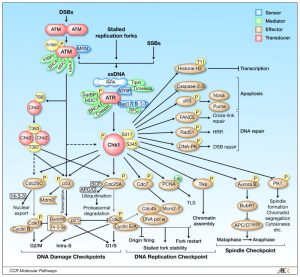
Rabusertib (LY2603618) specifically targets checkpoint kinase 1 (Chk1) with a Ki value of 0.7 nM and an IC50 value of 1.9 nM in recombinant kinase assays [1] Rabusertib exhibits high selectivity for Chk1, with IC50 values > 1 μM for Chk2, ATM, ATR, CDK1, Aurora A/B, and 46 other tested kinases [1] |
|---|---|
| ln Vitro |
Rabusertib (LY2603618) is a potent inhibitor of several Chk1 biological processes. In vitro tests of rabusertib (LY2603618) are conducted against a panel of 51 different protein kinases. Rabusertib (LY2603618) has an IC50 of 7 nM for Chk1, which makes it approximately 100 times more potent against Chk1 than it is against all other protein kinases tested (IC50=893 nM for PDK1, >1000 nM for the others). With an EC50 of 430 nM, rabusertib (LY2603618) successfully decreased Chk1 autophosphorylation. Rabusertib (LY2603618) effectively inhibited Chk1 in cells treated with DNA damaging agents, thereby abrogating the G2/M DNA damage checkpoint. When cells were treated with Rabusertib (LY2603618), a cellular phenotype that was reported for Chk1 depletion by RNA interference (RNAi) was observed. When Rabusertib (LY2603618) inhibits intracellular Chk1, it leads to decreased DNA synthesis and increased H2A. X phosphorylation is a marker for early mitotic entry and DNA damage[1]. MTT assays show dose-dependent inhibition of cell growth in response to varying concentrations of Rabusertib (LY2603618) treatment of SK-N-BE(2) cells, with an IC50 of 10.81 µM[1].
Against a panel of human solid tumor cell lines (HCT116, A549, MCF-7, PC3, MiaPaCa-2, SKOV3), Rabusertib showed antiproliferative activity with IC50 values ranging from 12 nM to 78 nM [1] - Rabusertib (20 nM) abrogated the G2/M checkpoint induced by cisplatin (2 μM) in HCT116 cells, reducing G2/M phase accumulation from 58% to 22% after 24 hours [1] - Treatment with Rabusertib (50 nM) alone induced minimal apoptosis (8% apoptotic cells) in A549 cells, but combined with gemcitabine (10 nM) increased apoptosis to 63% after 72 hours [1] - Rabusertib inhibited Chk1-mediated phosphorylation of CDC25C (Ser216) and Wee1 (Ser642) in HCT116 cells, as detected by Western blot, with maximal inhibition at 30 nM [1] - Synergistic antiproliferative effects were observed when Rabusertib was combined with DNA-damaging agents: cisplatin (combination index [CI] = 0.38), gemcitabine (CI = 0.29), doxorubicin (CI = 0.42), and etoposide (CI = 0.45) in HCT116 cells [1] - Rabusertib (40 nM) enhanced DNA double-strand breaks in gemcitabine-treated cells, as indicated by a 4.1-fold increase in γ-H2AX foci formation compared to gemcitabine alone [1] - In p53-deficient tumor cell lines (HCT116 p53⁻/⁻, MDA-MB-231), Rabusertib exhibited enhanced antiproliferative activity (IC50 = 12 nM to 25 nM) compared to p53-proficient cells [1] |
| ln Vivo |
Rabusertib (LY2603618) at a single concurrent oral dosage of 200 mg/kg and 150 mg/kg (IP) of Gemcitabine are administered to mice containing Calu-6 xenografts. Rabusertib (LY2603618) at 200 mg/kg is enough to inhibit 85% of Chk1 autophosphorylation in vivo after two hours. Rabusertib (LY2603618), a selective chemical inhibitor of Chk1, supports the cited report by effectively reducing Gemcitabine-induced phosphorylation on Tlk serine 695[1].
In HCT116 human colon cancer xenograft models (nu/nu mice), oral administration of Rabusertib (30 mg/kg, b.i.d. for 14 days) combined with cisplatin (5 mg/kg, i.p. on days 1, 5, 9) resulted in 91% tumor growth inhibition (TGI), compared to 45% TGI with cisplatin alone [1] - In A549 human non-small cell lung cancer (NSCLC) xenograft models (nu/nu mice), Rabusertib (25 mg/kg, b.i.d. for 14 days) combined with gemcitabine (100 mg/kg, i.p. on days 1, 5, 9) induced 87% TGI and prolonged median survival by 72% vs gemcitabine alone [1] - Tumor tissues from combined Rabusertib and gemcitabine treatment showed increased TUNEL-positive apoptotic cells (42% vs 16% with gemcitabine alone) and reduced Ki-67 proliferation index (20% vs 58% with gemcitabine alone) [1] |
| Enzyme Assay |
Recombinant Chk1 kinase activity assay: The assay was performed in reaction buffer containing recombinant human Chk1, ATP (10 μM), and a fluorescently labeled peptide substrate. Serial concentrations of Rabusertib (0.1 nM to 5 nM) were added, and the mixture was incubated at 30°C for 60 minutes. Phosphorylated substrate was detected by fluorescence resonance energy transfer (FRET), and Ki/IC50 values were calculated via nonlinear regression [1]
- Kinase selectivity panel assay: Rabusertib (1 μM) was tested against a panel of 52 human kinases using the same FRET-based method. Inhibition rates were determined relative to vehicle controls, and IC50 values were calculated for any kinases showing > 20% inhibition [1] - Chk1 binding assay: Surface plasmon resonance (SPR) was used to measure binding affinity. Rabusertib was serially diluted (0.5 nM to 20 nM) and passed over a sensor chip immobilized with Chk1. Binding responses were recorded, and the dissociation constant (Kd) was derived from steady-state analysis [1] |
| Cell Assay |
Cells are plated on 96-well tissue culture plates at a density of 2.5×10 3 per well, and then incubated for one cell doubling (18–24 hours). The final concentration range of 1-1000 nM is covered by half-log steps when setting up gemcitabine dilutions. Rabusertib (LY2603618) is made by dilutions in DMSO to a final concentration of 5000×, and then a 1000-fold dilution in medium to produce 5× stocks that are added to wells. Rabusertib (LY2603618) is added about 24 hours after the addition of gemcitabine. Three copies of each combination are made. Following the addition of Rabusertib (LY2603618) and allowing two cell doublings, MTS/PMS reagent is added to each well in accordance with the manufacturer's instructions. A Spectra Max 250 spectrophotometer is used to measure absorbance at 490 nm, and GraphPad Prism 4.0 is used to analyze the results. Non-linear regression is used to fit dose-response curves, with the bottom fits being limited to 0% inhibition[1].
Antiproliferative assay: Cancer cells were seeded in 96-well plates (4×10³ cells/well) and treated with serial concentrations of Rabusertib (5 nM to 200 nM) alone or in combination with DNA-damaging agents for 72 hours. Cell viability was assessed by a colorimetric assay based on tetrazolium salt reduction, and IC50 values/combination indices were calculated [1] - Cell cycle analysis: Cells were treated with Rabusertib (20 nM) plus cisplatin (2 μM) for 24 hours, harvested, fixed with 70% ethanol, stained with propidium iodide, and analyzed by flow cytometry to determine cell cycle distribution [1] - Apoptosis assay: Cells were treated with Rabusertib (50 nM) and/or gemcitabine (10 nM) for 72 hours, stained with annexin V-FITC and propidium iodide, and analyzed by flow cytometry [1] - Western blot analysis: Cells were lysed in ice-cold RIPA buffer, and proteins were separated by SDS-PAGE, transferred to membranes, and probed with antibodies against phospho-CDC25C (Ser216), phospho-Wee1 (Ser642), γ-H2AX, cleaved caspase-3, PARP, and β-actin. Signals were detected by chemiluminescence and quantified by densitometry [1] - γ-H2AX foci assay: Cells were treated with Rabusertib (40 nM) and gemcitabine (10 nM) for 24 hours, fixed, stained with γ-H2AX antibody and DAPI, and visualized by fluorescence microscopy. Foci per cell were counted using image analysis software [1] |
| Animal Protocol |
Mice: These investigations employ 26–28 g female Harlan athymic nude mice. Each subject animal's rear flank is subcutaneously injected with 1×10 6 Calu-6 cells in a 1:1 mixture of serum-free growth medium and Matrigel to start the tumor's growth. The animals are randomly assigned to treatment groups based on body weight and tumor size once the tumor volumes have grown to a size of about 150 mm 3 . A total of two injections are given to each animal: one is an intraperitoneal injection of 150 mg/kg Gemcitabine or saline vehicle, and the other is an oral 200 μL dose of LY2603618 or Captisol vehicle.
HCT116 colon cancer xenograft model: Female nu/nu mice (6-8 weeks old) were subcutaneously implanted with 5×10⁶ HCT116 cells. When tumors reached 100-150 mm3, mice were randomized into groups (n=8/group) and treated with: (1) vehicle (0.5% methylcellulose + 0.2% Tween 80) oral, (2) Rabusertib (30 mg/kg) oral twice daily for 14 days, (3) cisplatin (5 mg/kg) i.p. on days 1, 5, 9, (4) Rabusertib + cisplatin. Tumor volume and body weight were measured every 2 days [1] - A549 NSCLC xenograft model: Female nu/nu mice (6-8 weeks old) were subcutaneously implanted with 5×10⁶ A549 cells. Tumors reaching 100-150 mm3 were randomized (n=8/group) and treated with: (1) vehicle oral, (2) Rabusertib (25 mg/kg) oral twice daily for 14 days, (3) gemcitabine (100 mg/kg) i.p. on days 1, 5, 9, (4) Rabusertib + gemcitabine. Tumor volume and survival were monitored [1] |
| ADME/Pharmacokinetics |
In mice, the peak plasma concentration (Cmax) of latuscutinib (30 mg/kg) was 4.2 μM, the area under the curve (AUC0-24h) was 28.6 μM·h, and the oral bioavailability was 73% [1]. In mice, the clearance of latuscutinib (10 mg/kg) after intravenous injection was 8.6 mL/min/kg, the volume of distribution (Vss) was 1.2 L/kg, and the terminal half-life (t1/2) was 9.5 h [1]. Labuxcutinib has good water solubility (≥120 μM at pH 7.4) and high human plasma protein binding (94%) [1]. In rats, the peak plasma concentration (Cmax) of latuscutinib (20 mg/kg) was 3.8 μM, the area under the curve (AUC0-24h) was 28.6 μM·h. 24.3 μM·h, oral bioavailability is 68% [1]
|
| Toxicity/Toxicokinetics |
In repeated-dose oral toxicity studies in mice (28 days, 15-60 mg/kg/day), the maximum tolerated dose (MTD) of Rabusertib was 45 mg/kg/day, and the dose-limiting toxicity (DLT) was mild to moderate myelosuppression (30-40% reduction in neutrophils at 60 mg/kg/day) [1] - Oral administration of Rabusertib (30 mg/kg/day for 14 consecutive days) to mice caused transient weight loss (≤7%), which recovered within 5 days after discontinuation [1] - No significant histopathological changes were observed in the liver, kidneys, heart, or spleen of mice after 28 days of treatment with Rabusertib (45 mg/kg/day) [1] - Rabusertib does not inhibit human cytochrome P450 concentrations up to 20 μM enzymes (CYP1A2, CYP2C9, CYP2C19, CYP2D6, CYP3A4)[1]
|
| References |
|
| Additional Infomation |
1-[5-bromo-4-methyl-2-[[(2S)-2-morpholinyl]methoxy]phenyl]-3-(5-methyl-2-pyrazinyl)urea belongs to the urea class of compounds. Rabusertib has been used in trials for the treatment of cancer, solid tumors, advanced cancer, pancreatic tumors, and non-small cell lung cancer. Rabusertib is a cell cycle checkpoint kinase 2 (Chk2) inhibitor with potential chemotherapeutic activity. Rabusertib binds to and inhibits the activity of Chk2, which may prevent DNA repair caused by DNA damage agents, thereby enhancing the antitumor efficacy of various chemotherapeutic drugs. Chk2 is an ATP-dependent serine/threonine kinase, a key component of the DNA replication monitoring checkpoint system, and is activated by double-strand breaks (DSBs); activated Chk2 is overexpressed in various cancer cell types. Rabusertib (LY2603618) is a potent and selective small-molecule Chk1 inhibitor. Chk1 is a key mediator of DNA damage response and cell cycle checkpoint regulation[1]. The mechanism of action of Rabusertib is to block Chk1-mediated checkpoint activation, forcing DNA-unrepaired cancer cells to undergo mitosis, ultimately leading to mitotic catastrophe and apoptosis[1]. Rabusertib is designed to enhance the efficacy of DNA-targeted chemotherapy, especially for p53-deficient tumors that are highly dependent on Chk1 for survival[1]. Rabusertib has good oral bioavailability, a long half-life, and high selectivity, supporting its development as an oral combination therapy for solid tumors[1].
|
| Molecular Formula |
C18H22BRN5O3
|
|
|---|---|---|
| Molecular Weight |
436.3
|
|
| Exact Mass |
435.09
|
|
| Elemental Analysis |
C, 49.55; H, 5.08; Br, 18.31; N, 16.05; O, 11.00
|
|
| CAS # |
911222-45-2
|
|
| Related CAS # |
|
|
| PubChem CID |
11955855
|
|
| Appearance |
White to off-white solid powder
|
|
| Density |
1.5±0.1 g/cm3
|
|
| Boiling Point |
503.1±50.0 °C at 760 mmHg
|
|
| Flash Point |
258.1±30.1 °C
|
|
| Vapour Pressure |
0.0±1.3 mmHg at 25°C
|
|
| Index of Refraction |
1.633
|
|
| LogP |
2.1
|
|
| Hydrogen Bond Donor Count |
3
|
|
| Hydrogen Bond Acceptor Count |
6
|
|
| Rotatable Bond Count |
5
|
|
| Heavy Atom Count |
27
|
|
| Complexity |
486
|
|
| Defined Atom Stereocenter Count |
1
|
|
| SMILES |
O(C1=CC(C)=C(Br)C=C1NC(=O)NC1N=CC(C)=NC=1)C[C@H]1OCCNC1
|
|
| InChi Key |
SYYBDNPGDKKJDU-ZDUSSCGKSA-N
|
|
| InChi Code |
InChI=1S/C18H22BrN5O3/c1-11-5-16(27-10-13-8-20-3-4-26-13)15(6-14(11)19)23-18(25)24-17-9-21-12(2)7-22-17/h5-7,9,13,20H,3-4,8,10H2,1-2H3,(H2,22,23,24,25)/t13-/m0/s1
|
|
| Chemical Name |
1-[5-bromo-4-methyl-2-[[(2S)-morpholin-2-yl]methoxy]phenyl]-3-(5-methylpyrazin-2-yl)urea
|
|
| Synonyms |
|
|
| HS Tariff Code |
2934.99.9001
|
|
| Storage |
Powder -20°C 3 years 4°C 2 years In solvent -80°C 6 months -20°C 1 month |
|
| Shipping Condition |
Room temperature (This product is stable at ambient temperature for a few days during ordinary shipping and time spent in Customs)
|
| Solubility (In Vitro) |
DMSO: ~13 mg/mL (~29.8 mM)
Water: 1 mg/mL (Insoluble) Ethanol: 1 mg/mL |
|---|---|
| Solubility (In Vivo) |
Solubility in Formulation 1: ≥ 2.5 mg/mL (5.73 mM) (saturation unknown) in 10% DMSO + 40% PEG300 + 5% Tween80 + 45% Saline (add these co-solvents sequentially from left to right, and one by one), clear solution.
For example, if 1 mL of working solution is to be prepared, you can add 100 μL of 25.0 mg/mL clear DMSO stock solution to 400 μL PEG300 and mix evenly; then add 50 μL Tween-80 to the above solution and mix evenly; then add 450 μL normal saline to adjust the volume to 1 mL. Preparation of saline: Dissolve 0.9 g of sodium chloride in 100 mL ddH₂ O to obtain a clear solution. Solubility in Formulation 2: ≥ 2.5 mg/mL (5.73 mM) (saturation unknown) in 10% DMSO + 90% (20% SBE-β-CD in Saline) (add these co-solvents sequentially from left to right, and one by one), clear solution. For example, if 1 mL of working solution is to be prepared, you can add 100 μL of 25.0 mg/mL clear DMSO stock solution to 900 μL of 20% SBE-β-CD physiological saline solution and mix evenly. Preparation of 20% SBE-β-CD in Saline (4°C,1 week): Dissolve 2 g SBE-β-CD in 10 mL saline to obtain a clear solution. View More
Solubility in Formulation 3: ≥ 2.5 mg/mL (5.73 mM) (saturation unknown) in 10% DMSO + 90% Corn Oil (add these co-solvents sequentially from left to right, and one by one), clear solution. Solubility in Formulation 4: 2% DMSO +30% PEG400+0.5% Tween80+5% Propylene glycol : 30mg/mL |
| Preparing Stock Solutions | 1 mg | 5 mg | 10 mg | |
| 1 mM | 2.2920 mL | 11.4600 mL | 22.9200 mL | |
| 5 mM | 0.4584 mL | 2.2920 mL | 4.5840 mL | |
| 10 mM | 0.2292 mL | 1.1460 mL | 2.2920 mL |
*Note: Please select an appropriate solvent for the preparation of stock solution based on your experiment needs. For most products, DMSO can be used for preparing stock solutions (e.g. 5 mM, 10 mM, or 20 mM concentration); some products with high aqueous solubility may be dissolved in water directly. Solubility information is available at the above Solubility Data section. Once the stock solution is prepared, aliquot it to routine usage volumes and store at -20°C or -80°C. Avoid repeated freeze and thaw cycles.
Calculation results
Working concentration: mg/mL;
Method for preparing DMSO stock solution: mg drug pre-dissolved in μL DMSO (stock solution concentration mg/mL). Please contact us first if the concentration exceeds the DMSO solubility of the batch of drug.
Method for preparing in vivo formulation::Take μL DMSO stock solution, next add μL PEG300, mix and clarify, next addμL Tween 80, mix and clarify, next add μL ddH2O,mix and clarify.
(1) Please be sure that the solution is clear before the addition of next solvent. Dissolution methods like vortex, ultrasound or warming and heat may be used to aid dissolving.
(2) Be sure to add the solvent(s) in order.
|
|---|
Products are for research use only; We do not sell to patients
Copyright 2020 InvivoChem LLC | All Rights Reserved


 COA
COA