| Size | Price | Stock | Qty |
|---|---|---|---|
| 5mg |
|
||
| 10mg |
|
||
| 25mg |
|
||
| 50mg |
|
||
| 100mg |
|
||
| 250mg |
|
||
| Other Sizes |


Purity: =98.77%
| Targets |
HDAC5 ( IC50 = 4.22 nM ); HDAC4 ( IC50 = 11.9 nM ); HDAC6 ( IC50 = 55.7 nM ); HDAC1 ( IC50 = 320 nM ); HDAC11 ( IC50 = 852 nM ); HDAC2 ( IC50 = 881 nM ); HDAC8 ( IC50 = 1278 nM )
LMK-235 is a selective inhibitor of class IIa histone deacetylases (HDAC4, HDAC5), with no significant inhibitory activity against class I (HDAC1, HDAC2, HDAC3), class IIb (HDAC6, HDAC10), or class IV (HDAC11) HDACs. The IC50 values (measured by fluorogenic enzyme assay) are: HDAC4 = 45 nM, HDAC5 = 62 nM; HDAC1, HDAC2, HDAC3, HDAC6, HDAC8, HDAC10, HDAC11 = >10 μM (no detectable inhibition at concentrations up to 10 μM) [1] |
|---|---|
| ln Vitro |
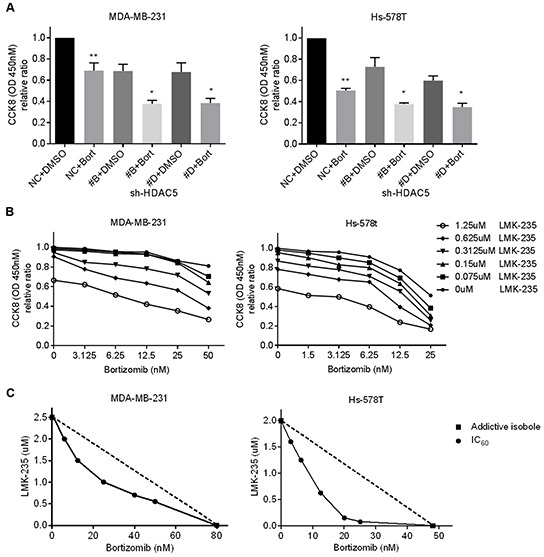
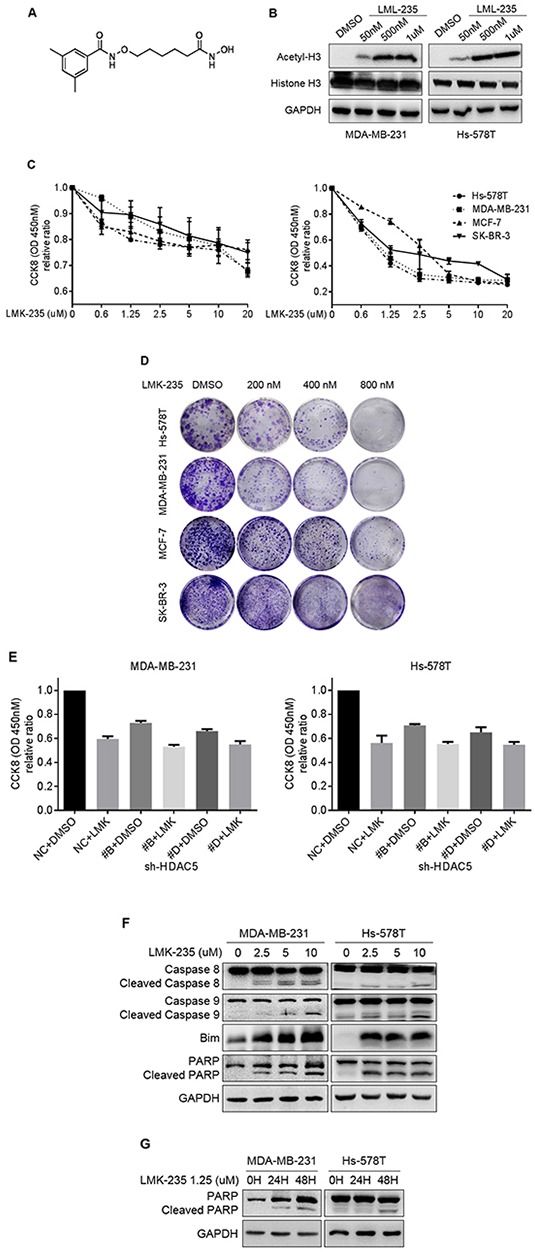
In vitro activity: LMK-235 exhibits cytotoxic activity with IC50s of 0.49 μM and 0.32 μM against the human ovarian cancer cell lines A2780 and A2780 CisR, respectively. With IC50s of 0.65 μM and 0.32 μM, respectively, LMK-235 inhibits HDAC in the A2780 and A2780 CisR cell lines. In all cell lines, LMK-235 results in a greater reduction in cell viability than cisplatin plus vorinostat combined[1]. BC cell proliferation is inhibited by LMK-235 (0, 0.625, 1.25, 2.5, 5, 10, and 20 μM) in a manner that is dependent on both dose and time. Additionally, BC cell growth is inhibited by LMK-235 (0-800 nM). In addition, LMK-235 and bortezomib work in concert in BC cell lines[2]. In Cdkl5 -/Y NPCs, LMK235 (2, 20?nM) substantially restores the decreased number of neurons produced by Cdkl5 -/Y NPCs while also decreasing HDAC4 nuclear accumulation. Moreover, in Cdkl5 -/Y NPCs, LMK235 reinstates histone 3 acetylation. The BDNF isoform IV is significantly increased by LMK235, while the isoforms I and II are unaffected[3].
1. Selective HDAC inhibition: LMK-235 inhibited recombinant human HDAC4 and HDAC5 with IC50 values of 45 nM and 62 nM, respectively, while showing no inhibitory effect on other HDAC isoforms (HDAC1–3, 6, 8, 10–11) even at 10 μM, confirming its class IIa HDAC selectivity [1] 2. Antiproliferative activity against chemoresistant cancer cells: - In cisplatin-resistant ovarian cancer A2780cis cells, LMK-235 exhibited potent antiproliferative activity with an IC50 of 1.2 μM (72-hour MTS assay), which was 2.1-fold more active than in cisplatin-sensitive A2780 cells (IC50 = 2.5 μM) [1] - In paclitaxel-resistant breast cancer MDA-MB-231TaxR cells, LMK-235 had an IC50 of 1.5 μM, compared to 2.8 μM in parental MDA-MB-231 cells [1] 3. Cell cycle arrest and apoptosis induction: - Flow cytometry analysis showed that treatment of A2780cis cells with LMK-235 (2 μM, 48 hours) increased the percentage of cells in the G2/M phase from 18% (control) to 35%, and induced early apoptosis (Annexin V-positive/PI-negative) in 22% of cells (vs. 3% in control) [1] 4. Regulation of downstream target proteins: - Western blot revealed that LMK-235 (1–4 μM, 24 hours) dose-dependently increased the levels of acetylated histone H3 (Ac-H3) and acetylated histone H4 (Ac-H4) in A2780cis cells, with a 3.2-fold and 2.8-fold increase at 4 μM, respectively [1] - The expression of p21 (a cell cycle inhibitor) was upregulated by 2.5-fold, and cyclin B1 (a G2/M phase regulator) was downregulated by 40% at 2 μM LMK-235 [1] |
| ln Vivo |
LMK235 (5 and 20 mg/kg) restores postmitotic granule neurons' maturation and survival in Cdkl5 -/Y mice. In Cdkl5 -/Y mice, LMK235 also promotes the development of synapses in the dentate gyrus and hippocampal regions. Additionally, in Cdkl5 -/Y mice, LMK235 restores hippocampal-dependent learning and memory[3].
|
| Enzyme Assay |
In accordance with the company's standard operating procedure, the in vitro inhibitory activity of compounds against seven human HDAC isoforms (1, 2, 4 C2A, 5 C2A, 6, 8, and 11) is assessed using a fluorescent-based assay. Using three-fold serial dilution and ten distinct concentrations, starting at 10 μM, the IC50 values are calculated. Vorinostat and TSA are the reference compounds.
Whole-Cell HDAC Inhibition Assay[1] The cellular HDAC assay was based on an assay published by Ciossek et al. and Bonfils et al with minor modifications. Briefly, human cancer cell lines Cal27sens/Cal27 CisR, Kyse510sens/Kyse510 CisR, A2780/A2780 CisR, and MDA-MB231sens/CisR were seeded in 96-well tissue culture plates at a density of 1.5 × 10⁴ cells/well in a total volume of 90 μL of culture medium. After 24 h, cells were incubated for 18 h with increasing concentrations of test compounds such as Compound 19i (LMK235). The reaction was started by adding 10 μL of 3 mM Boc-Lys(ε-Ac)-AMC to reach a final concentration of 0.3 mM. The cells were incubated with the Boc-Lys(ε-Ac)-AMC for 3 h under cell culture conditions. After this incubation, 100 μL/well stop solution (25 mM Tris-HCl (pH 8), 137 mM NaCl, 2.7 mM KCl, 1 mM MgCl2, 1% NP40, 2.0 mg/mL trypsin, 10 μM vorinostat) was added and the mixture was developed for 3 h under cell culture conditions. Fluorescence intensity was measured at an excitation of 320 nm and emission of 520 nm in a NOVOstar microplate reader. HDAC IC50 Profiling[1] The in vitro inhibitory activity of compounds 19e, 19h, and Compound 19i (LMK235) against seven human HDAC isoforms (1, 2, 4 C2A, 5 C2A, 6, 8, and 11) were performed with a fluorescent based assay according to the company’s standard operating procedure. The IC50 values were determined using 10 different concentrations with 3-fold serial dilution starting at 10 μM. TSA and vorinostat were used as reference compounds. 1. Recombinant HDAC activity assay (fluorogenic method): - Reaction system preparation: Recombinant human HDAC isoforms (HDAC1–3, 4, 5, 6, 8, 10, 11; each at 0.5–2 nM) were mixed with serial concentrations of LMK-235 (0.01 nM–10 μM) and a fluorogenic substrate (Boc-Lys(Ac)-AMC, 50 μM) in reaction buffer (50 mM Tris-HCl pH 8.0, 137 mM NaCl, 2.7 mM KCl, 1 mM MgCl₂, 1 mM DTT, 0.1 mg/mL BSA) [1] - Incubation and reaction termination: The mixture was incubated at 37°C for 60 minutes. The reaction was stopped by adding 1 M trichloroacetic acid (final concentration 0.1 M), followed by neutralization with 1 M NaOH to adjust the pH to 7.0 [1] - Fluorescence detection and data analysis: The fluorescence intensity of the released 7-amino-4-methylcoumarin (AMC) was measured using a microplate reader with excitation at 360 nm and emission at 460 nm. The inhibition rate was calculated as [(control fluorescence – sample fluorescence)/control fluorescence] × 100%. IC50 values were derived from dose-response curves using four-parameter logistic regression software [1] |
| Cell Assay |
Improved MTT assay is used to determine the rate of cell survival under test substance action. Based on the ability of living cells to convert yellow 3-(4,5-dimethylthiazol-2-yl)-2,5-diphenyltetrazolium bromide (MTT) into violet formazan, which can be measured spectrophotometrically, the assay is implemented. Briefly put, 96-well plates are seeded with 5000, 7000, 8000, and 10,000 cells/well of A2780, Cal27, Kyse510, and MDA-MB-231 cell lines. Cells are exposed to higher concentrations of the test compounds after a 24-hour period. Following a 72-hour incubation period, the addition of MTT solution (5 mg/mL in phosphate buffered saline) is used to assess cell survival. In DMSO, the formazan precipitate dissolves. The absorbance in a FLUOstar microplate reader is measured at 544 and 690 nm[1].
Primary hippocampal neurons and treatments[3] Hippocampal neurons were prepared from P1 Cdkl5 -/Y (n = 4) and Cdkl5 +/Y male (n = 4) mice. Briefly, hippocampi were dissected from mouse brains under a dissection microscope and treated with trypsin for 15 min at 37 °C and DNase for 2 min at room temperature before triturating mechanically with a fire-polished glass pipette to obtain a single-cell suspension. Approximately 1.2 x 10⁵ cells were plated on coverslips coated with poly-L-lysine in 6-well plates and cultured in Neurobasal medium supplemented with B27 and glutamine. Cells were maintained in vitro at 37 °C in a 5% CO2-humified incubator and fixed for immunostaining or western blot analysis at day 10 after plating (DIV10). 2 nM Compound 19i (LMK235) was administrated on alternate days starting from DIV2. 1. Cell culture and drug treatment: - Cancer cell lines (A2780, A2780cis, MDA-MB-231, MDA-MB-231TaxR) were cultured in RPMI 1640 medium supplemented with 10% fetal bovine serum and 1% penicillin-streptomycin at 37°C with 5% CO₂. Cells were seeded in 96-well plates (for MTS assay) or 6-well plates (for Western blot/flow cytometry) 24 hours before drug treatment [1] - LMK-235 was dissolved in DMSO (stock concentration 10 mM) and diluted with medium to final concentrations of 0.1–10 μM (DMSO final concentration <0.1%). Control cells were treated with 0.1% DMSO [1] 2. MTS antiproliferative assay: - After 72 hours of drug treatment, MTS reagent was added to each well (20 μL/well) and incubated at 37°C for 2 hours. The absorbance at 490 nm was measured using a microplate reader. Cell viability was calculated as (absorbance of treated group/absorbance of control group) × 100%, and IC50 values were determined from three independent experiments [1] 3. Western blot analysis: - Cells were lysed in RIPA buffer containing protease inhibitors 24 hours after treatment. Total protein (30 μg per lane) was separated by 10% SDS-PAGE and transferred to PVDF membranes. Membranes were blocked with 5% non-fat milk in TBST for 1 hour at room temperature, then incubated with primary antibodies against Ac-H3, Ac-H4, p21, cyclin B1, and β-actin (loading control) overnight at 4°C [1] - After washing with TBST, membranes were incubated with HRP-conjugated secondary antibodies for 1 hour at room temperature. Signals were detected using enhanced chemiluminescence (ECL) reagent, and band intensity was quantified using densitometry software (normalized to β-actin) [1] 4. Flow cytometry for cell cycle and apoptosis: - For cell cycle analysis: Cells were harvested 48 hours after treatment, fixed with 70% ethanol at -20°C overnight, stained with propidium iodide (PI) containing RNase A for 30 minutes at room temperature, and analyzed using a flow cytometer. The percentage of cells in G0/G1, S, and G2/M phases was calculated [1] - For apoptosis analysis: Cells were stained with Annexin V-FITC and PI for 15 minutes at room temperature in the dark, then analyzed by flow cytometry. Early apoptosis (Annexin V+/PI-) and late apoptosis (Annexin V+/PI+) rates were quantified [1] |
| Animal Protocol |
C57BL/6-BALB/c mice
20 mg/kg i.p. Colony and treatments[3] Mice for experiments were produced by crossing Cdkl5 +/− females with Cdkl5 -/Y males and Cdkl5 +/− females with Cdkl5 +/Y males; animals were genotyped by PCR of genomic DNA as previously described and littermate controls were used for all experiments. The day of birth was designated postnatal day (P) zero and animals that were 24 h of age were considered as 1-day-old animals (P1). After weaning, mice were housed 3 to 5 per cage on a 12-h light/dark cycle in a temperature-and humidity-controlled environment with food and water provided ad libitum.[3] Starting from postnatal day 40 (P40), Cdkl5 +/Y and Cdkl5 -/Y male mice were treated with vehicle (PBS) or Compound 19i (LMK235) (N-((6 (hydroxyamino)-6-oxohexyl)oxy)-3,5-dimethylbenzamide) 5 mg/kg or 20 mg/kg administered i.p. daily for 8 or 16 days. Animals were sacrificed on P48 or P56. |
| Toxicity/Toxicokinetics |
1. In vitro cytotoxicity to normal cells: LMK-235 (1–10 μM, 72 hours) showed low cytotoxicity to normal human ovarian surface epithelial cells (HOSEpiC), with cell survival >80% (compared to 50% survival of A2780cis cells at 2 μM concentration), indicating selective cytotoxicity to cancer cells [1].
|
| References |
|
| Additional Infomation |
This article describes the synthesis and biological evaluation of a novel, highly effective hydroxamic acid ester HDAC inhibitor with a novel alkoxyamide linker region. The biological evaluation included MTT and HDAC activity assays in sensitive and resistant cancer cell lines, as well as HDAC isotype analysis of some compounds. Compound 19i (LMK235) (N-((6-(hydroxyamino)-6-oxohexyl)oxy)-3,5-dimethylbenzamide) exhibited similar HDAC inhibitory effects to vorinostat in pan-HDAC activity assays, but showed stronger cytotoxicity against human cancer cell lines A2780, Cal27, Kyse510, and MDA-MB231. Subsequent HDAC isotype analysis revealed that compound 19i possesses novel HDAC isotype selectivity compared to vorinostat or trichostatin A (TSA). Compound 19i showed nanomolar inhibition of HDAC4 and HDAC5, while vorinostat and TSA showed micromolar inhibition of HDAC4 and HDAC5. [1] Objective: Histone deacetylase 5 (HDAC5) is an important protein in the nervous system and cardiac diseases and a potential drug target. However, little is known about the specific role of HDAC5 in breast cancer (BC). This study aimed to evaluate the expression of HDAC5 in human breast tumors and determine the effect of inhibiting HDAC5 expression on breast cancer cells. Experimental design: HDAC5 expression in breast cancer patients was evaluated and correlated with clinical characteristics and patient prognosis. Functional experiments were performed in breast cancer cells using shRNA and the selective HDAC inhibitor LMK-235 to knock down and inhibit HDAC5. The synergistic effect of LMK-235 with the proteasome inhibitor bortezomib was also investigated. Results: HDAC5 is widely expressed in human breast cancer tissues, and high HDAC5 expression is associated with poor prognosis. Knockdown of HDAC5 inhibits cell proliferation, migration and invasion and enhances apoptosis. HDAC5 inhibitor LMK-235 inhibits cell growth and induces apoptosis, and its combination with bortezomib synergistically enhances the efficacy of LMK-235. Conclusion: Our results suggest that HDAC5 is a promising prognostic biomarker and drug target for breast cancer, and the combination of LMK-235 and bortezomib provides a new treatment strategy for breast cancer. [2]
Cyclin-dependent kinase-like protein 5 (CDKL5) is a serine/threonine protein kinase that is mainly expressed in the brain. CDKL5 gene mutations lead to CDKL5 disease, a neurodevelopmental disorder that shares many similarities with Rett syndrome and is characterized by severe intellectual disability. Most of the phosphorylation targets of CDKL5 are unknown, which has hindered the discovery of therapeutic strategies targeting the neurological phenotype caused by CDKL5 mutations. This study demonstrates that histone deacetylase 4 (HDAC4) is a direct phosphorylation target of CDKL5, and CDKL5-dependent phosphorylation promotes HDAC4 retention in the cytoplasm. Intranuclear HDAC4 binds to chromatin and the MEF2A transcription factor, leading to histone deacetylation and altering neuronal gene expression. Using a Cdkl5 knockout (Cdkl5-/Y) mouse model, we found that hypophosphorylated HDAC4 translocates to the nucleus of neural progenitor cells, thereby reducing histone H3 acetylation levels. This effect can be reversed by re-expression of CDKL5 or by inhibiting HDAC4 activity using the HDAC4 inhibitor LMK235. In Cdkl5-/Y mice treated with LMK235, defects in neuronal progenitor cell survival and maturation, as well as hippocampus-dependent memory, were completely restored. These results suggest that HDAC4 plays a crucial role in the neurodevelopmental alterations induced by CDKL5 mutations and hint at the potential for drug interventions targeting HDAC4. [3] 1. Mechanism of action: LMK-235 exerts its anti-proliferative effect by selectively inhibiting class IIa HDACs (HDAC4, HDAC5), leading to increased histone acetylation (Ac-H3, Ac-H4), upregulation of p21 (inducing G2/M phase arrest) and downregulation of cyclin B1, ultimately inhibiting cancer cell proliferation and inducing apoptosis. Its enhanced activity against chemotherapy-resistant cells (e.g., A2780cis) suggests its potential for treating drug-resistant cancers [1] 2. Structural features: LMK-235 contains a novel linker unit in its linker region, which makes it more selective for HDAC4/5 compared to conventional HDAC inhibitors (e.g., SAHA, which inhibits multiple HDAC subtypes) [1] 3. Current status of research: As of the time of publication (2013), LMK-235 is in the preclinical development stage for the treatment of chemotherapy-resistant cancers; no clinical trials, FDA approvals, or indications have been reported [1] |
| Molecular Formula |
C15H22N2O4
|
|
|---|---|---|
| Molecular Weight |
294.35
|
|
| Exact Mass |
294.157
|
|
| Elemental Analysis |
C, 61.21; H, 7.53; N, 9.52; O, 21.74
|
|
| CAS # |
1418033-25-6
|
|
| Related CAS # |
|
|
| PubChem CID |
71520717
|
|
| Appearance |
White to off-white solid powder
|
|
| Density |
1.2±0.1 g/cm3
|
|
| Index of Refraction |
1.538
|
|
| LogP |
2.05
|
|
| Hydrogen Bond Donor Count |
3
|
|
| Hydrogen Bond Acceptor Count |
4
|
|
| Rotatable Bond Count |
8
|
|
| Heavy Atom Count |
21
|
|
| Complexity |
326
|
|
| Defined Atom Stereocenter Count |
0
|
|
| SMILES |
O(C([H])([H])C([H])([H])C([H])([H])C([H])([H])C([H])([H])C(N([H])O[H])=O)N([H])C(C1C([H])=C(C([H])([H])[H])C([H])=C(C([H])([H])[H])C=1[H])=O
|
|
| InChi Key |
VRYZCEONIWEUAV-UHFFFAOYSA-N
|
|
| InChi Code |
InChI=1S/C15H22N2O4/c1-11-8-12(2)10-13(9-11)15(19)17-21-7-5-3-4-6-14(18)16-20/h8-10,20H,3-7H2,1-2H3,(H,16,18)(H,17,19)
|
|
| Chemical Name |
N-[6-(hydroxyamino)-6-oxohexoxy]-3,5-dimethylbenzamide
|
|
| Synonyms |
LMK 235; LMK235; N-((6-(hydroxyamino)-6-oxohexyl)oxy)-3,5-dimethylbenzamide; LMK235; N-[6-(hydroxyamino)-6-oxohexoxy]-3,5-dimethylbenzamide; CHEMBL2312168; 6-{[(3,5-dimethylphenyl)formamido]oxy}-N-hydroxyhexanamide; LMK-235
|
|
| HS Tariff Code |
2934.99.9001
|
|
| Storage |
Powder -20°C 3 years 4°C 2 years In solvent -80°C 6 months -20°C 1 month |
|
| Shipping Condition |
Room temperature (This product is stable at ambient temperature for a few days during ordinary shipping and time spent in Customs)
|
| Solubility (In Vitro) |
DMSO: ~58 mg/mL (~197.0 mM)
Water: 1 mg/mL (Insoluble) Ethanol: ~58 mg/mL (~197.0 mM) |
|---|---|
| Solubility (In Vivo) |
Solubility in Formulation 1: ≥ 2.08 mg/mL (7.07 mM) (saturation unknown) in 10% DMSO + 40% PEG300 + 5% Tween80 + 45% Saline (add these co-solvents sequentially from left to right, and one by one), clear solution.
For example, if 1 mL of working solution is to be prepared, you can add 100 μL of 20.8 mg/mL clear DMSO stock solution to 400 μL PEG300 and mix evenly; then add 50 μL Tween-80 to the above solution and mix evenly; then add 450 μL normal saline to adjust the volume to 1 mL. Preparation of saline: Dissolve 0.9 g of sodium chloride in 100 mL ddH₂ O to obtain a clear solution. Solubility in Formulation 2: ≥ 2.08 mg/mL (7.07 mM) (saturation unknown) in 10% DMSO + 90% (20% SBE-β-CD in Saline) (add these co-solvents sequentially from left to right, and one by one), clear solution. For example, if 1 mL of working solution is to be prepared, you can add 100 μL of 20.8 mg/mL clear DMSO stock solution to 900 μL of 20% SBE-β-CD physiological saline solution and mix evenly. Preparation of 20% SBE-β-CD in Saline (4°C,1 week): Dissolve 2 g SBE-β-CD in 10 mL saline to obtain a clear solution. View More
Solubility in Formulation 3: ≥ 2.08 mg/mL (7.07 mM) (saturation unknown) in 10% DMSO + 90% Corn Oil (add these co-solvents sequentially from left to right, and one by one), clear solution. Solubility in Formulation 4: 5%DMSO+ 40%PEG300+ 5%Tween 80+ 50%ddH2O: 3.0mg/ml (10.19mM) |
| Preparing Stock Solutions | 1 mg | 5 mg | 10 mg | |
| 1 mM | 3.3973 mL | 16.9866 mL | 33.9732 mL | |
| 5 mM | 0.6795 mL | 3.3973 mL | 6.7946 mL | |
| 10 mM | 0.3397 mL | 1.6987 mL | 3.3973 mL |
*Note: Please select an appropriate solvent for the preparation of stock solution based on your experiment needs. For most products, DMSO can be used for preparing stock solutions (e.g. 5 mM, 10 mM, or 20 mM concentration); some products with high aqueous solubility may be dissolved in water directly. Solubility information is available at the above Solubility Data section. Once the stock solution is prepared, aliquot it to routine usage volumes and store at -20°C or -80°C. Avoid repeated freeze and thaw cycles.
Calculation results
Working concentration: mg/mL;
Method for preparing DMSO stock solution: mg drug pre-dissolved in μL DMSO (stock solution concentration mg/mL). Please contact us first if the concentration exceeds the DMSO solubility of the batch of drug.
Method for preparing in vivo formulation::Take μL DMSO stock solution, next add μL PEG300, mix and clarify, next addμL Tween 80, mix and clarify, next add μL ddH2O,mix and clarify.
(1) Please be sure that the solution is clear before the addition of next solvent. Dissolution methods like vortex, ultrasound or warming and heat may be used to aid dissolving.
(2) Be sure to add the solvent(s) in order.

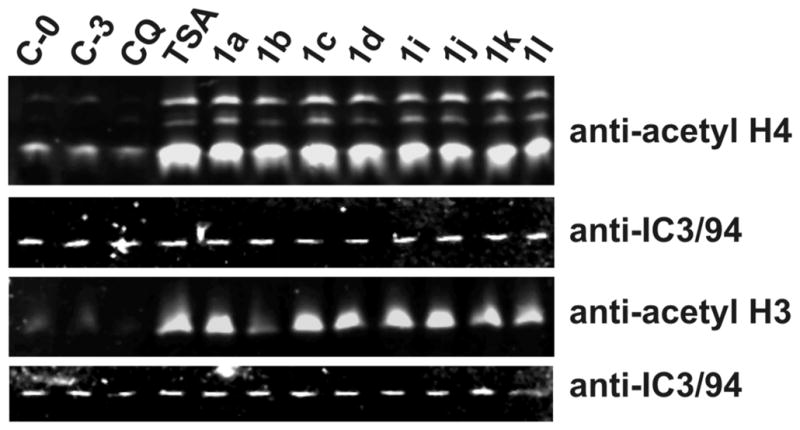
Hyperacetylation of P. falciparum histones. (Compound 1a is LMK-235)Eur J Med Chem.2014 Jul 23;82:204-13. |
|---|
LMK-235 synergizes with bortezomib in BC cells.Oncotarget.2016 Jun 21;7(25):37966-37978. |
LMK-235 inhibits BC cell proliferation and induces apoptosis.Oncotarget.2016 Jun 21;7(25):37966-37978. |
Products are for research use only; We do not sell to patients
Copyright 2020 InvivoChem LLC | All Rights Reserved


 COA
COA