| Size | Price | Stock | Qty |
|---|---|---|---|
| 1mg |
|
||
| 5mg |
|
||
| 10mg |
|
||
| 25mg |
|
||
| 50mg |
|
||
| 100mg | |||
| Other Sizes |
Purity: ≥98%
LGD-6972 (LGD6972; MB-11262) is a novel and orally bioavailable glucagon receptor antagonist with the potential to be used for treating type 2 diabetes (T2DM). In subjects with type 2 diabetes and those in good health, its linear plasma pharmacokinetics are consistent with a once-daily dosage. Additionally, it lowers postprandial plasma glucose levels. There are dose-dependent rises in fasting plasma glucagon, but in T2DM subjects, glucagon levels fall and insulin levels rise following an oral glucose load. The reduction in glucose levels observed in both T2DM patients and healthy individuals was linked to LGD-6972's inhibition of glucagon action. This effect was significant enough to forecast improvements in glycaemic control in T2DM patients who received longer treatment durations. Continued clinical development of LGD-6972 is supported by its safety and pharmacological profile after 14 days of dosing.
| Targets |
Glucagon receptor
|
|
|---|---|---|
| ln Vitro |
|
|
| ln Vivo |
|
|
| Animal Protocol |
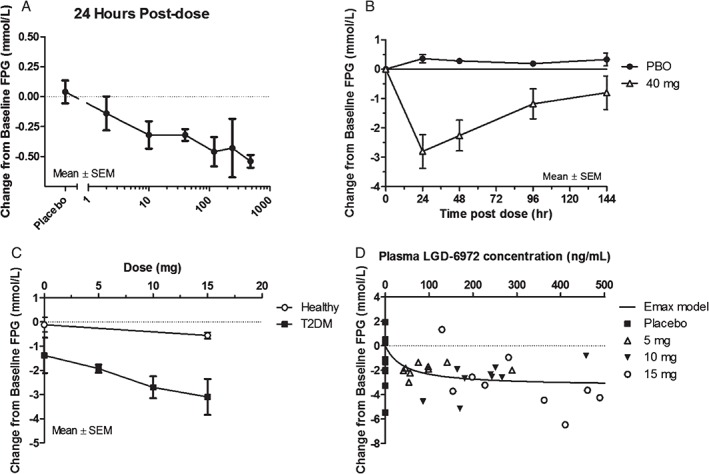
In healthy and T2DM subjects, LGD-6972 exhibits linear plasma pharmacokinetics compatible with a once-daily dosage that is comparable. All groups show dose-dependent reductions in fasting plasma glucose, which peak at 3.15 mM (56.8 mg/dL) in T2DM subjects on day 14. In the postprandial phase, plasma glucose is likewise decreased by LGD-6972. In T2DM subjects, there are dose-dependent increases in fasting plasma glucagon, but following an oral glucose load, glucagon levels fall and insulin levels rise. At the tested doses, LGD-6972 is well tolerated and does not cause dose-related or clinically significant alterations in clinical laboratory parameters. Hypoglycemia does not occur in any subject.
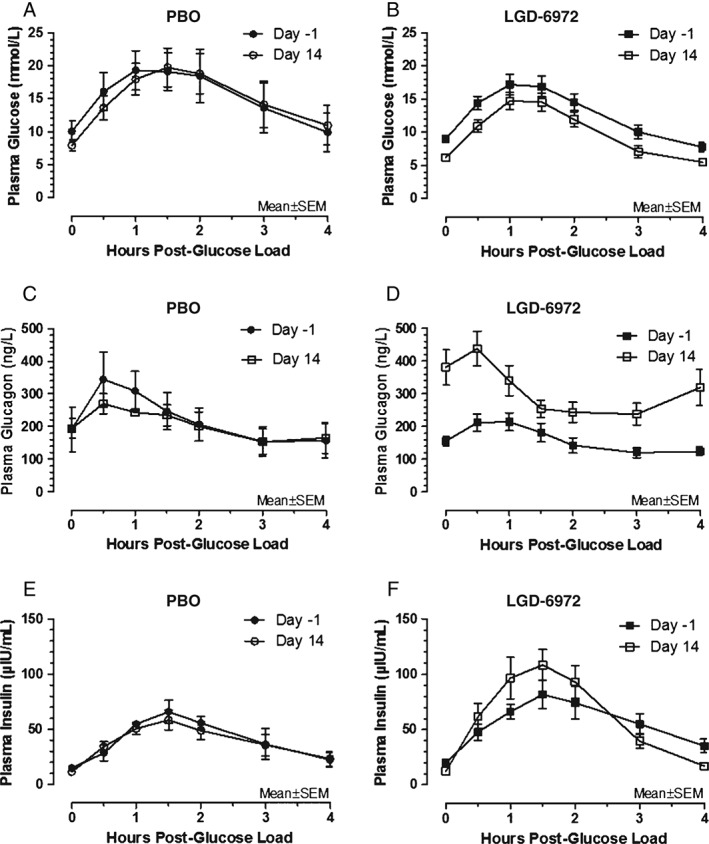
In the SAD study, subjects were healthy men and women, 21‐65 years of age. Eligibility criteria for T2DM subjects included HbA1c ≥ 6.5% and ≤ 10%, FPG < 12.21 mmol/L, and BMI of 18.5‐38.0 kg/m2. T2DM subjects were required to discontinue any antidiabetic medication 2 weeks prior to admission until after the last follow‐up visit. In the MAD study, subjects were men and women, 21‐65 years of age. T2DM subjects were required to be on a stable dose of metformin for ≥12 weeks without use of other antidiabetic medications for >3 weeks, and have HbA1c ≥ 6.5% and ≤ 10.5%, FPG ≥ 6.94 mmol/L and ≤ 14.43 mmol/dL, and BMI of 20 and 45 kg/m2.[1] Key exclusion criteria for both studies included: significant illness such as cardiovascular, haematologic, respiratory, renal or gastrointestinal disease; history of uncontrolled blood pressure; liver transaminase levels (AST, alanine aminotransferase or ALT, aspartate aminotransferase) > 10% × ULN; creatine kinase (CK) levels > 2 × ULN; serum triglyceride level > 4.52 mmol/L. To be eligible, women had to be either postmenopausal, surgically sterile or practicing an effective method of birth control. Male subjects must either have had a vasectomy or agreed that they and any female partners would use two acceptable forms of contraception. Pharmacokinetics[1] Plasma concentrations of LGD‐6972 were measured by a validated LC‐MS/MS method. A time‐exposure profile was measured throughout a 24‐hour period on day 1 in the SAD study, and on day 1 and day 14 in the MAD study. Additional trough concentrations were measured at several time points in the MAD study to investigate steady state pharmacokinetics and clearance rates. Pharmacodynamics[1] In the SAD study, FPG, fasting plasma glucagon, insulin and glucagon‐like peptide‐1 (GLP‐1) were evaluated in healthy and T2DM subjects. In the MAD study, PD variables in both healthy and T2DM subjects included FPG, fasting glucagon, total and active glucagon‐like peptide‐1, and insulin measured at baseline and throughout the 14‐day treatment. Seven‐point plasma glucose measurements were performed at baseline (day −1) and at day 14 in all T2DM subjects. A 4‐hour oral glucose tolerance test (OGTT) was performed in T2DM subjects receiving 10‐mg LGD‐6972 on day −1 and day 14 for measurement of within‐subject change from baseline for glucose, glucagon, insulin and active and total GLP‐1.A direct Emax model was developed to evaluate the relationship between plasma LGD‐6972 concentration and change from baseline fasting plasma glucose. The model estimated the maximum glucose lowering effect (Emax) and plasma LGD‐6972 concentration required to attain 50% of the maximum glucose effect (EC50). Studies L6972‐01 (NCT01919684) and L6972‐02 (NCT02250222) were conducted in accordance with Good Clinical Practice (GCP) guidelines. An Institutional Review Board (IRB) reviewed and approved the protocols prior to initiating the studies. All subjects provided written informed consent to participate. The primary objective of both studies was to evaluate the safety and tolerability of oral doses of LGD‐6972. Secondary objectives were to characterize the pharmacokinetic (PK) and pharmacodynamic (PD) profile of LGD‐6972.[1] Study L6972‐01 was a single centre, randomized, double‐blind, placebo‐controlled single ascending dose (SAD) study conducted in two parts. Part 1 evaluated LGD‐6972 in six groups of normal healthy subjects (eight/group) and Part 2 evaluated LGD‐6972 in a single group of eight subjects with T2DM. In Part 1, healthy subjects were randomly assigned in a 3:1 ratio to receive either a single oral dose of 2, 10, 40, 120, 240 or 480 mg of LGD‐6972 or placebo administered in a fasted state. Dose escalation occurred after review of safety, tolerability and preliminary PK data from previous dose levels. Following a 21‐day washout period, subjects who received the 40 mg dose in a fasted state received a second 40 mg dose after a high‐fat breakfast to explore food effects on pharmacokinetics of LGD‐6972. In Part 2, T2DM subjects received a single dose of 40 mg LGD‐6972 in a fasted state after the equivalent dose had been administered to healthy subjects and safety data had been reviewed. All subjects were confined at the site for 48 hours after dosing, and returned to the site 5, 7 and 14 days after dosing for follow‐up visits.[1] Study L6972‐02 was a randomized, double‐blind, placebo‐controlled, sequential, multiple ascending dose (MAD) study conducted at three sites in normoglycaemic healthy subjects (n = 12) and subjects with T2DM who were inadequately controlled with stable metformin monotherapy (n = 36). Twelve healthy subjects were randomized (3:1) to oral doses of 15 mg LGD‐6972 or placebo once daily in a fasted state for 14 days. T2DM subjects (12 subjects/dose group) were randomized (3:1) to 5, 10 or 15 mg LGD 6972 or placebo once daily in the fasted state for 14 days. Subjects were confined at the site for the entire 14‐day treatment period, and returned to the site for up to three weekly follow‐up visits. Initiation of dosing and dose escalation occurred in the T2DM subjects after review of safety, tolerability and preliminary PK data from previous dose levels.[1] In both studies, subjects received once‐daily placebo or LGD‐6972 as an aqueous solution formulated with CAPTISOL® (betadex [β‐cyclodextrin] sulfobutylether sodium). Subjects received standardized meals during confinement in the clinical pharmacology unit. Safety and tolerability were assessed during periodic physical examinations and measurement of vital signs, clinical laboratory tests, 12‐lead electrocardiograms (ECGs) and continual adverse event observation. |
|
| ADME/Pharmacokinetics |
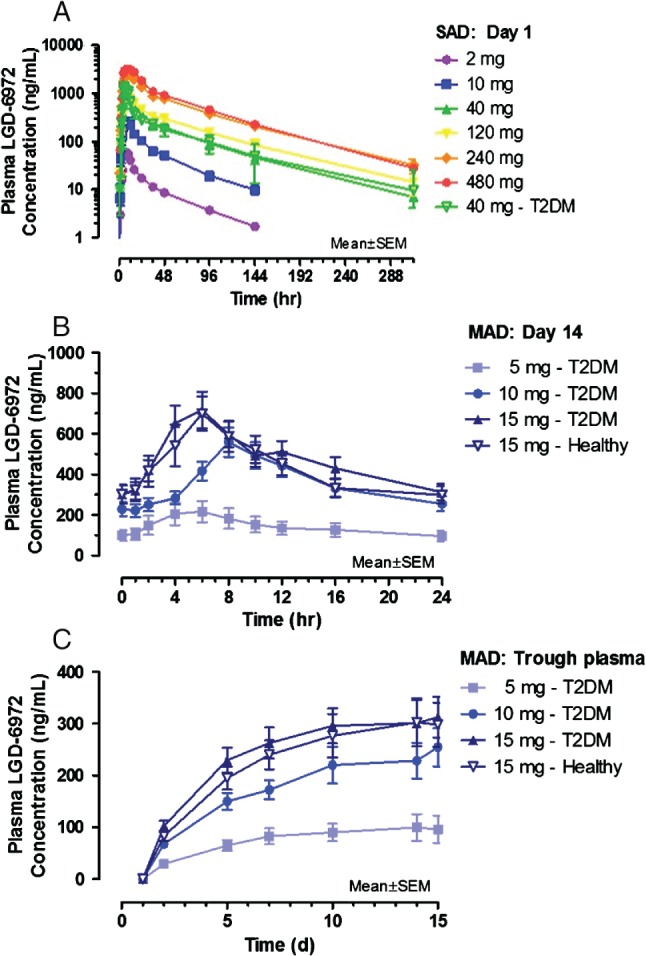
Good absorption was achieved after a single oral dose of 2 to 480 mg LGD-6972. Figure 1A shows the mean plasma concentrations of LGD-6972 in different dose groups after fasting administration in healthy subjects and subjects with type 2 diabetes. The time to peak concentration (Tmax) was approximately 6–8 hours after administration in most dose groups (see Supplementary Information Table S2). In healthy subjects, the maximum concentration (Cmax) and total exposure [area under the curve (AUC)] increased with increasing LGD-6972 dose. The elimination half-life was 39.2 to 58.5 hours in all dose groups. LGD-6972 was not detected in urine (data not shown). In healthy subjects, Cmax and AUC were 22.5% higher after fasting administration of 40 mg LGD-6972 than after eating (see Supplementary Information Table S2). Cmax was higher in subjects with type 2 diabetes (T2DM) than in healthy subjects, but the total exposure (AUC) was similar in both groups (see Supplementary Information Table S2) [1]. The plasma pharmacokinetic characteristics of LGD-6972 after repeated dosing were similar to and predictable to those observed in the single-dose (SAD) study. Figures 1B and 1C show the mean and mean trough concentrations of plasma LGD-6972 on day 14, respectively. Supplementary Information Table S3 lists the mean plasma pharmacokinetic parameters of LGD-6972 for each group. Cmax and exposure both increased in a dose-proportional manner. The pharmacokinetic characteristics of healthy subjects and T2DM subjects were similar after 14 days of treatment with 15 mg LGD-6972 (Figure 1B). Consistent with the results of the SAD study, LGD-6972 exhibited a long half-life (43.7 to 58.6 hours) in all dose groups, with a cumulative AUC0-24hr ratio of 2.5 to 3.1 after 14 days of treatment in patients with type 2 diabetes (see Supplementary Information Table S3). Steady-state pharmacokinetics were achieved in all groups at the end of treatment (Figure 1C). [1]
|
|
| Toxicity/Toxicokinetics |
LGD-6972 was well tolerated at the highest test dose (480 mg). No serious adverse events (SAEs) occurred in healthy subjects or subjects with type 2 diabetes mellitus (T2DM), and no subjects withdrew from the study due to adverse events (AEs). No clinically significant or dose-dependent changes were observed in hematology, clinical chemistry, urinalysis, electrocardiogram, or vital signs, and no hypoglycemia was reported. Treatment-related adverse events (TEAEs) related to the study drug were observed in healthy subjects, but not in any T2DM subjects. Table 1 summarizes the adverse events in healthy subjects by treatment group. The most common TEAEs were headache (n = 5) and gastrointestinal disorders (n = 4). Most TEAEs were mild or moderate in severity; however, one healthy subject receiving a 480 mg dose experienced two serious treatment-related adverse events (headache and nausea) [1].
In healthy subjects and subjects with type 2 diabetes mellitus (T2DM), LGD-6972 was well tolerated after 14 days of administration, with no clinically significant or dose-dependent changes in hematology, clinical chemistry, urinalysis, electrocardiogram, or vital signs. No serious adverse events occurred, and no study was terminated. Table 2 summarizes adverse events in healthy subjects and T2DM subjects. Two healthy subjects receiving 15 mg of LGD-6972 experienced treatment-related adverse events (headache) during treatment. For T2DM subjects, the most common treatment-related adverse events during treatment were headache (n = 4) and gastrointestinal disorders (n = 4). No other specific treatment-related adverse events occurred in more than one subject. Most treatment-related adverse events were mild or moderate (Grade 1 or 2). However, one patient with type 2 diabetes mellitus (T2DM) receiving 15 mg LGD-6972 experienced a treatment-emergent adverse event (TEAE), the most severe being grade 3 (abdominal discomfort, abdominal pain, headache, and nausea). Another patient with T2DM receiving 5 mg LGD-6972 developed elevated ALT (>3 times the upper limit of normal), AST, and gamma-glutamyl transferase (GGT) during the follow-up period (14 days after the end of dosing), accompanied by elevated neutrophil and white blood cell percentages and hematuria. Bilirubin was not elevated (no violation of Hy's law). All abnormalities were mild and resolved by the end of the study. No symptomatic hypoglycemia occurred. Patients with T2DM receiving 5, 10, or 15 mg LGD-6972 showed a slight increase in ALT from baseline on day 14 (15.6, 2.6, and 5.6 U/L, respectively). However, these increases were not dose-dependent, and the mean values for each group were within the normal range (see Supplementary Info Figure S1). Changes in AST were generally smaller than changes in ALT. No clinically significant or dose-dependent changes in total cholesterol, LDL cholesterol, HDL cholesterol, or triglycerides were observed (see Supplementary Info Tables S4 and S5). [1] |
|
| References | ||
| Additional Infomation |
LGD-6972 is currently undergoing clinical trial NCT01919684 (a study evaluating the safety, tolerability, pharmacokinetics, and pharmacodynamics of LGD-6972 in healthy subjects and patients with type 2 diabetes). In summary, the Phase I results reported in this article demonstrate that once-daily oral administration of LGD-6972 resulted in sustained and pharmacologically significant plasma drug concentrations in both healthy subjects and patients with type 2 diabetes, accompanied by a glycemic response. LGD-6972 was observed to lower glycemic levels in both fasting and postprandial states, accompanied by an increase in insulin levels and a decrease in glucagon levels after an oral glucose load. The extent and magnitude of the glycemic response in patients with type 2 diabetes were sufficient to predict a significant benefit in glycemic control with prolonged treatment in these patients. No significant safety or tolerability issues were observed. These results support the advancement of once-daily LGD-6972 to a Phase II clinical trial in patients with type 2 diabetes (T2DM). [1]
Objective: To evaluate the safety, tolerability, pharmacokinetics, and pharmacodynamics of the novel oral glucagon receptor antagonist LGD-6972 in single and multiple doses in healthy subjects and patients with type 2 diabetes mellitus (T2DM). Methods: In the single-dose escalation study, healthy subjects (n = 48) and patients with T2DM (n = 8) were given 2–480 mg of LGD-6972, respectively. In the multiple-dose escalation study, healthy subjects (n = 12) received 15 mg of LGD-6972 daily, and patients with T2DM (n = 36) received 5, 10, or 15 mg of LGD-6972 daily for 14 days. Results: The plasma pharmacokinetics of LGD-6972 were linear, consistent with the once-daily dosing regimen, and the efficacy was comparable in healthy subjects and patients with type 2 diabetes mellitus (T2DM). A dose-dependent decrease in fasting blood glucose was observed in all groups, with the largest decrease of 3.15 mmol/L (56.8 mg/dL) in patients with T2DM reaching day 14. LGD-6972 also reduced postprandial blood glucose. A dose-dependent increase in fasting plasma glucagon was observed, but glucagon levels decreased and insulin levels increased in patients with T2DM after oral glucose loading. LGD-6972 was well tolerated within the tested dose range, and no dose-related or clinically significant changes in clinical laboratory parameters were observed. No hypoglycemia occurred in any of the subjects. Conclusion: The inhibition of glucagon action by LGD-6972 was associated with a reduction in blood glucose in healthy subjects and patients with T2DM, and the reduction was sufficient to predict improved glycemic control in patients with T2DM over a longer treatment period. The safety and pharmacological characteristics of LGD-6972 after 14 days of administration support continued clinical development. [1] |
| Molecular Formula |
C43H46N2O5S
|
|
|---|---|---|
| Molecular Weight |
702.9
|
|
| Exact Mass |
702.312
|
|
| Elemental Analysis |
C, 73.48; H, 6.60; N, 3.99; O, 11.38; S, 4.56
|
|
| CAS # |
1207989-09-0
|
|
| Related CAS # |
1207989-22-7 (sodium); 1207989-09-0 (free)
|
|
| PubChem CID |
44625560
|
|
| Appearance |
Solid powder
|
|
| Density |
1.2±0.1 g/cm3
|
|
| Index of Refraction |
1.616
|
|
| LogP |
8.45
|
|
| Hydrogen Bond Donor Count |
3
|
|
| Hydrogen Bond Acceptor Count |
5
|
|
| Rotatable Bond Count |
12
|
|
| Heavy Atom Count |
51
|
|
| Complexity |
1200
|
|
| Defined Atom Stereocenter Count |
1
|
|
| SMILES |
S(C([H])([H])C([H])([H])N([H])C(C1C([H])=C([H])C(=C([H])C=1[H])C([H])([H])[C@@]([H])(C(N([H])C1C([H])=C([H])C(=C([H])C=1[H])C1C(C([H])([H])[H])=C([H])C(C([H])([H])[H])=C([H])C=1C([H])([H])[H])=O)C1C([H])=C([H])C(=C([H])C=1[H])C1C([H])=C([H])C(=C([H])C=1[H])C(C([H])([H])[H])(C([H])([H])[H])C([H])([H])[H])=O)(=O)(=O)O[H]
|
|
| InChi Key |
HKJMCBYPVCGZFB-LDLOPFEMSA-N
|
|
| InChi Code |
InChI=1S/C43H46N2O5S/c1-28-25-29(2)40(30(3)26-28)35-17-21-38(22-18-35)45-42(47)39(27-31-7-9-36(10-8-31)41(46)44-23-24-51(48,49)50)34-13-11-32(12-14-34)33-15-19-37(20-16-33)43(4,5)6/h7-22,25-26,39H,23-24,27H2,1-6H3,(H,44,46)(H,45,47)(H,48,49,50)/t39-/m1/s1
|
|
| Chemical Name |
2-[[4-[(2R)-2-[4-(4-tert-butylphenyl)phenyl]-3-oxo-3-[4-(2,4,6-trimethylphenyl)anilino]propyl]benzoyl]amino]ethanesulfonic acid
|
|
| Synonyms |
|
|
| HS Tariff Code |
2934.99.9001
|
|
| Storage |
Powder -20°C 3 years 4°C 2 years In solvent -80°C 6 months -20°C 1 month |
|
| Shipping Condition |
Room temperature (This product is stable at ambient temperature for a few days during ordinary shipping and time spent in Customs)
|
| Solubility (In Vitro) |
DMSO: ~125 mg/mL (~177.8 mM)
Water: 1 mg/mL (Insoluble) Ethanol: 1 mg/mL |
|---|---|
| Solubility (In Vivo) |
Solubility in Formulation 1: ≥ 2.08 mg/mL (2.96 mM) (saturation unknown) in 10% DMSO + 40% PEG300 + 5% Tween80 + 45% Saline (add these co-solvents sequentially from left to right, and one by one), clear solution.
For example, if 1 mL of working solution is to be prepared, you can add 100 μL of 20.8 mg/mL clear DMSO stock solution to 400 μL PEG300 and mix evenly; then add 50 μL Tween-80 to the above solution and mix evenly; then add 450 μL normal saline to adjust the volume to 1 mL. Preparation of saline: Dissolve 0.9 g of sodium chloride in 100 mL ddH₂ O to obtain a clear solution. Solubility in Formulation 2: ≥ 2.08 mg/mL (2.96 mM) (saturation unknown) in 10% DMSO + 90% (20% SBE-β-CD in Saline) (add these co-solvents sequentially from left to right, and one by one), clear solution. For example, if 1 mL of working solution is to be prepared, you can add 100 μL of 20.8 mg/mL clear DMSO stock solution to 900 μL of 20% SBE-β-CD physiological saline solution and mix evenly. Preparation of 20% SBE-β-CD in Saline (4°C,1 week): Dissolve 2 g SBE-β-CD in 10 mL saline to obtain a clear solution. View More
Solubility in Formulation 3: ≥ 2.08 mg/mL (2.96 mM) (saturation unknown) in 10% DMSO + 90% Corn Oil (add these co-solvents sequentially from left to right, and one by one), clear solution. |
| Preparing Stock Solutions | 1 mg | 5 mg | 10 mg | |
| 1 mM | 1.4227 mL | 7.1134 mL | 14.2268 mL | |
| 5 mM | 0.2845 mL | 1.4227 mL | 2.8454 mL | |
| 10 mM | 0.1423 mL | 0.7113 mL | 1.4227 mL |
*Note: Please select an appropriate solvent for the preparation of stock solution based on your experiment needs. For most products, DMSO can be used for preparing stock solutions (e.g. 5 mM, 10 mM, or 20 mM concentration); some products with high aqueous solubility may be dissolved in water directly. Solubility information is available at the above Solubility Data section. Once the stock solution is prepared, aliquot it to routine usage volumes and store at -20°C or -80°C. Avoid repeated freeze and thaw cycles.
Calculation results
Working concentration: mg/mL;
Method for preparing DMSO stock solution: mg drug pre-dissolved in μL DMSO (stock solution concentration mg/mL). Please contact us first if the concentration exceeds the DMSO solubility of the batch of drug.
Method for preparing in vivo formulation::Take μL DMSO stock solution, next add μL PEG300, mix and clarify, next addμL Tween 80, mix and clarify, next add μL ddH2O,mix and clarify.
(1) Please be sure that the solution is clear before the addition of next solvent. Dissolution methods like vortex, ultrasound or warming and heat may be used to aid dissolving.
(2) Be sure to add the solvent(s) in order.
| NCT Number | Recruitment | interventions | Conditions | Sponsor/Collaborators | Start Date | Phases |
| NCT02250222 | Completed | Drug: LGD-6972 Drug: Placebo (Captisol ®) |
Type 2 Diabetes Mellitus | Ligand Pharmaceuticals | October 2014 | Phase 1 |
| NCT02672839 | Completed | Drug: LGD-6972 Solution Drug: LGD-6972 Capsules |
Type 2 Diabetes Mellitus (T2DM) |
Ligand Pharmaceuticals | February 2016 | Phase 1 |
| NCT01919684 | Completed | Drug: LGD-6972 Drug: Placebo (Captisol®) |
Type 2 Diabetes Mellitus | Ligand Pharmaceuticals | November 2013 | Phase 1 |
| NCT02851849 | Completed | Drug: LGD-6972-5 mg Drug: LGD-6972-10 mg Drug: LGD-6972-15 mg |
Type 2 Diabetes Mellitus | Ligand Pharmaceuticals | September 2016 | Phase 2 |
|
|---|
|
|
Products are for research use only; We do not sell to patients
Copyright 2020 InvivoChem LLC | All Rights Reserved


 COA
COA