| Size | Price | Stock | Qty |
|---|---|---|---|
| 5mg |
|
||
| 25mg |
|
||
| 50mg |
|
||
| 100mg |
|
||
| 250mg |
|
||
| 500mg |
|
||
| 1g | |||
| Other Sizes |


Purity: ≥98%
| Targets |
FMS-like Tyrosine Kinase 3 (FLT3): In recombinant human FLT3 enzyme assays, KW-2449 exhibited IC50 values of 1.6 nM (wild-type FLT3), 2.1 nM (FLT3-ITD mutation), and 2.3 nM (FLT3-D835V mutation) [1]
- BCR/ABL Fusion Protein (especially T315I mutation): In recombinant human BCR/ABL enzyme assays, KW-2449 had an IC50 of 3.2 nM for T315I-mutated BCR/ABL, and 4.5 nM for wild-type BCR/ABL; no significant inhibition was observed for other kinases (e.g., c-Kit, VEGFR2) at concentrations up to 100 nM [1] |
|---|---|
| ln Vitro |
When FLT3/ITD, FLT3/D835Y, and wt-FLT3/FL are expressed in 32D cells, MOLM-13, and MV4;11, KW-2449 exhibits growth inhibitory activity. Its GI50 values are 0.024, 0.046, 0.014, 0.024, and 0.011 μM, in that order. In MOLM-13 cells, KW-2449 dose-dependently suppresses the phosphorylation of FLT3 (P-FLT3) and its downstream component, phosphorylated STAT5 (P-STAT5). The apoptotic cell population rises as a result of KW-2449's ability to raise the proportion of cells in the G1 phase and decrease the number of cells in the S phase of the cell cycle [1].
In FLT3-mutated leukemia cell lines (MV4-11 with FLT3-ITD, MOLM-13 with FLT3-ITD) ([1]): KW-2449 inhibited cell proliferation in a dose- and time-dependent manner. At 72 h treatment, the IC50 values were 3.5 nM (MV4-11) and 4.2 nM (MOLM-13) (MTT assay). Flow cytometry (Annexin V/PI staining) showed that 10 nM KW-2449 treatment for 48 h increased apoptotic rates from 4.2% (control) to 45.6% (MV4-11) and 42.3% (MOLM-13). Western blot revealed reduced phospho-FLT3 (p-FLT3, 85% reduction in MV4-11), phospho-STAT5 (p-STAT5, 78% reduction), and phospho-ERK (p-ERK, 72% reduction) [1] - In T315I-mutated BCR/ABL leukemia cell lines (K562-T315I, Ba/F3-T315I) ([1]): KW-2449 suppressed cell growth with IC50 values of 5.8 nM (K562-T315I) and 6.5 nM (Ba/F3-T315I) at 72 h (CCK-8 assay). Compared with imatinib (which is inactive against T315I), 10 nM KW-2449 reduced p-BCR/ABL (T315I) by 80% (Western blot), and induced G0/G1 cell cycle arrest (cells in G0/G1 phase increased from 40% to 68% in K562-T315I, flow cytometry). Clonogenic assay showed 10 nM KW-2449 reduced colony formation by 90% (K562-T315I) vs. control [1] - In human normal bone marrow mononuclear cells (hBMNCs) ([1]): KW-2449 at concentrations up to 50 nM showed no significant cytotoxicity (cell viability > 85% vs. control), indicating selective toxicity to leukemia cells [1] |
| ln Vivo |
In a FLT3-mutated xenograft model, oral treatment of KW-2449 results in minimal suppression of the bone marrow while exhibiting dose-dependent and considerable tumor growth inhibition. It causes apoptosis, G2/M arrest, and a decrease in phosphorylated histone H3 in human leukemia of the FLT3 wild-type. By simultaneously down-regulating BCR/ABL and Aurora kinases, KW-2449 aids in the release of resistance in leukemia that is resistant to imatinib. Furthermore, initial samples from patients with AML and those who are resistant to imatinib demonstrate the antiproliferative effect of KW-2449. Human plasma protein, such as α1-acid glycoprotein, had no effect on KW-2449's inhibitory activity[1].
In nude mice bearing MV4-11 (FLT3-ITD) leukemia xenografts ([1]): Mice were randomly divided into control (0.5% DMSO in saline) and KW-2449 groups (15 mg/kg, oral gavage, once daily for 21 days). The treatment group showed a 72% reduction in tumor volume (control: 1120 mm³; treatment: 313.6 mm³) and a 68% reduction in tumor weight (control: 1.25 g; treatment: 0.39 g) vs. control. Median survival was prolonged by 25 days (control: 38 days; treatment: 63 days). Immunohistochemistry of tumor tissues showed decreased p-FLT3 (75% reduction) and Ki-67 (60% reduction), and increased cleaved caspase-3 (3.5-fold) [1] - In nude mice bearing K562-T315I (T315I-BCR/ABL) leukemia xenografts ([1]): KW-2449 was administered at 20 mg/kg via oral gavage once daily for 28 days. The treatment group had a 65% reduction in tumor volume (control: 1050 mm³; treatment: 367.5 mm³) and a 62% reduction in tumor weight (control: 1.18 g; treatment: 0.45 g). Western blot of tumor lysates revealed reduced p-BCR/ABL (T315I, 78% reduction) and p-STAT5 (70% reduction) [1] |
| Enzyme Assay |
Recombinant FLT3 Kinase Activity Assay ([1]): Prepare reaction mixtures in assay buffer (50 mM Tris-HCl pH 7.5, 10 mM MgCl₂, 1 mM EGTA, 0.1 mM Na₃VO₄, 1 mM DTT) containing 50 nM recombinant human FLT3 (wild-type/ITD/D835V), 100 μM ATP, 100 μM biotinylated peptide substrate (FLT3-specific), and KW-2449 (0.1–100 nM). Incubate at 30°C for 60 minutes. Add streptavidin-coated beads to capture the substrate, then detect phosphorylated substrate using a phospho-specific antibody and chemiluminescence. Calculate FLT3 inhibition rate = [(control signal – sample signal)/control signal] × 100%. Plot dose-response curves to determine IC50 values (1.6 nM for wild-type, 2.1 nM for ITD, 2.3 nM for D835V) [1]
- Recombinant BCR/ABL (T315I) Kinase Activity Assay ([1]): Set up reactions with 50 nM recombinant human BCR/ABL (wild-type/T315I), 50 μM ATP, and 50 μM BCR/ABL-specific peptide substrate in the same assay buffer as above. Treat with KW-2449 (0.1–100 nM) and incubate at 30°C for 45 minutes. Use a radioactive kinase assay (³²P-ATP incorporation) to measure substrate phosphorylation: separate phosphorylated peptide by SDS-PAGE, quantify radioactivity via autoradiography. Calculate inhibition rate and determine IC50 (3.2 nM for T315I, 4.5 nM for wild-type) [1] |
| Cell Assay |
FLT3-Mutated Leukemia Cell Proliferation and Apoptosis Assay ([1]): 1. Proliferation assay: Seed MV4-11/MOLM-13 cells in 96-well plates at 5×10³ cells/well. After 24 h attachment, treat with KW-2449 (0.5, 1, 5, 10, 20 nM; control: 0.1% DMSO). Incubate for 24, 48, 72 h. Add MTT reagent (5 mg/mL) and incubate for 4 h. Dissolve formazan with DMSO, measure absorbance at 570 nm. Calculate IC50 using GraphPad Prism. 2. Apoptosis assay: Seed cells in 6-well plates (2×10⁵ cells/well), treat with 10 nM KW-2449 for 48 h. Stain with Annexin V-FITC and PI, analyze by flow cytometry. 3. Western blot: Lyse treated cells, probe with antibodies against p-FLT3, FLT3, p-STAT5, STAT5, p-ERK, ERK (β-actin as internal control) [1]
- T315I-BCR/ABL Leukemia Cell Cycle and Clonogenic Assay ([1]): 1. Cell cycle assay: Seed K562-T315I cells in 6-well plates (3×10⁵ cells/well), treat with 10 nM KW-2449 for 24 h. Fix with 70% ethanol, stain with propidium iodide, analyze cell cycle distribution via flow cytometry. 2. Clonogenic assay: Seed 200 K562-T315I cells/well in 6-well plates, treat with KW-2449 (1, 5, 10 nM) for 14 days (replace medium every 3 days). Fix with 4% paraformaldehyde, stain with 0.1% crystal violet, count clones ≥50 cells. Calculate clone formation rate = (treatment clones/control clones) × 100% [1] |
| Animal Protocol |
Dissolved in 0.5% methylcellulose 400; 32 mg/kg; oral administration CBySmn.CB17-Prkdsscid/J (BALB/C) mice are injected with BV173/E255K/Luc cl4 cells.
MV4-11 (FLT3-ITD) Leukemia Xenograft Model ([1]): Female nude mice (6–8 weeks old) were injected subcutaneously with 5×10⁶ MV4-11 cells into the right flank. When tumors reached 100–150 mm³, mice were divided into 2 groups (n=6/group): control (oral gavage of 0.5% DMSO in 0.9% saline, once daily) and KW-2449 group (oral gavage of 15 mg/kg KW-2449 dissolved in 0.5% DMSO/saline, once daily). Treatments continued for 21 days. Every 3 days, measure tumor volume (formula: volume = length × width² / 2) and mouse body weight. Monitor survival for 80 days to calculate median survival. At endpoint, sacrifice mice, excise tumors for weight measurement, immunohistochemistry (p-FLT3, Ki-67, cleaved caspase-3), and Western blot [1] - K562-T315I (T315I-BCR/ABL) Leukemia Xenograft Model ([1]): Male nude mice (6–8 weeks old) were injected subcutaneously with 4×10⁶ K562-T315I cells into the right flank. When tumors reached 100–150 mm³, mice were randomized to control (oral gavage of saline, once daily) and KW-2449 group (oral gavage of 20 mg/kg KW-2449 dissolved in 0.5% DMSO/saline, once daily) for 28 days. Every 3 days, record tumor volume and body weight. At endpoint, sacrifice mice, excise tumors for Western blot (p-BCR/ABL, p-STAT5) [1] |
| ADME/Pharmacokinetics |
In male SD rats (250–300 g), a single intravenous injection of 10 mg/kg KW-2449 ([1]) was administered: plasma concentration-time curves were determined by high performance liquid chromatography-tandem mass spectrometry (HPLC-MS/MS). The maximum plasma concentration (Cmax) was 420.5 ng/mL 5 minutes after administration. The area under the plasma concentration-time curve (AUC₀₋∞) was 580.2 ng·h/mL. The elimination half-life (t₁/₂) was 2.8 h [1]. In male SD rats (250–300 g), a single oral administration of 20 mg/kg KW-2449 ([1]) was administered: oral bioavailability was 35.8% (calculated by comparing the AUC₀₋∞ of oral and intravenous administration). Tissue distribution analysis showed that the highest concentrations were found in the liver (22.5 μg/g at 1 hour) and spleen (18.6 μg/g at 1 hour), while the concentrations in xenograft tumors were moderate (12.3 μg/g in MV4-11 tumors at 1 hour) [1].
|
| Toxicity/Toxicokinetics |
In nude mice treated with 15 mg/kg KW-2449 (oral, 21 days) ([1]): no significant weight loss (weight change: -2.1% vs. control group: +2.7%, P > 0.05) or significant toxic symptoms (sleepiness, diarrhea, hair loss) were observed. Serum biochemical parameters: ALT (26.2 U/L vs. control group 25.1 U/L), AST (42.5 U/L vs. control group 41.3 U/L), BUN (14.3 mg/dL vs. control group 14.0 mg/dL) and creatinine (0.76 mg/dL vs. control group 0.74 mg/dL) were not significantly different from the control group [1]
- In nude mice treated with 20 mg/kg KW-2449 (oral, 28 days) ([1]): no significant necrosis or inflammation was observed in liver and kidney histopathology. Hematological parameters (red blood cells: 9.5×10¹²/L vs. control group 9.7×10¹²/L; white blood cells: 4.9×10⁹/L vs. control group 5.1×10⁹/L; platelets: 280×10⁹/L vs. control group 295×10⁹/L) were all within the normal range. The plasma protein binding rate of KW-2449 (measured by ultrafiltration) was 88.5% [1] |
| References | |
| Additional Infomation |
[4-[2-(1H-indazole-3-yl)vinyl]phenyl]-(1-piperazinyl)methyl ketone belongs to the indazole class of compounds. KW-2449, an FLT3/ABL/Aurora kinase inhibitor, is an orally potent inhibitor of FMS-associated tyrosine kinase 3 (FLT3, STK1, or FLK2), tyrosine kinase ABL, and Aurora kinase, with potential antitumor activity. After administration, KW-2449 specifically binds to and inhibits wild-type and mutant FLT3, ABL, and Aurora kinases, thereby interfering with the activation of these kinase-mediated signal transduction pathways and reducing the proliferation of susceptible cancer cells. FLT3 and ABL kinases are upregulated in certain tumor cells and play important roles in tumor cell proliferation and metastasis. Aurora kinase is a serine/threonine kinase that is overexpressed in various cancer cell types and plays a crucial role in mitotic checkpoint control. KW-2449 is a novel oral multi-kinase inhibitor with high selectivity for FLT3 (including resistance mutations such as ITD and D835V) and T315I-mutated BCR/ABL—two genes that are major drivers of refractory leukemia [1]. Its core anti-leukemia mechanism is to inhibit the kinase activity of FLT3 and BCR/ABL (T315I), thereby inhibiting downstream signaling pathways (STAT5, ERK) that regulate cell proliferation, survival, and cell cycle progression, ultimately inducing apoptosis and cell cycle arrest [1]. KW-2449 can overcome imatinib resistance caused by T315I mutation in BCR/ABL and is effective against FLT3-mutated leukemia. Due to its resistance to other FLT3 inhibitors, KW-2449 is expected to be a potential treatment for refractory acute myeloid leukemia (AML) and chronic myeloid leukemia (CML) [1]
- Preclinical studies have shown that KW-2449 has good oral bioavailability, tumor penetration and safety, supporting its entry into clinical trials for refractory leukemia [1] |
| Molecular Formula |
C20H20N4O
|
|
|---|---|---|
| Molecular Weight |
332.4
|
|
| Exact Mass |
332.163
|
|
| CAS # |
1000669-72-6
|
|
| Related CAS # |
|
|
| PubChem CID |
11427553
|
|
| Appearance |
White to light yellow solid powder
|
|
| Density |
1.3±0.1 g/cm3
|
|
| Boiling Point |
604.1±55.0 °C at 760 mmHg
|
|
| Flash Point |
319.1±31.5 °C
|
|
| Vapour Pressure |
0.0±1.7 mmHg at 25°C
|
|
| Index of Refraction |
1.723
|
|
| LogP |
2.07
|
|
| Hydrogen Bond Donor Count |
2
|
|
| Hydrogen Bond Acceptor Count |
3
|
|
| Rotatable Bond Count |
3
|
|
| Heavy Atom Count |
25
|
|
| Complexity |
480
|
|
| Defined Atom Stereocenter Count |
0
|
|
| SMILES |
C1CN(CCN1)C(=O)C2=CC=C(C=C2)/C=C/C3=NNC4=CC=CC=C43
|
|
| InChi Key |
YYLKKYCXAOBSRM-JXMROGBWSA-N
|
|
| InChi Code |
InChI=1S/C20H20N4O/c25-20(24-13-11-21-12-14-24)16-8-5-15(6-9-16)7-10-19-17-3-1-2-4-18(17)22-23-19/h1-10,21H,11-14H2,(H,22,23)/b10-7+
|
|
| Chemical Name |
(E)-(4-(2-(1H-indazol-3-yl)vinyl)phenyl)(piperazin-1-yl)methanone
|
|
| Synonyms |
KW-2449; KW 2449; KW2449.
|
|
| HS Tariff Code |
2934.99.9001
|
|
| Storage |
Powder -20°C 3 years 4°C 2 years In solvent -80°C 6 months -20°C 1 month |
|
| Shipping Condition |
Room temperature (This product is stable at ambient temperature for a few days during ordinary shipping and time spent in Customs)
|
| Solubility (In Vitro) |
DMSO: 67 mg/mL (201.6 mM)
Water: 1 mg/mL (Insoluble) Ethanol: 1 mg/mL (2.3 mM) |
|---|---|
| Solubility (In Vivo) |
Solubility in Formulation 1: ≥ 2.5 mg/mL (7.52 mM) (saturation unknown) in 10% DMSO + 40% PEG300 + 5% Tween80 + 45% Saline (add these co-solvents sequentially from left to right, and one by one), clear solution.
For example, if 1 mL of working solution is to be prepared, you can add 100 μL of 25.0 mg/mL clear DMSO stock solution to 400 μL PEG300 and mix evenly; then add 50 μL Tween-80 to the above solution and mix evenly; then add 450 μL normal saline to adjust the volume to 1 mL. Preparation of saline: Dissolve 0.9 g of sodium chloride in 100 mL ddH₂ O to obtain a clear solution. Solubility in Formulation 2: ≥ 2.5 mg/mL (7.52 mM) (saturation unknown) in 10% DMSO + 90% (20% SBE-β-CD in Saline) (add these co-solvents sequentially from left to right, and one by one), clear solution. For example, if 1 mL of working solution is to be prepared, you can add 100 μL of 25.0 mg/mL clear DMSO stock solution to 900 μL of 20% SBE-β-CD physiological saline solution and mix evenly. Preparation of 20% SBE-β-CD in Saline (4°C,1 week): Dissolve 2 g SBE-β-CD in 10 mL saline to obtain a clear solution. View More
Solubility in Formulation 3: ≥ 2.5 mg/mL (7.52 mM) (saturation unknown) in 10% DMSO + 90% Corn Oil (add these co-solvents sequentially from left to right, and one by one), clear solution. Solubility in Formulation 4: 0.5% methylcellulose: 29mg/mL |
| Preparing Stock Solutions | 1 mg | 5 mg | 10 mg | |
| 1 mM | 3.0084 mL | 15.0421 mL | 30.0842 mL | |
| 5 mM | 0.6017 mL | 3.0084 mL | 6.0168 mL | |
| 10 mM | 0.3008 mL | 1.5042 mL | 3.0084 mL |
*Note: Please select an appropriate solvent for the preparation of stock solution based on your experiment needs. For most products, DMSO can be used for preparing stock solutions (e.g. 5 mM, 10 mM, or 20 mM concentration); some products with high aqueous solubility may be dissolved in water directly. Solubility information is available at the above Solubility Data section. Once the stock solution is prepared, aliquot it to routine usage volumes and store at -20°C or -80°C. Avoid repeated freeze and thaw cycles.
Calculation results
Working concentration: mg/mL;
Method for preparing DMSO stock solution: mg drug pre-dissolved in μL DMSO (stock solution concentration mg/mL). Please contact us first if the concentration exceeds the DMSO solubility of the batch of drug.
Method for preparing in vivo formulation::Take μL DMSO stock solution, next add μL PEG300, mix and clarify, next addμL Tween 80, mix and clarify, next add μL ddH2O,mix and clarify.
(1) Please be sure that the solution is clear before the addition of next solvent. Dissolution methods like vortex, ultrasound or warming and heat may be used to aid dissolving.
(2) Be sure to add the solvent(s) in order.
Link: https://clinicaltrials.gov/ct2/show/NCT00346632
Conditions:Acute Myelogenous Leukemia|Acute Lymphoblastic Leukemia|Myelodysplastic Syndromes|Chronic Myelogenous LeukemiaLink: https://clinicaltrials.gov/ct2/show/NCT00779480
Conditions:Acute Myelogenous Leukemia (AML)
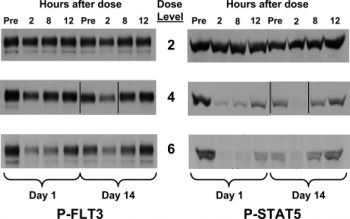
PIA results for patients receiving KW-2449. Blood. 2009 Apr 23;113(17):3938-46 |
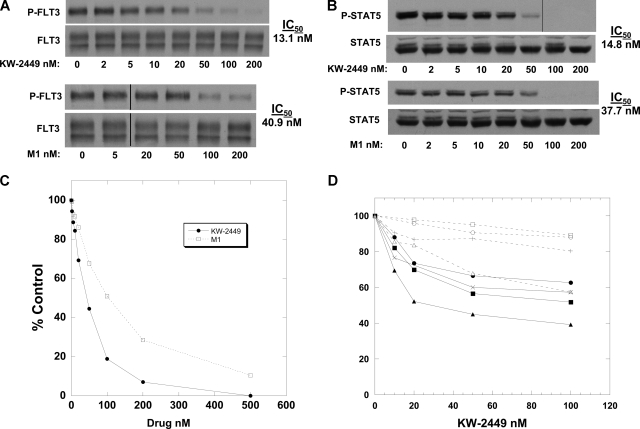
KW-2249 and its metabolite inhibit FLT3. Blood. 2009 Apr 23;113(17):3938-46. |
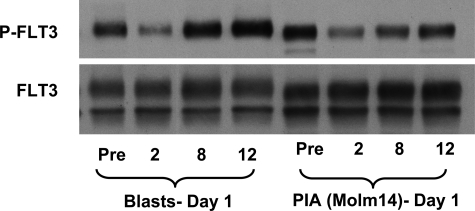
The PIA assay is a valid surrogate of in vivo target inhibition for KW-2449. Blood. 2009 Apr 23;113(17):3938-46. |
Products are for research use only; We do not sell to patients
Copyright 2020 InvivoChem LLC | All Rights Reserved


 COA
COA