| Size | Price | Stock | Qty |
|---|---|---|---|
| 5mg |
|
||
| 10mg |
|
||
| 25mg |
|
||
| 50mg |
|
||
| 100mg |
|
||
| 250mg |
|
||
| 500mg |
|
||
| Other Sizes |


Purity: ≥98%
| Targets |
mTORC1 (IC50 = 10 nM); mTORC2 (IC50 = 10 nM)
The primary targets of KU-0063794 are the mammalian target of rapamycin complex 1 (mTORC1) and mammalian target of rapamycin complex 2 (mTORC2). For purified mTOR kinase (in complex with GβL), the IC₅₀ value of KU-0063794 for inhibiting its kinase activity is approximately 10 nM. In HEK293 cells, the IC₅₀ for inhibiting mTORC1-mediated phosphorylation of p70S6K at Thr389 is about 11 nM, and the IC₅₀ for inhibiting mTORC2-mediated phosphorylation of Akt at Ser473 (in serum-starved and then stimulated HEK293 cells) is approximately 16 nM [1] - KU-0063794 also targets the mTOR signaling pathway by suppressing both mTORC1 and mTORC2 activities in prostate cancer cell lines (e.g., PC-3 and LNCaP). In PC-3 cells, the IC₅₀ for inhibiting cell proliferation (a readout of mTOR pathway inhibition) is about 25 nM, and in LNCaP cells, the IC₅₀ is approximately 32 nM [2] |
|---|---|
| ln Vitro |
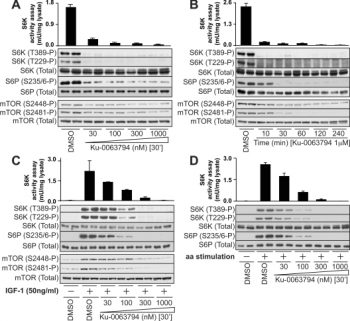
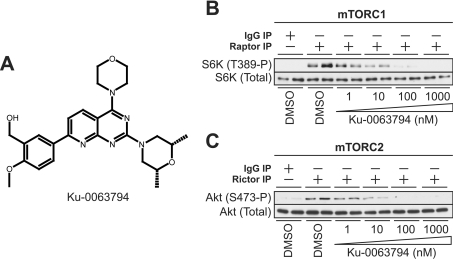
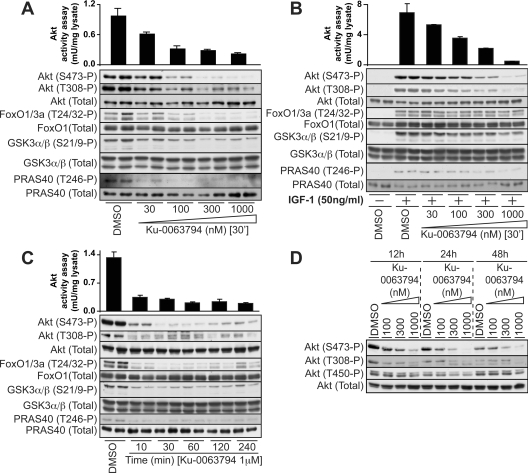
Compared with the mTOR inhibitor PP242, KU-0063794 exhibits higher specificity for mTOR, as being inactive against PI3Ks or 76 other kinases. In HEK-293 cells, KU-0063794 at 30 nM is sufficient to rapidly ablate S6K1 activity by blocking the phosphorylation of the hydrophobic motif (Thr389) and subsequently the phosphorylation of the T-loop residue (Thr229). t takes 300 nM of KU-0063794 to completely inhibit the S6K1 activity in serum-starved HEK-293 cells after IGF1 stimulation. Additionally, S6K1 and S6 protein phosphorylation brought on by amino acids is completely inhibited by KU-0063794 at concentrations of 100–300 nM. Similar to S6K1, KU-0063794 blocks mTORC1 at Ser2448 and mTORC2 at Ser2481 in a dose- and time-dependent manner. KU-0063794 causes a dose-dependent inhibition of the activity and phosphorylation of Akt at Ser473 and unexpected Thr308 as well as the phosphorylation of the Akt substrates PRAS40 at Thr246, GSK3/GSK3 at Ser21/Ser9, and Foxo-1/3a at Thr24/Thr32 in the presence of serum or after IGF1 stimulation. In a dose-dependent manner, KU-0063794 but not rapamycin inhibits SGK1 activity and Ser422 phosphorylation as well as its physiological substrate NDGR1 to the same extent as S6K1 and Akt phosphorylation. However, KU-0063794 does not inhibit phorbol ester-induced ERK or RSK phosphorylation or RSK activation. KU-0063794 has a significantly higher potency to cause the complete dephosphorylation of 4E-BP1 at Thr37, Thr46, and Ser65 when compared to rapamycin. More significantly than rapamycin, KU-0063794 inhibits cell growth in MEFs with wild-type and mLST8-deficient mutations and causes a G1 cell cycle arrest. [1]
Kinase activity inhibition: KU-0063794 potently inhibits the activity of purified mTOR kinase. When incubated with recombinant mTOR-GβL complex, the drug reduced the phosphorylation of mTOR substrates (e.g., 4E-BP1 fragment) in a dose-dependent manner, with an IC₅₀ of 10 nM. It showed high selectivity for mTOR, as it did not significantly inhibit the activity of other related kinases (e.g., PI3Kα, Akt1) even at concentrations up to 1 μM [1] - Signaling pathway modulation in HEK293 cells: Treatment of HEK293 cells with KU-0063794 resulted in dose-dependent suppression of mTORC1 and mTORC2 downstream signaling. At a concentration of 50 nM, the drug reduced the phosphorylation of p70S6K (Thr389, a mTORC1 substrate) by over 80% and the phosphorylation of Akt (Ser473, a mTORC2 substrate) by approximately 70% compared to the untreated control. The inhibition of phosphorylation was sustained for at least 24 hours after a single treatment [1] - Antiproliferative activity in prostate cancer cells: In PC-3 (androgen-independent) and LNCaP (androgen-dependent) prostate cancer cell lines, KU-0063794 exhibited dose-dependent antiproliferative effects. Using the MTT assay, the IC₅₀ values were determined to be 25 nM (PC-3) and 32 nM (LNCaP) after 72 hours of treatment. At a concentration of 100 nM, the drug inhibited cell proliferation by 90% (PC-3) and 85% (LNCaP) compared to the solvent control [2] - Apoptosis induction in prostate cancer cells: KU-0063794 induced apoptosis in PC-3 cells. After 48 hours of treatment with 100 nM drug, the percentage of Annexin V-FITC positive cells (early apoptotic cells) increased from 5% (control) to 25%, and the percentage of Annexin V-FITC/PI double-positive cells (late apoptotic/necrotic cells) increased from 3% (control) to 12%. Western blot analysis showed that the drug upregulated the expression of cleaved caspase-3 (an apoptosis marker) by 3-fold compared to the control [2] - Cell cycle arrest: In PC-3 cells, KU-0063794 caused cell cycle arrest at the G₁ phase. Flow cytometry analysis revealed that after 24 hours of treatment with 50 nM drug, the proportion of cells in G₁ phase increased from 55% (control) to 72%, while the proportion of cells in S phase decreased from 30% (control) to 15% [2] |
| ln Vivo |
Ku0063794 inhibits tumor growth and mTOR signaling in a preclinical renal cell carcinoma model. In the animal study, Ku0063794 was not, however, more efficient than temsirolimus. The fact that temsirolimus has significant effects on the tumor microenvironment may be the cause of Ku0063794's lack of increased activity in vivo. While Ku0063794 had no effect on the xenograft tumors' angiogenesis, temsirolimus did. Tumors treated with temsirolimus expressed lower levels of VEGF and PDGF than tumors treated with Ku0063794 did, which reduced angiogenesis[2].
Antitumor activity in PC-3 xenograft nude mice: Nude mice bearing subcutaneous PC-3 tumors were treated with KU-0063794. The drug was administered via intraperitoneal injection at a dose of 15 mg/kg, twice a week for 3 consecutive weeks. Compared to the solvent control group, the treatment group showed a significant reduction in tumor growth: the mean tumor volume at the end of treatment was 320 mm³ (treatment group) versus 910 mm³ (control group), representing a tumor growth inhibition rate of approximately 65%. The drug also reduced the tumor weight by 60% (mean tumor weight: 0.3 g vs. 0.75 g in control). No significant weight loss (weight change < 10%) or other obvious toxic symptoms were observed in the treated mice [2] - Modulation of mTOR signaling in xenograft tumors: Tumor tissues collected from KU-0063794-treated mice showed reduced phosphorylation of mTOR downstream targets. Western blot analysis revealed that the phosphorylation levels of p70S6K (Thr389) and Akt (Ser473) in tumor tissues were decreased by 75% and 65%, respectively, compared to the control group. Immunohistochemical staining also confirmed a reduction in Ki-67 (a proliferation marker) positive cells in the treatment group (20% positive cells vs. 60% in control) [2] |
| Enzyme Assay |
Specificity kinase panel[1]
\All assays were performed at The National Centre for Protein Kinase Profiling (http://www.kinase-screen.mrc.ac.uk/) as previously described [34]. Briefly, all assays were carried out robotically at room temperature (21 °C) and were linear with respect to time and enzyme concentration under the conditions used. Assays were performed for 30 min using Multidrop Micro reagent dispensers (Thermo Electron Corporation, Waltham, MA, U.S.A.) in a 96-well format. The abbreviations for each kinase are defined in legend to Table 1. The concentration of magnesium acetate in the assays was 10 mM and [γ-33P]ATP (∼800 c.p.m./pmol) was used at 5 μM for CK2α, DYRK3, EF2K, ERK1, ERK8, GSK3β, HIPK2, IGF1R, IRR, MARK3, MKK1, p38γ MAPK (mitogen-activated protein kinase), p38δ MAPK, PAK4, PIM2, Akt1, PLK1, PKCζ and PRK2; 20 μM for CaMKKβ, CDK2/cyclin A, CHK1, CHK2, CK1δ, CSK, EPH-B3, FGF-R1, IR, JNK1α1, JNK2α2, MAPKAP-K2, MSK1, MST2, MST4, p38β MAPK, PKA, PAK5, PAK6, PDK1, PIM1, PIM3, PKCα, ROCKII, PRAK, S6K1, SGK1, SYK, VEGFR and YES1; or 50 μM for AMPK, BRSK2, BTK, CaMK1, DYRK1a, DYRK2, EPH-A2, ERK2, IKKε, LCK, MELK, NEK2A, NEK6, p38α, PhKγ1, Akt2, PKD1, RSK1, RSK2, SRPK1 and TBK1, in order to be at or below the Km for ATP for each enzyme. Lipid kinase panel[1] \SPHK1 (sphingosine kinase 1) was assayed as follows: SPHK1 [diluted in 50 mM Tris/HCl, pH 7.5, 150 mM NaCl, 5 mM MgCl2, 1 mM EGTA and 1 mM DTT (dithiothreitol)] was assayed against sphingosine in a final volume of 50 μl containing 50 mM Tris/HCl, pH 7.5, 150 mM NaCl, 5 mM MgCl2, 1 mM EGTA, 10 μM sphingosine, 10 μM ATP and 1 mM DTT and incubated for 30 min at room temperature. \\SPHK2 was assayed as follows: SPHK2 (diluted in 50 mM Tris/HCl, pH 7.5, 200 mM KCl, 5 mM MgCl2, 1 mM EGTA and 1 mM DTT) was assayed against sphingosine in a final volume of 50 μl containing 50 mM Tris/HCl, pH 7.5, 200 mM KCl, 5 mM MgCl2, 1 mM EGTA, 10 μM sphingosine, 1 μM ATP and 1 mM DTT and incubated for 30 min at room temperature. Choline kinase was assayed as follows: choline kinase (diluted in 25 mM glycine/NaOH, pH 8.5, 67 mM KCl and 5 mM MgCl2) was assayed against choline in a final volume of 50 μl containing 25 mM glycine/NaOH, pH 8.5, 67 mM KCl, 5 mM MgCl2, 1 mM choline, 1 μM ATP and 1 mM DTT and incubated for 30 min at room temperature. These three assays were stopped by addition of 50 μl Kinase Glo Plus Reagent, incubated for 10 min at room temperature and read for 1 s/well. \\Class 1 PI3Kα was assayed as follows: PI3Kα (diluted in 50 mM Hepes, pH 7.5, 150 mM NaCl, 0.02% sodium cholate and 1 mM DTT) was assayed against PtdIns(4,5)P2 diC8 in a final volume of 50 μl containing 37 mM Hepes, pH 7.5, 111 mM NaCl, 0.02% sodium cholate, 5 mM DTT, 5 mM MgCl2, 1 mM ATP and 2 μM PtdIns(4,5)P2 and incubated for 70 min at room temperature. Assays were stopped by addition of a 5.5 μl solution of 50 mM EDTA and 0.02% (w/v) sodium cholate. An aliquot (25 μl) of the resultant mixture was transferred to a Lumitrac 200 plate. Detection mix 1 [41 mM Hepes, pH 7.5, 123 mM NaCl, 1.7 μg GST–GRP1 (guanine-nucleotide-releasing protein 1), 0.16 μM PtdIns(3,4,5)P3–biotin, 1.6 μg streptavidin–allophycocyanin and 0.96 μg/ml europium-chelatelabelled antibody] was added to give a final volume of 50 μl and incubated for 20 min at room temperature before reading. \\Class 1 PI3Kβ was assayed as follows: PI3Kβ (diluted in 50 mM Hepes, pH 7.5, 150 mM NaCl, 0.02% sodium cholate and 1 mM DTT) was assayed against PtdIns(4,5)P2–diC8 in a final volume of 50 μl containing 37 mM Hepes, pH 7.5, 111 mM NaCl, 0.02% sodium cholate, 5 mM DTT, 5 mM MgCl2, 1 mM ATP and 2 μM PtdIns(4,5)P2 and incubated for 70 min at room temperature. Assays were stopped by addition of 5.5 μl 50 mM EDTA and 25 μl assay mixture was transferred to Lumitrac 200 plate. Detection mix 1 was added to give a final volume of 50 μl and the mixture was incubated for 20 min at room temperature before reading. \\Class 2 PI3KC2β was assayed as follows: PI3KC2β (diluted in 20 mM Tris/HCl, pH 7.5, 150 mM NaCl, 1 mM EDTA, 1 mM DTT, 0.5 mM EGTA and 0.02% CHAPS) was assayed against phosphoinositide substrate in a final volume of 50 μl containing 19 mM Tris/HCl, pH 7.5, 143 mM NaCl, 0.96 mM EDTA, 0.96 mM DTT, 0.48 mM EGTA, 0.02% CHAPS, 20 μM phosphatidylinositol, 0.2 mM ATP and 2 mM MgCl2 and incubated for 30 min at room temperature. Assays were stopped by addition of 5.5 μl 50 mM EDTA and 2% CHAPS, and 25 μl was transferred to Lumitrac 200 plate. Detection mix 2 (18.6 mM Tris/HCl, pH 7.5, 140 mM NaCl, 0.9 mM DTT, 0.02% CHAPS, 1.4 μg SGK PX, 0.06 μM PtdIns3P–biotin, 1.6 μg streptavidin–allophycocyanin and 0.64 μg/ml Eu chelate-labelled antibody) was added to give a final volume of 50 ml and incubated for 30 min at room temperature before reading. \\Class 3 VPS34 was assayed as follows: VPS34 (diluted in 20 mM Tris/HCl, pH 7.5, 150 mM NaCl, 1 mM EDTA, 1 mM DTT, 0.5 mM EGTA and 0.02% CHAPS) was assayed against phosphoinositide substrate in a final volume of 50 μl containing 19 mM Tris/HCl, pH 7.5, 143 mM NaCl, 0.96 mM EDTA, 0.96 mM DTT, 0.48 mM EGTA, 0.02% CHAPS, 20 μM phosphatidylinositol, 0.2 mM ATP and 2 mM MnCl2 and incubated for 60 min at room temperature. Assays were stopped by addition of 5.5 μl 50 mM EDTA and 2% CHAPS and 25 μl was transferred to a Lumitrac 200 plate. Detection mix 2 was added to give a final volume of 50 ml and incubated for 30 min at room temperature before reading. mTOR complexes kinase assays[1] \HEK-293 cells were freshly lysed in Hepes lysis buffer. Lysate (1–4 mg) was pre-cleared by incubating with 5–20 μl of Protein G–Sepharose conjugated to pre-immune IgG. The lysate extracts were then incubated with 5–20 μl of Protein G–Sepharose conjugated to 5–20 μg of either anti-Rictor or anti-Raptor antibody, or pre-immune IgG. All antibodies were covalently conjugated to Protein G–Sepharose. Immunoprecipitations were carried out for 1 h at 4 °C on a vibrating platform. The immunoprecipitates were washed four times with Hepes lysis buffer, followed by two washes with Hepes kinase buffer. For Raptor immunoprecipitates used for phosphorylating S6K1, for the initial two wash steps the buffer included 0.5 M NaCl to ensure optimal kinase activity [7]. GST–Akt1 was isolated from serum-deprived HEK-293 cells incubated with PI-103 (1 μM for 1 h) [24]. GST–S6K1 was purified from serum-deprived HEK-293 cells incubated with rapamycin (0.1 μM for 1 h) [25]. mTOR reactions were initiated by adding 0.1 mM ATP and 10 mM MgCl2 in the presence or absence of Ku-0063794 and GST–Akt1 (0.5 μg) or GST–S6K1 (0.5 μg). Reaction were carried out for 30 min at 30 °C on a vibrating platform and stopped by addition of SDS sample buffer. Reaction mixtures were then filtered through a 0.22-μm-pore-size Spin-X filter and samples were subjected to electrophoresis and immunoblot analysis. Kinase assays[1] \HEK-293 were lysed in Tris lysis buffer. In order to perform Akt and S6K assays, 500 μg of lysate was incubated with 5 μg of the corresponding antibody conjugated to Protein G–Sepharose. To perform SGK1 activity assays, 50 μg of transfected lysate was incubated with 5 μg of glutathione–Sepharose. All the incubations were performed for 1 h at 4 °C on a vibrating platform. Kinase activity was assayed exactly as described previously [35] using the Crosstide peptide (GRPRTSSFAEG) at 30 μM. Incorporation of [32P]phosphate into the peptide substrate was determined by applying the reaction mixture to P81 phosphocellulose paper and liquid-scintillation counting of radioactivity after washing the papers in phosphoric acid. One unit of activity was defined as that which catalysed the incorporation of 1 nmol of [32P]phosphate into the substrate.[1] \HEK-293 cells are freshly lysed in Hepes lysis buffer. By incubating lysate (1-4 mg) with 5-20 L of Protein G-Sepharose conjugated to pre-immune IgG, lysate is pre-cleared. After that, 5–20 L of Protein G–Sepharose coupled to 5–20 g of either anti–Rictor or anti–Raptor antibody, or pre–immune IgG, is incubated with the lysate extracts. Protein G-Sepharose is covalently coupled to every antibody. Immunoprecipitations are performed on a vibrating platform for 1 hour at 4 °C. Hepes lysis buffer is used to wash the immunoprecipitates four times, then Hepes kinase buffer is used to wash them twice. To ensure optimal kinase activity, the buffer for the first two wash steps of Raptor immunoprecipitates used for phosphorylating S6K1 contains 0.5 M NaCl. GST-Akt1 is purified from serum-starved HEK-293 cells after an hour of PI-103 (1 μM for 1 hour) incubation. GST-S6K1 is isolated from HEK-293 cells depleted of serum and rapamycin (0.1 μM for 1 hour). In order to start mTOR reactions, 0.1 mM ATP and 10 mM MgCl2 are added while various concentrations of Ku-0063794 and GST-Akt1 (0.5 μg) or GST-S6K1 (0.5 μg) are also present. The addition of SDS sample buffer stops the reaction after it has been running for 30 minutes at 30 °C on a vibrating platform. After that, reaction mixtures are filtered through a Spin-X filter with a 0.22-m pore size, and samples are put through electrophoresis and an immunoblot analysis using the designated antibodies.\ mTOR kinase activity assay: Recombinant mTOR protein was first complexed with GβL (a mTOR-binding protein) in a reaction buffer containing Tris-HCl (pH 7.5), MgCl₂, and DTT. Different concentrations of KU-0063794 (ranging from 0.1 nM to 1 μM) were added to the mTOR-GβL complex, and the mixture was pre-incubated at 30°C for 15 minutes. Then, the reaction was initiated by adding a substrate mixture containing 4E-BP1 fragment (a specific mTOR substrate) and [γ-³²P]ATP. The reaction was incubated at 30°C for 30 minutes and terminated by adding SDS sample buffer. The phosphorylated 4E-BP1 fragment was separated by SDS-PAGE, and the radioactivity of the phosphorylated substrate band was measured using a phosphorimager. The percentage of kinase activity inhibition was calculated relative to the vehicle control, and the IC₅₀ value was determined by fitting the dose-response curve [1] - Kinase selectivity assay: The selectivity of KU-0063794 for mTOR was evaluated using a panel of recombinant kinases (including PI3Kα, Akt1, ERK1, and JNK1). Each kinase was incubated with its specific substrate, ATP (including [γ-³²P]ATP for radioactive detection), and 1 μM KU-0063794 (or vehicle) in their respective optimal reaction buffers. The reaction conditions (temperature and time) were optimized for each kinase. After the reaction was terminated, the phosphorylated substrates were detected using the same method as the mTOR kinase assay. The activity of each kinase in the presence of the drug was compared to the vehicle control to assess the selectivity [1] |
| Cell Assay |
Every 24 hours, a new batch of freshly dissolved Ku-0063794 is added to the medium as the cells are treated with it for 24, 48, and 72 hours. Cells are fixed in 4% (v/v) paraformaldehyde in PBS for 15 minutes in order to measure cell growth. The cells are washed once with water, stained for 20 minutes with 0.1% Crystal Violet in 10% ethanol, and then washed three times with water. Crystal Violet is extracted from cells using 0.5 mL of 10% (v/v) ethanoic (acetic) acid for 20 minutes. Then, the eluate is diluted 1:10 in water, and the absorbance at 590 nm is measured.
Cell Viability Assay[2] The cell viability assay was performed with the CellTiter-Glo® Luminescent Cell Viability Assay Kit in 96-well clear-bottom tissue-culture plates as recommended by the manufacturer. The Caki-1, 786-O or HUVEC cells were plated at densities low enough to ensure that cells never reach full confluency. A day after plating the cells, drug (Ku-0063794 or temsirolimus) or vehicle (DMSO) was added at the indicated concentrations in triplicate wells. Cell viability was measure after 24, 48, 72 and 96 hours of treatment. Luminescence was measured with the Wallac 1420 VICTOR2™ plate reader. Cell viability is presented as the percentage of the corresponding negative control at each time point. Inhibitory concentrations (e.g. IC50, IC30 and IC20) were calculated using Graphpad Prism (version 6.0).Flow Cytometric Analysis of Cell Cycle Distribution[2] Caki-1 and 786-O cells were plated in 10 cm cell culture dishes to allow the untreated control to reach 50% confluency by the end of the experiment. A day after plating the cells, the drug (Ku-0063794 or temsirolimus) or vehicle (DMSO) was added at the indicated concentrations in triplicate wells. After 72 hours of treatment, live cells in each dish were counted. To assess cell-cycle distribution, cells were resuspended in 70% ethanol (v/v). The cells were stained for 1 hour in the dark with PBS containing 50 µg/ml propidium iodide and 50 µg/ml RNase A. The DNA content of the cells was measured with the FACS Calibur flow cytometer and the CellQuest software. The cell-cycle distribution was determined using Modfit LT software. MTT cell proliferation assay: PC-3 and LNCaP cells were seeded in 96-well plates at a density of 2×10³ cells per well and incubated at 37°C with 5% CO₂ overnight. The next day, KU-0063794 was added to the wells at different concentrations (ranging from 1 nM to 1 μM), with each concentration having 3 replicate wells. A solvent control group (containing the same amount of DMSO as the drug group) was also set up. The cells were incubated for 72 hours, and then 20 μL of MTT solution (5 mg/mL in PBS) was added to each well. After further incubation at 37°C for 4 hours, the supernatant was carefully removed, and 150 μL of DMSO was added to each well to dissolve the formazan crystals. The absorbance was measured at 570 nm using a microplate reader. The cell viability was calculated as (absorbance of drug group / absorbance of control group) × 100%, and the IC₅₀ value was obtained by plotting the dose-response curve [2] - Western blot analysis for signaling proteins: HEK293, PC-3, or LNCaP cells were seeded in 6-well plates at a density of 5×10⁵ cells per well and cultured overnight. The cells were then treated with different concentrations of KU-0063794 (0, 10, 50, 100 nM) for 24 hours. After treatment, the cells were washed twice with ice-cold PBS and lysed with RIPA buffer containing protease inhibitors and phosphatase inhibitors. The cell lysates were centrifuged at 12,000 × g for 15 minutes at 4°C, and the supernatant (total protein) was collected. The protein concentration was determined using the BCA method. Equal amounts of protein (30 μg per lane) were separated by 10% SDS-PAGE and transferred to PVDF membranes. The membranes were blocked with 5% non-fat milk in TBST for 1 hour at room temperature, then incubated with primary antibodies (anti-phospho-p70S6K Thr389, anti-p70S6K, anti-phospho-Akt Ser473, anti-Akt, anti-cleaved caspase-3, or anti-GAPDH) at 4°C overnight. The next day, the membranes were washed three times with TBST and incubated with HRP-conjugated secondary antibodies for 1 hour at room temperature. After washing again, the protein bands were visualized using an ECL chemiluminescence kit, and the band intensity was quantified using ImageJ software [1,2] - Annexin V-FITC/PI apoptosis assay: PC-3 cells were seeded in 6-well plates at 5×10⁵ cells per well and treated with 100 nM KU-0063794 (or solvent) for 48 hours. The cells were harvested by trypsinization, washed twice with ice-cold PBS, and resuspended in 1× binding buffer at a concentration of 1×10⁶ cells/mL. Then, 5 μL of Annexin V-FITC and 5 μL of PI staining solution were added to 100 μL of the cell suspension. The mixture was incubated in the dark at room temperature for 15 minutes, and then 400 μL of 1× binding buffer was added. The apoptotic cells were analyzed using a flow cytometer within 1 hour. The cells were divided into four quadrants: live cells (Annexin V⁻/PI⁻), early apoptotic cells (Annexin V⁺/PI⁻), late apoptotic/necrotic cells (Annexin V⁺/PI⁺), and necrotic cells (Annexin V⁻/PI⁺) [2] - Cell cycle analysis: PC-3 cells were treated with 50 nM KU-0063794 (or solvent) for 24 hours. The cells were harvested, washed with PBS, and fixed with 70% ice-cold ethanol at 4°C overnight. The fixed cells were washed twice with PBS, resuspended in PBS containing RNase A (100 μg/mL), and incubated at 37°C for 30 minutes. Then, PI staining solution (50 μg/mL) was added, and the cells were incubated in the dark at room temperature for 30 minutes. The DNA content of the cells was analyzed using a flow cytometer, and the proportion of cells in G₁, S, and G₂/M phases was calculated using ModFit software [2] |
| Animal Protocol |
Nu/Nu nude mice
8 mg/kg i.p. Xenograft Model[2] Six-week-old female, Nu/Nu nude mice were purchased from Charles River Laboratories. Approximately 5×10⁶ 786-O cells were injected subcutaneously into the flank, and the tumors were allowed to reach 5 mm in diameter before starting treatment. The mice were randomly divided into three groups and treated once daily (five days a week) by intraperitoneal (IP) injection with DMSO (vehicle control), temsirolimus (0.6 mg/kg), or Ku0063794 (8 mg/kg). The tumor size and body weight were measured at least twice weekly. Tumor volume was estimated using the standard formula: (length×width2)/2. The mice were sacrificed after 46 days of treatment and the tumors were excised. Tumors were divided and either flash frozen in liquid nitrogen or placed in 10% buffered formalin and paraffin embedded (PE). The flash frozen tumors were homogenized in detergent lysis buffer with tissue homogenizer. The supernatant was used for western blotting. To prepare drugs for injection, temsirolimus was solubilized as a 5 mM stock solution in DMSO. Prior to IP injection, temsirolimus was diluted (15 µg/100 µl) in PEG1500 (50% (w/v) in 75 mM Hepes, pH 8.0). Ku0063794 was solubilized in one part DMSO and then diluted (200 µg/100 µl) with 4 parts PEG1500 (50% (w/v) in 75 mM Hepes, pH 8.0)[2]. PC-3 xenograft nude mouse model establishment and treatment: Male BALB/c nude mice (6-8 weeks old, SPF grade) were used. PC-3 cells in the logarithmic growth phase were harvested, washed with PBS, and resuspended at a concentration of 5×10⁷ cells/mL. A total of 0.2 mL of the cell suspension (1×10⁷ cells) was injected subcutaneously into the right flank of each mouse to establish the xenograft model. When the tumor volume reached approximately 100 mm³, the mice were randomly divided into two groups (n=6 per group): solvent control group and KU-0063794 treatment group. - Drug preparation and administration: KU-0063794 was dissolved in a mixture of DMSO, polyethylene glycol 400, and normal saline (volume ratio 1:4:5) to prepare a stock solution with a concentration of 3 mg/mL. The treatment group received an intraperitoneal injection of KU-0063794 at a dose of 15 mg/kg, twice a week for 3 weeks. The control group received an equal volume of the solvent mixture via the same route and frequency. - Data collection and sample processing: During the treatment period, the body weight of each mouse was measured twice a week, and the tumor volume was measured using a vernier caliper (tumor volume = length × width² / 2). At the end of the treatment, all mice were euthanized, and the tumors were excised, weighed, and photographed. Part of the tumor tissue was stored at -80°C for Western blot analysis, and the remaining part was fixed in 4% paraformaldehyde for immunohistochemical staining [2] |
| Toxicity/Toxicokinetics |
In vivo toxicity in nude mice: Nude mice treated with KU-0063794 (15 mg/kg, intraperitoneal injection, twice a week) for 3 weeks showed no obvious toxic symptoms. The weight of mice in the treatment group remained stable, with a maximum weight loss of less than 5% of the initial weight (control group: weight gain of 3%, treatment group: weight gain of 1%). No deaths, abnormal behaviors (e.g., reduced activity, loss of appetite) or organ damage (observed by gross autopsy after euthanasia) were found in the treatment group [2] - Neither of the two studies [1,2] reported data on the in vitro toxicity (e.g., cytotoxicity to normal cells), median lethal dose (LD₅₀), hepatotoxicity, nephrotoxicity, drug interactions, or plasma protein binding of KU-0063794.
|
| References | |
| Additional Infomation |
Ku-0063794 belongs to the pyridopyrimidine class of compounds and is an mTOR inhibitor with antitumor properties. It is both an mTOR inhibitor and an antitumor drug. It belongs to the morpholine, pyridopyrimidine, monomethoxybenzene, tertiary amine, and benzyl alcohol classes. KU-0063794 is a small molecule inhibitor that specifically targets both mTORC1 and mTORC2, unlike rapamycin and its analogues (which only inhibit mTORC1). This dual inhibition allows KU-0063794 to simultaneously block mTORC1-mediated cell proliferation and mTORC2-mediated Akt activation, thus exerting a stronger antitumor effect, especially in Akt-signaled tumors [1,2]. In HEK293 cells, the inhibition of mTOR signaling by KU-0063794 is reversible. After the drug was removed from the culture medium, the phosphorylation levels of p70S6K and Akt gradually returned to the control level within 48 hours, indicating that the drug's effect depends on its persistence [1]. The antitumor activity of KU-0063794 in PC-3 xenograft mice was associated with both inhibition of tumor cell proliferation (decreased Ki-67 expression) and induction of apoptosis (upregulation of cleaved caspase-3), suggesting that it has a dual mechanism of action in vivo [2].
|
| Molecular Formula |
C25H31N5O4
|
|---|---|
| Molecular Weight |
465.5447
|
| Exact Mass |
465.237
|
| Elemental Analysis |
C, 64.50; H, 6.71; N, 15.04; O, 13.75
|
| CAS # |
938440-64-3
|
| Related CAS # |
938440-64-3
|
| PubChem CID |
16736978
|
| Appearance |
Light yellow to yellow solid powder
|
| Density |
1.2±0.1 g/cm3
|
| Boiling Point |
694.3±65.0 °C at 760 mmHg
|
| Flash Point |
373.7±34.3 °C
|
| Vapour Pressure |
0.0±2.3 mmHg at 25°C
|
| Index of Refraction |
1.609
|
| LogP |
0.27
|
| Hydrogen Bond Donor Count |
1
|
| Hydrogen Bond Acceptor Count |
9
|
| Rotatable Bond Count |
5
|
| Heavy Atom Count |
34
|
| Complexity |
643
|
| Defined Atom Stereocenter Count |
2
|
| SMILES |
C[C@@H]1O[C@H](C)CN(C2N=C3N=C(C4C=CC(OC)=C(CO)C=4)C=CC3=C(N3CCOCC3)N=2)C1
|
| InChi Key |
RFSMUFRPPYDYRD-CALCHBBNSA-N
|
| InChi Code |
InChI=1S/C25H31N5O4/c1-16-13-30(14-17(2)34-16)25-27-23-20(24(28-25)29-8-10-33-11-9-29)5-6-21(26-23)18-4-7-22(32-3)19(12-18)15-31/h4-7,12,16-17,31H,8-11,13-15H2,1-3H3/t16-,17+
|
| Chemical Name |
[5-[2-[(2R,6S)-2,6-dimethylmorpholin-4-yl]-4-morpholin-4-ylpyrido[2,3-d]pyrimidin-7-yl]-2-methoxyphenyl]methanol
|
| Synonyms |
Ku0063794; Ku 0063794; KU0063794; Ku-0063794; KU-0063794; KU 0063794; KU 63794; 81HJG228AB; CHEMBL1078983; KU-63794; KU63794
|
| HS Tariff Code |
2934.99.9001
|
| Storage |
Powder -20°C 3 years 4°C 2 years In solvent -80°C 6 months -20°C 1 month |
| Shipping Condition |
Room temperature (This product is stable at ambient temperature for a few days during ordinary shipping and time spent in Customs)
|
| Solubility (In Vitro) |
DMSO: ~16 mg/mL (~34.4 mM)
Water: <1 mg/mL Ethanol: <1 mg/mL |
|---|---|
| Solubility (In Vivo) |
Solubility in Formulation 1: ≥ 1.67 mg/mL (3.59 mM) (saturation unknown) in 10% DMSO + 40% PEG300 + 5% Tween80 + 45% Saline (add these co-solvents sequentially from left to right, and one by one), clear solution.
For example, if 1 mL of working solution is to be prepared, you can add 100 μL of 16.7 mg/mL clear DMSO stock solution to 400 μL PEG300 and mix evenly; then add 50 μL Tween-80 to the above solution and mix evenly; then add 450 μL normal saline to adjust the volume to 1 mL. Preparation of saline: Dissolve 0.9 g of sodium chloride in 100 mL ddH₂ O to obtain a clear solution. Solubility in Formulation 2: ≥ 1.67 mg/mL (3.59 mM) (saturation unknown) in 10% DMSO + 90% (20% SBE-β-CD in Saline) (add these co-solvents sequentially from left to right, and one by one), clear solution. For example, if 1 mL of working solution is to be prepared, you can add 100 μL of 16.7 mg/mL clear DMSO stock solution to 900 μL of 20% SBE-β-CD physiological saline solution and mix evenly. Preparation of 20% SBE-β-CD in Saline (4°C,1 week): Dissolve 2 g SBE-β-CD in 10 mL saline to obtain a clear solution. View More
Solubility in Formulation 3: ≥ 1.67 mg/mL (3.59 mM) (saturation unknown) in 10% DMSO + 90% Corn Oil (add these co-solvents sequentially from left to right, and one by one), clear solution. Solubility in Formulation 4: 30% PEG400+0.5% Tween80+5% propylene glycol: 13mg/mL |
| Preparing Stock Solutions | 1 mg | 5 mg | 10 mg | |
| 1 mM | 2.1480 mL | 10.7402 mL | 21.4804 mL | |
| 5 mM | 0.4296 mL | 2.1480 mL | 4.2961 mL | |
| 10 mM | 0.2148 mL | 1.0740 mL | 2.1480 mL |
*Note: Please select an appropriate solvent for the preparation of stock solution based on your experiment needs. For most products, DMSO can be used for preparing stock solutions (e.g. 5 mM, 10 mM, or 20 mM concentration); some products with high aqueous solubility may be dissolved in water directly. Solubility information is available at the above Solubility Data section. Once the stock solution is prepared, aliquot it to routine usage volumes and store at -20°C or -80°C. Avoid repeated freeze and thaw cycles.
Calculation results
Working concentration: mg/mL;
Method for preparing DMSO stock solution: mg drug pre-dissolved in μL DMSO (stock solution concentration mg/mL). Please contact us first if the concentration exceeds the DMSO solubility of the batch of drug.
Method for preparing in vivo formulation::Take μL DMSO stock solution, next add μL PEG300, mix and clarify, next addμL Tween 80, mix and clarify, next add μL ddH2O,mix and clarify.
(1) Please be sure that the solution is clear before the addition of next solvent. Dissolution methods like vortex, ultrasound or warming and heat may be used to aid dissolving.
(2) Be sure to add the solvent(s) in order.
Ku-0063794 inhibits mTORC1 activity in vivo.Biochem J.2009 Jun 12;421(1):29-42. |
Ku-0063794 inhibits both mTORC1 and mTORC2 complexesin vitro.Biochem J.2009 Jun 12;421(1):29-42. |
Ku-0063794 ablates mTORC2in vivo.Biochem J.2009 Jun 12;421(1):29-42. |
Products are for research use only; We do not sell to patients
Copyright 2020 InvivoChem LLC | All Rights Reserved


 COA
COA