| Size | Price | Stock | Qty |
|---|---|---|---|
| 5mg |
|
||
| 10mg |
|
||
| 25mg |
|
||
| 50mg |
|
||
| 100mg |
|
||
| 250mg |
|
||
| 500mg | |||
| Other Sizes |


Purity: ≥98%
| Targets |
Kartogenin (KGN) specifically targets fibroblast growth factor receptor 3 (FGFR3) (EC50 = 100 nM for chondrogenic induction) [1]
|
|---|---|
| ln Vitro |
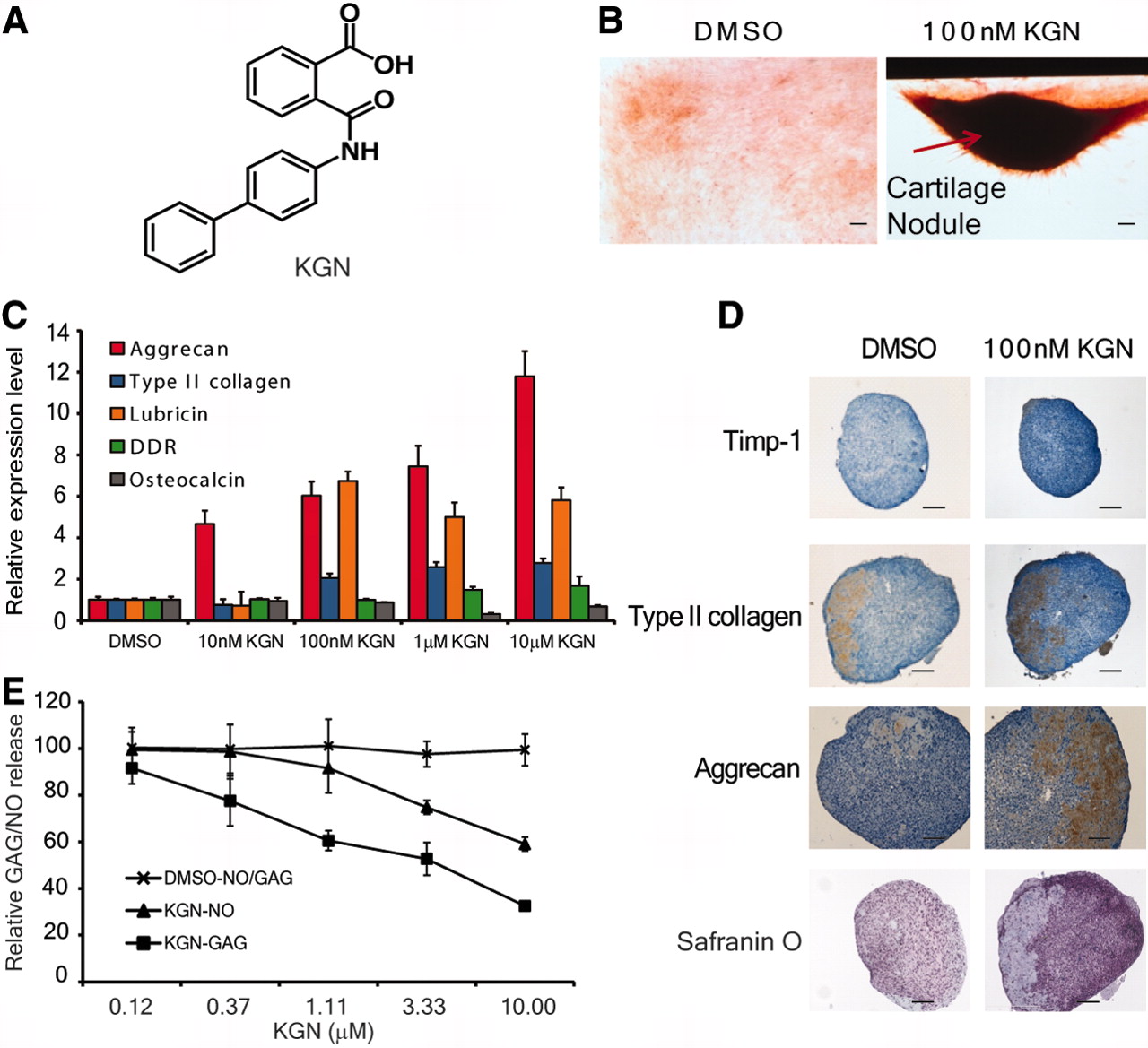
The chondrogenetic differentiation of BMSCs is induced in a concentration-dependent manner by katogenin (50-5000 nM; 2 weeks)[2]. In primary hMSCs, katogenin (100 nM; 72 h) stimulates chondrocyte nodule formation[1]. In hMSCs, cotogenin (10 nM -10 μM; 72 h) boosts the expression of genes unique to chondrocytes[1]. In primary bovine articular chondrocytes, katogenin (0.12-10 μM; 48 h) suppresses the release of nitric oxide (NO) and glycosaminoglycan (GAG) triggered by cytokines[1].
In human bone marrow mesenchymal stem cells (hBMSCs), Kartogenin (KGN) (1 μM) induces chondrogenic differentiation after 21 days of culture. It upregulates chondrogenic marker genes (SOX9: 3.8-fold; COL2A1: 4.2-fold; ACAN: 3.5-fold) at mRNA level, and increases type II collagen (COL2) and aggrecan (ACAN) protein expression (immunocytochemistry). Alcian blue staining shows enhanced glycosaminoglycan (GAG) synthesis [1][2] - In rat meniscal cells, Kartogenin (KGN) (500 nM) promotes cell proliferation by 45% after 72 hours (CCK-8 assay) and reduces apoptosis (Annexin V-positive cells decreased from 18% to 7% after 48 hours). It upregulates COL2A1 mRNA by 3.0-fold and downregulates catabolic gene MMP13 by 60% [2] - In mouse tendon-derived stem cells (TDSCs), Kartogenin (KGN) (2 μM) induces cartilage-like tissue formation after 14 days. It upregulates SOX9 (2.9-fold) and COL2A1 (3.3-fold) at mRNA level, with positive COL2 immunostaining and increased GAG deposition (Alcian blue staining) [4] - In normal human dermal fibroblasts and chondrocytes, Kartogenin (KGN) shows low toxicity at concentrations up to 10 μM (cell viability > 90% vs. control) [1][2] |
| ln Vivo |
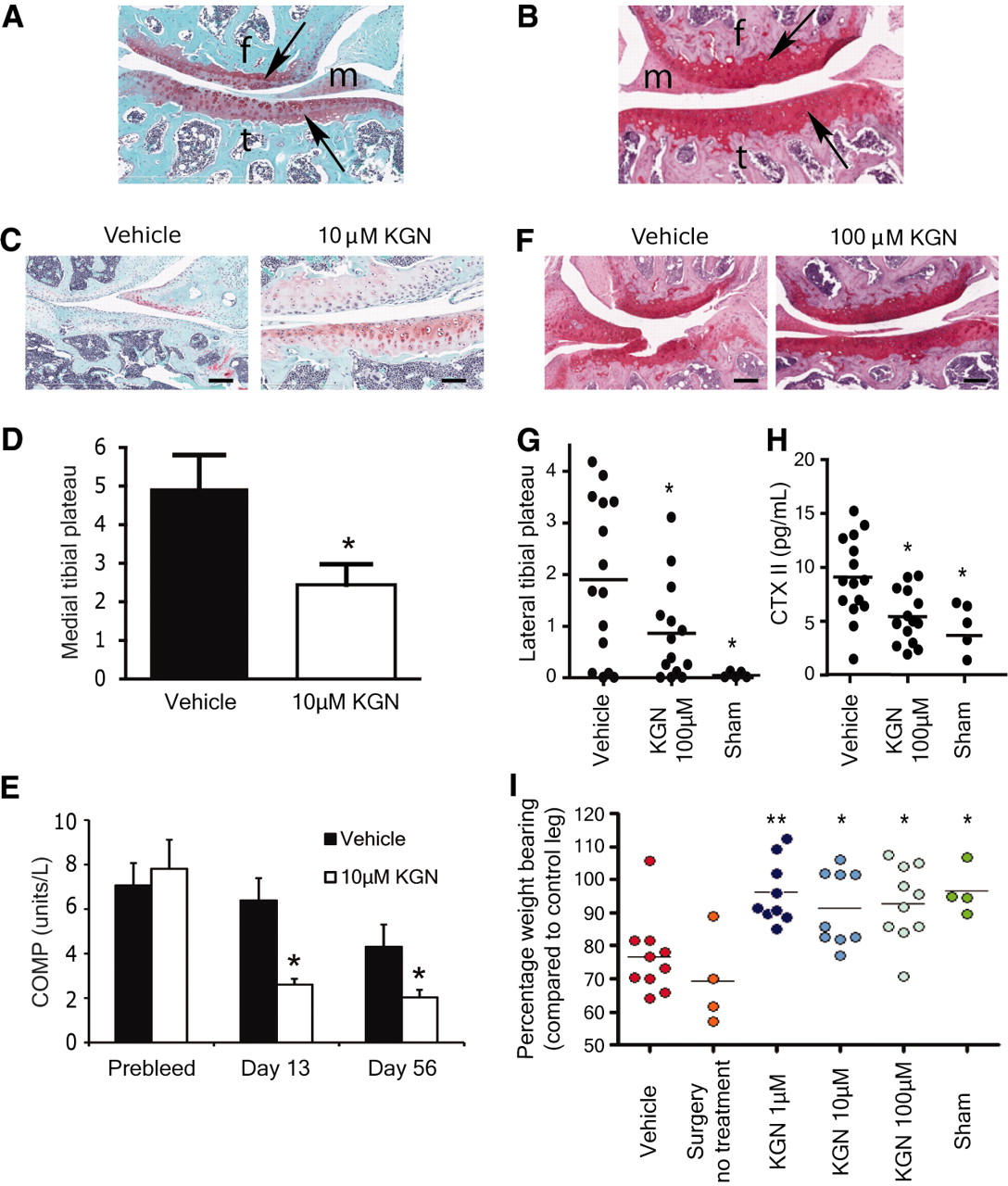
In mice with collagenase VII-induced OA models, cartilage regeneration is facilitated by katogenin (10 μM in 4μL of saline; ia on days 7 and 21)[1].
In a rat meniscus injury model, local injection of Kartogenin (KGN)-platelet-rich plasma (PRP) gel (500 nM KGN per injection) at the injury site immediately after surgery and on day 7 post-surgery promotes meniscus healing. At 8 weeks post-injury, the healing tissue shows improved histological score (from 4.2 to 8.5 on a 10-point scale), increased COL2-positive area (65% vs. 28% in PRP alone group), and reduced MMP13 expression [2] - In a mouse tendon-bone junction repair model, local application of Kartogenin (KGN) (1 μM) via collagen scaffold implantation promotes cartilage-like tissue formation at the junction after 4 weeks. Micro-CT analysis shows enhanced bone-tendon integration, and histological staining reveals COL2-positive cartilage tissue between tendon and bone [4] - In a rat articular cartilage defect model, intra-articular injection of Kartogenin (KGN) (1 μM, once weekly for 4 weeks) induces cartilage regeneration. The defect area is filled with hyaline cartilage-like tissue, with SOX9 and COL2 expression comparable to normal cartilage, and GAG content reaching 85% of normal cartilage [1] |
| Enzyme Assay |
FGFR3 binding assay: Purified recombinant human FGFR3 extracellular domain was immobilized on sensor chips. Kartogenin (KGN) (0.01-10 μM) was injected in running buffer, and binding affinity was measured by Surface Plasmon Resonance (SPR). The dissociation constant (KD) was determined to be 89 nM [1]
- FGFR3 kinase activity assay: Purified recombinant FGFR3 kinase domain was incubated with peptide substrate and Kartogenin (KGN) (0.05-5 μM) in assay buffer (50 mM Tris-HCl, pH 7.4, 10 mM MgCl₂, 1 mM DTT, 0.1 mM ATP) at 37°C for 45 minutes. Phosphorylated substrate was detected by colorimetric assay, showing that KGN enhances FGFR3 kinase activity by 2.3-fold at 1 μM [1] |
| Cell Assay |
hBMSCs chondrogenic differentiation assay: hBMSCs were seeded in pellet culture (2×10⁵ cells/pellet) or 6-well plates (monolayer) and cultured in chondrogenic induction medium containing Kartogenin (KGN) (0.1-5 μM). Medium was changed every 3 days. After 21 days, pellets were stained with Alcian blue (GAG) and Safranin O (cartilage matrix); qPCR analyzed SOX9/COL2A1/ACAN mRNA levels; Western blot and immunocytochemistry detected COL2 and ACAN protein [1][2]
- Rat meniscal cell proliferation/apoptosis assay: Rat meniscal cells were isolated and seeded in 96-well plates (proliferation) or 6-well plates (apoptosis) at 3×10³ cells/well or 2×10⁵ cells/well respectively. Cells were treated with Kartogenin (KGN) (0.1-2 μM) for 48-72 hours. CCK-8 assay assessed proliferation; Annexin V-FITC/PI staining quantified apoptosis; qPCR detected COL2A1 and MMP13 mRNA levels [2] - TDSCs cartilage-like differentiation assay: Mouse TDSCs were seeded in 6-well plates at 1×10⁵ cells/well and cultured in medium containing Kartogenin (KGN) (0.5-5 μM). After 14 days, cells were fixed for Alcian blue staining and COL2 immunocytochemistry; qPCR analyzed SOX9 and COL2A1 mRNA expression [4] |
| Animal Protocol |
Dissolved in saline; 10 μM or 100 μM; Intra-articular injection
Collagenase VII-induced OA mouse model and Surgery-induced OA mouse model Rat meniscus injury model: Adult male Sprague-Dawley rats were subjected to medial meniscus anterior horn injury via arthrotomy. Immediately after injury and on day 7 post-surgery, Kartogenin (KGN) was mixed with PRP to form a gel (final KGN concentration 500 nM), and 100 μL of the gel was injected locally at the injury site. Control group received PRP gel alone. At 8 weeks post-surgery, meniscal tissues were collected for histological scoring, immunofluorescence (COL2, MMP13), and GAG content analysis [2] - Mouse tendon-bone junction repair model: Adult C57BL/6 mice were subjected to Achilles tendon-bone junction injury. A collagen scaffold loaded with Kartogenin (KGN) (final concentration 1 μM) was implanted at the injury site. Control group received blank collagen scaffold. At 4 weeks post-surgery, tendon-bone junction tissues were harvested for micro-CT analysis and histological staining (HE, Safranin O, COL2 immunostaining) [4] - Rat articular cartilage defect model: Adult male Sprague-Dawley rats were created with 3 mm diameter full-thickness articular cartilage defects in the femoral condyle. Kartogenin (KGN) was dissolved in saline (final concentration 1 μM), and 50 μL was injected intra-articularly once weekly for 4 weeks. Control group received saline. At 12 weeks post-surgery, defect tissues were collected for histological evaluation and cartilage marker detection [1] |
| Toxicity/Toxicokinetics |
In vitro experiments showed that captoginine (KGN) had low toxicity to normal human and rodent cells (human bone marrow mesenchymal stem cells, dermal fibroblasts, and chondrocytes) (IC50 > 10 μM; cell viability > 90% at 10 μM concentration) [1][2][4]
- In vivo studies showed that local injection of captoginine (KGN) at the test dose (500 nM-1 μM local concentration) did not cause significant weight loss (<3% vs. baseline) or significant inflammatory response at the injection site in rats and mice [1][2][4] - Compared with the control group, no significant changes were observed in liver function (ALT, AST) or kidney function (creatinine, BUN) in the captoginine (KGN) treatment group [1][4] |
| References | |
| Additional Infomation |
Kartogenin (KGN) is a small molecule chondrogenesis inducer with high specificity for FGFR3[1]
- Its mechanism of action includes binding to FGFR3, activating the downstream MAPK/ERK signaling pathway, upregulating the chondrogenesis transcription factor SOX9, promoting the expression of chondrocyte-specific markers (COL2A1, ACAN), and inhibiting the catabolic gene (MMP13)[1][2][4] - Catagenesin (KGN) has shown chondrogenesis induction activity in mesenchymal stem cells (MSCs), meniscus cells and tendon-derived stem cells (TDSCs) in vitro, and has shown therapeutic effects in in vivo models of cartilage defects, meniscus injuries and tendon-bone integration repair[1][2][4] - It is widely used in regenerative medicine research for the repair of cartilage, meniscus and tendon-bone integration, and has potential clinical application value in the treatment of orthopedic connective tissue diseases. Tissue damage [1][3][4] - Captogin (KGN) can be used in combination with biomaterials (PRP gel, collagen scaffold) to enhance local preservation and therapeutic effects [2][4] |
| Molecular Formula |
C20H15NO3
|
|
|---|---|---|
| Molecular Weight |
317.34
|
|
| Exact Mass |
317.105
|
|
| CAS # |
4727-31-5
|
|
| Related CAS # |
|
|
| PubChem CID |
2826191
|
|
| Appearance |
White to off-white solid powder
|
|
| Density |
1.3±0.1 g/cm3
|
|
| Boiling Point |
464.4±38.0 °C at 760 mmHg
|
|
| Flash Point |
234.6±26.8 °C
|
|
| Vapour Pressure |
0.0±1.2 mmHg at 25°C
|
|
| Index of Refraction |
1.674
|
|
| LogP |
3.81
|
|
| Hydrogen Bond Donor Count |
2
|
|
| Hydrogen Bond Acceptor Count |
3
|
|
| Rotatable Bond Count |
4
|
|
| Heavy Atom Count |
24
|
|
| Complexity |
436
|
|
| Defined Atom Stereocenter Count |
0
|
|
| SMILES |
O=C(O)C1=CC=CC=C1C(NC2=CC=C(C3=CC=CC=C3)C=C2)=O
|
|
| InChi Key |
SLUINPGXGFUMLL-UHFFFAOYSA-N
|
|
| InChi Code |
InChI=1S/C20H15NO3/c22-19(17-8-4-5-9-18(17)20(23)24)21-16-12-10-15(11-13-16)14-6-2-1-3-7-14/h1-13H,(H,21,22)(H,23,24)
|
|
| Chemical Name |
2-[(4-phenylphenyl)carbamoyl]benzoic acid
|
|
| Synonyms |
|
|
| HS Tariff Code |
2934.99.9001
|
|
| Storage |
Powder -20°C 3 years 4°C 2 years In solvent -80°C 6 months -20°C 1 month |
|
| Shipping Condition |
Room temperature (This product is stable at ambient temperature for a few days during ordinary shipping and time spent in Customs)
|
| Solubility (In Vitro) |
DMSO: 63 mg/mL (198.5 mM)
Water: 1 mg/mL (Insoluble) Ethanol: 18 mg/mL (56.7 mM) |
|---|---|
| Solubility (In Vivo) |
Solubility in Formulation 1: ≥ 2.5 mg/mL (7.88 mM) (saturation unknown) in 10% DMSO + 40% PEG300 + 5% Tween80 + 45% Saline (add these co-solvents sequentially from left to right, and one by one), clear solution.
For example, if 1 mL of working solution is to be prepared, you can add 100 μL of 25.0 mg/mL clear DMSO stock solution to 400 μL PEG300 and mix evenly; then add 50 μL Tween-80 to the above solution and mix evenly; then add 450 μL normal saline to adjust the volume to 1 mL. Preparation of saline: Dissolve 0.9 g of sodium chloride in 100 mL ddH₂ O to obtain a clear solution. Solubility in Formulation 2: ≥ 2.5 mg/mL (7.88 mM) (saturation unknown) in 10% DMSO + 90% (20% SBE-β-CD in Saline) (add these co-solvents sequentially from left to right, and one by one), clear solution. For example, if 1 mL of working solution is to be prepared, you can add 100 μL of 25.0 mg/mL clear DMSO stock solution to 900 μL of 20% SBE-β-CD physiological saline solution and mix evenly. Preparation of 20% SBE-β-CD in Saline (4°C,1 week): Dissolve 2 g SBE-β-CD in 10 mL saline to obtain a clear solution. View More
Solubility in Formulation 3: ≥ 2.08 mg/mL (6.55 mM) (saturation unknown) in 10% DMSO + 90% Corn Oil (add these co-solvents sequentially from left to right, and one by one), clear solution. |
| Preparing Stock Solutions | 1 mg | 5 mg | 10 mg | |
| 1 mM | 3.1512 mL | 15.7560 mL | 31.5119 mL | |
| 5 mM | 0.6302 mL | 3.1512 mL | 6.3024 mL | |
| 10 mM | 0.3151 mL | 1.5756 mL | 3.1512 mL |
*Note: Please select an appropriate solvent for the preparation of stock solution based on your experiment needs. For most products, DMSO can be used for preparing stock solutions (e.g. 5 mM, 10 mM, or 20 mM concentration); some products with high aqueous solubility may be dissolved in water directly. Solubility information is available at the above Solubility Data section. Once the stock solution is prepared, aliquot it to routine usage volumes and store at -20°C or -80°C. Avoid repeated freeze and thaw cycles.
Calculation results
Working concentration: mg/mL;
Method for preparing DMSO stock solution: mg drug pre-dissolved in μL DMSO (stock solution concentration mg/mL). Please contact us first if the concentration exceeds the DMSO solubility of the batch of drug.
Method for preparing in vivo formulation::Take μL DMSO stock solution, next add μL PEG300, mix and clarify, next addμL Tween 80, mix and clarify, next add μL ddH2O,mix and clarify.
(1) Please be sure that the solution is clear before the addition of next solvent. Dissolution methods like vortex, ultrasound or warming and heat may be used to aid dissolving.
(2) Be sure to add the solvent(s) in order.
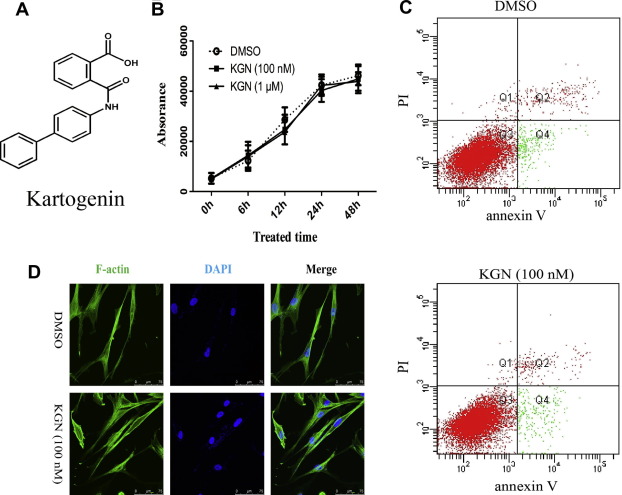 KGN had no influence on fibroblasts’ morphology, survival, and viability.Biochem Biophys Res Commun.2014 Jul 18;450(1):568-74. |
|---|
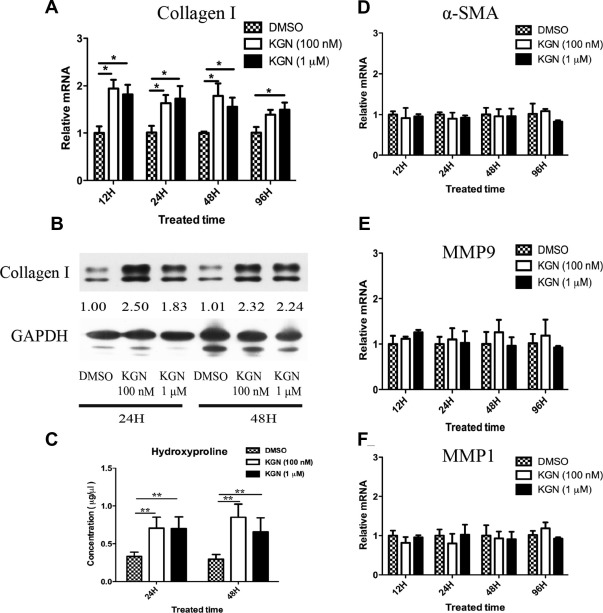 KGN stimulated collagen synthesis of fibroblasts.Biochem Biophys Res Commun.2014 Jul 18;450(1):568-74. |
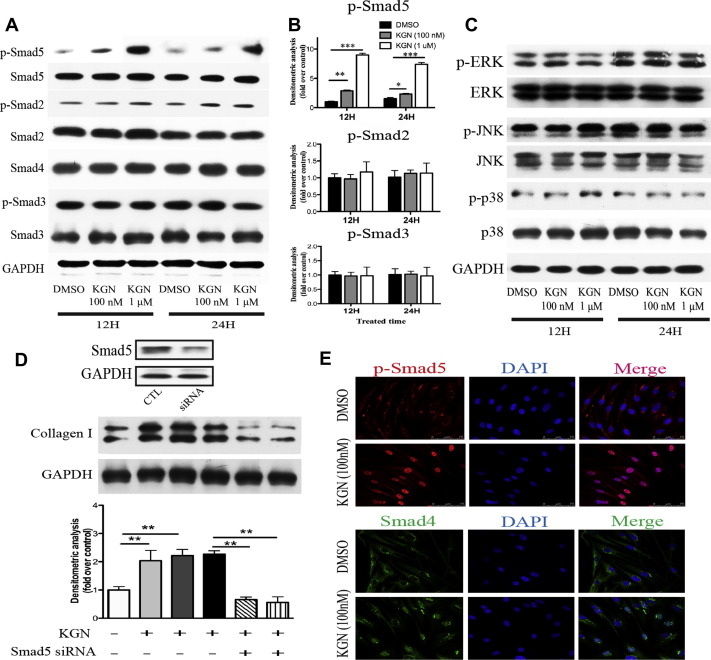
Smad5 functioned as a downstream effector of KGN, but not smad2, smad3, or MAPK signaling pathway.Biochem Biophys Res Commun.2014 Jul 18;450(1):568-74. |
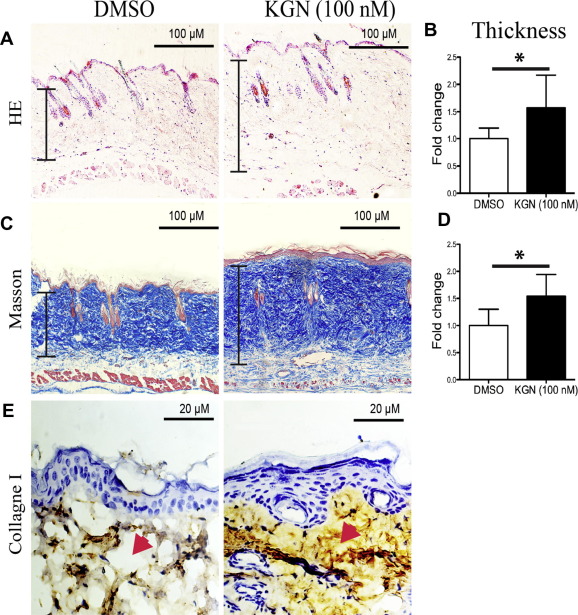
The effect of KGN on the dermis of mice. KGN was delivered into the dermis of normal BALB/c mice of 8weeks.Biochem Biophys Res Commun.2014 Jul 18;450(1):568-74. |
|---|
KGN induces chondrocyte differentiation from hMSCs and protects articular chondrocytes in vitro.Science.2012 May 11;336(6082):717-21. |
KGN promotes cartilage repair in collagenase VII– and surgery-induced OA models in mice.Science.2012 May 11;336(6082):717-21. |
Products are for research use only; We do not sell to patients
Copyright 2020 InvivoChem LLC | All Rights Reserved


 COA
COA