| Size | Price | Stock | Qty |
|---|---|---|---|
| 5mg |
|
||
| 10mg |
|
||
| 25mg |
|
||
| 50mg |
|
||
| 100mg |
|
||
| 250mg |
|
||
| 500mg | |||
| Other Sizes |


Purity: ≥98%
| Targets |
K-Ras
K-Ras-IN-1 (referred to as SRJ09, SRJ10, SRJ23, Andrographolide in the context of K-Ras binding) targets allosteric sites (p1, p3a, p3b, p2) on K-Ras ensembles; [1] |
||
|---|---|---|---|
| ln Vitro |
In vitro activity: K-Ras-IN-1 is a brand-new small molecule K-Ras inhibitor that attaches itself to K-Ras in a hydrophobic pocket in the apo-Ras crystal structure that Tyr-71 occupies. To put it another way, K-Ras-IN-1 attaches itself to K-Ras directly between switch I and switch II, blocking Sos-catalyzed K-Ras activation. It inhibits Sos-mediated nucleotide exchange by attaching to K-Ras and preventing Sos from binding. K-Ras-IN-1 serves as a platform for acquiring probe molecules that are helpful in clarifying novel understandings of Ras signaling and in identifying K-Ras inhibitors for the management of cancer.
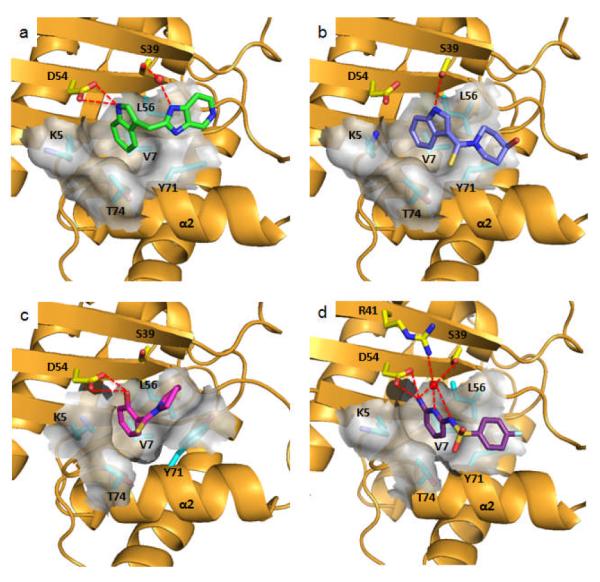
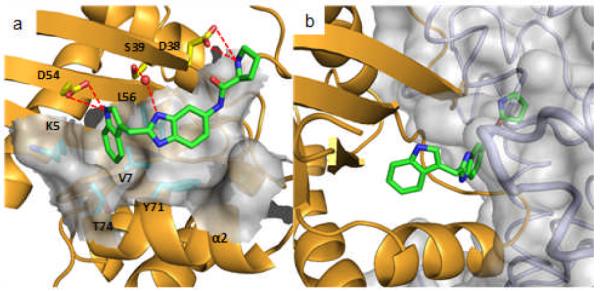
1. Fragment-based screening identified multiple chemotypes (indoles (1), phenols (2), sulfonamides (3)) that bind to GDP-K-Ras; analogs (4, 5, 6) were synthesized to improve water solubility and binding affinity to K-Ras, and X-ray co-crystal structures confirmed their binding to GDP-K-Ras (PDB codes: 4EPV for 4, 4EPW for 5, 4EPT for 2, 4EPX for 6) [2] 2. Small molecule 13 bound to GDP-K-Ras (PDB code 4EPY) and inhibited Sos-mediated activation of K-Ras; overlay of K-Ras/13 X-ray structure with Ras-Sos complex (PDB code 1BKD) confirmed that 13 occupied the binding interface of K-Ras and Sos, blocking their interaction [2] 3. LIBSA (LIgand Binding Specificity Analysis) was used to analyze binding preference of Andrographolide, SRJ09, SRJ10, SRJ23 to K-Ras ensembles (148 Ras conformations clustered into 5 groups): SRJ ligands (SRJ09, SRJ10, SRJ23) showed ~70–80% preference for K-Ras pocket p1 (SNR >1.0), while Andrographolide showed 58% preference for pocket p3a (SNR >1.0) [1] 4. Ensemble contact spectra of K-Ras clusters (using SRJ23 as probe) showed dominant peaks for cluster 2 and 4 at pocket p1 (SNR >1.0 after high-pass filter noise removal), dominant peaks for cluster 1 at pocket p3a (SNR >1.0 after high-pass filter noise removal), and cluttered spectra for cluster 3 and 5 with insignificant SNRs due to nonspecific binding [1] |
||
| ln Vivo |
|
||
| Enzyme Assay |
Compounds that blocked Sos-mediated nucleotide exchange were tested for their ability to investigate the functional effects of binding to K-Ras. In this experiment, BODIPY-GTP is swapped for unlabeled GDP, which is catalyzed by Sos and causes a rise in fluorescence.
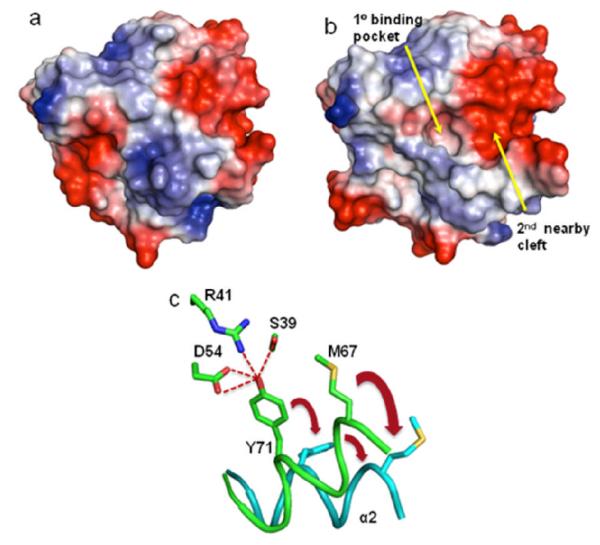
1. X-ray crystallography for K-Ras-ligand binding: GDP-K-Ras was co-crystallized with small molecules (2, 4, 5, 6, 13); X-ray co-crystal structures were resolved to determine the binding mode, pocket location, and interaction between ligands and K-Ras (electrostatic surface analysis confirmed K-Ras transition from "closed" to "open" form with a primary hydrophobic binding pocket and adjacent electronegative cleft) [2] 2. LIBSA-based K-Ras ensemble binding assay: 148 K-Ras conformations were clustered into 5 groups based on principal component (PC) projection; global docking of Andrographolide, SRJ09, SRJ10, SRJ23 to K-Ras ensembles was performed; contact spectra were generated (red peaks = noise, green peaks = signal), filtered by high-pass filter to remove noise, and signal-to-noise ratio (SNR) was calculated to quantify ligand-binding frequency at different K-Ras pockets (p1, p2, p3a, p3b) [1] 3. SNR convergence assay for K-Ras ligand binding: Global docking of ligands (Estradiol, Indinavir, BZI, 0QV, 0QW) to K-Ras was performed with 5–256 docked poses (no filters); SNR values were calculated to evaluate convergence (Estradiol and Indinavir showed constant SNR due to single-site targeting, while other ligands showed SNR convergence with increasing docked poses); cumulative variance of SNR decreased as the number of poses increased [1] |
||
| Animal Protocol |
|
||
| References | |||
| Additional Infomation |
1. K-Ras-IN-1 (K-Ras-targeting small molecule) binds to allosteric sites on the K-Ras aggregate; LIBSA is a novel approach for analyzing the binding preference of ligands to specific allosteric sites on receptor aggregates. It uses filtering algorithms and signal-to-noise ratio to quantify the relative binding frequency of different pockets [1]. 2. LIBSA can screen the binding of ligand libraries to large receptor conformation libraries without prior knowledge of specific pockets, thus enabling ligand sorting based on binding site preference rather than just affinity [1]. 3. K-Ras is a key oncoprotein, and Sos-mediated K-Ras activation is crucial for tumorigenesis; small molecules (e.g., 13) that can bind to GDP-K-Ras and block K-Ras-Sos interactions represent a new strategy for targeting K-Ras [2]. 4. GDP-K-Ras It exists in two conformations: "closed" and "open". Small molecules (2, 4, 5, 6, 13) bind to the "open" conformation of GDP-K-Ras, with the binding site located in a hydrophobic pocket adjacent to a negatively charged cleavage, thereby inhibiting Sos-mediated activation [2].
|
| Molecular Formula |
C11H13NOS
|
|
|---|---|---|
| Molecular Weight |
207.29
|
|
| Exact Mass |
207.071
|
|
| Elemental Analysis |
C, 63.74; H, 6.32; N, 6.76; O, 7.72; S, 15.47
|
|
| CAS # |
84783-01-7
|
|
| Related CAS # |
|
|
| PubChem CID |
551134
|
|
| Appearance |
White to off-white solid powder
|
|
| Density |
1.3±0.1 g/cm3
|
|
| Boiling Point |
332.1±44.0 °C at 760 mmHg
|
|
| Flash Point |
154.7±28.4 °C
|
|
| Vapour Pressure |
0.0±0.7 mmHg at 25°C
|
|
| Index of Refraction |
1.668
|
|
| LogP |
2.06
|
|
| Hydrogen Bond Donor Count |
1
|
|
| Hydrogen Bond Acceptor Count |
2
|
|
| Rotatable Bond Count |
1
|
|
| Heavy Atom Count |
14
|
|
| Complexity |
213
|
|
| Defined Atom Stereocenter Count |
0
|
|
| SMILES |
S=C(N1CCCC1)C1C(O)=CC=CC=1
|
|
| InChi Key |
QIKLOVZAPGSYNO-UHFFFAOYSA-N
|
|
| InChi Code |
InChI=1S/C11H13NOS/c13-10-6-2-1-5-9(10)11(14)12-7-3-4-8-12/h1-2,5-6,13H,3-4,7-8H2
|
|
| Chemical Name |
(2-hydroxyphenyl)-pyrrolidin-1-ylmethanethione
|
|
| Synonyms |
|
|
| HS Tariff Code |
2934.99.9001
|
|
| Storage |
Powder -20°C 3 years 4°C 2 years In solvent -80°C 6 months -20°C 1 month |
|
| Shipping Condition |
Room temperature (This product is stable at ambient temperature for a few days during ordinary shipping and time spent in Customs)
|
| Solubility (In Vitro) |
|
|||
|---|---|---|---|---|
| Solubility (In Vivo) |
Solubility in Formulation 1: ≥ 2.5 mg/mL (12.06 mM) (saturation unknown) in 10% DMSO + 40% PEG300 + 5% Tween80 + 45% Saline (add these co-solvents sequentially from left to right, and one by one), clear solution.
For example, if 1 mL of working solution is to be prepared, you can add 100 μL of 25.0 mg/mL clear DMSO stock solution to 400 μL PEG300 and mix evenly; then add 50 μL Tween-80 to the above solution and mix evenly; then add 450 μL normal saline to adjust the volume to 1 mL. Preparation of saline: Dissolve 0.9 g of sodium chloride in 100 mL ddH₂ O to obtain a clear solution. Solubility in Formulation 2: ≥ 2.5 mg/mL (12.06 mM) (saturation unknown) in 10% DMSO + 90% (20% SBE-β-CD in Saline) (add these co-solvents sequentially from left to right, and one by one), clear solution. For example, if 1 mL of working solution is to be prepared, you can add 100 μL of 25.0 mg/mL clear DMSO stock solution to 900 μL of 20% SBE-β-CD physiological saline solution and mix evenly. Preparation of 20% SBE-β-CD in Saline (4°C,1 week): Dissolve 2 g SBE-β-CD in 10 mL saline to obtain a clear solution. View More
Solubility in Formulation 3: ≥ 2.5 mg/mL (12.06 mM) (saturation unknown) in 10% DMSO + 90% Corn Oil (add these co-solvents sequentially from left to right, and one by one), clear solution. |
| Preparing Stock Solutions | 1 mg | 5 mg | 10 mg | |
| 1 mM | 4.8242 mL | 24.1208 mL | 48.2416 mL | |
| 5 mM | 0.9648 mL | 4.8242 mL | 9.6483 mL | |
| 10 mM | 0.4824 mL | 2.4121 mL | 4.8242 mL |
*Note: Please select an appropriate solvent for the preparation of stock solution based on your experiment needs. For most products, DMSO can be used for preparing stock solutions (e.g. 5 mM, 10 mM, or 20 mM concentration); some products with high aqueous solubility may be dissolved in water directly. Solubility information is available at the above Solubility Data section. Once the stock solution is prepared, aliquot it to routine usage volumes and store at -20°C or -80°C. Avoid repeated freeze and thaw cycles.
Calculation results
Working concentration: mg/mL;
Method for preparing DMSO stock solution: mg drug pre-dissolved in μL DMSO (stock solution concentration mg/mL). Please contact us first if the concentration exceeds the DMSO solubility of the batch of drug.
Method for preparing in vivo formulation::Take μL DMSO stock solution, next add μL PEG300, mix and clarify, next addμL Tween 80, mix and clarify, next add μL ddH2O,mix and clarify.
(1) Please be sure that the solution is clear before the addition of next solvent. Dissolution methods like vortex, ultrasound or warming and heat may be used to aid dissolving.
(2) Be sure to add the solvent(s) in order.
Ribbon and molecular surface representations of the X-ray co-crystal structures of GDP-K-Ras complexed to: a)4(PDB code 4EPV), b)5(PDB code 4EPW), c)2(PDB code 4EPT) and d)6(PDB code 4EPX).Angew Chem Int Ed Engl.2012 Jun 18;51(25):6140-3. |
|---|
Electrostatic surface representations of GDP-K-Ras a) in the absence of a ligand (PDB code 4EPR) and b) in the “open” form showing the primary hydrophobic binding pocket and the adjacent electronegative cleft. c) Schematic representation of the transition of GDP-K-Ras from the “closed” form (green) to the “open” form (cyan).Angew Chem Int Ed Engl.2012 Jun 18;51(25):6140-3. |
a) Ribbon and molecular surface representations of GDP-bound K-Ras complexed to13(PDB code 4EPY). b) K-Ras/13X-ray structure overlaid with a previously reportedRas-Sos complex crystal structure (PDB code 1BKD). Angew Chem Int Ed Engl.2012 Jun 18;51(25):6140-3. |
Products are for research use only; We do not sell to patients
Copyright 2020 InvivoChem LLC | All Rights Reserved


 COA
COA