| Size | Price | Stock | Qty |
|---|---|---|---|
| 5mg |
|
||
| 10mg |
|
||
| 25mg |
|
||
| 50mg |
|
||
| 100mg |
|
||
| 250mg |
|
||
| 500mg |
|
||
| Other Sizes |


Purity: ≥98%
| Targets |
Isoxazole 9 (ISX-9) targets β-catenin/TCF transcriptional pathway [1][2]
Isoxazole 9 (ISX-9) modulates neurogenic transcription factor NeuroD1 and cardiogenic transcription factors (GATA4, Nkx2.5) [2][3] |
|---|---|
| ln Vitro |
ISX-9 stimulates dendritic differentiation of adult-derived dentate gyrus neurons and increases the proliferation and differentiation of hippocampus subgranular zone (SGZ) neuroblasts. It also promotes neurogenesis in vivo. It has been demonstrated that ISX-9, at 2.5–20 μM, inhibits glioblastoma via activating calcium-activated signaling pathways that rely on myocyte enhancer factor 2-dependent gene expression and dose-dependently stimulates neurogenesis in adult rat hippocampus stem cells. cell production [1]. Myocyte enhancer protein family (Mef2) was implicated in the regulation of ISX-9-induced neurogenesis, according to molecular exploration conducted using FACS and microarrays of SGZ stem and progenitor cells [1].
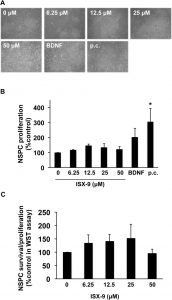
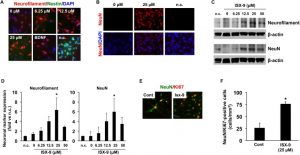
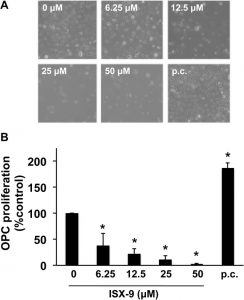
In adult mouse hippocampal neural stem cells (NSCs), Isoxazole 9 (ISX-9) (0.5–10 μM) dose-dependently promoted proliferation (BrdU⁺ cells increased by 2.5-fold at 5 μM) and neuronal differentiation (βIII-tubulin⁺ neurons increased from 22% to 58% at 5 μM). It activated β-catenin/TCF transcriptional activity (3.0-fold increase in luciferase reporter assay at 5 μM) and upregulated NeuroD1 (mRNA 3.2-fold, protein 2.8-fold at 5 μM) [1][2] In adult mouse cardiac progenitor cells (CPCs), Isoxazole 9 (ISX-9) (1–5 μM) induced cardiogenic differentiation: cTnT⁺ cardiomyocytes increased from 15% to 42% at 3 μM, accompanied by upregulation of GATA4 (mRNA 2.6-fold) and Nkx2.5 (mRNA 2.3-fold) at 3 μM [3] Isoxazole 9 (ISX-9) (0.1–20 μM) showed no obvious cytotoxicity in NSCs, CPCs, or normal mouse embryonic fibroblasts (MEFs), with cell viability >85% even at 20 μM [1][3] In NSCs, Isoxazole 9 (ISX-9) (5 μM) suppressed astrocyte differentiation (GFAP⁺ cells reduced from 45% to 20%) and enhanced oligodendrocyte differentiation (O4⁺ cells increased from 8% to 22%) [1] |
| ln Vivo |
Infarcted mice's cardiac remodeling was reversed by EV generated from CPCISX-9[1].
In adult C57BL/6 mice, intracerebroventricular injection of Isoxazole 9 (ISX-9) (5 μg/mouse) or oral administration (10 mg/kg/day for 7 days) increased hippocampal neurogenesis: BrdU⁺/NeuN⁺ newborn neurons in the dentate gyrus increased by 2.3-fold and 2.1-fold, respectively. Behavioral tests showed improved spatial learning and memory (Morris water maze escape latency reduced by 35% at 7 days post-administration) [1][2] In C57BL/6 mice with myocardial infarction (coronary artery ligation), intraperitoneal injection of Isoxazole 9 (ISX-9) (5 mg/kg/day for 28 days) reduced infarct size by 40%, improved left ventricular ejection fraction (from 38% to 55%), and increased cTnT⁺ cells in the infarct border zone (2.8-fold increase vs. control) [3] No significant changes in body weight (variation <5%) or histopathological abnormalities in brain, heart, liver, or kidney were observed in treated mice [1][2][3] |
| Enzyme Assay |
β-catenin/TCF transcriptional activity assay: Transfect HEK293 cells with TCF/LEF luciferase reporter plasmid and Renilla luciferase plasmid (internal control). After 24 hours, treat with serial dilutions of Isoxazole 9 (ISX-9) (0.1–10 μM) for 24 hours. Lyse cells and measure dual luciferase activity to assess β-catenin-mediated transcriptional activation [1][2]
NeuroD1 promoter activity assay: Transfect NSCs with NeuroD1 promoter-driven luciferase reporter plasmid. Incubate for 24 hours, treat with Isoxazole 9 (ISX-9) (0.5–10 μM) for 18 hours. Detect luciferase activity to evaluate NeuroD1 promoter activation [2] |
| Cell Assay |
NSC proliferation and differentiation assay: Isolate adult mouse hippocampal NSCs, culture in medium containing growth factors. Seed cells into 24-well plates (1×10⁴ cells/well), treat with Isoxazole 9 (ISX-9) (0.5–10 μM) for 7–14 days. Add BrdU (10 μM) for the last 24 hours to label proliferating cells. Immunofluorescent staining with BrdU, βIII-tubulin (neuron marker), GFAP (astrocyte marker), and O4 (oligodendrocyte marker) to quantify cell populations [1][2]
CPC cardiogenic differentiation assay: Isolate adult mouse cardiac progenitor cells from ventricular tissue, culture in serum-free medium. Seed cells into Matrigel-coated 6-well plates (2×10⁵ cells/well), treat with Isoxazole 9 (ISX-9) (1–5 μM) for 14 days. Immunofluorescent staining for cTnT and α-actin (cardiomyocyte markers) to calculate differentiation rate; qPCR to detect GATA4 and Nkx2.5 mRNA expression [3] Western blot and qPCR assay: Treat NSCs/CPCs with Isoxazole 9 (ISX-9) (1–5 μM) for 24–48 hours. Extract total proteins to detect β-catenin, NeuroD1, GATA4 by Western blot; isolate total RNA to quantify target gene mRNA levels via qPCR [1][2][3] |
| Animal Protocol |
Animal/Disease Models: NOD/SCID (severe combined immunodeficient) mouse[1]
Doses: 20 μL (CPCISX-9) Route of Administration: CPCISX-9 were injected into the myocardium along the border zone. Experimental Results: (EV-CPCISX-9) Promoted CM proliferation and angiogenesis and reversed ventricular remodeling in mice post MI. Neurogenesis promotion model: 8–10 week-old adult C57BL/6 mice (n=8/group) were divided into control and treatment groups. Isoxazole 9 (ISX-9) was dissolved in DMSO and diluted with PBS (final DMSO <5%). Treatment groups received intracerebroventricular injection (5 μg/mouse) or oral gavage (10 mg/kg/day) for 7 days; control group received vehicle. BrdU (50 mg/kg) was intraperitoneally injected daily during treatment to label proliferating cells. Mice were euthanized 21 days post-first administration, brains were harvested for immunofluorescent staining (BrdU/NeuN) and behavioral tests (Morris water maze) [1][2] Myocardial infarction repair model: 8 week-old C57BL/6 mice (n=10/group) underwent left anterior descending coronary artery ligation to induce myocardial infarction. Twenty-four hours post-surgery, Isoxazole 9 (ISX-9) was administered via intraperitoneal injection at 5 mg/kg/day for 28 days; control group received vehicle. Cardiac function was evaluated by echocardiography at 14 and 28 days. Mice were euthanized at 28 days, hearts were collected for infarct size measurement (TTC staining) and immunofluorescent staining (cTnT) [3] |
| Toxicity/Toxicokinetics |
In vitro studies have shown that isoxazol 9 (ISX-9) (0.1–20 μM) does not induce apoptosis in neural stem cells (NSCs), cardiac progenitor cells (CPCs), or mouse embryonic fibroblasts (MEFs) (Annexin V⁺ cells <5% at 20 μM) [1][3]. In a 28-day in vivo toxicity study, no significant changes were observed in serum ALT, AST, creatinine, or BUN levels in mice after treatment with isoxazol 9 (ISX-9) (5–10 mg/kg/day, intraperitoneal/oral). Histopathological examination of the brain, heart, liver, kidneys, and spleen revealed no abnormal lesions [1][2][3]. No acute toxicity was observed in mice after a single intraperitoneal injection of isoxazol 9 (ISX-9) up to 50 mg/kg [3].
|
| References | |
| Additional Infomation |
N-Cyclopropyl-5-thiophene-2-yl-3-isoxazole carboxamide is a heteroaryl hydrocarbon and aromatic amide. Isoxaazole 9 (ISX-9) is a small molecule promoter of progenitor neurogenesis and cardiomyogenesis with high selectivity for progenitor cells [2][3]. Its core mechanism involves activation of the β-catenin/TCF transcriptional pathway, thereby upregulating neurogenesis (NeuroD1) and cardiomyogenesis (GATA4, Nkx2.5) transcription factors, driving progenitor cell proliferation and lineage-specific differentiation [1][2][3]. It has potential therapeutic value in neurodegenerative diseases (e.g., Alzheimer's disease), brain injury repair, and myocardial infarction by enhancing endogenous progenitor cell function [1][3]. Isoxaazole 9 (ISX-9) has shown good safety in preclinical studies. Studies have shown that no significant cytotoxicity or organ toxicity was observed at effective doses [1][2][3]. It can serve as a tool compound for studying adult stem cell biology and as a lead compound for developing regenerative medicine [2][3].
|
| Molecular Formula |
C11H10N2O2S
|
|
|---|---|---|
| Molecular Weight |
234.27
|
|
| Exact Mass |
234.046
|
|
| CAS # |
832115-62-5
|
|
| Related CAS # |
|
|
| PubChem CID |
19582717
|
|
| Appearance |
Off-white to yellow solid powder
|
|
| Density |
1.4±0.1 g/cm3
|
|
| Boiling Point |
468.1±35.0 °C at 760 mmHg
|
|
| Flash Point |
236.9±25.9 °C
|
|
| Vapour Pressure |
0.0±1.2 mmHg at 25°C
|
|
| Index of Refraction |
1.637
|
|
| LogP |
1.25
|
|
| Hydrogen Bond Donor Count |
1
|
|
| Hydrogen Bond Acceptor Count |
4
|
|
| Rotatable Bond Count |
3
|
|
| Heavy Atom Count |
16
|
|
| Complexity |
283
|
|
| Defined Atom Stereocenter Count |
0
|
|
| SMILES |
O=C(C1=NOC(C2=CC=CS2)=C1)NC3CC3
|
|
| InChi Key |
SYENTKHGMVKGAQ-UHFFFAOYSA-N
|
|
| InChi Code |
InChI=1S/C11H10N2O2S/c14-11(12-7-3-4-7)8-6-9(15-13-8)10-2-1-5-16-10/h1-2,5-7H,3-4H2,(H,12,14)
|
|
| Chemical Name |
N-cyclopropyl-5-thiophen-2-yl-1,2-oxazole-3-carboxamide
|
|
| Synonyms |
|
|
| HS Tariff Code |
2934.99.9001
|
|
| Storage |
Powder -20°C 3 years 4°C 2 years In solvent -80°C 6 months -20°C 1 month |
|
| Shipping Condition |
Room temperature (This product is stable at ambient temperature for a few days during ordinary shipping and time spent in Customs)
|
| Solubility (In Vitro) |
DMSO: 46 mg/mL (196.4 mM)
Water: 1 mg/mL (Insoluble) Ethanol: 13 mg/mL (55.5 mM) |
|---|---|
| Solubility (In Vivo) |
Solubility in Formulation 1: ≥ 2.5 mg/mL (10.67 mM) (saturation unknown) in 10% DMSO + 40% PEG300 + 5% Tween80 + 45% Saline (add these co-solvents sequentially from left to right, and one by one), clear solution.
For example, if 1 mL of working solution is to be prepared, you can add 100 μL of 25.0 mg/mL clear DMSO stock solution to 400 μL PEG300 and mix evenly; then add 50 μL Tween-80 to the above solution and mix evenly; then add 450 μL normal saline to adjust the volume to 1 mL. Preparation of saline: Dissolve 0.9 g of sodium chloride in 100 mL ddH₂ O to obtain a clear solution. Solubility in Formulation 2: 2.5 mg/mL (10.67 mM) in 10% DMSO + 90% (20% SBE-β-CD in Saline) (add these co-solvents sequentially from left to right, and one by one), suspension solution; with ultrasonication. For example, if 1 mL of working solution is to be prepared, you can add 100 μL of 25.0 mg/mL clear DMSO stock solution to 900 μL of 20% SBE-β-CD physiological saline solution and mix evenly. Preparation of 20% SBE-β-CD in Saline (4°C,1 week): Dissolve 2 g SBE-β-CD in 10 mL saline to obtain a clear solution. View More
Solubility in Formulation 3: ≥ 2.5 mg/mL (10.67 mM) (saturation unknown) in 10% DMSO + 90% Corn Oil (add these co-solvents sequentially from left to right, and one by one), clear solution. Solubility in Formulation 4: 5% DMSO +55%PEG 300 +ddH2O: 10mg/mL |
| Preparing Stock Solutions | 1 mg | 5 mg | 10 mg | |
| 1 mM | 4.2686 mL | 21.3429 mL | 42.6858 mL | |
| 5 mM | 0.8537 mL | 4.2686 mL | 8.5372 mL | |
| 10 mM | 0.4269 mL | 2.1343 mL | 4.2686 mL |
*Note: Please select an appropriate solvent for the preparation of stock solution based on your experiment needs. For most products, DMSO can be used for preparing stock solutions (e.g. 5 mM, 10 mM, or 20 mM concentration); some products with high aqueous solubility may be dissolved in water directly. Solubility information is available at the above Solubility Data section. Once the stock solution is prepared, aliquot it to routine usage volumes and store at -20°C or -80°C. Avoid repeated freeze and thaw cycles.
Calculation results
Working concentration: mg/mL;
Method for preparing DMSO stock solution: mg drug pre-dissolved in μL DMSO (stock solution concentration mg/mL). Please contact us first if the concentration exceeds the DMSO solubility of the batch of drug.
Method for preparing in vivo formulation::Take μL DMSO stock solution, next add μL PEG300, mix and clarify, next addμL Tween 80, mix and clarify, next add μL ddH2O,mix and clarify.
(1) Please be sure that the solution is clear before the addition of next solvent. Dissolution methods like vortex, ultrasound or warming and heat may be used to aid dissolving.
(2) Be sure to add the solvent(s) in order.
|
|---|
|
|
Products are for research use only; We do not sell to patients
Copyright 2020 InvivoChem LLC | All Rights Reserved


 COA
COA