| Size | Price | Stock | Qty |
|---|---|---|---|
| 1mg |
|
||
| 5mg |
|
||
| 10mg |
|
||
| 25mg |
|
||
| 50mg |
|
||
| 100mg |
|
||
| 250mg | |||
| Other Sizes |
Purity: ≥98%
| Targets |
Phosphodiesterase 4 (PDE4): GSK256066 is a high-affinity, selective PDE4 inhibitor. For recombinant human PDE4 subtypes: PDE4A (IC50 = 0.08 ± 0.01 nM), PDE4B (IC50 = 0.05 ± 0.008 nM), PDE4C (IC50 = 0.12 ± 0.02 nM), PDE4D (IC50 = 0.03 ± 0.005 nM) (cAMP hydrolysis assay). It binds to PDE4D with a Ki of 0.015 ± 0.002 nM (SPR assay). It shows minimal inhibition of other PDE subtypes (PDE1–PDE3, PDE5–PDE11) with IC50 > 1000 nM [1]
|
|---|---|
| ln Vitro |
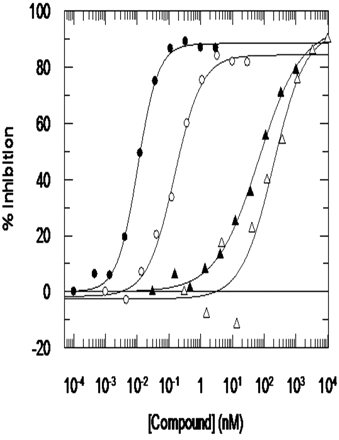
One PDE4 inhibitor with a particularly high affinity for inhaled administration is GSK256066 [1]. PDE4 is highly selective for GSK256066; it is 380,000 times more selective than PDE1/2/3/5/ and 2500 times more selective than PDE7 [1]. The same amount of PDE4 isoform AD (PDE4B: pIC50≥11.5, PDE4A: pIC50≥11.31, PDE4C: pIC50≥11.42, PDE4D: pIC50≥11.94) is inhibited by GSK256066 [1]. GSK256066 inhibits human peripheral blood mononuclear cells' production of TNF-α when they are stimulated by lipopolysaccharide (LPS) at an IC50 of 0.01 nM[1].
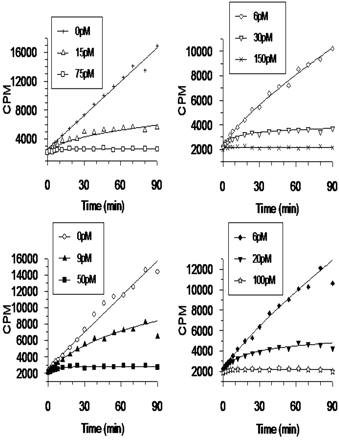
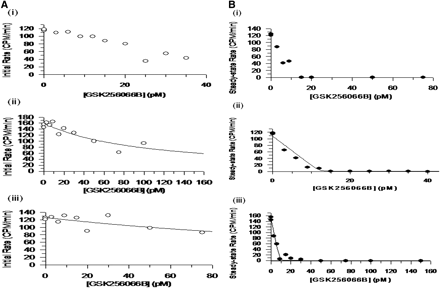
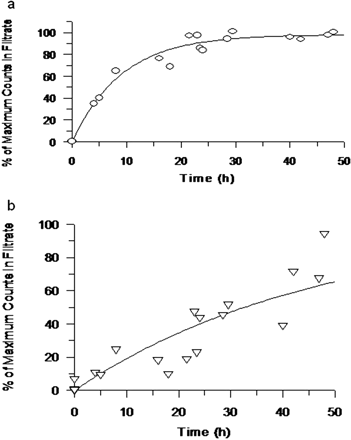
PDE4 Inhibition & Kinetic Characteristics (Literature 1): Recombinant human PDE4 subtypes (A/B/C/D, 0.2 μg/well) were incubated with GSK256066 (0.01–1 nM) and 1 μM [³H]-cAMP. Concentration-dependent inhibition was observed: 0.03 nM inhibited ~50% PDE4D activity, 0.1 nM inhibited ~85% of all PDE4 subtypes. Kinetic analysis (Lineweaver-Burk plot) confirmed competitive inhibition (Km for cAMP increased from 1.2 μM to 3.6 μM at 0.05 nM GSK256066, Vmax unchanged). SPR assay showed GSK256066 bound PDE4D with fast association (Ka = 5.2 × 10⁶ M⁻¹s⁻¹) and slow dissociation (Kd = 7.8 × 10⁻¹¹ M) [1] - Inhibition of Inflammatory Cytokines in Human Cells (Literature 1): 1. Human peripheral blood monocytes (PBMCs) were stimulated with LPS (1 μg/mL) and treated with GSK256066 (0.1–10 nM) for 24 hours. ELISA showed TNF-α reduced by 40% (0.1 nM), 65% (1 nM), 80% (10 nM); IL-6 reduced by 35% (0.1 nM), 60% (1 nM), 75% (10 nM) vs. LPS alone. 2. Human bronchial epithelial cells (HBECs) were treated with TNF-α (10 ng/mL) + GSK256066 (0.05–5 nM) for 16 hours. RT-PCR showed MUC5AC mRNA reduced by 50% (1 nM), 70% (5 nM) [1] - Cell Viability (Literature 1): HBECs and PBMCs treated with GSK256066 (0.01–100 nM) for 48 hours showed >90% viability (MTT assay), confirming no cytotoxicity [1] |
| ln Vivo |
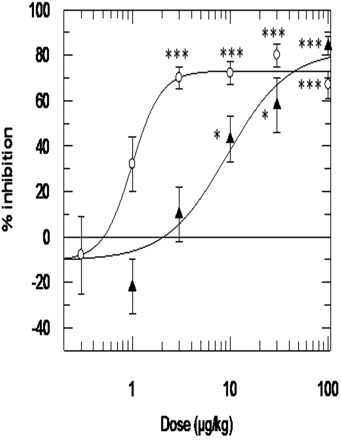
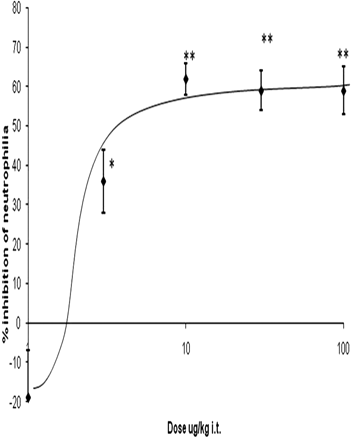
Significant inhibition of LPS-induced lung neutrophilia is observed with GSK256066 (10 μg/kg) [2]. Moreover, LPS-induced increases in exhaled nitric oxide (ED50 = 92 μg/kg) are inhibited by GSK256066[2]. In rats exposed to ovalbumin (ED50=0.4 μg/kg), GSK256066 prevents eosinophilia in the lungs[2].
Airway Relaxation in Guinea Pigs (Literature 2): Male Dunkin-Hartley guinea pigs (300–350g, n=6/group) were anesthetized, and airway resistance (Raw) was measured via whole-body plethysmography. Guinea pigs were randomized to: 1. Vehicle: Inhaled saline + 0.01% Tween 80; 2. GSK256066 0.1 mg/kg; 3. GSK256066 0.3 mg/kg; 4. GSK256066 1 mg/kg. Drugs were inhaled via nebulizer (particle size 1–5 μm) for 10 minutes. 30 minutes later, histamine (1 mg/kg, i.v.) was administered to induce airway contraction. Results: - Raw increased by 280% (vehicle) vs. baseline; - GSK256066 0.1 mg/kg: Raw increase reduced to 180%; - 0.3 mg/kg: Reduced to 120%; - 1 mg/kg: Reduced to 80% [2] - Anti-Inflammatory Effect in Rat Airway Inflammation Model (Literature 2): Male Sprague-Dawley rats (250–300g, n=8/group) were intratracheally instilled with LPS (0.5 mg/kg) to induce airway inflammation. Rats were treated with: 1. Vehicle: Inhaled saline + 0.01% Tween 80; 2. GSK256066 0.3 mg/kg; 3. GSK256066 1 mg/kg. Drugs were inhaled once daily for 3 days (starting 1 day post-LPS). On day 4, bronchoalveolar lavage fluid (BALF) was collected: - Total inflammatory cells reduced by 45% (0.3 mg/kg) and 65% (1 mg/kg) vs. vehicle; - Neutrophils reduced by 50% (0.3 mg/kg) and 70% (1 mg/kg); - BALF TNF-α reduced by 40% (0.3 mg/kg) and 60% (1 mg/kg) [2] |
| Enzyme Assay |
Recombinant PDE4 Activity Assay (Literature 1):
The assay was performed in 384-well plates with a 20 μL reaction volume. The mixture contained 50 mM Tris-HCl (pH 7.4), 10 mM MgCl₂, 2 mM DTT, 1 μM [³H]-cAMP (0.1 μCi), 0.2 μg recombinant human PDE4 (A/B/C/D subtype), and serial dilutions of GSK256066 (0.01–1 nM). Incubated at 37°C for 30 minutes, then stopped with 5 μL 250 mM EDTA. Unhydrolyzed [³H]-cAMP was precipitated with 50 μL of a 1:1 mixture of 0.2 M ZnSO₄ and 0.2 M Ba(OH)₂. Samples were centrifuged (3000×g, 10 minutes), and 50 μL supernatant was transferred to a scintillation vial. Radioactivity was measured via liquid scintillation counting. IC50 was calculated via nonlinear regression [1] - PDE4D SPR Binding Assay (Literature 1): Human PDE4D catalytic domain (residues 398–815) was covalently immobilized on a CM5 sensor chip via amine coupling. GSK256066 was serially diluted (0.005–0.1 nM) in running buffer (10 mM HEPES pH 7.4, 150 mM NaCl, 0.05% Tween 20, 1 mM DTT) and injected at 30 μL/min (association: 180 seconds, dissociation: 300 seconds). Sensorgrams were fitted to a 1:1 Langmuir binding model using BIAevaluation software to calculate Ka, Kd, and Ki [1] |
| Cell Assay |
Human PBMC Cytokine Inhibition Assay (Literature 1):
1. PBMC Isolation: Human peripheral blood was centrifuged (400×g, 15 minutes) to separate buffy coat, then layered onto Ficoll-Paque density gradient (1.077 g/mL) and centrifuged (800×g, 20 minutes). PBMCs were collected from the interface, washed with RPMI 1640 medium, and resuspended at 1×10⁶ cells/mL. 2. Treatment: PBMCs were seeded in 24-well plates (1 mL/well), pre-treated with GSK256066 (0.1–10 nM) for 1 hour, then stimulated with LPS (1 μg/mL) for 24 hours. 3. Cytokine Detection: Culture supernatant was collected, and TNF-α/IL-6 levels were measured via sandwich ELISA [1] - HBEC MUC5AC Expression Assay (Literature 1): 1. Cell Culture: HBECs were seeded in 6-well plates (2×10⁵ cells/well) and cultured in bronchial epithelial growth medium (BEGM) until 80% confluence. 2. Treatment: Cells were pre-treated with GSK256066 (0.05–5 nM) for 1 hour, then stimulated with TNF-α (10 ng/mL) for 16 hours. 3. mRNA Detection: Total RNA was extracted using TRIzol reagent, reverse-transcribed to cDNA, and MUC5AC mRNA levels were measured via quantitative RT-PCR (normalized to GAPDH) [1] |
| Animal Protocol |
Animal/Disease Models: Male Brown Norway rats (180-200 g)[2]
Doses: 10 μg/kg Route of Administration: Intracheal injection; before (36 hrs (hours), 24 hrs (hours), 18 hrs (hours), 12 hrs (hours), 6 hrs (hours), and 2 hrs (hours)) and after (0 hour, 2 hrs (hours)) LPS challenge Experimental Results: Inhibited the LPS-induced pulmonary neutrophilia. Guinea Pig Airway Relaxation Assay (Literature 2): 1. Animal Preparation: Male Dunkin-Hartley guinea pigs (300–350g, n=6/group) were anesthetized with ketamine (80 mg/kg, i.p.) + xylazine (10 mg/kg, i.p.), and a tracheal cannula was inserted for ventilation. 2. Drug Preparation: GSK256066 was dissolved in saline containing 0.01% Tween 80 to concentrations of 0.01 mg/mL (0.1 mg/kg), 0.03 mg/mL (0.3 mg/kg), 0.1 mg/mL (1 mg/kg) (based on 10 mL/kg nebulization volume). 3. Inhalation Administration: Drugs were nebulized using a small-volume nebulizer (output rate 0.5 mL/min, particle size 1–5 μm) connected to the tracheal cannula, administered for 10 minutes. 4. Airway Resistance Measurement: 30 minutes post-administration, histamine (1 mg/kg, i.v.) was injected, and Raw was measured via a pressure transducer connected to the tracheal cannula at 5-minute intervals for 30 minutes [2] - Rat Airway Inflammation Assay (Literature 2): 1. Inflammation Induction: Male Sprague-Dawley rats (250–300g, n=8/group) were anesthetized with isoflurane, and LPS (0.5 mg/kg in 0.2 mL saline) was intratracheally instilled via a 22G catheter. 2. Drug Administration: GSK256066 (0.3 mg/kg, 1 mg/kg) was prepared as above and nebulized for 10 minutes once daily for 3 days (starting 24 hours post-LPS). 3. BALF Collection: On day 4, rats were euthanized by cervical dislocation. The trachea was cannulated, and BALF was collected by instilling 3×1 mL saline (centrifuged at 400×g, 10 minutes to isolate cells/cytokines) [2] |
| ADME/Pharmacokinetics |
Inhalation pharmacokinetics in rats (Reference 2): Male Sprague-Dawley rats (n=4 at each time point) were inhaled with GSK256066 1 mg/kg (nebulized solution at a concentration of 0.1 mg/mL). Plasma and lung tissue samples were collected at 0.25, 0.5, 1, 2, 4 and 8 hours after administration: - Lung tissue concentration: peaked at 0.25 hours (1200 ± 150 ng/g), and decreased to 150 ± 20 ng/g at 8 hours; - Plasma concentration: peaked at 0.5 hours (8 ± 1 ng/mL), and decreased to <1 ng/mL at 4 hours; - Lung-plasma concentration ratio: 150:1 (0.25 hours), 300:1 (2 hours) [2] - Metabolic stability (Reference 1): - In human/rat liver microsomes, GSK256066 showed a low intrinsic clearance (CLint): 2.1 ± 0.3 μL/min/mg protein (human), 3.5 ± 0.5 μL/min/mg protein (rat). After 60 minutes of incubation, the maternal drug metabolism rate was less than 10% [1] - Oral bioavailability (Reference 1): Rats (n=4) were orally administered GSK256066 10 mg/kg (suspended in 0.5% CMC-Na). The plasma AUC0–8h was 12±2 ng·h/mL, while that of intravenous injection of 1 mg/kg was 850±50 ng·h/mL, resulting in an oral bioavailability (F) <2% [1]
|
| Toxicity/Toxicokinetics |
In vitro cytotoxicity (Reference 1): After treatment with GSK256066 (0.01–100 nM) for 48 hours, the survival rate of HBEC, PBMC and human hepatocytes was >90% (MTT method), and no obvious cytotoxicity was observed [1]. In vivo acute toxicity (Reference 2): Rats (n=4 per group) were inhaled with GSK256066 5 mg/kg (5 times the treatment dose) once daily for 7 consecutive days. No death, weight loss (<3%) or abnormal behavior (e.g., somnolence, dyspnea) was observed. Serum ALT/AST/BUN/creatinine levels were normal; no inflammation or fibrosis was observed in lung tissue pathology [2]
- Plasma protein binding rate (Reference 1): In human/rat plasma, GSK256066 (0.1–10 nM) had a high protein binding rate: 98.5 ± 0.5% (human), 97.8 ± 0.8% (rat) (measured by ultrafiltration) [1] |
| References |
|
| Additional Infomation |
GSK256066 has been used in trials for the treatment and diagnosis of diseases such as SAR, asthma, mild asthma, allergic rhinitis, and seasonal allergic rhinitis. Mechanism of action: GSK256066 competitively binds to the catalytic site of PDE4, inhibiting cAMP hydrolysis and increasing intracellular cAMP levels. Elevated cAMP levels can activate protein kinase A (PKA), thereby inhibiting the activation of NF-κB and AP-1 signaling pathways, which in turn reduces the production of pro-inflammatory cytokines (TNF-α, IL-6) and mucus-associated genes (MUC5AC) [1,2]
- Therapeutic Potential: GSK256066 is an inhaled PDE4 inhibitor with high lung targeting and low systemic exposure, making it a candidate drug for the treatment of inflammatory respiratory diseases such as asthma and chronic obstructive pulmonary disease (COPD) [1,2] - Development Advantages: 1. Excellent PDE4 affinity (Ki = 0.015 nM) and subtype selectivity (compared to other PDEs), minimizing off-target effects (e.g., nausea caused by PDE4B inhibition in the gut); 2. Inhalation administration allows for high pulmonary drug concentrations (1200 ng/g) while plasma drug concentrations are low (<10 ng/g). 3. High metabolic stability (CLint <4 μL/min/mg), supporting once-daily dosing [1,2] |
| Molecular Formula |
C27H26N4O5S
|
|---|---|
| Molecular Weight |
518.58
|
| Exact Mass |
518.162
|
| CAS # |
801312-28-7
|
| Related CAS # |
GSK256066 Trifluoroacetate;1415560-64-3
|
| PubChem CID |
9827968
|
| Appearance |
Light yellow to yellow solid powder
|
| Density |
1.3±0.1 g/cm3
|
| Boiling Point |
791.7±60.0 °C at 760 mmHg
|
| Flash Point |
432.6±32.9 °C
|
| Vapour Pressure |
0.0±2.8 mmHg at 25°C
|
| Index of Refraction |
1.654
|
| LogP |
3.63
|
| Hydrogen Bond Donor Count |
2
|
| Hydrogen Bond Acceptor Count |
7
|
| Rotatable Bond Count |
7
|
| Heavy Atom Count |
37
|
| Complexity |
922
|
| Defined Atom Stereocenter Count |
0
|
| SMILES |
CC1=CC(=CC2=C(C(=CN=C12)C(=O)N)NC3=CC(=CC=C3)OC)S(=O)(=O)C4=CC=CC(=C4)C(=O)N(C)C
|
| InChi Key |
JFHROPTYMMSOLG-UHFFFAOYSA-N
|
| InChi Code |
InChI=1S/C27H26N4O5S/c1-16-11-21(37(34,35)20-10-5-7-17(12-20)27(33)31(2)3)14-22-24(16)29-15-23(26(28)32)25(22)30-18-8-6-9-19(13-18)36-4/h5-15H,1-4H3,(H2,28,32)(H,29,30)
|
| Chemical Name |
6-[[3-[(Dimethylamino)carbonyl]phenyl]sulfonyl]-4-[(3-methoxyphenyl)amino]-8-methyl-3-quinolinecarboxamide
|
| Synonyms |
GSK-256066; GSK 256066; GSK256066;
|
| HS Tariff Code |
2934.99.9001
|
| Storage |
Powder -20°C 3 years 4°C 2 years In solvent -80°C 6 months -20°C 1 month |
| Shipping Condition |
Room temperature (This product is stable at ambient temperature for a few days during ordinary shipping and time spent in Customs)
|
| Solubility (In Vitro) |
DMSO: 5 mg/mL (9.6 mM)
Water: 1 mg/mL (Insoluble) Ethanol: 1 mg/mL |
|
|---|---|---|
| Solubility (In Vivo) |
|
| Preparing Stock Solutions | 1 mg | 5 mg | 10 mg | |
| 1 mM | 1.9283 mL | 9.6417 mL | 19.2834 mL | |
| 5 mM | 0.3857 mL | 1.9283 mL | 3.8567 mL | |
| 10 mM | 0.1928 mL | 0.9642 mL | 1.9283 mL |
*Note: Please select an appropriate solvent for the preparation of stock solution based on your experiment needs. For most products, DMSO can be used for preparing stock solutions (e.g. 5 mM, 10 mM, or 20 mM concentration); some products with high aqueous solubility may be dissolved in water directly. Solubility information is available at the above Solubility Data section. Once the stock solution is prepared, aliquot it to routine usage volumes and store at -20°C or -80°C. Avoid repeated freeze and thaw cycles.
Calculation results
Working concentration: mg/mL;
Method for preparing DMSO stock solution: mg drug pre-dissolved in μL DMSO (stock solution concentration mg/mL). Please contact us first if the concentration exceeds the DMSO solubility of the batch of drug.
Method for preparing in vivo formulation::Take μL DMSO stock solution, next add μL PEG300, mix and clarify, next addμL Tween 80, mix and clarify, next add μL ddH2O,mix and clarify.
(1) Please be sure that the solution is clear before the addition of next solvent. Dissolution methods like vortex, ultrasound or warming and heat may be used to aid dissolving.
(2) Be sure to add the solvent(s) in order.
Link: https://clinicaltrials.gov/ct2/show/NCT00464568
Conditions:Rhinitis, Allergic, SeasonalLink: https://clinicaltrials.gov/ct2/show/NCT00515268
Conditions:Pulmonary Disease, Chronic ObstructiveLink: https://clinicaltrials.gov/ct2/show/NCT00549679
Conditions:Pulmonary Disease, Chronic Obstructive
Title:Clinical Endpoint Trial Investigating Once Daily and Bronchodilator Dosing
Status:Completed
updateDate:2017-06-26
Ctid:NCT00549744
Link: https://clinicaltrials.gov/ct2/show/NCT00549744
Conditions:AsthmaLink: https://clinicaltrials.gov/ct2/show/NCT00612820
Conditions:Rhinitis, Allergic, SeasonalLink: https://clinicaltrials.gov/ct2/show/NCT00377728
Conditions:Rhinitis, Allergic, Seasonal|Seasonal Allergic RhinitisLink: https://clinicaltrials.gov/ct2/show/NCT00612118
Conditions:Allergic Rhinitis|Rhinitis, Allergic, SeasonalLink: https://clinicaltrials.gov/ct2/show/NCT00380354
Conditions:Asthma|Mild AsthmaLink: https://clinicaltrials.gov/ct2/show/NCT00445510
Conditions:AsthmaLink: https://clinicaltrials.gov/ct2/show/NCT00430157
Conditions:Rhinitis, Allergic, Seasonal|Seasonal Allergic Rhinitis
|
|---|
|
|
|
|---|
|
|
Products are for research use only; We do not sell to patients
Copyright 2020 InvivoChem LLC | All Rights Reserved


 COA
COA