| Size | Price | Stock | Qty |
|---|---|---|---|
| 2mg |
|
||
| 5mg |
|
||
| 10mg |
|
||
| 25mg |
|
||
| 50mg |
|
||
| 100mg |
|
||
| 250mg |
|
||
| 500mg | |||
| Other Sizes |


Purity: ≥98%
| Targets |
B-Raf (IC50 = 0.13 nM)
GDC-0879 is a potent and selective inhibitor of the oncogenic mutant B-Raf kinase (BRAFⁿᵉᵗ/ᵛ⁶⁰⁰ᴱ). In recombinant human BRAFⁿᵉᵗ/ᵛ⁶⁰⁰ᴱ kinase assays, it exhibits an IC₅₀ of 13 nM; it has minimal activity against wild-type BRAF (IC₅₀ = 3.2 μM) and other RAF family members (e.g., CRAF, IC₅₀ = 1.8 μM) [1] - In human BRAFⁿᵉᵗ/ᵛ⁶⁰⁰ᴱ-positive A375 melanoma cells, GDC-0879 inhibits phosphorylated mitogen-activated protein kinase kinase 1 (p-MEK1, downstream of BRAF) with an EC₅₀ of 45 nM [2] - GDC-0879 shows no significant affinity for non-RAF kinases, including EGFR (IC₅₀ > 10 μM) and PDGFRβ (IC₅₀ > 5 μM) [1] |
|---|---|
| ln Vitro |
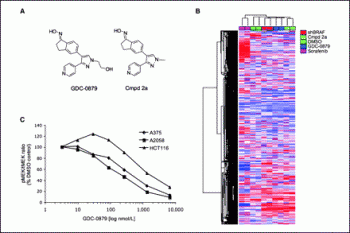
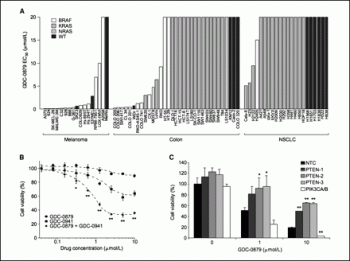
GDC-0879 also has an IC50 of 63 nM for inhibiting cellular pERK. GDC-0879 exhibits comparable potency in B-RafV600E mutant A375 melanoma and Colo205 colorectal carcinoma cell lines, with IC50 values for pMEK1 inhibition of 59 nM and 29 nM, respectively. With an IC50 of 0.75 μM , GDC-0879 potently inhibits B-RafV600E in Malme3M cells. Many tumor cells, including A375, 624, SK-MEL-28, Malme3M, C32, 928, 888, G-361, Colo205, Colo206, SW1417, CL34, and Colo201, exhibit EC50 values for GDC-0879 that are less than 0.5 μM.[1]
BRAFⁿᵉᵗ/ᵛ⁶⁰⁰ᴱ Melanoma Cell Proliferation Inhibition: In human BRAFⁿᵉᵗ/ᵛ⁶⁰⁰ᴱ-positive melanoma cell lines, GDC-0879 (0.001–10 μM) concentration-dependently inhibits proliferation: A375 cells (IC₅₀ = 0.03 μM), WM266-4 cells (IC₅₀ = 0.05 μM), and SK-MEL-28 cells (IC₅₀ = 0.07 μM). At 0.1 μM, it reduces phosphorylated ERK1/2 (p-ERK) levels by 90% (Western blot analysis) in A375 cells [1] - p-MEK1 Inhibition in Melanoma Cells: In A375 cells treated with GDC-0879 (0.01–1 μM) for 24 h, p-MEK1 levels are reduced in a concentration-dependent manner: 0.05 μM inhibits p-MEK1 by 50% (EC₅₀ = 45 nM), and 0.5 μM achieves 85% inhibition. Total MEK1 levels remain unchanged, confirming specific inhibition of BRAF-mediated MEK phosphorylation [2] - BRAF Wild-Type Cell Insensitivity: In human BRAF wild-type (BRAFʷᵗ) melanoma cells (e.g., SK-MEL-5), GDC-0879 (up to 10 μM) shows no significant antiproliferative activity (viability reduced by <15%), consistent with its low affinity for BRAFʷᵗ [1] |
| ln Vivo |
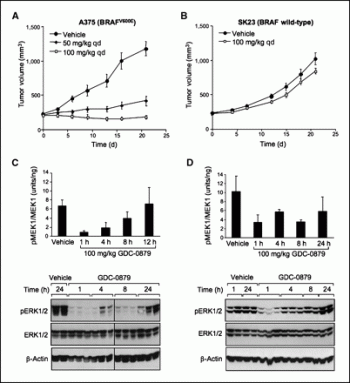
Compared to mutant KRAS-expressing tumors, GDC-0879-treated mice with BRAFV600E tumors from both cell lines and patients show a stronger and longer-lasting pharmacodynamic inhibition (>90% for 8 hours). A decreased time to progression is seen for some KRAS-mutant tumors after GDC-0879 administration, despite the fact that activated RAF signaling is involved in RAS-induced tumorigenesis. Mek inhibition also inhibits proliferation and tumor growth in cell lines expressing wild-type BRAF (81% KRAS mutant, 38% KRAS wild type), in contrast to GDC-0879, whose efficacy is solely dependent on B-RafV600E status. Pharmacological and genetic modifications of the PI3K pathway activity may significantly alter the B-RafV600E melanoma cells' response to GDC-0879.[2]
A375 Melanoma Xenograft Model: In female nude mice bearing A375 BRAFⁿᵉᵗ/ᵛ⁶⁰⁰ᴱ melanoma xenografts, oral administration of GDC-0879 (10, 30 mg/kg/day, once daily) dose-dependently inhibits tumor growth: 30 mg/kg reduces tumor volume by 85% at day 21 vs. vehicle, and induces partial tumor regression in 30% of mice. Tumor p-MEK1 levels are reduced by 75% (immunohistochemistry) at 30 mg/kg, correlating with antitumor efficacy [2] - Pharmacodynamic Correlation: In nude mice with A375 xenografts, plasma concentrations of GDC-0879 ≥ 0.1 μg/mL (achieved with 10 mg/kg/day) are required to inhibit tumor p-MEK1 by >50% and suppress tumor growth. At 30 mg/kg/day, plasma Cmax reaches 0.4 μg/mL, maintaining p-MEK1 inhibition for >12 h [2] |
| Enzyme Assay |
GDC-0879 is a potent and selective B-Raf inhibitor with an IC50 of 0.13 nM.
Recombinant BRAFⁿᵉᵗ/ᵛ⁶⁰⁰ᴱ Kinase Assay: Recombinant human BRAFⁿᵉᵗ/ᵛ⁶⁰⁰ᴱ or BRAFʷᵗ protein (50 ng/well) was incubated in kinase buffer (25 mM Tris-HCl pH 7.5, 10 mM MgCl₂, 1 mM DTT, 20 μM ATP) with a biotinylated MEK1-derived peptide (substrate, 2 μM) and various concentrations of GDC-0879 (0.001–50 μM) at 30°C for 60 min. Phosphorylated substrate was detected using a homogeneous time-resolved fluorescence (HTRF) assay (Eu-labeled anti-phospho-MEK antibody + streptavidin-allophycocyanin). Kinase activity was normalized to vehicle control, and IC₅₀ values were calculated via nonlinear regression [1] |
| Cell Assay |
GDC-0879 in vitro IC50 estimates for pMEK inhibition are determined using A375 and Colo205 cells. Briefly, GDC-0879 is incubated with A375 or Colo205 cells for 25 min at a range of concentrations (from 0.5 nM to 6.75 μM). Cells are lysed, and the lysates are centrifuged at 16,100 g for 30 min to determine the level of total protein. In a 96-well format, the levels of pMEK1 and total MEK1 protein are determined using enzyme-linked immunosorbent assay kits. At 20 μg of protein per well, samples are examined in duplicate. When converting optical densities obtained at 450 nm to units per milliliter (for pMEK1) or nanograms per milliliter (for total MEK1), a standard curve created using recombinant pMEK1 or MEK1 is used as a reference. Once converted to units per nanogram, the pMEK1/total MEK1 ratios are calculated. GraphPad Prism version 4.02 is used to estimate the IC50 values for pMEK1 inhibition through nonlinear regression.
Melanoma Cell Proliferation Assay: A375/WM266-4/SK-MEL-5 cells were seeded in 96-well plates (5×10³ cells/well) in DMEM medium supplemented with 10% fetal bovine serum (FBS). After 24 h adhesion, GDC-0879 (0.001–10 μM) was added, and cells were incubated for 72 h. Cell viability was measured via MTT assay (absorbance at 570 nm), and IC₅₀ values were determined using GraphPad Prism [1] - p-MEK1/p-ERK Western Blot Assay: A375 cells were seeded in 6-well plates (2×10⁵ cells/well) and treated with GDC-0879 (0.01–1 μM) for 24 h. Cells were lysed in RIPA buffer containing protease/phosphatase inhibitors, and lysates (20 μg protein per lane) were separated by SDS-PAGE. Proteins were transferred to PVDF membranes, probed with primary antibodies against p-MEK1, total MEK1, p-ERK1/2, and total ERK1/2, followed by HRP-conjugated secondary antibodies. Bands were visualized via chemiluminescence, and densitometry was used to quantify p-MEK1/p-ERK levels relative to total proteins [2] |
| Animal Protocol |
Mice: GDC-0879 is given orally in doses of 15, 25, 50, 100, and 200 mg/kg to female athymic nu/nu mice (weighing 25–28 g). Through cardiac puncture (terminal collection), blood samples (~1 mL) are taken at intervals of 0.5, 1, 2, 4, 8, and 24 hours following the dose and placed into tubes containing K2EDTA anticoagulant. The blood is combined with K2EDTA as soon as it is drawn, then chilled. Within 30 minutes, plasma is extracted from blood samples that have been centrifuged at a speed of 1000 to 1500g for five minutes at 4°C. When not in use, the plasma samples are kept at -80°C.
A375 Melanoma Xenograft Protocol: Female nude mice (6–7 weeks old, 18–22 g) were subcutaneously injected with A375 cells (5×10⁶ cells/mouse) suspended in Matrigel (1:1 v/v) into the right flank. When tumors reached 100–120 mm³, mice were randomized into 3 groups (n=8/group): Vehicle (0.5% methylcellulose + 0.2% Tween 80, p.o.), GDC-0879 10 mg/kg (p.o., q.d.), GDC-0879 30 mg/kg (p.o., q.d.). GDC-0879 was dissolved in vehicle (injection volume: 10 mL/kg). Treatment lasted 21 days. Tumor volume (V = π×L×W²/6) and body weight were measured every 3 days. At study end, tumors were excised: half were fixed in formalin for p-MEK1 immunohistochemistry, and half were frozen for protein extraction [2] |
| ADME/Pharmacokinetics |
Oral absorption: In female nude mice, oral administration of GDC-0879 (10, 30 mg/kg) showed dose-proportional absorption: the 10 mg/kg dose reached peak plasma concentration (Cmax) of 0.12 μg/mL at 1.5 hours (Tmax); the 30 mg/kg dose reached Cmax = 0.4 μg/mL at 2 hours. The absolute oral bioavailability was approximately 45% (calculated by comparing the AUC₀₋∞ of the oral and intravenous doses) [2] - Half-life and clearance: In nude mice, the terminal elimination half-life (t₁/₂) of GDC-0879 was 3.8 hours (oral administration of 30 mg/kg). Systemic clearance (CL) was 12 mL/min/kg, and volume of distribution (Vd) was 0.8 L/kg [2]
- Tissue distribution: In mice orally administered GDC-0879 (30 mg/kg), the tumor-to-plasma concentration ratio was 1.5 4 hours after administration, and the tumor concentration remained above the in vitro EC₅₀ value of p-MEK1 inhibition (>0.045 μg/mL) for 12 hours [2] |
| Toxicity/Toxicokinetics |
Plasma protein binding: In mouse plasma (measured by ultrafiltration), GDC-0879 had a protein binding rate of 95% at concentrations of 0.01–1 μg/mL, independent of concentration [2]
- Acute toxicity: No death or serious toxicity was observed in nude mice treated with GDC-0879 (up to 30 mg/kg/day for 21 days). Body weight remained stable (<5% change from baseline), and serum ALT/AST (liver marker) and creatinine (kidney marker) were within the normal range [2] - Organ pathology: At the end of the study, no histopathological lesions were found in the liver, kidney, heart, or lung tissue of mice treated with GDC-0879 (30 mg/kg/day), confirming its low organ toxicity [2] |
| References |
|
| Additional Infomation |
GDC-0879 belongs to the pyrazole class of compounds. Its structure is 1-(2-hydroxyethyl)pyrazole, with 4-pyridyl and 1-(hydroxyimino)indan-5-yl substituents attached at positions 3 and 4, respectively. It is a BRAF inhibitor and an antitumor drug. GDC-0879 belongs to the pyrazole, pyridine, indan, ketooxime, and primary alcohol classes. GDC-0879 is a research-grade selective BRAF inhibitor, developed as a tool compound for studying BRAF-mediated signaling pathways and antitumor effects, and is used in preclinical model studies. The drug has not yet been approved for clinical use [1,2]
- Mechanism of action: Its antitumor effect is mediated by specific inhibition of BRAFⁿᵉᵗ/ᵛ⁶⁰⁰ᴱ kinase activity, thereby blocking the downstream MAPK (RAF-MEK-ERK) signaling pathway—which is continuously activated in BRAFⁿᵉᵗ/ᵛ⁶⁰⁰ᴱ positive cancers, driving cell proliferation and survival [1,2] - Pharmacodynamic significance: Preclinical studies have confirmed that the antitumor efficacy of GDC-0879 is associated with the sustained inhibition of tumor p-MEK1 (the direct downstream target of BRAF), thus establishing a “target binding-efficacy” relationship for BRAF inhibitors [2] - Research applications: GDC-0879 is widely used to study the resistance mechanisms of BRAF inhibition (e.g., MEK). (Reactivation) and validation of combination strategies (e.g., BRAF + MEK inhibitors) in melanoma models [1,2] |
| Molecular Formula |
C19H18N4O2
|
|
|---|---|---|
| Molecular Weight |
334.37
|
|
| Exact Mass |
334.142
|
|
| Elemental Analysis |
C, 68.25; H, 5.43; N, 16.76; O, 9.57
|
|
| CAS # |
905281-76-7
|
|
| Related CAS # |
|
|
| PubChem CID |
11717001
|
|
| Appearance |
Light yellow to light brown solid powder
|
|
| Density |
1.4±0.1 g/cm3
|
|
| Boiling Point |
562.6±50.0 °C at 760 mmHg
|
|
| Flash Point |
294.0±30.1 °C
|
|
| Vapour Pressure |
0.0±1.6 mmHg at 25°C
|
|
| Index of Refraction |
1.705
|
|
| LogP |
1.12
|
|
| Hydrogen Bond Donor Count |
2
|
|
| Hydrogen Bond Acceptor Count |
5
|
|
| Rotatable Bond Count |
4
|
|
| Heavy Atom Count |
25
|
|
| Complexity |
480
|
|
| Defined Atom Stereocenter Count |
0
|
|
| SMILES |
ON=C1CCC2C1=CC=C(C1C(C3C=CN=CC=3)=NN(CCO)C=1)C=2
|
|
| InChi Key |
DEZZLWQELQORIU-RELWKKBWSA-N
|
|
| InChi Code |
InChI=1S/C19H18N4O2/c24-10-9-23-12-17(19(21-23)13-5-7-20-8-6-13)15-1-3-16-14(11-15)2-4-18(16)22-25/h1,3,5-8,11-12,24-25H,2,4,9-10H2/b22-18+
|
|
| Chemical Name |
2-[4-[(1E)-1-hydroxyimino-2,3-dihydroinden-5-yl]-3-pyridin-4-ylpyrazol-1-yl]ethanol
|
|
| Synonyms |
|
|
| HS Tariff Code |
2934.99.9001
|
|
| Storage |
Powder -20°C 3 years 4°C 2 years In solvent -80°C 6 months -20°C 1 month |
|
| Shipping Condition |
Room temperature (This product is stable at ambient temperature for a few days during ordinary shipping and time spent in Customs)
|
| Solubility (In Vitro) |
DMSO: ~66 mg/mL warming (~197.4 mM)
Water: 1 mg/mL (Insoluble) Ethanol: ~5 mg/mL (~15.0 mM) |
|---|---|
| Solubility (In Vivo) |
Solubility in Formulation 1: ≥ 2.5 mg/mL (7.48 mM) (saturation unknown) in 10% DMSO + 40% PEG300 + 5% Tween80 + 45% Saline (add these co-solvents sequentially from left to right, and one by one), clear solution.
For example, if 1 mL of working solution is to be prepared, you can add 100 μL of 25.0 mg/mL clear DMSO stock solution to 400 μL PEG300 and mix evenly; then add 50 μL Tween-80 to the above solution and mix evenly; then add 450 μL normal saline to adjust the volume to 1 mL. Preparation of saline: Dissolve 0.9 g of sodium chloride in 100 mL ddH₂ O to obtain a clear solution. Solubility in Formulation 2: ≥ 2.5 mg/mL (7.48 mM) (saturation unknown) in 10% DMSO + 90% Corn Oil (add these co-solvents sequentially from left to right, and one by one), clear solution. For example, if 1 mL of working solution is to be prepared, you can add 100 μL of 25.0 mg/mL clear DMSO stock solution to 900 μL of corn oil and mix evenly. View More
Solubility in Formulation 3: 0.5% methylcellulose+0.2% Tween 80: 8 mg/mL Solubility in Formulation 4: 3.23 mg/mL (9.66 mM) in 0.5% CMC-Na 0.5% Tween-80 (add these co-solvents sequentially from left to right, and one by one), clear solution; with ultrasonication (<60°C). |
| Preparing Stock Solutions | 1 mg | 5 mg | 10 mg | |
| 1 mM | 2.9907 mL | 14.9535 mL | 29.9070 mL | |
| 5 mM | 0.5981 mL | 2.9907 mL | 5.9814 mL | |
| 10 mM | 0.2991 mL | 1.4953 mL | 2.9907 mL |
*Note: Please select an appropriate solvent for the preparation of stock solution based on your experiment needs. For most products, DMSO can be used for preparing stock solutions (e.g. 5 mM, 10 mM, or 20 mM concentration); some products with high aqueous solubility may be dissolved in water directly. Solubility information is available at the above Solubility Data section. Once the stock solution is prepared, aliquot it to routine usage volumes and store at -20°C or -80°C. Avoid repeated freeze and thaw cycles.
Calculation results
Working concentration: mg/mL;
Method for preparing DMSO stock solution: mg drug pre-dissolved in μL DMSO (stock solution concentration mg/mL). Please contact us first if the concentration exceeds the DMSO solubility of the batch of drug.
Method for preparing in vivo formulation::Take μL DMSO stock solution, next add μL PEG300, mix and clarify, next addμL Tween 80, mix and clarify, next add μL ddH2O,mix and clarify.
(1) Please be sure that the solution is clear before the addition of next solvent. Dissolution methods like vortex, ultrasound or warming and heat may be used to aid dissolving.
(2) Be sure to add the solvent(s) in order.
GDC-0879 is a potent and selective RAF kinase inhibitor. Cancer Res. 2009 Apr 1;69(7):3042-51. |
BRAFV600E mutation predicts for enhanced sensitivity of melanoma, colon, and lung cancer cell lines to RAF inhibitors in vitro. |
Wild-type BRAF melanoma tumors have an attenuated pharmacodynamic response to GDC-0879 treatment relative to BRAFV600E tumor xenografts. |
Products are for research use only; We do not sell to patients
Copyright 2020 InvivoChem LLC | All Rights Reserved


 COA
COA