| Size | Price | Stock | Qty |
|---|---|---|---|
| 5mg |
|
||
| 10mg |
|
||
| 25mg |
|
||
| 50mg |
|
||
| 100mg |
|
||
| 250mg | |||
| Other Sizes |


Purity: ≥98%
| Targets |
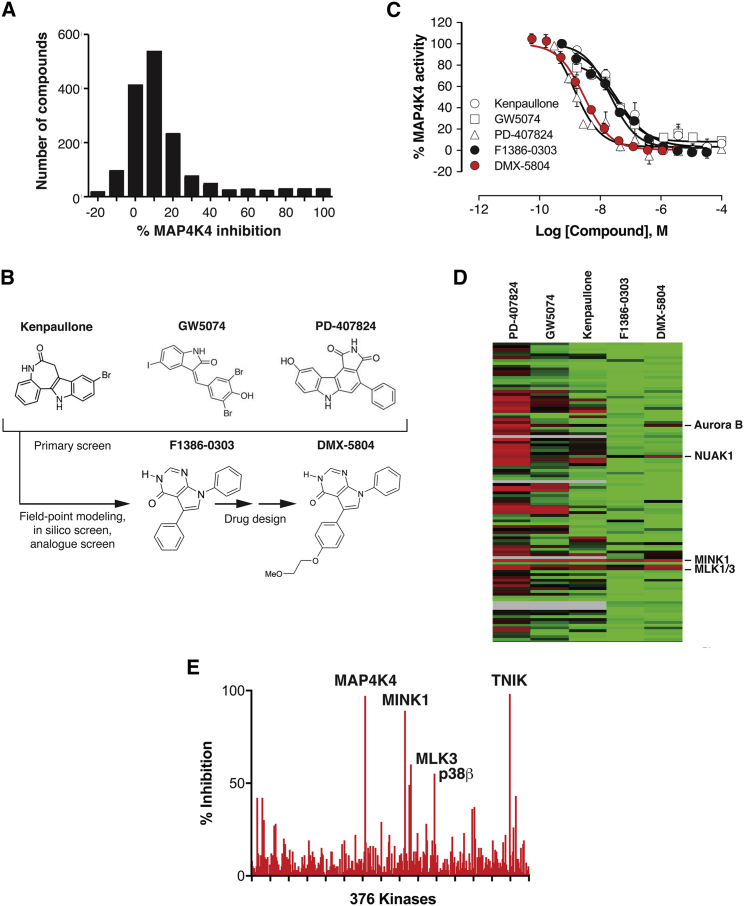
MAP4K4 (IC50 = 3 nM); MAP4K4 (pIC50 = 8.55); MINK1/MAP4K6 (pIC50 = 8.18); TNIK/MAP4K7 (pIC50 = 7.96); GCK/MAP4K2 (pIC50 = 6.50); KHS/MAP4K5 (pIC50 = 6.36); GLK/MAP4K3 (pIC50 = 4.95 nM); MLK1/MAP3K9 (pIC50 = 7.19); MLK3/MAP3K11 (pIC50 = 6.99); NUAK (pIC50 = 6.88); VEGFR (pIC50 = 5.72); ABL1 (pIC50 = 5.80 nM); Aurora B (pIC50 = 5.49 nM); FLT3 (pIC50 = 5.31); GSK3β (pIC50 = 4.66)
DMX-5804 exhibits great selectivity at MAP4K4 over other kinases, such as GCK/MAP4K2 (pIC50, 6.50), GLK/MAP4K3 (pIC50, 4.95), GSK3β (pIC50, 4.66), KHS/MAP4K5 (pIC50, 6.36), MLK1/MAP3K9 (pIC50, 7.19), MLK3/MAP3K11 (pIC50, 6.99), NUAK (pIC50, 6.88) and VEGFR (pIC50, 5.72), ABL1 (pIC50, 5.80), Aurora B (pIC50, 5.49), FLT3 (pIC50, 5.31)[1]. |
|---|---|
| ln Vitro |
DMX-5804 exhibits great selectivity at MAP4K4 over other kinases, such as GCK/MAP4K2 (pIC50, 6.50), GLK/MAP4K3 (pIC50, 4.95), GSK3β (pIC50, 4.66), KHS/MAP4K5 (pIC50, 6.36), MLK1/MAP3K9 (pIC50, 7.19), MLK3/MAP3K11 (pIC50, 6.99), NUAK (pIC50, 6.88) and VEGFR (pIC50, 5.72), ABL1 (pIC50, 5.80), Aurora B (pIC50, 5.49), FLT3 (pIC50, 5.31)[1].
DMX-5804 protects human induced pluripotent stem cell-derived cardiomyocytes (hiPSC-CMs) from oxidative stress-induced cell death. In vCor.4U ventricular myocytes, 10 µM DMX-5804 provided virtually complete protection against cell death induced by H2O2 (up to 200 µM) or menadione (up to 45 µM), as measured by CellTiter-Glo viability assay and human cardiac troponin I release. [1] The half-maximal effective concentration (EC50) for protection against 400 µM H2O2-induced cell death in iCell cardiomyocytes was 500 nM, though this value was contingent on the level of oxidative stress. Partial protection was observed even when DMX-5804 was administered 1 hour after the oxidative insult. [1] DMX-5804 (0.5-2 µM) preserved calcium cycling (peak area and peak height) in hiPSC-CMs subjected to sub-lethal menadione-induced oxidative stress, with protection maintained for up to 96 hours. [1] At a concentration of 10 µM, DMX-5804 improved the maximum oxidative capacity (mitochondrial respiration) 5-fold and partially rescued the extracellular acidification rate (glycolytic function) in hiPSC-CMs treated with menadione. [1] In 3D human engineered heart tissue (hEHT) made from vCor.4U cells, 10 µM DMX-5804 suppressed cell death induced by menadione over 24 hours and completely rescued spontaneous beating and force generation at 1 and 24 hours post-treatment. [1] DMX-5804 showed no adverse effects on hiPSC-CM viability, rhythmicity, calcium handling, mitochondrial function, or force generation in 2D or 3D culture. [1] DMX-5804 showed no off-target effects on cloned human ion channels hERG, hNaV1.5, and hCaV1.2. [1] |
| ln Vivo |
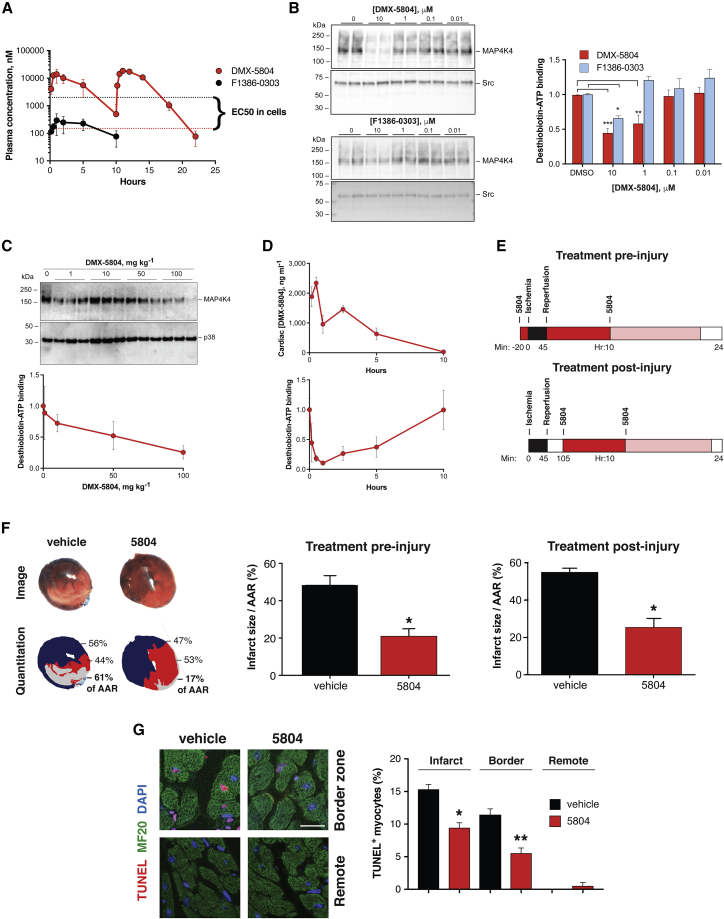
In a mouse model of myocardial ischemia-reperfusion injury, oral administration of DMX-5804 (50 mg/kg, twice, 10 hours apart) significantly reduced infarct size. When treatment began 20 minutes prior to ischemia, infarct size (as a proportion of the area at risk) was reduced from 48.5% to 20.9%. When treatment began 1 hour after reperfusion (post-injury), infarct size was reduced from 55.1% to 25.6%. [1]
In the post-injury treatment study, DMX-5804 also suppressed cardiomyocyte apoptosis within the infarct and adjacent jeopardized myocardium by 39% and 52%, respectively, as measured by TUNEL staining. [1] |
| Enzyme Assay |
The inhibitory activity of compounds against recombinant human MAP4K4 kinase domain was determined using a homogeneous time-resolved fluorescence (HTRF) competitive immunoassay. In this assay, the kinase reaction generates ADP, which competes with a dye-labeled ADP tracer for binding to an anti-ADP antibody labeled with a europium cryptate. The signal is measured as a ratio of emission at 665 nm and 620 nm. Reactions were conducted with ATP at its Km concentration (10 µM), the MAP4K4 kinase domain, and a biotinylated myelin basic protein substrate. Percent inhibition was calculated relative to control reactions with DMSO (100% activity) and no enzyme (0% activity). Dose-response curves were generated to determine IC50 values. [1]
A broader kinase selectivity profile for DMX-5804 was assessed against a panel of 376 human kinases. The compound was tested at a concentration of 30 times its IC50 for MAP4K4 (i.e., 90 nM). Residual kinase activities were measured and reported. [1] |
| Cell Assay |
Cell Viability and Death: hiPSC-CMs (iCell or vCor.4U lines) were plated in appropriate maintenance media. For viability assays, cells were treated with DMX-5804 (serial dilutions in DMSO, final concentration 0.1% DMSO) 1 hour prior to the addition of death inducers (H2O2 or menadione). After 24 hours, cell viability was assessed using the CellTiter-Glo luminescent assay, which quantifies ATP as a proxy for viable cell number. Alternatively, cell death was quantified by measuring the release of human cardiac troponin I into the culture medium using an AlphaLISA immunoassay. Membrane integrity loss was also assessed in iCell cardiomyocytes using the cell-impermeable dye DRAQ7 in a high-content imaging assay, specifically analyzing successfully transduced (GFP+) cardiomyocytes identified by a Myh6-RFP reporter. [1]
Calcium Cycling: vCor.4U hiPSC-CMs were treated with DMX-5804 and menadione. After 2-3 hours, cells were loaded with a fluorescent calcium indicator dye. Intracellular calcium oscillations were monitored using a fluorescence imaging plate reader (FLIPR). Parameters such as beat frequency, peak height, peak width, and total peak area were calculated and compared to controls. [1] Mitochondrial Function: vCor.4U hiPSC-CMs were seeded in specialized plates. After treatment with DMX-5804 and menadione, the culture medium was replaced with a bicarbonate-free assay medium. The oxygen consumption rate (OCR, indicator of mitochondrial respiration) and extracellular acidification rate (ECAR, indicator of glycolysis) were measured in real-time using a Seahorse extracellular flux analyzer. Sequential injections of oligomycin (ATP synthase inhibitor), FCCP (mitochondrial uncoupler), and a mix of antimycin A & rotenone (complex III & I inhibitors) were used to assess different parameters of mitochondrial function. [1] 3D Engineered Heart Tissue (hEHT): vCor.4U cardiomyocytes were mixed with fibrinogen and thrombin and cast into molds containing flexible silicone posts to form 3D tissues. After 12 days of maturation, hEHTs were treated with menadione in the presence or absence of DMX-5804. Cell death was assessed. Spontaneous contraction force was measured daily by optically tracking the deflection of the silicone posts and calculating force based on post dimensions and material properties. [1] Target Engagement in Cells: To confirm inhibition of endogenous MAP4K4, HEK293T cells were treated with the precursor compound F1386-0303 (10 µM). After 1 hour, endogenous MAP4K4 activity was measured in immune complex kinase assays, showing 70% inhibition. [1] |
| Animal Protocol |
Myocardial Infarction Model in Mice: Female CD-1 mice (9-10 weeks old) were used. Under general anesthesia and mechanical ventilation, a left thoracotomy was performed. The left anterior descending coronary artery (LAD) was ligated for 45 minutes to induce ischemia, followed by release of the ligature to allow reperfusion. DMX-5804 was formulated in 1.5% Captisol (sulfobutylether-β-cyclodextrin) solution. Mice received two oral gavage doses of DMX-5804 (50 mg/kg), spaced 10 hours apart. In the "pre-injury" protocol, the first dose was given 20 minutes before LAD occlusion. In the "post-injury" protocol, the first dose was given 1 hour after the initiation of reperfusion. After 24 hours of reperfusion, infarct size was quantified. Mice were re-anesthetized, the LAD was re-occluded, and Evans blue dye was perfused to delineate the non-ischemic area. The heart was excised, sectioned, stained with triphenyltetrazolium chloride (TTC) to visualize viable (red) and infarcted (white) tissue within the area at risk (unstained by blue). Infarct size was expressed as a percentage of the area at risk. Apoptosis was assessed in separate heart sections by TUNEL staining co-labeled with an antibody against sarcomeric myosin to identify cardiomyocytes. [1]
Pharmacokinetics Study: For pharmacokinetic profiling, DMX-5804 was formulated similarly. Female CD-1 mice received a single oral dose (50 mg/kg). Blood samples were collected at multiple time points (e.g., 10 min, 30 min, 1 h, 2.5 h, 5 h, 10 h, 20 h) post-dose. Plasma concentrations of DMX-5804 were determined. [1] Target Engagement In Vivo: Mice were orally dosed with DMX-5804. Hearts were harvested at various times or after different doses. Cardiac lysates were prepared and incubated with a desthiobiotin-ATP probe, which covalently labels active kinase ATP-binding sites. MAP4K4 was subsequently immunoprecipitated, and the level of probe labeling was assessed by western blot to measure the degree of target occupancy by the inhibitor. [1] |
| ADME/Pharmacokinetics |
After a single intravenous injection (1 mg/kg) of DMX-5804 into mice, its clearance (Cl) was 2.50 L hr⁻¹ kg⁻¹, its volume of distribution (Vd) was 1.22 L kg⁻¹, its half-life (t₁/₂) was 0.6 hours, and its peak plasma concentration (Cmax) was 1590 nM. [1] After a single oral administration (50 mg/kg) of DMX-5804 into mice, its area under the plasma concentration-time curve (AUC₀→∞) was 63733 nMhr, its Cmax was 13847 nM, its time to peak concentration (Tmax) was 1 hour, and its half-life was 1.8 hours. [1] After oral administration of 50 mg/kg of DMX-5804, the plasma concentrations at 1 hour and 10 hours were 334 nM and 8 nM, respectively. A second dose 10 hours later maintained plasma concentrations above the in vitro cardiomyocyte protection EC50 for nearly a day. [1] Compared with the prodrug F1386-0303, DMX-5804 showed significantly improved oral bioavailability and plasma exposure (AUC and Cmax) (29.5-fold and 46.9-fold, respectively). [1]
|
| Toxicity/Toxicokinetics |
At the tested concentrations, DMX-5804 did not show any adverse effects on the activity, contractility, calcium ion treatment, or mitochondrial function of hiPSC-CM. [1] Electrophysiological safety screening showed that DMX-5804 had no significant inhibitory effect on key cardiac ion channels (hERG, hNaV1.5, hCaV1.2). [1] DMX-5804 was tested using the Ames genotoxicity reversion assay with and without metabolic activation (S9) using Salmonella typhimurium strains TA98 and TA100. No mutagenicity was observed at test concentrations up to 250 µg/mL. [1] DMX-5804 was screened using a screening plate containing 44 off-target safety-related proteins (SafetyScreen44 plate). The only reported activity was against metallothionein 3. [1]
|
| References | |
| Additional Infomation |
DMX-5804 (5-[4-(2-methoxyethoxy)phenyl]-7-phenyl-3,7-dihydropyrrolo[2,3-d]pyrimidin-4-one) is a highly selective small molecule inhibitor of MAP4K4, developed from the lead compound F1386-0303 through pharmacophore modeling, virtual screening, and medicinal chemistry optimization. [1]
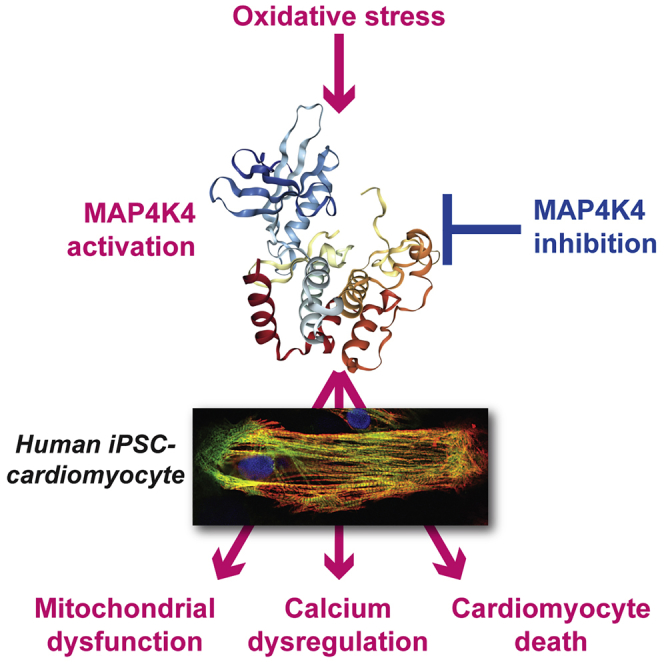
MAP4K4 is activated in failing human hearts and promotes cardiomyocyte death in response to oxidative stress, a hallmark of myocardial ischemia-reperfusion injury. [1] This study utilizes human induced pluripotent stem cell-derived cardiomyocytes (hiPSC-CMs) as a key, human-relevant target validation and drug discovery platform, highlighting its predictive value over traditional animal models in cardiac drug development. [1] In hiPSC-CMs, the protective effect provided by MAP4K4 inhibitors is comparable to that of the clinically effective β-blocker metoprolol and superior to p38 MAPK pathway inhibitors that failed in clinical trials, indicating that the hiPSC-CM model has good predictive accuracy. [1] The series of compounds containing DMX-5804 provides valuable tool compounds for validation, but their solubility and pharmacokinetic properties are insufficient for direct development as intravenous drug candidates for the treatment of acute ischemic injury, although it supports further drug development for this target. [1] |
| Molecular Formula |
C21H19N3O3
|
|---|---|
| Molecular Weight |
361.393864870071
|
| Exact Mass |
361.14
|
| Elemental Analysis |
C, 69.79; H, 5.30; N, 11.63; O, 13.28
|
| CAS # |
2306178-56-1
|
| Related CAS # |
2306178-56-1
|
| PubChem CID |
137334091
|
| Appearance |
Off-white to yellow solid powder
|
| LogP |
2.9
|
| Hydrogen Bond Donor Count |
1
|
| Hydrogen Bond Acceptor Count |
4
|
| Rotatable Bond Count |
6
|
| Heavy Atom Count |
27
|
| Complexity |
527
|
| Defined Atom Stereocenter Count |
0
|
| SMILES |
COCCOC1=CC=C(C=C1)C2=CN(C3=C2C(=O)NC=N3)C4=CC=CC=C4
|
| InChi Key |
FUSHFOGORKZNNQ-UHFFFAOYSA-N
|
| InChi Code |
InChI=1S/C21H19N3O3/c1-26-11-12-27-17-9-7-15(8-10-17)18-13-24(16-5-3-2-4-6-16)20-19(18)21(25)23-14-22-20/h2-10,13-14H,11-12H2,1H3,(H,22,23,25)
|
| Chemical Name |
5-[4-(2-methoxyethoxy)phenyl]-7-phenyl-3H-pyrrolo[2,3-d]pyrimidin-4-one
|
| Synonyms |
DMX-5804; DMX 5804; DMX5804
|
| HS Tariff Code |
2934.99.9001
|
| Storage |
Powder -20°C 3 years 4°C 2 years In solvent -80°C 6 months -20°C 1 month |
| Shipping Condition |
Room temperature (This product is stable at ambient temperature for a few days during ordinary shipping and time spent in Customs)
|
| Solubility (In Vitro) |
DMSO: 72~125 mg/mL (199.2~345.9 mM)
Ethanol: ~1.5 mg/mL (~4.2 mM) |
|---|---|
| Solubility (In Vivo) |
Solubility in Formulation 1: ≥ 2.08 mg/mL (5.76 mM) (saturation unknown) in 10% DMSO + 40% PEG300 + 5% Tween80 + 45% Saline (add these co-solvents sequentially from left to right, and one by one), clear solution.
For example, if 1 mL of working solution is to be prepared, you can add 100 μL of 20.8 mg/mL clear DMSO stock solution to 400 μL PEG300 and mix evenly; then add 50 μL Tween-80 to the above solution and mix evenly; then add 450 μL normal saline to adjust the volume to 1 mL. Preparation of saline: Dissolve 0.9 g of sodium chloride in 100 mL ddH₂ O to obtain a clear solution. Solubility in Formulation 2: ≥ 2.08 mg/mL (5.76 mM) (saturation unknown) in 10% DMSO + 90% (20% SBE-β-CD in Saline) (add these co-solvents sequentially from left to right, and one by one), clear solution. For example, if 1 mL of working solution is to be prepared, you can add 100 μL of 20.8 mg/mL clear DMSO stock solution to 900 μL of 20% SBE-β-CD physiological saline solution and mix evenly. Preparation of 20% SBE-β-CD in Saline (4°C,1 week): Dissolve 2 g SBE-β-CD in 10 mL saline to obtain a clear solution. View More
Solubility in Formulation 3: ≥ 2.08 mg/mL (5.76 mM) (saturation unknown) in 10% DMSO + 90% Corn Oil (add these co-solvents sequentially from left to right, and one by one), clear solution. |
| Preparing Stock Solutions | 1 mg | 5 mg | 10 mg | |
| 1 mM | 2.7671 mL | 13.8355 mL | 27.6709 mL | |
| 5 mM | 0.5534 mL | 2.7671 mL | 5.5342 mL | |
| 10 mM | 0.2767 mL | 1.3835 mL | 2.7671 mL |
*Note: Please select an appropriate solvent for the preparation of stock solution based on your experiment needs. For most products, DMSO can be used for preparing stock solutions (e.g. 5 mM, 10 mM, or 20 mM concentration); some products with high aqueous solubility may be dissolved in water directly. Solubility information is available at the above Solubility Data section. Once the stock solution is prepared, aliquot it to routine usage volumes and store at -20°C or -80°C. Avoid repeated freeze and thaw cycles.
Calculation results
Working concentration: mg/mL;
Method for preparing DMSO stock solution: mg drug pre-dissolved in μL DMSO (stock solution concentration mg/mL). Please contact us first if the concentration exceeds the DMSO solubility of the batch of drug.
Method for preparing in vivo formulation::Take μL DMSO stock solution, next add μL PEG300, mix and clarify, next addμL Tween 80, mix and clarify, next add μL ddH2O,mix and clarify.
(1) Please be sure that the solution is clear before the addition of next solvent. Dissolution methods like vortex, ultrasound or warming and heat may be used to aid dissolving.
(2) Be sure to add the solvent(s) in order.
MAP4K4 Inhibition Promotes Survival of Human Stem Cell-Derived Cardiomyocytes and Reduces Infarct Size In Vivo.Cell Stem Cell.2019 Apr 4;24(4):579-591.e12. |
Selective Small-Molecule Inhibitors of MAP4K4 Created by Field-Point Modeling and ScreeningIn Silico.Cell Stem Cell.2019 Apr 4;24(4):579-591.e12. |
MAP4K4 Inhibition Reduces Infarct Size in Mice.Cell Stem Cell.2019 Apr 4;24(4):579-591.e12. |
Products are for research use only; We do not sell to patients
Copyright 2020 InvivoChem LLC | All Rights Reserved


 COA
COA