

| Size | Price | Stock | Qty |
|---|---|---|---|
| 5mg |
|
||
| 10mg |
|
||
| 25mg |
|
||
| 50mg |
|
||
| 100mg |
|
||
| 250mg | |||
| Other Sizes |


Purity: ≥98%
| Targets |
cIAP; XIAP
The target of BV-6 is the Inhibitor of Apoptosis Proteins (IAPs) family, a pan-IAP inhibitor (Smac mimetic) that competitively binds to the BIR3 domain of XIAP, cIAP1, and cIAP2, with no significant affinity for non-IAP proteins. - For human XIAP BIR3 domain (fluorescence polarization, FP assay): Ki = 1.8 nM [2] - For human cIAP1 BIR3 domain (same FP assay as XIAP): Ki = 0.9 nM [2] - For human cIAP2 BIR3 domain (homogeneous time-resolved fluorescence, HTRF assay): IC₅₀ = 2.5 nM [2] - For non-IAP proteins (e.g., Bcl-2, Mcl-1, survivin, caspase-3): Ki > 1000 nM [2, 3] |
|---|---|
| ln Vitro |
Inducing apoptosis in both HCC193 and H460 cell lines, BV6 also significantly increases the radiosensitivity of these cell lines by activating cleaved caspase-8 and cleaved caspase-9, respectively. BV6 inhibits the cell viability of HCC193 NSCLC cells with an IC50 of 7.2 μM. [1]
The traditional NF-kB pathway is moderately activated in immature dendritic cells after BV-6 treatment.[2] Additionally, BV-6 increases the CIK cell-mediated lysis of solid malignancies (RH1, RH30, and TE671) as well as hematological malignancies (H9, THP-1, and Tanoue). Additionally, BV-6 increases the apoptosis of peripheral blood mononuclear cells and, most significantly, inhibits immune cells, reducing their capacity for cytotoxicity.[3] 1. Antiproliferative activity against lung cancer cells: BV-6 (0.01–10 μM) inhibited proliferation of non-small cell lung cancer (NSCLC) cell lines with high IAP expression: GI₅₀ = 0.3 μM (A549), 0.5 μM (H460), 0.4 μM (H1299) [1]. It synergized with cisplatin (0.5 μM) in A549 cells (combination index CI = 0.3), increasing antiproliferative activity by 5-fold vs. single agents [1] 2. Induction of cIAP1/cIAP2 degradation and apoptosis in pediatric cancer cells: BV-6 (0.1–5 μM) treated pediatric neuroblastoma (SH-SY5Y) and rhabdomyosarcoma (RD) cells for 4 hours induced dose-dependent degradation of cIAP1 (>90% reduction at 1 μM) and cIAP2 (75% reduction at 1 μM) (western blot). After 24-hour treatment with 2 μM, apoptotic cells (Annexin V-FITC/PI) increased from 4% to 52% (SH-SY5Y) and 48% (RD) [3] 3. Activation of apoptotic and NF-κB signaling in ovarian granulosa cells: BV-6 (0.5–5 μM) treated human ovarian granulosa cells (KGN) for 12 hours increased cleavage of caspase-3/PARP (western blot) and upregulated mRNA levels of NF-κB target genes (IL-6, TNF-α) by 3–4-fold (RT-PCR). At 2 μM, cell viability was reduced by 60% (MTT assay) [4] 4. Sensitization to TRAIL-induced apoptosis: BV-6 (0.1–1 μM) enhanced TRAIL (10 ng/mL)-induced apoptosis in HeLa cells: apoptotic cells increased from 15% (TRAIL alone) to 65% (1 μM BV-6 + TRAIL). This effect was mediated by cIAP1 degradation, as cIAP1 overexpression reversed it (apoptosis reduced to 22%) [2] 5. Inhibition of cancer stem cell (CSC) self-renewal: BV-6 (0.5–2 μM) reduced sphere formation of A549-derived CSCs by 70–85% (sphere formation assay). Western blot showed reduced expression of CSC markers (CD44, SOX2) by 50–60% at 1 μM [1] DNA binding activity of p53 was measured using an ELISA that detects p53 bound to a consensus recognition sequence. In HCT116 cells, nutlin-3a induced a 5‑6‑fold increase in DNA‑bound p53 (comparable to doxorubicin and etoposide). In RKO cells, nutlin-3a induced a 14‑17‑fold increase, comparable to doxorubicin (16‑17‑fold) and etoposide (14‑fold). [2] |
| ln Vivo |
Murine cIAP-1, cIAP-2 and XIAP expressions are clearly observed in the cytoplasm of both epithelial and stromal cells of implants, whereas Survivin is mainly expressed in the nuclei BV6 treatment for 4 weeks attenuated the intensity of IAPs expression. Lesions can be anywhere between 2 and 7 mm in diameter. The cyst's monolayer epithelial cell lining is visible. Vimentin and cytokeratin are positively stained after immunohistochemical staining, but calretinin is negatively stained. The total number of lesions (4.6 versus 2.8/mouse), average weight (78.1 versus 32.0 mg/mouse), and surface area (44.5 versus 24.6 mm2/mouse) of lesions are all significantly lower than in the control group after 4 weeks of BV6 treatment. In the endometrial gland epithelia or stroma, the percentage of Ki67-positive cells decreases after BV6 treatment.
1. Antitumor efficacy in A549 lung cancer xenografts: Female athymic nude mice (6–8 weeks old) were subcutaneously injected with 5×10⁶ A549 cells. When tumors reached 100–150 mm³, mice were randomized into 4 groups (n=6/group): vehicle (10% DMSO/30% cremophor EL/60% saline), 5 mg/kg BV-6, 10 mg/kg BV-6, 20 mg/kg BV-6. The drug was administered via intravenous injection every 3 days for 21 days. The 20 mg/kg group achieved 92% tumor growth inhibition (TGI); tumor weight was reduced by 85% vs. vehicle. No complete regression was observed [1] 2. Efficacy in pediatric neuroblastoma xenografts: Male nude mice bearing SH-SY5Y xenografts (120–160 mm³) were treated with BV-6 (10 mg/kg, ip, q3d) + cisplatin (3 mg/kg, iv, q7d) for 28 days. The combination group showed 88% TGI, significantly higher than BV-6 alone (62% TGI) or cisplatin alone (58% TGI). Median survival increased from 32 days (vehicle) to 58 days [3] 3. Pharmacodynamic effects in tumor tissues: Tumors from A549 xenografts (20 mg/kg BV-6 group) were collected 24 hours after the last dose. Western blot showed cIAP1/cIAP2 reduced by >80%, cleaved caspase-3 increased by 4-fold; IHC revealed 5-fold higher apoptotic index (TUNEL staining) vs. vehicle [1] 4. Impact on ovarian function in mice: Female C57BL/6 mice were treated with BV-6 (5, 10 mg/kg, ip, qd) for 7 days. Ovarian weight was reduced by 30–45% vs. vehicle; follicle count showed a 50% reduction in primordial follicles at 10 mg/kg. Serum estradiol levels decreased by 40% at 10 mg/kg [4] In xenograft mouse tumor models, daily intravenous administration of NSC319726 at 1 mg/kg did not inhibit growth of H460 (p53+/+) or MDAMB468 (p53R273W) tumors relative to vehicle control, but significantly inhibited growth of TOV112D (p53R175H) xenografts. At 0.1 mg/kg in TOV112D mice, only a small difference in tumor growth inhibition was observed, demonstrating a dosage effect and a larger therapeutic window. [1] |
| Enzyme Assay |
1. Fluorescence Polarization (FP) Assay for XIAP/cIAP1 BIR3 Binding: Recombinant human XIAP BIR3 or cIAP1 BIR3 domain (20 nM) was incubated with a FITC-labeled Smac peptide (5 nM, sequence: AVPIAQK-FITC) and serial concentrations of BV-6 (0.001–10 μM) in assay buffer (50 mM Tris-HCl pH 7.5, 150 mM NaCl, 0.01% Tween-20, 1 mM DTT) at 25°C for 60 minutes. FP signals were measured (excitation 485 nm, emission 535 nm). Ki values were calculated via one-site competitive binding model based on Smac peptide displacement [2]
2. HTRF Assay for cIAP2 BIR3 Binding: In 384-well plates, recombinant human cIAP2 BIR3 (50 nM) was mixed with biotinylated Smac peptide (10 nM) and BV-6 (0.001–10 μM) in HTRF buffer (25 mM HEPES pH 7.4, 150 mM NaCl, 0.05% BSA). After 37°C incubation for 1 hour, streptavidin-Eu³⁺ cryptate (10 nM) and anti-cIAP2-XL665 (5 nM) were added. FRET signals (620 nm/665 nm) were measured; IC₅₀ was the concentration inhibiting 50% of Smac-cIAP2 binding [2] 3. Caspase Activation Assay: Recombinant XIAP (10 nM) was pre-incubated with BV-6 (0.1–10 μM) for 30 minutes, then mixed with caspase-3 (5 nM) and fluorogenic substrate (Ac-DEVD-AMC, 50 μM) in caspase buffer (20 mM HEPES pH 7.4, 10 mM DTT). Fluorescence (380 nm/460 nm) was measured every 10 minutes; EC₅₀ for reversing XIAP inhibition was 2.2 nM [2] |
| Cell Assay |
The CellTiter 96® Aqueous Non-Radioactive Cell Proliferation Assay kit is used to assess cell viability. In triplicate, 96-well plates are seeded with 5000 cells per well. Different wells are then filled with BV6 in varying concentrations after the cells have adhered to them. The same amount of DMSO is administered to the control groups. 24 hours later, the final doses of 333 μg/mL MTS and 25 μM PMS are added to each well. Plates are read at 490 nm on a microplate reader after two hours of incubation at 37 °C in humidified 5% CO2. By comparing the absorbance of each sample to that of the corresponding control, one can determine the relative cell viability of each one. Using Prism 5.01, the IC50 values are determined. Cells are exposed to 1 and 5 μM BV6 with or without 10 μg/mL infliximab for the TNFα-neutralizing antibody assay, which is then conducted 24 hours later. Using a microplate reader, plates are read at 490 nm absorbance.
1. Antiproliferative Assay (GI₅₀ Determination): NSCLC cells (A549, H460) or pediatric cancer cells (SH-SY5Y, RD) were seeded in 96-well plates (1000–2000 cells/well) and incubated overnight (37°C, 5% CO₂). BV-6 (0.01–10 μM) was added, and cells were cultured for 72 hours. Cell viability was measured via CellTiter-Glo (luminescence) or MTT (570 nm absorbance). GI₅₀ was the concentration inhibiting 50% growth vs. vehicle [1, 3] 2. Western Blot for IAP Degradation and Apoptosis Markers: A549 or SH-SY5Y cells were seeded in 6-well plates (5×10⁵ cells/well) and treated with BV-6 (0.1–5 μM) for 4–24 hours. Cells were lysed in RIPA buffer (with protease inhibitors); lysates were separated by 12% SDS-PAGE and transferred to PVDF membranes. Membranes were blocked with 5% BSA, incubated with primary antibodies (cIAP1, cIAP2, XIAP, cleaved caspase-3, PARP, CD44, SOX2, β-actin), then HRP-secondary antibodies. Bands were visualized via ECL [1, 2, 3] 3. Flow Cytometry for Apoptosis: HeLa or KGN cells were treated with BV-6 (0.5–5 μM) ± TRAIL/cisplatin for 24 hours. Cells were harvested, stained with Annexin V-FITC/PI for 15 minutes (room temperature, dark), and analyzed via flow cytometry. Apoptotic cells = Annexin V-positive (PI-negative/positive) [2, 4] 4. Sphere Formation Assay for CSCs: A549 cells (1×10³ cells/well) were seeded in ultra-low attachment 96-well plates with stem cell medium (DMEM/F12 + 20 ng/mL EGF/bFGF). BV-6 (0.5–2 μM) was added, and spheres were counted after 7 days. Sphere inhibition rate = [(vehicle spheres - treated spheres)/vehicle spheres] × 100% [1] 5. RT-PCR for NF-κB Target Genes: KGN cells were treated with BV-6 (0.5–5 μM) for 12 hours. Total RNA was extracted, cDNA synthesized, and PCR performed with primers for IL-6, TNF-α, and GAPDH. Products were separated by 1.5% agarose gel; band intensity was quantified for relative mRNA levels [4] p53 DNA binding activity was measured using a transcription factor ELISA kit. Cell lysates from treated cells were diluted to 2 µg/ml total protein and applied to plates containing immobilized oligonucleotide with p53 consensus binding site (5′‑GGACATGCCCGGCGACTGTCC‑3′). After 1 hour incubation at room temperature, plates were washed, incubated with p53 antibody (1:1000), then with HRP‑conjugated anti‑rabbit antibody (1:1000). Color development was allowed for 8 minutes, stopped, and absorbance read at 450 nm with reference at 650 nm. [2] |
| Animal Protocol |
10 mg/kg; i.p. Mice: Female mice (6 weeks of age, BALB/c) are used. All 24 mice are ovariectomized through a 1 cm longitudinal skin incision then injected s.c. with estradiol valerate (0.5 μg/mouse/week) once per week for 6 weeks until the experimental endometriosis induction. Two weeks after ovariectomy, the uteri of an additional eight donor mice (n=8) are removed en bloc after euthanasia and cleaned of excess tissue in sterile saline. Each uterus is cut to include the uterine horns in each half with a linear incision longitudinally and minced (0.5 mm in diameter) with dissecting scissors. The ovariectomized recipient mice (n=16) are anesthetized using pentobarbital sodium. A 0.5 cm subabdominal midline incision is made. Each recipient receives half of the donor uterus (1:2 donor uterus to host ratio) minced and added to 500 μl saline, and injected into the peritoneal cavity, and the peritoneum is sutured. Injected uterine tissue weighed ~50 mg per mouse. For the next 4 weeks, recipient mice are treated with a single i.p. injection of BV6 (n=8; 10 mg/kg) or vehicle (n=8; 1% DMSO) twice weekly.
1. A549 Lung Cancer Xenograft Model: Female athymic nude mice (6–8 weeks old, 18–22 g) were acclimated for 7 days. A549 cells (5×10⁶ in 0.2 mL PBS/matrigel 1:1) were subcutaneously injected into the right flank. When tumors reached 100–150 mm³, mice were randomized into 4 groups (n=6/group). BV-6 was formulated in 10% DMSO/30% cremophor EL/60% saline, doses 5, 10, 20 mg/kg, iv, q3d for 21 days. Vehicle group received the same volume. Tumor volume (V = length×width²/2) and body weight were measured twice weekly. At study end, tumors were harvested for western blot/IHC [1] 2. SH-SY5Y Neuroblastoma Combination Model: Male nude mice were injected subcutaneously with 4×10⁶ SH-SY5Y cells (PBS/matrigel 1:1). When tumors reached 120–160 mm³, mice were divided into 4 groups (n=6/group): vehicle, BV-6 (10 mg/kg, ip, q3d), cisplatin (3 mg/kg, iv, q7d), combination. Treatment lasted 28 days. Cisplatin was formulated in saline. Survival was monitored daily; moribund mice were euthanized. Median survival was calculated via Kaplan-Meier method [3] 3. Mouse Ovarian Function Model: Female C57BL/6 mice (8–10 weeks old) were randomized into 3 groups (n=8/group): vehicle (saline), 5 mg/kg BV-6, 10 mg/kg BV-6 (ip, qd for 7 days). Mice were euthanized 24 hours after the last dose; ovaries were weighed, fixed in 4% paraformaldehyde, and sectioned for follicle counting (hematoxylin-eosin staining). Serum estradiol was measured via ELISA [4] |
| ADME/Pharmacokinetics |
1. Pharmacokinetics in mice (intravenous administration): Male CD-1 mice (n=3 at each time point) were given BV-6 (10 mg/kg, intravenously, dissolved in 10% DMSO/30% Cremophor EL/60% saline). Plasma was collected at 0.083, 0.25, 0.5, 1, 2, 4, 6, 8 and 12 hours after administration. Drug concentration was determined by LC-MS/MS. Parameters: t₁/₂ = 3.5 h, Cmax = 5.2 μM, CL = 10.8 mL/min/kg, Vdss = 6.2 L/kg [1] 2. Oral bioavailability: Male CD-1 mice (n=3 at each time point) were given BV-6 (50 mg/kg, dissolved in 0.5% methylcellulose/0.2% Tween-80) orally. Plasma concentrations at all time points were below the lower limit of quantitation (LLOQ, 1 ng/mL), indicating oral bioavailability <1% [1]
3. Plasma protein binding: Human/mouse plasma (500 μL) was mixed with BV-6 (0.1–10 μM) and dialyzed at 37°C with a 12–14 kDa dialysis membrane for 4 hours. Free drug concentration was determined by LC-MS/MS. Binding rate: 97.8% (human), 96.5% (mouse) [1] 4. Tissue distribution: Mice were intravenously injected with BV-6 (10 mg/kg) and sacrificed 1 hour later (Tmax). Tissues (liver, spleen, lung, tumor, brain) were homogenized; drug concentration was determined by LC-MS/MS. The highest concentrations were in the liver (18.5 μM), spleen (12.3 μM), tumor (4.8 μM, tumor/plasma ratio = 0.9), and brain (0.3 μM, brain/plasma ratio = 0.06) [1]. 5. In vitro metabolism: BV-6 (1 μM) was incubated with human/mouse liver microsomes (HLMs/MLMs) + NADPH at 37°C. t₁/₂: 65 min (human liver microsomes), 52 min (mixed liver microsomes); CLint: 25 μL/min/mg (human liver microsomes), 29 μL/min/mg (mixed liver microsomes). Major metabolites: monohydroxylated derivatives (LC-MS/MS) [1]. |
| Toxicity/Toxicokinetics |
1. Acute toxicity in mice: Male/female CD-1 mice (n=4 per sex/dose group) were given BV-6 (25, 50, 75, 100 mg/kg, intravenously). Observation for 14 days. Maximum tolerated dose (MTD) = 75 mg/kg: 100 mg/kg resulted in 40% mortality (2 out of 5 mice per sex died), accompanied by somnolence/ataxia. 75 mg/kg resulted in transient weight loss (maximum 5%, recovered by day 3) [1] 2. Subacute toxicity in xenograft models: In the A549/SH-SY5Y model (20/10 mg/kg, intravenously/intraperitoneally, every 3 days for 21/28 days), BV-6 did not cause significant weight loss (<5%) or abnormal symptoms (diarrhea/piloerection). Serum ALT/AST/BUN/creatinine levels were unchanged compared to the vector group [1, 3]
3. Hematologic toxicity: Blood counts (white blood cells, red blood cells, platelets) in mice treated with BV-6 (20 mg/kg, intravenous injection, once every 3 days for 21 days) were normal compared to the vector group, indicating no bone marrow suppression [1] 4. Ovarian toxicity: Ovarian weight (reduced by 45%) and number of primordial follicles (reduced by 50%) in female C57BL/6 mice treated with BV-6 (10 mg/kg, intraperitoneal injection, once daily for 7 days) were both reduced compared to the vector group. No histopathological lesions (necrosis/inflammation) were observed [4] |
| References | |
| Additional Infomation |
N,N'-(hexane-1,6-diyl)bis(1-{(2S)-2-cyclohexyl-2-[(N-methyl-L-alanyl)amino]acetyl}-L-prolyl-β-phenyl-L-phenylalanylamide) is a polyamide composed of hexane-1,6-diamine with 1-{(2S)-2-cyclohexyl-2-[(N-methyl-L-alanyl)amino]acetyl}-L-prolyl-β-phenyl-L-phenylalanyl moiety attached to its two nitrogen atoms. It is functionally related to methyl 1-{(2S)-2-cyclohexyl-2-[(N-methyl-L-alanyl)amino]acetyl}-L-prolyl-β-phenyl-L-phenylalanine ester.
1. Background: BV-6 is a potent pan-IAP inhibitor (Smac mimic) that has been developed for cancer treatment. It targets overexpressed IAPs (XIAP, cIAP1, cIAP2) in various cancers, thereby restoring apoptosis signaling pathways. Unlike selective IAP inhibitors, BV-6's pan-IAP activity enhances its efficacy against tumors with heterogeneous IAP expression [1, 2] 2. Mechanism of action: BV-6 binds to the BIR3 domain of XIAP/cIAP1/cIAP2, inducing autoubiquitination/degradation of cIAP1/cIAP2 and displacing caspase from XIAP. This activates intrinsic/extrinsic apoptosis pathways and the non-canonical NF-κB pathway (enhancing immune recruitment). It also targets cancer stem cells by reducing self-renewal and biomarker expression [1, 2, 3] 3. Potential indications: Preclinical data support the use of BV-6 for the treatment of non-small cell lung cancer, pediatric neuroblastoma/rhabdomyosarcoma, and ovarian cancer (in combination with chemotherapy). Its activity targeting cancer stem cells (CSCs) suggests its potential for preventing recurrence [1, 3] 4. Clinical Development Challenges: BV-6 has low oral bioavailability (<1%), requiring parenteral administration. Ovarian toxicity (reduction of follicles) in mice highlights the need for dose optimization to avoid reproductive side effects in clinical applications [1, 4] 5. Current Status: At the time of publication (2011-2015), BV-6 was in preclinical development. Its pan-IAP activity and CSC-targeting properties make it a promising candidate, but further improvements are needed to enhance pharmacokinetics and reduce off-target toxicity [1, 2, 3, 4] |
| Molecular Formula |
C70H96N10O8
|
|
|---|---|---|
| Molecular Weight |
1205.57
|
|
| Exact Mass |
1204.74
|
|
| Elemental Analysis |
C, 69.74; H, 8.03; N, 11.62; O, 10.62
|
|
| CAS # |
1001600-56-1
|
|
| Related CAS # |
|
|
| PubChem CID |
23657864
|
|
| Appearance |
White to off-white a crystalline solid
|
|
| LogP |
9.744
|
|
| Hydrogen Bond Donor Count |
8
|
|
| Hydrogen Bond Acceptor Count |
10
|
|
| Rotatable Bond Count |
29
|
|
| Heavy Atom Count |
88
|
|
| Complexity |
2030
|
|
| Defined Atom Stereocenter Count |
8
|
|
| SMILES |
O=C(C([H])(C1([H])C([H])([H])C([H])([H])C([H])([H])C([H])([H])C1([H])[H])N([H])C(C([H])(C([H])([H])[H])N([H])C([H])([H])[H])=O)N1C([H])([H])C([H])([H])C([H])([H])C1([H])C(N([H])C([H])(C(N([H])C([H])([H])C([H])([H])C([H])([H])C([H])([H])C([H])([H])C([H])([H])N([H])C(C([H])(C([H])(C1C([H])=C([H])C([H])=C([H])C=1[H])C1C([H])=C([H])C([H])=C([H])C=1[H])N([H])C(C1([H])C([H])([H])C([H])([H])C([H])([H])N1C(C([H])(C1([H])C([H])([H])C([H])([H])C([H])([H])C([H])([H])C1([H])[H])N([H])C(C([H])(C([H])([H])[H])N([H])C([H])([H])[H])=O)=O)=O)=O)=O)C([H])(C1C([H])=C([H])C([H])=C([H])C=1[H])C1C([H])=C([H])C([H])=C([H])C=1[H])=O
|
|
| InChi Key |
DPXJXGNXKOVBJV-YLOPQIBLSA-N
|
|
| InChi Code |
InChI=1S/C70H96N10O8/c1-47(71-3)63(81)75-59(53-37-21-11-22-38-53)69(87)79-45-27-41-55(79)65(83)77-61(57(49-29-13-7-14-30-49)50-31-15-8-16-32-50)67(85)73-43-25-5-6-26-44-74-68(86)62(58(51-33-17-9-18-34-51)52-35-19-10-20-36-52)78-66(84)56-42-28-46-80(56)70(88)60(54-39-23-12-24-40-54)76-64(82)48(2)72-4/h7-10,13-20,29-36,47-48,53-62,71-72H,5-6,11-12,21-28,37-46H2,1-4H3,(H,73,85)(H,74,86)(H,75,81)(H,76,82)(H,77,83)(H,78,84)/t47-,48-,55-,56-,59-,60-,61-,62-/m0/s1
|
|
| Chemical Name |
(2S)-1-[(2S)-2-cyclohexyl-2-[[(2S)-2-(methylamino)propanoyl]amino]acetyl]-N-[(2S)-1-[6-[[(2S)-2-[[(2S)-1-[(2S)-2-cyclohexyl-2-[[(2S)-2-(methylamino)propanoyl]amino]acetyl]pyrrolidine-2-carbonyl]amino]-3,3-diphenylpropanoyl]amino]hexylamino]-1-oxo-3,3-diphenylpropan-2-yl]pyrrolidine-2-carboxamide
|
|
| Synonyms |
Smac mimetic BV6; BV6; BV-6; BV 6
|
|
| HS Tariff Code |
2934.99.9001
|
|
| Storage |
Powder -20°C 3 years 4°C 2 years In solvent -80°C 6 months -20°C 1 month |
|
| Shipping Condition |
Room temperature (This product is stable at ambient temperature for a few days during ordinary shipping and time spent in Customs)
|
| Solubility (In Vitro) |
|
|||
|---|---|---|---|---|
| Solubility (In Vivo) |
Solubility in Formulation 1: ≥ 2.5 mg/mL (2.07 mM) (saturation unknown) in 10% DMSO + 40% PEG300 + 5% Tween80 + 45% Saline (add these co-solvents sequentially from left to right, and one by one), clear solution.
For example, if 1 mL of working solution is to be prepared, you can add 100 μL of 25.0 mg/mL clear DMSO stock solution to 400 μL PEG300 and mix evenly; then add 50 μL Tween-80 to the above solution and mix evenly; then add 450 μL normal saline to adjust the volume to 1 mL. Preparation of saline: Dissolve 0.9 g of sodium chloride in 100 mL ddH₂ O to obtain a clear solution. Solubility in Formulation 2: ≥ 2.5 mg/mL (2.07 mM) (saturation unknown) in 10% DMSO + 90% (20% SBE-β-CD in Saline) (add these co-solvents sequentially from left to right, and one by one), clear solution. For example, if 1 mL of working solution is to be prepared, you can add 100 μL of 25.0 mg/mL clear DMSO stock solution to 900 μL of 20% SBE-β-CD physiological saline solution and mix evenly. Preparation of 20% SBE-β-CD in Saline (4°C,1 week): Dissolve 2 g SBE-β-CD in 10 mL saline to obtain a clear solution. View More
Solubility in Formulation 3: ≥ 2.5 mg/mL (2.07 mM) (saturation unknown) in 10% DMSO + 90% Corn Oil (add these co-solvents sequentially from left to right, and one by one), clear solution. |
| Preparing Stock Solutions | 1 mg | 5 mg | 10 mg | |
| 1 mM | 0.8295 mL | 4.1474 mL | 8.2948 mL | |
| 5 mM | 0.1659 mL | 0.8295 mL | 1.6590 mL | |
| 10 mM | 0.0829 mL | 0.4147 mL | 0.8295 mL |
*Note: Please select an appropriate solvent for the preparation of stock solution based on your experiment needs. For most products, DMSO can be used for preparing stock solutions (e.g. 5 mM, 10 mM, or 20 mM concentration); some products with high aqueous solubility may be dissolved in water directly. Solubility information is available at the above Solubility Data section. Once the stock solution is prepared, aliquot it to routine usage volumes and store at -20°C or -80°C. Avoid repeated freeze and thaw cycles.
Calculation results
Working concentration: mg/mL;
Method for preparing DMSO stock solution: mg drug pre-dissolved in μL DMSO (stock solution concentration mg/mL). Please contact us first if the concentration exceeds the DMSO solubility of the batch of drug.
Method for preparing in vivo formulation::Take μL DMSO stock solution, next add μL PEG300, mix and clarify, next addμL Tween 80, mix and clarify, next add μL ddH2O,mix and clarify.
(1) Please be sure that the solution is clear before the addition of next solvent. Dissolution methods like vortex, ultrasound or warming and heat may be used to aid dissolving.
(2) Be sure to add the solvent(s) in order.
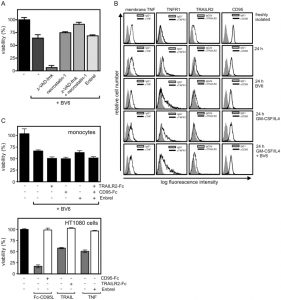
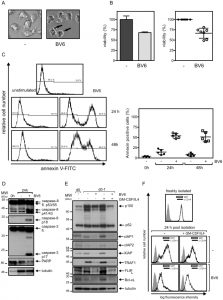 SMAC mimetic BV6 induces cell death in monocytes. |
|---|
 |
Products are for research use only; We do not sell to patients
Copyright 2020 InvivoChem LLC | All Rights Reserved


 COA
COA