

| Size | Price | Stock | Qty |
|---|---|---|---|
| 25mg |
|
||
| 50mg |
|
||
| 100mg |
|
||
| 250mg |
|
||
| 500mg | |||
| Other Sizes |


Purity: ≥98%
| Targets |
5-HT1E Receptor ( Ki = 1.1 nM ); 5-HT1F Receptor ( Ki = 0.7 nM ); 5-HT1A Receptor ( Ki = 63 nM ); 5-HT1B Receptor( Ki = 126 nM ); 5-HT1D Receptor ( Ki = 63 nM );
5-HT2A Receptor ( Ki = 1259 nM ); 5-HT2B Receptor( Ki = 100 nM ); 5-HT2C Receptor ( Ki = 316 nM ); 5-HT6 Receptor ( Ki > 10000 nM ); 5-HT7 Receptor ( Ki > 10000 nM ) BRL-54443 is a selective agonist of 5-hydroxytryptamine 1E (5-HT₁E) and 5-HT₁F receptors. In human recombinant 5-HT₁E receptors (expressed in HEK 293 cells), it exhibits a Ki value of 1.8 nM; in human recombinant 5-HT₁F receptors, the Ki is 3.2 nM [1] - BRL-54443 has negligible affinity for other 5-HT receptor subtypes, including 5-HT₁A (Ki > 1000 nM), 5-HT₁B (Ki > 500 nM), and 5-HT₂A (Ki > 10,000 nM) receptors in human brain membranes [4] - BRL-54443 binds to mouse thoracic aorta 5-HT₁E receptors with an apparent Ki of 2.5 nM, consistent with its affinity for human recombinant 5-HT₁E receptors [2] |
|---|---|
| ln Vitro |
In vitro activity: BRL54443 binds with high affinity at 5-HT1F receptors, despite its low affinity for other receptors, such as 5-HT1A (63 nM), 5-HT1B (126 nM), 5-HT1D (63 nM), 5-HT2A (1259 nM), 5-HT2B (100 nM), 5-HT2C (316 nM), 5-HT6 (>10,000 nM), 5-HT7 (>10,000 nM), D2 (501 nM), D3 (631 nM), and α1B-adrenoceptors (1259 nM)[1].
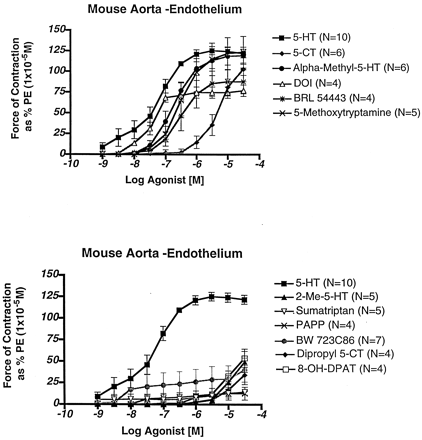
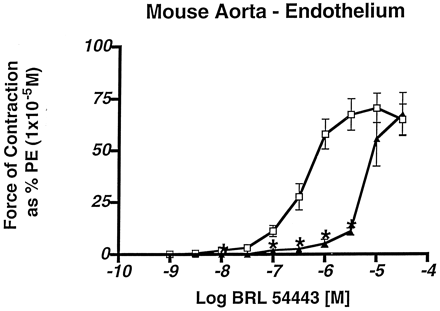
BRL54443 specifically activates 5-HT1E receptors in DG membranes and significantly reduces the production of cAMP that is dependent on forskolin (IC50=14 nM). Moreover, contraction is induced by BRL 54443 (-log EC50=6.52)[2]. Mouse Thoracic Aorta Contraction: In isolated mouse thoracic aorta strips (pre-contracted with phenylephrine, 1 μM), BRL-54443 (10⁻⁹ to 10⁻⁶ M) induces concentration-dependent contraction: 10⁻⁷ M achieves 40% of maximum 5-HT-induced contraction, and 10⁻⁶ M reaches 90% contraction. The EC₅₀ for this effect is 25 nM, and it is completely blocked by the selective 5-HT₁E antagonist SB-224289 (1 μM) [2] - HEK 293 Cell 5-HT₁E Functional Assay: In HEK 293 cells stably expressing human 5-HT₁E receptors, BRL-54443 (10⁻¹⁰ to 10⁻⁶ M) dose-dependently inhibits forskolin-stimulated cAMP production: 10⁻⁸ M reduces cAMP levels by 30%, 10⁻⁷ M reduces by 50% (EC₅₀ = 10 nM), and 10⁻⁶ M achieves maximum inhibition (80%) [1] - 5-HT₁F Receptor Functional Activity: In CHO cells expressing human 5-HT₁F receptors, BRL-54443 (10⁻⁹ to 10⁻⁶ M) concentration-dependently decreases forskolin-induced cAMP accumulation: 10⁻⁷ M reduces cAMP by 45% (EC₅₀ = 35 nM), with no effect on cells lacking 5-HT₁F receptors [1] |
| ln Vivo |
Antinociception was defined as a decrease in flinching. Rats were shown to flinch less from formalin when BRL54443 (5-HT(1E/1F); 3-300 microg/paw) was administered peripherally ipsilaterally, but not contralaterally[3].
Rat Formalin-Induced Nociception Model: In male Sprague-Dawley rats, subcutaneous (s.c.) administration of BRL-54443 (1, 3, 10 mg/kg) 30 min before intraplantar formalin (2.5%, 50 μL) dose-dependently reduces nociceptive behavior: 10 mg/kg decreases phase II (15–60 min) paw-licking time by 60% vs. vehicle, with no effect on phase I (0–5 min) responses. This effect is reversed by co-administration of the 5-HT₁F antagonist GR127935 (1 mg/kg, s.c.) [4] - Mouse Tail-Flick Test: In male ICR mice, intraperitoneal (i.p.) BRL-54443 (5, 10, 20 mg/kg) 20 min before tail-flick stimulation (55°C water) increases tail-flick latency: 10 mg/kg prolongs latency from 2.5 s (vehicle) to 4.5 s (antinociceptive effect), with an ED₅₀ of 8 mg/kg. The effect persists for 60 min post-administration [4] |
| Enzyme Assay |
Human Recombinant 5-HT₁E Binding Assay (HEK 293 Cells): HEK 293 cells expressing human 5-HT₁E receptors were harvested, homogenized in ice-cold Tris-HCl buffer (50 mM, pH 7.4, containing 120 mM NaCl, 5 mM KCl) and centrifuged at 48,000 × g for 15 min. 50 μg of membrane protein was incubated with [³H]-5-HT (0.5 nM) and various concentrations of BRL-54443 (10⁻¹² to 10⁻⁶ M) at 25°C for 60 min. Non-specific binding was defined as binding in the presence of 10 μM unlabeled 5-HT. Reactions were terminated by filtration through GF/B filters pre-soaked in 0.1% polyethyleneimine, washed 3 times with ice-cold buffer, and radioactivity counted via liquid scintillation spectrometry. Ki values were calculated using the Cheng-Prusoff equation [1]
- Mouse Thoracic Aorta 5-HT₁E Binding Assay: Mouse thoracic aorta was dissected, homogenized in ice-cold HEPES buffer (25 mM, pH 7.4, containing 10 mM MgCl₂) and centrifuged at 50,000 × g for 20 min. 75 μg of membrane protein was incubated with [³H]-SB-224289 (0.3 nM, a 5-HT₁E ligand) and BRL-54443 (10⁻¹¹ to 10⁻⁶ M) at 37°C for 45 min. Non-specific binding was determined with 10 μM metergoline. Filtration and radioactivity counting were performed as described above [2] |
| Cell Assay |
HEK 293 Cell cAMP Assay: HEK 293 cells expressing human 5-HT₁E receptors were seeded in 96-well plates (1×10⁴ cells/well) and cultured in DMEM medium supplemented with 10% fetal bovine serum (FBS) for 24 h. Medium was replaced with serum-free DMEM containing BRL-54443 (10⁻¹⁰ to 10⁻⁶ M) for 10 min, followed by addition of forskolin (10 μM) to stimulate cAMP production. After 30 min, cAMP levels were measured using a competitive ELISA kit, with absorbance read at 450 nm. Results were normalized to vehicle-treated cells [1]
- CHO Cell 5-HT₁F Functional Assay: CHO cells expressing human 5-HT₁F receptors were seeded in 24-well plates (5×10⁴ cells/well) in DMEM/F12 + 10% FBS. After 24 h adhesion, medium was replaced with serum-free DMEM/F12 containing BRL-54443 (10⁻⁹ to 10⁻⁶ M) + forskolin (5 μM) for 45 min. cAMP was extracted with ice-cold ethanol, evaporated to dryness, and resuspended in assay buffer. cAMP concentration was quantified via radioimmunoassay [1] |
| Animal Protocol |
Dissolved in distilled water containing 1 equivalent 2,3-dihydroxybutanedioic acid+0.9% NaCl; 3 μg/kg-30 mg/kg; s.c.injection
Adult male cats Rat Formalin Nociception Model: Male Sprague-Dawley rats (220–250 g) were acclimated to test cages for 3 days. Rats were randomized into 4 groups (n=8/group): Vehicle (normal saline + 0.1% DMSO, s.c.), BRL-54443 1 mg/kg (s.c.), 3 mg/kg (s.c.), 10 mg/kg (s.c.). BRL-54443 was dissolved in normal saline with 0.1% DMSO (injection volume: 1 mL/kg). Thirty minutes post-drug, 50 μL of 2.5% formalin was injected into the left hind paw. Paw-licking time was recorded in 5-min intervals for 60 min (phase I: 0–5 min, phase II: 15–60 min). For antagonist interaction, rats received GR127935 (1 mg/kg, s.c.) 15 min before BRL-54443 (10 mg/kg) [4] - Mouse Tail-Flick Model: Male ICR mice (20–22 g) were divided into 4 groups (n=10/group): Vehicle (normal saline, i.p.), BRL-54443 5 mg/kg (i.p.), 10 mg/kg (i.p.), 20 mg/kg (i.p.). Twenty minutes post-injection, mice were placed in a tail-flick apparatus (55°C water bath), and tail-flick latency (time to tail withdrawal) was recorded. A cut-off time of 10 s was used to prevent tissue damage. Latency was measured at 20, 40, 60 min post-drug [4] |
| References |
|
| Additional Infomation |
3-(1-Methyl-4-piperidinyl)-1H-indole-5-ol is a hydroxyindole compound. BRL-54443 is a research tool compound used to study the physiological and pathological effects of 5-HT₁E and 5-HT₁F receptors; it has not yet been approved for clinical use [1,4]. Mechanism of action: Its analgesic effect is mediated by activation of peripheral 5-HT₁F receptors, thereby inhibiting the release of nociceptive neuropeptides (e.g., CGRP) from sensory nerve endings. Its vasoconstrictive effect involves 5-HT₁E receptor-mediated smooth muscle activation [2,4]
- Research applications: BRL-54443 is often used in preclinical models to study the role of 5-HT₁E/1F receptors in pain modulation, vascular physiology, and neuroinflammatory diseases [3,4] - Pharmacological specificity: Unlike non-selective 5-HT agonists, BRL-54443 has very low cross-reactivity with other 5-HT subtypes, making it an important tool for distinguishing 5-HT₁E/1F-dependent signaling pathways [1] |
| Molecular Formula |
C14H18N2O
|
|
|---|---|---|
| Molecular Weight |
230.31
|
|
| Exact Mass |
230.141
|
|
| Elemental Analysis |
C, 73.01; H, 7.88; N, 12.16; O, 6.95
|
|
| CAS # |
57477-39-1
|
|
| Related CAS # |
|
|
| PubChem CID |
2438
|
|
| Appearance |
White to gray solid powder
|
|
| Density |
1.2±0.1 g/cm3
|
|
| Boiling Point |
431.5±45.0 °C at 760 mmHg
|
|
| Flash Point |
214.8±28.7 °C
|
|
| Vapour Pressure |
0.0±1.1 mmHg at 25°C
|
|
| Index of Refraction |
1.646
|
|
| LogP |
1.16
|
|
| Hydrogen Bond Donor Count |
2
|
|
| Hydrogen Bond Acceptor Count |
2
|
|
| Rotatable Bond Count |
1
|
|
| Heavy Atom Count |
17
|
|
| Complexity |
263
|
|
| Defined Atom Stereocenter Count |
0
|
|
| SMILES |
O([H])C1C([H])=C([H])C2=C(C=1[H])C(=C([H])N2[H])C1([H])C([H])([H])C([H])([H])N(C([H])([H])[H])C([H])([H])C1([H])[H]
|
|
| InChi Key |
WKNFADCGOAHBPG-UHFFFAOYSA-N
|
|
| InChi Code |
InChI=1S/C14H18N2O/c1-16-6-4-10(5-7-16)13-9-15-14-3-2-11(17)8-12(13)14/h2-3,8-10,15,17H,4-7H2,1H3
|
|
| Chemical Name |
3-(1-methylpiperidin-4-yl)-1H-indol-5-ol
|
|
| Synonyms |
|
|
| HS Tariff Code |
2934.99.9001
|
|
| Storage |
Powder -20°C 3 years 4°C 2 years In solvent -80°C 6 months -20°C 1 month |
|
| Shipping Condition |
Room temperature (This product is stable at ambient temperature for a few days during ordinary shipping and time spent in Customs)
|
| Solubility (In Vitro) |
DMSO: ~46 mg/mL (~199.7 mM)
Water: 1 mg/mL (Insoluble) Ethanol: ~2 mg/mL (~8.7 mM) |
|---|---|
| Solubility (In Vivo) |
Solubility in Formulation 1: ≥ 2.5 mg/mL (10.85 mM) (saturation unknown) in 10% DMSO + 40% PEG300 + 5% Tween80 + 45% Saline (add these co-solvents sequentially from left to right, and one by one), clear solution.
For example, if 1 mL of working solution is to be prepared, you can add 100 μL of 25.0 mg/mL clear DMSO stock solution to 400 μL PEG300 and mix evenly; then add 50 μL Tween-80 to the above solution and mix evenly; then add 450 μL normal saline to adjust the volume to 1 mL. Preparation of saline: Dissolve 0.9 g of sodium chloride in 100 mL ddH₂ O to obtain a clear solution. Solubility in Formulation 2: ≥ 2.5 mg/mL (10.85 mM) (saturation unknown) in 10% DMSO + 90% (20% SBE-β-CD in Saline) (add these co-solvents sequentially from left to right, and one by one), clear solution. For example, if 1 mL of working solution is to be prepared, you can add 100 μL of 25.0 mg/mL clear DMSO stock solution to 900 μL of 20% SBE-β-CD physiological saline solution and mix evenly. Preparation of 20% SBE-β-CD in Saline (4°C,1 week): Dissolve 2 g SBE-β-CD in 10 mL saline to obtain a clear solution. View More
Solubility in Formulation 3: 30% Propylene glycol , 5% Tween 80 , 65% D5W: 30 mg/mL |
| Preparing Stock Solutions | 1 mg | 5 mg | 10 mg | |
| 1 mM | 4.3420 mL | 21.7099 mL | 43.4197 mL | |
| 5 mM | 0.8684 mL | 4.3420 mL | 8.6839 mL | |
| 10 mM | 0.4342 mL | 2.1710 mL | 4.3420 mL |
*Note: Please select an appropriate solvent for the preparation of stock solution based on your experiment needs. For most products, DMSO can be used for preparing stock solutions (e.g. 5 mM, 10 mM, or 20 mM concentration); some products with high aqueous solubility may be dissolved in water directly. Solubility information is available at the above Solubility Data section. Once the stock solution is prepared, aliquot it to routine usage volumes and store at -20°C or -80°C. Avoid repeated freeze and thaw cycles.
Calculation results
Working concentration: mg/mL;
Method for preparing DMSO stock solution: mg drug pre-dissolved in μL DMSO (stock solution concentration mg/mL). Please contact us first if the concentration exceeds the DMSO solubility of the batch of drug.
Method for preparing in vivo formulation::Take μL DMSO stock solution, next add μL PEG300, mix and clarify, next addμL Tween 80, mix and clarify, next add μL ddH2O,mix and clarify.
(1) Please be sure that the solution is clear before the addition of next solvent. Dissolution methods like vortex, ultrasound or warming and heat may be used to aid dissolving.
(2) Be sure to add the solvent(s) in order.
 |
|---|
 |
Products are for research use only; We do not sell to patients
Copyright 2020 InvivoChem LLC | All Rights Reserved


 COA
COA