| Size | Price | Stock | Qty |
|---|---|---|---|
| 50mg |
|
||
| 100mg |
|
||
| 250mg |
|
||
| 500mg |
|
||
| 1g |
|
||
| 2g | |||
| Other Sizes |
Purity: ≥98%
| Targets |
Abl kinase (wild-type): IC₅₀ ≈ 1.2 nM; Src family kinases (Src: IC₅₀ ≈ 1.5 nM, Lyn: IC₅₀ ≈ 2.4 nM, Hck: IC₅₀ ≈ 1.8 nM); imatinib-resistant Abl mutants (G250E: IC₅₀ ≈ 2.1 nM, M351T: IC₅₀ ≈ 2.7 nM, E255K: IC₅₀ ≈ 3.3 nM); T315I Abl mutant: IC₅₀ > 100 nM (no significant inhibition) [2]
Bosutinib (SKI-606; Bosulif) was used as a dual inhibitor of Abl and Src family kinases in the treatment of newly diagnosed chronic-phase chronic myeloid leukemia (CP-CML) [1] |
|---|---|
| ln Vitro |
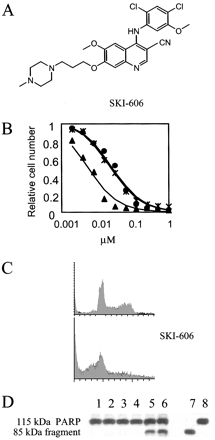
Bosutinib (SKI-606), with IC50 values in the low nanomolar range, is an effective inhibitor of Bcr-Abl in a number of chronic myelogenous leukemia cell lines[2].
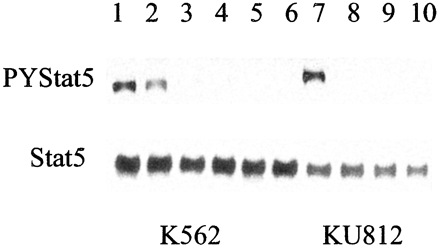
In wild-type Bcr-Abl+ cell lines (K562, BV173): Bosutinib (SKI-606; Bosulif) (0.1 nM–100 nM) concentration-dependently inhibited cell proliferation, with IC₅₀ values of ~15 nM (K562) and ~20 nM (BV173) (MTS assay). Western blot showed reduced phosphorylation of Abl (Tyr412), Src (Tyr416), and downstream substrates (CrkL Tyr207, STAT5 Tyr694) at 50 nM [2] - In imatinib-resistant Bcr-Abl+ cell lines (K562/G01, expressing G250E mutant; K562/M351T, expressing M351T mutant): Bosutinib (SKI-606; Bosulif) (1 nM–100 nM) inhibited proliferation with IC₅₀ values of ~25 nM (K562/G01) and ~30 nM (K562/M351T), while imatinib IC₅₀ > 1000 nM in these lines. It also induced apoptosis (Annexin V/PI staining) in K562/G01 cells: apoptotic rate increased from ~5% (control) to ~45% at 100 nM [2] - In T315I Abl mutant cell line (K562/T315I): Bosutinib (SKI-606; Bosulif) (up to 1000 nM) had no significant antiproliferative activity (viability reduction <10%), indicating resistance of T315I mutant to the drug [2] |
| ln Vivo |
In nude mice, busutinib (oral gavage; 75 mg/kg twice daily or 150 mg/kg once daily) has anti-human KU812 xenograft action. Against syngeneic Bcr-Abl WT and mutant Ba/F3 xenografts, bosutinib (150 mg/kg; once day, five days weekly) has activity[2].
In nude mouse (nu/nu, 6–8 weeks old) xenograft models of K562 (wild-type Bcr-Abl) and K562/G01 (G250E mutant): Mice were randomized into control (solvent), Bosutinib (SKI-606; Bosulif) low-dose (30 mg/kg), and high-dose (60 mg/kg) groups. The drug was administered via oral gavage twice daily for 14 days. For K562 xenografts: tumor volume was reduced by ~60% (low dose) and ~85% (high dose) vs. control; tumor weight at sacrifice was decreased by ~55% (low dose) and ~80% (high dose). For K562/G01 xenografts: tumor volume reduction was ~55% (low dose) and ~75% (high dose); tumor weight decrease was ~50% (low dose) and ~70% (high dose). Western blot of tumor lysates confirmed reduced p-Abl and p-Src levels [2] - In the BELA trial (phase III, randomized, open-label) of newly diagnosed CP-CML patients (n=536, age ≥18 years): Patients were divided into Bosutinib (SKI-606; Bosulif) group (500 mg once daily, oral) and imatinib group (400 mg once daily, oral), with a median follow-up of 12 months. Efficacy outcomes: (1) Complete Cytogenetic Response (CCyR) rate at 12 months: 77.2% (Bosutinib) vs. 66.4% (imatinib); (2) Major Molecular Response (MMR) rate at 12 months: 41.1% (Bosutinib) vs. 27.6% (imatinib); (3) Time to CCyR: median 3.0 months (Bosutinib) vs. 5.6 months (imatinib); (4) No significant difference in progression-free survival (PFS) between groups (97.9% vs. 96.6%) [1] |
| Enzyme Assay |
Recombinant Abl/Src kinase activity assay: Recombinant human wild-type Abl catalytic domain, Src family kinase domains (Src, Lyn, Hck), or imatinib-resistant Abl mutants (G250E, M351T, E255K, T315I) were incubated with reaction buffer (50 mM Tris-HCl pH 7.5, 10 mM MgCl₂, 1 mM DTT) containing ATP (10 μM, including [γ-³²P]ATP) and a peptide substrate (Abl substrate: EAIYAAPFAKKK; Src substrate: KKEEEEYMMMM). Bosutinib (SKI-606; Bosulif) was added at concentrations of 0.01 nM–1000 nM (solvent as control). The reaction was incubated at 30°C for 60 minutes, then terminated by spotting onto phosphocellulose filters. Filters were washed with 0.75% phosphoric acid, and radioactivity was measured via scintillation counting. Inhibition rates were calculated to determine IC₅₀ values [2]
|
| Cell Assay |
Cell Proliferation Assay[2]
Cell Types: The leukemic Bcr-Abl+ cell lines (KCL22, K562, KU812, and Lama84) Tested Concentrations: 0.1 μmol/L Incubation Duration: 72 h Experimental Results: Inhibited several human CML derived cell lines with IC50 values ranging from 1 to 20 nmol/L Bcr-Abl+ cell proliferation assay (MTS): Wild-type (K562, BV173) or imatinib-resistant (K562/G01, K562/M351T, K562/T315I) Bcr-Abl+ cells were seeded in 96-well plates (5×10³ cells/well) and treated with Bosutinib (SKI-606; Bosulif) (0.1 nM–1000 nM, 6 replicates/concentration). After 72 hours of incubation (37°C, 5% CO₂), MTS reagent was added, and absorbance at 490 nm was measured. Cell viability was calculated as (absorbance of drug group/absorbance of control group) × 100%, and IC₅₀ values were determined via GraphPad Prism [2] - Apoptosis assay (Annexin V/PI): K562/G01 cells were treated with Bosutinib (SKI-606; Bosulif) (0 nM, 50 nM, 100 nM) for 48 hours. Cells were harvested, washed with PBS, stained with Annexin V-FITC and PI for 15 minutes in the dark, and analyzed via flow cytometry. Apoptotic cells were defined as Annexin V-positive (early apoptosis: PI-negative; late apoptosis: PI-positive) [2] - Western blot for signaling analysis: K562 or K562/G01 cells were treated with Bosutinib (SKI-606; Bosulif) (0 nM–100 nM) for 2 hours. Cells were lysed with RIPA buffer (含 protease/phosphatase inhibitors), and 30 μg protein was separated by SDS-PAGE, transferred to PVDF membranes. Membranes were probed with antibodies against p-Abl (Tyr412), total Abl, p-Src (Tyr416), total Src, p-CrkL (Tyr207), p-STAT5 (Tyr694), and β-actin (loading control). Signals were detected via ECL chemiluminescence, and band intensities were quantified with ImageJ [2] |
| Animal Protocol |
Animal/Disease Models: KU812CM L xenograft model[2]
Doses: 75 mg/kg twice (two times) daily or 150 mg/kg one time/day Route of Administration: Bosutinib (po (oral gavage); 75 mg/kg twice (two times) daily or 150 mg/kg one time/day) Experimental Results: Had the therapeutic activity and produced a dose- and schedule-dependent weight loss. Animal/Disease Models: Syngeneic Bcr-Abl WT and mutant Ba/F3 xenografts[2] Doses: 150 mg/kg Route of Administration: Bosutinib (150 mg/kg; one time/day, 5 days weekly) Experimental Results: diminished the rate of tumor growth and prolonged event-free survival of mice. Nude mouse xenograft model (K562/K562/G01): Female nude mice (nu/nu, 6–8 weeks old, 18–22 g) were housed in SPF facilities (22–25°C, 12 h light/dark cycle). Bcr-Abl+ cells (5×10⁶ cells/mouse in 100 μL PBS/matrigel 1:1) were subcutaneously injected into the right flank. When tumors reached ~100 mm³, mice were randomized into 3 groups (n=6/group): (1) Control: oral gavage of solvent (5% DMSO, 10% Cremophor EL, 85% normal saline); (2) Low-dose: oral gavage of Bosutinib (SKI-606; Bosulif) (30 mg/kg, dissolved in solvent); (3) High-dose: oral gavage of Bosutinib (SKI-606; Bosulif) (60 mg/kg, dissolved in solvent). Drugs were administered twice daily for 14 days. Tumor volume was measured every 2 days (volume = length × width² / 2). On day 14, mice were euthanized, tumors were excised and weighed, and tumor lysates were prepared for Western blot [2] - BELA trial clinical protocol (human): Eligible patients were adults (≥18 years) with newly diagnosed CP-CML (diagnosed per WHO criteria, within 6 months of enrollment). Patients were randomized 1:1 to Bosutinib (SKI-606; Bosulif) (500 mg once daily, oral, with food) or imatinib (400 mg once daily, oral, with food). Treatment continued until disease progression, unacceptable toxicity, or withdrawal of consent. Follow-up included monthly complete blood counts (CBC) for 3 months, then every 3 months; bone marrow aspirates/biopsies for cytogenetic analysis at 3, 6, 12, 18, and 24 months; molecular testing (BCR-ABL transcript levels) every 3 months. Dose adjustments were allowed for grade ≥3 adverse events (e.g., Bosutinib dose reduced to 400 mg/day for persistent diarrhea) [1] |
| ADME/Pharmacokinetics |
Absorption, Distribution and Excretion
Within the oral dose range of 200 to 800 mg (equivalent to 0.33 to 1.3 times the maximum approved recommended dose of 600 mg), the Cmax and AUC of bosutinib increase proportionally with the dose. After multiple oral doses of 400 mg bosutinib, the steady-state Cmax was 127 ng/mL (31%), Ctrough was 68 ng/mL (39%), and AUC was 2370 ng•h/mL (34%). After multiple oral doses of 500 mg bosutinib, the steady-state Cmax was 171 ng/mL (38%), Ctrough was 91 ng/mL (42%), and AUC was 3150 ng•h/mL (38%). No clinically significant differences in the pharmacokinetics of bosutinib were observed after administration of the same dose of bosutinib tablets or capsules in a food-bearing state. Following a single oral dose of 500 mg bosutinib (taken with food), the median time to peak concentration (tmax) was 6.0 (6.0, 6.0) hours. The absolute bioavailability in healthy subjects was 34%. Compared to fasting, in healthy subjects taking bosutinib tablets, administration after a high-fat meal resulted in a 1.8-fold increase in Cmax and a 1.7-fold increase in AUC. Compared to fasting, in healthy subjects taking bosutinib capsules, administration after a high-fat meal resulted in a 1.6-fold increase in Cmax and a 1.5-fold increase in AUC. A high-fat meal (total calories 800-1000) contains approximately 150 calories of protein, 250 calories of carbohydrates, and 500-600 calories of fat. After a single oral administration of [14C]-labeled bosutinib on an empty stomach, 91.3% of the dose was excreted in feces and 3.3% in urine. The mean (standard deviation) apparent volume of distribution after an oral administration of 500 mg bosutinib was 6080 ± 1230 L. The mean (standard deviation) apparent clearance after a single oral administration of bosutinib was 189 ± 48 L/h. Metabolisms/Metabolites Bosutinib is primarily metabolized by CYP3A4. The major circulating metabolites identified in plasma were oxidative dechlorination (M2) bosutinib (19% of maternal exposure) and N-demethylation (M5) bosutinib (25% of maternal exposure), while bosutinib N-oxide (M6) was a minor circulating metabolite. All metabolites were considered inactive. Biological Half-Life> The mean (standard deviation) of the terminal elimination half-life (t1/2) of bosutinib after a single oral dose is 22.5 ± 1.7 hours. Oral Absorption: In humans (BELA trial), the median time to reach peak plasma concentration (Cmax) of bosutinib (SKI-606; Bosulif) (500 mg orally with food) was 2.0 hours; the mean Cmax was approximately 450 ng/mL and the mean AUC₀-24h was approximately 3800 ng·h/mL [1] -Half-Life: The mean terminal elimination half-life (t₁/₂) of bosutinib (SKI-606; Bosulif) in humans was approximately 22 hours, supporting once-daily dosing [1] -Metabolism: In vitro studies (see [2]) showed that bosutinib (SKI-606; Bosulif) is primarily metabolized by CYP3A4; no major active metabolite was detected [2] - Plasma protein binding rate: approximately 94% (measured by human plasma balanced dialysis method, see [2]) [2] |
| Toxicity/Toxicokinetics |
Hepatotoxicity
Elevated serum transaminase levels were common in large clinical trials of bosutinib, occurring in up to 58% of patients treated with bosutinib. Transaminase levels exceeding the upper limit of normal (ULN) were found in 4% to 19% of bosutinib patients (and 3% of imatinib patients). These abnormalities are often asymptomatic but lead to treatment discontinuation in up to 2% of patients. Additionally, there have been isolated reports of clinically significant liver injury from bosutinib treatment, but the incidence and clinical characteristics of this adverse event are not well understood. Onset typically occurs within 3 months, and the pattern of serum enzyme elevation is usually hepatocellular. Other tyrosine kinase receptor inhibitors used to treat chronic myeloid leukemia (CML), such as imatinib, nilotinib, and ponatinib, have also been associated with cases of acute liver injury with jaundice. With these drugs, liver injury typically occurs several months after treatment, and the pattern of serum enzyme elevation is usually hepatocellular. Immune allergic reactions (rash, fever, and eosinophilia) and autoantibody formation are generally not observed. Imatinib and nilotinib treatments have been reported to cause hepatitis B virus reactivation, but not with bosutinib. Reactivation typically occurs in hepatitis B surface antigen (HBsAg)-positive patients who have received tyrosine kinase inhibitor therapy for 3 to 6 months, manifesting as jaundice, significantly elevated serum transaminases, and elevated hepatitis B virus DNA levels. Hepatitis B virus reactivation can be serious; there have been reports of death following imatinib and nilotinib treatment. Screening for hepatitis B surface antigen (HBsAg) and hepatitis B core antibody (anti-HBc) is sometimes recommended before initiating chemotherapy for cancer. For HBsAg-positive patients, oral antiviral medications such as lamivudine, tenofovir, or entecavir are recommended for prophylaxis. It is currently unclear whether bosutinib treatment leads to hepatitis B virus reactivation. Probability score: D (Possibly a rare cause of clinically significant liver damage). Effects during pregnancy and lactation> ◉ Overview of use during lactation There is currently no information on the clinical use of bosutinib during lactation. Because bosutinib binds to plasma proteins at a rate as high as 96%, its concentration in breast milk may be very low. However, its half-life is approximately 22 hours, so it may accumulate in the infant. The National Comprehensive Cancer Network (NCCN) guidelines recommend avoiding breastfeeding during bosutinib treatment, and the manufacturer recommends discontinuing breastfeeding within 2 weeks of the last dose. ◉ Effects on breastfed infants As of the revision date, no relevant published information was found. ◉ Effects on lactation and breast milk As of the revision date, no relevant published information was found. Protein binding> Bosutinib has an in vitro protein binding rate of 94% and an in vitro protein binding rate of 96%, regardless of concentration. Clinical adverse events (BELA trial): The most common grade ≥3 adverse events in the bosutinib (SKI-606; bosulinib) group (n=268) and the imatinib group (n=268) were: (1) diarrhea: 12.5% vs. 1.9%; (2) elevated ALT: 9.7% vs. 2.6%; (3) elevated AST: 7.8% vs. 2.2%; (4) rash: 6.7% vs. 2.2%; (5) neutropenia: 5.6% vs. 8.2%. No treatment-related deaths were reported in either group. Dose interruption/discontinuation due to toxicity: 15.7% (bosutinib group) vs. 8.2% (imatinib group) [1] - Animal toxicity (xenograft model): No significant weight loss (<5% vs. baseline) or death was observed in nude mice treated with bosutinib (SKI-606; Bosulif) (30 mg/kg or 60 mg/kg twice daily for 14 days). Serum ALT/AST and creatinine levels were within the normal range, indicating no significant hepatotoxicity or nephrotoxicity [2] |
| References |
[1]. Jorge E Cortes, et al. Bosutinib versus imatinib in newly diagnosed chronic-phase chronic myeloid leukemia: results from the BELA trial. J Clin Oncol. 2012 Oct 1;30(28):3486-92.
[2]. Miriam Puttini, et al. In vitro and in vivo activity of SKI-606, a novel Src-Abl inhibitor, against imatinib-resistant Bcr-Abl+ neoplastic cells. Cancer Res. 2006 Dec 1;66(23):11314-22. |
| Additional Infomation |
Pharmacodynamics
Clinical studies have shown that higher bosutinib exposure leads to better efficacy but also a greater likelihood of safety events. The time course of the pharmacodynamic response of bosutinib is not fully elucidated. A single oral dose of 500 mg bosutinib in combination with ketoconazole (a potent CYP3A inhibitor) did not prolong the QT interval to any clinically significant extent. Bosulif (SKI-606; Bosulif) is a dual inhibitor of Abl and Src family kinases, designed to overcome imatinib resistance in Bcr-Abl+ leukemia by targeting Abl mutants (except T315I) and Src-mediated signaling pathway bypasses [2] - The BELA trial showed that bosulif (SKI-606; Bosulif) (500 mg once daily) achieved cytogenetic and molecular remissions faster and higher than imatinib in newly diagnosed chronic phase chronic myeloid leukemia (CP-CML) patients, supporting its use as a first-line treatment [1] - bosulif (SKI-606; Bosulif) has been approved by the FDA for the treatment of newly diagnosed adult patients with CP-CML and CP-CML patients who are resistant to/intolerant of imatinib. The patient (mentioned in [1] as clinical background) [1] |
| Molecular Formula |
C26H29CL2N5O3
|
|---|---|
| Molecular Weight |
530.45
|
| Exact Mass |
529.164
|
| CAS # |
380843-75-4
|
| Related CAS # |
Bosutinib hydrate;918639-08-4;Bosutinib-d8;Bosutinib isomer;1391063-17-4
|
| PubChem CID |
5328940
|
| Appearance |
White to yellow solid powder
|
| Density |
1.4±0.1 g/cm3
|
| Boiling Point |
649.7±55.0 °C at 760 mmHg
|
| Melting Point |
116-120ºC
|
| Flash Point |
346.7±31.5 °C
|
| Vapour Pressure |
0.0±1.9 mmHg at 25°C
|
| Index of Refraction |
1.652
|
| LogP |
5.48
|
| Hydrogen Bond Donor Count |
1
|
| Hydrogen Bond Acceptor Count |
8
|
| Rotatable Bond Count |
9
|
| Heavy Atom Count |
36
|
| Complexity |
734
|
| Defined Atom Stereocenter Count |
0
|
| SMILES |
ClC1=C([H])C(=C(C([H])=C1N([H])C1=C(C#N)C([H])=NC2=C([H])C(=C(C([H])=C21)OC([H])([H])[H])OC([H])([H])C([H])([H])C([H])([H])N1C([H])([H])C([H])([H])N(C([H])([H])[H])C([H])([H])C1([H])[H])OC([H])([H])[H])Cl
|
| InChi Key |
UBPYILGKFZZVDX-UHFFFAOYSA-N
|
| InChi Code |
InChI=1S/C26H29Cl2N5O3/c1-32-6-8-33(9-7-32)5-4-10-36-25-13-21-18(11-24(25)35-3)26(17(15-29)16-30-21)31-22-14-23(34-2)20(28)12-19(22)27/h11-14,16H,4-10H2,1-3H3,(H,30,31)
|
| Chemical Name |
4-(2,4-dichloro-5-methoxyphenylamino)-6-methoxy-7-(3-(4-methylpiperazin-1-yl)propoxy)quinoline-3-carbonitrile
|
| Synonyms |
Bosutinib; SKI606; SKI 606; SK-I606; trade name: Bosulif.
|
| HS Tariff Code |
2934.99.9001
|
| Storage |
Powder -20°C 3 years 4°C 2 years In solvent -80°C 6 months -20°C 1 month Note: This product requires protection from light (avoid light exposure) during transportation and storage. |
| Shipping Condition |
Room temperature (This product is stable at ambient temperature for a few days during ordinary shipping and time spent in Customs)
|
| Solubility (In Vitro) |
DMSO: 100 mg/mL (188.5 mM)
Water: 1 mg/mL (Insoluble) Ethanol: 2 mg/mL (3.8 mM) |
|---|---|
| Solubility (In Vivo) |
Solubility in Formulation 1: ≥ 2.5 mg/mL (4.71 mM) (saturation unknown) in 10% DMSO + 40% PEG300 + 5% Tween80 + 45% Saline (add these co-solvents sequentially from left to right, and one by one), clear solution.
For example, if 1 mL of working solution is to be prepared, you can add 100 μL of 25.0 mg/mL clear DMSO stock solution to 400 μL PEG300 and mix evenly; then add 50 μL Tween-80 to the above solution and mix evenly; then add 450 μL normal saline to adjust the volume to 1 mL. Preparation of saline: Dissolve 0.9 g of sodium chloride in 100 mL ddH₂ O to obtain a clear solution. Solubility in Formulation 2: ≥ 2.5 mg/mL (4.71 mM) (saturation unknown) in 10% DMSO + 90% Corn Oil (add these co-solvents sequentially from left to right, and one by one), clear solution. For example, if 1 mL of working solution is to be prepared, you can add 100 μL of 25.0 mg/mL clear DMSO stock solution to 900 μL of corn oil and mix evenly. View More
Solubility in Formulation 3: ≥ 2.08 mg/mL (3.92 mM) (saturation unknown) in 10% DMSO + 90% (20% SBE-β-CD in Saline) (add these co-solvents sequentially from left to right, and one by one), clear solution. Solubility in Formulation 4: 2% DMSO+30% PEG 300+5% Tween 80+ddH2O: 10 mg/mL |
| Preparing Stock Solutions | 1 mg | 5 mg | 10 mg | |
| 1 mM | 1.8852 mL | 9.4260 mL | 18.8519 mL | |
| 5 mM | 0.3770 mL | 1.8852 mL | 3.7704 mL | |
| 10 mM | 0.1885 mL | 0.9426 mL | 1.8852 mL |
*Note: Please select an appropriate solvent for the preparation of stock solution based on your experiment needs. For most products, DMSO can be used for preparing stock solutions (e.g. 5 mM, 10 mM, or 20 mM concentration); some products with high aqueous solubility may be dissolved in water directly. Solubility information is available at the above Solubility Data section. Once the stock solution is prepared, aliquot it to routine usage volumes and store at -20°C or -80°C. Avoid repeated freeze and thaw cycles.
Calculation results
Working concentration: mg/mL;
Method for preparing DMSO stock solution: mg drug pre-dissolved in μL DMSO (stock solution concentration mg/mL). Please contact us first if the concentration exceeds the DMSO solubility of the batch of drug.
Method for preparing in vivo formulation::Take μL DMSO stock solution, next add μL PEG300, mix and clarify, next addμL Tween 80, mix and clarify, next add μL ddH2O,mix and clarify.
(1) Please be sure that the solution is clear before the addition of next solvent. Dissolution methods like vortex, ultrasound or warming and heat may be used to aid dissolving.
(2) Be sure to add the solvent(s) in order.
| NCT Number | Recruitment | interventions | Conditions | Sponsor/Collaborators | Start Date | Phases |
| NCT04793399 | Terminated Has Results | Drug: Bosutinib 400 MG Monotherapy | Chronic Phase-Chronic Myeloid Leukemia |
Fundacion Espanola para la Curacionde la Leucemia Mieloide Cronica |
February 24, 2021 | Phase 1 Phase 2 |
| NCT03888222 | Completed | Drug: Placebo Oral Tablet Drug: Bosutinib Oral Tablet |
Dementia With Lewy Bodies | Georgetown University | April 23, 2019 | Phase 2 |
| NCT05363488 | Completed | Drug: Bosutinib | Myeloid Leukemia | Pfizer | October 8, 2021 | |
| NCT04549480 | Completed | Drug: Bosutinib capsule Drug: Bosutinib tablet |
Healthy Participants | Pfizer | September 16, 2020 | Phase 1 |
SKI-606 is a potent inhibitor of CML cell proliferation and survival.Cancer Res.2003 Jan 15;63(2):375-81. |
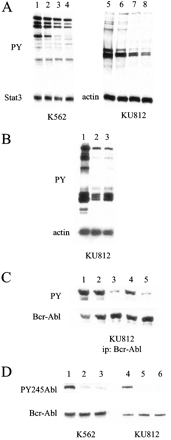
SKI-606 inhibits tyrosine phosphorylation of cellular proteins and Bcr-Abl in CML cells.Cancer Res.2003 Jan 15;63(2):375-81. |
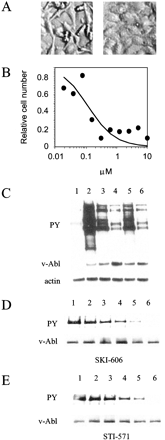
SKI-606 is an Abl kinase inhibitor.Cancer Res.2003 Jan 15;63(2):375-81. |
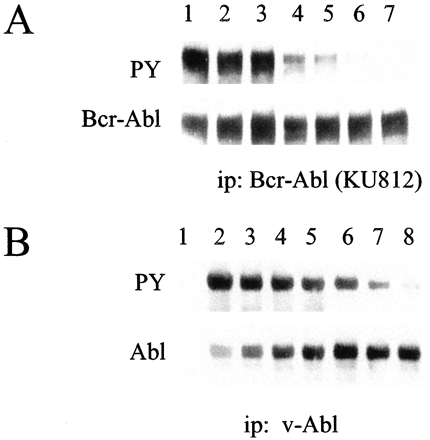
Comparison of inhibition of Bcr-Abl tyrosine phosphorylation and v-Abl phosphorylation by SKI-606.Cancer Res.2003 Jan 15;63(2):375-81. |
SKI-606 inhibits downstream signaling from Bcr-Abl.Cancer Res.2003 Jan 15;63(2):375-81. |
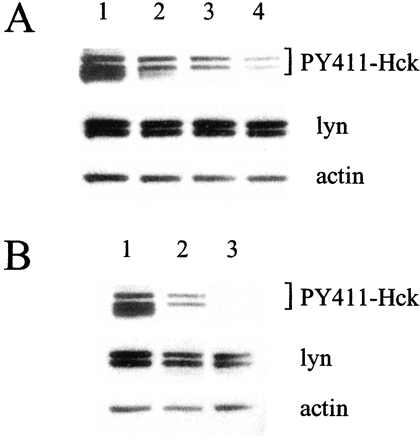
SKI-606 reduces phosphorylation of Tyr397 in Lyn.Cancer Res.2003 Jan 15;63(2):375-81. |
Products are for research use only; We do not sell to patients
Copyright 2020 InvivoChem LLC | All Rights Reserved


 COA
COA