| Size | Price | Stock | Qty |
|---|---|---|---|
| 1mg |
|
||
| 5mg |
|
||
| 10mg |
|
||
| 25mg |
|
||
| 50mg |
|
||
| 100mg |
|
||
| 250mg |
|
||
| Other Sizes |


Purity: ≥98%
Birinapant (TL32711; TL-32711; TL 32711) is a novel and potent bivalent peptidomimetic of the IAP (Inhibitor of Apoptosis Protein) family protein and the second mitochondrial-derived activator of caspases. It might be effective against cancer. A SMAC mimetic antagonist, birinapant primarily inhibits cIAP1 with a Kd of <1 nM in a cell-free assay and is less effective against XIAP.
Birinapant (code name TL32711) is a bivalent SMAC mimetic that antagonizes members of the inhibitor of apoptosis protein (IAP) family by mimicking the AVPI tetrapeptide motif of the endogenous SMAC protein. Developed by TetraLogic Pharmaceuticals, this compound was an anti-tumor drug candidate that entered clinical trials for the treatment of various solid tumors and hematologic malignancies.| Targets |
XIAP (Kd = 45 nM); cIAP1 (Kd <1 nM)
Birinapant primarily targets IAP family proteins, including cIAP1, cIAP2, XIAP, and ML-IAP. In cell-free systems, it exhibits ultra-high affinity for the BIR3 domain of cIAP1 (Kd < 1 nM) and binds XIAP with a Kd of 45 nM. Birinapant preferentially targets TRAF2-associated cIAP1 and cIAP2, inducing their autoubiquitylation and proteasomal degradation, thereby relieving IAP-mediated inhibition of apoptotic pathways. |
|---|---|
| ln Vitro |
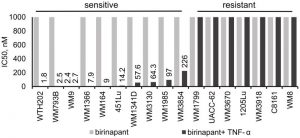
Birinapant binds to both cIAP1 and XIAP with Kd values of 45 and 1 nM, respectively. Birinapant significantly increases the potency of TNF-α-induced apoptosis in SUM149 (triple-negative, EGFR-activated) cells, which are TRAIL-sensitive but TRAIL-insensitive SUM190 (ErbB2-overexpressing) cells. Rapid cIAP1 degradation, activation of caspases, cleavage of PARP, and activation of NF-B are all brought about by birinapant.[1] In vitro, birinapant and TNF- exhibit an effective antimelanoma effect. While neither substance is effective alone, birinapant combined with TNF-(1 ng/mL) inhibits the growth of the human melanoma cell lines WTH202, WM793B, WM1366, and WM164 with IC50s of 1.8, 2.5, 7.9, and 9 nM, respectively. With an IC50 of 2.4 nM, birinapant alone inhibits the proliferation of WM9 cells. In these cell lines, birinapant significantly inhibits the target proteins cIAP1 and cIAP2.[2]
Birinapant effectively induces death in various tumor cells in vitro. Mechanistically, following cIAP1/2 degradation, it promotes the formation of a RIPK1:caspase-8 complex, activates caspase-8, and initiates the extrinsic apoptotic pathway. When combined with TNF-α, Birinapant demonstrates IC50 values of 1.8, 2.5, 7.9, and 9 nM against the melanoma cell lines WTH202, WM793B, WM1366, and WM164, respectively. In ALL cell lines, the median IC50 in combination with TNF-α is as low as 3.6 nM, exhibiting profound cytotoxic effects. |
| ln Vivo |
Birinapant (30 mg/kg) treatment significantly induces abrogation of tumor growth in melanoma xenotransplantation models 451Lu with. [2]
Birinapant inhibits tumor growth in melanoma xenotransplantation models as a single agent [2] To investigate whether birinapant could inhibit melanoma tumor growth in an in vivo setting as a single agent, two cell lines were selected for xenotransplantation experiments: both were in vitro birinapant single agent resistant, but 451Lu did respond in vitro to the combination of birinapant with TNF-α, whereas 1205Lu did not respond to the combination treatment in vitro. Both cell lines were inoculated s.c. in NUDE mice and allowed to form palpable tumors before being randomized into vehicle control and birinapant treatment groups. During three weeks of dosing, birinapant showed an antitumor effect in both models, although the effect in the in vitro combination sensitive cell line was more sustained with abrogation of tumor growth in the birinapant treated animals. In contrast, 1205Lu tumors showed a marked slowing of tumor growth, but not abrogation of tumors (Fig 5A). In a subsequent in vivo experiment, we then went on to confirm birinapant target inhibition in both models by immunoblot of tumor lysates. Animals were again inoculated with both xenograft models and tumors allowed to from. Animals were then pre-treated twice in an interval of 48h and tumors were harvested 3, 6, 12, and 24 hours after the second dosing. Compared to vehicle control, cIAP1 protein was reduced to low levels at 3h post and this effect was sustained for 24 hours in both models (Fig 5B). Staining for activated caspase-3 in biopsies of the same tumors showed a modest increase in apoptotic cells in the birinapant treated animals compared to vehicle control, 24h post treatment (Fig 5C). Drug treatment increased the mean [(18)F]ICMT-11 tumor uptake with a peak at 24 hours for CPA (40 mg/kg; AUC40-60: 8.04 ± 1.33 and 16.05 ± 3.35 %ID/mL × min at baseline and 24 hours, respectively) and 6 hours for birinapant (15 mg/kg; AUC40-60: 20.29 ± 0.82 and 31.07 ± 5.66 %ID/mL × min, at baseline and 6 hours, respectively). Voxel-based spatiotemporal analysis of tumor-intrinsic heterogeneity suggested that discrete pockets of caspase-3 activation could be detected by [(18)F]ICMT-11. Increased tumor [(18)F]ICMT-11 uptake was associated with caspase-3 activation measured ex vivo, and early radiotracer uptake predicted apoptosis, distinct from the glucose metabolism with [(18)F]fluorodeoxyglucose-PET, which depicted continuous loss of cell viability. Conclusion: The proapoptotic effects of CPA and birinapant resulted in a time-dependent increase in [(18)F]ICMT-11 uptake detected by PET. [(18)F]ICMT-11-PET holds promise as a noninvasive pharmacodynamic biomarker of caspase-3-associated apoptosis in tumors. [3] Birinapant effectively inhibits tumor growth at well-tolerated doses in multiple patient-derived xenograft (PDX) models. In pediatric ALL xenograft models, birinapant (30 mg/kg, intraperitoneal, Q3D × 5) induced significant event-free survival differences in 3 out of 3 B-precursor ALL models, with ALL-17 achieving complete response and ALL-2 achieving maintained complete remission (remaining in remission until day 42). In a myeloma xenograft model, the combination of birinapant and bortezomib significantly prolonged survival. |
| Enzyme Assay |
A fluorogenic substrate is used to ascertain the binding affinities of substances to XIAP and cIAP1, and the Kd values are then reported. The fluorescently labeled modified Smac peptide (AbuRPF-K(5-Fam)-NH2; FP pep-tide) dissociation constant (Kd) is first calculated by titrating varying protein concentrations (0.075–5 μM in half log dilutions) with a fixed concentration of peptide (5 nM). With 5 nM of FP peptide and 50 nM of XIAP used in the assay, the nonlinear least squares fit to a single-site binding model using GraphPad Prism produced the dose-response curves. The FP peptide:protein binary complex is mixed with various concentrations of Smac mimetics (100-0.001 μM in half log dilutions) for 15 min at room temperature in 100 mL of 0.1 M potassium phosphate buffer, pH 7.5, containing 100 mg/mL bovine c-globulin. After incubation, the polarization values are determined using a 520 nm emission filter and a 485 nm excitation filter on a multi-label plate reader.
Protein Preparation: Express and purify BIR domains of IAP family proteins (e.g., cIAP1-BIR3, XIAP-BIR3). Affinity Determination: Use fluorescence polarization (FP) or surface plasmon resonance (SPR) to measure the binding affinity (Kd) of birinapant to each BIR domain. Competitive Binding: Use fluorescently labeled SMAC-derived peptides as tracers to validate binding specificity through competitive binding assays. Data Analysis: Calculate Kd values of birinapant for each target, resulting in cIAP1 < 1 nM and XIAP = 45 nM. |
| Cell Assay |
After 24 hours of cell attachment, the cells are incubated with birinapant and/or TNF- for another 24 or 72 hours. The MTS assay is then carried out.
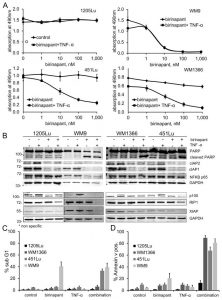
Cell viability [1] Trypan blue exclusion assay was performed as described previously [2]. Cells were seeded in 6 well plates at 7.5 × 10⁴ (SUM149) or 1.5 × 10⁵ (SUM190) cells per well and allowed to adhere overnight. Cells were treated with TRAIL (0–100 ng mL−1), Birinapant (0–10,000 nM), GT13402 (0–10,000 nM), TNF-α (50 ng mL−1), TNF-α neutralizing antibody (10 μg mL−1), pan-caspase inhibitor Q-VD-OPh (20 μM), or a combination as indicated. All treatments were applied for 24 h, and then the cells were trypsinized and resuspended in PBS. Next, 10 μL of cell suspension was added to 10 μL 0.4 % trypan blue, and 10 μL of the mixture was loaded onto a hemocytometer; cells were counted, and live and dead cell numbers were recorded. Clonogenic growth assay [1] Cells were plated in triplicate in 6 well plates at 250–500 cells per well (SUM149) or 500–1,000 cells per well (SUM190) and allowed to adhere overnight. Cells were treated with TRAIL (0–100 ng mL−1), Birinapant (0–10,000 nM), GT13402 (0–10,000 nM), TNF-α (50 ng mL−1), TNF-α neutralizing antibody (10 μg mL−1), pan-caspase inhibitor Q-VD-OPh (20 μM), or a combination as indicated. After 24 h treatments, the cells were washed twice with PBS, and regular growth media was added. The cells were then allowed to grow for 5–14 days, changing the media every 4–5 days. Once colonies of at least 50 cells were observed, the cells were washed with PBS, fixed, stained with 0.4 % crystal violet, then rinsed in cold water and left to dry overnight. Colonies were counted and imaged using a ColCount, and colonies formed per cells plated was calculated. Numbers were normalized to untreated. Annexin-V staining [1] Cells were seeded in 6 well plates at 7.5 × 10⁴ (SUM149) or 1.5 × 10⁵ (SUM190) cells per well and allowed to adhere overnight. Cells were treated with TRAIL (0–100 ng mL−1), Birinapant (0–1,000 nM), GT13402 (0–1,000 nM), or a combination as indicated for 12 h. Cells were harvested with 0.25 % trypsin (-EDTA), washed with PBS, and resuspended in biotin-conjugated Annexin-V for 5 min at RT. Cells were washed again with PBS and resuspended in streptavidin-conjugated FITC and 7-AAD dyes for 15 min on ice. Cells were washed and resuspended in PBS, and then at least 25,000 events were collected on a BD FACSCalibur flow cytometer. Results were analyzed using FlowJo software. TNFR1 knockdown [1] Cells were seeded in 6 well plates at 1.5 × 10⁵ cells per well and allowed to adhere overnight. After 24 h, either scramble control siRNA or TNFR1 targeting siRNA at 100 nM was applied in the presence of Dharmafect transfection reagent. Birinapant (0–1,000 nM) was added the day after transfection, and cells were harvested after 24 h for trypan blue viability staining and western immunoblotting to confirm knockdown. In vitro drug sensitivity assays [2] For monolayer cell culture assays, cells were allowed to attach for 24h and subsequently incubated with Birinapant and/or TNF-α for 24 or 72h. CellTiter 96® AQueous Non-Radioactive Cell Proliferation Assay (MTS) assay was performed according to the manufacturer’s description. For cell cycle analysis, melanoma cells were fixed in 70% ethyl alcohol and stained with propidium iodide. Samples were subsequently analyzed with an EPICS XL apparatus. Annexin V staining was performed with an annexin V allophycocyanin conjugate according to the manufacturer’s description. Briefly, cells were treated with DMSO control, Birinapant and/or TNF-α for 24h. Resuspended cells were washed and incubated with the conjugate for 15min and annexin-binding buffer was added. Samples were subsequently analyzed with an EPICS XL apparatus. 451Lu and WM1366 melanoma cells were treated with Birinapant 1uM in combination with TNF-α 1ng/ml. Cells were then incubated for 72h in the presence or absence of Z-VAD-FMK a pan caspase inhibitor. Proliferation was assessed using the MTS assay. 451Lu and WM1366 melanoma cells were treated with Birinapant 1uM in combination with TNF-α 1ng/ml. Cells were then incubated for 72h in the presence or absence of Necrostatin-1 a RIP1 kinase inhibitor. Proliferation was assessed using the MTS assay. [2] Cell Culture: Seed tumor cells in 96-well plates and culture to appropriate confluence (e.g., ALL, melanoma, myeloma cell lines). Drug Treatment: Add varying concentrations of birinapant (alone or in combination with TNF-α/TRAIL/chemotherapeutics) and incubate for 48-96 hours. Viability Assay: Measure cell viability using MTT, CCK-8, or CellTiter-Glo methods to calculate IC50 values. Apoptosis Detection: Assess apoptosis rate by Annexin V/PI double staining flow cytometry, or detect markers such as cIAP1/2 degradation, caspase-8 activation, and PARP cleavage by Western blot. |
| Animal Protocol |
Human melanoma xenografts 451Lu
30 mg/kg 3 times per week intraperitoneally All animal experiments were performed in accordance with Wistar IACUC protocol 111954 in NUDE mice. Ten animals each were inoculated s.c. with 1×10⁶ 451Lu or 1205Lu human melanoma cells in a suspension of matrigel / complete media at a ratio of 1:1. After formation of palpable tumors, mice from both tumor models were randomized into two groups. Both groups were treated intra-peritoneal three times/ week with either vehicle control or Birinapant 30mg/kg for 21 days. Birinapant was dissolved in 12.5% Captisol in distilled water. Tumor size was assessed twice weekly by caliper measurement. Subsequently, satellite groups of ten and fifteen mice were inoculated in the same fashion with 451Lu and 1205Lu tumor cells respectively. After tumors had reached a mean volume of 200mm3 animals were dosed with either Birinapant or vehicle control as described above. After 48 hours and two doses, animals were sacrificed and tumors were harvested at four time points after the last treatment. Tumor samples were snap frozen in liquid nitrogen for subsequent protein analysis and preserved as FFPE blocks for immune-histochemistry. [2] Small animal experimental models [3] The in vivo experimental xenograft models were established by subcutaneous injection of 5 × 10³ 38C13 cells in C3H mice and 5 × 10⁶ HCT116 or 2 × 10⁶ MDA-MB-231 cells in BALB/c nude mice. All mice were 6- to 8-week-old females from Charles River. When xenografts reached approximately 80 mm3 [tumor dimensions were measured using a caliper and tumor volumes were calculated using the ellipsoid formula that is best for estimating tumor mass; volume mm3 = (π/6) × a × b × c, where a, b, and c represent 3 orthogonal axes of the tumor], mice were injected a single dose of CPA (40 mg/kg i.p.) or Birinapant (15 m/kg i.p.) and subjected to positron emission tomography-computed tomography (PET-CT) imaging in a longitudinal setting where the same animal serves as its own control. Animals & Models: Use immunodeficient mice (e.g., NSG or SCID mice) implanted subcutaneously or intravenously with tumor cells to establish xenograft models (ALL, myeloma, solid tumors, etc.). Grouping & Dosing: When tumors reach approximately 100-200 mm³, randomize animals into control and treatment groups. Birinapant is typically administered intraperitoneally at 30 mg/kg on a Q3D×5 schedule, or in combination with chemotherapeutic agents. Monitoring: Measure tumor volume and body weight 2-3 times weekly; record event-free survival (EFS) and overall survival (OS). Endpoint Analysis: Euthanize animals at study termination, collect tumor tissues for Western blot (cIAP1/2, PARP, etc.), immunohistochemistry, and TUNEL staining to assess in vivo target inhibition and apoptosis induction. |
| ADME/Pharmacokinetics |
Birinapant is administered as a 30-minute intravenous infusion once weekly. Clinical pharmacokinetic studies in 114 patients with advanced malignancies demonstrate a three-compartment model: terminal half-life of approximately 40 hours, clearance of 21 L/h, and steady-state volume of distribution of 10.2 L. Birinapant exhibits linear pharmacokinetics across the dose range of 0.18-35 mg/m² with no significant accumulation following weekly dosing. When combined with irinotecan, docetaxel, gemcitabine, or liposomal doxorubicin, birinapant pharmacokinetics remain unchanged; however, co-administration with paclitaxel/carboplatin results in a 2-fold increase in AUC, potentially due to reduced OATP1B3-mediated tissue uptake.
|
| Toxicity/Toxicokinetics |
Birinapant is generally well-tolerated in preclinical and clinical studies. In pediatric ALL xenograft models, the 30 mg/kg (Q3D×5) regimen was well-tolerated with no reported significant toxicity. In myeloma xenograft models, the combination of birinapant with bortezomib was also well-tolerated. In clinical studies, birinapant tolerability remained unchanged when combined with multiple chemotherapy regimens; even with the 2-fold increased exposure when co-administered with paclitaxel/carboplatin, no change in tolerability was observed. Of note, birinapant is for research use only and should be handled by trained personnel, avoiding skin and eye contact.
|
| References |
|
| Additional Infomation |
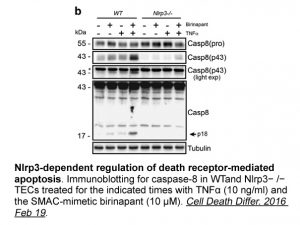
Birinapant is a dipeptide. Birinapant has been investigated for the treatment of myelodysplastic syndromes (MDS) and chronic myelomonocytic leukemia (CMML). Birinapant is a synthetic small molecule that is both a peptide mimic of mitochondrial-derived caspase activator II (SMAC) and an inhibitor of the inhibitor of apoptosis protein (IAP) family of proteins, possessing potential antitumor activity. As a SMAC mimic and IAP antagonist, Birinapant selectively binds to and inhibits the activity of IAPs, such as X-linked IAP (XIAP) and cellular IAP 1 (cIAP1) and 2 (cIAP2), with stronger inhibition of cIAP1 than cIAP2. Since IAPs can protect cancer cells from the apoptosis process, this drug may restore and promote apoptosis induction by activating apoptosis signaling pathways in cancer cells and inhibiting nuclear factor-κB (NF-κB)-mediated survival pathways. Many cancer cell types overexpress IAPs. Inhibiting apoptosis is achieved by binding to active caspases -3, -7, and -9 via their baculoviral lAP repeat (BIR) domains. Overexpression of IAPs can both promote cancer cell survival and enhance chemotherapy resistance. X-linked inhibitor of apoptosis (XIAP) is the most potent caspase inhibitor in mammals and is associated with acquired treatment resistance in inflammatory breast cancer (IBC), an aggressive subtype of breast cancer with extremely low survival rates. Second mitochondrial-derived caspase activator (Smac) protein is a potent antagonist of IAP proteins and forms the basis for the development of Smac mimics. This paper reports for the first time that the bivalent Smac mimic, Birinapant, can induce death in TRAIL-insensitive SUM190 (ErbB2 overexpressing) cells as a single agent and significantly enhance the efficacy of TRAIL-induced apoptosis in TRAIL-sensitive SUM149 (triple-negative, EGFR-activated) cells (two patient-derived IBC tumor models). Birinapant exhibits high affinity (nanomolar levels) for both cIAP1/2 and XIAP. Using homologous SUM149 and SUM190 cells with different XIAP expression levels (SUM149 wtXIAP, SUM190 shXIAP) and a bivalent Smac mimic (GT13402) with high cIAP1/2 binding affinity but low XIAP binding affinity (Kd > 1 μM), we demonstrated that XIAP inhibition is necessary to enhance TRAIL efficacy. Conversely, the efficacy of birinapant monotherapy is attributed to its antagonistic effect on pan-IAP. Birinapant induces rapid degradation of cIAP1, caspase activation, PARP cleavage, and NF-κB activation. Birinapant treatment slightly increased TNF-α production in SUM190 cells, while no increase was observed in SUM149 cells. The addition of exogenous TNF-α did not enhance the efficacy of birinapant. Neither TNF-α neutralizing antibody nor TNFR1 knockdown reversed cell death. However, the pan-cysteine inhibitor Q-VD-OPh reversed birinapant-mediated cell death. In addition, birinapant alone or in combination reduced the colony-forming ability and anchorage-independent growth potential of IBC cells. These findings suggest that birinapant initiates cancer cell death in an IAP-dependent manner, thus supporting the development of Smac mimics for the treatment of IBC. [1]
Objective: Inhibitors of apoptosis (IAP) promote cancer cell survival and confer treatment resistance. We report a second mitochondrial-derived caspase mimic, birinapant, that restores the sensitivity of melanoma cells to apoptotic stimuli such as TNF-α. Birinapant can act as an antagonist of cIAP1 and cIAP2. Experimental design: We selected 17 melanoma cell lines representing the five major genetic subtypes of cutaneous melanoma. We treated these cell lines with birinapanant alone or in combination with TNF-α. We evaluated the effects of the drugs on cell viability, target inhibition, and apoptosis initiation, and validated these results in two-dimensional (2D), three-dimensional (3D) spheroids, and in vivo xenograft models. Results: When birinapanant was used in combination with TNF-α, significant combined activity was observed in 12 of 18 cell lines, meaning that neither drug alone was effective, but the combination was highly effective. This response was also observed in the spheroid model, and in vivo experiments showed that birinapanant inhibited tumor growth in in vitro resistant cell lines even without the addition of TNF-α. The combination of birinapanant and TNF-α showed the same degree of growth inhibition in acquired BRAF inhibitor-resistant melanoma cell lines as in parental cell lines. Conclusion: Birinapanant in combination with TNF-α exhibits potent anti-melanoma activity in vitro. Even when cells are resistant to monotherapy in vitro, birinapanant as a single agent shows antitumor activity in vivo. Birinapant in combination with TNF-α was effective against melanoma cell lines resistant to acquired BRAF inhibitors. [2] Objective: Inducing tumor cell apoptosis is considered an ideal target for anticancer therapy. We investigated whether the dynamic spatiotemporal evolution of apoptosis induced by cytotoxic and mechanism-targeted drugs could be noninvasively detected using the caspase-3 radiotracer [(18)F]ICMT-11 and positron emission tomography (PET). Experimental design: We evaluated the effect of a single dose of the alkylating agent cyclophosphamide (CPA or 4-hydroperoxycyclophosphamide) or the mechanism-targeted small molecule SMAC mimic birinapant on caspase-3 activation in vitro and in vivo using [(18)F]ICMT-11-PET in tumor-bearing mice (38C13 B-cell lymphoma, HCT116 colon cancer, or MDA-MB-231 breast adenocarcinoma). We compared the results of ex vivo analysis of caspase-3 with in vivo PET imaging data. [3] Acquiring apoptosis resistance is a fundamental event in cancer development. One of the mechanisms by which cancer cells evade apoptosis is the dysregulation of inhibitory apoptosis proteins (IAPs). The activity of IAPs is regulated by endogenous IAP antagonists, such as SMAC, also known as DIABLO. SMAC antagonizes IAP proteins by binding to specific BIR domains of IAPs via its N-terminal tetrapeptide (AVPI). Small molecule compounds that mimic the SMAC AVPI motif have been designed to overcome IAP-mediated apoptosis resistance in cancer cells. This article reports the preclinical characterization of birinapant (TL32711), a divalent SMAC mimic compound currently undergoing clinical trials for cancer treatment. In vitro experiments showed that birinapant can bind to the BIR3 domain of cIAP1, cIAP2 and XIAP and the BIR domain of ML-IAP, and induce autoubiquitination and proteasomal degradation of cIAP1 and cIAP2 in intact cells, leading to the formation of the RIPK1:caspase-8 complex, activation of caspase-8 and tumor cell death. Birinapant preferentially targets TRAF2-associated cIAP1 and cIAP2, thereby inhibiting TNF-induced NF-κB activation. Birinapant can enhance the activity of various chemotherapeutic anticancer drugs in a TNF-dependent or TNF-independent manner. In various primary patient-derived xenograft models, tolerated doses of birinapant inhibited tumor growth. These results support the combination therapy of birinapant with various chemotherapeutic drugs, especially those that can induce TNF secretion. [4] |
| Molecular Formula |
C42H56F2N8O6
|
|
|---|---|---|
| Molecular Weight |
806.94
|
|
| Exact Mass |
806.42909
|
|
| Elemental Analysis |
C, 62.51; H, 6.99; F, 4.71; N, 13.89; O, 11.90
|
|
| CAS # |
1260251-31-7
|
|
| Related CAS # |
|
|
| PubChem CID |
49836020
|
|
| Appearance |
White solid powder
|
|
| Density |
1.3±0.1 g/cm3
|
|
| Boiling Point |
1090.5±65.0 °C at 760 mmHg
|
|
| Flash Point |
613.3±34.3 °C
|
|
| Vapour Pressure |
0.0±0.3 mmHg at 25°C
|
|
| Index of Refraction |
1.628
|
|
| LogP |
2.98
|
|
| Hydrogen Bond Donor Count |
8
|
|
| Hydrogen Bond Acceptor Count |
10
|
|
| Rotatable Bond Count |
15
|
|
| Heavy Atom Count |
58
|
|
| Complexity |
1350
|
|
| Defined Atom Stereocenter Count |
8
|
|
| SMILES |
FC1C([H])=C([H])C2=C(C=1[H])N([H])C(C1=C(C3C([H])=C([H])C(=C([H])C=3N1[H])F)C([H])([H])[C@]1([H])C([H])([H])[C@@]([H])(C([H])([H])N1C([C@]([H])(C([H])([H])C([H])([H])[H])N([H])C([C@]([H])(C([H])([H])[H])N([H])C([H])([H])[H])=O)=O)O[H])=C2C([H])([H])[C@]1([H])C([H])([H])[C@@]([H])(C([H])([H])N1C([C@]([H])(C([H])([H])C([H])([H])[H])N([H])C([C@]([H])(C([H])([H])[H])N([H])C([H])([H])[H])=O)=O)O[H]
|
|
| InChi Key |
PKWRMUKBEYJEIX-DXXQBUJASA-N
|
|
| InChi Code |
InChI=1S/C42H56F2N8O6/c1-7-33(49-39(55)21(3)45-5)41(57)51-19-27(53)15-25(51)17-31-29-11-9-23(43)13-35(29)47-37(31)38-32(30-12-10-24(44)14-36(30)48-38)18-26-16-28(54)20-52(26)42(58)34(8-2)50-40(56)22(4)46-6/h9-14,21-22,25-28,33-34,45-48,53-54H,7-8,15-20H2,1-6H3,(H,49,55)(H,50,56)/t21-,22-,25-,26-,27-,28-,33-,34-/m0/s1
|
|
| Chemical Name |
(2S)-N-[(2S)-1-[(2R,4S)-2-[[6-fluoro-2-[6-fluoro-3-[[(2R,4S)-4-hydroxy-1-[(2S)-2-[[(2S)-2-(methylamino)propanoyl]amino]butanoyl]pyrrolidin-2-yl]methyl]-1H-indol-2-yl]-1H-indol-3-yl]methyl]-4-hydroxypyrrolidin-1-yl]-1-oxobutan-2-yl]-2-(methylamino)propanamide
|
|
| Synonyms |
|
|
| HS Tariff Code |
2934.99.9001
|
|
| Storage |
Powder -20°C 3 years 4°C 2 years In solvent -80°C 6 months -20°C 1 month |
|
| Shipping Condition |
Room temperature (This product is stable at ambient temperature for a few days during ordinary shipping and time spent in Customs)
|
| Solubility (In Vitro) |
DMSO: ~100 mg/mL (~123.9 mM)
Water: 1 mg/mL (Insoluble) Ethanol: ~55 mg/mL (~68.1 mM) |
|---|---|
| Solubility (In Vivo) |
Solubility in Formulation 1: ≥ 2.08 mg/mL (2.58 mM) (saturation unknown) in 10% DMSO + 40% PEG300 + 5% Tween80 + 45% Saline (add these co-solvents sequentially from left to right, and one by one), clear solution.
For example, if 1 mL of working solution is to be prepared, you can add 100 μL of 20.8 mg/mL clear DMSO stock solution to 400 μL PEG300 and mix evenly; then add 50 μL Tween-80 to the above solution and mix evenly; then add 450 μL normal saline to adjust the volume to 1 mL. Preparation of saline: Dissolve 0.9 g of sodium chloride in 100 mL ddH₂ O to obtain a clear solution. Solubility in Formulation 2: 2.08 mg/mL (2.58 mM) in 10% DMSO + 90% (20% SBE-β-CD in Saline) (add these co-solvents sequentially from left to right, and one by one), suspension solution; with ultrasonication. For example, if 1 mL of working solution is to be prepared, you can add 100 μL of 20.8 mg/mL clear DMSO stock solution to 900 μL of 20% SBE-β-CD physiological saline solution and mix evenly. Preparation of 20% SBE-β-CD in Saline (4°C,1 week): Dissolve 2 g SBE-β-CD in 10 mL saline to obtain a clear solution. View More
Solubility in Formulation 3: ≥ 2.08 mg/mL (2.58 mM) (saturation unknown) in 10% DMSO + 90% Corn Oil (add these co-solvents sequentially from left to right, and one by one), clear solution. Solubility in Formulation 4: 15% Captisol: 15mg/mL |
| Preparing Stock Solutions | 1 mg | 5 mg | 10 mg | |
| 1 mM | 1.2392 mL | 6.1962 mL | 12.3925 mL | |
| 5 mM | 0.2478 mL | 1.2392 mL | 2.4785 mL | |
| 10 mM | 0.1239 mL | 0.6196 mL | 1.2392 mL |
*Note: Please select an appropriate solvent for the preparation of stock solution based on your experiment needs. For most products, DMSO can be used for preparing stock solutions (e.g. 5 mM, 10 mM, or 20 mM concentration); some products with high aqueous solubility may be dissolved in water directly. Solubility information is available at the above Solubility Data section. Once the stock solution is prepared, aliquot it to routine usage volumes and store at -20°C or -80°C. Avoid repeated freeze and thaw cycles.
Calculation results
Working concentration: mg/mL;
Method for preparing DMSO stock solution: mg drug pre-dissolved in μL DMSO (stock solution concentration mg/mL). Please contact us first if the concentration exceeds the DMSO solubility of the batch of drug.
Method for preparing in vivo formulation::Take μL DMSO stock solution, next add μL PEG300, mix and clarify, next addμL Tween 80, mix and clarify, next add μL ddH2O,mix and clarify.
(1) Please be sure that the solution is clear before the addition of next solvent. Dissolution methods like vortex, ultrasound or warming and heat may be used to aid dissolving.
(2) Be sure to add the solvent(s) in order.
| NCT Number | Recruitment | interventions | Conditions | Sponsor/Collaborators | Start Date | Phases |
| NCT01940172 | Completed | Drug: Birinapant Drug: Conatumumab |
Relapsed Fallopian Tube Cancer Relapsed Epithelial Ovarian Cancer |
Memorial Sloan Kettering Cancer Center |
November 2013 | Phase 1 |
| NCT01828346 | Completed | Drug: Birinapant Drug: 5-Azacitidine |
Myelodysplastic Syndrome | TetraLogic Pharmaceuticals | June 2013 | Phase 1 Phase 2 |
| NCT01188499 | Completed | Drug: Birinapant | Cancer | TetraLogic Pharmaceuticals | October 2010 | Phase 1 Phase 2 |
| NCT00993239 | Completed | Drug: Birinapant (TL32711) |
Cancer | TetraLogic Pharmaceuticals | November 2009 | Phase 1 |
|
|---|
|
|
Products are for research use only; We do not sell to patients
Copyright 2020 InvivoChem LLC | All Rights Reserved


 COA
COA