| Size | Price | Stock | Qty |
|---|---|---|---|
| 5mg |
|
||
| 10mg |
|
||
| 25mg |
|
||
| 50mg |
|
||
| 100mg |
|
||
| 250mg |
|
||
| 500mg |
|
||
| Other Sizes |


Purity: ≥98%
| Targets |
PLK1 (IC50 = 0.83 nM); Plk2/Snk (IC50 = 3.5 nM); Plk3/Fnk (IC50 = 9 nM); BRD4 (IC50 = 25 nM)
Polo-like Kinase 1 (PLK1) (Ki = 0.83 nM; IC50 = 1.3 nM for PLK1 kinase activity) [1] - PLK1 (IC50 = 0.8 nM) and Bromodomain-containing Protein 4 (BRD4) (IC50 = 3.1 μM for BRD4(1) bromodomain binding) [2] - PLK1 (Ki = 0.6 nM; IC50 = 1.0 nM in kinase assay) [3] |
|---|---|
| ln Vitro |
BI 2536 inhibits Plk2 and Plk3 functions to a marginal degree, with IC50 values of 3.5 nM and 9.0 nM, in that order. A range of mitotic processes known to depend on Plk1 are blocked in HeLa cells by BI 2536 treatment, ranging from 10 to 100 nM. These effects include induction of monopolar spindles, inhibition of cohesin release from chromosome arms, and blocking of γ-tubulin recruitment and phosphorylation of Apc6 at mitotic centrosomes. Treatment with BI 2536 results in the arrest of HeLa cells in G2/M, followed by a concentration-dependent accumulation of cleaved PARP p85 fragments and a sub-G1 DNA peak, which is suggestive of DNA breakage and apoptosis. While BI 2536 prevents the growth of exponentially growing hTERT-RPE1, human umbilical vein endothelial cells (HUVECs), and normal rat kidney (NRK) cells with EC50 of 12-31 nM, it also inhibits the growth of a panel of 32 human cancer cell lines with EC50 of 2-25 nM. With EC50 values ranging from 1.4 to 5.6 nM, BI 2536's inhibition of Plk1 suppresses the growth and viability of anaplastic thyroid carcinoma (ATC) cells, including CAL62, OCUT-1, SW1736, 8505C, and ACT-1.
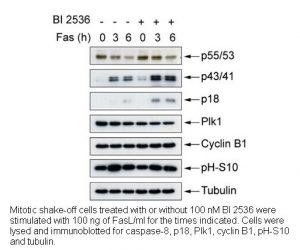
Treatment with BI 2536 induced mitotic arrest in HeLa, U2OS, and A549 cells, characterized by abnormal spindle formation, unseparated chromosomes, and increased phosphorylation of histone H3 (Ser10). The IC50 values for mitotic arrest were 5 nM (HeLa), 7 nM (U2OS), and 10 nM (A549). Prolonged exposure (24-48 h) led to apoptosis, as confirmed by caspase-3 activation and Annexin V staining [1] - BI 2536 exhibited dual inhibitory activity: it potently suppressed PLK1 kinase activity (IC50 = 0.8 nM) and weakly bound to BRD4 bromodomain (IC50 = 3.1 μM for BRD4(1), 5.2 μM for BRD4(2)). It did not significantly inhibit other BET family members (BRD2, BRD3) at concentrations up to 10 μM. In cancer cell lines (MDA-MB-231, MCF-7, HCT116), it inhibited proliferation with IC50 values ranging from 2.5 to 8.3 nM, which correlated with PLK1 inhibition rather than BRD4 binding [2] - In a panel of 55 human cancer cell lines (including lung, colon, breast, and prostate cancer), BI 2536 inhibited cell proliferation with IC50 values ranging from 0.5 to 10 nM. It induced G2/M phase arrest in HCT116 and PC-3 cells, followed by apoptosis. Western blot analysis showed reduced phosphorylation of PLK1 substrates (Cdc25C, cyclin B1) and increased levels of cleaved PARP [3] |
| ln Vivo |
BI 2536, administered intravenously (IV) once or twice a week, inhibits cell proliferation by inducing a mitotic arrest, which in turn induces tumor-cell death in a variety of xenograft models with acceptable tolerability. The growth of HCT 116 xenografts with T/C of 15% and 0.3%, respectively, is markedly inhibited by the administration of BI 2536 at 50 mg/kg once or twice a week. Additionally, BxPC-3 and A549 models treated twice a week with BI 2536 show excellent tumor growth with T/C of 5% and 14%, respectively.
In nude mice bearing HCT116 colon cancer xenografts, BI 2536 administered intravenously (IV) at 20 mg/kg once weekly for 3 weeks significantly inhibited tumor growth (tumor growth inhibition rate = 78%; p < 0.01 vs. vehicle). Tumor samples from treated mice showed increased mitotic figures (arrested in metaphase) and reduced Ki-67 staining (proliferation marker) [3] - In U2OS osteosarcoma xenografts, BI 2536 given IV at 15 mg/kg twice weekly for 4 weeks resulted in 65% tumor growth inhibition. No significant weight loss or organ toxicity was observed during the treatment period [3] |
| Enzyme Assay |
Recombinant human Plk1 (residues 1–603) is purified by affinity chromatography using glutathione-agarose after being expressed as an N-terminal, GST-tagged fusion protein using a baculoviral expression system. When conducting Plk1 enzyme activity assays, serially diluted BI 2536 is present along with 20 ng of recombinant kinase and 10 μg of casein from cow's milk used as the substrate. A final volume of 60 μL is used for kinase reactions, which are carried out for 45 minutes at 30 °C (15 mM MgCl2, 25 mM MOPS [pH 7.0], 1 mM DTT, 1% DMSO, 7.5 mM ATP, 0.3 μCi γ-33P-ATP). A final 125 μL of ice-cold 5% TCA is added to stop the reaction. Following the transfer of precipitates to Multi-Screen mixed ester cellulose filter plates, the plates undergo a 1% TCA wash and radiometric quantification. The IC50 value is computed using the dose-response curve.
PLK1 kinase assay: Recombinant PLK1 catalytic domain was incubated with a peptide substrate (KKT(p)LRR) and ATP. BI 2536 was added at serial concentrations (0.1 nM to 1 μM), and kinase activity was measured by detecting phosphorylated substrate via scintillation proximity assay. The reaction was carried out at 30°C for 60 minutes, and IC50 was calculated from dose-response curves [1] - PLK1 and BRD4 dual assay: For PLK1 kinase activity, recombinant PLK1 was mixed with ATP and a fluorescent peptide substrate; activity was quantified by fluorescence resonance energy transfer (FRET) after 45 minutes at 25°C. For BRD4 bromodomain binding, BI 2536 was incubated with recombinant BRD4(1) or BRD4(2) domain and a fluorescently labeled acetylated histone peptide. Binding affinity (IC50) was determined by measuring competition for peptide binding via fluorescence polarization [2] - PLK1 Ki determination: Kinase reactions were performed with varying ATP concentrations (0.5-10 μM) and fixed BI 2536 concentrations. The Ki value was calculated using Lineweaver-Burk plots and nonlinear regression analysis, based on competitive inhibition of ATP binding [3] |
| Cell Assay |
In assays for cell proliferation, different concentrations of BI 2536 (10 nM-1 μM) are added and incubated for 72 hours. The growth of the cells is measured by measuring the Alamar Blue dye conversion in a fluorescence spectrophotometer. From the dose-response curve fit, effective concentrations (EC50) at which cellular growth is 50% inhibited are extrapolated[3].
Mitotic arrest assay: HeLa, U2OS, and A549 cells were seeded in 96-well plates (5×10³ cells/well) and incubated overnight. BI 2536 was added at concentrations of 0.1-100 nM, and cells were cultured for 16 hours. Cells were fixed with formaldehyde, permeabilized, and stained with anti-phospho-histone H3 (Ser10) antibody and DAPI. Mitotic cells (phospho-H3 positive) were counted by immunofluorescence microscopy [1] - Cell proliferation assay: Cancer cell lines were plated in 384-well plates (2×10³ cells/well) and treated with BI 2536 (0.01-100 nM) for 72 hours. Cell viability was assessed using a colorimetric assay based on mitochondrial dehydrogenase activity. IC50 values were derived from dose-response curves using four-parameter logistic regression [2] - Apoptosis and cell cycle assay: HCT116 cells were treated with BI 2536 (5 nM) for 24-48 hours. For cell cycle analysis, cells were harvested, fixed, stained with propidium iodide, and analyzed by flow cytometry. For apoptosis detection, cells were stained with Annexin V-FITC and propidium iodide, followed by flow cytometric analysis. Western blot was performed to detect cleaved PARP, caspase-3, and PLK1 substrate proteins [3] |
| Animal Protocol |
Mice: Subcutaneous injection of 2×10 6 , 1×10 6 , or 1×10 7 cells into each mouse's flank results in the grafting of HCT 116 colon-carcinoma, NCI-H460, or A549 lung-carcinoma cells into female BomTac:NMRI-Foxn1nu mice. Animals are paired into groups of ten mice each for treatment and control once tumors have grown to a volume of about 50 mm 3 . Treatment is not started in regression experiments until the mean tumor volume reaches 500 mm 3 . The recommended dosage and schedule for intravenous injection of BI 2536 are administered into the tail vein. Ten milliliters for every kilogram of body weight is the dosage. Three times a week, calipers are used to determine tumor volumes. The following formula is used to convert the results to tumor volume (mm 3 ): length×width 2 ×π/6. On the same days, the mice's weight is ascertained as a measure of tolerability. In a one-sided (decreasing) exact Wilcoxon test, the treatment group and the vehicle control group are compared for statistical analysis.
Xenograft tumor model: Female nude mice (6-8 weeks old) were subcutaneously injected with HCT116 (5×10⁶ cells) or U2OS (1×10⁷ cells) cells into the right flank. When tumors reached 100-150 mm3, mice were randomized into treatment (n=8) and vehicle control (n=8) groups. BI 2536 was dissolved in a mixture of PEG400 and saline (1:1 v/v) and administered intravenously via tail vein. Dosing regimens included 20 mg/kg once weekly for 3 weeks (HCT116) and 15 mg/kg twice weekly for 4 weeks (U2OS). Tumor volume was measured twice weekly using calipers, and body weight was monitored throughout the study [3] |
| References |
|
| Additional Infomation |
BI 2536 is being investigated in the clinical trial NCT00376623 (Efficacy and safety of BI 2536 in the treatment of advanced or metastatic non-small cell lung cancer). BI 2536, a Plk1 inhibitor, is a small molecule compound with potential antitumor activity. BI 2536 binds to and inhibits the activity of Polo-like kinase 1 (Plk1), leading to mitotic arrest, cytokinesis inhibition, and apoptosis in susceptible tumor cell populations. Plk1 is a serine/threonine protein kinase and a regulator of many key processes in mitosis and cell division. BI 2536 acts as a selective PLK1 inhibitor by binding to the ATP-binding pocket of PLK1, blocking its kinase activity, and interfering with mitotic processes. It inhibits key PLK1-mediated events, including centrosome maturation, spindle assembly, and cytokinesis[1] - As a dual inhibitor, BI 2536 binds to the bromodomain of BRD4, but with a lower affinity than PLK1. PLK1 inhibitory activity is the main driver of its antiproliferative and antitumor effects, while BRD4 binding may contribute little to its bioactivity[2] - BI 2536 is a tool compound used to study the function of PLK1 in mitosis and has the potential to be used as an anticancer drug due to its strong in vitro and in vivo antitumor activity[3]
|
| Molecular Formula |
C28H39N7O3
|
|
|---|---|---|
| Molecular Weight |
521.66
|
|
| Exact Mass |
521.311
|
|
| Elemental Analysis |
C, 64.47; H, 7.54; N, 18.80; O, 9.20
|
|
| CAS # |
755038-02-9
|
|
| Related CAS # |
|
|
| PubChem CID |
11364421
|
|
| Appearance |
Off-white to yellow solid powder
|
|
| Density |
1.3±0.1 g/cm3
|
|
| Index of Refraction |
1.634
|
|
| LogP |
1.81
|
|
| Hydrogen Bond Donor Count |
2
|
|
| Hydrogen Bond Acceptor Count |
8
|
|
| Rotatable Bond Count |
7
|
|
| Heavy Atom Count |
38
|
|
| Complexity |
816
|
|
| Defined Atom Stereocenter Count |
1
|
|
| SMILES |
O=C1[C@@]([H])(C([H])([H])C([H])([H])[H])N(C2C(=C([H])N=C(N([H])C3C([H])=C([H])C(=C([H])C=3OC([H])([H])[H])C(N([H])C3([H])C([H])([H])C([H])([H])N(C([H])([H])[H])C([H])([H])C3([H])[H])=O)N=2)N1C([H])([H])[H])C1([H])C([H])([H])C([H])([H])C([H])([H])C1([H])[H]
|
|
| InChi Key |
XQVVPGYIWAGRNI-JOCHJYFZSA-N
|
|
| InChi Code |
InChI=1S/C28H39N7O3/c1-5-22-27(37)34(3)23-17-29-28(32-25(23)35(22)20-8-6-7-9-20)31-21-11-10-18(16-24(21)38-4)26(36)30-19-12-14-33(2)15-13-19/h10-11,16-17,19-20,22H,5-9,12-15H2,1-4H3,(H,30,36)(H,29,31,32)/t22-/m1/s1
|
|
| Chemical Name |
4-[[(7R)-8-cyclopentyl-7-ethyl-5-methyl-6-oxo-7H-pteridin-2-yl]amino]-3-methoxy-N-(1-methylpiperidin-4-yl)benzamide
|
|
| Synonyms |
|
|
| HS Tariff Code |
2934.99.9001
|
|
| Storage |
Powder -20°C 3 years 4°C 2 years In solvent -80°C 6 months -20°C 1 month Note: This product requires protection from light (avoid light exposure) during transportation and storage. |
|
| Shipping Condition |
Room temperature (This product is stable at ambient temperature for a few days during ordinary shipping and time spent in Customs)
|
| Solubility (In Vitro) |
DMSO: ~21 mg/mL (~40.3 mM)
Water: 1 mg/mL (Insoluble) Ethanol: ~100 mg/mL (~191.7 mM) |
|---|---|
| Solubility (In Vivo) |
Solubility in Formulation 1: ≥ 3.25 mg/mL (6.23 mM) (saturation unknown) in 10% DMSO + 40% PEG300 + 5% Tween80 + 45% Saline (add these co-solvents sequentially from left to right, and one by one), clear solution.
For example, if 1 mL of working solution is to be prepared, you can add 100 μL of 32.5 mg/mL clear DMSO stock solution to 400 μL of PEG300 and mix evenly; then add 50 μL of Tween-80 to the above solution and mix evenly; then add 450 μL of normal saline to adjust the volume to 1 mL. Preparation of saline: Dissolve 0.9 g of sodium chloride in 100 mL ddH₂ O to obtain a clear solution. Solubility in Formulation 2: ≥ 3.25 mg/mL (6.23 mM) (saturation unknown) in 10% DMSO + 90% (20% SBE-β-CD in Saline) (add these co-solvents sequentially from left to right, and one by one), clear solution. For example, if 1 mL of working solution is to be prepared, you can add 100 μL of 32.5 mg/mL clear DMSO stock solution to 900 μL of 20% SBE-β-CD physiological saline solution and mix evenly. Preparation of 20% SBE-β-CD in Saline (4°C,1 week): Dissolve 2 g SBE-β-CD in 10 mL saline to obtain a clear solution. View More
Solubility in Formulation 3: ≥ 2.08 mg/mL (3.99 mM) (saturation unknown) in 10% DMSO + 90% Corn Oil (add these co-solvents sequentially from left to right, and one by one), clear solution. Solubility in Formulation 4: 30%PEG 400 +0.5% Tween 80 +5% Propylene glycol : 15mg/mL |
| Preparing Stock Solutions | 1 mg | 5 mg | 10 mg | |
| 1 mM | 1.9170 mL | 9.5848 mL | 19.1696 mL | |
| 5 mM | 0.3834 mL | 1.9170 mL | 3.8339 mL | |
| 10 mM | 0.1917 mL | 0.9585 mL | 1.9170 mL |
*Note: Please select an appropriate solvent for the preparation of stock solution based on your experiment needs. For most products, DMSO can be used for preparing stock solutions (e.g. 5 mM, 10 mM, or 20 mM concentration); some products with high aqueous solubility may be dissolved in water directly. Solubility information is available at the above Solubility Data section. Once the stock solution is prepared, aliquot it to routine usage volumes and store at -20°C or -80°C. Avoid repeated freeze and thaw cycles.
Calculation results
Working concentration: mg/mL;
Method for preparing DMSO stock solution: mg drug pre-dissolved in μL DMSO (stock solution concentration mg/mL). Please contact us first if the concentration exceeds the DMSO solubility of the batch of drug.
Method for preparing in vivo formulation::Take μL DMSO stock solution, next add μL PEG300, mix and clarify, next addμL Tween 80, mix and clarify, next add μL ddH2O,mix and clarify.
(1) Please be sure that the solution is clear before the addition of next solvent. Dissolution methods like vortex, ultrasound or warming and heat may be used to aid dissolving.
(2) Be sure to add the solvent(s) in order.
| NCT Number | Recruitment | interventions | Conditions | Sponsor/Collaborators | Start Date | Phases |
| NCT00412880 | Completed | Drug: BI 2536 | Carcinoma, Small Cell | Boehringer Ingelheim | February 14, 2007 | Phase 2 |
| NCT00243087 | Completed | Drug: BI 2536 | Lymphoma | Boehringer Ingelheim | July 2005 | Phase 1 |
| NCT00706498 | Completed | Drug: BI 2536 | Prostatic Neoplasms | Boehringer Ingelheim | September 2006 | Phase 2 |
|
|---|
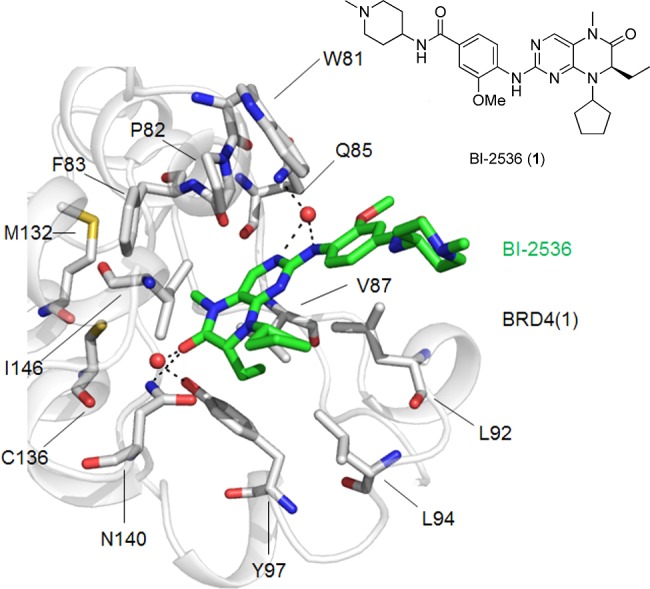
Crystal structure of BI-2536 bound to BRD4(1) (PDB ID = 4OGI).ACS Med Chem Lett.2015 May 18;6(7):764-9. |
\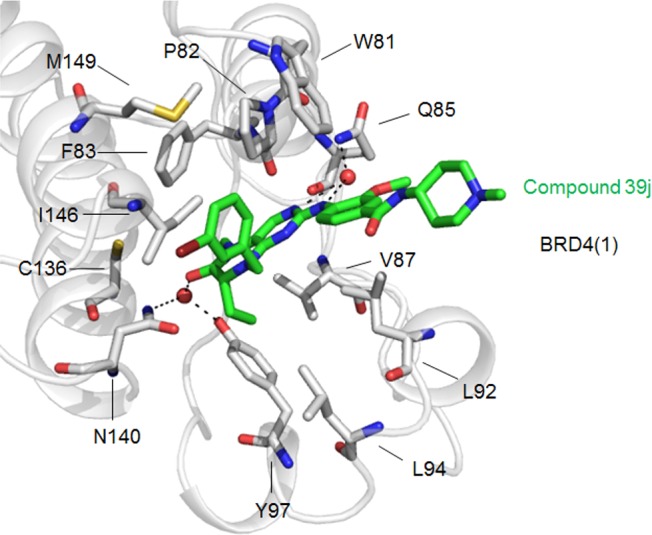 High scoring, GOLD-predicted docking mode of compound39jin BRD4(1).ACS Med Chem Lett.2015 May 18;6(7):764-9. |
Products are for research use only; We do not sell to patients
Copyright 2020 InvivoChem LLC | All Rights Reserved


 COA
COA