| Size | Price | Stock | Qty |
|---|---|---|---|
| 5mg |
|
||
| 10mg |
|
||
| 25mg |
|
||
| 50mg |
|
||
| 100mg |
|
||
| 250mg | |||
| 500mg | |||
| Other Sizes |
Purity: ≥98%
| Targets |
PI3Kα (IC50 = 4 nM); PI3Kβ (IC50 = 63 nM); PI3Kγ (IC50 = 38 nM); mTOR; Autophagy
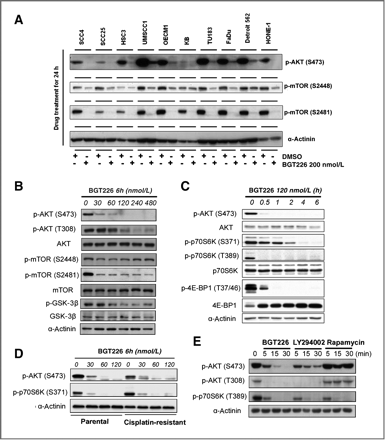
BGT226 shows significant growth inhibition or signal blockage profiles compared with LY294002 and Rapamycin. With IC50 values of 23.1±7.4 and 12.5±5.1, respectively, BGT226 (10–1000 nM) inhibits the growth of FaDu and OECM1 cells[2]. In BGT226-treated cell lines (200 nM; 24 hours), the expression levels of p-mTOR Ser2481 are decreased, and p-AKT Ser473 and p-mTOR Ser2448 are also decreased[2]. |
|---|---|
| ln Vitro |
BGT226 shows significant growth inhibition or signal blockage profiles compared with LY294002 and Rapamycin. With IC50 values of 23.1±7.4 and 12.5±5.1, respectively, BGT226 (10–1000 nM) inhibits the growth of FaDu and OECM1 cells[2].
In BGT226-treated cell lines (200 nM; 24 hours), the expression levels of p-mTOR Ser2481 are decreased, and p-AKT Ser473 and p-mTOR Ser2448 are also decreased[2].
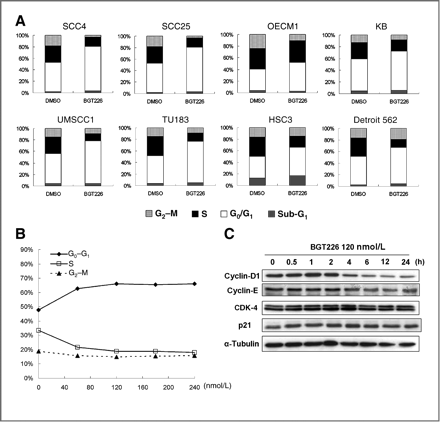
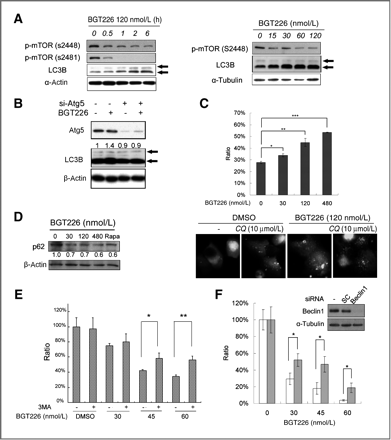
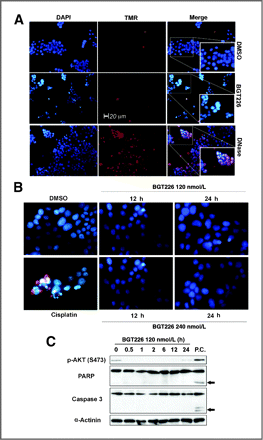
BGT226 exhibited potent growth-inhibitory activity against all tested head and neck cancer cell lines, with IC50 values ranging from 7.4 to 30.1 nmol/L. The compound also showed activity against cisplatin-resistant HONE-1-C15 cells (IC50 = 30.1 nmol/L) and against cell lines carrying PIK3CA mutation H1047R (Detroit 562 and HONE-1). BGT226 inhibited the PI3K/AKT/mTOR signaling pathway, reducing phosphorylation of AKT (Ser473, Thr308), mTOR (Ser2481, Ser2448), p70 S6 kinase, and 4E-BP1 in a concentration- and time-dependent manner. Flow cytometry analysis revealed that BGT226 induced G0–G1 phase cell cycle arrest, accompanied by a decrease in S-phase cells. No significant apoptosis induction was observed via TUNEL assay, caspase 3/7 activity detection, or PARP cleavage analysis. BGT226 induced autophagy, as evidenced by increased LC3B-II expression, GFP-LC3 puncta formation, p62 degradation, and acridine orange staining of acidic vesicular organelles. Autophagy inhibition by 3-methyladenine or Beclin1 siRNA attenuated BGT226-induced cytotoxicity and restored colony formation in clonogenic assays. Cathepsin B/L activity was increased in BGT226-treated cells, suggesting lysosomal involvement in cell death. |
| ln Vivo |
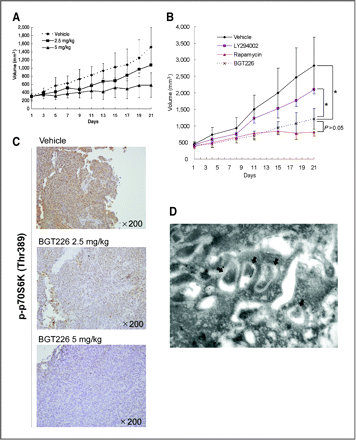
BGT226 (2.5 and 5 mg/kg; orally for 21 in male athymic mice) causes 34.7% and 76.1% reduction of the tumor growth on day 21 compared with control[2].
In a FaDu xenograft mouse model, oral administration of BGT226 at 2.5 mg/kg and 5 mg/kg for 21 days inhibited tumor growth by 34.7% and 76.1%, respectively, compared to vehicle control. BGT226 showed comparable tumor growth inhibition to rapamycin, and both were superior to LY294002. Immunohistochemical staining of tumor tissues showed decreased cytoplasmic p-p70 S6 kinase (Thr389) expression in a dose-dependent manner. Transmission electron microscopy revealed autophagosome formation with double-membrane vacuoles in BGT226-treated tumors. No significant morbidity or body weight loss (>10%) was observed in treated mice. |
| Enzyme Assay |
BGT226 maleate (NVP-BGT226 maleate) is a PI3K (with IC50s of 4 nM, 63 nM and 38 nM for PI3Kα, PI3Kβ and PI3Kγ) /mTOR dual inhibitor which displays potent growth-inhibitory activity against human head and neck cancer cells.
|
| Cell Assay |
NCI-H929, U266, RPMI-8226 and OPM2 MM cells are seeded in 96-well plates at a concentration of 1.5 × 10⁴ cells/well in RPMI medium supplemented with 10% fetal bovine serum with or without NVP-BGT226 that is to be tested. Cells are cultured for an additional 12 hours in a humid environment (37 °C/5% CO2) after the addition of BrdU-labelling solution (final concentration: 10 μM) after 36 hours. After a centrifugation of the plates for 10 minutes at 300 g, the supernatants are discarded. For two hours, the plates are dried at 60 °C. After the DNA has been partially digested by nuclease treatment for 30 minutes at 37 °C, it has been fixed with ethanol/HCl for 30 minutes at -20 °C.
Growth inhibition assay: Cells were seeded in 24-well plates and treated with various concentrations of BGT226 for three generation times, then fixed and stained with methylene blue. Optical density was measured at 550 nm to calculate IC50. Clonogenic assay: Cells were plated in 6-well plates, treated with BGT226 with or without 3-methyladenine pretreatment, washed after 24 hours, and cultured in drug-free medium for 10 days before colony counting. Western blot analysis: Cells were lysed after drug treatment, proteins separated by SDS-PAGE, transferred to PVDF membranes, and probed with antibodies against phospho- and total proteins of the PI3K/AKT/mTOR pathway and autophagy markers. Cell cycle analysis: Cells were fixed in ethanol, treated with RNase, stained with propidium iodide, and analyzed by flow cytometry. Apoptosis assay: TUNEL assay and real-time caspase 3/7 activity detection were performed using commercial kits and fluorescence microscopy. Autophagy detection: GFP-LC3 transfection and fluorescence microscopy were used to monitor autophagosome formation; acridine orange staining and flow cytometry were used to detect acidic vesicular organelles. Gene silencing: Atg5 or Beclin1 siRNA was transfected using Lipofectamine reagent before drug treatment. |
| Animal Protocol |
Human FaDu xenografted mice
5 mg/kg for 3 weeks Oral administration Human FaDu cells were subcutaneously inoculated into athymic mice. When tumor volume reached 200–400 mm³, mice were randomized into groups and treated orally once daily with BGT226 (dissolved in 90% N-methyl-2-pyrrolidone/10% PEG300) at 2.5 or 5 mg/kg for 21 consecutive days. Control groups received vehicle, rapamycin (oral), or LY294002 (intraperitoneal). Tumor size and body weight were measured every 2 days. At the end of the study, tumors were collected for immunohistochemistry and electron microscopy. |
| Toxicity/Toxicokinetics |
In xenotransplantation studies, mice treated with doses up to 5 mg/kg of BGT226 showed no significant morbidity or mortality, and weight loss was less than 10%.
|
| References |
|
| Additional Infomation |
BGT226 free base is an imidazoquinoline compound with the chemical name 3-methyl-2-oxo-2,3-dihydro-1H-imidazo[4,5-c]quinoline, substituted at position 1 with 3-trifluoromethyl-4-(piperazin-1-yl)phenyl and position 8 with 6-methoxypyridin-3-yl. It is a dual PI3K/mTOR inhibitor with dual activities: antitumor activity, mTOR inhibition, and EC 2.7.1.137 (phosphatidylinositol 3-kinase) inhibition. It is an imidazoquinoline compound, an N-arylpiperazine compound, a pyridine compound, an organofluorine compound, and an aromatic ether. It is the conjugate base of BGT226(1+).
BGT226 is a novel dual PI3K/mTOR inhibitor specifically developed for head and neck cancer, particularly suitable for cases with PI3K/AKT/mTOR pathway dysregulation or cisplatin resistance. This drug induces autophagy-mediated cell death rather than apoptosis, which may represent a different mechanism of action compared to traditional chemotherapy. This study supports further clinical research on BGT226 in head and neck cancer patients, particularly those resistant to other treatments. |
| Molecular Formula |
C28H25F3N6O2
|
|---|---|
| Molecular Weight |
534.53
|
| Exact Mass |
534.199
|
| Elemental Analysis |
C, 59.07; H, 4.49; F, 8.76; N, 12.92; O, 14.75
|
| CAS # |
915020-55-2
|
| Related CAS # |
BGT226 maleate;1245537-68-1
|
| PubChem CID |
11978790
|
| Appearance |
White to off-white solid powder
|
| Density |
1.4±0.1 g/cm3
|
| Boiling Point |
713.3±70.0 °C at 760 mmHg
|
| Flash Point |
385.2±35.7 °C
|
| Vapour Pressure |
0.0±2.3 mmHg at 25°C
|
| Index of Refraction |
1.628
|
| LogP |
3.41
|
| Hydrogen Bond Donor Count |
1
|
| Hydrogen Bond Acceptor Count |
9
|
| Rotatable Bond Count |
4
|
| Heavy Atom Count |
39
|
| Complexity |
873
|
| Defined Atom Stereocenter Count |
0
|
| SMILES |
FC(C1C([H])=C(C([H])=C([H])C=1N1C([H])([H])C([H])([H])N([H])C([H])([H])C1([H])[H])N1C(N(C([H])([H])[H])C2=C([H])N=C3C([H])=C([H])C(C4=C([H])N=C(C([H])=C4[H])OC([H])([H])[H])=C([H])C3=C12)=O)(F)F
|
| InChi Key |
BMMXYEBLEBULND-UHFFFAOYSA-N
|
| InChi Code |
InChI=1S/C28H25F3N6O2/c1-35-24-16-33-22-6-3-17(18-4-8-25(39-2)34-15-18)13-20(22)26(24)37(27(35)38)19-5-7-23(21(14-19)28(29,30)31)36-11-9-32-10-12-36/h3-8,13-16,32H,9-12H2,1-2H3
|
| Chemical Name |
8-(6-methoxypyridin-3-yl)-3-methyl-1-[4-piperazin-1-yl-3-(trifluoromethyl)phenyl]imidazo[4,5-c]quinolin-2-one
|
| Synonyms |
BGT226; BGT 226; BGT-226; NVP-BGT-226; NVP-BGT 226; NVP-BGT226
|
| HS Tariff Code |
2934.99.9001
|
| Storage |
Powder -20°C 3 years 4°C 2 years In solvent -80°C 6 months -20°C 1 month |
| Shipping Condition |
Room temperature (This product is stable at ambient temperature for a few days during ordinary shipping and time spent in Customs)
|
| Solubility (In Vitro) |
|
|||
|---|---|---|---|---|
| Solubility (In Vivo) |
Solubility in Formulation 1: ≥ 1 mg/mL (1.87 mM) (saturation unknown) in 10% DMSO + 40% PEG300 + 5% Tween80 + 45% Saline (add these co-solvents sequentially from left to right, and one by one), clear solution.
For example, if 1 mL of working solution is to be prepared, you can add 100 μL of 10.0 mg/mL clear DMSO stock solution to 400 μL of PEG300 and mix evenly; then add 50 μL of Tween-80 to the above solution and mix evenly; then add 450 μL of normal saline to adjust the volume to 1 mL. Preparation of saline: Dissolve 0.9 g of sodium chloride in 100 mL ddH₂ O to obtain a clear solution. Solubility in Formulation 2: ≥ 1 mg/mL (1.87 mM) (saturation unknown) in 10% DMSO + 90% Corn Oil (add these co-solvents sequentially from left to right, and one by one), clear solution. For example, if 1 mL of working solution is to be prepared, you can add 100 μL of 10.0 mg/mL clear DMSO stock solution to 900 μL of corn oil and mix evenly. View More
Solubility in Formulation 3: 30% PEG400+0.5% Tween80+5% Propylene glycol : 30mg/mL |
| Preparing Stock Solutions | 1 mg | 5 mg | 10 mg | |
| 1 mM | 1.8708 mL | 9.3540 mL | 18.7080 mL | |
| 5 mM | 0.3742 mL | 1.8708 mL | 3.7416 mL | |
| 10 mM | 0.1871 mL | 0.9354 mL | 1.8708 mL |
*Note: Please select an appropriate solvent for the preparation of stock solution based on your experiment needs. For most products, DMSO can be used for preparing stock solutions (e.g. 5 mM, 10 mM, or 20 mM concentration); some products with high aqueous solubility may be dissolved in water directly. Solubility information is available at the above Solubility Data section. Once the stock solution is prepared, aliquot it to routine usage volumes and store at -20°C or -80°C. Avoid repeated freeze and thaw cycles.
Calculation results
Working concentration: mg/mL;
Method for preparing DMSO stock solution: mg drug pre-dissolved in μL DMSO (stock solution concentration mg/mL). Please contact us first if the concentration exceeds the DMSO solubility of the batch of drug.
Method for preparing in vivo formulation::Take μL DMSO stock solution, next add μL PEG300, mix and clarify, next addμL Tween 80, mix and clarify, next add μL ddH2O,mix and clarify.
(1) Please be sure that the solution is clear before the addition of next solvent. Dissolution methods like vortex, ultrasound or warming and heat may be used to aid dissolving.
(2) Be sure to add the solvent(s) in order.
| NCT Number | Recruitment | interventions | Conditions | Sponsor/Collaborators | Start Date | Phases |
| NCT00600275 | Completed | Drug: BGT226 | Solid Tumors Breast Cancer Cowden Syndrome |
Novartis Pharmaceuticals | December 2007 | Phase 1 Phase 2 |
|
Effect of BGT226 on cell cycle. A, cell-cycle distribution of all tested cell lines in the presence of BGT226 or DMSO as control was evaluated by flow cytometric analysis.Clin Cancer Res.2011 Nov 15;17(22):7116-26. |
Analysis of autophagy in BGT226-treated cell lines.Clin Cancer Res.2011 Nov 15;17(22):7116-26. |
Xenograft model of FaDu cells.Clin Cancer Res.2011 Nov 15;17(22):7116-26. |
Analysis of apoptosis in BGT226-treated FaDu cells.Clin Cancer Res.2011 Nov 15;17(22):7116-26. |
Products are for research use only; We do not sell to patients
Copyright 2020 InvivoChem LLC | All Rights Reserved


 COA
COA