| Size | Price | Stock | Qty |
|---|---|---|---|
| 1mg |
|
||
| 5mg |
|
||
| 10mg |
|
||
| Other Sizes |


Purity: ≥98%
| Targets |
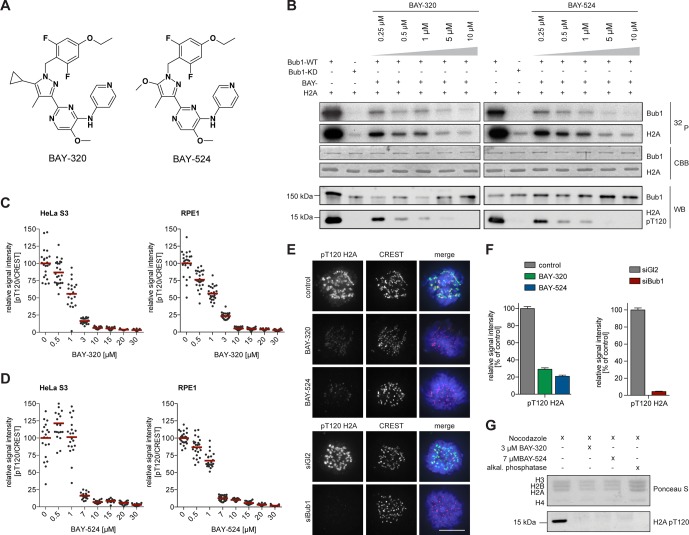
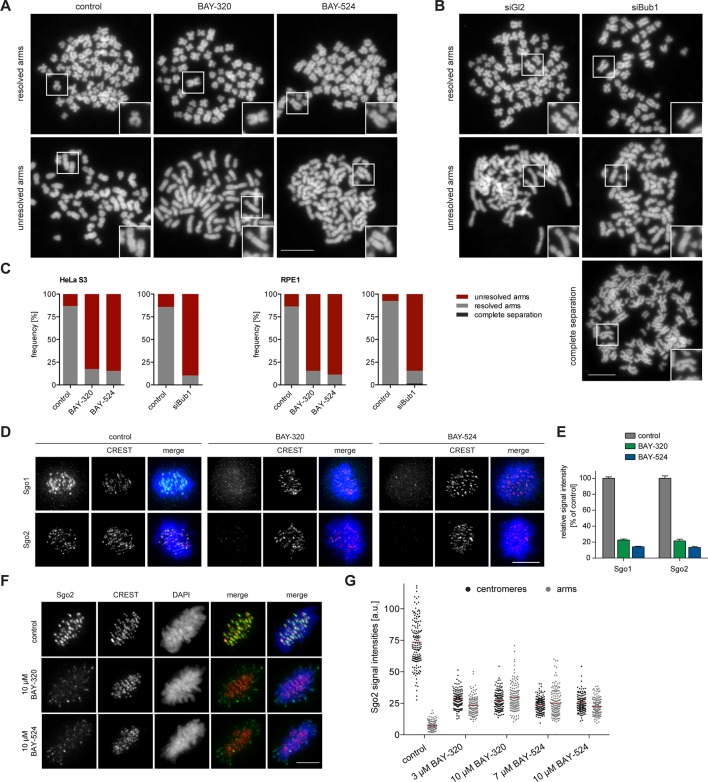
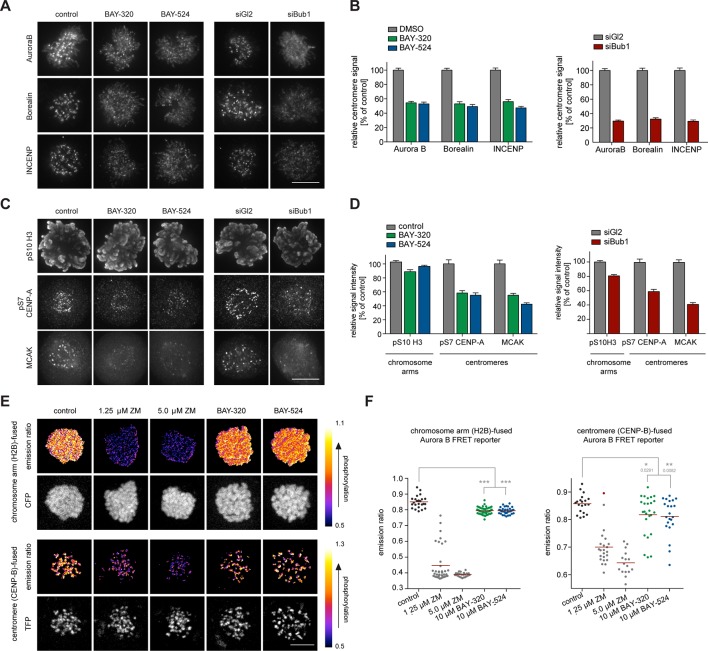
At an IC50 of 450 nM, BAY-524 inhibits the human Bub1 recombinant catalytic domain[1]. BAY-524 selectively inhibits Bub1 kinase at 7–10 μM or 0–30 μM for 14 hours or 1 hour [1]. The effects of BAY-524 (7 μM, 12 hours or 7 μM, 12 μM, 3 hours) on chromatid cohesion and Sgo1 and Sgo2 localization in cells have been reported [1]. BAY-524 (7 μM, 10 μM) modifies CPC's activity and localization [1]. Additive effects on CPC centromere association are observed with BAY-524 (7 μM, 2 h) [1]. There is a slight impact of BAY-524 (7 μM, 48 hours) on SAC signaling [1]. Cells are sensitized to low doses of paclitaxel by BAY-524 (7 μM, 10 μM) [1].
|
|---|---|
| ln Vitro |
At an IC50 of 450 nM, BAY-524 inhibits the human Bub1 recombinant catalytic domain[1]. BAY-524 selectively inhibits Bub1 kinase at 7–10 μM or 0–30 μM for 14 hours or 1 hour [1]. The effects of BAY-524 (7 μM, 12 hours or 7 μM, 12 μM, 3 hours) on chromatid cohesion and Sgo1 and Sgo2 localization in cells have been reported [1]. BAY-524 (7 μM, 10 μM) modifies CPC's activity and localization [1]. Additive effects on CPC centromere association are observed with BAY-524 (7 μM, 2 h) [1]. There is a slight impact of BAY-524 (7 μM, 48 hours) on SAC signaling [1]. Cells are sensitized to low doses of paclitaxel by BAY-524 (7 μM, 10 μM) [1].
BAY-524 inhibits Bub1 kinase activity in vitro, reducing both Bub1 autophosphorylation and phosphorylation of histone H2A at threonine 120 (pT120-H2A). [1] BAY-524 (7–10 µM) significantly reduces centromeric levels of pT120-H2A in HeLa S3 and RPE1 cells, as shown by immunofluorescence and Western blot. [1] BAY-524 treatment (7 µM) leads to persistent sister chromatid arm cohesion and redistribution of Shugoshin proteins (Sgo1 and Sgo2) from centromeres to chromosome arms. [1] BAY-524 reduces centromeric localization of the chromosomal passenger complex (CPC) components Aurora B, Borealin, and INCENP by ~50%, and partially reduces Aurora B activity at centromeres. [1] BAY-524 does not significantly affect kinetochore recruitment of SAC proteins Mad1, Mad2, or BubR1, nor does it dramatically weaken the spindle assembly checkpoint in nocodazole-arrested cells. [1] BAY-524 does not impair chromosome alignment or significantly increase micronucleation when used alone. [1] BAY-524 sensitizes HeLa and RPE1 cells to low doses of Paclitaxel (1–4 nM), leading to increased chromosome segregation errors and reduced cell proliferation in colony formation assays. [1] |
| Enzyme Assay |
The inhibitory activity of BAY-524 against the recombinant catalytic domain of human Bub1 (amino acids 704–1085) was measured using a time-resolved fluorescence energy transfer (TR-FRET) kinase assay. The assay monitored phosphorylation of a biotinylated synthetic peptide substrate in the presence of 2 mM ATP. The IC₅₀ value was determined to be 450 ± 60 nM. [1]
In vitro kinase assays were performed using LAP-tagged Bub1 wild-type protein purified from mitotic HEK 293T cells. Reactions contained recombinant histone H2A as substrate, γ-³²P-ATP, and serial dilutions of BAY-524. After incubation at 30°C for 30 minutes, reactions were stopped and analyzed by SDS-PAGE, followed by autoradiography and Western blotting for pT120-H2A. [1] |
| Cell Assay |
Western Blot Analysis[1]
Cell Types: hTERT-RPE1 (RPE1) and HeLa cells Tested Concentrations: 7-10 μM Incubation Duration: 14 hrs (hours) Experimental Results: Significant reduction in T120 phosphorylation. Immunofluorescence[1] Cell Types: RPE1 and HeLa cells Tested Concentrations: 0-30 μM Incubation Duration: 1 hour Experimental Results: diminished phosphorylation of histone H2A-T120. For immunofluorescence analysis of pT120-H2A, HeLa S3 or RPE1 cells were treated with the proteasomal inhibitor MG132 for 2 hours, followed by nocodazole and increasing doses of BAY-524 for 1 hour. Cells were fixed and stained with antibodies against pT120-H2A and CREST serum, and analyzed by immunofluorescence microscopy. [1] To assess chromatid cohesion and Sgo localization, HeLa S3 cells were synchronized by thymidine block, released into nocodazole with BAY-524 (7 µM), and chromosome spreads were prepared. Alternatively, cells were fixed and stained for Sgo1, Sgo2, and CREST. [1] For analysis of CPC localization, synchronized HeLa cells treated with BAY-524 were fixed and stained for Aurora B, Borealin, INCENP, and centromere markers. [1] Cell proliferation and colony formation assays were performed by treating HeLa or RPE1 cells with BAY-524 (7 or 10 µM) in the presence or absence of Paclitaxel (1–4 nM) for 7 days. Colonies were fixed, stained, and quantified. [1] Live-cell imaging was used to monitor mitotic progression and chromosome segregation in HeLa or RPE1 cells expressing H2B-GFP treated with BAY-524 and/or Paclitaxel. [1] |
| References | |
| Additional Infomation |
BAY-524 is a substituted benzylpyrazole compound and an ATP-competitive inhibitor of the Bub1 kinase. [1]
It has been used as a chemical tool to study the catalytic and scaffold functions of Bub1 in mitosis. [1] While the kinase selectivity profile of BAY-524 is not detailed in this study, the related compound BAY-320 showed high selectivity for Bub1 across a broad kinase spectrum. [1] This study suggests that BAY-524 may have the potential for combination therapy with microtubule-targeting drugs such as paclitaxel, particularly in aneuploid cancer cells. [1] |
| Molecular Formula |
C24H24F2N6O3
|
|---|---|
| Molecular Weight |
482.48
|
| Exact Mass |
482.187
|
| CAS # |
1445830-39-6
|
| PubChem CID |
71611179
|
| Appearance |
Off-white to light yellow solid powder
|
| LogP |
3.8
|
| Hydrogen Bond Donor Count |
1
|
| Hydrogen Bond Acceptor Count |
10
|
| Rotatable Bond Count |
9
|
| Heavy Atom Count |
35
|
| Complexity |
636
|
| Defined Atom Stereocenter Count |
0
|
| SMILES |
FC1C([H])=C(C([H])=C(C=1C([H])([H])N1C(=C(C([H])([H])[H])C(C2=NC([H])=C(C(N([H])C3C([H])=C([H])N=C([H])C=3[H])=N2)OC([H])([H])[H])=N1)OC([H])([H])[H])F)OC([H])([H])C([H])([H])[H]
|
| InChi Key |
LMRCQVHTZUUHFN-UHFFFAOYSA-N
|
| InChi Code |
InChI=1S/C24H24F2N6O3/c1-5-35-16-10-18(25)17(19(26)11-16)13-32-24(34-4)14(2)21(31-32)23-28-12-20(33-3)22(30-23)29-15-6-8-27-9-7-15/h6-12H,5,13H2,1-4H3,(H,27,28,29,30)
|
| Chemical Name |
2-[1-[(4-ethoxy-2,6-difluorophenyl)methyl]-5-methoxy-4-methylpyrazol-3-yl]-5-methoxy-N-pyridin-4-ylpyrimidin-4-amine
|
| Synonyms |
BAY-524; BAY 524; BAY524
|
| HS Tariff Code |
2934.99.9001
|
| Storage |
Powder -20°C 3 years 4°C 2 years In solvent -80°C 6 months -20°C 1 month |
| Shipping Condition |
Room temperature (This product is stable at ambient temperature for a few days during ordinary shipping and time spent in Customs)
|
| Solubility (In Vitro) |
DMSO : ~166.67 mg/mL (~345.44 mM)
|
|---|---|
| Solubility (In Vivo) |
Solubility in Formulation 1: ≥ 4.17 mg/mL (8.64 mM) (saturation unknown) in 10% DMSO + 40% PEG300 + 5% Tween80 + 45% Saline (add these co-solvents sequentially from left to right, and one by one), clear solution.
For example, if 1 mL of working solution is to be prepared, you can add 100 μL of 41.7 mg/mL clear DMSO stock solution to 400 μL PEG300 and mix evenly; then add 50 μL Tween-80 to the above solution and mix evenly; then add 450 μL normal saline to adjust the volume to 1 mL. Preparation of saline: Dissolve 0.9 g of sodium chloride in 100 mL ddH₂ O to obtain a clear solution. Solubility in Formulation 2: ≥ 4.17 mg/mL (8.64 mM) (saturation unknown) in 10% DMSO + 90% Corn Oil (add these co-solvents sequentially from left to right, and one by one), clear solution. For example, if 1 mL of working solution is to be prepared, you can add 100 μL of 41.7 mg/mL clear DMSO stock solution to 900 μL of corn oil and mix evenly. (Please use freshly prepared in vivo formulations for optimal results.) |
| Preparing Stock Solutions | 1 mg | 5 mg | 10 mg | |
| 1 mM | 2.0726 mL | 10.3631 mL | 20.7262 mL | |
| 5 mM | 0.4145 mL | 2.0726 mL | 4.1452 mL | |
| 10 mM | 0.2073 mL | 1.0363 mL | 2.0726 mL |
*Note: Please select an appropriate solvent for the preparation of stock solution based on your experiment needs. For most products, DMSO can be used for preparing stock solutions (e.g. 5 mM, 10 mM, or 20 mM concentration); some products with high aqueous solubility may be dissolved in water directly. Solubility information is available at the above Solubility Data section. Once the stock solution is prepared, aliquot it to routine usage volumes and store at -20°C or -80°C. Avoid repeated freeze and thaw cycles.
Calculation results
Working concentration: mg/mL;
Method for preparing DMSO stock solution: mg drug pre-dissolved in μL DMSO (stock solution concentration mg/mL). Please contact us first if the concentration exceeds the DMSO solubility of the batch of drug.
Method for preparing in vivo formulation::Take μL DMSO stock solution, next add μL PEG300, mix and clarify, next addμL Tween 80, mix and clarify, next add μL ddH2O,mix and clarify.
(1) Please be sure that the solution is clear before the addition of next solvent. Dissolution methods like vortex, ultrasound or warming and heat may be used to aid dissolving.
(2) Be sure to add the solvent(s) in order.
BAY-320 and BAY-524 inhibit Bub1 kinase.Elife. 2016 Feb 17;5. pii: e12187. |
Inhibition of Bub1 affects Sgo1 and Sgo2 localization and chromatid cohesion.Elife. 2016 Feb 17;5. pii: e12187. |
Bub1 inhibition affects localization and activity of the CPC.Elife. 2016 Feb 17;5. pii: e12187. |
Products are for research use only; We do not sell to patients
Copyright 2020 InvivoChem LLC | All Rights Reserved


 COA
COA