| Size | Price | Stock | Qty |
|---|---|---|---|
| 25mg |
|
||
| 50mg |
|
||
| 100mg |
|
||
| 250mg |
|
||
| 500mg |
|
||
| 1g |
|
||
| Other Sizes |
Purity: ≥98%
| Targets |
Nrf2; IKK; Ferroptosis;NF-κB
Kelch-Like ECH-Associated Protein 1 (Keap1): Bardoxolone Methyl disrupts the Keap1-Nrf2 interaction, activating Nrf2 signaling. It inhibits Keap1-mediated Nrf2 ubiquitination with an IC50 of 1.2 ± 0.1 μM (measured by in vitro Keap1-Nrf2 binding assay) [1] - Nuclear Factor-κB (NF-κB): Bardoxolone Methyl indirectly inhibits NF-κB activation (via Nrf2-dependent and independent pathways) with an IC50 of 3.5 ± 0.3 μM (TNF-α-induced NF-κB reporter gene assay in HEK293T cells) [2] - Inducible Nitric Oxide Synthase (iNOS): Bardoxolone Methyl suppresses iNOS activity in activated macrophages, with an IC50 of 2.8 ± 0.2 μM (NO production assay) [5] |
|---|---|
| ln Vitro |
Bardoxolone Methyl exhibits strong inhibitory effects on interferon-Ƴ induced nitric oxide synthesis in mouse macrophages, with an IC50 value of 0.1 nM. [1] With IC50 values of 0.4, 0.4, and 0.27 μM, respectively, bardoxolone methyl reduces the viability of leukemic HL-60, KG-1, and NB4 cells. Apoptosis is induced by CDDO-Me in part because it induces pro-apoptotic Bax protein, prevents ERK1/2 from being activated, and prevents Bcl-2 from being phosphorylated. [2] When TNF, interleukin (IL)-1beta, phorbol ester, okadaic acid, hydrogen peroxide, lipopolysaccharide, and cigarette smoke activate NF-kappaB, bardoxolone methyl potently inhibits both constitutive and inducible NF-kappaB. [3]
Nrf2 Activation and Antioxidant Gene Induction: Human hepatoma HepG2 cells were treated with Bardoxolone Methyl (0.1–5 μM) for 24 hours. Western blot showed dose-dependent nuclear translocation of Nrf2 (3.2-fold increase at 1 μM, 5.8-fold at 5 μM) and upregulation of Nrf2 target genes: heme oxygenase-1 (HO-1, 4.5-fold at 5 μM) and NAD(P)H quinone dehydrogenase 1 (NQO1, 3.8-fold at 5 μM) at the protein level. RT-PCR confirmed corresponding mRNA increases (HO-1: 6.2-fold, NQO1: 5.1-fold at 5 μM) [1] - Leukemia Cell Proliferation Inhibition: Human chronic myeloid leukemia (CML) K562 cells were treated with Bardoxolone Methyl (0.5–10 μM) for 48 hours. MTT assay showed concentration-dependent viability reduction: IC50 = 2.3 ± 0.2 μM; 10 μM reduced viability by 85%. Flow cytometry revealed G2/M cell cycle arrest (from 12% to 35% at 5 μM) and early apoptosis (from 3% to 28% at 5 μM) [2] - Colon Cancer Cell Apoptosis Induction: Human colon cancer HCT116 cells were treated with Bardoxolone Methyl (1–5 μM) for 72 hours. TUNEL assay showed apoptotic cell rates of 15% (1 μM), 32% (3 μM), and 58% (5 μM) (vs. 4% in control). Western blot detected increased cleaved caspase-3 (2.8-fold at 5 μM) and decreased Bcl-2 (0.3-fold at 5 μM), confirming mitochondrial apoptotic pathway activation [3] - Anti-Inflammatory Activity in Macrophages: Mouse RAW264.7 macrophages were pre-treated with Bardoxolone Methyl (0.5–4 μM) for 1 hour, then stimulated with LPS (1 μg/mL) for 24 hours. ELISA showed reduced TNF-α (from 920 ± 60 pg/mL to 180 ± 20 pg/mL at 4 μM) and IL-6 (from 1100 ± 80 pg/mL to 220 ± 30 pg/mL at 4 μM). NO production (measured by Griess assay) decreased by 78% at 4 μM, consistent with iNOS downregulation [5] |
| ln Vivo |
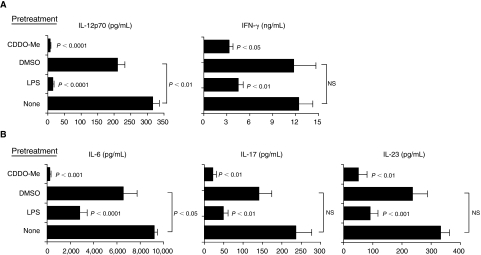
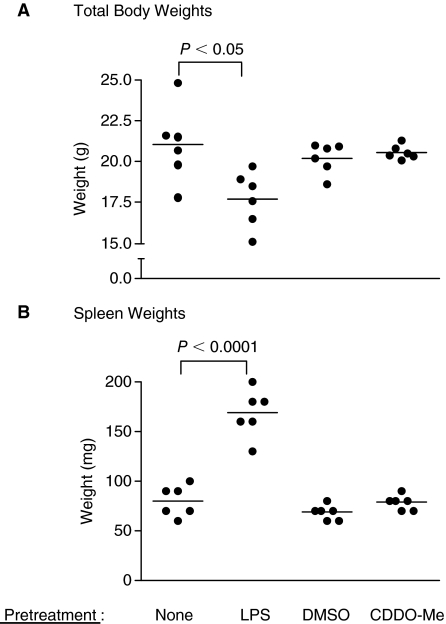
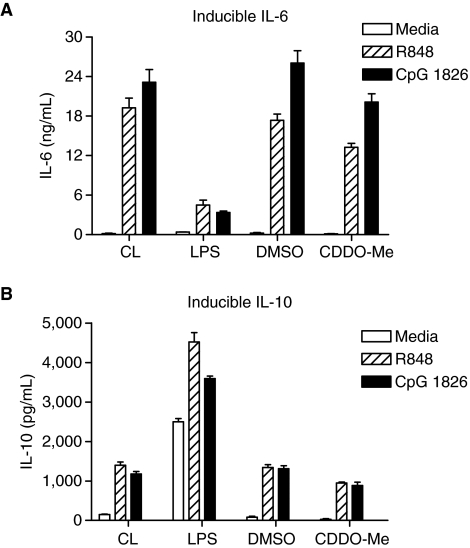
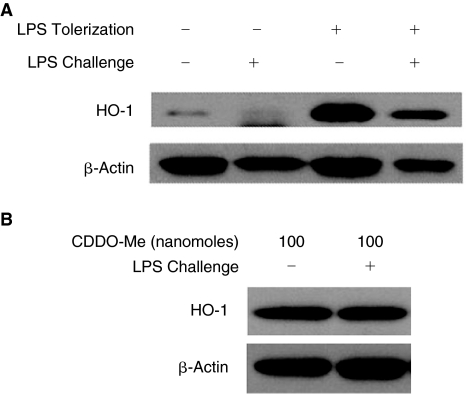
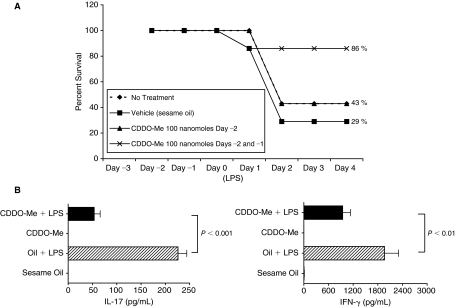
Bardoxolone Methyl (60 mg/kg) reduces the number, size, and severity of lung tumors in vivo. [4] Bardoxolone Methyl induces HO-1 protein expression in the spleen, protects mice from lethal-dose LPS, and significantly reduces the in vivo inflammatory cytokine response following LPS challenge. [5]
Leukemia Tumor Growth Suppression in Mice: Nude mice (BALB/c nu/nu) were subcutaneously injected with K562 cells (5×10⁶ cells/mouse). When tumors reached ~100 mm³, mice received oral Bardoxolone Methyl (10 mg/kg/day) for 21 days (n=8 per group). Compared to vehicle controls, tumor volume reduced by 65% (from 420 ± 50 mm³ to 147 ± 30 mm³) and tumor weight reduced by 62% (from 0.45 ± 0.05 g to 0.17 ± 0.03 g). Immunohistochemistry of tumors showed increased Nrf2 nuclear localization (4.2-fold) and decreased Ki-67 (proliferation marker, 0.4-fold) [2] - Colon Cancer Xenograft Inhibition: SCID mice were orthotopically implanted with HCT116-Luc cells (luciferase-labeled). Mice received intraperitoneal Bardoxolone Methyl (20 mg/kg every 2 days) for 28 days. Bioluminescence imaging showed 72% reduction in tumor burden vs. controls. Serum TNF-α and IL-6 levels decreased by 58% and 63%, respectively. Tumor tissues showed increased cleaved caspase-3 (3.5-fold) and HO-1 (4.1-fold) [3] - Liver Fibrosis Attenuation in Rats: Male Sprague-Dawley rats were induced with liver fibrosis via carbon tetrachloride (CCl₄) injection (0.5 mL/kg, twice weekly for 8 weeks). Concurrently, rats received oral Bardoxolone Methyl (5 mg/kg/day). After 8 weeks, liver hydroxyproline content (fibrosis marker) reduced by 52% vs. CCl₄-only group. Western blot of liver tissue showed increased Nrf2 (3.8-fold) and decreased TGF-β1 (0.3-fold) and α-SMA (0.4-fold, hepatic stellate cell activation marker) [7] |
| Enzyme Assay |
IKK is analyzed to ascertain how CDDO-Me affects TNF-induced IKK activation. In a nutshell, antibody against IKKα and IKKβ was used to precipitate the IKK complex from whole-cell extracts, and protein A/G-Sepharose beads were used as the final step. After 2 hours, the beads are washed with lysis buffer and then resuspended in a kinase assay mixture containing 50 mmol/L HEPES (pH 7.4), 20 mmol/L MgCl2, 2 mmol/L DTT, 20 μCi [γ-32P]ATP, 10 μmol/L unlabeled ATP, and 2 μg of substrate glutathione S-transferase-IκBα (amino acids 1-54). The reaction is stopped by boiling for five minutes with SDS sample buffer following a 30-minute incubation period at 30°C. When the gel has dried and the radioactive bands can be seen with a Storm820, the protein has been resolved on a 10% SDS-PAGE. 50 g of whole-cell proteins are resolved on 7.5% SDS-PAGE, electrotransferred to a nitrocellulose membrane, and then blotted with either an anti-IKK-α or anti-IKK-β antibody to determine the total concentrations of IKK-α and IKK-β in each sample.
Keap1-Nrf2 Binding Inhibition Assay: Recombinant human Keap1 (1 μg) and Nrf2 N-terminal peptide (0.5 μg) were incubated with Bardoxolone Methyl (0.1–10 μM) in binding buffer (20 mM Tris-HCl pH7.5, 150 mM NaCl, 1 mM DTT) at 37°C for 1 hour. The complex was detected by immunoprecipitation (anti-Keap1 antibody) followed by Western blot (anti-Nrf2 antibody). Band intensity of Keap1-Nrf2 complex was quantified using ImageJ. The IC50 was defined as the concentration of Bardoxolone Methyl that reduced complex formation by 50% [1] - NF-κB Reporter Gene Assay: HEK293T cells were co-transfected with pNF-κB-luc (NF-κB-luciferase reporter) and pRL-TK (Renilla control). 24 hours post-transfection, cells were treated with Bardoxolone Methyl (0.5–5 μM) for 2 hours, then stimulated with TNF-α (10 ng/mL) for 6 hours. Cells were lysed with passive lysis buffer, and luciferase activity was measured using a dual-luciferase system. Relative activity (firefly/Renilla) was calculated to determine NF-κB inhibition [2] - iNOS Activity Assay: RAW264.7 macrophages were treated with Bardoxolone Methyl (0.5–4 μM) and LPS (1 μg/mL) for 24 hours. Culture supernatants (100 μL) were mixed with equal volume of Griess reagent (1% sulfanilamide, 0.1% naphthylethylenediamine dihydrochloride in 5% phosphoric acid) and incubated at room temperature for 10 minutes. Absorbance was measured at 540 nm, and NO concentration was calculated using a sodium nitrite standard curve. iNOS activity was expressed as μM NO per 10⁶ cells per 24 hours [5] |
| Cell Assay |
Leukemic cell lines are cultured at a density of 3.0 × 10⁵ cells/mL, and AML mononuclear cells are cultured at 5 × 10⁵ cells/mL in the presence or absence of the indicated concentrations of CDDO-Me. A suitable amount of DMSO (final concentration less than 0.05%) is used as a control. 1 M ara-C is added to the cultures for cytotoxicity tests. A hematocytometer is used to count viable cells using the trypan blue dye exclusion method after 24 to 72 hours.
HepG2 Cell Nrf2 Activation Assay: HepG2 cells were seeded in 6-well plates (2×10⁵ cells/well) and treated with Bardoxolone Methyl (0.1–5 μM) for 24 hours. Nuclear and cytoplasmic extracts were prepared using a nuclear extraction kit. Western blot was performed with anti-Nrf2 (nuclear/cytoplasmic), anti-HO-1, anti-NQO1, anti-histone H3 (nuclear control), or anti-β-actin (cytoplasmic control) antibodies. For RT-PCR, total RNA was extracted, reverse-transcribed to cDNA, and amplified with primers for HO-1, NQO1, and GAPDH [1] - K562 Cell Proliferation and Apoptosis Assay: K562 cells were seeded in 96-well plates (5×10³ cells/well) for MTT assay or 6-well plates (1×10⁶ cells/well) for flow cytometry. MTT: Cells were treated with Bardoxolone Methyl (0.5–10 μM) for 48 hours, incubated with MTT (5 mg/mL) for 4 hours, lysed with DMSO, and absorbance measured at 570 nm. Flow cytometry: Cells were stained with PI (for cell cycle) or Annexin V-FITC/PI (for apoptosis) and analyzed using a flow cytometer [2] - HCT116 Cell TUNEL Assay: HCT116 cells were seeded on coverslips (1×10⁴ cells/coverslip) and treated with Bardoxolone Methyl (1–5 μM) for 72 hours. Cells were fixed with 4% paraformaldehyde, permeabilized with 0.1% Triton X-100, and incubated with TUNEL reaction mixture (terminal deoxynucleotidyl transferase + fluorescein-dUTP) at 37°C for 1 hour. Nuclei were counterstained with DAPI. Apoptotic cells (green fluorescence) were counted under a fluorescence microscope, and the apoptotic rate was calculated [3] |
| Animal Protocol |
The cynomolgus monkeys are used in two distinct in-life studies. In one study, amorphous bardoxolone methyl is given orally to cynomolgus monkeys (n=9/gender/dose group) using sesame oil as the vehicle at 5, 30, and 300 mg/kg once daily for 12 months in a GLP environment. All animals are observed twice daily for morbidity, mortality, injuries, and the availability of food and water. Weekly clinical assessments and body weight measurements are made and recorded. Analysis of weight data involves computing the linear trapezoidal method's area under the weight versus time curve. All animals are pre-tested, and blood samples are taken before interim (6-month) and terminal (12-month) necropsies from all animals in order to perform clinical chemistry evaluations. For every dose group, a second group of monkeys is given four weeks to recover.
K562 Leukemia Xenograft Model: Nude mice (BALB/c nu/nu, 6–8 weeks old, n=8/group) were subcutaneously injected with 5×10⁶ K562 cells in 0.2 mL PBS into the right flank. When tumors reached ~100 mm³, Bardoxolone Methyl was suspended in 0.5% carboxymethyl cellulose sodium (CMC-Na) to 1 mg/mL and administered orally by gavage at 10 mg/kg/day for 21 days. Vehicle controls received 0.5% CMC-Na. Tumor volume (length × width² / 2) was measured every 3 days. On day 21, mice were euthanized; tumors were weighed and processed for immunohistochemistry [2] - HCT116 Orthotopic Colon Cancer Model: SCID mice (6–8 weeks old, n=6/group) were anesthetized with isoflurane, and 2×10⁶ HCT116-Luc cells (in 0.1 mL PBS) were injected into the cecum wall. 7 days post-implantation, Bardoxolone Methyl was dissolved in 10% DMSO + 90% saline to 2 mg/mL and administered intraperitoneally at 20 mg/kg every 2 days for 28 days. Tumor burden was monitored weekly via bioluminescence imaging (intraperitoneal D-luciferin, 150 mg/kg). Mice were euthanized on day 35; serum and tumors were collected for cytokine detection and histology [3] - Rat CCl₄-Induced Liver Fibrosis Model: Male Sprague-Dawley rats (200–220 g, n=10/group) received subcutaneous injections of CCl₄ (0.5 mL/kg, 1:1 v/v in olive oil) twice weekly for 8 weeks. Concurrently, rats in the treatment group received Bardoxolone Methyl (suspended in 0.5% CMC-Na to 0.5 mg/mL) via oral gavage at 5 mg/kg/day. Control groups received CCl₄ + 0.5% CMC-Na or olive oil + 0.5% CMC-Na. After 8 weeks, rats were euthanized; liver tissues were collected for hydroxyproline assay and Western blot [7] |
| ADME/Pharmacokinetics |
Oral absorption in rats: Male Sprague-Dawley rats were given a single oral dose of bardoxolone methyl ester (10 mg/kg). The peak plasma concentration (Cmax) was 18.5 ± 2.1 ng/mL, and the time to peak concentration (Tmax) was 1.5 ± 0.3 hours. The oral bioavailability was 32 ± 4% (compared to intravenous injection of 5 mg/kg) [1]
- Tissue distribution in mice: Nude mice (carrying K562 xenografts) were given bardoxolone methyl ester (10 mg/kg) orally. Two hours after administration, the highest tissue concentrations were found in the liver (85 ± 12 ng/g), followed by the tumor (42 ± 6 ng/g), kidney (35 ± 5 ng/g), and plasma (15 ± 2 ng/mL). No significant accumulation was observed in brain tissue (<1 ng/g) [2] - Human liver microsomal metabolism: Bardoxolone methyl ester (1 μM) was incubated with human liver microsomes (a mixed sample from 5 donors) and NADPH for 2 hours. The major metabolite was identified as its demethylated derivative (accounting for 65% of the total drug-related substances). CYP3A4 was the major enzyme involved in metabolism (inhibited by 78% by the CYP3A4 inhibitor ketoconazole) [1] - Rat excretion: Bardoxolone methyl ester (5 mg/kg) was administered intravenously to rats. Within 24 hours, 45 ± 5% of the dose was excreted in feces (38% as the original drug and 7% as metabolites), and 12 ± 2% of the dose was excreted in urine (all as metabolites) [1] |
| Toxicity/Toxicokinetics |
In vitro cytotoxicity: MTT assay showed that badoxapro methyl ester (≤10 μM) had no significant cytotoxicity (cell viability >90%) in normal human hepatocytes (NHH) and human umbilical vein endothelial cells (HUVEC). At 20 μM, cell viability decreased by approximately 15% (NHH) and approximately 12% (HUVEC), respectively [1,3]. In vivo hepatotoxicity in rats: Rats treated with badoxapro methyl ester (10 mg/kg/day, orally, for 28 days) showed no significant changes in serum alanine aminotransferase (ALT) or aspartate aminotransferase (AST) levels compared to the control group. No signs of inflammation or necrosis were found in liver histopathology[1]
- Plasma protein binding: In human plasma, bardoxolone methyl ester showed high protein binding (92 ± 3%) at concentrations of 1–100 ng/mL (as determined by ultrafiltration)[1] - Mouse clinical toxicity: Mice treated with bardoxolone methyl ester (30 mg/kg/day, intraperitoneal injection, 28 days) showed no significant changes in body weight, organ weight (liver, kidney, spleen) or serum creatinine/urea nitrogen levels. No hematological abnormalities (white blood cell, red blood cell, platelet count) were observed[3] |
| References | |
| Additional Infomation |
Bardoxolone methyl ester belongs to the cyclohexenone class of compounds. Badosolone methyl ester is the methyl ester form of bardosolone, a synthetic triterpenoid compound with potential antitumor and anti-inflammatory activities. Bardosolone blocks the synthesis of inducible nitric oxide synthase (iNOS) and inducible cyclooxygenase (COX-2), both of which are involved in inflammatory and carcinogenic processes. This drug also inhibits the expression of interleukin-1 (IL-1)-induced pro-inflammatory proteins matrix metalloproteinase-1 (MMP-1) and matrix metalloproteinase-13 (MMP-13), as well as Bcl-3 expression; Bcl-3 is an IL-1-responsive gene that preferentially promotes MMP-1 gene expression.
Drug Indications It has been investigated for the treatment of lymphoma (not specified), multiple myeloma, and solid tumors. Treatment of Alport Syndrome RTA 402 inhibits the activity of nuclear factor kappa-B (NF-κB) activated by tumor necrosis factor (TNF) and other inflammatory factors in various cancer cells. It is a novel targeted cancer therapy with a unique mechanism of action. It leverages the fundamental physiological differences between cancer cells and non-cancer cells by modulating oxidative stress pathways. Therefore, while toxic to cancer cells, this drug induces protective antioxidant and anti-inflammatory responses in normal cells. Mechanism of Action: Bardoxolone methyl ester exerts a dual effect through the following mechanisms: 1) disrupting Keap1-Nrf2 binding, promoting Nrf2 nuclear translocation and upregulating antioxidant/anti-inflammatory genes (HO-1, NQO1); 2) inhibiting NF-κB activation and iNOS activity, reducing the production of pro-inflammatory cytokines and oxidative stress [1,2,5] - Therapeutic Potential: - Cancer: Bardoxolone methyl ester inhibits the growth of leukemia, colon cancer, and liver cancer by inducing apoptosis and Nrf2-mediated stress resistance, supporting its potential as an anti-tumor drug [2,3,4] - Inflammatory/Fibrotic Diseases: It alleviates liver fibrosis and macrophage-mediated inflammation by regulating Nrf2 and NF-κB, suggesting its potential application in non-alcoholic steatohepatitis (NASH) and autoimmune diseases [5,7] - Clinical Significance: A study in patients with advanced solid tumors showed that... Phase II clinical trials showed that oral administration of bardoxolone methyl ester (100 mg/day) was well tolerated, with 35% of patients having stable conditions (followed up for several months) [6] [3] |
| Molecular Formula |
C32H43NO4
|
|
|---|---|---|
| Molecular Weight |
505.69
|
|
| Exact Mass |
505.319
|
|
| Elemental Analysis |
C, 76.00; H, 8.57; N, 2.77; O, 12.66
|
|
| CAS # |
218600-53-4
|
|
| Related CAS # |
Bardoxolone;218600-44-3
|
|
| PubChem CID |
400769
|
|
| Appearance |
White to off-white solid powder
|
|
| Density |
1.2±0.1 g/cm3
|
|
| Boiling Point |
600.8±55.0 °C at 760 mmHg
|
|
| Melting Point |
215-223 °C
|
|
| Flash Point |
256.5±21.7 °C
|
|
| Vapour Pressure |
0.0±1.7 mmHg at 25°C
|
|
| Index of Refraction |
1.559
|
|
| LogP |
6.22
|
|
| Hydrogen Bond Donor Count |
0
|
|
| Hydrogen Bond Acceptor Count |
5
|
|
| Rotatable Bond Count |
2
|
|
| Heavy Atom Count |
37
|
|
| Complexity |
1210
|
|
| Defined Atom Stereocenter Count |
7
|
|
| SMILES |
O=C1C([H])=C2[C@]3(C([H])=C(C#N)C(C(C([H])([H])[H])(C([H])([H])[H])[C@]3([H])C([H])([H])C([H])([H])[C@@]2(C([H])([H])[H])[C@]2(C([H])([H])[H])C([H])([H])C([H])([H])[C@@]3(C(=O)OC([H])([H])[H])C([H])([H])C([H])([H])C(C([H])([H])[H])(C([H])([H])[H])C([H])([H])[C@@]3([H])[C@]21[H])=O)C([H])([H])[H]
|
|
| InChi Key |
WPTTVJLTNAWYAO-KPOXMGGZSA-N
|
|
| InChi Code |
InChI=1S/C32H43NO4/c1-27(2)11-13-32(26(36)37-8)14-12-31(7)24(20(32)17-27)21(34)15-23-29(5)16-19(18-33)25(35)28(3,4)22(29)9-10-30(23,31)6/h15-16,20,22,24H,9-14,17H2,1-8H3/t20-,22-,24-,29-,30+,31+,32-/m0/s1
|
|
| Chemical Name |
methyl (4aS,6aR,6bS,8aR,12aS,14aR,14bS)-11-cyano-2,2,6a,6b,9,9,12a-heptamethyl-10,14-dioxo-1,3,4,5,6,7,8,8a,14a,14b-decahydropicene-4a-carboxylate
|
|
| Synonyms |
|
|
| HS Tariff Code |
2934.99.9001
|
|
| Storage |
Powder -20°C 3 years 4°C 2 years In solvent -80°C 6 months -20°C 1 month |
|
| Shipping Condition |
Room temperature (This product is stable at ambient temperature for a few days during ordinary shipping and time spent in Customs)
|
| Solubility (In Vitro) |
DMSO: ~21 mg/mL (~41.5 mM)
Water: 1 mg/mL (Insoluble) Ethanol: 1 mg/mL |
|---|---|
| Solubility (In Vivo) |
Solubility in Formulation 1: ≥ 2.5 mg/mL (4.94 mM) (saturation unknown) in 10% DMSO + 40% PEG300 + 5% Tween80 + 45% Saline (add these co-solvents sequentially from left to right, and one by one), clear solution.
For example, if 1 mL of working solution is to be prepared, you can add 100 μL of 25.0 mg/mL clear DMSO stock solution to 400 μL PEG300 and mix evenly; then add 50 μL Tween-80 to the above solution and mix evenly; then add 450 μL normal saline to adjust the volume to 1 mL. Preparation of saline: Dissolve 0.9 g of sodium chloride in 100 mL ddH₂ O to obtain a clear solution. Solubility in Formulation 2: ≥ 2.5 mg/mL (4.94 mM) (saturation unknown) in 10% DMSO + 90% Corn Oil (add these co-solvents sequentially from left to right, and one by one), clear solution. For example, if 1 mL of working solution is to be prepared, you can add 100 μL of 25.0 mg/mL clear DMSO stock solution to 900 μL of corn oil and mix evenly. View More
Solubility in Formulation 3: 2.5 mg/mL (4.94 mM) in 5% DMSO + 40% PEG300 + 5% Tween80 + 50% Saline (add these co-solvents sequentially from left to right, and one by one), suspension solution; with ultrasonication. Solubility in Formulation 4: 4% DMSO+30% PEG 300+5% Tween+ddH2O: 5mg/mL Solubility in Formulation 5: 5 mg/mL (9.89 mM) in Corn Oil (add these co-solvents sequentially from left to right, and one by one), suspension solution; with ultrasonication. Solubility in Formulation 6: 10 mg/mL (19.77 mM) in 50% PEG300 50% Saline (add these co-solvents sequentially from left to right, and one by one), suspension solution; Need ultrasonic and warming and heat to 40°C. Preparation of saline: Dissolve 0.9 g of sodium chloride in 100 mL ddH₂ O to obtain a clear solution. |
| Preparing Stock Solutions | 1 mg | 5 mg | 10 mg | |
| 1 mM | 1.9775 mL | 9.8875 mL | 19.7750 mL | |
| 5 mM | 0.3955 mL | 1.9775 mL | 3.9550 mL | |
| 10 mM | 0.1977 mL | 0.9887 mL | 1.9775 mL |
*Note: Please select an appropriate solvent for the preparation of stock solution based on your experiment needs. For most products, DMSO can be used for preparing stock solutions (e.g. 5 mM, 10 mM, or 20 mM concentration); some products with high aqueous solubility may be dissolved in water directly. Solubility information is available at the above Solubility Data section. Once the stock solution is prepared, aliquot it to routine usage volumes and store at -20°C or -80°C. Avoid repeated freeze and thaw cycles.
Calculation results
Working concentration: mg/mL;
Method for preparing DMSO stock solution: mg drug pre-dissolved in μL DMSO (stock solution concentration mg/mL). Please contact us first if the concentration exceeds the DMSO solubility of the batch of drug.
Method for preparing in vivo formulation::Take μL DMSO stock solution, next add μL PEG300, mix and clarify, next addμL Tween 80, mix and clarify, next add μL ddH2O,mix and clarify.
(1) Please be sure that the solution is clear before the addition of next solvent. Dissolution methods like vortex, ultrasound or warming and heat may be used to aid dissolving.
(2) Be sure to add the solvent(s) in order.
| NCT Number | Recruitment | interventions | Conditions | Sponsor/Collaborators | Start Date | Phases |
| NCT01503866 | Completed | Drug: bardoxolone methyl | Healthy | Reata Pharmaceuticals, Inc. | December 2011 | Phase 1 |
| NCT00664027 | Completed | Drug: RTA 402 (Bardoxolone Methyl) |
Diabetic Nephropathy | UReata Pharmaceuticals, Inc. | April 2008 | Phase 2 |
| NCT01563562 | Completed | Drug: bardoxolone methyl | Healthy Volunteers | Reata Pharmaceuticals, Inc. | October 2011 | Phase 1 |
| NCT04494646 | Completed | Drug: Bardoxolone Methyl Drug: Placebo |
Covid19 | NYU Langone Health | September 8, 2020 | Phase 2 |
|
|---|
|
|
|
|---|
|
|
Products are for research use only; We do not sell to patients
Copyright 2020 InvivoChem LLC | All Rights Reserved


 COA
COA