| Size | Price | Stock | Qty |
|---|---|---|---|
| 10mg |
|
||
| 25mg |
|
||
| 50mg |
|
||
| 100mg |
|
||
| 250mg |
|
||
| 500mg |
|
||
| Other Sizes |
Purity: ≥98%
| Targets |
S1PR1 ( EC50 = 0.39 nM ); S1PR5 ( EC50 = 0.98 nM ); S1PR4 ( EC50 = 750 nM ); S1PR3 ( EC50 > 1000 nM ); S1PR2 ( EC50 > 10000 nM )
Sphingosine-1-phosphate receptor 1 (S1P1) (Ki = 0.39 nM, human; EC50 = 0.9 nM for receptor internalization) [2][4] - Sphingosine-1-phosphate receptor 5 (S1P5) (Ki = 0.43 nM, human; EC50 = 1.1 nM for receptor internalization) [2][4] - No significant affinity for S1P2/S1P3/S1P4 or other GPCRs (Ki > 1000 nM) [2] |
|---|---|
| ln Vitro |
In vitro activity: Siponimod (compound 32) shows selectivity for S1P1 and S1P5, while leaving the S1P2, S1P3, and S1P4 receptors unaffected[1].
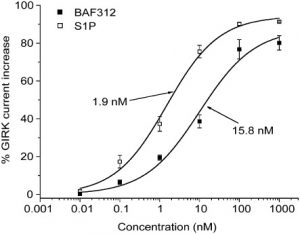
Siponimod (1 mM; 0-1 h) stimulates S1P1 receptor internalization, with 94% of S1P1 receptors localized intracellularly at 1 h[2]. Siponimod (0.001 nM-1 μM; 1 h) has an EC50 value of 15.8 nM, which activates the GIRK channel in atrial myocytes in CHO cell line CCL-61[2]. Siponimod (BAF312) is a potent, selective S1P1/S1P5 receptor modulator that acts as a partial agonist and induces receptor internalization [1][2][4] - In human T lymphocytes, Siponimod (0.01-10 μM) dose-dependently inhibited S1P-induced chemotaxis by 75-90% and blocked lymphocyte egress from lymphoid tissue mimics, mediated by S1P1 internalization [1][4] - In human S1P1/S1P5-expressing HEK293 cells, Siponimod (0.001-100 nM) induced receptor internalization with EC50 values of 0.9 nM (S1P1) and 1.1 nM (S1P5), reducing surface receptor expression by 60-70% [2][4] - In rat cortical neurons, Siponimod (0.1-5 μM) protected against glutamate-induced excitotoxicity, increasing cell viability by 35-50% via S1P5-mediated activation of Akt signaling [4] - In murine microglia (BV2 cells), Siponimod (0.5-5 μM) reduced LPS-induced pro-inflammatory cytokine (TNF-α, IL-6) production by 40-60% and downregulated NF-κB activation [4] - It had minimal effect on S1P3-mediated calcium mobilization in HEK293 cells at concentrations up to 10 μM, confirming subtype selectivity [2] |
| ln Vivo |
Siponimod (1 g/kg; i.v.; single dose) exhibits low to moderate levels in monkeys but high levels in rats in metabolism studies with liver microsomes. The absolute bioavailability is 50 and 71% in the rat and monkey, respectively, indicating no major presystemic first pass metabolism[1].
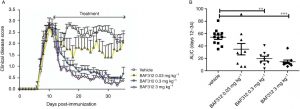
Siponimod (0.3, 3 mg/kg; p.o.; once daily; 23 d) internalizes S1P1 receptors to suppress experimental autoimmune encephalomyelitis (EAE) in rats[2]. In C57BL/6 mice with experimental autoimmune encephalomyelitis (EAE, secondary progressive MS model), oral Siponimod (0.1-1 mg/kg/day for 28 days) dose-dependently reduced clinical scores by 45-70% and decreased spinal cord demyelination by 55% [3][4] - In rats, oral Siponimod (0.3-3 mg/kg) induced a transient, species-specific bradycardia (15-20% reduction in heart rate) within 1-2 hours, which resolved spontaneously; no significant bradycardia observed in mice at equivalent doses [1] - In EAE mice, Siponimod (1 mg/kg/day) reduced peripheral blood lymphocyte counts by 60% and spinal cord inflammatory cell infiltration (CD4+ T cells, macrophages) by 50% [3][4] - It enhanced remyelination in the spinal cord of EAE mice, increasing mature oligodendrocyte count by 40% and improving axonal integrity [4] |
| Enzyme Assay |
Centrifuging the cells at 26900 × g for 30 minutes at 4°C follows the homogenization of the cells. To re-suspend the membranes, mix 20 mM HEPES (pH 7.4), 100 mM NaCl, 10 mM MgCl2, 1 mM EDTA, and 0.1% fat-free BSA at a protein concentration of 2-3 mg/mL. The membranes used in the GTPγ[35S] binding assay are 75 mg protein/mL in 50 mM HEPES, 100 mM NaCl, 10 mM MgCl2, 20 μg/mL saponin and 0.1% fat-free BSA (pH 7.4), 5 mg/mL with a wheat-germ agglutinin-coated scintillation proximity assay-bead, and 10 μM GDP for 10–15 min. With the addition of 200 pM GTPγ[35S], the GTPγ[35S]-binding reaction is initiate. Once the plates have been at room temperature for 120 minutes, they are centrifuged at 300 × g for 10 minutes and then tallied.
S1P1/S1P5 receptor binding assay: Membrane preparations from human S1P1/S1P5-expressing cells were incubated with [³H]-S1P (0.5 nM) and Siponimod (0.001-1000 nM) at 25°C for 60 minutes. Non-specific binding was determined with excess unlabeled S1P. Bound ligands were separated by filtration, and radioactivity was quantified to calculate Ki values [2][4] - S1P receptor internalization assay: S1P1/S1P5-HEK293 cells were treated with Siponimod (0.001-100 nM) for 2 hours, fixed, and immunostained for surface receptors. Internalization was quantified by flow cytometry to determine EC50 values [2][4] - NF-κB activation assay: BV2 microglia were pretreated with Siponimod (0.5-5 μM) for 1 hour, then stimulated with LPS (1 μg/mL) for 6 hours. Nuclear extracts were analyzed for NF-κB DNA-binding activity by EMSA [4] |
| Cell Assay |
Analysis of CHO cells using flow cytometry reveals antagonist-mediated internalization of S1P1 receptors. An agonist is added to standard culture medium and Myc-tag hS1P1 cells are incubated for 1 hour at 37°C. The cells are then washed with PBS. While one aliquot is left in culture medium (without an agonist) at 37°C for three hours, the other is kept on ice for three hours (or twelve hours). First, the cells are incubated for 60 minutes at 4°C with either 4 μg/mL monoclonal mouse anti-C-myc IgG1 antibody or isotype control mouse IgG1. Next, they are incubated with 1 μg/mL of goat anti-mouse secondary conjugates that have been labeled with Alexa488, which is a fluorescent dye. Using 10,000 viable cells per sample, the cells are measured using flow cytometry.
T cell chemotaxis assay: Human T lymphocytes were isolated from peripheral blood, pretreated with Siponimod (0.01-10 μM) for 30 minutes, and added to Transwell upper chambers. S1P (100 nM) was added to lower chambers, and migrated cells were counted after 4 hours [1][4] - Neuronal excitotoxicity assay: Rat cortical neurons were cultured for 7 days, pretreated with Siponimod (0.1-5 μM) for 1 hour, then exposed to glutamate (100 μM) for 24 hours. Cell viability was measured by MTT assay [4] - Microglia cytokine production assay: BV2 cells were seeded in 24-well plates, pretreated with Siponimod (0.5-5 μM) for 1 hour, then stimulated with LPS (1 μg/mL) for 24 hours. TNF-α and IL-6 levels in supernatants were quantified by ELISA [4] - Lymphocyte egress assay: Mouse lymph node explants were treated with Siponimod (0.1-1 μM) for 24 hours, and egressed lymphocytes in culture supernatants were counted by flow cytometry [1] |
| Animal Protocol |
Suspended in 1% aqueous carboxy-methylcellulose; 0.03, 0.3 and 3 mg/kg; oral givage
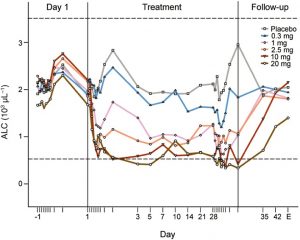
Encephalomyelitis (EAE) model rat BAF312 was tested in a rat experimental autoimmune encephalomyelitis (EAE) model. Electrophysiological recordings of G-protein-coupled inwardly rectifying potassium (GIRK) channels were carried out in human atrial myocytes. A Phase I multiple-dose trial studied the pharmacokinetics, pharmacodynamics and safety of BAF312 in 48 healthy subjects.[1] EAE (secondary progressive MS) mouse model: Female C57BL/6 mice (8-10 weeks old) were immunized with MOG peptide to induce EAE. Siponimod suspended in 0.5% CMC-Na was administered orally at 0.1, 0.3, 1 mg/kg/day from day 14 post-immunization (onset of secondary progression) for 28 days. Clinical scores, demyelination, and remyelination were evaluated [3][4] - Rat bradycardia assay: Male Wistar rats (250-300 g) were instrumented for telemetric heart rate monitoring. Siponimod (0.3, 1, 3 mg/kg) dissolved in 0.5% CMC-Na was administered orally, and heart rate was recorded continuously for 24 hours [1] |
| ADME/Pharmacokinetics |
Absorption, Distribution and Excretion
Following oral administration of immediate-release sinimod, the time to reach maximum plasma concentration (Cmax) (Tmax) is approximately 4 hours (range 3–8 hours). Sinimod has a high absorption rate (≥70%). The absolute oral bioavailability of sinimod is approximately 84%. Steady-state plasma concentrations are reached approximately 6 days after a single daily dose of sinimod. Effect of food on absorption: Food intake delays sinimod absorption (median Tmax increases by approximately 2–3 hours). Food intake has no effect on systemic exposure (Cmax and AUC) of sinimod. Therefore, sinimod administration is not affected by food intake. Sinimod is primarily eliminated from systemic circulation through metabolism and subsequent bile/fecal excretion. Unmetabolized sinimod is not detected in urine. Sinimod is distributed throughout the body with a mean volume of distribution of 124 liters. The concentration of sinimod measured in human plasma is 68%. Animal studies have shown that sinimod readily crosses the blood-brain barrier. In patients with multiple sclerosis, the estimated epigenetic systemic clearance is 3.11 L/h. Metabolism/Metabolites Sinimod is primarily metabolized by CYP2C9 enzymes (79.3%), followed by CYP3A4 enzymes (18.5%). The pharmacological activities of the major metabolites M3 and M17 are not expected to affect the clinical efficacy and safety of sinimod in humans. Biological Half-Life The epigenetic elimination half-life is approximately 30 hours. Oral bioavailability: approximately 84% in humans; approximately 78% in rats; approximately 82% in mice [1][2] -Elimination half-life: 32-42 hours in humans; 18-24 hours in rats; 20-26 hours in mice [2][3] -Plasma protein binding: 99.5% in human plasma (concentration range: 0.1-10 μg/mL) [2] -Distribution: Volume of distribution (Vd) in humans is 120-150 L/kg, widely distributed in the central nervous system (CNS), lymphoid tissue and brain tissue [3][4] -Metabolism: Metabolized in the liver by CYP3A4 and UDP-glucuronyl transferase (UGT); no active metabolites were found [2][3] -Excretion: 70-75% of the dose is excreted in feces as metabolites; 15-20% is excreted in urine; <1% Excreted in its original form [2] |
| Toxicity/Toxicokinetics |
Hepatotoxicity
Elevated serum ALT levels were common in large controlled trials of sinimod in patients with multiple sclerosis, typically occurring within the first 3 months of treatment. These elevations were usually mild and asymptomatic, and ALT levels often returned to baseline within 3 months of continued treatment or discontinuation. 6% to 8% of patients in the sinimod treatment group reported transaminase elevations exceeding three times the upper limit of normal (ULN), compared to less than 2% in the placebo group. No cases of acute hepatitis or clinically significant liver injury occurred in these premarket clinical trials, but 1% of subjects discontinued treatment due to abnormal liver function tests. While sinimod is associated with lymphopenia and long-term treatment is associated with a risk of relapse of herpes simplex and herpes zoster virus infections, it has not been found to be associated with hepatitis B virus relapse, although one case of hepatitis B virus relapse has been reported with fingolimod. Therefore, mild to moderate transient elevations of serum enzymes during treatment are not uncommon, but there have been no reports of clinically significant liver injury with jaundice caused by sinimod, despite limited clinical experience. Probability Score: E (Suspected but not confirmed cause of clinically significant liver injury). Pregnancy and Lactation Effects ◉ Overview of Use During Lactation Although sinimod has a high binding rate in maternal plasma and is unlikely to enter breast milk in large quantities, it still poses potential toxicity to breastfed infants. Since there is currently no published experience regarding the use of sinimod during lactation, expert opinion generally recommends avoiding the use of fingolimod, a drug closely related to it, during lactation, especially when breastfeeding newborns or premature infants. However, the manufacturer's label does not recommend that sinimod be contraindicated in breastfeeding women. ◉ Effects on Breastfed Infants No relevant published information found as of the revision date. ◉ Effects on Lactation and Breast Milk No relevant published information found as of the revision date. ◈ What is Sinimod? Sinimod (Mayzent®) is a medication approved for the treatment of relapsing-remitting multiple sclerosis (MS), including clinically isolated syndrome, relapsing-remitting multiple sclerosis, and active secondary progressive multiple sclerosis. For information about multiple sclerosis, please see the MotherToBaby case sheet: https://mothertobaby.org/fact-sheets/multiple-sclerosis/. Sometimes, when people find out they are pregnant, they may consider changing how they take the medication or even stopping it altogether. However, it is essential to talk to your healthcare provider before changing how you take this medication. Your healthcare provider can discuss with you the benefits of treating your condition and the risks of not treating the condition during pregnancy. ◈ I am taking sinimod, but I want to stop taking it before I get pregnant. How long will this medication stay in my body? Everyone clears the medication at a different rate. For healthy adults, it takes an average of about 10 days to clear most of the sinimod from the body. ◈ I am taking sinimod. Will it make it harder for me to get pregnant? It is currently unclear whether sinimod makes it harder to get pregnant. ◈ Does taking sinimod increase the risk of miscarriage? Miscarriage is common and can occur in any pregnancy for many reasons. According to the product label, animal studies report that taking sinimod increases the risk of pregnancy loss. There are currently no studies in human pregnant women to determine whether sinimod increases the risk of miscarriage. ◈ Does taking sinimod increase the risk of birth defects? There is a 3-5% risk of birth defects in each pregnancy, known as background risk. According to the product label, animal studies report that taking sinimod increases the risk of birth defects. There are currently no studies in human pregnant women to determine whether sinimod further increases the risk of birth defects on top of the background risk. ◈ Will taking sinimod during pregnancy cause other pregnancy-related problems? According to the product label, animal studies report that taking sinimod may lead to low birth weight in newborns. Currently, there are no studies on human pregnant women to determine whether sinimod increases the risk of pregnancy-related problems, such as preterm birth (delivery before 37 weeks of gestation) or low birth weight (birth weight less than 5 pounds 8 ounces [2500 grams]). ◈ Will taking sinimod during pregnancy affect a child's future behavior or learning abilities? There are currently no studies to determine whether sinimod causes behavioral or learning problems in children. ◈ Breastfeeding while taking sinimod: There are currently no studies on taking sinimod while breastfeeding. It is unclear whether sinimod passes into breast milk and what effects it has on breastfed infants. If you are taking sinimod while breastfeeding and suspect your infant has any symptoms, contact your child's healthcare provider. Be sure to consult your healthcare provider about all breastfeeding-related questions. ◈ If men take sinimod, will it affect fertility (the ability to impregnate a partner) or increase the risk of birth defects? There are currently no studies to explore whether sinimod affects male fertility or increases the risk of birth defects. Generally, exposure to sinimod by the father or sperm donor is unlikely to increase the risk of pregnancy. For more information, please see the “Paternal Exposure to Sinimod” fact sheet on the MotherToBaby website: https://mothertobaby.org/fact-sheets/paternal-exposures-pregnancy/. Protein Binding In healthy patients and patients with impaired liver or kidney function, the protein binding rate of sinimod is greater than 99.9%. Due to the high plasma protein binding rate of sinimod, hemodialysis is unlikely to alter the total and free concentrations of sinimod, and therefore, no dose adjustment is expected. Acute toxicity: Oral LD50 in rats > 500 mg/kg; in mice > 400 mg/kg [2] -Subchronic toxicity (oral administration in rats over 28 days): No significant hepatotoxicity or nephrotoxicity was observed at doses up to 10 mg/kg/day; transient lymphopenia (≤25% reduction) occurred at 30 mg/kg/day, which was reversible upon discontinuation [1][2] -Clinical toxicity: In human trials, common adverse events included mild to moderate headache (18%), hypertension (12%), and urinary tract infection (10%); rare bradycardia (≤2%) was relieved by dose adjustment [3] -Drug interactions: Can be inhibited by potent CYP3A4 inhibitors (e.g., ketoconazole); No interaction with MS disease-modifying therapies (e.g., interferon beta) [3] |
| References |
|
| Additional Infomation |
Pharmacodynamics
Immune System Effects: Sinimod can cause a dose-dependent decrease in peripheral blood lymphocyte count within 6 hours of the first dose, due to insufficient lymphocyte release leading to reversible accumulation of lymphocytes in lymphoid tissues. This can reduce inflammation associated with multiple sclerosis. Lymphocyte counts return to normal in 90% of patients within 10 days of discontinuation. Effects on Heart Rate and Rhythm: Sinimod can cause a transient decrease in heart rate and atrioventricular conduction after treatment initiation. The most significant decrease in heart rate occurs within 6 hours of administration. Sinimod treatment does not alter autonomic cardiac responses, including diurnal variations in heart rate and responses to exercise. Effects on Lung Function: A dose-dependent decrease in forced expiratory volume in one second (FEV1) was observed in patients receiving sinimod, with a greater magnitude of decrease than in the placebo group. Sinimod (BAF312) is a selective S1P1/S1P5 receptor modulator approved for the treatment of secondary progressive multiple sclerosis (SPMS)[2][3][4] - Its core mechanism involves a dual action: inducing S1P1 internalization to block lymphocyte migration (immunomodulation), and activating S1P5 to promote neuronal survival and myelin regeneration (neuroprotection)[4] - It can effectively cross the blood-brain barrier (BBB) to exert peripheral immunomodulatory and central neuroprotective effects in multiple sclerosis[3][4] - FDA-approved indication: treatment of adult SPMS to slow disease progression, disability worsening and inflammatory activity[3] - Species-specific bradycardia (observed in rats but not in mice/humans and dose-dependent) is associated with differential expression of S1P3 in cardiac tissue[1] - Once-daily oral dosing regimens are supported by their long elimination half-life in the human body, thereby improving patient compliance [2][3] |
| Molecular Formula |
C29H35F3N2O3
|
|
|---|---|---|
| Molecular Weight |
516.6
|
|
| Exact Mass |
516.259
|
|
| Elemental Analysis |
C, 67.42; H, 6.83; F, 11.03; N, 5.42; O, 9.29
|
|
| CAS # |
1230487-00-9
|
|
| Related CAS # |
Siponimod hemifumarate; 1234627-85-0
|
|
| PubChem CID |
44599207
|
|
| Appearance |
White to off-white solid powder
|
|
| Density |
1.2±0.1 g/cm3
|
|
| Boiling Point |
602.0±65.0 °C at 760 mmHg
|
|
| Melting Point |
111-112
|
|
| Flash Point |
317.9±34.3 °C
|
|
| Vapour Pressure |
0.0±1.8 mmHg at 25°C
|
|
| Index of Refraction |
1.571
|
|
| LogP |
6.9
|
|
| Hydrogen Bond Donor Count |
1
|
|
| Hydrogen Bond Acceptor Count |
8
|
|
| Rotatable Bond Count |
9
|
|
| Heavy Atom Count |
37
|
|
| Complexity |
777
|
|
| Defined Atom Stereocenter Count |
0
|
|
| SMILES |
FC(C1C([H])=C(C([H])([H])O/N=C(\C([H])([H])[H])/C2C([H])=C([H])C(=C(C=2[H])C([H])([H])C([H])([H])[H])C([H])([H])N2C([H])([H])C([H])(C(=O)O[H])C2([H])[H])C([H])=C([H])C=1C1([H])C([H])([H])C([H])([H])C([H])([H])C([H])([H])C1([H])[H])(F)F
|
|
| InChi Key |
KIHYPELVXPAIDH-HNSNBQBZSA-N
|
|
| InChi Code |
InChI=1S/C29H35F3N2O3/c1-3-21-14-23(10-11-24(21)15-34-16-25(17-34)28(35)36)19(2)33-37-18-20-9-12-26(22-7-5-4-6-8-22)27(13-20)29(30,31)32/h9-14,22,25H,3-8,15-18H2,1-2H3,(H,35,36)/b33-19+
|
|
| Chemical Name |
1-[[4-[(E)-N-[[4-cyclohexyl-3-(trifluoromethyl)phenyl]methoxy]-C-methylcarbonimidoyl]-2-ethylphenyl]methyl]azetidine-3-carboxylic acid
|
|
| Synonyms |
|
|
| HS Tariff Code |
2934.99.9001
|
|
| Storage |
Powder -20°C 3 years 4°C 2 years In solvent -80°C 6 months -20°C 1 month Note: Please store this product in a sealed and protected environment, avoid exposure to moisture. |
|
| Shipping Condition |
Room temperature (This product is stable at ambient temperature for a few days during ordinary shipping and time spent in Customs)
|
| Solubility (In Vitro) |
DMSO: ~100 mg/mL (~193.6 mM)
Water: 1 mg/mL (Insoluble) Ethanol: ~44 mg/mL (~85.2 mM) |
|---|---|
| Solubility (In Vivo) |
Solubility in Formulation 1: ≥ 2.5 mg/mL (4.84 mM) (saturation unknown) in 10% DMSO + 40% PEG300 + 5% Tween80 + 45% Saline (add these co-solvents sequentially from left to right, and one by one), clear solution.
For example, if 1 mL of working solution is to be prepared, you can add 100 μL of 25.0 mg/mL clear DMSO stock solution to 400 μL PEG300 and mix evenly; then add 50 μL Tween-80 to the above solution and mix evenly; then add 450 μL normal saline to adjust the volume to 1 mL. Preparation of saline: Dissolve 0.9 g of sodium chloride in 100 mL ddH₂ O to obtain a clear solution. Solubility in Formulation 2: ≥ 2.5 mg/mL (4.84 mM) (saturation unknown) in 10% DMSO + 90% (20% SBE-β-CD in Saline) (add these co-solvents sequentially from left to right, and one by one), clear solution. For example, if 1 mL of working solution is to be prepared, you can add 100 μL of 25.0 mg/mL clear DMSO stock solution to 900 μL of 20% SBE-β-CD physiological saline solution and mix evenly. Preparation of 20% SBE-β-CD in Saline (4°C,1 week): Dissolve 2 g SBE-β-CD in 10 mL saline to obtain a clear solution. View More
Solubility in Formulation 3: ≥ 2.5 mg/mL (4.84 mM) (saturation unknown) in 10% DMSO + 90% Corn Oil (add these co-solvents sequentially from left to right, and one by one), clear solution. Solubility in Formulation 4: 1.67 mg/mL (3.23 mM) in 5% DMSO + 40% PEG300 + 5% Tween80 + 50% Saline (add these co-solvents sequentially from left to right, and one by one), suspension solution; with ultrasonication. Preparation of saline: Dissolve 0.9 g of sodium chloride in 100 mL ddH₂ O to obtain a clear solution. Solubility in Formulation 5: 1.67 mg/mL (3.23 mM) in 5% DMSO + 95% (20% SBE-β-CD in Saline) (add these co-solvents sequentially from left to right, and one by one), suspension solution; with ultrasonication. Preparation of 20% SBE-β-CD in Saline (4°C,1 week): Dissolve 2 g SBE-β-CD in 10 mL saline to obtain a clear solution. Solubility in Formulation 6: 0.33 mg/mL (0.64 mM) in 1% DMSO 99% Saline (add these co-solvents sequentially from left to right, and one by one), suspension solution; with ultrasonication. Preparation of saline: Dissolve 0.9 g of sodium chloride in 100 mL ddH₂ O to obtain a clear solution. |
| Preparing Stock Solutions | 1 mg | 5 mg | 10 mg | |
| 1 mM | 1.9357 mL | 9.6787 mL | 19.3573 mL | |
| 5 mM | 0.3871 mL | 1.9357 mL | 3.8715 mL | |
| 10 mM | 0.1936 mL | 0.9679 mL | 1.9357 mL |
*Note: Please select an appropriate solvent for the preparation of stock solution based on your experiment needs. For most products, DMSO can be used for preparing stock solutions (e.g. 5 mM, 10 mM, or 20 mM concentration); some products with high aqueous solubility may be dissolved in water directly. Solubility information is available at the above Solubility Data section. Once the stock solution is prepared, aliquot it to routine usage volumes and store at -20°C or -80°C. Avoid repeated freeze and thaw cycles.
Calculation results
Working concentration: mg/mL;
Method for preparing DMSO stock solution: mg drug pre-dissolved in μL DMSO (stock solution concentration mg/mL). Please contact us first if the concentration exceeds the DMSO solubility of the batch of drug.
Method for preparing in vivo formulation::Take μL DMSO stock solution, next add μL PEG300, mix and clarify, next addμL Tween 80, mix and clarify, next add μL ddH2O,mix and clarify.
(1) Please be sure that the solution is clear before the addition of next solvent. Dissolution methods like vortex, ultrasound or warming and heat may be used to aid dissolving.
(2) Be sure to add the solvent(s) in order.
| NCT Number | Recruitment | interventions | Conditions | Sponsor/Collaborators | Start Date | Phases |
| NCT05376579 | Active Recruiting |
Other: siponimod | Active Secondary Progressive Multiple Sclerosis |
Novartis Pharmaceuticals | June 17, 2022 | N/A |
| NCT04933552 | Recruiting | Other: Siponimod | Multiple Sclerosis | Novartis Pharmaceuticals | December 15, 2021 | N/A |
| NCT04926818 | Recruiting | Drug: Siponimod Drug: Ofatumumab |
Multiple Sclerosis (MS) | Novartis Pharmaceuticals | October 5, 2021 | Phase 3 |
| NCT03623243 | Completed | Drug: Siponimod | Multiple Sclerosis Relapsing Multiple Sclerosis |
Novartis Pharmaceuticals | February 14, 2019 | Phase 3 |
|
|---|
|
|
Products are for research use only; We do not sell to patients
Copyright 2020 InvivoChem LLC | All Rights Reserved


 COA
COA