| Size | Price | Stock | Qty |
|---|---|---|---|
| 5mg |
|
||
| 10mg |
|
||
| 25mg |
|
||
| 50mg |
|
||
| 100mg |
|
||
| 250mg |
|
||
| 500mg | |||
| Other Sizes |
Purity: ≥98%
| Targets |
Chk1 (IC50 = 5 nM); Chk2 (IC50 = 5 nM)
AZD7762 targets checkpoint kinase 1 (Chk1) with an IC50 value of 1.3 nM and checkpoint kinase 2 (Chk2) with an IC50 value of 7.6 nM in recombinant kinase assays [1] AZD7762 shows moderate selectivity, with IC50 values > 1 μM for 28 other tested kinases (including CDK1, Aurora A, ATM, ATR) [1] |
|---|---|
| ln Vitro |
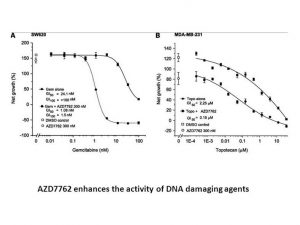
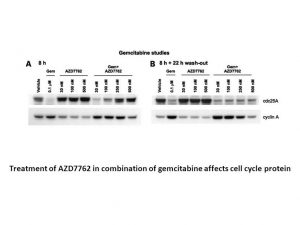
AZD7762, a more selective inhibitor of Chk1, binds to the ATP-binding site of Chk1 reversibly and inhibits Chk1 phosphorylation of a cdc25C peptide with an IC50 of 5 nM and a Ki of 3.6 nM. By obstructing the chk1-dependent degradation of Cdc25A and activating Cyclin A, AZD7762 causes cell arrest with an EC50 of 0.620 μM and significantly reverses the G2 arrest induced by camptothecin, which has an EC50 of 10 nM. By lowering the GI50 values from 24.1 nM and 2.25 μM to 1.08 nM and 0.15 μM, respectively, AZD7762 (300 nM) improves the antitumor efficacy of gemcitabine against SW620 and topotecan against MDA-MB-231.[1] AZD7762 exhibits cytotoxicity with IC50 values ranging from 82.6 to 505.9 nM against a range of neuroblastoma cell lines expressing p53 wild type, p53 mutation, Mdm2 amplification, or p14 deletion.[2]
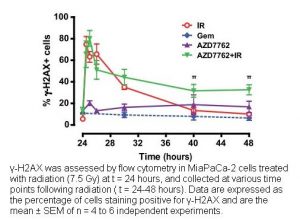
Against a panel of human cancer cell lines (HCT116, A2780, MCF-7, PC3, HeLa), AZD7762 exhibited antiproliferative activity with IC50 values ranging from 25 nM to 150 nM [1] - AZD7762 (50 nM) abrogated the G2/M checkpoint induced by DNA-damaging agents (cisplatin, doxorubicin) in HCT116 cells, reducing G2/M phase accumulation from 62% to 28% [1] - Treatment with AZD7762 (100 nM) alone induced mild apoptosis (12% apoptotic cells) in A2780 cells, but combined with cisplatin (1 μM) increased apoptosis to 58% after 72 hours [1] - AZD7762 inhibited Chk1-mediated phosphorylation of CDC25C (Ser216) and Chk2-mediated phosphorylation of p53 (Ser20) in HCT116 cells, as detected by Western blot [1] - Synergistic antiproliferative effects were observed when AZD7762 was combined with DNA-targeted therapies: cisplatin (combination index [CI] = 0.4), doxorubicin (CI = 0.35), paclitaxel (CI = 0.5), and gemcitabine (CI = 0.45) in HCT116 cells [1] - AZD7762 (75 nM) enhanced DNA double-strand breaks in cisplatin-treated cells, as shown by increased γ-H2AX foci formation (3.2-fold vs cisplatin alone) [1] |
| ln Vivo |
In the H460-DNp53 and SW620 xenograft mice, AZD7762 at 25 mg/kg has minimal antitumor activity. However, when administered in conjunction with gemcitabine (60 mg/kg), AZD7762 exhibits significant antitumor efficacy in the two xenograft mice, with a log cell kill of 0.9 or a percent treated/control (%T/C) of 26, even at low doses of 12.5 mg. When administered in conjunction with gemcitabine (10 mg/kg), AZD7762 and the H460-DNp53 xenograft rat exhibit dose-dependent tumor volume inhibition, with percentage T/C values of 48 and 32 for 10 and 20 mg/kg AZD7762, respectively.
In HCT116 human colon cancer xenograft models (nu/nu mice), intraperitoneal administration of AZD7762 (10 mg/kg, q.d. for 5 days) combined with cisplatin (5 mg/kg, i.p. on days 1 and 5) resulted in 89% tumor growth inhibition (TGI), compared to 41% TGI with cisplatin alone [1] - In A2780 human ovarian cancer xenograft models (nu/nu mice), AZD7762 (15 mg/kg, i.p., q.d. for 5 days) combined with paclitaxel (10 mg/kg, i.v., on days 1 and 5) induced 92% TGI and prolonged median survival by 65% vs paclitaxel alone [1] - Tumor tissues from combined AZD7762 and cisplatin treatment showed increased TUNEL-positive apoptotic cells (45% vs 18% with cisplatin alone) and reduced Ki-67 proliferation index (22% vs 56% with cisplatin alone) [1] |
| Enzyme Assay |
Purified by glutathione affinity chromatography, recombinant human Chk1 is expressed as a glutathione S-transferase fusion in insect cells via a baculovirus vector. For Chk1, N-biotinylaminohexanoyl-KKVSRSGLYRSPMPENLNRPR is a synthetic peptide substrate. The final assay peptide and ATP concentrations are 0.8 and 1 μM, respectively (cold + 40 nCi [ 33 P]ATP). An assay plate with 384 wells is filled with varying concentrations of AZD7762, a buffer that contains ATP, chk1 kinase, and peptide. Using a TopCount reader, the plates are read after two hours of incubation, during which the reaction is halted by adding a buffer containing EDTA and scintillation proximity assay beads. Determine a dose response (IC50) by conducting data analysis.
Recombinant Chk1/Chk2 kinase activity assay: The assay was performed in reaction buffer containing recombinant Chk1/Chk2, ATP (10 μM), and a fluorescently labeled peptide substrate. Serial concentrations of AZD7762 (0.1 nM to 1 μM) were added, and the mixture was incubated at 30°C for 60 minutes. Phosphorylated substrate was detected by fluorescence resonance energy transfer (FRET), and IC50 values were calculated via nonlinear regression [1] - Kinase selectivity panel assay: AZD7762 (1 μM) was tested against a panel of 30 human kinases using the same FRET-based method. Inhibition rates were determined relative to vehicle controls, and IC50 values were calculated for kinases showing > 20% inhibition [1] |
| Cell Assay |
In the checkpoint abrogation assay, HT29 cells are treated with camptothecin (a topoisomerase I inhibitor; 0.07 μg/mL) for two hours in order to trigger the G2 checkpoint. After that, cells are subjected to a 12-point titration of AZD7762 (12.5 μM to 6 nM) in addition to nocodazole for a duration of 20 hours. After fixing for one hour in 3.7% formaldehyde, permeabilizing the cells in PBS containing 0.05% Triton X, and incubating the cells for one hour in anti-phH3 antibody, Alexa Fluor 488 anti-rabbit, and Hoechst stain, the cells are left for another hour. The percentage of cells undergoing mitosis is represented by the mitotic index, which is calculated using the ArrayScan. In order to conduct potentiation assays, either SW620 or MDA-MB-231 cells are treated with a constant dose of AZD7762 (300 nM) for 24 hours followed by a 9-point titration of gemcitabine ranging from 0.01 to 100 nM. The medium is removed after 24 hours, and AZD7762 alone is then added back to the wells for a further 24 hours. Following this, the cells are cultured for a further 72 hours in medium free of AZD7762. MTT determines the impact on cell proliferation.
Antiproliferative assay: Cancer cells were seeded in 96-well plates (5×10³ cells/well) and treated with serial concentrations of AZD7762 (10 nM to 1 μM) alone or in combination with DNA-targeted agents for 72 hours. Cell viability was assessed by a colorimetric assay based on tetrazolium salt reduction, and IC50 values/combination indices were calculated [1] - Cell cycle analysis: Cells were treated with AZD7762 (50 nM) plus cisplatin (1 μM) for 24 hours, harvested, fixed with 70% ethanol, stained with propidium iodide, and analyzed by flow cytometry to determine cell cycle distribution [1] - Apoptosis assay: Cells were treated with AZD7762 (100 nM) and/or doxorubicin (0.5 μM) for 72 hours, stained with annexin V-FITC and propidium iodide, and analyzed by flow cytometry [1] - Western blot analysis: Cells were lysed in RIPA buffer, and proteins were separated by SDS-PAGE, transferred to membranes, and probed with antibodies against phospho-CDC25C (Ser216), phospho-p53 (Ser20), γ-H2AX, cleaved caspase-3, PARP, and β-actin. Signals were detected by chemiluminescence and quantified by densitometry [1] - γ-H2AX foci assay: Cells were treated with AZD7762 (75 nM) and cisplatin (1 μM) for 24 hours, fixed, stained with γ-H2AX antibody and DAPI, and visualized by fluorescence microscopy. Foci per cell were counted manually [1] |
| Animal Protocol |
Mice and Rats: Male RNU rats and male NCr mice are employed. Tumor cells are removed from mice used as xenograft models, centrifuged for five minutes to pellet the cells, and then resuspended in sterile PBS. Using a 25-gauge needle, cells (3×10 3 -6×10 6 ) are s.c. implanted into the right flank of the mice in a volume of 0.1 to 0.2 mL. Before compound is administered, tumors are allowed to grow to the specified size of 100 to 200 mm 3 . Rat xenograft models involve cell harvesting, centrifugation for 5 minutes to pellet the cells, and resuspension in a 50% sterile PBS and 50% Matrigel solution. Five days prior to cell implantation, rats undergo a whole-body radiation dose of 5 Gy with the goal of enhancing tumor growth. With a 25-gauge needle, H460-DNp53 cells (1×10 7 ) are s.c. implanted into the rats' right flanks in a volume of 0.2 mL. Before administering AZD-7762, tumors are allowed to grow to the specified size of 100 to 200 mm 3 . The tail vein is used to administer intravenous injections of AZD-7762 (10 and 20 mg/kg). Treatments were administered in cycles of three to five, according to cyclic schedules. Every three days, AZD-7762 is delivered after a standard agent (NSC 613327 or CPT-11) has been administered. Electronic calipers are used to measure and compute tumor volumes.
Mice: Pharmacological inhibitors are administered to C57Bl/6 mice eight days after they receive an intravenous injection of 2×10 5 Eμ-Myc B-lymphoma cells in PBS. Treatment is administered to the mice until an ethical endpoint, such as a hunched posture, ruffled fur, enlarged lymph nodes, labored breathing, weight loss of more than 20% of the initial body weight, limited mobility, or paralysis, is achieved. On weekdays, 20 mg/kg of AZD7762 is administered intraperitoneally in a solution of 10.3% -hydroxypropyl-β-cyclodextrin and 0.9% saline.
HCT116 colon cancer xenograft model: Female nu/nu mice (6-8 weeks old) were subcutaneously implanted with 5×10⁶ HCT116 cells. When tumors reached 100-150 mm3, mice were randomized into groups (n=6/group) and treated with: (1) vehicle (5% DMSO + 20% Cremophor EL + 75% saline) i.p., (2) AZD7762 (10 mg/kg) i.p. once daily for 5 days, (3) cisplatin (5 mg/kg) i.p. on days 1 and 5, (4) AZD7762 + cisplatin. Tumor volume and body weight were measured every 2 days [1] - A2780 ovarian cancer xenograft model: Female nu/nu mice (6-8 weeks old) were subcutaneously implanted with 5×10⁶ A2780 cells. Tumors reaching 100-150 mm3 were randomized (n=6/group) and treated with: (1) vehicle i.p., (2) AZD7762 (15 mg/kg) i.p. once daily for 5 days, (3) paclitaxel (10 mg/kg) i.v. on days 1 and 5, (4) AZD7762 + paclitaxel. Tumor volume and survival were monitored [1] |
| ADME/Pharmacokinetics |
In mice, after intraperitoneal injection of AZD7762 (10 mg/kg), the peak plasma concentration (Cmax) was 2.8 μM, the area under the curve (AUC0-24h) was 16.5 μM·h, and the terminal half-life (t1/2) was 4.2 h [1]. AZD7762 has moderate water solubility (35 μM at pH 7.4) and high human plasma protein binding (91%) [1]. After oral administration of AZD7762 (25 mg/kg) in mice, the oral bioavailability was low (12%), the peak plasma concentration (Cmax) was 0.3 μM, and the area under the curve (AUC0-24h) was 2.1 μM·h [1].
|
| Toxicity/Toxicokinetics |
In a single-dose toxicity study in mice, the maximum tolerated dose (MTD) of AZD7762 was 20 mg/kg intraperitoneally, and lethal toxicity (50% mortality) was observed at 30 mg/kg [1]. Repeated administration of AZD7762 (10 mg/kg intraperitoneally, once daily for 5 days) in mice caused mild myelosuppression (23% decrease in white blood cell count) and transient weight loss (≤8%), which resolved within 7 days [1]. At concentrations up to 10 μM, AZD7762 did not inhibit human cytochrome P450 enzymes (CYP1A2, CYP2C9, CYP2C19, CYP2D6, CYP3A4) [1].
|
| References |
|
| Additional Infomation |
3-(carbamoylamino)-5-(3-fluorophenyl)-N-[(3S)-3-piperidinyl]-2-thiophene carboxamide is an aromatic amide belonging to the thiophene class of compounds. AZD7762 has been investigated for the treatment of cancer, solid tumors, and advanced solid malignancies. The checkpoint kinase inhibitor AZD7762 is a synthetic small-molecule checkpoint kinase (Chks) inhibitor with potential chemosensitizing activity. AZD7762 binds to Chks and inhibits their activity, potentially preventing cell cycle arrest and subsequent nucleotide excision repair in DNA-damaged tumor cells, ultimately leading to tumor cell apoptosis. This drug may enhance the cytotoxicity of DNA-damaging agents. Chks are a class of protein kinases that regulate the G1/S or G2/M phase transitions in the cell cycle. When DNA is damaged or DNA replication is incomplete, checkpoint kinases (Chks) are activated, initiating cell cycle arrest to allow DNA repair or complete DNA replication.
Discoveries in cell cycle research have led to the hypothesis that tumors may possess selective sensitivity to DNA-damaging drugs, thereby enhancing anti-tumor activity and expanding the scope of treatment. This theory is based on the observation that most tumors lack the G1 phase DNA damage checkpoint pathway, leading them to rely on S and G2 phase checkpoints for DNA repair and cell survival. The S and G2 phase checkpoints are regulated by checkpoint kinase 1 (CK1), a serine/threonine kinase that is activated after DNA damage; therefore, inhibiting CK1 signaling impairs DNA repair and increases tumor cell death. However, normal tissues possess a functional G1 phase checkpoint signaling pathway, enabling DNA repair and cell survival. This article describes the preclinical profile of AZD7762, a potent ATP-competitive checkpoint kinase inhibitor currently undergoing clinical trials. AZD7762 has been extensively studied in vitro and in vivo in combination with DNA-damaging agents, demonstrating that, in various scenarios, inhibition of checkpoint kinases enhances the efficacy of DNA damage-induced cell cycle arrest. In various xenograft models, when AZD7762 was used in combination with DNA damage agents, a dose-dependent enhancement of antitumor activity was observed, which further supports the potential of checkpoint kinase inhibitors to enhance the efficacy of conventional chemotherapy and radiotherapy and improve patient response rates in multiple scenarios. [1] AZD7762 is a novel small molecule inhibitor of Chk1 and Chk2, which are key regulators of DNA damage response and cell cycle checkpoints. [1] The mechanism of action of AZD7762 involves blocking the G2/M and S phase checkpoints, forcing DNA-unrepaired cancer cells to undergo mitosis, ultimately leading to mitotic catastrophe and apoptosis. [1] AZD7762 is designed to enhance the efficacy of DNA-targeted chemotherapy by preventing cancer cells from repairing DNA damage. Drug-induced DNA damage[1] AZD7762 showed higher activity in p53-deficient cancer cells because these cells are more dependent on Chk1/Chk2-mediated checkpoints for survival[1] |
| Molecular Formula |
C17H19FN4O2S
|
|
|---|---|---|
| Molecular Weight |
362.42
|
|
| Exact Mass |
362.12
|
|
| Elemental Analysis |
C, 56.34; H, 5.28; F, 5.24; N, 15.46; O, 8.83; S, 8.85
|
|
| CAS # |
860352-01-8
|
|
| Related CAS # |
AZD-7762 hydrochloride;1246094-78-9
|
|
| PubChem CID |
11152667
|
|
| Appearance |
white solid powder
|
|
| Density |
1.38
|
|
| Boiling Point |
547.6ºC at 760 mmHg
|
|
| Flash Point |
285ºC
|
|
| LogP |
4.821
|
|
| Hydrogen Bond Donor Count |
4
|
|
| Hydrogen Bond Acceptor Count |
5
|
|
| Rotatable Bond Count |
4
|
|
| Heavy Atom Count |
25
|
|
| Complexity |
495
|
|
| Defined Atom Stereocenter Count |
1
|
|
| SMILES |
C(C1=C(NC(=O)N)C=C(C2C=CC=C(F)C=2)S1)(=O)N[C@@H]1CNCCC1
|
|
| InChi Key |
IAYGCINLNONXHY-LBPRGKRZSA-N
|
|
| InChi Code |
InChI=1S/C17H19FN4O2S/c18-11-4-1-3-10(7-11)14-8-13(22-17(19)24)15(25-14)16(23)21-12-5-2-6-20-9-12/h1,3-4,7-8,12,20H,2,5-6,9H2,(H,21,23)(H3,19,22,24)/t12-/m0/s1
|
|
| Chemical Name |
3-(carbamoylamino)-5-(3-fluorophenyl)-N-[(3S)-piperidin-3-yl]thiophene-2-carboxamide
|
|
| Synonyms |
|
|
| HS Tariff Code |
2934.99.9001
|
|
| Storage |
Powder -20°C 3 years 4°C 2 years In solvent -80°C 6 months -20°C 1 month |
|
| Shipping Condition |
Room temperature (This product is stable at ambient temperature for a few days during ordinary shipping and time spent in Customs)
|
| Solubility (In Vitro) |
DMSO: ~50 mg/mL (~138.0 mM)
Water: 1 mg/mL (Insoluble) Ethanol: 1 mg/mL |
|---|---|
| Solubility (In Vivo) |
Solubility in Formulation 1: ≥ 2.5 mg/mL (6.90 mM) (saturation unknown) in 10% DMSO + 40% PEG300 + 5% Tween80 + 45% Saline (add these co-solvents sequentially from left to right, and one by one), clear solution.
For example, if 1 mL of working solution is to be prepared, you can add 100 μL of 25.0 mg/mL clear DMSO stock solution to 400 μL PEG300 and mix evenly; then add 50 μL Tween-80 to the above solution and mix evenly; then add 450 μL normal saline to adjust the volume to 1 mL. Preparation of saline: Dissolve 0.9 g of sodium chloride in 100 mL ddH₂ O to obtain a clear solution. Solubility in Formulation 2: ≥ 2.5 mg/mL (6.90 mM) (saturation unknown) in 10% DMSO + 90% (20% SBE-β-CD in Saline) (add these co-solvents sequentially from left to right, and one by one), clear solution. For example, if 1 mL of working solution is to be prepared, you can add 100 μL of 25.0 mg/mL clear DMSO stock solution to 900 μL of 20% SBE-β-CD physiological saline solution and mix evenly. Preparation of 20% SBE-β-CD in Saline (4°C,1 week): Dissolve 2 g SBE-β-CD in 10 mL saline to obtain a clear solution. View More
Solubility in Formulation 3: ≥ 2.5 mg/mL (6.90 mM) (saturation unknown) in 10% DMSO + 90% Corn Oil (add these co-solvents sequentially from left to right, and one by one), clear solution. Solubility in Formulation 4: 10 mg/mL (27.59 mM) in 10% HP-β-CD (add these co-solvents sequentially from left to right, and one by one), clear solution; with ultrasonication. |
| Preparing Stock Solutions | 1 mg | 5 mg | 10 mg | |
| 1 mM | 2.7592 mL | 13.7961 mL | 27.5923 mL | |
| 5 mM | 0.5518 mL | 2.7592 mL | 5.5185 mL | |
| 10 mM | 0.2759 mL | 1.3796 mL | 2.7592 mL |
*Note: Please select an appropriate solvent for the preparation of stock solution based on your experiment needs. For most products, DMSO can be used for preparing stock solutions (e.g. 5 mM, 10 mM, or 20 mM concentration); some products with high aqueous solubility may be dissolved in water directly. Solubility information is available at the above Solubility Data section. Once the stock solution is prepared, aliquot it to routine usage volumes and store at -20°C or -80°C. Avoid repeated freeze and thaw cycles.
Calculation results
Working concentration: mg/mL;
Method for preparing DMSO stock solution: mg drug pre-dissolved in μL DMSO (stock solution concentration mg/mL). Please contact us first if the concentration exceeds the DMSO solubility of the batch of drug.
Method for preparing in vivo formulation::Take μL DMSO stock solution, next add μL PEG300, mix and clarify, next addμL Tween 80, mix and clarify, next add μL ddH2O,mix and clarify.
(1) Please be sure that the solution is clear before the addition of next solvent. Dissolution methods like vortex, ultrasound or warming and heat may be used to aid dissolving.
(2) Be sure to add the solvent(s) in order.
| NCT Number | Recruitment | interventions | Conditions | Sponsor/Collaborators | Start Date | Phases |
| NCT00413686 | Completed | Drug: AZD7762 Drug: Gemcitabine |
Solid Tumors | AstraZeneca | December 2006 | Phase 1 |
| NCT00473616 | Terminated | Drug: AZD7762 Drug: Irinotecan |
Advanced Solid Tumors Cancer |
AstraZeneca | May 2007 | Phase 1 |
| NCT00937664 | Terminated | Drug: AZD7762 Drug: gemcitabine |
Cancer Solid Tumors |
AstraZeneca | July 2009 | Phase 1 |
|
|---|
|
|
 Effect of AZD7762 on cell cycle proteins following treatment of cells with DNA-damaging agents.Mol Cancer Ther.2008 Sep;7(9):2955-66. |
|---|
 AZD7762 potentiated gemcitabine and topotecan.Mol Cancer Ther.2008 Sep;7(9):2955-66. |
 AZD7762 potentiated gemcitabine in rodent xenograft efficacy models.Mol Cancer Ther.2008 Sep;7(9):2955-66. |
Products are for research use only; We do not sell to patients
Copyright 2020 InvivoChem LLC | All Rights Reserved


 COA
COA