| Size | Price | Stock | Qty |
|---|---|---|---|
| 5mg |
|
||
| 10mg |
|
||
| 25mg |
|
||
| 50mg |
|
||
| 100mg |
|
||
| Other Sizes |
Purity: ≥98%
| Targets |
mGluR2 ( EC50 = 285 nM )
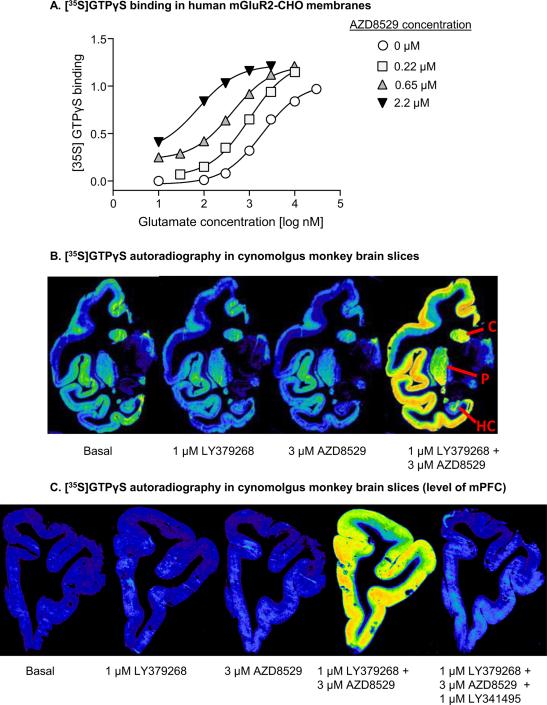
AZD-8529 mesylate increases the effects of glutamate at mGluR2 with an EC50 of 195 nM [1]. AZD-8529 mesylate does not cause antagonist reactions on mGluRs at 25 μM[1]. AZD8529 potentiation of mGluR2 receptor function[1] We assessed the effect of AZD8529 at the human mGluR2 receptor by measuring the potentiation of [35S]GTPγS binding in the presence of increasing concentrations of exogenously applied agonist (L-glutamate). AZD8529 potentiated the effects of glutamate at mGluR2 with an EC50 of 195±62 nM and an Emax of 110%±11% (Figure 1A). In order to assess the selectivity of AZD8529 against the family of mGluRs, we used fluorescence-based assays. AZD8529 potentiated mGluR2 activity with an EC50 of 285±20 nM and did not produce any positive allosteric modulator responses at 20-25 M on the mGluR1, 3, 4, 5, 6, 7, and 8 subtypes (Table 1). In addition, at 25 μM AZD8529 did not elicit antagonist responses on mGluRs. When AZD8529 (10 μM) was studied in a broad receptor screen (Table 2), we observed >50% inhibition of ligand biding at adenosine A3 receptors (51% inhibition) and the norepinephrine transporter (NET, IC50=4.73 μM). In vitro electrophysiology tests [2] The mGlu2/3 receptor agonist DCG-IV induced inhibitory effects on fEPSPs in the pyramidal cells in the CA1 region of the hippocampus. The inhibitory effects of DCG-IV on synaptic transmission were potentiated by AZD8418 and AZD8529, with EC50 values of 0.86 and 1.4 μM, respectively (Fig. 2a). AZD8418 produced a greater maximal potentiation (79.9 ± 4.4) than AZD8529 (61.4 ± 4.3, p < 0.05). The mGlu2/3 receptor antagonist LY341495 (1 μM) effectively blocked the inhibition of fEPSPs that was induced by DCG-IV alone (10 nM) or the combination of DCG-IV with either AZD8529 (10 μM) or AZD8418 (10 μM; Fig. 2b). |
|---|---|
| ln Vitro |
AZD-8529 mesylate increases the effects of glutamate at mGluR2 with an EC50 of 195 nM [1].
AZD-8529 mesylate does not cause antagonist reactions on mGluRs at 25 μM[1]. AZD8529 potentiation of mGluR2 receptor function[1] We assessed the effect of AZD8529 at the human mGluR2 receptor by measuring the potentiation of [35S]GTPγS binding in the presence of increasing concentrations of exogenously applied agonist (L-glutamate). AZD8529 potentiated the effects of glutamate at mGluR2 with an EC50 of 195±62 nM and an Emax of 110%±11% (Figure 1A). In order to assess the selectivity of AZD8529 against the family of mGluRs, we used fluorescence-based assays. AZD8529 potentiated mGluR2 activity with an EC50 of 285±20 nM and did not produce any positive allosteric modulator responses at 20-25 M on the mGluR1, 3, 4, 5, 6, 7, and 8 subtypes (Table 1). In addition, at 25 μM AZD8529 did not elicit antagonist responses on mGluRs. When AZD8529 (10 μM) was studied in a broad receptor screen (Table 2), we observed >50% inhibition of ligand biding at adenosine A3 receptors (51% inhibition) and the norepinephrine transporter (NET, IC50=4.73 μM). In vitro electrophysiology tests [2] The mGlu2/3 receptor agonist DCG-IV induced inhibitory effects on fEPSPs in the pyramidal cells in the CA1 region of the hippocampus. The inhibitory effects of DCG-IV on synaptic transmission were potentiated by AZD8418 and AZD8529, with EC50 values of 0.86 and 1.4 μM, respectively (Fig. 2a). AZD8418 produced a greater maximal potentiation (79.9 ± 4.4) than AZD8529 (61.4 ± 4.3, p < 0.05). The mGlu2/3 receptor antagonist LY341495 (1 μM) effectively blocked the inhibition of fEPSPs that was induced by DCG-IV alone (10 nM) or the combination of DCG-IV with either AZD8529 (10 μM) or AZD8418 (10 μM; Fig. 2b). AZD8529 potentiated agonist (L-glutamate)-induced activation of human mGluR2 expressed in CHO cell membranes in a [35S]GTPγS binding assay (EC50 = 195 ± 62 nM, Emax = 110% ± 11%). [1] In a fluorescence-based assay using HEK-293 cells expressing chimeric human mGluR constructs, AZD8529 acted as a positive allosteric modulator at mGluR2 (EC50 = 285 ± 20 nM, Emax = 59.9% ± 14%) but showed no significant effect on mGluR1, 3, 4, 5, 6, 7, or 8. [1] Using [35S]GTPγS autoradiography on cynomolgus monkey brain slices, AZD8529 (3 µM) significantly potentiated the signal induced by a sub-optimal concentration of the mGluR2/3 agonist LY379268 (1 µM) in the cortex, hippocampus, and striatum. This potentiation was reversed by the mGluR2/3 antagonist LY341495 (1 µM). [1] |
| ln Vivo |
AZD-8529 mesylate (0.3-mg/kg, i.m.) AZD-8529 mesylate (0.3 mg/kg, i.m.) lessens cue- and priming-induced reinstatement in squirrel monkeys[1].
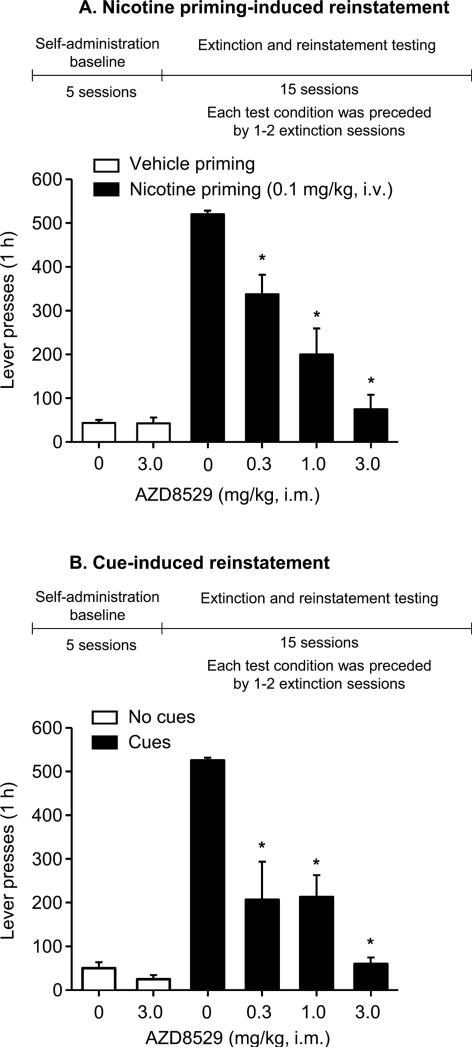
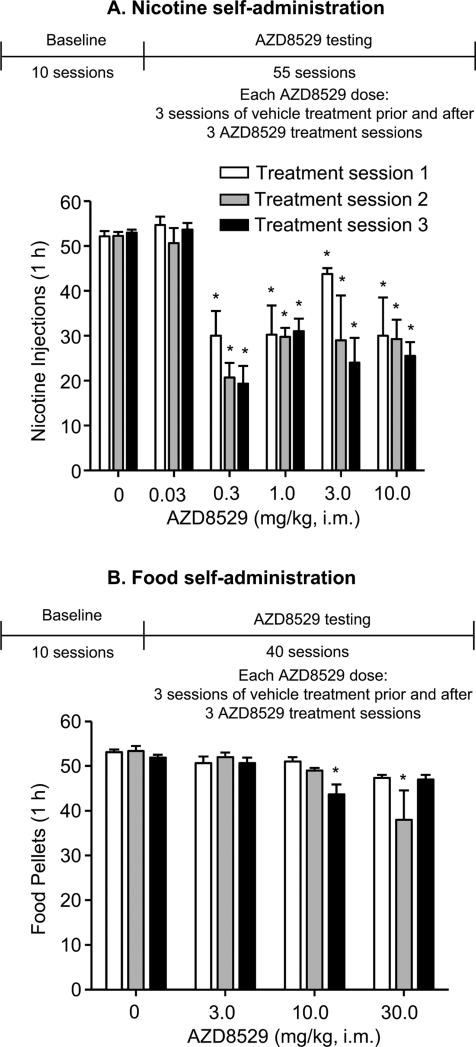
AZD-8529 mesylate (30 mg/kg; i.p.) reduces the increased extracellular dopamine induced by nicotine in accumbens shell of freely-moving rats[1]. In monkeys, AZD8529 decreased nicotine self-administration at doses (.3-3 mg/kg) that did not affect food self-administration. AZD8529 also reduced nicotine priming- and cue-induced reinstatement of nicotine seeking after extinction of the drug-reinforced responding. In rats, AZD8529 decreased nicotine-induced accumbens dopamine release. Conclusions: These results provide evidence for efficacy of positive allosteric modulators of mGluR2 in nonhuman primate models of nicotine reinforcement and relapse. This drug class should be considered for nicotine addiction treatment. Acute treatment with AZD8418 (0.37, 1.12, 3.73, 7.46, and 14.92 mg/kg) and AZD8529 (1.75, 5.83, 17.5, and 58.3 mg/kg) deceased nicotine self-administration and had no effect on food-maintained responding. Chronic treatment with AZD8418 attenuated nicotine self-administration, but tolerance to this effect developed quickly. The inhibition of nicotine self-administration by chronic AZD8529 administration persisted throughout the 14 days of treatment. Chronic treatment with either PAMs inhibited food self-administration. AZD8418 (acute) and AZD8529 (acute and subchronic) blocked cue-induced reinstatement of nicotine- and food-seeking behavior. Conclusions: These findings indicate an important role for mGlu2 receptors in the reinforcing properties of self-administered nicotine and the motivational impact of cues that were previously associated with nicotine administration (i.e., cue-induced reinstatement of nicotine-seeking behavior). Thus, mGlu2 PAMs may be useful medications to assist people to quit tobacco smoking and prevent relapse [2]. In squirrel monkeys trained to self-administer nicotine intravenously (30 µg/kg/injection), pretreatment with AZD8529 (0.3, 1, 3, and 10 mg/kg, i.m., 3 hr before session) significantly decreased nicotine self-administration over three consecutive test sessions without evidence of tolerance. Doses of 0.3-3 mg/kg did not affect food self-administration, while higher doses (10 and 30 mg/kg) did. [1] AZD8529 (0.3, 1, and 3 mg/kg, i.m.) dose-dependently decreased both nicotine priming-induced (0.1 mg/kg, i.v.) reinstatement and cue-induced reinstatement of extinguished nicotine-seeking behavior in squirrel monkeys. [1] In rats, AZD8529 (30 mg/kg, i.p., but not 10 mg/kg) attenuated the increase in extracellular dopamine levels in the nucleus accumbens shell induced by nicotine (0.4 mg/kg, s.c.). AZD8529 alone had no effect on dopamine levels. [1] |
| Enzyme Assay |
Functional mGluR2 assays [1]
Receptor selectivity assay [1] To determine the selectivity of AZD8529 within the mGluR family, we used fluorescence-based assays and HEK 293 cell-lines expressing human mGluR constructs. The cell lines expressed chimeric fusion constructs hmGluR2/hCaR*, hmGluR1/hCaR*, hmGluR3/hCaR*, hmGluR4/hCaR*, hmGluR5/hCaR*, hmGluR6/hCaR*, hmGluR7/hCaR*, hmGluR8/hCaR*, each comprising the extracellular domain and transmembrane domain of human mGluR, and the intracellular domain of the human calcium receptor fused to the promiscuous chimeric protein Gqi5 as described previously. Receptor screening [1] We evaluated AZD8529 at 10 μM for off-target effects using radioligand binding assays (MDS Pharma) based on published methods. We ran reference standards for each assay. We determined IC50 values using non-linear, least squares regression analysis of the Data Analysis Toolbox (MDL Information Systems). [35S]GTPγS binding human mGlu2-CHO membranes [1] We used membranes prepared from a CHO cell line expressing the human mGluR2 and performed the assay in a scintillation proximity assay (SPA) format. We grew Chinese hamster ovary (CHO) cells expressing the human mGluR2 to approximately 80% confluence, washed the cells in ice-cold phosphate-buffered saline, and stored them frozen until membrane preparation. Assay buffer contained 0.05 M HEPES, 0.10 M NaCl, 0.01 M MgCl2, pH 7.4 plus 100 M dithiothreitol and 3 M guanosine diphosphate. We started the assay by adding a mixture of wheat germ agglutinin SPA beads (0.75 mg/ml) and membranes (6 g/ml) in assay buffer containing AZD8529 or vehicle. After 15-min incubation, we added a solution containing the [35S]GTPγS and L- glutamate (final concentrations 100 pM [35S]GTPγS and 0-100 M glutamate). Following incubation at room temperature (60 min), we centrifuged the assay plates and read them on the TopCount™ scintillation counter. We determined [35S]GTPγS binding in the absence of glutamate and in the presence of 100- M glutamate as 0% and 100% levels, respectively. We estimated the modulator activity of AZD8529 on mGluR2 activation from the concentration response curves of AZD8529 fitted with a 4-parameter logistic equation to calculate the apparent potency (EC50) and maximal efficacy (Emax). The effect of AZD8529 on mGluR2 function was assessed using a scintillation proximity assay (SPA) format with membranes prepared from a CHO cell line expressing the human mGluR2. The assay buffer contained HEPES, NaCl, MgCl2, dithiothreitol, and guanosine diphosphate. A mixture of wheat germ agglutinin SPA beads and membranes in assay buffer containing AZD8529 or vehicle was incubated for 15 minutes. Then, a solution containing [35S]GTPγS and varying concentrations of L-glutamate was added. After a 60-minute incubation at room temperature, plates were centrifuged and read on a scintillation counter. [35S]GTPγS binding in the absence of glutamate and in the presence of a maximal glutamate concentration (100 µM) was defined as 0% and 100% activity, respectively. Concentration-response curves for AZD8529 were fitted to calculate EC50 and Emax. [1] Receptor selectivity screening for off-target effects was performed using standard radioligand binding assays at a single concentration (10 µM) of AZD8529 against a panel of receptors, ion channels, and transporters. Reference standards were run for each assay. [1] |
| Cell Assay |
[35S]GTPγS autoradiography in cynomolgus monkey brain slices [1]
We anaesthetized the monkey with sodium pentobarbital (100 mg/kg), perfused it with saline, and then removed the brain and froze it in cooled isopentane. We cut 20-μm striatum and hippocampus sections on a cryostat, mounted the sections on glass slides and stored them at 80°C until use. We warmed the sections to room temperature in a vacuum chamber over 3 hr on the day of the experiment. We incubated the sections in 50 mM Tris HCl, 3 mM MgCl2, 0.2 mM EGTA, 100 mM NaCl, and 0.2 mM DTT (Tris Assay Buffer, TAB); pH 7.4 at 25°C for 10 min. We then incubated the slides in TAB containing 2 mM guanosine diphosphate (GDP) for 15 min at 25°C. We placed the slides in one of the following four conditions for 2 hr at 25°C: Basal: TAB + 2 mM GDP + 0.04 nM [35S]GTPγ S; Agonist alone: TAB + 2 mM GDP + 0.04 nM [35S]GTPγS + 1 μM LY379268; Modulator alone: TAB + 2 mM GDP + 0.04 nM [35S]GTPγS + 3 μM AZD8529; Modulator + Agonist: TAB + 2 mM GDP + 0.04 nM [35S]GTPγS + 1 μM LY379268 + 3 μM AZD8529; Modulator + Agonist + Antagonist: TAB+2 mM GDP+0.04 nM [35S]GTPγS+1 μM LY379268+ 3 μM AZD8529+1 μM LY341495. We then washed the sections 2 times in 4°C 50 mM Tris HCl, pH 7.4, 5 min each, rinsed them in ice cold H2O and air dried the slides. We then exposed the slides to Biomax MR film for 2 days and developed using standard techniques, digitized, and analyzed. Slice recording [2] Slices were submerged in a slice chamber and bathed in 32 °C aCSF at a flow rate of 1–2 ml/min. The slices were held in place with a weight made of platinum wire. Schaeffer collateral fibers in the stratum radiatum were stimulated with a monopolar tungsten electrode (model 575300, 0.5–1 mΩ) connected to an isolated pulse stimulator (model 2100). Recordings of the extracellular population spike from pyramidal cells in layers of the CA1 were made with electrodes that were pulled from borosilicate glass (model TW150-4) and filled with 2 mM NaCl. The slices were stimulated with single 10 ms pulses that were delivered every 30 s. A baseline response was established (50–70 % of maximum), and then an approximately 15-min control period was recorded. Following the control period, the compounds were bath applied for 40 min or until a steady-state response was reached. The literature does not contain detailed descriptions of classical cell-based assays (e.g., antiproliferative, apoptosis, Western blot) for AZD8529. The primary cellular data involve recombinant receptor systems for target validation and selectivity profiling, as described in the Enzyme Assay and In Vitro sections. [1] |
| Animal Protocol |
Sprague-Dawley rats
10 mg/kg, 30 mg/kg Intraperitoneal injection; 2 hours before nicotine injections Nicotine self-administration [1] We performed this phase over a period of 14 weeks and it included 1-hr sessions from Monday through Friday. Before the start of each session, we placed the monkeys into the Plexiglas chairs and restrained them in the seated position by waist locks. We first trained the monkeys to lever-press under a fixed-ratio schedule (FR10, timeout 60 s) of intravenous nicotine (30 μg/kg/injection) reinforcement. After flushing the catheters with 1 ml physiological saline, we connected them to a motor-driven syringe. At the start of each session, the white house-light was turned off and the green stimulus light was turned on; 10 lever-presses turned off the green light and produced 2-s amber light paired with nicotine injection (0.2 ml). During the 60-s timeout period the chamber was dark and lever-presses had no programmed consequences. When responses showed <15% variability for at least 5 consecutive sessions, we tested the effect of AZD8529 pretreatment (0.03, 0.3, 1, 3, and 10 mg/kg, i.m., 3 hr before the session) on nicotine self-administration for 3 sessions; we compared these data to three consecutive session of vehicle pretreatment immediately preceding each test session. The 3-hr pretreatment time is based on AstraZeneca Tmax pharmacokinetic studies (data not shown). Reinstatement of nicotine seeking [1] We performed this phase of the study over a period of 9 weeks. We first tested the monkeys for nicotine priming-induced reinstatement after extinction of the drug-reinforced responding. We then retrained them to self-administer nicotine over 5 days and then tested them for cue-induced reinstatement after extinction of the drug-reinforced responding. We tested AZD8529 doses of 3 mg/kg or lower, because 3 mg/kg was the highest effective dose that reduced nicotine but not food self-administration. Nicotine priming-induced reinstatement [1] We performed tests for nicotine priming-induced reinstatement after the monkeys underwent daily extinction sessions during which lever-presses led to saline infusions plus the visual cues previously paired with nicotine infusions, but not nicotine. We gave a non-contingent saline injection before each extinction session as a vehicle control for the nicotine-priming injections. After at least two extinction sessions, when responding had reached a low, stable level, we determined the effect of pretreatment with AZD8529 (0.3, 1 or 3 mg/kg, i.m.) or its vehicle on nicotine (0.1 mg/kg i.v.)-induced reinstatement. We gave the nicotine priming injections immediately before the start of the test sessions. During testing, lever-presses (FR10) continued to produce only saline injections and the discrete cues. We also tested the effect of 3 mg/kg of AZD8529 on saline priming to determine whether AZD8529 alone would affect nicotine seeking after extinction. Cue-induced reinstatement [1] After the completion of nicotine priming tests, we retrained the monkeys to self-administer nicotine for ~10 sessions. We then gave them 3 extinction sessions during which lever-presses had no reinforced consequences (neither nicotine nor cue were available); additionally, we did not inject monkeys with saline priming before these sessions. After extinction, we determined the effect of pretreatment with AZD8529 (0.3, 1 or 3 mg/kg, i.m.) or its vehicle on cue-induced reinstatement. During testing, lever-presses (FR10) produced the i.v. saline infusions and visual cue presentations. We also determined the effect of 3 mg/kg of AZD8529 on extinction responding in the absence of the cue. Each cue-induced reinstatement test was followed by one or two extinction sessions. Food self-administration [1] We determined the effect of AZD8529 in a separate group of monkeys that self-administered 190-mg food pellets under reinforcement schedule conditions identical to those we used with nicotine (FR 10, TO 60 s). We restricted food intake to maintain monkeys’ weights at a level that facilitates food-reinforced responding (no more than 10% below free-feeding weight). The number of reinforcers delivered per session, as well as rates of responding, in this group were very similar to the nicotine group (Figure 2). We injected each dose of AZD8529 (3, 10 and 30 mg/kg, i.m.) for three consecutive sessions, which was preceded by three sessions with vehicle injections before the sessions. AZD8529 plasma levels in squirrel monkeys [1] To determine whether plasma levels during the behavioral experiments reach levels that are well tolerated in humans (per AstraZeneca company information), we injected 3 squirrel monkeys with AZD8529 (1 mg/kg, i.m.) and 3 hr later we collected venous blood samples (approximately 1.5 ml) from the femoral vein under light ketamine (10 mg/kg, i.m.) anesthesia. We rapidly mixed the blood samples and immediately cooled them on ice until centrifugation. Plasma was prepared by centrifugation at 4°C for 10 min at 1500 x g within 30 min of blood sampling. We separated the plasma and transferred it to two 2-ml micro-centrifuge tubes. We stored the plasma samples at −80°C. We shipped the samples on dry ice to AstraZeneca where AZD8529 levels were measured using a standardized LC/MS/MS method. In vivo microdialysis in rats [1] The general procedure was described previously (36). We performed microdialysis in Sprague-Dawley rats 20-24 hr after implantation of probes aimed at the accumbens shell (2.0 mm anterior,1.1 mm lateral from bregma, and 8.0 mm below the dura) (37). We collected samples (20 μl) every 20 min (perfusion rate: 1ul per min) and immediately analyzed dopamine levels by HPLC coupled to electrochemical detection. We injected the test drugs or their vehicle after observing stable dopamine levels (<15% variation) in 3 consecutive samples. We injected vehicle or AZD8529 (10 or 30 mg/kg i.p.) 2 hr before vehicle or nicotine (0.4 mg/kg s.c.) injections. We collected dialysate samples for 2 hr after nicotine injections. We based the AZD8529 doses on previous unpublished work of AstraZeneca in rat behavioral models and a recent study on the effect of the drug on ‘incubation’ of methamphetamine craving in rats. [1] AZD8529 free-base was dissolved in sterile water.[1] Experimental design [2] Experiment 1: effects of acute AZD8418 and AZD8529 treatment on nicotine and food self-administration [2] After establishing stable nicotine or food self-administration (<20 % variability in responding over three consecutive days), the effects of acute AZD8418 (0, 0.37, 1.12, 3.73, 7.46, and 14.92 mg/kg) and AZD8529 (0, 1.75, 5.83, 17.5, and 58.3 mg/kg) treatment on nicotine and food self-administration were assessed using a within-subjects Latin square design. Four groups of naive rats were used to examine the effects of acute treatment with (i) AZD8418 on nicotine self-administration (n = 12) and food self-administration (n = 10) and (ii) AZD8529 on nicotine self-administration (n = 12) and food self-administration (n = 7). At least 5 days elapsed between drug administrations. Experiment 2: effects of chronic AZD8418 and AZD8529 treatment on nicotine and food self-administration [2] The effects of 14-day repeated AZD8418 and AZD8529 treatment regimens on nicotine and food self-administration were assessed using a between-subjects design. Four groups of naive rats were used to examine the effects of chronic treatment with (i) AZD8418 (0, 3.73, 7.46, and 14.92 mg/kg/day) on nicotine self-administration (n = 10–11/subgroup), (ii) AZD8418 (0 and 14.92 mg/kg/day) on food-self-administration (n = 10–11/subgroup), (iii) AZD8529 (0 and 58.3 mg/kg/day) on nicotine self-administration (n = 10–12/subgroup), and (iv) AZD8529 (0 and 58.3 mg/kg/day) on food self-administration (n = 8–13/subgroup). The subgroups for each tested compound were balanced for weight and nicotine/food intake before initiating the chronic treatments. Experiment 3: effects of acute AZD8418 and AZD8529 treatment on cue-induced reinstatement of nicotine- and food-seeking behavior [2] After completing experiment 1, nicotine self-administering rats were tested under extinction conditions. All of the rats reached the predetermined criterion of extinction (see above) by the end of the 10th extinction session. The first reinstatement session was conducted after vehicle administration to ensure that each subject exhibited robust reinstatement as defined above (>50 % increase in responding compared to the mean of the last three extinction sessions) before initiating the drug treatments. Only rats that exhibited robust nicotine-seeking behavior during this first reinstatement session were included in the remainder of the experiments. Each reinstatement session was preceded by three daily extinction sessions to re-extinguish responding. AZD8418 (0, 1.12, 3.73, 7.46, and 14.92 mg/kg) and AZD8529 (0, 1.75, 5.83, 17.5, and 58.3 mg/kg) were administered prior to each reinstatement session using a within-subjects Latin square design.Independent naive rats (n = 9–13/group) that were trained to self-administer food were used to assess the effects of AZD8418 (0, 3.73, 7.46, and 14.92 mg/kg) and AZD8529 (0, 1.75, 5.83, 17.5, and 58.3 mg/kg) on cue-induced reinstatement of food-seeking behavior using a between-subjects design because food-seeking behavior exhibits rapid extinction with repeated reinstatement testing (Bespalov et al. 2005). The groups were balanced for weight and food responding before treatment. Pharmacokinetic studies [2] AZD8529 (4.7 mg/kg) and AZD8418 (5 mg/kg) were administered orally by gavage to groups of male Wistar rats (n = 3–4), either as a single dose or as daily doses for 7 days. Tail vein blood samples (0.25 ml) were collected from all rats at 0.5, 1, 3, 6, 12, and 24 h after drug administration on day 1 or 7 of dosing. The plasma was prepared by centrifugation at 4 °C for 10 min at 1500×g within 30 min of blood sampling and analyzed for concentrations of AZD8529 or AZD8418 by a standard reverse-phase liquid chromatography and electrospray ionization tandem mass spectrometry (LC/MS/MS) method. Squirrel Monkey Nicotine Self-Administration: Adult male squirrel monkeys with a history of nicotine self-administration were used. Sessions were 1 hour long, conducted 5 days a week. Under a fixed-ratio 10 schedule (FR10, timeout 60 s), 10 lever presses resulted in an intravenous nicotine injection (30 µg/kg/injection) paired with a 2-s visual cue. After stable baseline responding, the effects of AZD8529 (0.03, 0.3, 1, 3, and 10 mg/kg) or vehicle were tested. AZD8529 was administered intramuscularly 3 hours before the session. Each dose was tested for 3 consecutive sessions, preceded and followed by 3 vehicle sessions. [1] Squirrel Monkey Food Self-Administration: A separate group of monkeys self-administered 190-mg food pellets under identical FR10, timeout 60 s schedule conditions. AZD8529 (3, 10, and 30 mg/kg, i.m.) was tested using the same pretreatment and session protocol as in the nicotine experiment. [1] Squirrel Monkey Reinstatement Testing: After extinction of nicotine-reinforced responding, reinstatement tests were conducted. For nicotine priming-induced reinstatement, monkeys received AZD8529 (0.3, 1, or 3 mg/kg, i.m.) or vehicle 3 hours before a non-contingent priming injection of nicotine (0.1 mg/kg, i.v.) or saline. During the test, lever presses (FR10) produced saline and cues. For cue-induced reinstatement, after extinction where neither nicotine nor cues were available, monkeys were pretreated with AZD8529 or vehicle, and then responding (FR10) produced the previously nicotine-associated cues and saline infusions. [1] Rat Microdialysis: Male Sprague-Dawley rats were implanted with microdialysis probes aimed at the nucleus accumbens shell. After recovery, dialysate samples were collected every 20 minutes. Once stable baseline dopamine levels were established, rats were pretreated with AZD8529 (10 or 30 mg/kg, i.p.) or vehicle. Two hours later, they received an injection of nicotine (0.4 mg/kg, s.c.) or vehicle. Dialysate collection continued for 2 hours post-nicotine injection, and dopamine levels were analyzed by HPLC-ECD. [1] Primate Brain Slice Autoradiography: Cynomolgus monkeys were anesthetized and perfused, and their brains were removed and frozen. Brain sections (20 µm) from striatum and hippocampus were cut. Sections were pre-incubated in assay buffer, then incubated for 2 hours in one of several conditions containing GDP, [35S]GTPγS, and various combinations of LY379268 (agonist), AZD8529 (modulator), and LY341495 (antagonist). After washing and drying, sections were exposed to film, developed, and analyzed. [1] |
| ADME/Pharmacokinetics |
Pharmacokinetic characteristics of AZD8529 [2] After a single dose of 5 mg/kg of AZD8418, the peak plasma concentration (Tmax) was reached 1 hour after administration. After a single dose of 4.7 mg/kg of AZD8529, the peak plasma concentration was reached 3 hours after administration. The peak plasma concentration (Cmax) of AZD8418 (690 ± 108 nM) was significantly higher than that of AZD8529 (158 ± 30 nM). Similarly, the area under the curve (AUC) of AZD8418 was also higher than that of AZD8529, indicating that the bioavailability of AZD8418 was higher than that of AZD8529. Repeated daily administration of AZD8418 or AZD8529 for 7 consecutive days did not change the Tmax or Cmax of plasma exposure. Based on the results of pharmacokinetic studies, the dosage and pretreatment time of AZD8418 (0, 0.37, 1.12, 3.73, 7.46 and 14.92 mg/kg; pretreatment 1 h) and AZD8529 (0, 1.75, 5.83, 17.5 and 58.3 mg/kg; pretreatment 3 h) were determined to reflect the differences in Cmax and Tmax. Plasma concentration of AZD8529 [2] In a group of squirrel monkeys (n=3), the plasma concentration of AZD8529 was 112 ± 17 nM 3 h after injection of the drug (1 mg/kg) (pretreatment time in self-administration and recovery experiments). We investigated the effect of systemic injection of AZD8529 on nicotine-induced dopamine release in the nucleus accumbens shell of rats. The results showed that nicotine (0.4 mg/kg, subcutaneous injection) increased extracellular dopamine levels, while 30 mg/kg of AZD8529 reduced this effect, but 10 mg/kg of AZD8529 had no such effect (Supplementary Figure S1; AZD8529 dose-time interaction: F(34,170)=2.24; p<0.001). AZD8529 alone (10 or 30 mg/kg) had no effect on dopamine levels (Supplementary Figure S1). In squirrel monkeys, plasma concentrations were 112 ± 17 nM 3 hours after intramuscular injection of 1 mg/kg AZD8529. This time point was consistent with the pretreatment time point used in the behavioral experiments. [1] According to the company information cited in the text, AZD8529 has high oral bioavailability and its plasma concentrations in human studies are comparable to those achieved in monkeys after administration of an effective behavioral dose, indicating good tolerability. [1]
|
| Toxicity/Toxicokinetics |
The manuscript did not provide specific toxicity data, such as median lethal dose (LD50), organ toxicity, or detailed drug interactions. [1]
At high doses (10 and 30 mg/kg), monkeys experienced reduced spontaneous food intake, the effects of which may reflect behavioral inhibition or other side effects, but these were not classified as typical toxicities in this study. [1] |
| References |
|
| Additional Infomation |
AZD8529 is being investigated in the clinical trial NCT00921804 (a study evaluating the efficacy, safety, and tolerability of AZD8529 in adult patients with schizophrenia). Background: Based on rodent studies, type II metabologlutamate receptors (mGluR2 and mGluR3) are considered targets for addiction treatment. However, LY379268 and other type II agonists cannot distinguish between mGluR2 (the proposed therapeutic target) and mGluR3, which are primarily located in presynaptic inhibition. These agonists develop tolerance after repeated administration and are therefore no longer considered for addiction treatment. This study aimed to investigate the effects of the selective mGluR2 positive allosteric modulator AZD8529 on nicotine abuse-related effects in squirrel monkeys and rats. Methods: First, we used membranes prepared from cell lines expressing human mGluR2 and primate brain slices to evaluate the regulatory effect of AZD8529 on mGluR2 function through in vitro functional experiments. We then determined the effects of AZD8529 (0.03–10 mg/kg, intramuscular) on intravenous nicotine self-administration and nicotine craving recovery induced by nicotine initiation or nicotine-related cues. We also determined the effects of AZD8529 on food self-administration behavior in monkeys and on nicotine-induced dopamine release in the nucleus accumbens shell of rats. [1]
Principle: Many drug development strategies aim to reduce nicotine intake and prevent smoking relapse by blocking glutamate transmission. Reducing glutamate release by activating presynaptic inhibitory metabologlutamate (mGlu)2/3 receptors can inhibit the reinforcing effect of nicotine and block cue-induced nicotine craving recovery in rats. However, the relative role of mGlu2 receptors in nicotine dependence remains unclear. Objective: This study used novel, relatively selective mGlu2 positive allosteric modulators (PAMs) AZD8418 and AZD8529 to evaluate the role of mGlu2 receptors in nicotine intake and drug-seeking behavior. Results: Acute administration of AZD8418 (0.37, 1.12, 3.73, 7.46, and 14.92 mg/kg) and AZD8529 (1.75, 5.83, 17.5, and 58.3 mg/kg) reduced nicotine self-administration behavior but had no effect on the maintenance response to food. Long-term administration of AZD8418 attenuated nicotine self-administration behavior, but this effect quickly developed into tolerance. The inhibitory effect of long-term AZD8529 on nicotine self-administration lasted for 14 days of treatment. Long-term administration of any of the PAMs inhibited food self-administration. Both AZD8418 (acute) and AZD8529 (acute and subchronic) blocked the recovery of cue-induced nicotine and food craving behaviors. Conclusion: These findings suggest that the mGlu2 receptor plays an important role in the reinforcing effect of self-administered nicotine and the motivational effect of previously nicotine-related cues (i.e., the recovery of cue-induced nicotine craving behaviors). Therefore, mGlu2 PAMs may help people quit smoking and prevent relapse. [2] AZD8529 has been proposed as a novel therapy for nicotine addiction, focusing on preventing relapse by targeting mGluR2. [1] This drug has potential advantages over earlier non-selective mGluR2/3 agonists (e.g., LY379268) because it is selective for mGluR2, does not develop tolerance with repeated administration in test models, and has minimal effect on natural reward (food) at anti-nicotine doses. [1] Its mechanism of action is thought to involve reducing nicotine-induced dopamine release in the mesolimbic pathway (as shown in rats) and attenuating the motivational effects of nicotine itself and environmental cues associated with nicotine use. [1] Given the comorbidity and shared neurobiological pathways, the authors suggest that the therapeutic effects of mGluR2 positive allosteric modulators may extend beyond nicotine addiction to other substance use disorders (e.g., cocaine, methamphetamine, heroin, alcohol). [1] |
| Molecular Formula |
C25H28F3N5O6S
|
|---|---|
| Molecular Weight |
583.579935073853
|
| Exact Mass |
583.171
|
| Elemental Analysis |
C, 51.45; H, 4.84; F, 9.77; N, 12.00; O, 16.45; S, 5.49
|
| CAS # |
1314217-69-0
|
| Related CAS # |
AZD-8529; 1092453-15-0; 1314217-69-0 (mesylate); 1344999-56-9 (mesylate hydrate)
|
| PubChem CID |
53495155
|
| Appearance |
White to off-white solid powder
|
| Hydrogen Bond Donor Count |
2
|
| Hydrogen Bond Acceptor Count |
13
|
| Rotatable Bond Count |
6
|
| Heavy Atom Count |
40
|
| Complexity |
822
|
| Defined Atom Stereocenter Count |
0
|
| SMILES |
S(C)(=O)(=O)O.FC(OC1C=CC(=CC=1)CN1C(C2C(C)=CC(C3=NC(CN4CCNCC4)=NO3)=CC=2C1)=O)(F)F
|
| InChi Key |
HRHCPVNKPOTCGB-UHFFFAOYSA-N
|
| InChi Code |
InChI=1S/C24H24F3N5O3.CH4O3S/c1-15-10-17(22-29-20(30-35-22)14-31-8-6-28-7-9-31)11-18-13-32(23(33)21(15)18)12-16-2-4-19(5-3-16)34-24(25,26)27;1-5(2,3)4/h2-5,10-11,28H,6-9,12-14H2,1H3;1H3,(H,2,3,4)
|
| Chemical Name |
methanesulfonic acid;7-methyl-5-[3-(piperazin-1-ylmethyl)-1,2,4-oxadiazol-5-yl]-2-[[4-(trifluoromethoxy)phenyl]methyl]-3H-isoindol-1-one
|
| Synonyms |
AZD-8529; AZD8529 mesylate; AZD 8529 mesylate; 1314217-69-0; AZD-8529 (mesylate); 29K1DH0MV7; 7-Methyl-5-(3-(piperazin-1-ylmethyl)-1,2,4-oxadiazol-5-yl)-2-(4-(trifluoromethoxy)benzyl)isoindolin-1-one methanesulfonate; methanesulfonic acid;7-methyl-5-[3-(piperazin-1-ylmethyl)-1,2,4-oxadiazol-5-yl]-2-[[4-(trifluoromethoxy)phenyl]methyl]-3H-isoindol-1-one; 1H-Isoindol-1-one, 2,3-dihydro-7-methyl-5-(3-(1-piperazinylmethyl)-1,2,4-oxadiazol-5-yl)-2-((4-(trifluoromethoxy)phenyl)methyl)-, methanesulfonate (1:1); AZD-8529 mesylate
|
| HS Tariff Code |
2934.99.9001
|
| Storage |
Powder -20°C 3 years 4°C 2 years In solvent -80°C 6 months -20°C 1 month Note: Please store this product in a sealed and protected environment, avoid exposure to moisture. |
| Shipping Condition |
Room temperature (This product is stable at ambient temperature for a few days during ordinary shipping and time spent in Customs)
|
| Solubility (In Vitro) |
DMSO: ~41.7 mg/mL (~71.4 mM)
|
|---|---|
| Solubility (In Vivo) |
Solubility in Formulation 1: ≥ 2.08 mg/mL (3.56 mM) (saturation unknown) in 10% DMSO + 40% PEG300 + 5% Tween80 + 45% Saline (add these co-solvents sequentially from left to right, and one by one), clear solution.
For example, if 1 mL of working solution is to be prepared, you can add 100 μL of 20.8 mg/mL clear DMSO stock solution to 400 μL PEG300 and mix evenly; then add 50 μL Tween-80 to the above solution and mix evenly; then add 450 μL normal saline to adjust the volume to 1 mL. Preparation of saline: Dissolve 0.9 g of sodium chloride in 100 mL ddH₂ O to obtain a clear solution. Solubility in Formulation 2: ≥ 2.08 mg/mL (3.56 mM) (saturation unknown) in 10% DMSO + 90% (20% SBE-β-CD in Saline) (add these co-solvents sequentially from left to right, and one by one), clear solution. For example, if 1 mL of working solution is to be prepared, you can add 100 μL of 20.8 mg/mL clear DMSO stock solution to 900 μL of 20% SBE-β-CD physiological saline solution and mix evenly. Preparation of 20% SBE-β-CD in Saline (4°C,1 week): Dissolve 2 g SBE-β-CD in 10 mL saline to obtain a clear solution. View More
Solubility in Formulation 3: ≥ 2.08 mg/mL (3.56 mM) (saturation unknown) in 10% DMSO + 90% Corn Oil (add these co-solvents sequentially from left to right, and one by one), clear solution. |
| Preparing Stock Solutions | 1 mg | 5 mg | 10 mg | |
| 1 mM | 1.7136 mL | 8.5678 mL | 17.1356 mL | |
| 5 mM | 0.3427 mL | 1.7136 mL | 3.4271 mL | |
| 10 mM | 0.1714 mL | 0.8568 mL | 1.7136 mL |
*Note: Please select an appropriate solvent for the preparation of stock solution based on your experiment needs. For most products, DMSO can be used for preparing stock solutions (e.g. 5 mM, 10 mM, or 20 mM concentration); some products with high aqueous solubility may be dissolved in water directly. Solubility information is available at the above Solubility Data section. Once the stock solution is prepared, aliquot it to routine usage volumes and store at -20°C or -80°C. Avoid repeated freeze and thaw cycles.
Calculation results
Working concentration: mg/mL;
Method for preparing DMSO stock solution: mg drug pre-dissolved in μL DMSO (stock solution concentration mg/mL). Please contact us first if the concentration exceeds the DMSO solubility of the batch of drug.
Method for preparing in vivo formulation::Take μL DMSO stock solution, next add μL PEG300, mix and clarify, next addμL Tween 80, mix and clarify, next add μL ddH2O,mix and clarify.
(1) Please be sure that the solution is clear before the addition of next solvent. Dissolution methods like vortex, ultrasound or warming and heat may be used to aid dissolving.
(2) Be sure to add the solvent(s) in order.
| NCT Number | Recruitment | interventions | Conditions | Sponsor/Collaborators | Start Date | Phases |
| NCT00755378 | Completed | Drug: AZD8529 Drug: Placebo |
Healthy Volunteer | AstraZeneca | September 2008 | Phase 1 |
| NCT00765492 | Completed | Drug: AZD8529 Drug: Placebo |
Healthy Volunteer | AstraZeneca | October 2008 | Phase 1 |
| NCT00886756 | Completed | Drug: AZD8529 Drug: Placebo |
Healthy | AstraZeneca | April 2009 | Phase 1 |
| NCT02401022 | Completed | Drug: AZD8529 | Tobacco Use Disorder | National Institute on Drug Abuse (NIDA) |
July 2015 | Phase 2 |
| NCT00921804 | Completed | Drug: AZD 8529 Drug: Risperidone |
Schizophrenia | AstraZeneca | June 2009 | Phase 2 |
|
AZD8529 decreased nicotine priming-induced and cue-induced reinstatement in squirrel monkeys.Biol Psychiatry. 2015 Oct 1;78(7):452-62. |
Effect of AZD8529 on nicotine and food self-administration in squirrel monkeys.Biol Psychiatry. 2015 Oct 1;78(7):452-62. |
Products are for research use only; We do not sell to patients
Copyright 2020 InvivoChem LLC | All Rights Reserved


 COA
COA