| Size | Price | Stock | Qty |
|---|---|---|---|
| 10mg |
|
||
| 25mg |
|
||
| 50mg |
|
||
| 100mg |
|
||
| 250mg |
|
||
| Other Sizes |


| Targets |
Aurantio-obtusin targets multiple pathways involved in metabolism, inflammation, and bone health. It inhibits rat lens aldose reductase (RLAR), an enzyme involved in the polyol pathway that is associated with diabetic complications. The compound activates AMPK signaling and autophagy, promoting fatty acid oxidation (FAO) and inhibiting fatty acid synthesis. Its anti-allergic, vasorelaxation, hypotensive, and hypolipidemic effects suggest modulation of vascular and metabolic pathways. As an osteoanabolic compound, it promotes bone formation, suggesting potential interactions with bone metabolism pathways. The compound's anti-inflammatory and anti-oxidative activities further expand its target profile.
|
|---|---|
| ln Vitro |
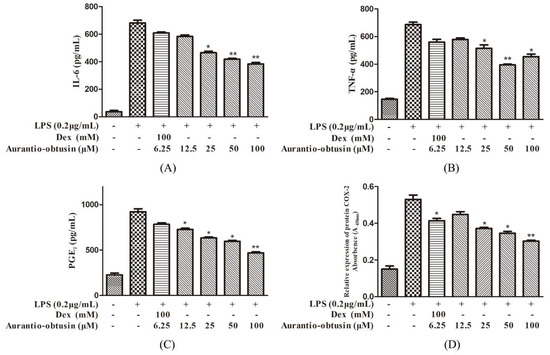
Aurantio-obtusin (6.25-100 μM; 24 h) can significantly reduce the production of NO and PGE2, and significantly inhibit IL-6, TNF-α and COX in RAW264.7 cells treated with LPS (0.2 μg/mL) -2 Aurantio-obtusin (6.25-100 μM; 12 h) inhibits NF-κB activation in RAW264.7 cells treated with LPS (0.2 μg/mL) by inhibiting i-κB and IKK phosphorylation. Aurantioobtusin (1-10000 nM) produces MA small resistance vasodilation in a concentration-dependent manner [1].
In vitro studies have demonstrated that aurantio-obtusin inhibits rat lens aldose reductase (RLAR) with an IC₅₀ of 13.6. It exhibits anti-inflammatory, anti-oxidative, and anti-coagulant activities. The compound's anti-allergic, vasorelaxation, hypotensive, and hypolipidemic effects have been documented in various cell-based models. Its ability to inhibit fatty acid synthesis and promote FAO suggests potential for treating metabolic disorders. The compound's osteoanabolic activity indicates potential for preventing osteoporosis and other metabolic bone diseases. |
| ln Vivo |
In HFSW-induced mice, aurantio-obtusin (5–15 mg/kg; face; single dose) decreases lipid droplet accumulation and widespread steatosis in a dosage-dependent manner [3]. Oryza obtusina (5).
In vivo, aurantio-obtusin (5-15 mg/kg; oral administration; single dose) inhibits fatty acid synthesis, promotes FAO, and activates AMPK signaling and autophagy in HFSW-induced mice. Its anti-allergic, vasorelaxation, hypotensive, and hypolipidemic effects suggest potential therapeutic applications in allergic diseases, hypertension, and hyperlipidemia. The compound's osteoanabolic activity indicates potential for preventing osteoporosis and other metabolic bone diseases. However, comprehensive in vivo efficacy and safety studies are needed to fully evaluate its therapeutic potential. The compound's natural occurrence in Cassia seeds, which have been used in traditional medicine, further supports its potential as a lead compound for drug development. |
| Enzyme Assay |
In vitro non-cell enzyme assays for aurantio-obtusin typically involve measuring the inhibition of aldose reductase activity using purified enzyme and a substrate such as DL-glyceraldehyde or glucose. The compound is incubated with the enzyme and substrate, and the consumption of NADPH is measured spectrophotometrically at 340 nm. IC₅₀ values are calculated from dose-response curves. The compound's antioxidant activity can be measured using DPPH, ABTS, or FRAP assays. Its anti-inflammatory activity can be assessed by measuring the inhibition of COX or LOX enzymes using cell-free enzyme assays. These assays provide quantitative data on the compound's direct interactions with its molecular targets.
|
| Cell Assay |
In vitro cell-based assays for aurantio-obtusin use various cell lines to study its biological activities. For anti-inflammatory studies, macrophages or other immune cells stimulated with LPS are used, and the production of inflammatory cytokines (TNF-α, IL-6, IL-1β) is measured by ELISA. For metabolic studies, adipocytes or hepatocytes are used to study fatty acid synthesis and oxidation. The activation of AMPK is confirmed by Western blotting for phospho-AMPK. For bone studies, osteoblasts or osteoclasts are used to study bone formation and resorption. Cell viability and proliferation are assessed using MTT or similar assays.
|
| Animal Protocol |
Animal/Disease Models: C57BL/6J mouse model [3]
Doses: 5 mg/ -15 mg/kg; receptor; single dose) Inhibits factor synthesis in HFSW-induced cytokines and promotes FAO activation of AMPK signaling and autophagy [3 ]. kg, 10 mg/kg, 15 mg/kg Route of Administration: po (oral gavage) on HFSW diet for 4 weeks, followed by varying doses of Aurantio-obtusin for a further 4 weeks. Experimental Results: HSFW can reduce the levels of TG, TC in liver and TG, ALT and AST in serum. Reduces the number and size of fat droplets in liver cells. AMPK phosphorylation was Dramatically increased in HFSW-induced mice. In vivo animal studies for aurantio-obtusin employ models of metabolic disorders and bone diseases. For metabolic studies, HFSW (high-fat, high-sucrose, high-cholesterol) induced mice are used, and the compound is administered orally at doses of 5-15 mg/kg. Parameters such as body weight, blood glucose, lipid profile, and fatty acid synthesis and oxidation markers are assessed. The activation of AMPK and autophagy is confirmed by Western blotting. For bone studies, models of osteoporosis are used, and parameters such as bone mineral density, bone formation markers, and bone resorption markers are assessed. Pharmacokinetic studies in these models provide information about the compound's absorption, distribution, metabolism, and excretion. |
| ADME/Pharmacokinetics |
Aurantio-obtusin has a molecular weight of 330.29 g/mol and a molecular formula of C₁₇H₁₄O₇. It is an anthraquinone isolated from Cassia seeds. The compound should be stored as a powder at -20°C for up to three years. It is soluble in DMSO and other organic solvents. Detailed pharmacokinetic parameters such as absorption, distribution, metabolism, and excretion have not been extensively characterized. As a small molecule anthraquinone, aurantio-obtusin is expected to have moderate oral bioavailability. The compound's ability to activate AMPK and inhibit aldose reductase suggests potential for treating metabolic disorders and diabetic complications.
|
| Toxicity/Toxicokinetics |
The toxicity profile of aurantio-obtusin has not been comprehensively evaluated in published studies. As a natural anthraquinone from Cassia seeds, which have a history of use in traditional medicine, it is generally considered to have low to moderate toxicity. No specific toxicity data, such as LD₅₀ values or organ-specific toxicity, have been reported in the available literature. The compound's ability to activate AMPK and inhibit fatty acid synthesis suggests that it may have significant metabolic effects that require careful evaluation. The compound is classified as a research reagent and is not intended for human therapeutic use without further safety evaluation. Standard laboratory safety precautions should be followed when handling the compound.
|
| References |
|
| Additional Infomation |
Aurantio-obtusin is a trihydroxyanthraquinone, namely 1,3,7-trihydroxy-9,10-anthraquinone, with a methoxy group attached to the 2 and 8 positions and a methyl group attached to the 6 position. It has been reported that Aurantio-obtusin is present in Senna obtusifolia and Senna tora, and relevant data are available.
Aurantio-obtusin is an anthraquinone originally isolated from Cassia seeds (Semen Cassiae) with diverse biological activities. It is also known as 橙黄决明素 in Chinese. The compound exhibits anti-allergic, vasorelaxation, hypotensive, and hypolipidemic effects. It is a promising osteoanabolic compound with potential therapeutic applications in the prevention of osteoporosis and other metabolic bone diseases. Aurantio-obtusin inhibits rat lens aldose reductase (RLAR) in vitro with an IC₅₀ of 13.6. It also exhibits anti-inflammatory, anti-oxidative, and anti-coagulant activities. In HFSW-induced mice, the compound inhibits fatty acid synthesis, promotes FAO, and activates AMPK signaling and autophagy. Not approved for clinical use; intended for research purposes only. |
| Molecular Formula |
C17H14O7
|
|---|---|
| Molecular Weight |
330.2889
|
| Exact Mass |
330.073
|
| Elemental Analysis |
C, 61.82; H, 4.27; O, 33.91
|
| CAS # |
67979-25-3
|
| Related CAS # |
67979-25-3
|
| PubChem CID |
155011
|
| Appearance |
Yellow to orange a crystalline solid
|
| Density |
1.5±0.1 g/cm3
|
| Boiling Point |
594.6±50.0 °C at 760 mmHg
|
| Flash Point |
222.4±23.6 °C
|
| Vapour Pressure |
0.0±1.7 mmHg at 25°C
|
| Index of Refraction |
1.679
|
| Source |
Originated from plants: Leguminosae Seeds of Cassia tora Linn.
Originated from plants: other families |
| LogP |
3.81
|
| Hydrogen Bond Donor Count |
3
|
| Hydrogen Bond Acceptor Count |
7
|
| Rotatable Bond Count |
2
|
| Heavy Atom Count |
24
|
| Complexity |
521
|
| Defined Atom Stereocenter Count |
0
|
| SMILES |
O(C([H])([H])[H])C1=C(C(C([H])([H])[H])=C([H])C2C(C3=C([H])C(=C(C(=C3C(C=21)=O)O[H])OC([H])([H])[H])O[H])=O)O[H]
|
| InChi Key |
RNXZPKOEJUFJON-UHFFFAOYSA-N
|
| InChi Code |
InChI=1S/C17H14O7/c1-6-4-7-11(17(24-3)12(6)19)14(21)10-8(13(7)20)5-9(18)16(23-2)15(10)22/h4-5,18-19,22H,1-3H3
|
| Chemical Name |
1,3,7-trihydroxy-2,8-dimethoxy-6-methylanthracene-9,10-dione
|
| Synonyms |
Aurantio obtusin; Aurantio-obtusin; Aurantioobtusin
|
| HS Tariff Code |
2934.99.9001
|
| Storage |
Powder -20°C 3 years 4°C 2 years In solvent -80°C 6 months -20°C 1 month Note: This product requires protection from light (avoid light exposure) during transportation and storage. |
| Shipping Condition |
Room temperature (This product is stable at ambient temperature for a few days during ordinary shipping and time spent in Customs)
|
| Solubility (In Vitro) |
DMSO: 25~66 mg/mL (75.7~199.8 mM)
|
|---|---|
| Solubility (In Vivo) |
Solubility in Formulation 1: ≥ 2.08 mg/mL (6.30 mM) (saturation unknown) in 10% DMSO + 40% PEG300 +5% Tween-80 + 45% Saline (add these co-solvents sequentially from left to right, and one by one), clear solution.
For example, if 1 mL of working solution is to be prepared, you can add 100 μL of 20.8 mg/mL clear DMSO stock solution to 400 μL PEG300 and mix evenly; then add 50 μL Tween-80 + to the above solution and mix evenly; then add 450 μL normal saline to adjust the volume to 1 mL. Preparation of saline: Dissolve 0.9 g of sodium chloride in 100 mL ddH₂ O to obtain a clear solution. (Please use freshly prepared in vivo formulations for optimal results.) |
| Preparing Stock Solutions | 1 mg | 5 mg | 10 mg | |
| 1 mM | 3.0276 mL | 15.1382 mL | 30.2764 mL | |
| 5 mM | 0.6055 mL | 3.0276 mL | 6.0553 mL | |
| 10 mM | 0.3028 mL | 1.5138 mL | 3.0276 mL |
*Note: Please select an appropriate solvent for the preparation of stock solution based on your experiment needs. For most products, DMSO can be used for preparing stock solutions (e.g. 5 mM, 10 mM, or 20 mM concentration); some products with high aqueous solubility may be dissolved in water directly. Solubility information is available at the above Solubility Data section. Once the stock solution is prepared, aliquot it to routine usage volumes and store at -20°C or -80°C. Avoid repeated freeze and thaw cycles.
Calculation results
Working concentration: mg/mL;
Method for preparing DMSO stock solution: mg drug pre-dissolved in μL DMSO (stock solution concentration mg/mL). Please contact us first if the concentration exceeds the DMSO solubility of the batch of drug.
Method for preparing in vivo formulation::Take μL DMSO stock solution, next add μL PEG300, mix and clarify, next addμL Tween 80, mix and clarify, next add μL ddH2O,mix and clarify.
(1) Please be sure that the solution is clear before the addition of next solvent. Dissolution methods like vortex, ultrasound or warming and heat may be used to aid dissolving.
(2) Be sure to add the solvent(s) in order.
|
|
|
Products are for research use only; We do not sell to patients
Copyright 2020 InvivoChem LLC | All Rights Reserved