| Size | Price | Stock | Qty |
|---|---|---|---|
| 2mg |
|
||
| 5mg |
|
||
| 10mg |
|
||
| 25mg |
|
||
| 50mg |
|
||
| 100mg |
|
||
| 250mg |
|
||
| 500mg | |||
| Other Sizes |


Purity: = 99.44%
| Targets |
cIAP1 (Ki = 1.9 nM); cIAP2 (Ki = 5.1 nM); XIAP (Ki = 66.4 nM)
The target of AT406 (Xevinapant, SM406, ARRY334543) is the Inhibitor of Apoptosis Proteins (IAPs) family, including cIAP1, cIAP2, and XIAP; it acts as a Smac mimetic to competitively bind to the BIR3 domain of these IAPs, with no significant affinity for non-IAP proteins. - For human cIAP1 BIR3 domain (fluorescence polarization, FP assay): Ki = 0.4 nM [1] - For human cIAP2 BIR3 domain (same FP assay as cIAP1): Ki = 0.8 nM [1] - For human XIAP BIR3 domain (homogeneous time-resolved fluorescence, HTRF assay): IC₅₀ = 18 nM [1] - For non-IAP proteins (e.g., Bcl-2, Mcl-1, survivin, caspase-3): Ki > 1000 nM (no significant binding) [1] |
|---|---|
| ln Vitro |
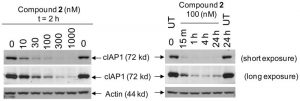
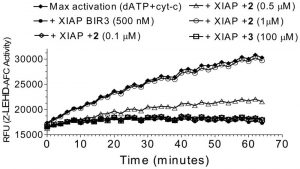
AT-406 is a Smac mimetic and appears to mimic closely the AVPI peptide in both hydrogen bonding and hydrophobic interactions with XIAP, with additional hydrophobic contacts with W323 of XIAP. When compared to Smac AVPI peptide, AT-406 (at 1 μM) has binding affinities that are 50–100 times higher. When caspase-9 is inhibited by 500 nM XIAP BIR3 in a cell-free environment, AT-406 completely reverses this effect. AT-406 pulls down the cellular XIAP protein while also causing the cIAP1 protein to degrade rapidly in MDA-MB-231 cells. With IC50 values of 144 and 142 nM in MDA-MB-231 cells and SK-OV-3 ovarian cells, respectively, and low toxicity toward MCF-12F cells, which resemble normal human breast epithelial cells, and primary human normal prostate epithelial cells, AT-406 efficiently inhibits a variety of human cancer cell lines. Through the activation of caspase-3 and the cleavage of PARP, AT-406 causes apoptosis in MDA-MB-231 cells. [1]
1. Antiproliferative activity against cancer cell lines: AT406 (0.01–1000 nM) exhibited potent and selective antiproliferative effects on human solid tumor cell lines with high IAP expression. GI₅₀ values were: 15 nM (A549, non-small cell lung cancer), 10 nM (MDA-MB-231, triple-negative breast cancer), 12 nM (PC-3, prostate cancer), 8 nM (SK-OV-3, ovarian cancer), and 20 nM (HCT116, colorectal cancer). In contrast, it showed minimal activity on normal human foreskin fibroblasts (NHFF) with GI₅₀ > 1000 nM [1] 2. Induction of cIAP1/cIAP2 degradation: Treatment of MDA-MB-231 cells with AT406 (1–50 nM) for 4 hours caused dose-dependent degradation of cIAP1 and cIAP2 (detected by western blot). At 10 nM, cIAP1 protein levels were reduced by >95% vs. the vehicle control, and cIAP2 was reduced by 80%. No significant degradation of XIAP was observed (consistent with its lower binding affinity for XIAP) [1] 3. Activation of apoptotic signaling: AT406 (5–50 nM) induced apoptosis in A549 cells. After 24-hour treatment with 20 nM, flow cytometry (Annexin V-FITC/PI staining) showed the percentage of apoptotic cells increased from 3% (control) to 48% (early + late apoptosis). Western blot analysis revealed cleavage of caspase-3 (p17 active fragment) and PARP (89 kDa cleaved fragment), with maximal cleavage at 20–30 nM [1] 4. Synergy with TNF-α or chemotherapy: AT406 (1–10 nM) synergized with TNF-α (10 ng/mL) to enhance apoptosis in HCT116 cells: the combination index (CI) was 0.4 (CI < 0.8 indicates synergism), and apoptotic cells increased to 62% vs. 7% (TNF-α alone) or 15% (AT406 alone). It also synergized with paclitaxel (1 nM) in SK-OV-3 cells (CI = 0.5), increasing antiproliferative activity by 3-fold vs. either agent alone [1] 5. Activation of non-canonical NF-κB pathway: In PC-3 cells, AT406 (10–50 nM) dose-dependently increased nuclear translocation of p52 (a marker of non-canonical NF-κB activation) and upregulated mRNA levels of NF-κB target genes (e.g., IL-8, TNF-α) by 2.5–4.0-fold (detected by RT-PCR) [1] |
| ln Vivo |
In mice, rats, non-human primates, and dogs, AT-406 has good oral bioavailability and pharmacokinetic (PK) characteristics. AT-406 effectively induces cIAP1 degradation, procaspase-8 processing, and PARP cleavage in tumor tissues at 100 mg/kg with good tolerance even at 200 mg/kg in the MDA-MB-231 xenograft. At 100 mg/kg, AT-406 significantly inhibits tumor growth, with a p value of 0.0012. [1]
1. Antitumor efficacy in oral administration of A549 lung cancer xenografts: Female athymic nude mice (6–8 weeks old) were subcutaneously injected with 5×10⁶ A549 cells. When tumors reached 100–150 mm³, mice were randomized into 4 groups (n=6/group): vehicle (0.5% methylcellulose), 10 mg/kg AT406, 25 mg/kg AT406, and 50 mg/kg AT406. The drug was administered orally once daily for 21 days. The 50 mg/kg group achieved 90% tumor growth inhibition (TGI), and tumor weight was reduced by 82% vs. the vehicle group. No complete tumor regression was observed [1] 2. Efficacy in MDA-MB-231 breast cancer xenografts: Female nude mice bearing MDA-MB-231 xenografts (120–160 mm³) were treated with AT406 (25 mg/kg, oral, once daily for 18 days). TGI was 78%, and tumor weight was 22% of the vehicle group. Immunohistochemistry (IHC) of tumor tissues showed reduced cIAP1 staining (by 85%) and increased cleaved caspase-3 staining (by 5-fold) vs. vehicle [1] 3. Pharmacodynamic effects in PC-3 prostate cancer xenografts: Male nude mice with PC-3 xenografts (140–180 mm³) were treated with a single oral dose of AT406 (50 mg/kg). Tumors were collected at 2, 6, 12, and 24 hours post-dosing. Western blot showed cIAP1 degradation peaked at 6 hours (reduced by 90%) and returned to baseline at 24 hours; cleaved caspase-3 levels were highest at 12 hours (3.5-fold vs. baseline) [1] 4. Synergy with paclitaxel in vivo: Nude mice bearing SK-OV-3 xenografts (100–120 mm³) were treated with AT406 (25 mg/kg, oral, qd) + paclitaxel (5 mg/kg, iv, q3d) for 21 days. The combination group showed 95% TGI, significantly higher than AT406 alone (70% TGI) or paclitaxel alone (65% TGI). No increase in toxicity was observed vs. single agents [1] |
| Enzyme Assay |
FL-AT-406 (the fluorescently tagged AT-406) is employed to develop a set of new FP assays for determination of the binding affinities of Smac mimetics to XIAP, cIAP-1, and cIAP-2 BIR3 proteins. Titration experiments using a fixed concentration of FL-AT-406 and varying concentrations of the protein up to full saturation are used to calculate the Kd value of FL-AT-406 to each IAP protein. A Microfluor 2 96-well, black, round-bottom plate is used to measure the fluorescence polarization values using an Infinite M-1000 plate reader. For experiments with XIAP BIR3, cIAP-1 BIR3, and cIAP-2 BIR3, FL-AT-406 (2, 1, and 1 nM for each well, respectively) and various protein concentrations are added to a final volume of 125 μL in the assay buffer (100 mM potassium phosphate, pH 7.5, 100 g/mL bovine -globulin, 0.02% sodium azide, with 4% DMSO). After being thoroughly combined, the plates are gently shaken for two to three hours at room temperature. At an excitation wavelength of 485 nm and an emission wavelength of 530 nm, the polarization values in millipolarization units (mP) are measured. Then, using Graphpad Prism 5.0 software, equilibrium dissociation constants (Kd) are calculated by fitting the sigmoidal dose-dependent FP increases as a function of protein concentrations. In competitive binding tests for XIAP3 BIR3, AT-406 is incubated with 20 nM XIAP BIR3 protein and 2 nM FL-AT-406 in the assay buffer (100 mM potassium phosphate, pH 7.5; 100 μg/mL bovine γ-globulin; 0.02% sodium azide). 3 nM protein and 1 nM FL-AT-406 are used in experiments to determine competitive binding for the cIAP1 BIR3 protein. 5 nM protein and 1 nM FL-AT-406 are used in competitive binding tests for cIAP2 BIR3. Using an Infinite M-1000 plate reader, polarization values are determined for each competitive binding experiment after two to three hours of incubation. Using nonlinear least-squares analysis, the IC50 value, or inhibitor concentration at which 50% of the bound tracer is displaced, is extracted from the plot. The PRISM program is used to fit curves.
1. Fluorescence Polarization (FP) Assay for cIAP1/cIAP2 BIR3 Binding: Recombinant human cIAP1 BIR3 or cIAP2 BIR3 domain (20 nM) was incubated with a FITC-labeled Smac N-terminal peptide (5 nM, sequence: AVPIAQK-FITC) and serial concentrations of AT406 (0.001–100 nM) in assay buffer (50 mM Tris-HCl pH 7.5, 150 mM NaCl, 0.01% Tween-20, 1 mM DTT) at 25°C for 60 minutes. FP signals were measured using a microplate reader (excitation 485 nm, emission 535 nm). Ki values were calculated using a one-site competitive binding model, based on the reduction in FP signal caused by AT406 displacing the Smac peptide [1] 2. HTRF Assay for XIAP BIR3 Binding: The assay was performed in 384-well plates. Recombinant human XIAP BIR3 domain (50 nM) was mixed with a biotinylated Smac peptide (10 nM) and AT406 (0.01–1000 nM) in HTRF buffer (25 mM HEPES pH 7.4, 150 mM NaCl, 0.05% BSA). After incubation at 37°C for 1 hour, streptavidin-conjugated Eu³⁺ cryptate (10 nM) and anti-XIAP antibody conjugated with XL665 (5 nM) were added. The plate was incubated for another 30 minutes, and FRET signals were measured at 620 nm (donor) and 665 nm (acceptor). IC₅₀ was defined as the concentration of AT406 that inhibited 50% of the Smac-XIAP BIR3 interaction [1] 3. Caspase-3 Activation Assay (XIAP Inhibition Reversal): Recombinant human XIAP (10 nM) was pre-incubated with AT406 (0.1–1000 nM) in caspase buffer (20 mM HEPES pH 7.4, 100 mM NaCl, 10 mM DTT, 1 mM EDTA) at 37°C for 30 minutes. Recombinant caspase-3 (5 nM) and a fluorogenic substrate (Ac-DEVD-AMC, 50 μM) were then added, and fluorescence intensity (excitation 380 nm, emission 460 nm) was measured every 10 minutes for 2 hours. The EC₅₀ for reversing XIAP-mediated caspase-3 inhibition was 22 nM [1] |
| Cell Assay |
At a density of (3-4) × 103 cells/well, cells are seeded in 96-well flat-bottom cell culture plates with AT-406 and incubated for 4 days. Three to four 103 cells/well of AT-406-seeded cells are placed in 96-well flat-bottom cell culture plates, and the cells are then incubated for four days. The rate of cell growth inhibition after treatment with different concentrations of AT-406 is determined by assaying with (2-(2-methoxy-4-nitrophenyl)-3-(4-nitrophenyl)-5-(2,4-disulfophenyl)-2H-tetrazolium monosodium salt (WST-8). WST-8 is added to each well to a final concentration of 10%, and then the plates are incubated at 37 °C for 2−3 hours. Using a TECAN ULTRA reader, the samples' absorbance is calculated at 450 nm. By comparing absorbance in cells that were not treated and cells that were treated with AT-406, the concentration of AT-406 that inhibited cell growth by 50% (IC50) can be determined. A TECAN ULTRA reader is used to measure the samples' absorbance at 450 nm. By comparing the absorbance of treated and untreated cells, the concentration of AT-406 that 50% inhibited cell growth (IC50) can be determined.
1. Antiproliferative Assay (GI₅₀ Determination): Cancer cells (A549, MDA-MB-231, PC-3, etc.) were seeded in 96-well plates at a density of 1000–2000 cells/well and incubated overnight (37°C, 5% CO₂). AT406 was added at serial concentrations (0.01–1000 nM), and cells were cultured for 72 hours. Cell viability was measured using the CellTiter-Glo Luminescent Assay (luminescence intensity proportional to intracellular ATP). GI₅₀ was calculated as the concentration of AT406 that inhibited cell growth by 50% vs. the vehicle control [1] 2. Western Blot for IAP Degradation and Apoptosis Markers: MDA-MB-231 or A549 cells were seeded in 6-well plates (5×10⁵ cells/well) and grown to 70% confluence. AT406 (1–50 nM) was added, and cells were incubated for 4–24 hours. Cells were lysed in RIPA buffer containing protease and phosphatase inhibitors; lysates were separated by 12% SDS-PAGE and transferred to PVDF membranes. Membranes were blocked with 5% non-fat milk, incubated overnight at 4°C with primary antibodies (cIAP1, cIAP2, XIAP, cleaved caspase-3, cleaved PARP, β-actin), then with HRP-conjugated secondary antibodies. Protein bands were visualized using ECL chemiluminescence [1] 3. Flow Cytometry for Apoptosis Detection: A549 cells were seeded in 12-well plates (2×10⁵ cells/well) and treated with AT406 (5–50 nM) for 24 hours. Cells were harvested, washed with cold PBS, and stained with Annexin V-FITC and propidium iodide (PI) for 15 minutes at room temperature (protected from light). Stained cells were analyzed using a flow cytometer; apoptotic cells were categorized as Annexin V-positive/PI-negative (early apoptosis) or Annexin V-positive/PI-positive (late apoptosis) [1] 4. RT-PCR for NF-κB Target Genes: PC-3 cells were treated with AT406 (10–50 nM) for 6 hours. Total RNA was extracted using an RNA isolation kit, and cDNA was synthesized with reverse transcriptase. PCR amplification was performed using specific primers for IL-8, TNF-α, and GAPDH (housekeeping gene). PCR products were separated by 1.5% agarose gel electrophoresis, and band intensities were quantified to calculate relative mRNA levels [1] 5. Combination Synergy Assay: HCT116 cells were treated with AT406 (1–10 nM) + TNF-α (10 ng/mL) or AT406 (5–20 nM) + paclitaxel (1 nM) for 72 hours. Cell viability was measured by CellTiter-Glo, and synergy was evaluated using the Chou-Talalay method (combination index, CI: CI < 0.8 = synergism, 0.8–1.2 = additive, >1.2 = antagonism) [1] |
| Animal Protocol |
MDA-MB-231 xenograft tumors in severe combined immune deficiency (SCID) mice
10 mg/kg (i.v.), 10 mg/kg (p.o.), 30 mg/kg (p.o.) and 100 mg/kg (p.o.) Administered via intravenously (i.v.) or oral gavage (p.o.) In Vivo pharmacodynamic (PD) studies[1] For in vivo PD studies, the MDA-MB-231 xenograft tumor model was employed. To develop xenograft tumors, 5 × 10⁶ MDA-MB-231 cancer cells with matrigel were injected subcutaneously on the dorsal side of the severe combined immunodeficient mice (SCID mice from Charles River), one tumor per mouse. Mice bearing MDA-MB-231 xenograft tumors were administered with a single dose of AT406 (Xevinapant, SM406, ARRY334543) in its HCl salt form at 100 mg/kg via oral gavage, Taxotere at 7.5 mg/kg intravenously or vehicle control. Tumor tissues were harvested at indicated time points. Tumor tissues were analyzed using Western blotting to examine levels of cIAP1 and XIAP, caspase-8 processing and PARP cleavage in tumor tissues. In Vivo Pharmacokinetic studies in plasma and MDA-MB-231 tumor tissues in SCID mice[1] To develop xenograft tumors, 5 × 10⁶ MDA-MB-231 cancer cells with matrigel were injected subcutaneously on the dorsal side of the severe combined immunodeficient mice (SCID mice from Charles River), two tumors (left and right sides) per mouse. Mice bearing MDA-MB-231 xenograft tumors were administered with a single dose of compound 2 [AT406 (Xevinapant, SM406, ARRY334543)] in its HCl salt form at 100 mg/kg via oral gavage. Blood and tumor samples were collected from each mouse by terminal cardiac puncture at 0.25, 0.5, 1, 2, 4, 6, 8, 24 h post-dose. Samples were taken from three mice at each time point. Blood samples were collected into potassium heparin treated tubes and centrifuged at 2000g and 4°C for 10 min. Plasma was collected and stored at −80°C prior to analysis. Isolated tumor tissues were immediately frozen and ground with a mortar and pestle in liquid nitrogen, then stored at −80°C until analysis. In Vivo antitumor efficacy study[1] SCID mice (8–10 per group) bearing MDA-MB-231 xenograft tumors were treated with different doses of AT406 (Xevinapant, SM406, ARRY334543), or 7.5 mg/kg of Taxotere or vehicle control daily, 5 days a week for 2 weeks. Tumor sizes and animal weights were measured 3 times a week during the treatment and twice a week after the treatment. Data are presented as mean tumor volumes ± SEM. Statistical analyses were performed by two-way ANOVA and unpaired two-tailed t test, using Prism (version 4.0, GraphPad, La Jolla, CA). P < 0.05 was considered statistically significant. The efficacy experiment was performed under the guidelines of the University of Michigan Committee for Use and Care of Animals. Pharmacokinetics of AT406 (Xevinapant, SM406, ARRY334543) in rats, dogs and non-human primates[1] Pharmacokinetic (PK) studies in male Sprague Dawley rats, beagle dogs and cynomolgus monkeys (non-human primates) were performed a CRO company. AT406 (Xevinapant, SM406, ARRY334543) in its hydrochloride salt form was used in pharmacokinetic (PK) evaluations and was dissolved in saline to yield final concentration at 25 mg/mL (pH≈7). The solution was administered to animals on preparation. The concentration of AT406 (Xevinapant, SM406, ARRY334543) in dosing solution was confirmed by HPLC. For PK studies in rats, dogs and monkeys, animals were randomly assigned to the treatment groups and were carotid cannulated before the PK studies. The LC system comprised an Agilent liquid chromatograph equipped with an isocratic pump (1100 series), an autosampler (1100 series) and a degasser (1100 series). Mass spectrometric analysis was performed using an API3000 (triple-quadruple) instrument from AB Inc with an ESI interface. The data acquisition and control system were created using Analyst 1.4 software from ABI Inc. The concentrations in plasma below the limit of quantitation (LOQ = 5 ng/mL) were designated as zero. The pharmacokinetic data analysis was performed using noncompartmental analysis. Oral bioavailability was calculated as F(%)=(Dose(oral)×AUC(0-∞)(oral))/(Dose (iv)×AUC(0-∞) (iv))*100%. 1. A549 Lung Cancer Xenograft Model: Female athymic nude mice (6–8 weeks old, 18–22 g) were acclimated to the laboratory (12 h light/dark cycle, 22±2°C) for 7 days. A549 cells (5×10⁶ cells in 0.2 mL PBS/matrigel 1:1) were subcutaneously injected into the right flank. When tumors reached 100–150 mm³ (≈10 days post-injection), mice were randomized into 4 groups (n=6/group). AT406 was formulated in 0.5% methylcellulose (w/v) in deionized water. Doses were 10, 25, 50 mg/kg, administered via oral gavage once daily for 21 days. The vehicle group received the same volume of 0.5% methylcellulose. Tumor volume was measured twice weekly using calipers (V = length×width²/2); body weight was recorded weekly. At study end, mice were euthanized, tumors were excised, weighed, and stored at -80°C for western blot or fixed in 4% paraformaldehyde for IHC [1] 2. MDA-MB-231 Breast Cancer Xenograft Model: Female nude mice were injected subcutaneously with 4×10⁶ MDA-MB-231 cells (PBS/matrigel 1:1). When tumors reached 120–160 mm³, mice were divided into 2 groups (n=6/group): vehicle (0.5% methylcellulose) and 25 mg/kg AT406 (oral, qd for 18 days). Tumor volume and body weight were monitored as described above. At study end, tumors were fixed in 4% paraformaldehyde, embedded in paraffin, sectioned (5 μm), and stained with antibodies against cIAP1 and cleaved caspase-3 for IHC [1] 3. PC-3 Prostate Cancer Pharmacodynamic Model: Male nude mice were injected subcutaneously with 6×10⁶ PC-3 cells (PBS/matrigel 1:1). When tumors reached 140–180 mm³, mice received a single oral dose of 50 mg/kg AT406 (n=3 per time point). Mice were euthanized at 2, 6, 12, and 24 hours post-dosing; tumors were harvested, frozen in liquid nitrogen, and lysed for western blot analysis of cIAP1 and cleaved caspase-3 [1] 4. SK-OV-3 Ovarian Cancer Combination Model: Female nude mice with SK-OV-3 xenografts (100–120 mm³) were randomized into 4 groups (n=6/group): vehicle, AT406 (25 mg/kg, oral, qd), paclitaxel (5 mg/kg, iv, q3d), and combination. Treatment lasted 21 days. Paclitaxel was formulated in 50% ethanol/50% cremophor EL (1:1) diluted with saline. Body weight and tumor volume were measured twice weekly; at study end, tumors were weighed to calculate TGI [1] |
| ADME/Pharmacokinetics |
1. Oral bioavailability in mice: Male CD-1 mice (n=3 at each time point) were administered AT406 via oral gavage (25 mg/kg, dissolved in 0.5% methylcellulose) or intravenous injection (5 mg/kg, dissolved in 10% DMSO/30% Cremophor EL/60% saline). Plasma was collected at 0.083, 0.25, 0.5, 1, 2, 4, 6, 8, and 12 hours post-administration. Drug concentration was determined by LC-MS/MS. Oral bioavailability (F) = 35%; oral Cmax = 3.8 μM, Tmax = 1 hour. Terminal half-life (t₁/₂) = 4.2 hours [1]
2. Plasma protein binding: Human and mouse plasma (500 μL) were mixed with AT406 (0.1–10 μM) and dialyzed at 37°C for 4 hours using a dialysis membrane with a molecular weight cutoff of 12–14 kDa. The concentration of free drug in the dialysate was determined by LC-MS/MS. Plasma protein binding rate: 96.5% (human), 95.2% (mouse) [1] 3. Tissue distribution in mice: Mice were orally administered AT406 (25 mg/kg) and sacrificed 1 hour later (Tmax). Tissues (liver, spleen, lung, tumor, brain, kidney) were collected, homogenized in PBS (1:1, w/v), and drug concentration was determined by LC-MS/MS. The highest concentrations were found in the liver (12.5 μM) and spleen (9.8 μM); the concentration in tumors was 4.2 μM (tumor/plasma ratio = 1.1); and the concentration in brain tissue was lower (0.3 μM, brain/plasma ratio = 0.08) [1] 4. In vitro metabolism (liver microsomes): AT406 (1 μM) was incubated with human liver microsomes (HLMs) or mouse liver microsomes (MLMs) in the presence of NADPH (1 mM) at 37°C. Samples were collected at 0, 5, 10, 20, 30 and 60 minutes, respectively. Half-life (t₁/₂): 55 min (HLMs), 48 min (MLMs); Intrinsic clearance (CLint): 28 μL/min/mg protein (human liver microsomes), 32 μL/min/mg protein (mucus microsomes). The major metabolite was identified as a monohydroxylated derivative by LC-MS/MS[1] 5. Renal and fecal excretion: Mice were orally administered AT406 (25 mg/kg). Urine and feces were collected over 24 hours. Drug concentration was determined by LC-MS/MS. Approximately 12% of the dose was excreted unchanged in urine and 28% in feces (total unchanged excretion: 40%)[1] 6. CYP enzyme inhibition: AT406 (0.1–100 μM) was incubated with specific substrates of human liver microsomes and CYP1A2, 2C9, 2C19, 2D6, and 3A4. The IC₅₀ of all CYPs was >50 μM, indicating a low risk of drug interaction[1] |
| Toxicity/Toxicokinetics |
1. Acute toxicity in mice: Male and female CD-1 mice (n=4 per sex per dose group) were administered a single oral dose of AT406 (75, 100, 150, 200 mg/kg). Mice were observed for 14 days. The maximum tolerated dose (MTD) was 150 mg/kg; 200 mg/kg resulted in 40% mortality (2 out of 5 mice per sex per group), accompanied by lethargy and reduced food intake (appearing 24 hours after administration). At a dose of 150 mg/kg, transient weight loss (maximum 6%, recovered by day 4) was observed; no other toxic symptoms (e.g., diarrhea, piloerection) were observed [1]
2. Subacute toxicity in xenograft models: In the A549 and MDA-MB-231 xenograft studies (50 mg/kg, orally, once daily for 21/18 days), AT406 did not cause significant weight loss (<5%) or abnormal clinical symptoms. Serum samples collected at the end of the study showed no significant changes in ALT, AST (liver function), BUN, or creatinine (kidney function) compared to the vector group [1] 3. Hematologic toxicity: Complete blood counts (CBCs) were performed on mice treated with AT406 (50 mg/kg, orally, once daily for 21 days). Compared with the vector group, no significant changes were observed in white blood cells (WBC), red blood cells (RBC), platelets, or hemoglobin, indicating that no bone marrow suppression occurred [1]. 4. Tissue toxicity: Histopathological analysis of the liver, kidney, spleen, and lungs of mice treated with 50 mg/kg AT406 (orally, once daily for 21 days) showed no significant lesions (e.g., necrosis, inflammation) compared with the vector group [1]. |
| References | |
| Additional Infomation |
Xevinapant is an orally potent steroid that mimics the natural mitochondrial-derived second caspase activator (Smac) and inhibitor of apoptosis protein (IAP) inhibitors, possessing potential immunomodulatory, apoptosis-inducing, chemo/radiosensitizing, and antitumor activities. After oral administration, Xevinapant targets and binds to the Smac binding groove on IAPs, including the direct caspase inhibitor X-linked IAP (XIAP) and cellular IAPs 1 (c-IAP1) and 2 (c-IAP2). This inhibits the activity of these IAPs and promotes the induction of apoptosis. Furthermore, because Xevinapant inhibits IAP activity, it may synergize with cytotoxic drugs and/or radiotherapy to overcome tumor cell apoptosis resistance. Since IAPs regulate the nuclear factor κB (NF-κB) signaling pathway, thereby driving gene expression involved in immune and inflammatory responses, xevinapant may enhance antitumor immune responses when used in combination with certain immunomodulators, such as immune checkpoint inhibitors. IAPs are overexpressed in various cancer cell types and inhibit intrinsic and extrinsic apoptosis by binding to and inhibiting the activity of active caspases through their baculoviral lAP repeat (BIR) domains. They lead to chemotherapy and radiotherapy resistance in cancer cells to certain cytotoxic drugs and radiation, promote tumor cell survival, and are associated with poor prognosis in some types of cancer. SMAC is a pro-apoptotic mitochondrial protein and an endogenous inhibitor of IAP family cellular proteins.
See also: Civenapam hydrochloride (its active ingredient). Drug Indications Treatment of head and neck epithelial malignancies 1. Background: AT406 (Civenapam, SM406, ARRY334543) is a potent, orally active Smac mimic and selective inhibitor of IAP proteins, being developed as a clinical candidate for cancer treatment. IAP proteins are overexpressed in more than 50% of human solid tumors. They inhibit apoptosis by binding to and inhibiting caspases. Smac mimics such as AT406 counteract this inhibition by displacing caspases from IAPs, thereby restoring apoptosis signaling [1]. 2. Mechanism of action: AT406 binds to the BIR3 domain of cIAP1 and cIAP2 with high affinity, inducing their self-ubiquitination and proteasome degradation. The degradation of cIAP releases TNF receptor-associated factor 2 (TRAF2), which activates the non-canonical NF-κB pathway (enhancing immune cell recruitment) and relieves caspase inhibition—these combined effects lead to apoptosis in cancer cells. AT406’s moderate affinity for XIAP can further promote apoptosis by reversing XIAP-mediated caspase inhibition [1] 3. Clinical development advantages: Unlike earlier IAP inhibitors (e.g., GDC-0152, which can only be administered intravenously), AT406 has good oral bioavailability (35% in mice), making it convenient for oral treatment of chronic cancers. Its selectivity for IAP and low off-target kinase activity reduce the risk of adverse reactions [1] 4. Potential indications: Preclinical data support the use of AT406 for the treatment of solid tumors with high IAP expression, including non-small cell lung cancer, triple-negative breast cancer, prostate cancer, and ovarian cancer. It also shows potential for enhanced efficacy when used in combination with immunotherapy (due to NF-κB activation) or chemotherapy (e.g., paclitaxel) [1] 5. Clinical status: As of the time of this publication (2011), AT406 is in the preclinical development stage and is planned to advance to a Phase I clinical trial for solid tumors. Its oral activity and manageable toxicity are considered key advantages for its clinical translation [1] |
| Molecular Formula |
C32H43N5O4
|
|---|---|
| Molecular Weight |
561.71
|
| Exact Mass |
561.331
|
| Elemental Analysis |
C, 68.42; H, 7.72; N, 12.47; O, 11.39
|
| CAS # |
1071992-99-8
|
| Related CAS # |
Xevinapant hydrochloride;1071992-57-8
|
| PubChem CID |
25022340
|
| Appearance |
White to off-white solid powder
|
| Density |
1.2±0.1 g/cm3
|
| Boiling Point |
840.5±65.0 °C at 760 mmHg
|
| Flash Point |
462.1±34.3 °C
|
| Vapour Pressure |
0.0±3.1 mmHg at 25°C
|
| Index of Refraction |
1.603
|
| LogP |
2.09
|
| Hydrogen Bond Donor Count |
3
|
| Hydrogen Bond Acceptor Count |
5
|
| Rotatable Bond Count |
9
|
| Heavy Atom Count |
41
|
| Complexity |
896
|
| Defined Atom Stereocenter Count |
4
|
| SMILES |
O=C1[C@]([H])(C([H])([H])N(C(C([H])([H])C([H])(C([H])([H])[H])C([H])([H])[H])=O)C([H])([H])C([H])([H])[C@@]2([H])C([H])([H])C([H])([H])[C@@]([H])(C(N([H])C([H])(C3C([H])=C([H])C([H])=C([H])C=3[H])C3C([H])=C([H])C([H])=C([H])C=3[H])=O)N21)N([H])C([C@]([H])(C([H])([H])[H])N([H])C([H])([H])[H])=O
|
| InChi Key |
LSXUTRRVVSPWDZ-MKKUMYSQSA-N
|
| InChi Code |
InChI=1S/C32H43N5O4/c1-21(2)19-28(38)36-18-17-25-15-16-27(37(25)32(41)26(20-36)34-30(39)22(3)33-4)31(40)35-29(23-11-7-5-8-12-23)24-13-9-6-10-14-24/h5-14,21-22,25-27,29,33H,15-20H2,1-4H3,(H,34,39)(H,35,40)/t22-,25+,26-,27-/m0/s1
|
| Chemical Name |
(5S,8S,10aR)-N-benzhydryl-5-[[(2S)-2-(methylamino)propanoyl]amino]-3-(3-methylbutanoyl)-6-oxo-1,2,4,5,8,9,10,10a-octahydropyrrolo[1,2-a][1,5]diazocine-8-carboxamide
|
| Synonyms |
DeBio-1143; DeBio1143; DeBio 1143; Xevinapant; AT 406; AT-406; AT406; SM406; SM 406; N65WC8PXDD; SM-406; UNII-N65WC8PXDD; Xevinapant; ARRY-334543; ARRY 334543; ARRY334543
|
| HS Tariff Code |
2934.99.9001
|
| Storage |
Powder -20°C 3 years 4°C 2 years In solvent -80°C 6 months -20°C 1 month |
| Shipping Condition |
Room temperature (This product is stable at ambient temperature for a few days during ordinary shipping and time spent in Customs)
|
| Solubility (In Vitro) |
DMSO: ~100 mg/mL (~178.0 mM)
Water: 1 mg/mL (Insoluble) Ethanol: N/A |
|---|---|
| Solubility (In Vivo) |
Solubility in Formulation 1: ≥ 2.5 mg/mL (4.45 mM) (saturation unknown) in 10% DMSO + 40% PEG300 + 5% Tween80 + 45% Saline (add these co-solvents sequentially from left to right, and one by one), clear solution.
For example, if 1 mL of working solution is to be prepared, you can add 100 μL of 25.0 mg/mL clear DMSO stock solution to 400 μL PEG300 and mix evenly; then add 50 μL Tween-80 to the above solution and mix evenly; then add 450 μL normal saline to adjust the volume to 1 mL. Preparation of saline: Dissolve 0.9 g of sodium chloride in 100 mL ddH₂ O to obtain a clear solution. Solubility in Formulation 2: ≥ 2.5 mg/mL (4.45 mM) (saturation unknown) in 10% DMSO + 90% (20% SBE-β-CD in Saline) (add these co-solvents sequentially from left to right, and one by one), clear solution. For example, if 1 mL of working solution is to be prepared, you can add 100 μL of 25.0 mg/mL clear DMSO stock solution to 900 μL of 20% SBE-β-CD physiological saline solution and mix evenly. Preparation of 20% SBE-β-CD in Saline (4°C,1 week): Dissolve 2 g SBE-β-CD in 10 mL saline to obtain a clear solution. View More
Solubility in Formulation 3: ≥ 2.5 mg/mL (4.45 mM) (saturation unknown) in 10% DMSO + 90% Corn Oil (add these co-solvents sequentially from left to right, and one by one), clear solution. Solubility in Formulation 4: 30% Propylene glycol , 5% Tween 80 , 65% D5W: 30mg/mL |
| Preparing Stock Solutions | 1 mg | 5 mg | 10 mg | |
| 1 mM | 1.7803 mL | 8.9014 mL | 17.8028 mL | |
| 5 mM | 0.3561 mL | 1.7803 mL | 3.5606 mL | |
| 10 mM | 0.1780 mL | 0.8901 mL | 1.7803 mL |
*Note: Please select an appropriate solvent for the preparation of stock solution based on your experiment needs. For most products, DMSO can be used for preparing stock solutions (e.g. 5 mM, 10 mM, or 20 mM concentration); some products with high aqueous solubility may be dissolved in water directly. Solubility information is available at the above Solubility Data section. Once the stock solution is prepared, aliquot it to routine usage volumes and store at -20°C or -80°C. Avoid repeated freeze and thaw cycles.
Calculation results
Working concentration: mg/mL;
Method for preparing DMSO stock solution: mg drug pre-dissolved in μL DMSO (stock solution concentration mg/mL). Please contact us first if the concentration exceeds the DMSO solubility of the batch of drug.
Method for preparing in vivo formulation::Take μL DMSO stock solution, next add μL PEG300, mix and clarify, next addμL Tween 80, mix and clarify, next add μL ddH2O,mix and clarify.
(1) Please be sure that the solution is clear before the addition of next solvent. Dissolution methods like vortex, ultrasound or warming and heat may be used to aid dissolving.
(2) Be sure to add the solvent(s) in order.
| NCT Number | Recruitment | interventions | Conditions | Sponsor/Collaborators | Start Date | Phases |
| NCT01078649 | Completed | Drug: Debio 1143 (AT-406) |
Cancer Malignancy Lymphoma |
Debiopharm International SA | March 29, 2010 | Phase 1 |
Products are for research use only; We do not sell to patients
Copyright 2020 InvivoChem LLC | All Rights Reserved


 COA
COA