| Size | Price | Stock | Qty |
|---|---|---|---|
| 5mg |
|
||
| 10mg |
|
||
| 25mg |
|
||
| 50mg |
|
||
| 100mg |
|
||
| Other Sizes |


Purity: ≥98%
| Targets |
STAT6 (IC50 = 21 nM)
AS1517499 targets STAT6 (signal transducers and activators of transcription 6) with an IC50 of 21 nM for STAT6 inhibition [1] AS1517499 targets STAT6 (signal transducers and activators of transcription 6) [2] |
|---|---|
| ln Vitro |
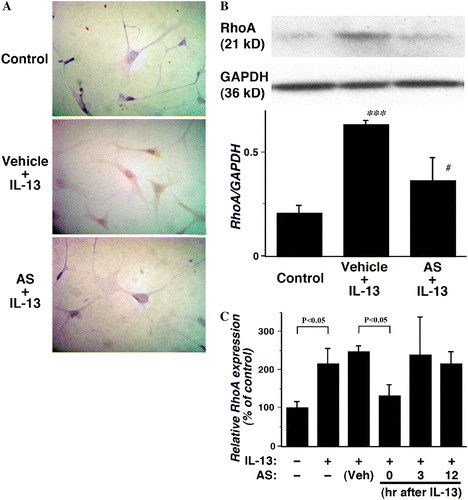
Without influencing IL-12-induced T helper 1 (Th1) cells, AS1517499 demonstrated strong STAT6 inhibition with an IC50 value of 21 nM. It also inhibited IL-4-induced Th2 differentiation of mouse splenic T cells with an IC50 value of 2.3 nM. distinction. Without impacting Th1 differentiation, AS1517499 specifically inhibits Th2 differentiation [1]. Co-incubation inhibits events. IL-13 (100 ng/mL) phosphorylated STAT6 and upregulated RhoA, a monomeric GTPase responsible for smooth muscle contraction's Ca2+ sensitivity in cultured human BSM cells. Both of these effects were linked to AS1517499 (100 nM)[2].
1. AS1517499 (4-(benzylamino)-2-{[2-(3-chloro-4-hydroxyphenyl)ethyl]amino}pyrimidine-5-carboxamide) exhibited potent STAT6 inhibitory activity with an IC50 value of 21 nM; it inhibited IL-4-induced Th2 differentiation of mouse spleen T cells with an IC50 value of 2.3 nM and did not affect IL-12-induced Th1 differentiation [1] 2. In cultured human bronchial smooth muscle (BSM) cells, IL-13 (100 ng/ml) induced STAT6 phosphorylation and up-regulation of RhoA (a monomeric GTPase responsible for Ca2+ sensitization of smooth muscle contraction); co-incubation with AS1517499 (100 nM) inhibited both IL-13-induced STAT6 phosphorylation and RhoA up-regulation [2] |
| ln Vivo |
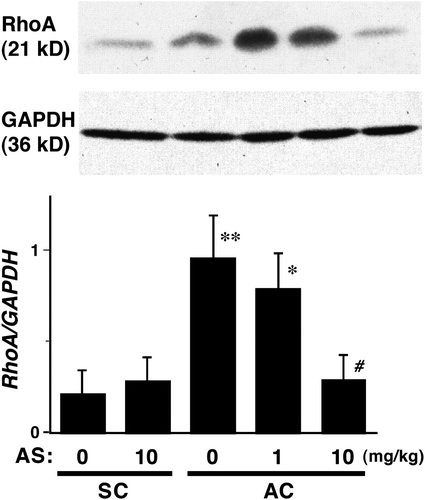
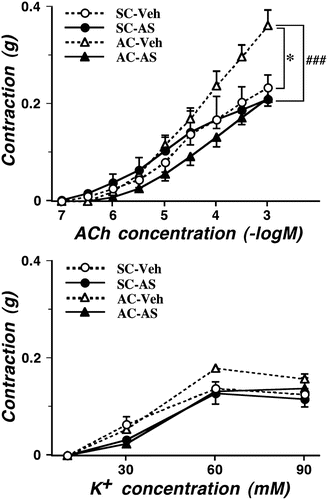
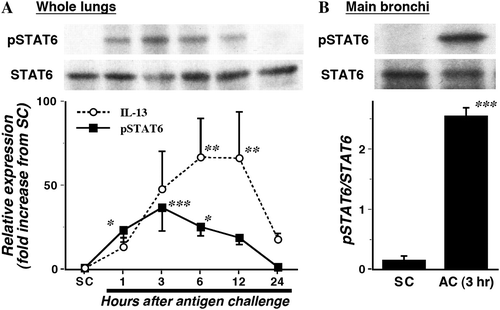
Following the final ovalbumin antigen challenge, BALB/c mice that had been repeatedly and actively sensitized to the antigen showed elevated IL-13 levels in bronchoalveolar lavage fluid and STAT6 phosphorylation in bronchial tissue. In response to acetylcholine, these mice exhibit increased BSM contractility, and bronchial tissue has higher RhoA expression. A single ovalbumin exposure hour prior to each injection of AS1517499 (10 mg/kg) intraperitoneally virtually eliminated antigen-induced RhoA upregulation and BSM hyperresponsiveness [2].
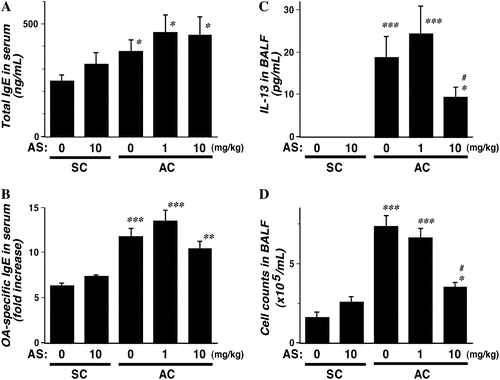
1. In BALB/c mice actively sensitized and repeatedly challenged with ovalbumin antigen: - Increased IL-13 levels in bronchoalveolar lavage fluids and STAT6 phosphorylation in bronchial tissues were observed after the last antigen challenge; these mice showed augmented BSM contractility to acetylcholine and up-regulation of RhoA in bronchial tissues [2] - Intraperitoneal injections of AS1517499 (10 mg/kg) 1 hour before each ovalbumin exposure almost completely inhibited antigen-induced RhoA up-regulation and BSM hyperresponsiveness; it also partially but significantly inhibited antigen-induced IL-13 production [2] |
| Enzyme Assay |
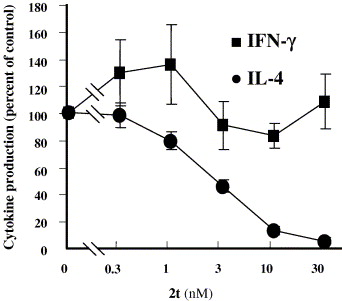
The STAT6 (signal transducers and activators of transcription 6) protein is activated by interleukin (IL)-4 and IL-13, and plays an important role in T-helper cell 2 (Th2) differentiation. STAT6 might therefore be an excellent therapeutic target for various allergic conditions, including asthma and atopic diseases. We synthesized a series of 2-{[2-(4-hydroxyphenyl)ethyl]amino}pyrimidine-5-carboxamide derivatives and evaluated their STAT6 inhibitory activities. Among these compounds, 4-(benzylamino)-2-{[2-(3-chloro-4-hydroxyphenyl)ethyl]amino}pyrimidine-5-carboxamide (2t, AS1517499) showed potent STAT6 inhibition with an IC(50) value of 21 nM, and also inhibited IL-4-induced Th2 differentiation of mouse spleen T cells with an IC(50) value of 2.3 nM and without influencing T-helper cell 1 (Th1) differentiation induced by IL-12[1].
|
| Cell Assay |
Normal human BSM cells were maintained in SmBM medium supplemented with 5% fetal bovine serum, 0.5 ng/ml human epidermal growth factor (hEGF), 5 μg/ml insulin, 2 ng/ml human fibroblast growth factor-basic (hFGF-b), 50 μg/ml gentamicin, and 50 ng/ml amphotericin B. Cells were maintained at 37°C in a humidified atmosphere (5% CO2), fed every 48 to 72 hours, and passaged when cells reached 90 to 95% confluence. Then the hBSMCs (passages 7–9) were seeded in 6-well plates and 8-well chamber slides at a density of 3,500 cells/cm2 and, when 80 to 85% confluence was observed, cells were cultured without serum for 24 hours before addition of recombinant human IL-13. AS1517499 (100 nM) or its vehicle (0.3% DMSO) was treated 30 minutes before the addition of IL-13 (100 ng/ml). In some experiments, AS1517499 was treated 0 (co-incubation), 3, or 12 hours after the addition of IL-13. In another series of experiments, a selective Rho-kinase inhibitor Y-27632 (1 μM) or its vehicle (0.3% DMSO) was also applied 15 minutes before the IL-13 application. At the indicated time after the IL-13 treatment, cells were washed with PBS, immediately collected, and disrupted with 1× SDS sample buffer (250 μl/well), and used for Western blot analyses[2].
1. Mouse spleen T cells were isolated and treated with IL-4 to induce Th2 differentiation, with or without AS1517499 at different concentrations; the inhibitory effect of AS1517499 on Th2 differentiation was evaluated, and its IC50 value (2.3 nM) was determined; parallel experiments were conducted with IL-12 to induce Th1 differentiation, and the effect of AS1517499 on Th1 differentiation was assessed (no inhibitory effect observed) [1] 2. Human bronchial smooth muscle (BSM) cells were cultured in vitro and stimulated with IL-13 (100 ng/ml) in the presence or absence of AS1517499 (100 nM); the phosphorylation level of STAT6 was detected (method not specified), and the expression level of RhoA (a key molecule for Ca2+ sensitization of smooth muscle contraction) was quantified to evaluate the inhibitory effect of AS1517499 on IL-13/STAT6 signaling pathway [2] |
| Animal Protocol |
1 or 10 mg/kg/d; dissolved in 20% DMSO in saline or its vehicle; i.p injection
Male BALB/c mice Male BALB/c mice were housed in a pathogen-free facility.Preparation of a murine model of allergic bronchial asthma, which has an in vivo AHR, was performed as described previously. In brief, BALB/c mice (8 wk of age) were actively sensitized by intraperitoneal injections of 8 μg ovalbumin with 2 mg Imject Alum on Day 0 and Day 5. The sensitized mice were challenged with aerosolized OVA-saline solution (5 mg/ml) for 30 minutes on Days 12, 16, and 20. A control group of mice received the same immunization procedure but inhaled saline aerosol instead of OVA challenge. The aerosol was generated with an ultrasonic nebulizer and introduced to a Plexiglas chamber box (130 × 200 mm, 100 mm height) in which the mice were placed. Animals also received intraperitoneal injection with AS1517499 (1 or 10 mg/kg/d; dissolved in 20% DMSO in saline) or its vehicle 1 hour before each antigen inhalation (Days 12, 16, and 20). Twenty-four hours after the last OVA challenge, mice were killed by exsanguination from abdominal aorta under urethane (1.6 g/kg, intraperitoneally) anesthesia.[2] 1. BALB/c male mice were actively sensitized and repeatedly challenged with ovalbumin antigen to establish a model of antigen-induced bronchial hypercontractility; AS1517499 was administered via intraperitoneal injection at a dose of 10 mg/kg, 1 hour before each ovalbumin exposure (frequency consistent with ovalbumin challenges); after the last antigen challenge, bronchoalveolar lavage fluids were collected to measure IL-13 levels, bronchial tissues were harvested to detect STAT6 phosphorylation and RhoA expression, and BSM contractility to acetylcholine was evaluated to assess the therapeutic effect of AS1517499 [2] |
| References |
|
| Additional Infomation |
Interleukin-13 (IL-13) is a key mediator in the development of airway hyperresponsiveness in asthma. Signal transducer and activator of transcription 6 (STAT6) is one of the main signal transduction molecules activated by IL-13, and the IL-13/STAT6 pathway may be involved in enhanced bronchial smooth muscle (BSM) contraction. This study investigated the effect of a novel STAT6 inhibitor, AS1517499, on antigen-induced BSM hyperresponsiveness. In cultured human BSM cells, IL-13 (100 ng/ml) induced STAT6 phosphorylation and upregulation of RhoA (a monomeric GTPase responsible for Ca2+-sensitized smooth muscle contraction); while AS1517499 (100 nM) inhibited both processes. In BALB/c mice actively sensitized and repeatedly challenged with ovalbumin antigen, IL-13 levels increased in bronchoalveolar lavage fluid and STAT6 phosphorylation occurred in bronchial tissue after the last antigen challenge. These mice exhibited enhanced bronchial smooth muscle contraction in response to acetylcholine, along with upregulation of RhoA expression in bronchial tissue. Intraperitoneal injection of AS1517499 (10 mg/kg) one hour prior to each ovalbumin exposure almost completely suppressed antigen-induced RhoA upregulation and bronchial smooth muscle hyperresponsiveness. Simultaneously, partial but significant inhibition of antigen-induced IL-13 production was also observed. These results suggest that the inhibitory effects of STAT6 inhibitors (such as AS1517499) on RhoA and IL-13 upregulation may be beneficial for asthma treatment. [2]
1. STAT6 is activated by IL-4 and IL-13 and plays a key role in Th2 cell differentiation, making it a potential therapeutic target for allergic diseases (asthma, atopic diseases); AS1517499 is a novel 2-{[2-(4-hydroxyphenyl)-ethyl]amino}pyrimidine-5-carboxamide derivative and a potent STAT6 inhibitor [1] 2. IL-13 is a core mediator of airway hyperresponsiveness in asthma, and the IL-13/STAT6 pathway is involved in the enhancement of bronchial smooth muscle contraction; AS1517499 improves mouse antigen-induced bronchial hyperconstriction by inhibiting STAT6 phosphorylation, RhoA upregulation and IL-13 production, suggesting its potential use in the treatment of asthma [2] |
| Molecular Formula |
C20H20CLN5O2
|
|
|---|---|---|
| Molecular Weight |
397.86
|
|
| Exact Mass |
397.131
|
|
| Elemental Analysis |
C, 60.38; H, 5.07; Cl, 8.91; N, 17.60; O, 8.04
|
|
| CAS # |
919486-40-1
|
|
| Related CAS # |
|
|
| PubChem CID |
10340781
|
|
| Appearance |
White to light brown solid
|
|
| LogP |
2.929
|
|
| Hydrogen Bond Donor Count |
4
|
|
| Hydrogen Bond Acceptor Count |
6
|
|
| Rotatable Bond Count |
8
|
|
| Heavy Atom Count |
28
|
|
| Complexity |
491
|
|
| Defined Atom Stereocenter Count |
0
|
|
| SMILES |
O=C(C1C(NCC2C=CC=CC=2)=NC(NCCC2C=C(Cl)C(O)=CC=2)=NC=1)N
|
|
| InChi Key |
OZRMEKAUZBKTTC-UHFFFAOYSA-N
|
|
| InChi Code |
InChI=1S/C20H20ClN5O2/c21-16-10-13(6-7-17(16)27)8-9-23-20-25-12-15(18(22)28)19(26-20)24-11-14-4-2-1-3-5-14/h1-7,10,12,27H,8-9,11H2,(H2,22,28)(H2,23,24,25,26)
|
|
| Chemical Name |
5-(4-cyclopropyl-1H-imidazol-1-yl)-2-fluoro-N-(6-(4-isopropyl-4H-1,2,4-triazol-3-yl)pyridin-2-yl)-4-methylbenzamide
|
|
| Synonyms |
AS-1517499; AS1517499; AS 1517499
|
|
| HS Tariff Code |
2934.99.9001
|
|
| Storage |
Powder -20°C 3 years 4°C 2 years In solvent -80°C 6 months -20°C 1 month |
|
| Shipping Condition |
Room temperature (This product is stable at ambient temperature for a few days during ordinary shipping and time spent in Customs)
|
| Solubility (In Vitro) |
DMSO: ≥ 35 mg/mL
Water: 1 mg/mL (Insoluble) Ethanol: 1 mg/mL |
|---|---|
| Solubility (In Vivo) |
Solubility in Formulation 1: ≥ 2.5 mg/mL (6.28 mM) (saturation unknown) in 10% DMSO + 40% PEG300 + 5% Tween80 + 45% Saline (add these co-solvents sequentially from left to right, and one by one), clear solution.
For example, if 1 mL of working solution is to be prepared, you can add 100 μL of 25.0 mg/mL clear DMSO stock solution to 400 μL PEG300 and mix evenly; then add 50 μL Tween-80 to the above solution and mix evenly; then add 450 μL normal saline to adjust the volume to 1 mL. Preparation of saline: Dissolve 0.9 g of sodium chloride in 100 mL ddH₂ O to obtain a clear solution. Solubility in Formulation 2: ≥ 2.5 mg/mL (6.28 mM) (saturation unknown) in 10% DMSO + 90% Corn Oil (add these co-solvents sequentially from left to right, and one by one), clear solution. For example, if 1 mL of working solution is to be prepared, you can add 100 μL of 25.0 mg/mL clear DMSO stock solution to 900 μL of corn oil and mix evenly. (Please use freshly prepared in vivo formulations for optimal results.) |
| Preparing Stock Solutions | 1 mg | 5 mg | 10 mg | |
| 1 mM | 2.5134 mL | 12.5672 mL | 25.1345 mL | |
| 5 mM | 0.5027 mL | 2.5134 mL | 5.0269 mL | |
| 10 mM | 0.2513 mL | 1.2567 mL | 2.5134 mL |
*Note: Please select an appropriate solvent for the preparation of stock solution based on your experiment needs. For most products, DMSO can be used for preparing stock solutions (e.g. 5 mM, 10 mM, or 20 mM concentration); some products with high aqueous solubility may be dissolved in water directly. Solubility information is available at the above Solubility Data section. Once the stock solution is prepared, aliquot it to routine usage volumes and store at -20°C or -80°C. Avoid repeated freeze and thaw cycles.
Calculation results
Working concentration: mg/mL;
Method for preparing DMSO stock solution: mg drug pre-dissolved in μL DMSO (stock solution concentration mg/mL). Please contact us first if the concentration exceeds the DMSO solubility of the batch of drug.
Method for preparing in vivo formulation::Take μL DMSO stock solution, next add μL PEG300, mix and clarify, next addμL Tween 80, mix and clarify, next add μL ddH2O,mix and clarify.
(1) Please be sure that the solution is clear before the addition of next solvent. Dissolution methods like vortex, ultrasound or warming and heat may be used to aid dissolving.
(2) Be sure to add the solvent(s) in order.
Inhibitory effects of AS1517499 (AS) on the IL-13–induced activation of STAT6 and up-regulation of RhoA in cultured hBSMCs.Am J Respir Cell Mol Biol.2009 Nov;41(5):516-24. |
|---|
Inhibitory effects of AS on the antigen-induced up-regulation of RhoA in bronchial tissues of sensitized mice.Am J Respir Cell Mol Biol.2009 Nov;41(5):516-24. |
Effects of AS1517499 on Serum IgE, IL-13 in BAL Fluids, and Inflammatory Cell Infiltration.Am J Respir Cell Mol Biol.2009 Nov;41(5):516-24. |
Effects of AS on the antigen-induced production of IgE and IL-13 and infiltration of inflammatory cells into the airways in mice.Am J Respir Cell Mol Biol.2009 Nov;41(5):516-24. |
|---|
Antigen-induced activation of signal transducer and activator of transcription 6 (STAT6) in lungs and bronchial tissues of sensitized mice.Am J Respir Cell Mol Biol.2009 Nov;41(5):516-24. |
The effect of compound2ton cytokine production in T cells from spleen of mice.Bioorg Med Chem.2007 Jan 15;15(2):1044-55. |
Products are for research use only; We do not sell to patients
Copyright 2020 InvivoChem LLC | All Rights Reserved


 COA
COA