| Size | Price | Stock | Qty |
|---|---|---|---|
| 5mg |
|
||
| 10mg |
|
||
| 25mg |
|
||
| 50mg |
|
||
| 100mg |
|
||
| 250mg |
|
||
| 500mg | |||
| Other Sizes |


Purity: ≥98%
| Targets |
JNK1 (IC50 = 80 nM); JNK2 (IC50 = 90 nM); JNK3 (IC50 = 230 nM)
c-Jun N-terminal Kinase 1 (JNK1) (IC₅₀=0.15 μM in recombinant JNK1 kinase assay); c-Jun N-terminal Kinase 2 (JNK2) (IC₅₀=0.12 μM in recombinant JNK2 kinase assay); c-Jun N-terminal Kinase 3 (JNK3) (IC₅₀=0.21 μM in recombinant JNK3 kinase assay) [1] |
|---|---|
| ln Vitro |
In vitro, AS602801 demonstrates cytotoxicity against both serum-cultured non-stem cancer cells and cancer stem cells derived from human pancreatic cancer, non-small cell lung cancer, ovarian cancer, and glioblastoma at concentrations that do not impair the viability of healthy human fibroblasts. Additionally, AS602801 prevents cancer stem cells that have survived treatment from renewing themselves and starting tumors[2].
AS 602801 (Bentamapimod) is a potent and selective small-molecule inhibitor of JNK1/2/3, with no significant activity against other MAP kinases (ERK1/2, p38α) [1] - JNK kinase inhibitory activity: Inhibits recombinant human JNK1, JNK2, and JNK3 with IC₅₀ values of 0.15 μM, 0.12 μM, and 0.21 μM, respectively; shows >100-fold selectivity over ERK1/2 (IC₅₀>20 μM) and p38α (IC₅₀>25 μM) [1] - Inhibits cancer stem cell (CSC) proliferation: Reduces the viability of CSCs derived from breast cancer (MDA-MB-231), colon cancer (HT-29), and pancreatic cancer (PANC-1) cells with IC₅₀ values of 0.32 μM, 0.28 μM, and 0.41 μM, respectively (MTT assay); significantly suppresses CSC sphere formation (colony number reduced by 65–80% at 1 μM) [2] - Induces CSC apoptosis: 0.5–2 μM AS 602801 (Bentamapimod) increases Annexin V-positive CSCs by 35–60% (flow cytometry); upregulates pro-apoptotic proteins (Bax, cleaved caspase-3/9) and downregulates anti-apoptotic protein Bcl-2 (western blot) [2] - Blocks JNK/c-Jun signaling pathway: Dose-dependently inhibits phosphorylation of c-Jun (Ser63/73) in CSCs (IC₅₀=0.25 μM) and reduces c-Jun transcriptional activity (luciferase reporter assay, 50% inhibition at 0.3 μM) [2] - Inhibits endometriotic stromal cell (ESC) proliferation and invasion: 0.1–1 μM AS 602801 (Bentamapimod) reduces ESC viability by 20–55% (CCK-8 assay); inhibits ESC migration (transwell assay, 45–70% reduction at 0.5 μM) and extracellular matrix (ECM) degradation via downregulating MMP-2/9 expression [3] - No significant cytotoxicity on normal cells: Normal human mammary epithelial cells (HMECs) and endometrial stromal cells (NESCs) treated with AS 602801 (Bentamapimod) up to 5 μM for 72 hours show >85% cell viability [2][3] |
| ln Vivo |
Systemic administration of AS602801 at a dose and schedule that did not negatively impact the health of the tumor-bearing mice reduced the number of cancer stem cells in established xenograft tumors[2].
Inhibits tumor growth in CSC-derived xenograft models: Nude mice (BALB/c nu/nu) implanted with MDA-MB-231 CSCs (1×10⁶ cells/mouse) were treated with AS 602801 (Bentamapimod) via intraperitoneal injection (5 mg/kg, 10 mg/kg) twice weekly for 4 weeks. The 10 mg/kg dose reduces tumor volume by 72% (from 1200 ± 150 mm³ to 336 ± 80 mm³, p<0.001) and tumor weight by 68% compared to vehicle control; immunohistochemistry shows reduced p-c-Jun (Ser63) expression and increased cleaved caspase-3 in tumor tissues [2] - Induces regression of endometriotic lesions in mouse models: Female C57BL/6 mice with surgically induced endometriosis were treated with AS 602801 (Bentamapimod) (3 mg/kg, 10 mg/kg) via oral gavage once daily for 21 days. The 10 mg/kg dose reduces lesion volume by 65% (from 18 ± 3 mm³ to 6.3 ± 1.2 mm³, p<0.01) and lesion weight by 62%; histopathological analysis shows decreased stromal cell density and reduced MMP-9 expression in lesions [3] - Improves survival in pancreatic cancer xenograft models: Nude mice implanted with PANC-1 CSCs were treated with AS 602801 (Bentamapimod) (10 mg/kg, intraperitoneal injection, twice weekly). Median survival was extended from 35 days (vehicle) to 58 days (treatment group, p<0.01) [2] |
| Enzyme Assay |
AS602801 (also known as Bentamapimod and PGL5001) is a novel, potent and ATP-competitive JNK (c-Jun N-terminal Kinase) inhibitor with IC50 values of 80 nM, 90 nM, and 230 nM for JNK1, JNK2, and JNK3, respectively. It functions as a JNK inhibitor and can lessen the surface area and volume of induced endometriosis in baboons without having a significant impact on cycle length or serum levels of reproductive hormones or having any significant adverse effects on the endocrine system.
Recombinant JNK kinase activity assay: Recombinant human JNK1/2/3 enzymes are diluted in kinase buffer (20 mM Tris-HCl pH 7.5, 10 mM MgCl₂, 1 mM DTT, 0.1 mM ATP). Serial 3-fold dilutions of AS 602801 (Bentamapimod) (0.01–50 μM) are mixed with enzyme solution and GST-c-Jun (1–79 aa, substrate) in 96-well plates. The reaction is initiated by adding [γ-³²P]ATP, incubated at 30°C for 30 minutes, and terminated by adding 2×SDS sample buffer. Phosphorylated GST-c-Jun is separated by SDS-PAGE, transferred to PVDF membranes, and radioactivity is quantified by autoradiography. IC₅₀ values are calculated from dose-response curves [1] - JNK/c-Jun transcriptional activity assay: HEK293 cells transfected with c-Jun luciferase reporter plasmid and Renilla luciferase plasmid (internal control) are seeded in 96-well plates. After 24 hours, cells are treated with AS 602801 (Bentamapimod) (0.05–5 μM) for 1 hour, then stimulated with anisomycin (1 μg/mL) to activate JNK. Luciferase activity is measured 6 hours later using a dual-luciferase assay kit, and relative luciferase activity (firefly/Renilla) is calculated to assess transcriptional inhibition [2] |
| Cell Assay |
Human IMR90 normal fibroblasts and human cancer cells PANC-1, A2780, and A549 are subjected to a 3-day treatment period with or without bentamapimod (AS 602801) at the indicated concentrations (2.5, 5, or 7.5 μM). Using trypan blue as a vital dye, researchers were able to count the number of viable cells (left panels) and the percentage of dead cells (right panels)[2].
Cancer stem cell viability assay: CSCs isolated from MDA-MB-231, HT-29, and PANC-1 cells are seeded in 96-well plates (5×10³ cells/well) and treated with AS 602801 (Bentamapimod) (0.01–10 μM) for 72 hours. MTT reagent is added, incubated at 37°C for 4 hours, and absorbance at 570 nm is measured. IC₅₀ values are derived from nonlinear regression analysis [2] - Sphere formation assay: CSCs are seeded in ultra-low attachment 6-well plates (1×10³ cells/well) in stem cell medium and treated with AS 602801 (Bentamapimod) (0.1–2 μM). After 14 days, spheres with diameter >50 μm are counted under a microscope, and sphere formation efficiency is calculated as (number of spheres/number of seeded cells) × 100% [2] - Endometriotic stromal cell invasion assay: ESCs (2×10⁴ cells/well) are seeded in the upper chamber of Matrigel-coated Transwell inserts and treated with AS 602801 (Bentamapimod) (0.1–1 μM) in serum-free medium. The lower chamber contains 10% FBS medium as a chemoattractant. After 24 hours of incubation at 37°C, non-invading cells on the upper surface are removed, and invading cells are stained with crystal violet. Stained cells are quantified by absorbance at 570 nm [3] - Western blot analysis: CSCs or ESCs are treated with AS 602801 (Bentamapimod) (0.25–2 μM) for 24 hours, lysed in RIPA buffer, and protein concentrations are determined. Equal amounts of protein are separated by SDS-PAGE, transferred to PVDF membranes, and probed with primary antibodies against p-c-Jun (Ser63/73), c-Jun, Bax, Bcl-2, cleaved caspase-3, MMP-2, MMP-9, and GAPDH (loading control). Secondary antibodies conjugated to HRP are added, and bands are visualized by chemiluminescence [2][3] |
| Animal Protocol |
Mice: The silastic capsule containing 8 μg of estradiol is implanted subcutaneously into the 5-week-old athymic (ncr/nude) ovariectomized mice after isoflurane anesthesia. Twenty-four hours later, mice were injected subcutaneously or intraperitoneally with a phosphate-buffered saline (PBS) suspension containing 8 to 10 fragments of human endometrial tissue per mouse (biopsies taken from volunteers or patients) on the ventral midline just below the umbilicus. Tissue fragments are cultured as organs for 24 hours prior to injection while being treated with 1 nM estradiol, PR, or MPA. Bentamapimod (AS 602801) is first administered orally 10 to 12 days after tissue injection. MPA is administered twice weekly by tuberculin syringe injections (200 mg/kg) along the right flank, and progesterone is administered via a slow-release silastic capsule containing 25 μg PR. Gavage administration of bentamapimod (AS 602801) is carried out for 30 days at doses of 10 mg/kg and 30 mg/kg/animal. In order to directly examine the size and number of lesions, mice are once more given general anesthesia and sacrificed by cervical dislocation after the course of treatment is complete. In order to facilitate further analysis, excised lesions from uteri are weighed and measured[3].
CSC-derived xenograft tumor model: Female BALB/c nu/nu mice (6–8 weeks old) are anesthetized, and MDA-MB-231 CSCs (1×10⁶ cells/mouse) suspended in Matrigel are implanted subcutaneously into the right flank. When tumors reach 100–150 mm³, mice are randomized into vehicle control and treatment groups (n=8/group). AS 602801 (Bentamapimod) is dissolved in DMSO (5%) + sterile saline (95%) and administered via intraperitoneal injection at 5 mg/kg or 10 mg/kg twice weekly for 4 weeks. Tumor volume is measured every 3 days using calipers (volume = length × width² / 2), and mice are euthanized at the end of treatment to collect tumors for weight measurement and immunohistochemical analysis [2] - Surgically induced endometriosis mouse model: Female C57BL/6 mice (8–10 weeks old) are anesthetized, and uterine horns are excised, cut into 1 mm³ fragments, and implanted onto the peritoneal wall and mesentery. Two weeks after surgery, mice with confirmed endometriotic lesions are randomized into vehicle control and treatment groups (n=10/group). AS 602801 (Bentamapimod) is formulated in 0.5% carboxymethylcellulose sodium (CMC-Na) and administered via oral gavage at 3 mg/kg or 10 mg/kg once daily for 21 days. Mice are euthanized, lesions are dissected to measure volume and weight, and tissues are fixed in 4% paraformaldehyde for histopathological staining and immunohistochemistry [3] - Pancreatic cancer survival model: Nude mice (6–8 weeks old) are implanted orthotopically with PANC-1 CSCs (5×10⁵ cells/mouse) into the pancreas. Seven days after implantation, mice are treated with AS 602801 (Bentamapimod) (10 mg/kg, intraperitoneal injection) twice weekly. Mice are monitored daily for survival and euthanized when they show signs of severe illness (e.g., weight loss >20%, lethargy) [2] |
| ADME/Pharmacokinetics |
Oral bioavailability: 38% in mice (10 mg/kg oral dose) [3] - Plasma pharmacokinetics: After oral administration of 10 mg/kg AS 602801 (Bentamapimod) to mice, Cmax = 2.8 μM, AUC₀–24h = 18.5 μM·h, terminal half-life (t₁/₂) = 6.2 hours [3] - Tissue distribution: The highest concentrations were detected in the liver (liver/plasma ratio = 3.2) and kidney (kidney/plasma ratio = 2.5) 2 hours after oral administration to mice; the tumor tissue concentration reached 1.2 μM (10 mg/kg oral dose) 4 hours later [2] - Metabolism: It is mainly metabolized in human liver microsomes by cytochrome P450 3A4 (CYP3A4); the main metabolite is demethylated AS 602801 retains 30% of the JNK inhibitory activity of the parent compound [1]
|
| Toxicity/Toxicokinetics |
Acute toxicity (mice): Oral LD₅₀ > 200 mg/kg; Intraperitoneal LD₅₀ = 150 mg/kg [3]
- Subchronic toxicity (mice, 28 days): Oral doses up to 50 mg/kg/day showed no significant changes in body weight, food intake, or hematological parameters (red blood cells, white blood cells, platelets); at 50 mg/kg/day, a slight increase in ALT (1.5 times higher than the solvent control group) and AST (1.3 times higher than the solvent control group) was observed, but no histopathological abnormalities were observed in the liver [3] - Chronic toxicity (rats, 90 days): Oral doses up to 25 mg/kg/day did not cause significant nephrotoxicity (unchanged BUN and creatinine levels) or neurotoxicity; gastrointestinal toxicity was extremely low (at a dose of 25 mg/kg/day, 10% of rats experienced transient diarrhea) [3] - Human plasma protein binding rate: 89–92% (equilibrium dialysis, 0.1–10 μM) [1] |
| References |
|
| Additional Infomation |
AS 602801 (Bentamapimod) is a selective JNK1/2/3 inhibitor that has been developed as an anticancer drug and a treatment for endometriosis [1][2][3] - Mechanism of action: It binds to the ATP-binding pocket of JNK kinase, inhibiting its catalytic activity and blocking the JNK/c-Jun signaling pathway; this leads to the inhibition of proliferation of cancer cells and endometriosis stromal cells, the induction of apoptosis, and the inhibition of cell migration/invasion [1][2][3] - Clinical significance: It targets cancer stem cells, which are the cause of tumor development, recurrence, and chemotherapy resistance, making it a potential treatment for refractory cancers (breast cancer, colon cancer, pancreatic cancer) [2] - Preclinical efficacy: It has shown significant antitumor activity in CSC-derived xenograft tumors and has shown regression of endometriosis lesions in animal models, with good pharmacokinetic properties and low toxicity [2][3] - Development status: preclinical stage; no FDA-approved indications to date [1][2][3] - Potential drug interactions: may interact with CYP3A4 substrates/inhibitors; combination therapy with CYP3A4 inhibitors (e.g., ketoconazole) increased plasma AUC in mice by 2.1-fold [1]
|
| Molecular Formula |
C25H23N5O2S
|
|
|---|---|---|
| Molecular Weight |
457.55
|
|
| Exact Mass |
457.157
|
|
| Elemental Analysis |
C, 65.63; H, 5.07; N, 15.31; O, 6.99; S, 7.01
|
|
| CAS # |
848344-36-5
|
|
| Related CAS # |
|
|
| PubChem CID |
10195250
|
|
| Appearance |
Light yellow to yellow solid powder
|
|
| Density |
1.3±0.1 g/cm3
|
|
| Boiling Point |
666.5±65.0 °C at 760 mmHg
|
|
| Flash Point |
356.9±34.3 °C
|
|
| Vapour Pressure |
0.0±2.0 mmHg at 25°C
|
|
| Index of Refraction |
1.667
|
|
| LogP |
2.71
|
|
| Hydrogen Bond Donor Count |
0
|
|
| Hydrogen Bond Acceptor Count |
8
|
|
| Rotatable Bond Count |
7
|
|
| Heavy Atom Count |
33
|
|
| Complexity |
660
|
|
| Defined Atom Stereocenter Count |
0
|
|
| SMILES |
N#CC(C1C=CN=C(OCC2C=CC(CN3CCOCC3)=CC=2)N=1)C1SC2C(=CC=CC=2)N=1
|
|
| InChi Key |
XCPPIJCBCWUBNT-UHFFFAOYSA-N
|
|
| InChi Code |
InChI=1S/C25H23N5O2S/c26-15-20(24-28-22-3-1-2-4-23(22)33-24)21-9-10-27-25(29-21)32-17-19-7-5-18(6-8-19)16-30-11-13-31-14-12-30/h1-10,20H,11-14,16-17H2
|
|
| Chemical Name |
2-(1,3-benzothiazol-2-yl)-2-[2-[[4-(morpholin-4-ylmethyl)phenyl]methoxy]pyrimidin-4-yl]acetonitrile
|
|
| Synonyms |
|
|
| HS Tariff Code |
2934.99.9001
|
|
| Storage |
Powder -20°C 3 years 4°C 2 years In solvent -80°C 6 months -20°C 1 month |
|
| Shipping Condition |
Room temperature (This product is stable at ambient temperature for a few days during ordinary shipping and time spent in Customs)
|
| Solubility (In Vitro) |
|
|||
|---|---|---|---|---|
| Solubility (In Vivo) |
Solubility in Formulation 1: ≥ 0.83 mg/mL (1.81 mM) (saturation unknown) in 10% DMSO + 40% PEG300 +5% Tween-80 + 45% Saline (add these co-solvents sequentially from left to right, and one by one), suspension solution.
For example, if 1 mL of working solution is to be prepared, you can add 100 μL of 8.3 mg/mL clear DMSO stock solution to 400 μL of PEG300 and mix evenly; then add 50 μL of Tween-80 + to the above solution and mix evenly; then add 450 μL of normal saline to adjust the volume to 1 mL. Preparation of saline: Dissolve 0.9 g of sodium chloride in 100 mL ddH₂ O to obtain a clear solution. (Please use freshly prepared in vivo formulations for optimal results.) |
| Preparing Stock Solutions | 1 mg | 5 mg | 10 mg | |
| 1 mM | 2.1856 mL | 10.9278 mL | 21.8555 mL | |
| 5 mM | 0.4371 mL | 2.1856 mL | 4.3711 mL | |
| 10 mM | 0.2186 mL | 1.0928 mL | 2.1856 mL |
*Note: Please select an appropriate solvent for the preparation of stock solution based on your experiment needs. For most products, DMSO can be used for preparing stock solutions (e.g. 5 mM, 10 mM, or 20 mM concentration); some products with high aqueous solubility may be dissolved in water directly. Solubility information is available at the above Solubility Data section. Once the stock solution is prepared, aliquot it to routine usage volumes and store at -20°C or -80°C. Avoid repeated freeze and thaw cycles.
Calculation results
Working concentration: mg/mL;
Method for preparing DMSO stock solution: mg drug pre-dissolved in μL DMSO (stock solution concentration mg/mL). Please contact us first if the concentration exceeds the DMSO solubility of the batch of drug.
Method for preparing in vivo formulation::Take μL DMSO stock solution, next add μL PEG300, mix and clarify, next addμL Tween 80, mix and clarify, next add μL ddH2O,mix and clarify.
(1) Please be sure that the solution is clear before the addition of next solvent. Dissolution methods like vortex, ultrasound or warming and heat may be used to aid dissolving.
(2) Be sure to add the solvent(s) in order.
| NCT Number | Recruitment | interventions | Conditions | Sponsor/Collaborators | Start Date | Phases |
| NCT01630252 | Completed | Drug: PGL5001 Drug: Placebo |
Endometriosis | PregLem SA | June 2012 | Phase 2 |
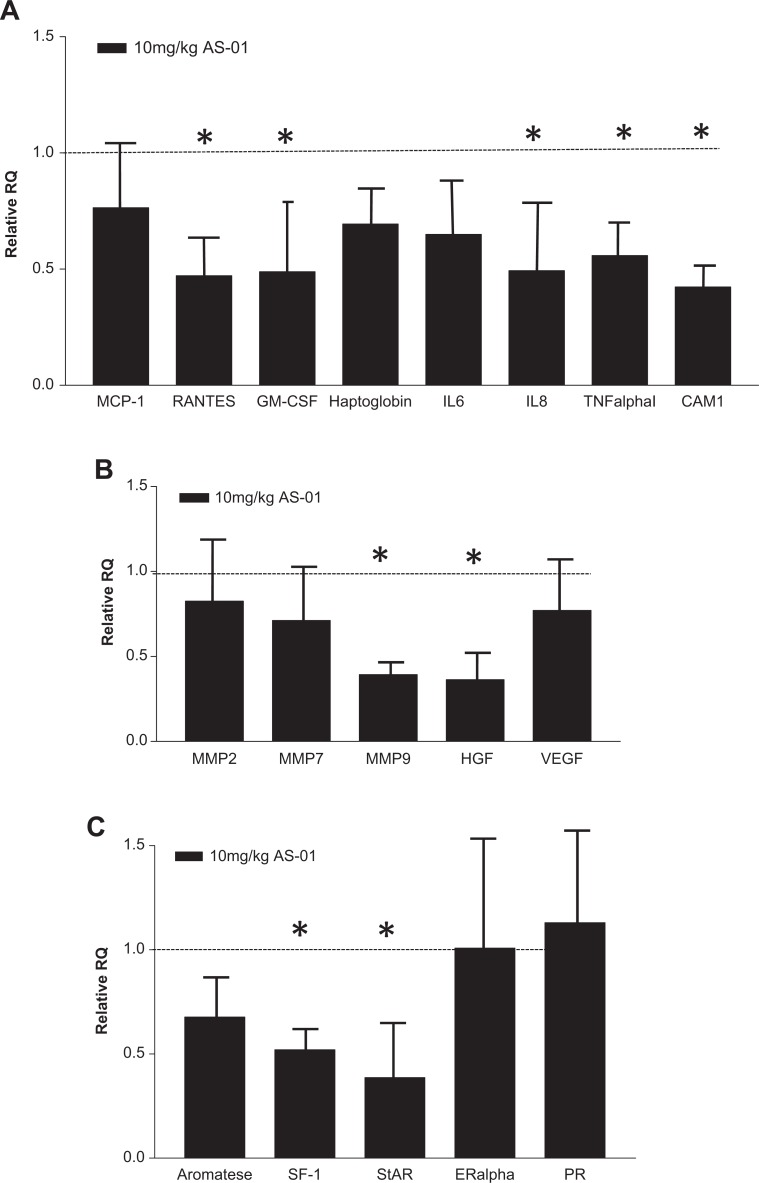
Bentamapimod (AS-01) causes reduction in the expression of genes previously associated with endometriosis in endometriotic-like lesions established with biopsies from patients with disease.Reprod Sci.2016 Jan;23(1):11-23. |
|---|
|
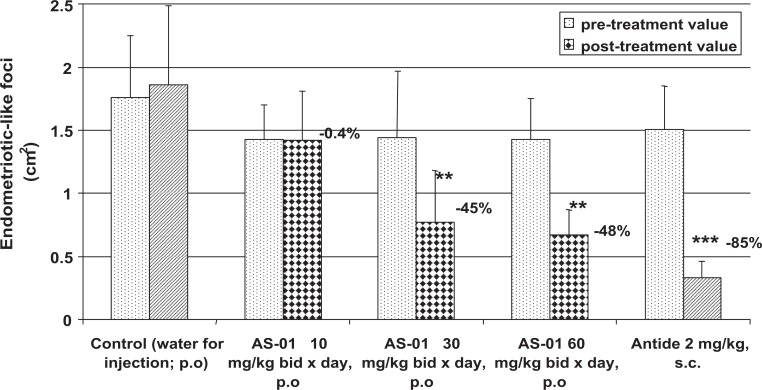
Bentamapimod at both 30 mg/kg twice daily (BID) and 60 mg/kg BID causes regression of surgically induced autologous endometriotic-like foci in rats.
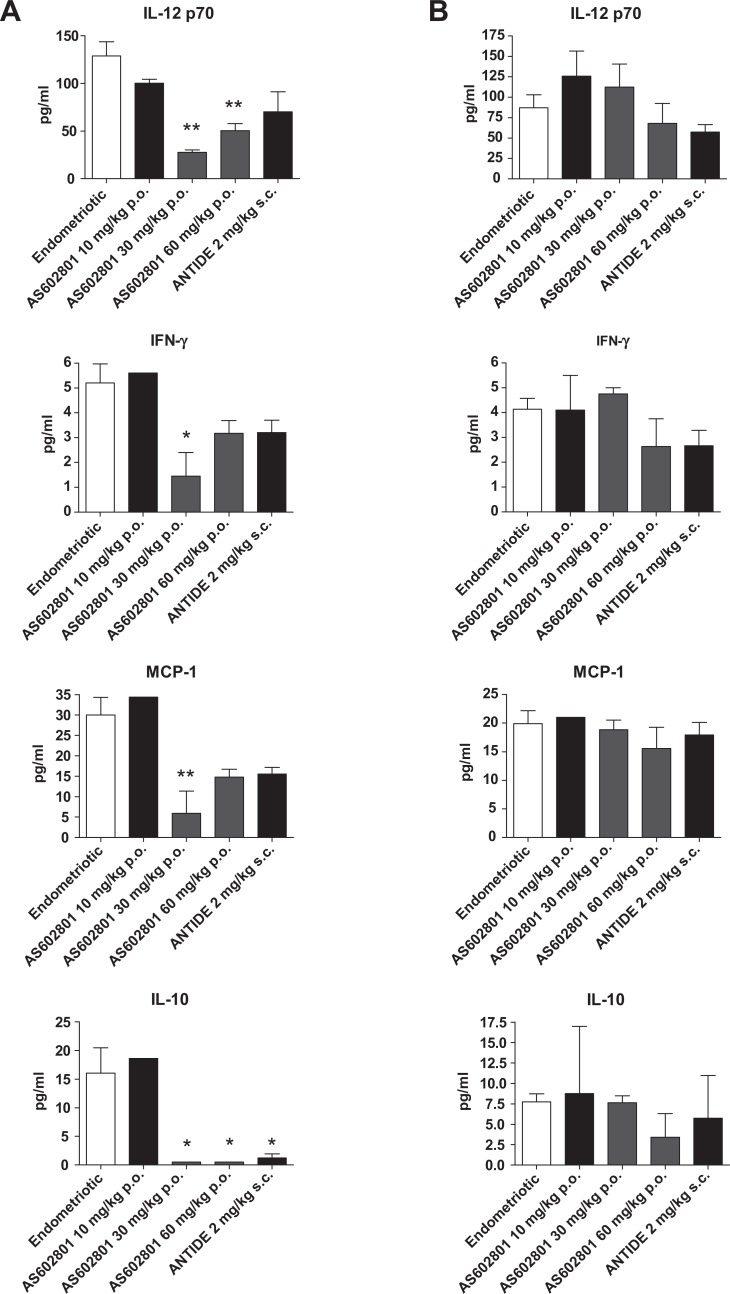
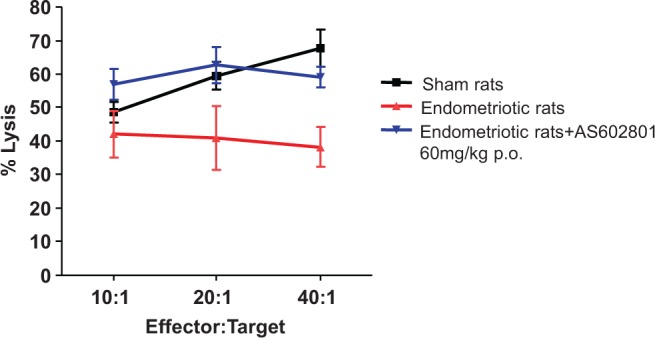
Cytotoxic activity of natural killer (NK) cells from splenocytes. Splenocytes isolated from endometriotic rat after their treatment were subjected to lytic activity of the target cells as described in the Methods section.Reprod Sci.2016 Jan;23(1):11-23. |
Products are for research use only; We do not sell to patients
Copyright 2020 InvivoChem LLC | All Rights Reserved


 COA
COA