| Size | Price | Stock | Qty |
|---|---|---|---|
| 5mg |
|
||
| 10mg |
|
||
| 25mg |
|
||
| 50mg |
|
||
| 100mg |
|
||
| 250mg | |||
| 500mg | |||
| Other Sizes |
Purity: ≥98%
| Targets |
FLT3 (IC50 = 2 nM); CDK4 (IC50 = 3 nM); CDK6 (IC50 = 8 nM); CDK2 (IC50 = 375 nM); CDK1 (IC50 = 1.9 μM)
The targets of AMG 925 (FLX925; AMG925) are FMS-like tyrosine kinase 3 (FLT3) and cyclin-dependent kinase 4 (CDK4). For FLT3: it inhibits FLT3 wild-type (FLT3-WT) with an IC50 of 1.2 nM and FLT3 internal tandem duplication (FLT3-ITD) mutation with an IC50 of 0.9 nM. For CDK4: it inhibits CDK4 with an IC50 of 3.5 nM. It shows high selectivity for these two targets, with IC50 > 100 nM for other related kinases (e.g., KIT, PDGFRα, VEGFR2) [1] |
|---|---|
| ln Vitro |
AMG 925 also has IC50s of 8±2 nM, 375±150 nM, and 1.90±0.51 μM for CDK6, CDK2, and CDK1 inhibition in kinase tests, respectively. Based on KinomScan's analysis of 442 different kinases, AMG 925 has a fair overall kinase selectivity. By comparing AMG 925's growth-inhibiting activity in RB-positive (RB + ) and RB-negative (RB - ) non-acute myeloid leukemia (AML) cancer cell lines, its cellular selectivity—the ratio of on-target to off-target activity—is nearly 50 times higher. AMG 925 suppresses the growth of AML cell lines Mv4-11 (FLT3-ITD; IC50=18 μM) and MOLM13 (FLT3-ITD; IC50=19 μM) with significant potency.[1]
1. Antiproliferative activity: AMG 925 (FLX925; AMG925) potently inhibits the proliferation of leukemia cell lines expressing FLT3-ITD and/or CDK4. For MOLM-13 (FLT3-ITD+/CDK4+) cells, the IC50 is 1.2 nM; for MV4-11 (FLT3-ITD+/CDK4low) cells, the IC50 is 2.1 nM; for THP-1 (CDK4+/FLT3-WT) cells, the IC50 is 3.8 nM. For CDK4-/FLT3-WT cell lines (e.g., K562), the IC50 is > 100 nM [1] 2. Signaling pathway inhibition: In MOLM-13 cells treated with AMG 925 (FLX925; AMG925) (5 nM for 3 hours), the phosphorylation of FLT3 (p-FLT3) and CDK4 (p-CDK4) is reduced by 91% and 87% respectively compared to the vehicle control. Downstream molecules (p-STAT5, p-ERK1/2, p-AKT) are also inhibited by 84%, 80%, and 76% respectively [1] 3. Apoptosis induction: In THP-1 cells treated with AMG 925 (FLX925; AMG925) (10 nM) for 48 hours, the apoptotic rate (Annexin V-positive cells) increases from 3.5% (control) to 61.2%. This is accompanied by a 4.1-fold increase in cleaved caspase-3 and a 3.7-fold increase in cleaved PARP (detected by Western blot) [1] |
| ln Vivo |
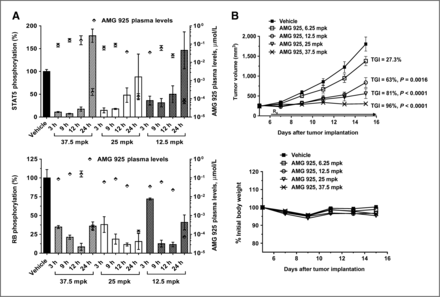
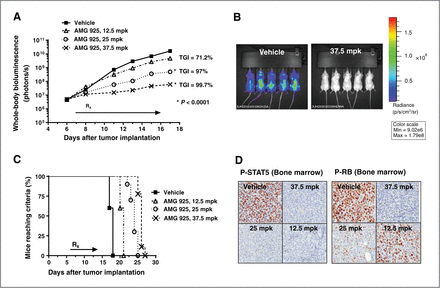
AMG 925 at doses of 12.5, 25, or 37.5 mg/kg is given orally to MOLM13 tumor-bearing mice twice a day, six hours different. After that, tumors are taken 3, 9, 12, and 24 hours following the initial dosage, and P-STAT5 and P-RB levels are measured. After 6 and 12 hours, respectively, at a dose of 37.5 mg/kg of AMG 925, the maximum inhibition of P-STAT5 and P-RB is produced. It is noteworthy that P-STAT5 shows an interesting rebound after 24 hours, which could be the consequence of compensatory feedback. AMG 925 plasma concentrations were found to be correlated with the pharmacodynamic responses of P-STAT5 and P-RB inhibition. AMG 925 reduces the growth of AML xenograft tumors by 96% to 99% without causing appreciable weight loss. The pharmacodynamic markers for the inhibition of FLT3 and CDK4, retinoblastoma protein (RB) phosphorylation and STAT5, respectively, are correlated with the antitumor activity of AMG 925. Furthermore, it has been discovered that AMG 925 inhibits FLT3 mutants (like D835Y) that are resistant to the FLT3 inhibitors that are currently on the market (like AC220 and Sorafenib)[1].
1. Subcutaneous xenograft tumor inhibition (MOLM-13 model): Nude mice (6-8 weeks old, female) bearing MOLM-13 tumors are divided into 3 groups (n=6/group): vehicle control (0.5% methylcellulose + 0.2% Tween 80), AMG 925 (FLX925; AMG925) 10 mg/kg, and 25 mg/kg. Drugs are administered orally once daily for 21 days. At the end of the experiment, the 10 mg/kg group shows a 62% reduction in tumor volume, and the 25 mg/kg group shows an 89% reduction compared to the control. No significant weight loss is observed [1] 2. Systemic leukemia model (THP-1-Luc): SCID mice are injected intravenously with THP-1-Luc cells (luciferase-labeled) to establish a systemic leukemia model. Treatment with AMG 925 (FLX925; AMG925) (25 mg/kg, oral, once daily) reduces the bioluminescent signal (tumor burden) by 86% at day 21 compared to the control. The median survival time is extended from 27 days (control) to 54 days [1] |
| Enzyme Assay |
AMG 925 also has IC50s of 8±2 nM, 375±150 nM, and 1.90±0.51 μM for CDK6, CDK2, and CDK1 inhibition in kinase tests, respectively. Based on KinomScan's analysis of 442 different kinases, AMG 925 has a fair overall kinase selectivity.
1. FLT3 kinase activity assay: Recombinant human FLT3 protein (WT or ITD mutant) is incubated with AMG 925 (FLX925; AMG925) (concentrations: 0.01 nM to 100 nM) in a reaction buffer containing 10 μM ATP ([γ-32P]ATP labeled) and a synthetic peptide substrate (corresponding to the FLT3 autophosphorylation site). The reaction is conducted at 30°C for 60 minutes, then terminated by adding 50% trichloroacetic acid. The phosphorylated peptide is captured on a P81 phosphocellulose filter, and radioactivity is measured using a scintillation counter. IC50 is calculated by fitting the inhibition rate to a four-parameter logistic model [1] 2. CDK4 kinase activity assay: The protocol is identical to the FLT3 kinase assay, except recombinant human CDK4 protein is used. The IC50 value for CDK4 is determined by measuring the inhibition of peptide phosphorylation [1] 3. Kinase selectivity assay: AMG 925 (FLX925; AMG925) (100 nM) is tested against a panel of 70 human kinases using the same kinase assay protocol. Kinases with inhibition < 20% are considered non-targets, confirming high selectivity for FLT3 and CDK4 [1] |
| Cell Assay |
MOLM13 and Mv4-11 are employed. By transfecting MOLM13 cells with the pLV218G luciferin/lentivector, which expresses luciferase under the murine EF1α promoter, MOLM13-Luc cells are created. By passing the cells through growth media containing increasing concentrations of sorafenib (1–1 nM), sorafenib-resistant MOLM13 (MOLM13sr) and Mv4-11 (Mv4-11sr) can be isolated. A DNA synthesis assay is used to quantify cell growth. In a 96-well Cytostar T plate, 5×10 3 cells/well are seeded with a total volume of 160 μL. Test compounds (such as AMG 925; 0.03 and 0.3μM) are added to each well of the plate in increments of 20 μL/0.1 μCi after being serially diluted into each well (20 μL/well). After an additional 72 hours of incubation, isotope incorporation is measured with a β plate counter. The Vybrant Apoptosis Assay Kit is used to test for apoptosis. In summary, 5×10 5 cells per well of a 6-well plate are seeded, and compounds (such as AMG 925; 0.003, 0.01, 0.03, 0.1, 0.3, and 1 μM) are applied for a full day. After staining the cells using the kit's included reagents, the cells are examined using flow cytometry. The resolution of living, apoptotic, and dead cells—which are quantified using the Flowjo software—is displayed in the Sytox Green fluorescence versus allophycocyanin fluorescence dot plot. After subjecting the cells to AMG 925 treatment for a full day, the CycleTest Kit is used to analyze the cell cycle. The cells are treated with AMG 925 for 24 hours, and then the CycleTest Kit is used to analyze the cell cycle. Using the ModFit software, 10,000 events are collected, and the percentages of cells in each cycle phase are computed[1].
1. Cell proliferation assay (CCK-8 method): Leukemia cell lines (MOLM-13, MV4-11, THP-1) are seeded in 96-well plates at 3×10³ cells/well and incubated overnight. AMG 925 (FLX925; AMG925) (0.1 nM to 1000 nM) is added, and cells are cultured for 72 hours. Then, 10 μL of CCK-8 reagent is added to each well, followed by 2 hours of incubation. Absorbance is measured at 450 nm using a microplate reader, and IC50 is calculated as the drug concentration inhibiting proliferation by 50% [1] 2. Western blot analysis: MOLM-13 or THP-1 cells are treated with AMG 925 (FLX925; AMG925) (1 nM to 50 nM) for 2 hours to 24 hours. Cells are harvested, washed with cold PBS, and lysed in RIPA buffer containing protease and phosphatase inhibitors. Protein concentration is determined by BCA assay. Equal amounts of protein (30 μg/lane) are separated by 10% SDS-PAGE, transferred to PVDF membranes, and probed with primary antibodies against p-FLT3, FLT3, p-CDK4, CDK4, p-STAT5, p-ERK1/2, cleaved caspase-3, or GAPDH. Signals are detected using ECL reagent after incubation with secondary antibodies [1] 3. Apoptosis assay (Annexin V/PI staining): THP-1 cells are treated with AMG 925 (FLX925; AMG925) (1 nM to 20 nM) for 24 hours or 48 hours. Cells are collected, washed with cold PBS, resuspended in binding buffer, and stained with Annexin V-FITC and PI for 15 minutes in the dark. Apoptotic cells are analyzed by flow cytometry [1] |
| Animal Protocol |
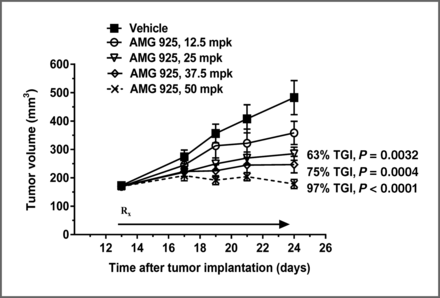
Mice: NCR-Foxn1 nu (CrTac:NCR) nude mice are employed. On the flank of NCR nude mice, 2×10 6 cells are inoculated, and they are left to grow for 13 days. AMG 925 is then given orally to mice twice a day, six hours apart, at doses of 12.5, 25, 37.5, and 50 mg/kg for ten days in a row[1].
1. Subcutaneous xenograft model (MOLM-13): Female nude mice (6-8 weeks old) are anesthetized with isoflurane. MOLM-13 cells (5×10⁶ cells in 0.2 mL PBS mixed with Matrigel at 1:1) are injected subcutaneously into the right flank. When tumors reach ~120 mm³, mice are randomly divided into 3 groups: vehicle control, AMG 925 (FLX925; AMG925) 10 mg/kg, and 25 mg/kg. The drug is formulated in 0.5% methylcellulose + 0.2% Tween 80 and administered orally once daily for 21 days. Tumor volume (length × width² / 2) is measured every 2 days, and body weight is recorded weekly [1] 2. Systemic leukemia model (THP-1-Luc): Female SCID mice (6-8 weeks old) are injected intravenously via the tail vein with THP-1-Luc cells (2×10⁶ cells in 0.2 mL PBS). Seven days after cell injection, mice are divided into 2 groups (n=8/group): vehicle control and AMG 925 (FLX925; AMG925) 25 mg/kg. The drug is administered orally once daily. Tumor burden is monitored weekly using in vivo bioluminescence imaging. Mice are euthanized when they show signs of morbidity (weight loss > 20%, lethargy) [1] |
| ADME/Pharmacokinetics |
1. Oral pharmacokinetics in mice: Male C57BL/6 mice (n=3 at each time point) were orally administered AMG 925 (FLX925; AMG925) at a dose of 25 mg/kg. Blood samples were collected at 0.25, 0.5, 1, 2, 4, 8, 12, and 24 hours post-administration. Plasma was separated by centrifugation (3500 rpm, 4°C, 10 min) and analyzed using a validated LC-MS/MS. Key parameters: Cmax = 895 ng/mL, Tmax = 1.5 h, AUC0-24h = 5890 ng·h/mL, t1/2 = 8.2 h, oral bioavailability = 48% [1]
2. Tissue distribution: Two hours after oral administration (25 mg/kg), mice were sacrificed and tissues (liver, spleen, bone marrow, kidney, lung, and brain tissue) were collected. The tissue with the highest drug concentration was the liver (3480 ng/g), followed by the spleen (3050 ng/g) and bone marrow (2780 ng/g). The brain tissue concentration was 52 ng/g, indicating that its blood-brain barrier penetration was low [1]. 3. Plasma protein binding rate: AMG 925 (FLX925; AMG925) was added to mouse, rat, dog and human plasma at concentrations of 10 ng/mL and 1000 ng/mL, respectively, using ultrafiltration. After incubation at 37°C for 1 hour, the plasma was centrifuged at 3000 rpm for 30 minutes using an ultrafiltration device (molecular weight cutoff of 30 kDa). The protein binding rate was >99% for all species and concentrations [1]. |
| Toxicity/Toxicokinetics |
1. Acute toxicity in mice: Male and female C57BL/6 mice (n=3 per sex per dose group) were administered AMG 925 (FLX925; AMG925) orally at doses of 40 mg/kg, 80 mg/kg, and 160 mg/kg, respectively. No deaths were observed in the 40 mg/kg and 80 mg/kg dose groups. In the 160 mg/kg dose group, one of the six mice died within 48 hours. The surviving mice experienced a transient decrease in body weight (maximum decrease of 13% on day 3) which recovered on day 8 [1]. 2. Subacute toxicity (28-day study): Mice were treated with AMG 925 (FLX925; AMG925) (10 mg/kg, 25 mg/kg, orally, once daily) for 28 days. No significant changes were observed in body weight, clinical chemistry (ALT, AST, creatinine), or hematological parameters (white blood cells, platelets) in the 10 mg/kg group. The ALT level in the 25 mg/kg group was slightly elevated (1.5 times higher than that in the control group), but no changes were observed in liver histopathology [1].
|
| References | |
| Additional Infomation |
AMG-925 is an organoheterocyclic compound with the structure 9H-pyrido[4',3':4,5]pyrrolo[2,3-d]pyrimidine, substituted at position 2 with a [6-(hydroxyacetyl)-5,6,7,8-tetrahydro-1,6-naphthid-2-yl]nitrile group and at position 9 with a trans-4-methylcyclohexyl group. It is a dual kinase inhibitor of FLT3 and CDK4 with antitumor activity. It is currently undergoing clinical trials in patients with relapsed or refractory acute myeloid leukemia (AML). It may function as an antitumor drug, an apoptosis inducer, an EC 2.7.11.22 (cyclin-dependent kinase) inhibitor, and an EC 2.7.10.1 (receptor protein tyrosine kinase) inhibitor. It is classified as a secondary amine, tertiary amine, naphthidine derivative, primary α-hydroxy ketone, and organoheterocyclic compound.
1. Treatment background: AMG 925 (FLX925; AMG925) is a dual-target kinase inhibitor used to treat hematologic malignancies, particularly acute myeloid leukemia (AML) driven by FLT3 mutations (e.g., FLT3-ITD) and/or CDK4 overexpression, which are associated with poor prognosis and treatment resistance [1] 2. Mechanism of action: The drug exerts its antileukemic effect by competitively binding to the ATP-binding pockets of FLT3 and CDK4, inhibiting their autophosphorylation and downstream signaling pathways (JAK-STAT, RAS-ERK, PI3K-AKT). This leads to the inhibition of leukemia cell proliferation, the induction of apoptosis, and the suppression of leukemia stem cell self-renewal capacity[1] 3. Preclinical advantages: Compared with single-target inhibitors, AMG 925 (FLX925; AMG925) targets multiple kinases that are frequently mutated in acute myeloid leukemia (AML), making it potentially effective for patients with co-mutations or resistance to single-target drugs[1] |
| Molecular Formula |
C26H29N7O2
|
|---|---|
| Molecular Weight |
471.55
|
| Exact Mass |
471.238
|
| Elemental Analysis |
C, 66.22; H, 6.20; N, 20.79; O, 6.79
|
| CAS # |
1401033-86-0
|
| Related CAS # |
AMG 925 HCl;1401034-19-2
|
| PubChem CID |
60202647
|
| Appearance |
white solid powder
|
| Density |
1.5±0.1 g/cm3
|
| Boiling Point |
712.3±70.0 °C at 760 mmHg
|
| Flash Point |
384.6±35.7 °C
|
| Vapour Pressure |
0.0±2.4 mmHg at 25°C
|
| Index of Refraction |
1.766
|
| LogP |
1.67
|
| Hydrogen Bond Donor Count |
2
|
| Hydrogen Bond Acceptor Count |
7
|
| Rotatable Bond Count |
4
|
| Heavy Atom Count |
35
|
| Complexity |
747
|
| Defined Atom Stereocenter Count |
0
|
| SMILES |
C1(NC2C=CC3CN(C(CO)=O)CCC=3N=2)N=CC2C3C=CN=CC=3N([C@H]3CC[C@H](C)CC3)C=2N=1
|
| InChi Key |
BBUVDDPUURMFOX-UHFFFAOYSA-N
|
| InChi Code |
InChI=1S/C26H29N7O2/c1-16-2-5-18(6-3-16)33-22-13-27-10-8-19(22)20-12-28-26(31-25(20)33)30-23-7-4-17-14-32(24(35)15-34)11-9-21(17)29-23/h4,7-8,10,12-13,16,18,34H,2-3,5-6,9,11,14-15H2,1H3,(H,28,29,30,31)
|
| Chemical Name |
2-hydroxy-1-[2-[[8-(4-methylcyclohexyl)-4,6,8,11-tetrazatricyclo[7.4.0.02,7]trideca-1(9),2,4,6,10,12-hexaen-5-yl]amino]-7,8-dihydro-5H-1,6-naphthyridin-6-yl]ethanone
|
| Synonyms |
FLX 925; AMG925; FLX925; FLX-925; AMG-925; AMG 925
|
| HS Tariff Code |
2934.99.9001
|
| Storage |
Powder -20°C 3 years 4°C 2 years In solvent -80°C 6 months -20°C 1 month |
| Shipping Condition |
Room temperature (This product is stable at ambient temperature for a few days during ordinary shipping and time spent in Customs)
|
| Solubility (In Vitro) |
DMSO: ~10 mM
Water: 1 mg/mL (Insoluble) Ethanol: 1 mg/mL |
|
|---|---|---|
| Solubility (In Vivo) |
|
| Preparing Stock Solutions | 1 mg | 5 mg | 10 mg | |
| 1 mM | 2.1207 mL | 10.6033 mL | 21.2067 mL | |
| 5 mM | 0.4241 mL | 2.1207 mL | 4.2413 mL | |
| 10 mM | 0.2121 mL | 1.0603 mL | 2.1207 mL |
*Note: Please select an appropriate solvent for the preparation of stock solution based on your experiment needs. For most products, DMSO can be used for preparing stock solutions (e.g. 5 mM, 10 mM, or 20 mM concentration); some products with high aqueous solubility may be dissolved in water directly. Solubility information is available at the above Solubility Data section. Once the stock solution is prepared, aliquot it to routine usage volumes and store at -20°C or -80°C. Avoid repeated freeze and thaw cycles.
Calculation results
Working concentration: mg/mL;
Method for preparing DMSO stock solution: mg drug pre-dissolved in μL DMSO (stock solution concentration mg/mL). Please contact us first if the concentration exceeds the DMSO solubility of the batch of drug.
Method for preparing in vivo formulation::Take μL DMSO stock solution, next add μL PEG300, mix and clarify, next addμL Tween 80, mix and clarify, next add μL ddH2O,mix and clarify.
(1) Please be sure that the solution is clear before the addition of next solvent. Dissolution methods like vortex, ultrasound or warming and heat may be used to aid dissolving.
(2) Be sure to add the solvent(s) in order.
Activity of AMG 925 in subcutaneous MOLM13 xenograft tumor model.Mol Cancer Ther. 2014 Apr;13(4):880-9. |
Activity of AMG 925 in systemic MOLM13-Luc xenograft tumor model. Mol Cancer Ther. 2014 Apr;13(4):880-9. |
Activity of AMG 925 in Colo205 xenograft tumor model. Mol Cancer Ther. 2014 Apr;13(4):880-9. |
Products are for research use only; We do not sell to patients
Copyright 2020 InvivoChem LLC | All Rights Reserved


 COA
COA