| Size | Price | Stock | Qty |
|---|---|---|---|
| 5mg |
|
||
| 10mg |
|
||
| 25mg |
|
||
| 50mg |
|
||
| 100mg |
|
||
| Other Sizes |
| Targets |
Amyloid-beta (Aβ) peptides. ALZ-801 targets soluble Aβ monomers and oligomers, preventing their aggregation into neurotoxic species. The compound binds to Aβ peptides, inhibiting the formation of oligomers and fibrils. This mechanism is distinct from antibody-based therapies that target amyloid plaques. ALZ-801 may also modulate the interaction of Aβ with cellular membranes and reduce neuroinflammation.
|
|---|---|
| ln Vitro |
ALZ-801 demonstrates potent inhibition of Aβ aggregation in vitro. The compound binds to soluble Aβ peptides and prevents their self-association into toxic oligomers and fibrils. This has been characterized using various biophysical techniques including thioflavin T fluorescence assays, electron microscopy, and size exclusion chromatography. The compound's ability to inhibit Aβ-induced neurotoxicity has been confirmed in neuronal cell cultures.
|
| ln Vivo |
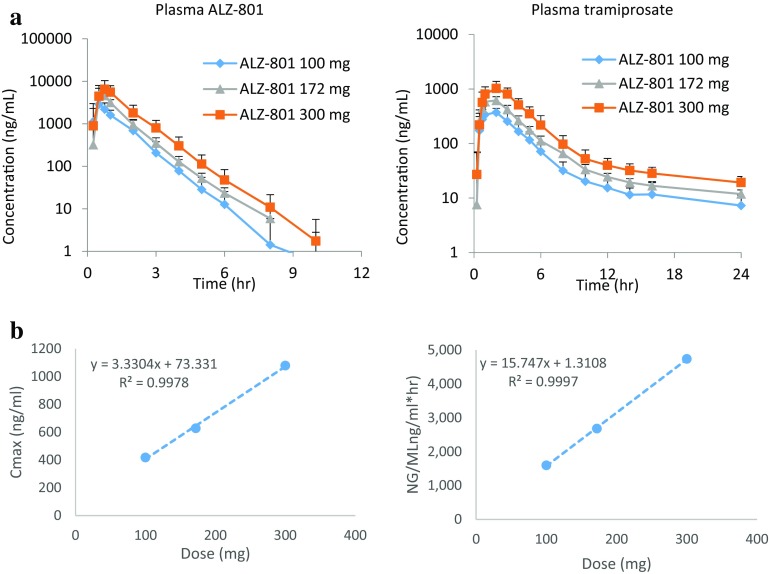
The mean AUCt values of ALZ-801 (Alabama Drug; 172 mg/kg; single dose) were 58, 758, and 5841 ng/mL.h in plasma and brain, respectively. ALZ-801: The ratios of trimiprost in the waist and midbrain of CD-1 mice were 1.8 and 3.1, respectively [1].
In vivo, ALZ-801 has been shown to reduce brain Aβ levels and amyloid plaque formation in transgenic mouse models of Alzheimer's disease. The compound is orally bioavailable and crosses the blood-brain barrier. In clinical studies, ALZ-801 has demonstrated favorable effects on biomarkers of Alzheimer's disease, including reductions in plasma Aβ42 levels and neurofilament light chain. The compound is being evaluated in Phase 3 clinical trials for early Alzheimer's disease. |
| Enzyme Assay |
In vitro assays for ALZ-801 typically involve thioflavin T fluorescence assays to measure Aβ aggregation kinetics. Aβ peptides are incubated with varying concentrations of ALZ-801, and fluorescence is measured over time. The IC50 for inhibition of Aβ aggregation is determined. Biophysical techniques such as electron microscopy and size exclusion chromatography are used to confirm the inhibition of fibril formation. Neuronal cell cultures are used to assess protection against Aβ-induced neurotoxicity.
|
| Cell Assay |
Cellular assays for ALZ-801 involve culturing neuronal cells, such as primary cortical neurons or SH-SY5Y cells, and treating them with Aβ peptides in the presence or absence of ALZ-801. Cell viability is measured using MTT or LDH assays. Aβ-induced neurotoxicity and its inhibition by ALZ-801 are assessed. Inflammatory markers such as cytokine levels may also be measured.
|
| Animal Protocol |
In vivo animal studies for ALZ-801 have been conducted in transgenic mouse models of Alzheimer's disease, such as APP/PS1 mice. The compound is typically administered orally. Brain Aβ levels, amyloid plaque burden, and neuroinflammation are assessed. Cognitive function may be evaluated using behavioral tests such as the Morris water maze. Dosing regimens vary depending on the study.
|
| ADME/Pharmacokinetics |
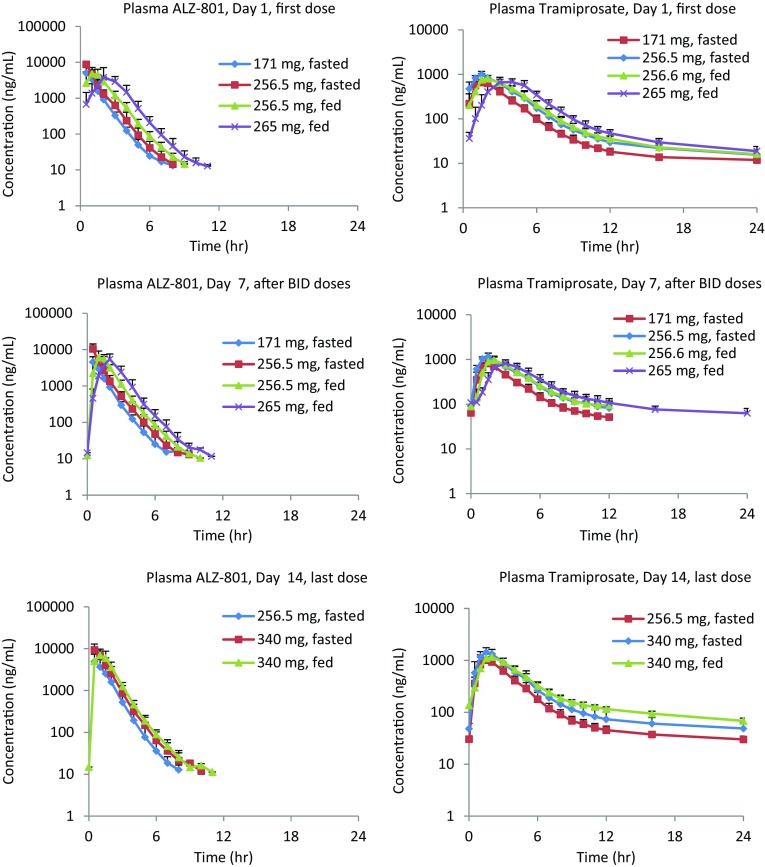
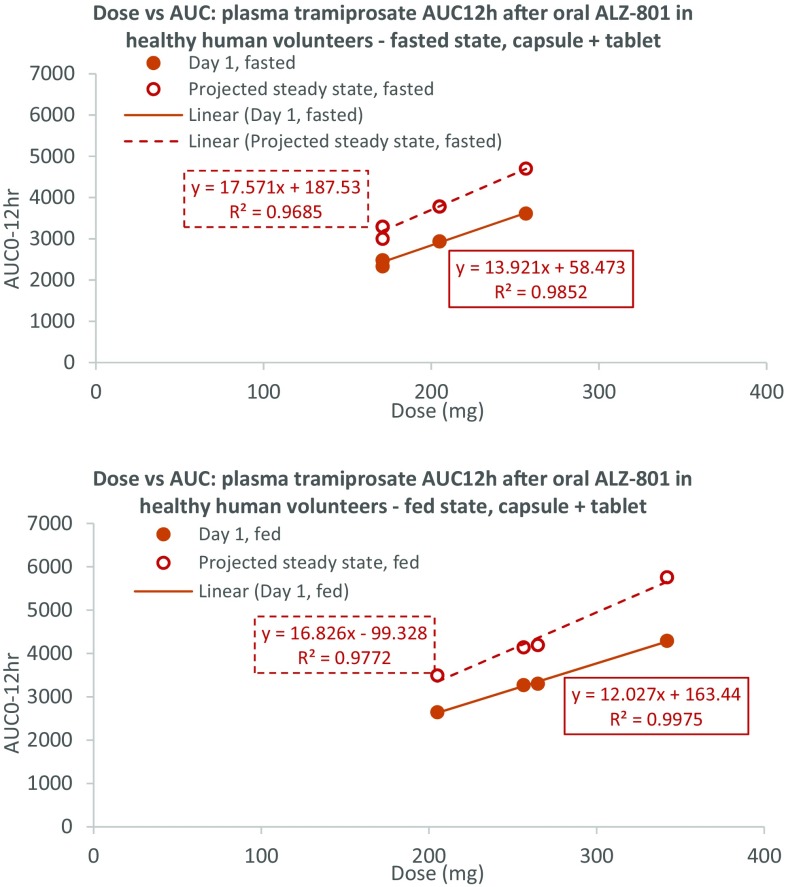
ALZ-801 is orally bioavailable and crosses the blood-brain barrier. The compound is a prodrug of tramiprosate, with improved pharmacokinetic properties including reduced gastrointestinal side effects. It is administered orally and has shown favorable pharmacokinetics in clinical studies, with dose-proportional exposure and a half-life suitable for once- or twice-daily dosing. The compound is being evaluated in Phase 3 clinical trials.
|
| Toxicity/Toxicokinetics |
ALZ-801 has shown a favorable safety profile in clinical trials, with no significant safety concerns identified. Common side effects are mild and may include gastrointestinal symptoms, which are less frequent than with tramiprosate. The compound is generally well-tolerated at therapeutic doses. Long-term safety data are being collected in ongoing clinical trials.
|
| References |
|
| Additional Infomation |
ALZ-801 is an orally available anti-amyloid agent in clinical development for Alzheimer's disease. It is a prodrug of tramiprosate that inhibits Aβ aggregation. The compound is being evaluated in Phase 3 trials for early Alzheimer's disease, including APOE4 carriers. ALZ-801 has shown biomarker effects and a favorable safety profile. It is not yet approved for clinical use and is available only for clinical research.
|
| Molecular Formula |
C8H18N2O4S
|
|---|---|
| Molecular Weight |
238.3045
|
| Exact Mass |
238.098
|
| CAS # |
1034190-08-3
|
| Related CAS # |
3687-18-1;
|
| PubChem CID |
25008296
|
| Appearance |
White to off-white solid powder
|
| LogP |
-3
|
| Hydrogen Bond Donor Count |
3
|
| Hydrogen Bond Acceptor Count |
5
|
| Rotatable Bond Count |
6
|
| Heavy Atom Count |
15
|
| Complexity |
294
|
| Defined Atom Stereocenter Count |
1
|
| SMILES |
C(CCNC([C@H](C(C)C)N)=O)S(=O)(=O)O
|
| InChi Key |
NRZRFNYKMSAZBI-ZETCQYMHSA-N
|
| InChi Code |
InChI=1S/C8H18N2O4S/c1-6(2)7(9)8(11)10-4-3-5-15(12,13)14/h6-7H,3-5,9H2,1-2H3,(H,10,11)(H,12,13,14)/t7-/m0/s1
|
| Chemical Name |
(S)-3-(2-Amino-3-methylbutanamido)propane-1-sulfonic acid
|
| Synonyms |
BLU 8499 ALZ 801 NRM8499 BLU8499ALZ-801 NRM-8499BLU-8499ALZ801 NRM 8499
|
| HS Tariff Code |
2934.99.9001
|
| Storage |
Powder -20°C 3 years 4°C 2 years In solvent -80°C 6 months -20°C 1 month Note: Please store this product in a sealed and protected environment, avoid exposure to moisture. |
| Shipping Condition |
Room temperature (This product is stable at ambient temperature for a few days during ordinary shipping and time spent in Customs)
|
| Solubility (In Vitro) |
H2O : ~30 mg/mL (~125.89 mM)
|
|---|---|
| Solubility (In Vivo) |
Solubility in Formulation 1: 100 mg/mL (419.64 mM) in PBS (add these co-solvents sequentially from left to right, and one by one), clear solution; with sonication.
(Please use freshly prepared in vivo formulations for optimal results.) |
| Preparing Stock Solutions | 1 mg | 5 mg | 10 mg | |
| 1 mM | 4.1964 mL | 20.9820 mL | 41.9639 mL | |
| 5 mM | 0.8393 mL | 4.1964 mL | 8.3928 mL | |
| 10 mM | 0.4196 mL | 2.0982 mL | 4.1964 mL |
*Note: Please select an appropriate solvent for the preparation of stock solution based on your experiment needs. For most products, DMSO can be used for preparing stock solutions (e.g. 5 mM, 10 mM, or 20 mM concentration); some products with high aqueous solubility may be dissolved in water directly. Solubility information is available at the above Solubility Data section. Once the stock solution is prepared, aliquot it to routine usage volumes and store at -20°C or -80°C. Avoid repeated freeze and thaw cycles.
Calculation results
Working concentration: mg/mL;
Method for preparing DMSO stock solution: mg drug pre-dissolved in μL DMSO (stock solution concentration mg/mL). Please contact us first if the concentration exceeds the DMSO solubility of the batch of drug.
Method for preparing in vivo formulation::Take μL DMSO stock solution, next add μL PEG300, mix and clarify, next addμL Tween 80, mix and clarify, next add μL ddH2O,mix and clarify.
(1) Please be sure that the solution is clear before the addition of next solvent. Dissolution methods like vortex, ultrasound or warming and heat may be used to aid dissolving.
(2) Be sure to add the solvent(s) in order.
| NCT Number | Recruitment | interventions | Conditions | Sponsor/Collaborators | Start Date | Phases |
| NCT04585347 | Completed | Drug: ALZ-801 170 mg Fasting Drug: ALZ-801 205 mg Fasting Drug: ALZ-801 205 mg After Food Drug: ALZ-801 342 mg Fasting |
Alzheimer Disease | Alzheon Inc. | 2015-09-16 | Phase 1 |
| NCT04157712 | Completed | Drug: ALZ-801 or matching placebo | Alzheimer Disease | Alzheon Inc. | 2015-09-26 | Phase 1 |
| NCT04693520 | Active, not recruiting | Drug: ALZ-801 | Early Alzheimer's Disease | Alzheon Inc. | 2020-09-30 | Phase 2 |
| NCT06304883 | Enrolling by invitation | Drug: Experimental: ALZ-801 | Early Alzheimer's Disease | Alzheon Inc. | 2024-04-02 | Phase 3 |
| NCT04770220 | Completed | Drug: Experimental: ALZ-801 Drug: Placebo Comparator: Placebo |
Early Alzheimer's Disease | Alzheon Inc. | 2021-05-19 | Phase 3 |
|
|
|
Products are for research use only; We do not sell to patients
Copyright 2020 InvivoChem LLC | All Rights Reserved