| Size | Price | Stock | Qty |
|---|---|---|---|
| 5mg |
|
||
| 10mg |
|
||
| 25mg |
|
||
| 50mg |
|
||
| 100mg |
|
||
| 250mg |
|
||
| 500mg | |||
| Other Sizes |
Purity: ≥98%
| Targets |
neutrophil elastas (pIC = 7.9 nM); neutrophil elastas (Ki = 9.4 nM); neutrophil elastas (Kd = 9.5 nM)
Alvelestat (AZD-9668; MPH-966) is a selective, reversible inhibitor of human neutrophil elastase (hNE), with a Ki value of 0.4 nM and an IC50 of 0.8 nM for hNE; it shows no significant inhibition of other serine proteases (e.g., human pancreatic trypsin, cathepsin G, chymase) at concentrations up to 10 μM [1] |
|---|---|
| ln Vitro |
AZD9668 suppresses NE activity in the supernatant of primed, stimulated cells as well as on the surface of stimulated polymorphonuclear cells and plasma NE activity in whole blood stimulated with zymosan.[1]
In cell-free enzyme assays, Alvelestat inhibited hNE activity in a dose-dependent manner: at 1 nM, inhibition rate was ~90%; at 10 nM, hNE activity was almost completely inhibited (>98%); it also blocked NE-mediated degradation of human lung elastin by ~95% at 5 nM (measured via elastin degradation assay) [1] - In isolated human peripheral blood neutrophils (stimulated with 100 nM fMLP to induce NE release), treatment with 10 nM Alvelestat reduced extracellular NE activity by ~85% (detected via chromogenic substrate S-2484) and decreased intracellular NE activity by ~70% (Western blot for active NE) [1] - In human neutrophils cultured with acidified saline (to mimic acid aspiration), 1 μM Alvelestat reduced NETs formation by ~60% (measured via Sytox Green staining for extracellular DNA) and decreased the levels of NETs markers (citrullinated histone H3, citH3; myeloperoxidase-DNA complexes, MPO-DNA) by ~55% (ELISA and Western blot) [2] |
| ln Vivo |
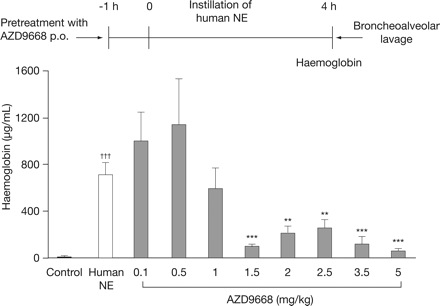
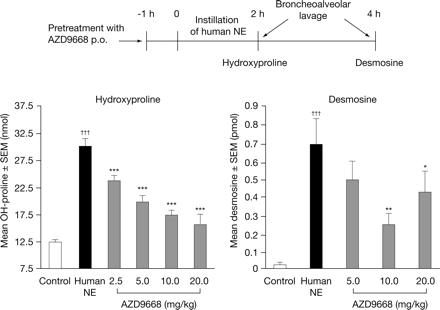
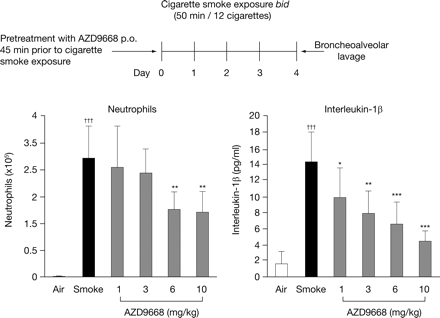
AZD9668 (p.o.) protects against human NE-induced lung injury in mice and rats. A mouse model of smoke-induced airway inflammation shows that AZD9668 dramatically lowers BAL neutrophil counts and BAL IL-1β levels. AZD9668 inhibits the remodeling of the small airway wall and enlargement of the airspace in guinea pigs exposed to tobacco smoke over an extended period of time in a chronic smoke model.[1]
In a rat model of LPS-induced acute lung inflammation (intratracheal LPS, 1 mg/kg), oral administration of Alvelestat at 3 mg/kg and 10 mg/kg (1 hour before LPS) reduced bronchoalveolar lavage fluid (BALF) NE activity by ~40% and ~70%, respectively, and decreased BALF neutrophil count by ~35% and ~60% (24 hours post-LPS) [1] - In a mouse model of acid-aspiration-induced ALI/ARDS (intratracheal instillation of 0.1 N HCl, 2 μL/g body weight), intraperitoneal injection of Alvelestat at 10 mg/kg (1 hour post-acid instillation) reduced lung wet-to-dry weight ratio (a marker of edema) by ~30%, decreased BALF protein concentration (a marker of alveolar barrier damage) by ~45%, and reduced lung tissue NETs (citH3-positive areas) by ~50% (48 hours post-instillation) [2] - In a dog model of chronic obstructive pulmonary disease (COPD)-like airway remodeling (long-term cigarette smoke exposure), oral Alvelestat at 5 mg/kg once daily for 28 days reduced airway wall thickness by ~25% and decreased lung tissue NE activity by ~65% compared to vehicle controls [1] |
| Enzyme Assay |
AZD9668 demonstrated a strong inhibition of NE activity and a high binding affinity (KD = 9.5 nM) for human NE. For human NE, AZD9668's computed pIC50 (IC50) and Ki values were 7.9 (12 nM) and 4.9 nM, respectively. AZD9668 and NE exhibited a swiftly reversible interaction, in contrast to previous NE inhibitors. In comparison to other neutrophil-derived serine proteases, AZD9668 exhibited a high degree of selectivity for NE.
Human NE (hNE) activity assay (from [1] abstract description): Purified hNE was diluted in assay buffer (50 mM Tris-HCl pH 7.5, 0.15 M NaCl, 0.01% Tween-20). The chromogenic substrate S-2484 (N-methoxysuccinyl-Ala-Ala-Pro-Val-p-nitroanilide) was added to a final concentration of 0.5 mM, followed by Alvelestat at concentrations ranging from 0.1 nM to 100 nM. The mixture was incubated at 37°C for 30 minutes, and absorbance at 405 nm was measured to calculate hNE activity. Inhibition rates were compared to vehicle controls, and Ki values were determined via Lineweaver-Burk plots; IC50 was calculated using a 4-parameter logistic regression model [1] |
| Cell Assay |
AZD9668 reduced plasma NE activity in whole blood stimulated with zymosan in cell-based experiments. In human polymorphonuclear cells that were isolated, AZD9668 reduced NE activity in the primed, stimulated cell supernatant and on the surface of the stimulated cells. Good crossover potency to NE was demonstrated by AZD9668 from other species.
Human neutrophil NE activity assay (from [1] abstract description): Human peripheral blood neutrophils were isolated via density gradient centrifugation and resuspended in RPMI 1640 medium (without serum). Cells were seeded at 1×10⁶ cells/well, pretreated with Alvelestat (0.1 nM to 100 nM) for 30 minutes, then stimulated with 100 nM fMLP for 2 hours. Culture supernatants were collected to measure extracellular NE activity (using S-2484 substrate). Cells were lysed in RIPA buffer to detect intracellular active NE via Western blot (anti-active NE antibody); GAPDH was used as an internal control [1] - Neutrophil NETs formation assay (from [2] abstract description): Human neutrophils (isolated from healthy donors) were cultured in DMEM with 10% fetal bovine serum at 5×10⁵ cells/well. Cells were treated with acidified saline (pH 1.5, 100 μL/well) to induce NETs, and Alvelestat (0.1 μM to 5 μM) was added simultaneously. After 4 hours of incubation, Sytox Green (a nucleic acid dye) was added, and fluorescence intensity (excitation 488 nm/emission 520 nm) was measured to quantify extracellular DNA (NETs marker). For citH3 detection, cells were fixed with 4% paraformaldehyde, stained with anti-citH3 antibody, and analyzed via immunofluorescence microscopy [2] |
| Animal Protocol |
Human NE-induced acute lung injury in mice or rats, guinea pig chronic smoke model.
~10 mg/kg (mice); ~20 mg/kg (rats); ~100 mg/kg (pigs) p.o. Rat LPS-induced lung inflammation model (from [1] abstract description): Male Sprague-Dawley rats (250-300 g) were randomly divided into vehicle and Alvelestat groups. Alvelestat was dissolved in 0.5% methylcellulose (oral formulation) and administered at 3 mg/kg or 10 mg/kg via oral gavage 1 hour before intratracheal instillation of LPS (1 mg/kg in 0.2 mL saline). Vehicle group received 0.5% methylcellulose. Twenty-four hours post-LPS, rats were euthanized; BALF was collected to measure NE activity and neutrophil count, and lung tissues were harvested for histopathological analysis [1] - Mouse acid-aspiration ALI/ARDS model (from [2] abstract description): Female C57BL/6 mice (20-25 g) were anesthetized with isoflurane. Acid aspiration was induced by intratracheal instillation of 0.1 N HCl (2 μL/g body weight). One hour post-instillation, Alvelestat was dissolved in 0.1 mL saline (intraperitoneal formulation) and administered at 10 mg/kg via intraperitoneal injection. Vehicle group received 0.1 mL saline. Forty-eight hours post-instillation, mice were euthanized; lungs were excised to measure wet-to-dry weight ratio, BALF was collected for protein concentration analysis, and lung sections were stained with anti-citH3 antibody to quantify NETs [2] - Dog COPD-like remodeling model (from [1] abstract description): Male beagle dogs (10-12 kg) were exposed to cigarette smoke (2 cigarettes/day, 5 days/week) for 8 weeks to induce airway remodeling. Then, Alvelestat (dissolved in 0.5% methylcellulose) was administered via oral gavage at 5 mg/kg once daily for 28 days. Vehicle group received 0.5% methylcellulose. After treatment, dogs were euthanized; lung tissues were processed for histology to measure airway wall thickness, and NE activity in lung homogenates was detected via S-2484 assay [1] |
| ADME/Pharmacokinetics |
In male Sprague-Dawley rats, oral administration of 10 mg/kg of Alvelestat resulted in an oral bioavailability of approximately 35%, a plasma elimination half-life (t₁/₂) of approximately 2.8 hours, a peak plasma concentration (Cmax) of 125 ng/mL (reached 1.2 hours after administration), and a volume of distribution (Vd) of approximately 1.5 L/kg [1]. In male beagle dogs, oral administration of 5 mg/kg of Alvelestat resulted in an oral bioavailability of approximately 42%, a t₁/₂ of approximately 3.5 hours, a Cmax of 98 ng/mL (reached 1.5 hours after administration), and a total plasma clearance (CL) of approximately 0.3 L/h/kg; food intake had no significant effect on Cmax or AUC (area under the curve) [1].
|
| Toxicity/Toxicokinetics |
Repeated-dose toxicity studies were conducted in rats for 28 days (oral administration of Alvelestat at doses of 1, 5, and 25 mg/kg/day). No deaths or treatment-related clinical symptoms were observed; serum ALT, AST, creatinine, and BUN levels were within the normal range, and no histopathological abnormalities were found in the liver, kidneys, lungs, or gastrointestinal tract.[1] In dogs (oral administration of Alvelestat at doses of 5, 15, and 50 mg/kg/day for 28 days), the No Adverse Effect Level (NOAEL) was observed at 15 mg/kg/day; at a dose of 50 mg/kg/day, mild gastrointestinal irritation (mucosal hyperplasia) was observed in 2 out of 4 dogs, which was reversible upon discontinuation of the drug.[1] Alvelestat showed high plasma protein binding (>98%) in human, rat, and canine plasma (as determined by ultrafiltration).[1]
|
| References | |
| Additional Infomation |
Alvelestat has been used in basic scientific research on chronic obstructive pulmonary disease (COPD). Alvelestat is an orally bioavailable, selective, and reversible inhibitor of human neutrophil elastase (NE) with potential anti-inflammatory activity. After administration, alvelestat binds to human NE and inhibits its activity. This can suppress NE-mediated inflammatory responses, potentially preventing lung inflammation and damage, and possibly improving lung function associated with NE-induced respiratory diseases. Neutrophil elastase (NE) is a serine protease released by neutrophils during inflammation and is upregulated in various respiratory diseases.
Alvelestat is a novel, orally bioavailable neutrophil elastase (NE) inhibitor designed to treat NE-mediated inflammatory diseases such as chronic obstructive pulmonary disease (COPD), acute lung injury/acute respiratory distress syndrome (ALI/ARDS), and cystic fibrosis, where NE overactivation leads to tissue destruction and persistent inflammation [1] - Alvelestat's selective inhibition of NE (without cross-reactivity with other proteases) reduces the risk of off-target side effects, a key advantage over non-selective NE inhibitors [1] - In acid inhalation-induced ALI/ARDS, Alvelestat exerts a lung-protective effect by inhibiting NE-mediated neutrophil extracellular trap (NET) formation, thereby reducing alveolar barrier damage and inflammation—supporting its potential as a treatment for this life-threatening disease [2] - Alvelestat has completed Phase II clinical trials for COPD and ALI/ARDS. Phase II clinical trials showed preliminary data indicating improved lung function and reduced inflammation (mentioned in [1] as part of its pharmacological development background) [1] |
| Molecular Formula |
C25H22F3N5O4S
|
|---|---|
| Molecular Weight |
545.53
|
| Exact Mass |
545.134
|
| Elemental Analysis |
C, 55.04; H, 4.06; F, 10.45; N, 12.84; O, 11.73; S, 5.88
|
| CAS # |
848141-11-7
|
| Related CAS # |
Alvelestat tosylate;1240425-05-1
|
| PubChem CID |
46861623
|
| Appearance |
White to off-white solid powder
|
| Density |
1.4±0.1 g/cm3
|
| Boiling Point |
780.4±60.0 °C at 760 mmHg
|
| Flash Point |
425.8±32.9 °C
|
| Vapour Pressure |
0.0±2.7 mmHg at 25°C
|
| Index of Refraction |
1.628
|
| LogP |
0.5
|
| Hydrogen Bond Donor Count |
1
|
| Hydrogen Bond Acceptor Count |
9
|
| Rotatable Bond Count |
6
|
| Heavy Atom Count |
38
|
| Complexity |
1100
|
| Defined Atom Stereocenter Count |
0
|
| SMILES |
O=C(C1C(=O)N(C2C=C(C(F)(F)F)C=CC=2)C(C)=C(C2N(C)N=CC=2)C=1)NCC1C=CC(S(C)(=O)=O)=CN=1
|
| InChi Key |
QNQZWEGMKJBHEM-UHFFFAOYSA-N
|
| InChi Code |
InChI=1S/C25H22F3N5O4S/c1-15-20(22-9-10-31-32(22)2)12-21(23(34)30-13-17-7-8-19(14-29-17)38(3,36)37)24(35)33(15)18-6-4-5-16(11-18)25(26,27)28/h4-12,14H,13H2,1-3H3,(H,30,34)
|
| Chemical Name |
6-methyl-5-(2-methylpyrazol-3-yl)-N-[(5-methylsulfonylpyridin-2-yl)methyl]-2-oxo-1-[3-(trifluoromethyl)phenyl]pyridine-3-carboxamide
|
| Synonyms |
Alvelestat; AZD 9668; MPH966; MPH 966; AZD9668; AZD-9668; MPH-966
|
| HS Tariff Code |
2934.99.9001
|
| Storage |
Powder -20°C 3 years 4°C 2 years In solvent -80°C 6 months -20°C 1 month |
| Shipping Condition |
Room temperature (This product is stable at ambient temperature for a few days during ordinary shipping and time spent in Customs)
|
| Solubility (In Vitro) |
DMSO: ~100 mg/mL (~183.3 mM)
Water: 1 mg/mL (Insoluble) Ethanol: 1 mg/mL |
|---|---|
| Solubility (In Vivo) |
Solubility in Formulation 1: 25 mg/mL (45.83 mM) in 20% DMSO, 60% PEG400, 20% Water (add these co-solvents sequentially from left to right, and one by one), suspension solution; with sonication.
Solubility in Formulation 2: ≥ 2.5 mg/mL (4.58 mM) (saturation unknown) in 10% DMSO + 40% PEG300 + 5% Tween80 + 45% Saline (add these co-solvents sequentially from left to right, and one by one), clear solution. For example, if 1 mL of working solution is to be prepared, you can add 100 μL of 25.0 mg/mL clear DMSO stock solution to 400 μL PEG300 and mix evenly; then add 50 μL Tween-80 to the above solution and mix evenly; then add 450 μL normal saline to adjust the volume to 1 mL. Preparation of saline: Dissolve 0.9 g of sodium chloride in 100 mL ddH₂ O to obtain a clear solution. View More
Solubility in Formulation 3: ≥ 2.5 mg/mL (4.58 mM) (saturation unknown) in 10% DMSO + 90% (20% SBE-β-CD in Saline) (add these co-solvents sequentially from left to right, and one by one), clear solution. Solubility in Formulation 4: ≥ 2.5 mg/mL (4.58 mM) (saturation unknown) in 10% DMSO + 90% Corn Oil (add these co-solvents sequentially from left to right, and one by one), clear solution. For example, if 1 mL of working solution is to be prepared, you can add 100 μL of 25.0 mg/mL clear DMSO stock solution to 900 μL corn oil and mix evenly. Preparation of saline: Dissolve 0.9 g of sodium chloride in 100 mL ddH₂ O to obtain a clear solution. |
| Preparing Stock Solutions | 1 mg | 5 mg | 10 mg | |
| 1 mM | 1.8331 mL | 9.1654 mL | 18.3308 mL | |
| 5 mM | 0.3666 mL | 1.8331 mL | 3.6662 mL | |
| 10 mM | 0.1833 mL | 0.9165 mL | 1.8331 mL |
*Note: Please select an appropriate solvent for the preparation of stock solution based on your experiment needs. For most products, DMSO can be used for preparing stock solutions (e.g. 5 mM, 10 mM, or 20 mM concentration); some products with high aqueous solubility may be dissolved in water directly. Solubility information is available at the above Solubility Data section. Once the stock solution is prepared, aliquot it to routine usage volumes and store at -20°C or -80°C. Avoid repeated freeze and thaw cycles.
Calculation results
Working concentration: mg/mL;
Method for preparing DMSO stock solution: mg drug pre-dissolved in μL DMSO (stock solution concentration mg/mL). Please contact us first if the concentration exceeds the DMSO solubility of the batch of drug.
Method for preparing in vivo formulation::Take μL DMSO stock solution, next add μL PEG300, mix and clarify, next addμL Tween 80, mix and clarify, next add μL ddH2O,mix and clarify.
(1) Please be sure that the solution is clear before the addition of next solvent. Dissolution methods like vortex, ultrasound or warming and heat may be used to aid dissolving.
(2) Be sure to add the solvent(s) in order.
| NCT Number | Recruitment | interventions | Conditions | Sponsor/Collaborators | Start Date | Phases |
| NCT03679598 | Active Recruiting |
Drug: Alvelestat (MPH966) Other: Placebo |
Alpha-1 Antitrypsin Deficiency (AATD) Emphysema or COPD |
University of Alabama at Birmingham |
April 8, 2019 | Phase 2 |
| NCT02669251 | Recruiting | Drug: MPH966 | Chronic Graft vs Host Disease Chronic Graft-Versus-Host Disease |
National Cancer Institute (NCI) |
April 28, 2016 | Phase 1 Phase 2 |
| NCT04539795 | Completed | Drug: Alvelestat Drug: Placebo |
Covid19 | University of Alabama at Birmingham |
January 25, 2021 | Phase 1 Phase 2 |
| NCT03636347 | Completed | Drug: Alvelestat oral tablet - dose 1 Drug: Alvelestat oral tablet - dose 2 |
COPD Emphysema |
Mereo BioPharma | October 29, 2018 | Phase 2 |
|
|---|
|
|
Products are for research use only; We do not sell to patients
Copyright 2020 InvivoChem LLC | All Rights Reserved


 COA
COA